What the rowing machine asks of the back, and what no study has countedEmerging evidence
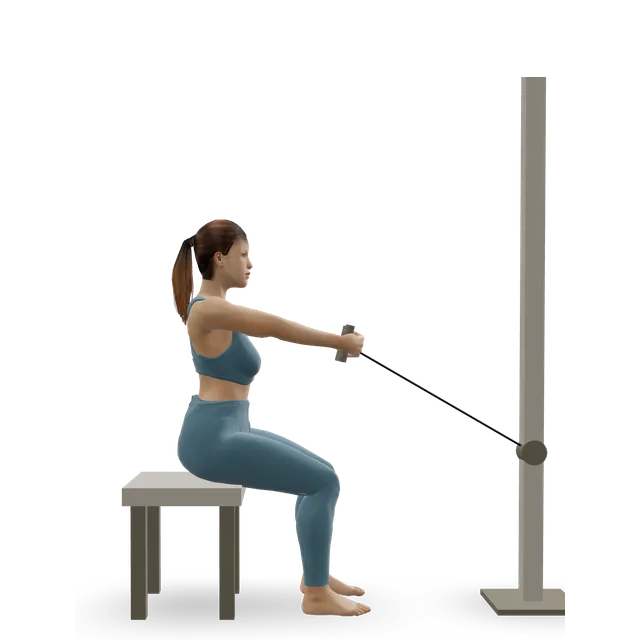
The stroke has four parts: the catch (sitting forward, shins near vertical, arms long), the drive (legs, then the body swings back, then the arms pull), the finish (legs long, leaning back slightly, handle to the lower ribs) and the recovery (the same in reverse). British Rowing says rowing loads the spine "in a sitting position", many times a minute for the whole session, and that the risk is highest early in the drive, when the load is heaviest. In 10 high-level rowers, the lowest part of the lower back sat close to the end of its bending range at the catch. Modelled compression at the bottom of the spine reached about 4.6 times body weight at race effort in 14 women, and it rose with stroke rate in 12 elite women, while the legs did less.
No study has counted back pain from the rowing machine in gym-goers, measured what the damper does to the spine, or tested a change to the stroke against pain. So the map on this page comes from studies of competitive rowers, who row far more than most of us, and from the maker's and British Rowing's guidance.
Sources 23, 26, 3, 45, 4, 5, 1, 19
Tiredness rounds the back, more on the machine than in a boatEmerging evidence
A review of 22 studies (429 people) found that tiredness increases lower back bending at the catch, and more on the machine than on the water. In 19 elite men, the most the lower back bent rose by 4.4 degrees on the machine during a step test, against 1.3 in a single scull, and in 8 rowers over an hour, the machine gave more lower back movement and less pelvic tilt than a rowing tank.
But 6 trained men rowing for an hour at a low intensity kept the same shape at the catch throughout (about 34 degrees of bending). Our reading: drift into a rounded back comes with hard work, high stroke rates and inexperience more than with time alone.
Sources 1, 2, 8, 6, 7
The usual stories, and how good the evidence isEmerging evidence
Slumping at the catch: rowers with back pain had relatively more backward pelvic tilt at the catch, while rowers without pain kept the pelvis neutral or tipped forward, and at higher stroke rates rowers roll the pelvis forward less. Opening the back before the legs: rowers with back pain used their back muscles harder at the catch and early drive (22 university rowers), and teenage rowers with pain stayed near the end of their bending range for more of the drive (10 in each group). Leaning back too far: elite women leaned back further at maximal effort, and the maker calls an extreme lean back "a weak position".
These studies are cross-sectional: they catch rowers at one moment, so the slump may follow the pain rather than cause it. Overreaching is described too: in 6 elite men, the reach at the catch grew by about 2 centimetres as they tired on a fixed machine. A higher damper means more force per stroke at a lower stroke rate, and rib stress fractures went with heavy load per stroke in a case series of 10 elite rowers; no study has linked the damper to back pain directly. Stiff hips may play a part: World Rowing wants at least 130 degrees of hip bend for the catch, and in 20 elite rowers, stiffer hips went with more disc changes; a pinch in the groin at the catch is the hip itself, as in 18 young rowers with labral tears.
Sources 1, 32, 33, 34, 35, 21, 31, 25, 30, 40, 47, 48
Who gets itEmerging evidence
The lower back is the commonest place rowers get hurt, at every level: over a year, 53% of 76 New Zealand international rowers had an episode, most with little effect on training; the lower back was a third of masters rowers' injuries (32.6% of injuries in 743 rowers); and it topped the list for UK amateur club rowers, elite juniors and Australia's national team. In school rowers, 94% of boys and 78% of girls had had back pain at some point.
A previous episode of back pain was the one risk factor that held up across 10 studies (about 2.6 times the odds), though that figure comes from only two of them and the certainty is low. In 1,632 former college rowers, 526 developed back pain while rowing in college, and rowing machine sessions over 30 minutes were one of several factors linked with it; an association, not proof of cause. The sacroiliac (SI) joint is often blamed, but the only study in rowers used tests with poor reliability. There are no figures for gym-goers or class users on the rower.
Sources 9, 10, 11, 12, 13, 14, 15, 16, 50
Rib pain in rowersEmerging evidence
A rib stress fracture is a crack that builds up with training rather than one injury. It affects 8% to 16% of elite rowers over a career, but about 2% of university and 1% of junior elite rowers, and it hurts at the side of the chest, most often around the sixth rib. It feels sharp on breathing in, coughing or changing position. Long pieces at a heavy load per stroke, low bone density and eating too little for the training are linked with it.
Rowers usually lose 4 to 6 weeks of training (from 1 to 16 weeks across 17 studies), and about two months in Australia's national team. Rib pain that builds with rowing needs a GP, as the warning signs say.
Sources 41, 42, 43, 45, 44, 40
When a scan or test mattersStrong evidence
Not usually. The National Institute for Health and Care Excellence (NICE) says don't routinely offer imaging for low back pain outside specialist care. Disc bulges show on scans of 30% of 20-year-olds without back pain, and in 22 pain-free teenage rowers, 40.9% had a disc or spine stress finding on magnetic resonance imaging (MRI), against 9.1% of inactive teenagers. A scan finding isn't the diagnosis on its own.
Tests do matter with the warning signs; for a young rower whose pain is worse leaning back and doesn't settle (a stress fracture of the spine), for rib pain that builds with training, where MRI is the first test in elite rowers, and for one-sided bone pain in a rower training hard on too little food (one case of a stress fracture of the spine was missed on X-ray).
Sources 53, 57, 46, 45, 42, 49
How it usually goesStrong evidence
No study follows back pain from the rowing machine in people who aren't rowers. In new back pain, average pain fell from 52 to 23 out of 100 within 6 weeks across 33 groups of people (11,166 in all), then more slowly. The NHS says back pain usually improves within a few weeks, and World Rowing's summary says most rowers' back pain is not serious and they recover well.
Former college rowers had no more back pain later in life than the general population (51.4% over a lifetime), and 173 former elite rowers had no more than non-athletes, though rowers with back pain in college had more later. No one can promise a date.
Sources 56, 54, 9, 17, 18, 21