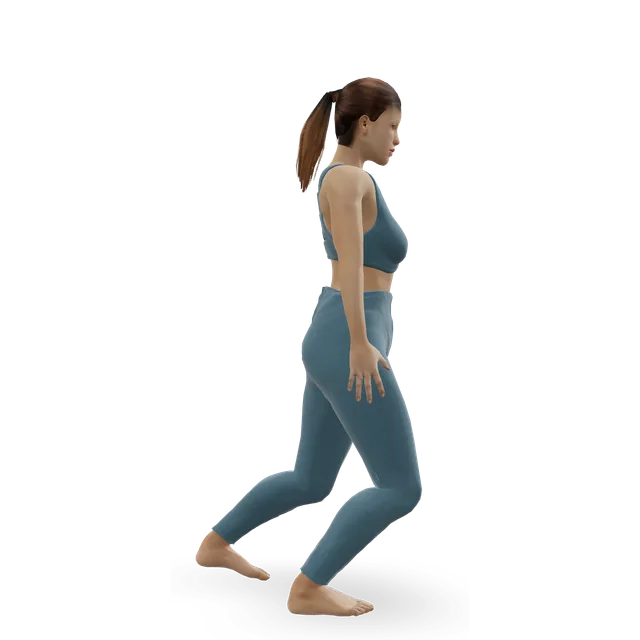
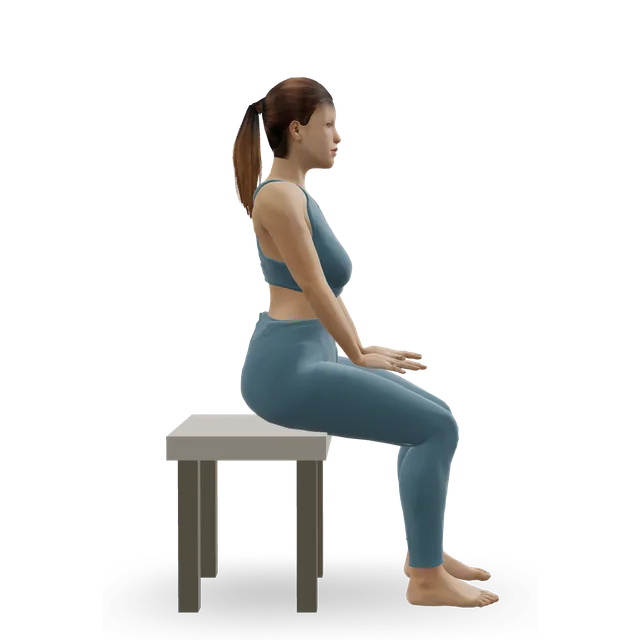
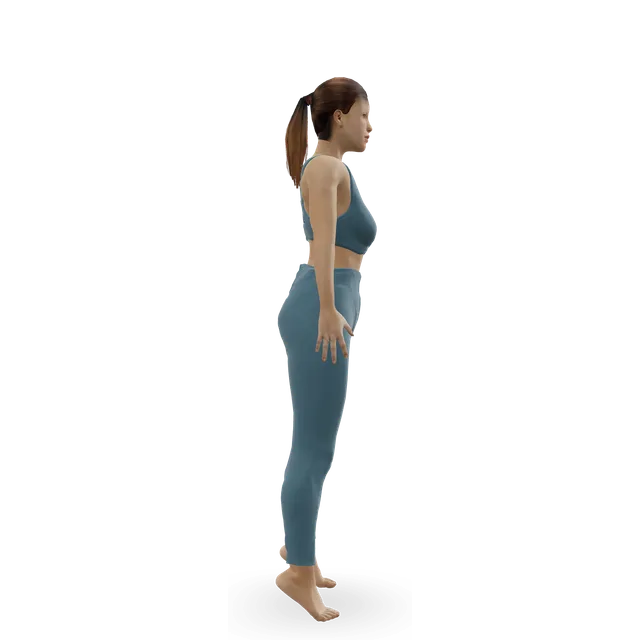
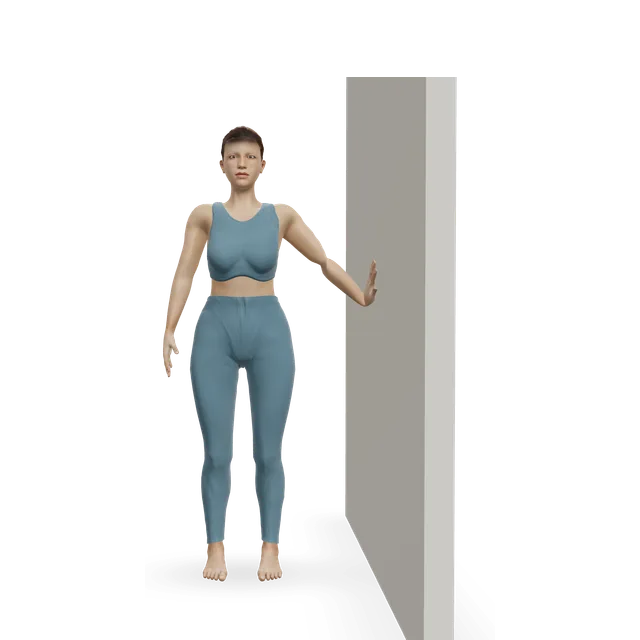
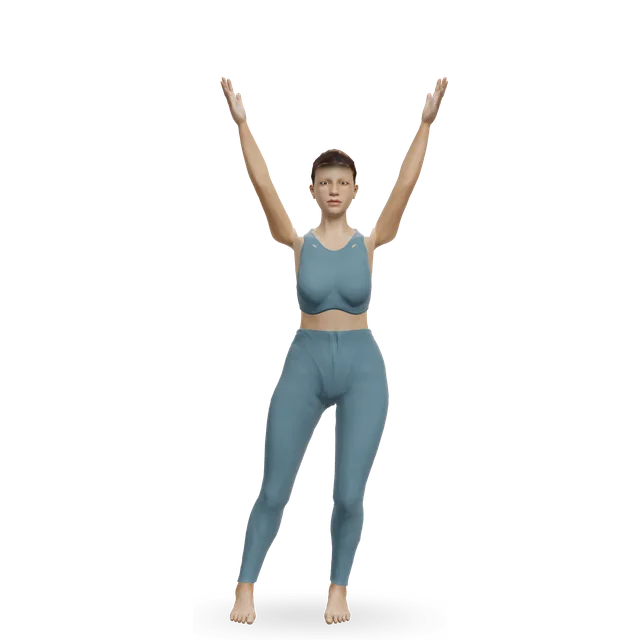
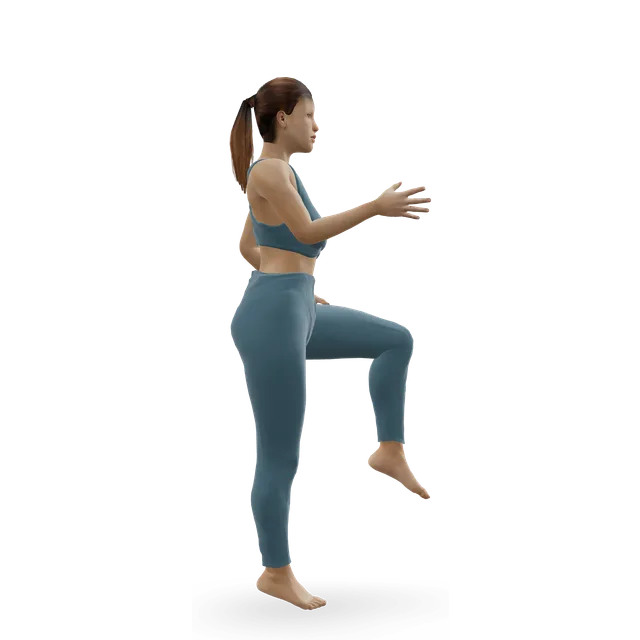
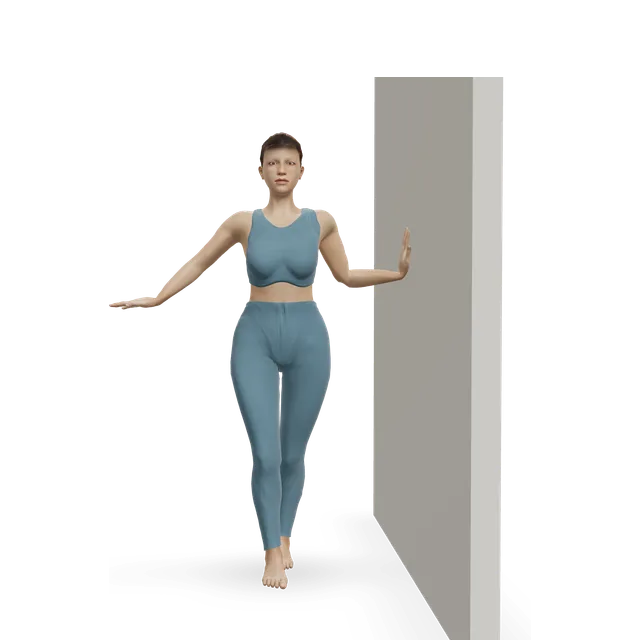
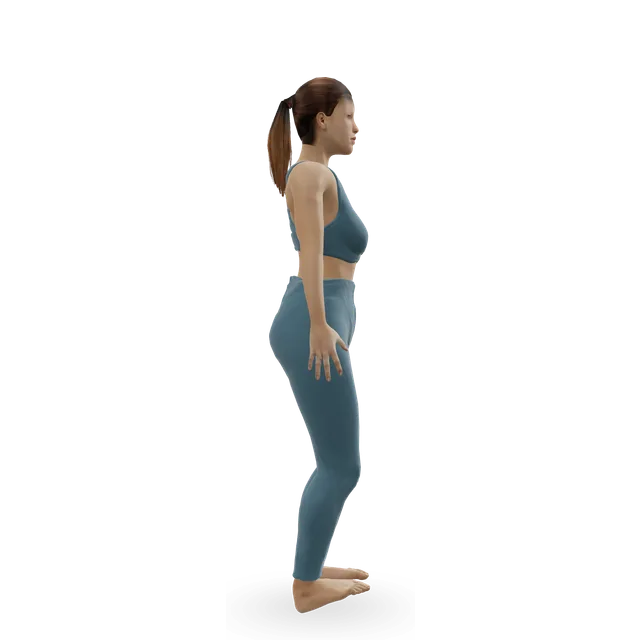
Ankle pain after dancing: pointe, plié, landings, sprains and the Achilles, and what helps

Sore ankles after dancing are common and usually settle within a day or two: most dance injuries build up gradually, and the feet and ankles take the largest share in ballet, contemporary, Irish, ballroom and Latin dance. Where it hurts points to the cause: a pinch at the back on pointe or relevé, a pinch at the front in a deep plié, a tendon behind the inner ankle bone, the outer ankle after a roll on a turn, a landing or in heels, or the Achilles above the heel. Most settle with changes to how you dance and a staged plan, and few need surgery.

This guide starts with the signs that need a 999 call or accident and emergency (A&E), such as an ankle that looks deformed after a fall, and those that need a general practitioner (GP) or the National Health Service's 111 line (NHS 111) the same day, such as an ankle you can't take four steps on after a roll. It then maps the causes by where it hurts and how you dance, explains what to change in pointe, plié, jumps, floors and heels, and gives a four-stage plan with a 3D demo of every move, back to full dancing in the order a return-to-ballet protocol uses.

When to get help first

Exercise is for pain that has been checked or is clearly mild and settling.

Get urgent medical help if

  • Call 999 or go to A&E: after an injury, you heard a crack, the foot or ankle has changed shape or points at an odd angle, a bone is sticking out, there is a bad cut over it, you're in severe pain, or the toes look blue or white, feel numb or are cold to touch. These can mean a broken bone. Don't drive yourself.
  • Same day (NHS 111 or an urgent treatment centre): after an injury, you can't put weight on it or walk more than a few steps, the pain is very bad or getting worse, there is a lot of swelling or bruising or it is getting worse, it feels very stiff, or it's not feeling any better after treating it yourself. Get the same help if you also have a very high temperature, or feel hot, cold or shivery: this could be an infection. If you think it's broken, don't treat it yourself.
  • Same day: after a twist or a fall, if you can't take four steps, or pressing on the back edge or the tip of the bony bump on either side of the ankle hurts, get it checked. Clinicians use these points, the Ottawa ankle rules, to decide who needs an X-ray, and you can have a break and still walk.
  • Same day: after a twist or a fall, if you can't walk four steps, if pressing on the bony bump on the inner side of the midfoot (the navicular) or the bump halfway along the outer edge of the foot (the base of the fifth metatarsal) hurts, if the foot looks out of shape, or if you're unsure, get it checked. Clinicians use these points, the Ottawa rules, to decide who needs an X-ray.
  • Same day (NHS 111): after an injury, the ankle is very painful or the pain is getting worse, there's a lot of swelling or bruising or it's getting worse, it hurts to put weight on it, it feels very stiff or is hard to move, you feel faint, dizzy or sick from the pain, or you heard a snap, grinding or popping noise when it happened. If you think it's broken, don't treat it yourself.
  • Same day: after the foot was forced outwards, pain above the ankle between the shin bones, or pain anywhere up the outer side of the leg to just below the knee, especially if you can't hop or walk normally. A high ankle sprain can be unstable, and the outer leg bone can break high up (a Maisonneuve fracture), so the whole lower leg needs examining and an X-ray.
  • Same day: after an injury, a pop or snap behind the outer ankle bone with swelling, or a tendon you can see or feel slipping over the bone. The tendons may have come out of their groove (dislocated), which is often mistaken for a sprain; experts advise a specialist review.
  • Same day: a sudden snap or pop at the back of the heel or calf, or a feeling of being kicked there, then walking flat-footed and being unable to push off, stand on tiptoe or climb stairs. It could be an Achilles tendon rupture or a broken heel bone. Go to A&E or a minor injuries unit, or contact NHS 111.
  • Same day: a sudden, very painful, hot, swollen, red joint, often the big toe but sometimes the middle of the foot (the midfoot) or the ankle, especially with a high temperature, feeling shivery or being unable to eat. It may be gout, but it could be a joint infection (septic arthritis), which is urgent.
  • Same day (urgent GP appointment or NHS 111): sudden, severe pain in one joint, with swelling, a change in skin colour or difficulty moving it, especially if you feel unwell, hot, cold or shivery or have a high temperature (although not everyone has one). It could be an infection in the joint, gout or calcium crystals (pseudogout), and only a sample of fluid from the joint can tell them apart.
  • Call 999 or go to A&E: a foot or leg that is suddenly cold, pale, numb, weak or very painful without an injury. A sudden loss of blood supply is a vascular emergency.
  • Same day (urgent GP appointment or NHS 111): throbbing pain in one leg (rarely both), usually the calf or thigh; swelling in one leg (rarely both); red, blue or darkened skin around the painful area, which may be harder to see on brown or black skin; or swollen veins. It could be a blood clot (DVT). Watch for it after an ankle injury or time in a cast or boot.
  • Call 999 or go to A&E if breathing suddenly becomes difficult, if pain in your chest or upper back comes on suddenly with breathlessness or a very fast heartbeat, or if someone passes out. Do not drive yourself. It can be a blood clot that has reached the lungs.
  • Same day: in a cast or boot, pain that is getting worse, toes that are numb or burning, a cast that feels too tight, toes that are swollen, blue or white, or a bad smell from under the cast.
  • Same day: you have diabetes and a new foot problem, such as an ulcer or wound, signs of infection, or a hot, swollen foot with a change in colour, even if it doesn't hurt. Contact your diabetes foot team or GP: NICE asks for these to reach a specialist foot service within 1 working day, and a suspected Charcot foot is kept off weight until it has been checked.

See a doctor or physiotherapist if

  • Pain that isn't better after 2 weeks of looking after it yourself, is getting worse, keeps coming back, or stops you doing normal things.
  • An ankle that keeps giving way months after a sprain.
  • Pain or swelling still there 6 to 12 weeks after a sprain, or deep pain inside the joint with catching or locking: see your GP. A damaged patch of cartilage and bone on the talus (an osteochondral lesion) is one cause, X-rays often miss it, and it has its own guide.
  • Pain, clicking, locking or swelling that carries on despite a good rehab programme. Cartilage, tendon and other problems are common alongside an unstable ankle and need assessing.
  • Pain at the back of the ankle that keeps coming back with pointing, kicking or landing: see a GP or physiotherapist. In many areas you can refer yourself to NHS physiotherapy.
  • Not better after about 3 months of good rehab, or it keeps a dancer off pointe or a player out of games: ask about seeing a sports medicine doctor or a foot and ankle specialist about an injection or surgery.
  • Pain at the front of the ankle that keeps coming back when you squat, lunge, climb or kick: see a GP or physiotherapist. In many areas you can refer yourself to NHS physiotherapy.
  • Not better after about 3 months of good rehab, or it keeps you from training, dancing or playing: ask about seeing a sports medicine doctor or a foot and ankle specialist about an injection or keyhole surgery.
  • One spot on a foot bone that hurts with every step and later at night: a possible stress fracture.
  • One spot on the inner ankle bone that hurts with every step, built up with running or jumping: stop running and get it checked soon. It's a stress fracture site that heals less well, and the first X-ray can look normal.
  • One spot on the outer leg bone a few centimetres above the ankle that hurts with every step, built up with running: a possible stress fracture. Stop running and get it checked.
  • Pain in one spot on the inner ankle bone, or a deep ankle pain that is hard to pinpoint, that builds with running and later hurts with every step or at night, sometimes with swelling over the bone: stop running and get it checked promptly. Stress fractures of the inner ankle bone and of the talus (the bone at the top of the ankle joint) heal less well, and the first X-ray can look normal.
  • A stress fracture from ordinary activity, more than one stress fracture, periods that have stopped or become irregular, or worries that you're eating too little for your training: see a GP about bone health and energy intake.
  • Clicking or snapping behind the outer ankle bone that keeps happening or hurts.
  • Pain that is getting worse week on week despite cutting back, or is stopping your normal activities.
  • A suspected rupture that was never examined, or a weak push-off weeks after what seemed to be a sprain or calf strain: ask for an assessment. A rupture found late may need different treatment.
  • Tingling or loss of feeling in the foot, or a foot that feels weak.
  • Any foot pain if you have diabetes: foot problems can be more serious.
  • Bone pain that is constant or worse at night, especially with a lump, unexplained weight loss, fever or tiredness, or a past history of cancer.
  • Ankle pain from dancing that changes how you dance, keeps you out of class for more than a week or two, or comes back every time you return: see a GP or a physiotherapist, ideally one who works with dancers. In England, professional and pre-professional dancers can ask their GP about a referral to an NHS Dance Injury Clinic (our suggestion, built on the ankle hub's see-a-GP line, a review advising a team approach with physiotherapists and the National Institute of Dance Medicine and Science's page on the clinics).

Where does it hurt?

Location narrows the likely causes; it does not diagnose.

A general ache in both ankles and calves the day after a long class, a rehearsal or a night out, easing as you move

Tired, overloaded ankles and calves, the commonest cause. A day or two of lighter dancing in flats or a lower heel usually settles it; this guide covers it.

Deep at the back of the ankle, often towards the outer side, on pointe, demi-pointe or relevé, or landing on a pointed foot

Posterior ankle impingement, sometimes with a small extra bone (an os trigonum), the commonest ankle problem seen in professional ballet. Stay short of the pinch.

Read: Posterior ankle impingement →

Behind and below the inner ankle bone, worse on pointe, demi-pointe or in grand plié, sometimes with a big toe that catches or clicks

The big toe's flexor tendon (flexor hallucis longus), often called dancer's tendinitis, often alongside impingement at the back. Dancers tend to seek help late.

Read: Inner ankle pain →

A pinch or block at the front of the ankle at the bottom of a deep demi-plié, a landing or a lunge, often after old sprains

Anterior ankle impingement, less common than the back in ballet. A shallower plié and fewer jumps come first.

Read: Anterior ankle impingement →

The outer ankle after rolling over on a turn, a landing or in heels, with swelling and bruising

Usually an ankle sprain, common in dancers who dance in heels. Check the Ottawa points in the warning signs first.

Read: Sprained ankle →

An outer ankle that keeps going over, or feels unstable, months after a sprain

Chronic ankle instability. Balance training, and a brace for sport, cut repeat sprains in athletes.

Read: Chronic ankle instability →

Behind the outer ankle bone, clicking or snapping, sore after jumps or turns

The peroneal tendons. A tendon you can feel slipping over the bone needs checking, as the warning signs say.

Read: Peroneal tendinopathy →

The cord above the heel, stiff in the morning, sore after relevés, jumps and pliés

Achilles tendinopathy, an overuse problem in ballet, managed with calf loading as it is for anyone else.

Read: Achilles tendinopathy →

A snap or pop at the back of the heel in a jump or a push-off, then walking flat-footed

A possible Achilles rupture, which is rare: get help the same day.

Read: Achilles rupture →

Pain above the ankle between the shin bones after landing with the foot forced outwards

A high ankle sprain, which is uncommon: get it checked the same day.

Read: High ankle sprain →

One spot on a bone (the inner ankle bone, the outer leg bone above the ankle, or the top of the midfoot) that hurts with jumps and later at rest or at night

A possible stress fracture, less common but important: stop jumping and get it checked.

Read: Stress fracture →

A deep ache inside the joint that won't settle after a sprain, with swelling after class or catching

Possibly a damaged patch of cartilage and bone on the talus, which is uncommon and needs a scan.

Read: Talus cartilage lesion →
Show all 17 areasShow fewer areas

Understand it

Common in dancers, and usually tired, overloaded anklesStrong evidence

Dancing asks the ankle for more range, more often, than almost any other activity: relevé and pointe take it to the end of pointing, a deep plié to the end of bending up, and jumps, turns and heels load it at both ends. Across 29 studies of dancers, a review found "a high prevalence and incidence of lower extremity and back injuries, with soft tissue and overuse injuries predominating". In ballet, the foot and ankle accounted for 14% to 57% of injuries, and across 11 studies of 1,650 pre-professional and professional ballet dancers they were the most affected region in both sexes; ankle tendon pain (19%) was among ballet dancers' commonest problems in a meta-analysis of 19 studies.

Other styles show the same pattern. Almost 1 in 5 first-year contemporary dance students reported an ankle injury over a year. In Irish dancers the foot and ankle are the most affected areas (25% to 68% of injuries), and about half of Dutch ballroom and Latin dancers reported a foot, ankle or lower leg injury over their dancing lives. Street styles differ: in hip hop the knee leads, with the foot and ankle 15% of injuries at a London clinic, and breakers report wrist, spine, shoulder and ankle pain.

Injury is uncommon for the hours danced: under 5 injuries per 1,000 hours across recreational, student and professional dancers, about 1 per 1,000 hours in ballet, and in social salsa about 1.1 for women and 0.5 for men. Ordinary aches after a long class or a night out are far commoner than injuries that stop dancing. In children's emergency visits for dance injuries in the US, sprains and strains of the legs led, and 30.8% came from dancing at home or at parties rather than in class.

Sources 18, 1, 2, 49, 3, 50, 4, 5, 51, 19, 52, 6, 7, 53

Pointe, plié, jumps and heels: what loads the ankleEmerging evidence

Dancing on pointe and in relevé "requires extreme plantar flexion" of the ankle, pointing it as far as it goes, as a review of back-of-ankle pain in dancers puts it. In two professional ballet companies over 3 seasons (455 dancer-seasons), women had 1.20 foot and ankle injuries per dancer each season needing medical attention, and men 0.83. Ankle impingement and joint irritation (synovitis) were the commonest problems seen, and sprains cost the most dancing time; sprains came mostly from jumps, and impingement in women mostly from dancing on pointe. The authors call outer ankle sprains and impingement at the back "the 2 most burdensome injuries in professional ballet".

Heels add a sideways risk. In elite teenage ballroom and Latin dancers, who dance in heels, 49.5% had sprained an ankle and 45.1% had an ankle that kept giving way, with an average of 11.2 days missed per sprain (we read this study's abstract). In US women generally, emergency department injuries from high heels were mostly ankle and foot sprains and strains. No study has tested heel height in dancers.

Sources 16, 8, 9, 58

The back of the ankle: impingement and the big toe's tendonEmerging evidence

Pain deep at the back of the ankle on pointe or relevé is usually posterior ankle impingement: soft tissue, and sometimes a small extra bone behind the ankle (an os trigonum), pinched as the foot points fully. It was the commonest ankle problem professional ballet dancers saw the medical team for. The big toe's long flexor tendon (flexor hallucis longus) runs just behind it on the inner side and often hurts alongside it, sometimes with a big toe that catches.

A review says "The diagnosis of posterior ankle impingement requires an accurate history and specific examination". Dancers tend to put off seeking help for the tendon, and a review of ankle injuries in dancers says that a team approach with knowledgeable physical therapists "can obviate the need for surgical treatment".

Sources 21, 8, 46, 15

The front of the ankle: a pinch at the bottom of a pliéEmerging evidence

A pinch or block at the front of the ankle at the bottom of a deep demi-plié, a landing or a lunge is anterior ankle impingement: soft tissue or bone spurs at the front of the joint caught as the shin moves over the foot, often after old sprains. It is less common than impingement at the back in professional ballet. Bone spurs don't settle the question on their own: a review notes that "The presence of osteophytes does not always correlate with impingement suggesting that soft tissue changes must also be necessary".

Sources 23, 24, 8

Sprains, and ankles that keep giving wayEmerging evidence

A roll on a turn, a landing or in heels is the classic dance sprain. In the teenage ballroom and Latin dancers, 35.3% of sprains came back within a year (from the abstract), and in a review of dance studies a past outer ankle sprain went with a higher risk of the next. A dance review warns that because sprains are so common, "it may not receive the careful attention it deserves". The NHS says most sprains feel better after 2 weeks, and to avoid strenuous exercise for up to 8 weeks.

Sources 9, 20, 47, 48

A stress fracture: the one not to missEmerging evidence

One spot on a bone that hurts with jumps, and later at rest or at night, needs checking. In two US ballet companies, dancing more than 5 hours a day and longer spells without periods went with stress fractures, an association, and a review of fractures in dancers covers stress fractures of the outer leg bone (the fibula), the heel bone and the midfoot. The first X-ray can look normal: in 64 second metatarsal stress fractures in professional dancers, the first X-rays were negative in 42, so a scan may be needed.

A review lists low energy availability (eating too little for your training), low bone density and sudden rises in training among the factors, and the fracture review says treatment should address any problems around the fracture, such as eating, hormones and training. These are reasons to see a GP about bone health, not to stop dancing.

Sources 39, 40, 55, 41, 42

When a scan helps, and when it misleadsEmerging evidence

Most ankle pain after dancing needs no scan. After a twist or a fall, clinicians use the Ottawa ankle rules to decide who needs an X-ray (see the warning signs), and the NHS ankle pain page says to contact NHS 111 if you think it may be broken. For pain at the back of the ankle that doesn't settle, an ultrasound-guided injection of local anaesthetic and steroid can help find and ease the problem: a review calls such injections "useful interventions to locate the symptomatic lesions and reduce symptoms and occasionally prove curative".

Scans need care in dancers. In 31 professional ballet dancers without pain, 82% of feet and ankles showed swelling inside a bone (bone marrow oedema) on magnetic resonance imaging (MRI); the authors write that "Positive MRI findings are commonplace" in such dancers and "The majority do not result in the development of symptoms requiring medical attention within 12 months". At the front, bone spurs on an X-ray don't always cause pain. A suspected stress fracture is the main reason for an MRI, because early X-rays miss many.

Sources 54, 21, 14, 24, 40, 55

How it usually goesEmerging evidence

Aches settle in days. In a UK ballet company, the average injury cost 7 days of dancing (4 in women, 9 in men); in two professional companies, ankle injuries that stopped dancing cost a median of 23 days in women and 41 in men; and sprains in teenage ballroom and Latin dancers cost an average of 11.2 days. The NHS says most sprains feel better after 2 weeks.

Most back-of-ankle pain is treated without surgery first, though a review found only six reports of non-surgical treatment, in 28 dancers, "which does not allow for any evidence-based recommendations". When surgery is needed, the results are good: across 376 ankles in dancers, the outcome was good to excellent in 89%, with return to dance at an average of 11 weeks; after open removal of an os trigonum in 38 young dancers, the average return to dance was 7.9 weeks and to pain-free dance 17.7 weeks; after keyhole removal in 12 professional dancers, 8.7 weeks; after keyhole surgery at the front, nine dancers were back at full dance at an average of 7 weeks; and after a tendon release in 13 ballet dancers, all returned within an average of five months. In an older series of 37 dancers, results were good or excellent for 28 of 34 professional dancers' ankles against 2 of 6 amateurs'.

These are case series of the hardest cases, and professional dancers may have more support to rehabilitate. No one can promise a date.

Sources 56, 8, 9, 48, 16, 27, 28, 25, 29, 22

When it isn't dancing: the causes the warning signs cover

Some ankle pain has causes dancing didn't create, and the warning signs follow the pages behind them. The NHS broken ankle page asks for help from NHS 111 if an injured ankle hurts to put weight on or comes with a very high temperature, and the Ottawa ankle rules, tested in emergency departments and in a review of 27 studies, pick out who needs an X-ray. A tendon slipping over the outer ankle bone needs a specialist review, an international consensus says, and a review calls peroneal tendon problems an under-appreciated cause of pain on the outer side that can be hard to tell from a ligament injury. A snap at the back of the heel can be an Achilles tendon rupture, as an NHS hospital's leaflet describes. A sudden hot, red, swollen joint can be gout or a joint infection, which the NHS septic arthritis page says needs urgent treatment. A foot that is suddenly cold and pale without an injury is a vascular emergency, unlike the gradual leg pain of narrowed arteries the NHS peripheral arterial disease page describes, and a throbbing, swollen calf after an injury or a boot can be a blood clot, as the NHS DVT page explains. With diabetes, the National Institute for Health and Care Excellence (NICE) asks for a new foot problem to reach a specialist foot service within 1 working day.

One spot on a bone that hurts with every step, and later at night, can be a stress fracture, as Health New Zealand and the American Academy of Orthopaedic Surgeons (AAOS) describe. The inner ankle bone and the talus are high-risk sites that heal less well, two reviews of high-risk stress fractures say; in 8 people with a stress fracture of the inner ankle bone, the first X-ray showed it in only 3; and in a review of 76 studies, more than 90% of athletes returned to sport, the longest returns coming after high-risk sites such as the navicular. Expert guidance on bone stress injuries and an NHS trust's leaflet set the bone rule below. More than one stress fracture, periods that stop, or eating too little for your training needs a GP: the International Olympic Committee calls this relative energy deficiency in sport (REDs), and an Endocrine Society guideline covers periods that stop. Bone pain that is constant or worse at night needs checking, the NHS bone cancer page says, though that is rare. After a sprain, an NHS hospital leaflet says the exercises should not increase your pain, and a trial found gentle exercise from the first week safe; the moving-on rule for the back of the ankle comes from a programme in adult footballers.

Sources 64, 65, 66, 67, 68, 69, 70, 71, 72, 73, 74, 75, 76, 77, 78, 79, 80, 81, 82, 83, 84, 85, 86, 87, 88
What helps, and how strong the evidence is

Change the range, the jumps, the floor and the heel firstEmerging evidence

For ankle pain the NHS says "rest and raise your ankle when you can", use ice and painkillers, "wear wide comfortable shoes with a low heel and soft sole" and "do not wear high heels or tight pointy shoes"; for a sprain it advises rest, ice, compression and raising it at first. No trial has tested changes to dancing. At the front of the ankle, a review says "Relative activity limitation such as avoiding jumps, avoiding forcing of demi-plié, combined with attention to correct technique to reduce pronation may improve the symptoms of anterior impingement in dancers"; at the back, dancing on pointe was the commonest cause of impingement in professional women, so demi-pointe and a lower relevé are the obvious changes.

Floors and jumps matter, but the evidence is from the lab: in 14 dancers landing on 5 floors, ankle loads rose as the floors got harder, and grand jetés landed harder than assemblés whatever the shoe; neither study measured injury. A US sports medicine society's dance tip sheet lists hard floors and cold studios among the causes of dance injuries. No study has tested heel height in dancers, though sprains were common in teenage dancers who compete in heels, and high-heel injuries in women generally are mostly ankle and foot sprains and strains.

Sources 54, 48, 24, 8, 34, 57, 13, 9, 58

After a sprain, balance training and a brace for sport cut repeat sprains (in athletes, not dancers)Strong evidence

No trial has tested this in dancers, so the evidence is borrowed from athletes. An evidence-based guideline prefers "supervised exercise-based programmes" to passive treatments after a sprain, and an overview of 46 reviews found "moderate evidence for neuromuscular training in preventing recurrence of an ankle sprain". In 522 athletes after a sprain, an 8-week home balance programme of three sessions a week, up to 30 minutes each, cut repeat sprains from 33% to 22%: "Nine athletes needed to be treated to prevent one recurrence". In 384 athletes, a brace for sport cut repeat sprains more than home training alone (relative risk 0.53), and the guideline says "ankle braces should be considered as an efficacious option".

In 42 ballet students, 1 minute a day on a textured balance board improved the sense of where the ankle is, faster in those with a past sprain, but the study didn't count injuries.

Sources 30, 12, 10, 11, 61

Conditioning for dancers: promising, but the studies are smallMixed evidence

In the one randomised trial in professional ballet, of 39 dancers, a 30-minute programme three times a week that included band work for pointing and turning the foot out went with an 82% lower injury rate, but only among the dancers who kept it up, with the others left out of that analysis, so the true effect is probably smaller. In a UK company, individual conditioning was followed by injury rates roughly halving, with no comparison group.

A 2026 review of dance prevention studies concluded that "efficacy of these programs could not be determined", and a 2024 review of 10 small fitness training studies in dancers found that most reported benefits but that "The evidence is limited by the current study methodologies". So calf, ankle and balance work is sensible, but unproven for preventing dance injuries.

Sources 35, 36, 37, 38

Surgery is for the few who don't settle, and most dancers returnEmerging evidence

Most dancers' ankle pain settles without surgery, and a review says a team approach with physiotherapists can avoid it. For back-of-ankle pain that doesn't settle, a guided injection can help, and in professional footballers (another group) guided injections allowed "a rapid return to athletic activity in all patients". Surgery, open or keyhole, is for those who don't settle after good rehab: both approaches got dancers back to the barre at a median of 8 weeks in one surgeon's series, and across athletes generally, keyhole removal of an os trigonum averaged 7.8 weeks back to sport with 5.0% complications, mostly short-lived nerve irritation. These are case series and reviews of case series, not trials.

After a sprain, the guideline says "Surgery should be reserved for cases that do not respond to thorough and comprehensive exercise-based treatment".

Sources 15, 16, 26, 63, 21, 62, 30

Achilles pain in dancers: treat it as you would anyone'sEmerging evidence

Achilles tendon pain in ballet is an overuse problem from repeated pointe, demi-pointe and plié, and it is managed with gradual calf loading, as our Achilles guide sets out. A review warns against treating dancers' Achilles pain with unproven special methods, which "carries with it an unquantifiable risk". A rupture while dancing is rare; one case series describes ruptures in middle-aged recreational dancers.

Sources 31, 32, 33

Pointe: readiness, not a birthdayMixed evidence

A review found no validated test of pointe readiness, and the link between readiness and injury is unproven. Experts in a consensus study agreed on calf endurance, balance and control as what matters, and guidance from dance medicine clinicians discourages pointe for students who take ballet only once a week. The US sports medicine society's tip sheet says age 12 is the usual lower limit, but "strength and maturity are more important than age". Your teacher decides.

Sources 43, 44, 45, 13

Tell someone earlyEmerging evidence

The dance tip sheet says "Resist the temptation to dance through pain." and asks teachers to make a class where students "are not afraid to share that they are injured and need a break". Dancers tend to put off seeking help for back-of-ankle tendon pain. In England, a GP can refer professional and pre-professional dancers to the NHS Dance Injury Clinics, which "are free at the point of use", and One Dance UK keeps a directory of practitioners who work with dancers.

Sources 13, 46, 59, 60

How much pain is OK while you exercise?

The ankle pain rule: stay short of the pinch, and one sore spot on a bone stays pain-freeEmerging evidence

Some discomfort during exercise is fine. Aim for pain you would call mild to moderate, no more than about 5 out of 10, that settles within an hour, with no more swelling or stiffness the next morning. If it's worse the next day, do a little less (a smaller range, fewer reps, a lighter band), not nothing.

The exceptions: pain in one spot on a bone should be pain-free, because it could be a stress fracture; burning, tingling or numbness means stop that movement; and if your feet are numb, pain won't warn you, so check your skin after exercise.

If pain climbs day after day, or you notice a warning sign, stop and get it checked. The 5 out of 10 figure is an editorial starting point that matches this site's other pain guides, not a tested rule.

After a sprain, NHS hospital leaflets say the exercises should not increase your pain, and gentle exercise from the first week was safe in a trial: re-injury was 4% with or without it.

Full pointing: stay short of the sharp pinch at the back of the ankle. Calf raises, relevé and pointing exercises go only as high as you can without it, and go higher as it eases (our suggestion).

Moving on: in the footballers' programme (adults, one group with no comparison), players moved on when pain on full pointing was 4 out of 10 or less and only at the very end of the range, and went back to running and sport drills once hopping and landing were pain-free. The return-to-ballet protocol moves dancers on only when each step is pain-free.

Bending the ankle up under load (squats, lunges, stairs, the knee-to-wall rock, landings, plié): stay short of the sharp pinch at the front of the ankle. A stretch in the back of the calf is fine; a pinch at the front is not. Let the depth come back over weeks (our suggestion).

Dancers returning to class: a published return-to-ballet protocol allows discomfort up to 3 out of 10 that eases during the warm-up. Soreness that carries on into class means 2 days off and a step back; soreness that starts the next day and hasn't gone within 24 hours means a day off, then carry on.

Expert guidance on bone stress injuries says the right load causes no symptoms during, after or the day after loading. Health New Zealand says stop exercising as soon as you feel pain, and never play through it; an NHS trust says if the pain comes back, do less and let it settle.

For dancing (our suggestion, built on the rules above and a published return-to-ballet protocol's soreness rules): judge each class, rehearsal or night out by your ankle during it, that evening and the next morning. A step that brings the sharp pinch at the back or the front gets its smaller version for now (a lower relevé, demi-pointe instead of pointe, a shallower plié, smaller jumps, a lower heel). The protocol defines soreness as "discomfort greater than 3/10"; discomfort of 2 to 3 out of 10 that eases during the warm-up is fine, and soreness that carries on into class means 2 days off and a step back. One spot on a bone that hurts, a rolled ankle that swells fast, a snap at the back of the heel or a hot, red ankle isn't a pain-rule question: see the warning signs.

Sources 74, 76, 75, 80, 81, 82, 17

The exercise plan: 4 stages

Start at the first stage. Each move opens a full guide with a 3D demo.

Stage 1

Settle: stop the pinch, keep moving

About the first 2 weeks: dance only what doesn't pinch or hurt (class without pointe, big jumps or deep pliés, in flats or a lower heel), and keep the calf, ankle and fitness going. A suspected stress fracture follows our stress fracture guide and its bone rule, and a fresh sprain our sprained ankle guide's first two weeks; with any warning sign, get checked first.

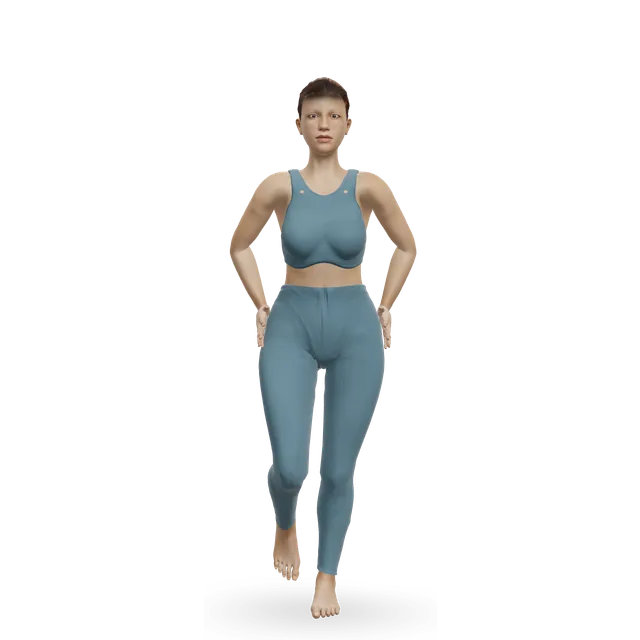
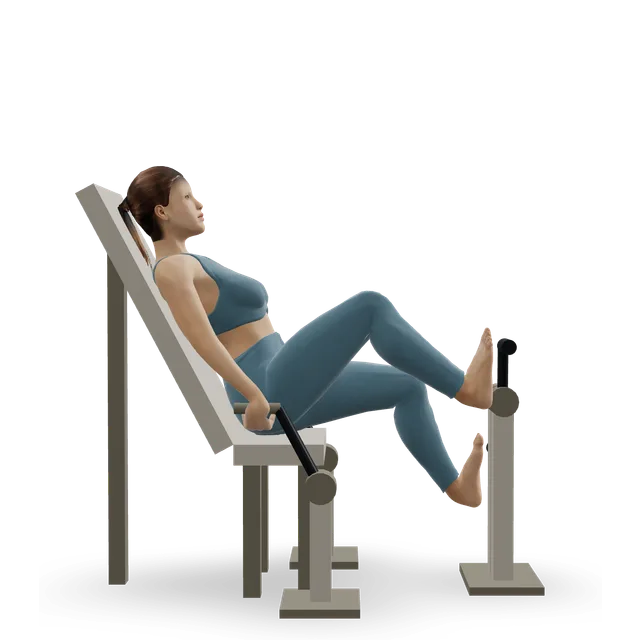
Recumbent exercise bike demonstrated on the 3D figure3D demoRecumbent exercise bikeBeginner · Cardio machine

10 to 20 minutes at a moderate effort to start, building towards 30 · From the move page's dose (an editorial starting point). Fitness without impact

Harder: Stationary cycling

Ankle CARs (controlled articular rotations) demonstrated on the 3D figure3D demoAnkle CARs (controlled articular rotations)Beginner · No equipment

5 slow circles each way with each ankle, morning and evening · From the move page's dose (an editorial starting point). Stay short of the pinch, as the move page says

Easier: Ankle circles · Harder: Toes-tucked kneeling (toe squat)

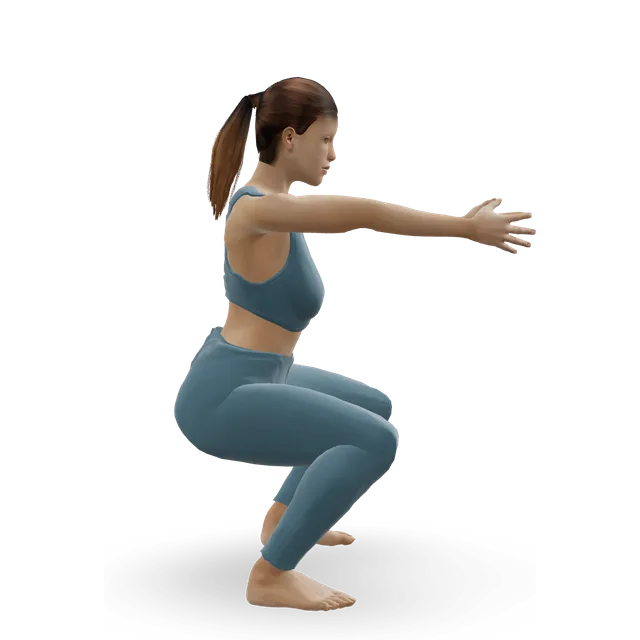
Knee-to-wall ankle rock demonstrated on the 3D figure3D demoKnee-to-wall ankle rockBeginner · A wall

10 slow rocks per side, daily · The move page's dose. Stop short of a pinch at the front of the ankle

Harder: Deep squat hold

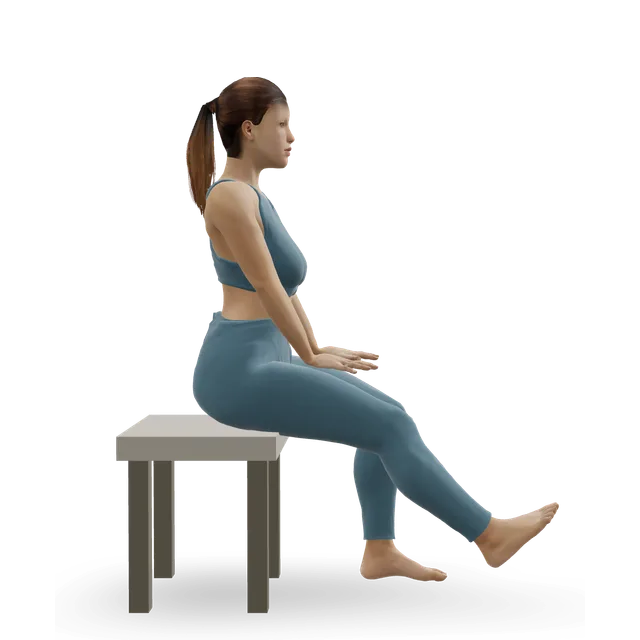
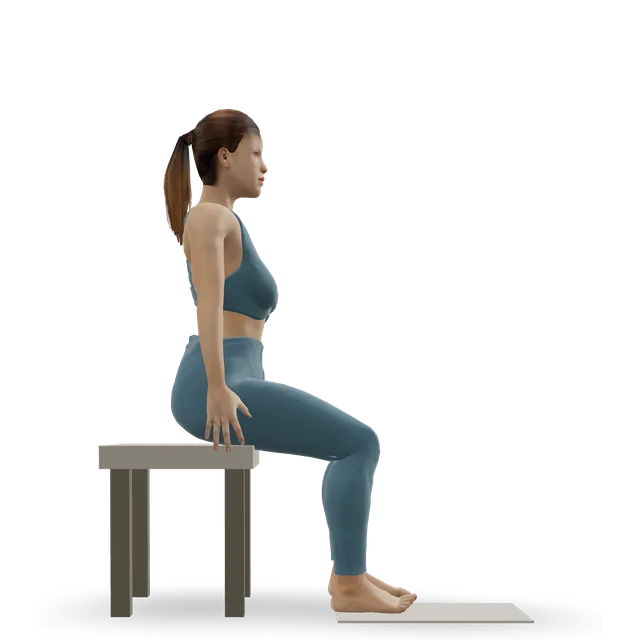
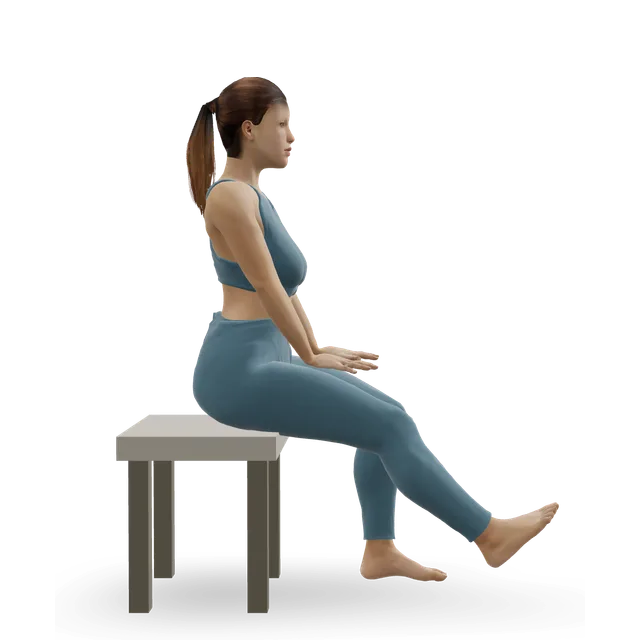
Seated bent-knee calf raise (soleus raise) demonstrated on the 3D figure3D demoSeated bent-knee calf raise (soleus raise)Beginner · A bench or box

2 sets of 15, through the middle of the range · As in our posterior ankle impingement guide (editorial). Calf work without full pointing

Harder: Slow calf raise

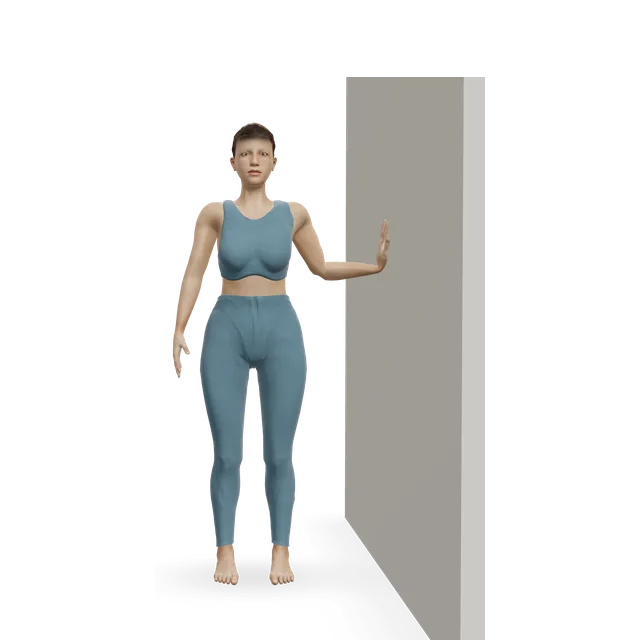
Isometric calf raise hold demonstrated on the 3D figure3D demoIsometric calf raise holdBeginner · A wall

5 holds of 30 to 45 seconds, once or twice a day · From the move page's dose (an editorial starting point). For Achilles pain; hold part-way up, below any pinch at the back

Easier: Seated bent-knee calf raise (soleus raise) · Harder: Slow calf raise

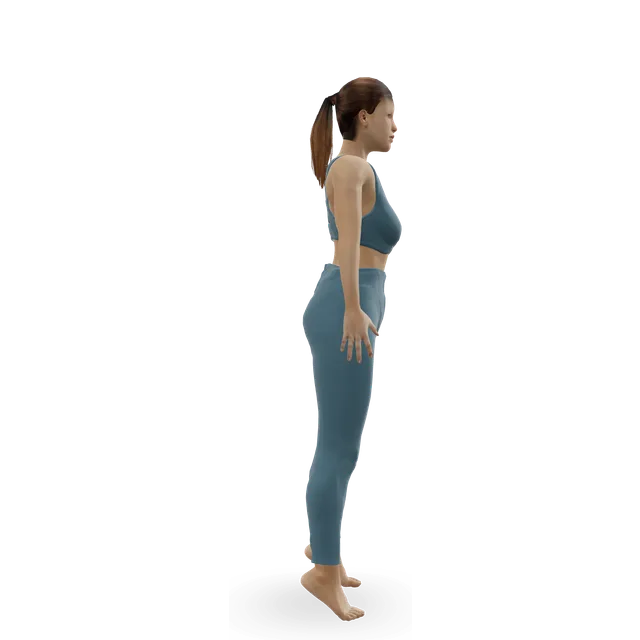
Single-leg stand demonstrated on the 3D figure3D demoSingle-leg standBeginner · A wall

10 holds of 5 to 10 s on the sore leg · As in our posterior ankle impingement guide (the footballers' programme's dose)

Easier: Tandem stance and heel-to-toe walk · Harder: Single-leg reach matrix

Move on when: Walking and daily life are pain-free, pointing and bending the ankle are pain-free except perhaps at the very end of the range, and a lighter class leaves the ankle no worse the next morning (editorial, as in our posterior ankle impingement guide).

Follow along: a timer, a cue and the next move, one step at a time.
Stage 2

Build: calf strength, the ankle in every direction, balance

About weeks 2 to 6, 3 or 4 sessions a week alongside lighter classes: calf strength through a growing range, ankle strength in every direction and single-leg balance, as the home balance programme after a sprain and the ballet trial's band work do.

Slow calf raise demonstrated on the 3D figure3D demoSlow calf raiseBeginner · A wall

10 slow rises, only as high as you can go without the pinch · As in our posterior ankle impingement guide (the dance warm-up's 10), building to full height over the weeks

Easier: Seated bent-knee calf raise (soleus raise) · Harder: Standing dumbbell calf raise

Band ankle eversion demonstrated on the 3D figure3D demoBand ankle eversionBeginner · A band + A bench or box

3 sets of 10 each foot · As in our posterior ankle impingement guide (the dancers' strength workout's dose); the ballet trial's band work for turning the foot out

Easier: Isometric ankle eversion against a wall · Harder: Single-leg stand

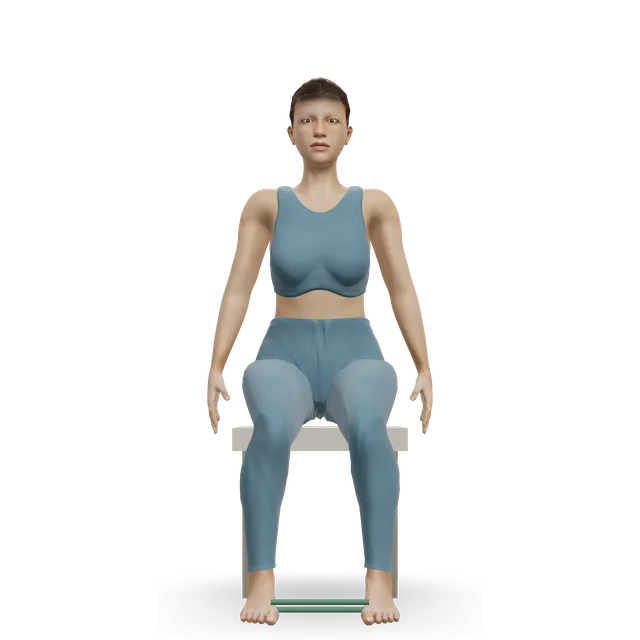
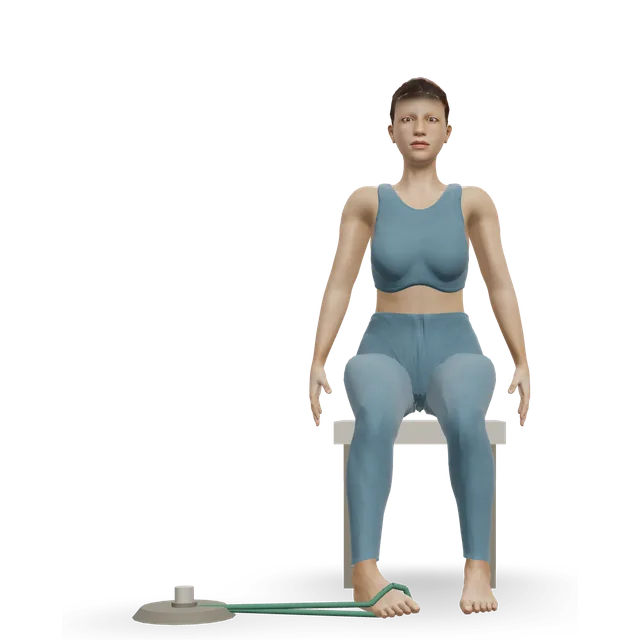
Band ankle inversion demonstrated on the 3D figure3D demoBand ankle inversionBeginner · A band + A bench or box

3 sets of 10 at 3 to 5 seconds a rep, rising to 4 sets of 10 with a heavier band, three times a week for 6 weeks · From the move page's dose (the Hall 2018 trial's dose for chronic ankle instability)

Harder: Single-leg calf raise from a step

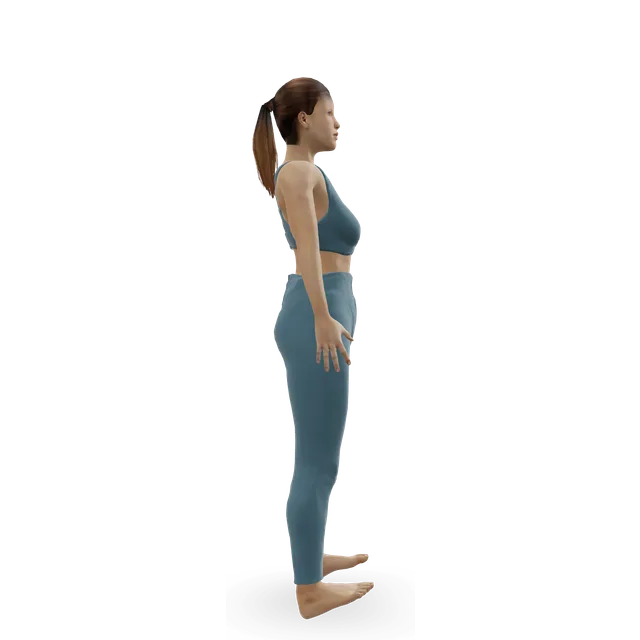
Tibialis raise demonstrated on the 3D figure3D demoTibialis raiseBeginner · No equipment

3 sets of 10 · As in our posterior ankle impingement guide (the dancers' strength workout's dose)

Harder: Single-leg tibialis raise

Single-leg reach matrix demonstrated on the 3D figure3D demoSingle-leg reach matrixIntermediate · No equipment

3 rounds of 5 reaches in each direction, each leg · From the move page's dose (an editorial starting point). Balance and control in every direction

Easier: Standing crossed-leg side reach · Harder: Single-leg Romanian deadlift

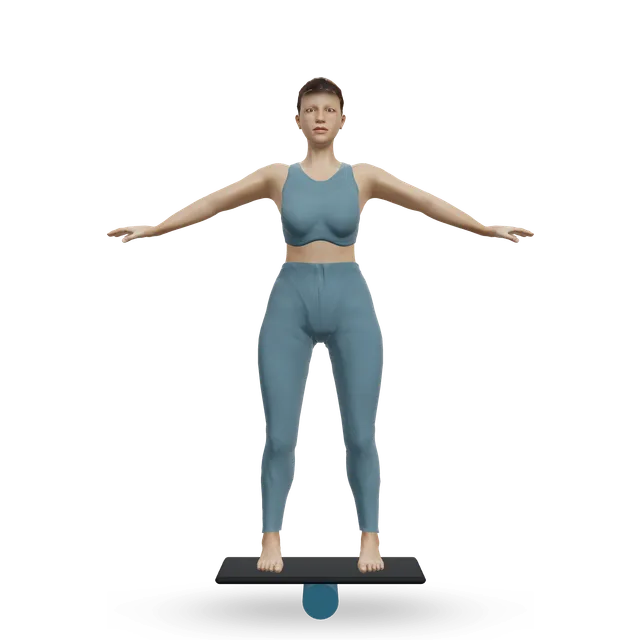
Balance board stand demonstrated on the 3D figure3D demoBalance board standBeginner · Other / check instructions

Several holds of 20 to 30 seconds on most days · From the move page's dose (an editorial starting point). Balance work as in the home programme that cut repeat sprains in athletes

Easier: Single-leg stand

Move on when: 10 slow calf raises to full height cause no pinch, you can stand on the sore leg for 30 seconds, and your strength feels close to the other side (editorial; our posterior ankle impingement guide uses 80% to 90% of the other side before the return-to-ballet steps).

Follow along: a timer, a cue and the next move, one step at a time.
Stage 3

Relevé, plié and small jumps

About weeks 4 to 8, 2 or 3 sessions a week: single-leg calf strength for relevé, a plié through a growing range, and small springs and quiet landings before big jumps.

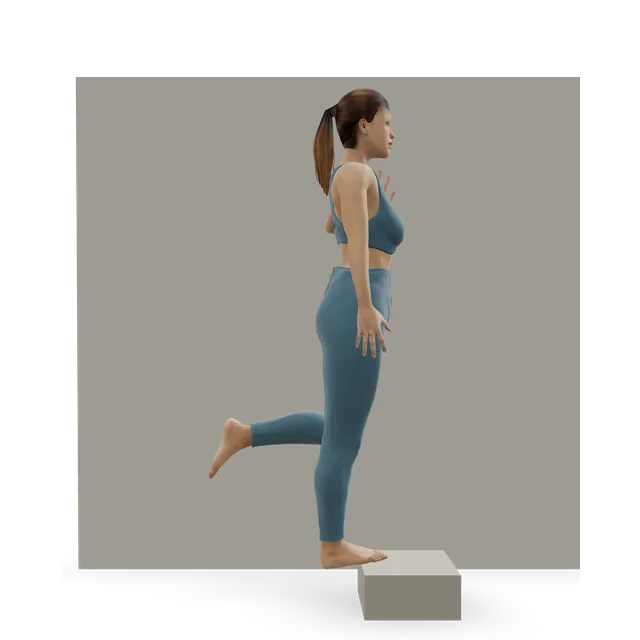
Single-leg calf raise from a step demonstrated on the 3D figure3D demoSingle-leg calf raise from a stepIntermediate · A step + A wall

2 sets of 12 each leg, lowering for 3 seconds · As in our posterior ankle impingement guide (the dancers' strength workout's dose). Full height only when it doesn't pinch

Easier: Slow calf raise · Harder: Single-leg pogo hops

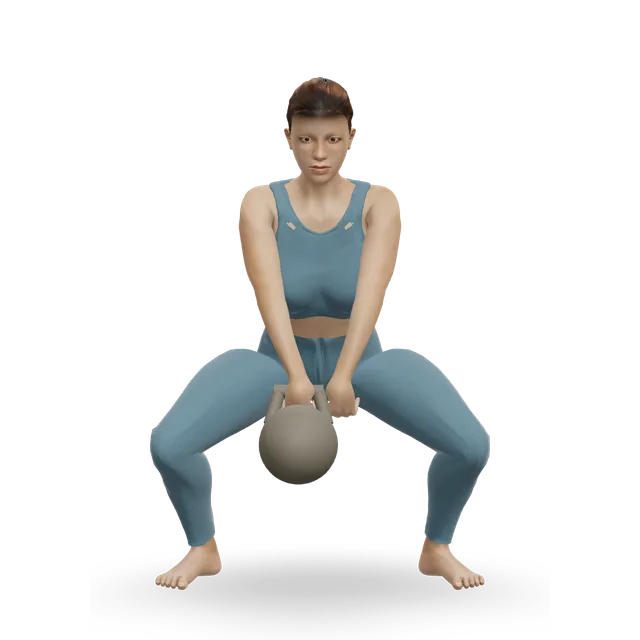
Plié dumbbell squat (sumo squat) demonstrated on the 3D figure3D demoPlié dumbbell squat (sumo squat)Intermediate · A dumbbell + A kettlebell

2 to 3 sets of 8, light, only as deep as you can go without a pinch at the front of the ankle · Editorial. A loaded plié: knees over the toes, turnout from the hips

Easier: Bodyweight squat · Harder: Back squat with bands

Ankle bounces (mini pogo) demonstrated on the 3D figure3D demoAnkle bounces (mini pogo)Beginner · No equipment

2 sets of 20, every other day · As in our posterior ankle impingement guide (the dance warm-up's dose). Leave it out with a suspected stress fracture, as the move page says

Harder: Pogo hops

Pogo hops demonstrated on the 3D figure3D demoPogo hopsIntermediate · No equipment

3 sets of 10 on two legs · As in our foot and knee pain after dancing guides (the first jumping dose of the largest jumper's knee trial). Small springs before big jumps

Easier: Ankle bounces (mini pogo) · Harder: Single-leg pogo hops

Snapdown to athletic landing demonstrated on the 3D figure3D demoSnapdown to athletic landingBeginner · No equipment

2 sets of 5, holding each landing for 2 s · As in our foot pain after dancing guide (editorial): quiet landings through the whole foot

Harder: Box drop landing

Move on when: 20 slow single-leg calf raises each side and a week of small springs pass the pain rule, with no pinch and no sore spot on a bone (editorial).

Follow along: a timer, a cue and the next move, one step at a time.
Stage 4

Back to full dancing: the protocol's order, then for good

From about week 6, often later, then for good: the full range of your dancing, one element at a time, by the written steps below, with two strength sessions a week kept. No study has tested a return to dance after ankle pain; the order is a published return-to-ballet protocol's, an expert protocol, and for other styles our suggestion.

Single-leg hop and stick demonstrated on the 3D figure3D demoSingle-leg hop and stickIntermediate · No equipment

3 sets of 5 each leg · As in our posterior ankle impingement guide (the dancers' strength workout's dose). Land through the foot to the heel and hold

Easier: Standing broad jump with stuck landing · Harder: Alternate-leg bounding

Pogo hops demonstrated on the 3D figure3D demoPogo hopsIntermediate · No equipment

3 sets of 10 on two legs · As in our foot pain after dancing guide (the first jumping dose of the largest jumper's knee trial)

Easier: Ankle bounces (mini pogo) · Harder: Single-leg pogo hops

Single-leg calf raise from a step demonstrated on the 3D figure3D demoSingle-leg calf raise from a stepIntermediate · A step + A wall

3 sets of 15 to 20 each leg, twice a week · As in our foot pain after dancing guide (editorial): keeps the calves strong while dancing comes back

Easier: Slow calf raise · Harder: Single-leg pogo hops

Band ankle eversion demonstrated on the 3D figure3D demoBand ankle eversionBeginner · A band + A bench or box

3 sets of 10 · As in the professional ballet trial's programme our dance page sets out

Easier: Isometric ankle eversion against a wall · Harder: Single-leg stand

Single-leg stand demonstrated on the 3D figure3D demoSingle-leg standBeginner · A wall

3 holds of 30 s each leg, eyes closed when steady · As in our foot pain after dancing guide (the ballet trial's programme as our dance page sets it out)

Easier: Tandem stance and heel-to-toe walk · Harder: Single-leg reach matrix

Move on when: Our suggestion: each element has passed the pain rule for a week before the next comes back, as the protocol moves dancers on only when each stage is pain-free. Keep two strength sessions a week and at least one full rest day. If it flares, drop back a stage for a week, not to nothing.

Follow along: a timer, a cue and the next move, one step at a time.

What to change for now

What to do now (written steps)

Our 3D figure can't show these. They come from the NHS ankle and sprain pages and a sports medicine society's dance advice; no trial has tested what to do after ankle pain from dancing, and where a step is our suggestion, it says so.

  • 1. Rest and raise the ankle when you can, use an ice pack wrapped in a towel, and take painkillers if you need them, as the NHS ankle pain page advises; after a sprain, rest, ice, compression and raising it at first.
  • 2. Change the next class, don't cancel dancing: for a week or two, demi-pointe instead of pointe, relevé only as high as is pinch-free, a shallower plié, smaller and fewer jumps, and turnout only as far as your hips allow (our suggestion). A review of front-of-ankle pain advises avoiding jumps and forced demi-plié.
  • 3. Wear wide, comfortable shoes with a low heel and a soft sole between classes, and no high heels for now, as the NHS advises.
  • 4. Tell your teacher or partner, so the steps can change for a while; the dance tip sheet says "Resist the temptation to dance through pain."
  • 5. A roll you couldn't walk on, a pinch that is getting worse, one spot on a bone that hurts, or a hot, red ankle isn't an ordinary dance ache: see the warning signs.

Sources 54, 48, 24, 13

Next time: range, jumps, floors, heels, a brace and hours (written steps)

The 3D figure can't show these. They are our suggestion unless a source is named, and none has been tested as a way to prevent ankle pain in dancers.

  • 1. Range: build pointe, relevé and deep plié back gradually, and stay short of a sharp pinch at the back or the front; dancing on pointe was the commonest cause of impingement in professional women.
  • 2. Jumps: small jumps before big ones, and fewer repeats at first; sprains in professional ballet came mostly from jumps.
  • 3. Floors: jump on a sprung floor where you can; in a lab study, harder floors raised ankle loads on landing.
  • 4. Heels: practise in flats or a lower heel, add heel time gradually, and keep the full heel for performances while the ankle settles; sprains were common in teenage dancers who compete in heels.
  • 5. A brace or tape after a sprain: a brace for sport cut repeat sprains in athletes, and a guideline calls braces "an efficacious option". Many styles can't use one on stage, so wear it for class and rehearsal while the ankle recovers (our suggestion).
  • 6. Hours and speaking up: add class and rehearsal time gradually, keep a full rest day each week, and see someone who works with dancers early. In England, professional and pre-professional dancers can ask their GP about the NHS Dance Injury Clinics, and One Dance UK keeps a directory of practitioners who work with dancers.

Sources 8, 24, 34, 13, 9, 30, 11, 59, 60

Dancing comes back (written steps)

The order of a published foot and ankle return-to-ballet protocol, an expert protocol not tested in trials; for other styles, our suggestion on the same pattern. Move on when each step has passed the pain rule.

  • 1. Barre work first, with two hands, then one: demi-plié to half range, tendu, rond de jambe à terre and relevé on two feet, in a soft shoe or trainer at first, with the sore leg as the working leg.
  • 2. Full demi-plié, then grand plié as it allows, relevé on one foot, and turns with the sore leg as the working leg, not the supporting leg.
  • 3. Full barre, then turns on the sore leg as the supporting leg, singles first.
  • 4. Small jumps without beats (glissade, chassé, pas de chat, changement), then sissonne, assemblé and petit allegro.
  • 5. Big jumps (grand jeté, tour jeté), then partner work; the protocol starts pointe "after pain-free completion of this stage".
  • 6. Heels, tap or street styles: practise in flats or a lower heel first, then short spells in your usual shoes, then full routines; for street styles, footwork before jumps and spins (our suggestion).
  • 7. Keep two strength sessions a week (the stage 2 to 4 moves, or our strength workout for dancers) and at least one full rest day.
  • 8. If it doesn't settle, or keeps coming back, see someone who works with dancers, as the warning signs say.

Sources 17, 13

Positions to swap, and why

Habit or positionWhy it mattersInstead
Full pointe or relevé every class while the back of the ankle pinchesDancing on pointe was the commonest cause of impingement in professional women.Demi-pointe and a lower relevé for now, and calf raises only to the height without the pinch.Try: Slow calf raise
Forcing a deep demi-plié into a pinch at the front of the ankleA review of front-of-ankle pain in dancers advises avoiding forced demi-plié.A shallower plié, and loaded pliés only to the depth without a pinch.Try: Plié dumbbell squat (sumo squat)
Big jumps first after a sprainSprains in professional ballet came mostly from jumps.Small springs first, then single-leg hops and landings.Try: Pogo hops
Dancing through a sprain without rehabRepeat sprains are common, and balance training cut them in athletes.Single-leg balance work, then a balance board.Try: Single-leg stand
Rehearsing for hours in full heels on a sore ankleSprains are common in dancers who compete in heels.Flats or a lower heel for practice, and the full heel for the performance.
Jumping on a hard, unsprung floorHarder floors raised ankle loads on landing in a lab study.A sprung floor, smaller jumps and fewer repeats.
Keeping quiet about pain, or waiting monthsDancers tend to seek help late for back-of-ankle tendon pain, and the dance tip sheet says don't dance through pain.Tell your teacher, and see someone who works with dancers early.
Stretching harder into a pinching ankleForcing the range isn't advised; the pinch is the joint, not tightness.Strength through the range that doesn't pinch, such as band work in every direction.Try: Band ankle inversion
Asking for an MRI firstScan findings are common in dancers without pain.An examination first, and a scan if it would change the plan.

Routines to follow

More moves for this area

Questions people ask

Why do my ankles hurt after dancing?

Usually tired, overloaded ankles and calves after more hours, relevés, jumps or heels than they're used to. It's common and settles within a day or two. Pain in one spot, a pinch at the back or front, or swelling after a roll needs a closer look.

Why does the back of my ankle hurt after dancing?

Often posterior ankle impingement, a pinch on pointe, demi-pointe or relevé, sometimes with a small extra bone, or the big toe's tendon behind the inner ankle bone. Stay short of the pinch, strengthen the calf, and get it checked if it keeps coming back.

Why does the front of my ankle hurt in plié?

Anterior ankle impingement pinches the front of the joint at the bottom of a deep demi-plié, often after old sprains. A shallower plié, fewer jumps and work on technique come first.

I rolled my ankle dancing: is it broken?

Get it checked the same day if you couldn't take four steps afterwards, or if pressing on the back edge or the tip of either ankle bone hurts, as the Ottawa ankle rules say. Most sprains feel better after 2 weeks, but the NHS says avoid strenuous exercise for up to 8 weeks.

When can I dance after a sprained ankle?

When walking and hopping are pain-free and your balance and strength are close to the other side, build back step by step: barre, then centre, then small jumps, then big jumps. In teenage ballroom and Latin dancers, a sprain cost about 11 days, and a balance programme cuts repeat sprains. No one can promise a date.

Is it normal for a dancer's ankles to hurt?

Some aching after a long class is common, but it shouldn't keep coming back or change how you dance. Most dance injuries build up gradually and settle with changes and rehab.

Why are my ankles swollen after dancing?

Both ankles puffy after a long night of dancing or standing, gone by the morning, is often fluid from heat and standing (our reading). One swollen, throbbing calf, or swelling that doesn't go down, needs help the same day.

Does dancing in heels hurt your ankles?

Sprains are common in teenage dancers who compete in heels, and high-heel injuries in women generally are mostly ankle sprains. Practise in flats or a lower heel and build heel time gradually (our suggestion).

Do I need surgery for an os trigonum?

Usually not: most dancers' back-of-ankle pain is managed without surgery. If it doesn't settle after good rehab, surgery has good results, with dancers back at an average of 11 weeks across case series.

Do I need a scan?

Usually not at first. An X-ray after a twist if the Ottawa rules say so, and an MRI for a suspected stress fracture or when surgery is being considered. Scan findings are common in dancers without pain.

What exercises help a dancer's ankle?

Calf raises within the range that doesn't pinch, band work in every direction, balance on one leg and on a board, then hops and landings. The four stages above build them up.

When should I worry?

Call 999 for an ankle that looks deformed after a fall or a foot that is suddenly cold and pale. Get same-day help for an ankle you can't walk on, a snap at the back of the heel, or a hot, red ankle with a fever. In the US, call 911 where this page says 999.

Related exercise guides

Other pain guides

Sources

  1. Smith 2015 · Injuries in ballet (systematic review, Orthop J Sports Med)
  2. Rupendran 2026 · Overuse injuries in male and female ballet dancers: 11 studies (systematic review and meta-analysis, J Dance Med Sci)
  3. Sun 2024 · Injuries in modern and contemporary dancers: 18 studies (systematic review and meta-analysis, Front Public Health)
  4. Póvoa 2023 · Irish dancing injuries and risk factors (systematic review of 11 studies, Int J Environ Res Public Health)
  5. Keijsers 2023 · Injuries in ballroom DanceSport (retrospective survey, J Dance Med Sci)
  6. Vassallo 2019 · Injury rates in recreational, student and professional dancers (systematic review of 16 studies, J Sports Sci)
  7. Domene 2018 · Injuries in non-professional salsa dancers over a year (injury surveillance study, J Phys Act Health)
  8. Katakura 2023 · Foot and ankle injuries in 2 professional ballet companies over 3 seasons (cohort study, Orthop J Sports Med)
  9. Liu 2025 · Ankle sprains in elite teenage ballroom and Latin dancers (cross-sectional study with 1-year follow-up, Phys Sportsmed)
  10. Hupperets 2009 · An 8-week home balance programme after an ankle sprain in 522 athletes (RCT, BMJ)
  11. Janssen 2014 · Bracing vs neuromuscular training to prevent repeat ankle sprains (RCT of 384, Br J Sports Med)
  12. Doherty 2017 · Treatment and prevention of acute and recurrent ankle sprain: an overview of systematic reviews (Br J Sports Med)
  13. American Orthopaedic Society for Sports Medicine (AOSSM) · STOP Sports Injuries tip sheet: Dance Injuries (reviewed November 2025)
  14. Katakura 2024 · Foot and ankle MRI in 31 professional ballet dancers without symptoms (cross-sectional study, OJSM)
  15. Vosseller 2019 · Ankle injuries in dancers (review, J Am Acad Orthop Surg)
  16. Rietveld 2018 · Treatment of posterior ankle impingement in dancers (systematic review, J Dance Med Sci)
  17. Glasser 2022 · A return-to-ballet protocol (narrative review and expert protocol, Cureus)
  18. Hincapié 2008 · Injuries and pain in dancers (systematic review, Arch Phys Med Rehabil)
  19. Tjukov 2020 · The injury profile of hip hop and street dancers (survey of 146, J Dance Med Sci)
  20. Jacobs 2012 · Injuries and pain in dancers (systematic review update, J Dance Med Sci)
  21. Roche 2013 · Posterior ankle impingement in dancers and athletes (review, Foot Ankle Clin)
  22. Hamilton 1996 · Pain at the back of the ankle in 37 dancers: diagnosis and surgery (case series, J Bone Joint Surg Am)
  23. Russell 2012 · Pathoanatomy of anterior ankle impingement in dancers (review, J Dance Med Sci)
  24. O'Kane 2008 · Anterior impingement syndrome in dancers (review, Curr Rev Musculoskelet Med)
  25. Nihal 2005 · Keyhole surgery for anterior ankle impingement in dancers (case series, Foot Ankle Int)
  26. Rietveld 2018 · Open or keyhole surgery for back-of-ankle impingement and flexor hallucis longus tendon pain in dancers (case series, J Dance Med Sci)
  27. Heyer 2017 · Os trigonum removal through an open approach in dancers (case series, Foot Ankle Int)
  28. Morelli 2017 · Keyhole removal of a painful os trigonum in 12 professional dancers (case series, J Foot Ankle Surg)
  29. Kolettis 1996 · Surgery for flexor hallucis longus tendon pain in 13 ballet dancers (case series, J Bone Joint Surg Am)
  30. Vuurberg 2018 · Diagnosis, treatment and prevention of ankle sprains (evidence-based guideline update, Br J Sports Med)
  31. Fernández-Palazzi 1990 · Achilles tendinitis in ballet dancers (case series, Clin Orthop Relat Res)
  32. Maffulli 2012 · Achilles tendinopathy in dancers (review, J Dance Med Sci)
  33. Roopnarinesingh 2021 · Achilles tendon ruptures while dancing the Jerusalema (case series, Int J Surg Case Rep)
  34. Hopper 2015 · Dance floor force reduction and ankle loads in 14 dancers' drop landings (lab study, J Sci Med Sport)
  35. Vera 2020 · An injury prevention programme for professional ballet (randomised trial of 39, Orthop J Sports Med)
  36. Allen 2013 · An injury audit and conditioning programme in a ballet company over 3 years (prospective study without a comparison group, Clin J Sport Med)
  37. Critchley 2026 · Injury prevention in dance: 8 studies (systematic review, J Dance Med Sci)
  38. Dang 2024 · Physical fitness training and dance injury (systematic review, Sportverletz Sportschaden)
  39. Kadel 1992 · Stress fractures in 54 professional ballet dancers (survey, Am J Sports Med)
  40. O'Malley 1996 · Stress fractures at the base of the second metatarsal in 51 ballet dancers (case series, Foot Ankle Int)
  41. Jotwani 2022 · Managing stress fractures in ballet (review, J Am Acad Orthop Surg)
  42. Goulart 2008 · Foot and ankle fractures in dancers (review, Clin Sports Med)
  43. Hough-Coles 2022 · Tests of pointe readiness in young dancers (systematic review, J Dance Med Sci)
  44. Ferguson 2026 · Readiness for pointe shoes in ballet (Delphi consensus study, Sports Med Open)
  45. Weiss 2009 · When can I start pointe work? (guidelines, J Dance Med Sci)
  46. Sammarco 1998 · Flexor hallucis longus tendon injury in dancers and non-dancers: 26 patients (case series, Foot Ankle Int)
  47. Russell 2010 · Acute ankle sprain in dancers (review, J Dance Med Sci)
  48. NHS · Sprains and strains
  49. Smith 2016 · Musculoskeletal injuries in ballet dancers: 19 studies (systematic review and meta-analysis, Phys Ther Sport)
  50. Mailuhu 2021 · Ankle injuries in 91 contemporary pre-professional dancers over a year (prospective cohort study, BMJ Open Sport Exerc Med)
  51. Jubb 2019 · Injury patterns in hip hop dancers at a London clinic (clinic case series, J Dance Med Sci)
  52. Kauther 2009 · Breakdance injuries and overuse problems in amateurs and professionals (survey, Am J Sports Med)
  53. Dadoo 2023 · Children's dance injuries in US emergency departments, 2000 to 2020 (national surveillance study, Pediatr Emerg Care)
  54. NHS · Ankle pain
  55. Albisetti 2010 · Stress fractures at the base of the metatarsals in 150 young trainee ballet dancers (case series, Int Orthop)
  56. Allen 2012 · Ballet injuries and how long they last over 1 year (cohort study, J Orthop Sports Phys Ther)
  57. McPherson 2019 · Ground reaction forces in ballet jumps by footwear and jump type (lab study, J Dance Med Sci)
  58. Moore 2015 · High-heel injuries in US emergency departments, 2002 to 2012 (registry study, J Foot Ankle Surg)
  59. National Institute of Dance Medicine and Science (NIDMS, UK) · NHS Dance Injury Clinics
  60. One Dance UK · Healthier Dancer Programme
  61. Steinberg 2019 · Textured balance board training in adolescent ballet dancers with ankle problems (training study, J Sport Rehabil)
  62. Robinson 2006 · Ultrasound-guided injections for posterior ankle impingement in professional footballers (case series, AJR)
  63. Anastasio 2024 · Minimally invasive surgery for os trigonum syndrome (systematic review, Am J Sports Med)
  64. NHS · Broken ankle
  65. Stiell 1993 · The Ottawa ankle rules: refinement and validation (prospective study, JAMA)
  66. Bachmann 2003 · How accurate the Ottawa ankle rules are: 27 studies, 15,581 people (systematic review, BMJ)
  67. van Dijk 2018 · Peroneal tendon problems: the ESSKA-AFAS international consensus (consensus statement, Knee Surg Sports Traumatol Arthrosc)
  68. Cambridge University Hospitals NHS · Achilles tendon rupture: management and rehabilitation (patient information, 2026)
  69. NHS · Gout (past its review date: reviewed August 2023, review due August 2026)
  70. NHS · Septic arthritis
  71. NHS · Peripheral arterial disease (PAD)
  72. NHS · DVT (deep vein thrombosis)
  73. NICE NG19 · Diabetic foot problems: prevention and management
  74. Health New Zealand Te Whatu Ora · Stress fractures of the foot and shin bone
  75. Warden 2021 · The right load for low-risk shin and foot bone stress injuries in runners (clinical commentary, JOSPT)
  76. Gloucestershire Hospitals NHS Foundation Trust · Caring for a stress fracture (emergency department leaflet)
  77. Mountjoy 2023 · IOC consensus statement on relative energy deficiency in sport, REDs (BJSM; a correction was published in 2024 that we couldn't read)
  78. Gordon 2017 · Functional hypothalamic amenorrhoea: Endocrine Society clinical practice guideline (J Clin Endocrinol Metab)
  79. NHS · Symptoms of bone cancer
  80. St George's University Hospitals NHS · Ankle sprains (patient leaflet, 2025)
  81. Bleakley 2010 · Accelerated rehabilitation after ankle sprain (RCT, BMJ)
  82. Gupta 2024 · An 8-week rehab programme without injections in 20 adult footballers (single-group study, Heliyon)
  83. Orava 1995 · Stress fractures of the inner ankle bone (medial malleolus) in 8 people (case series, J Bone Joint Surg Am)
  84. Boden 2000 · High-risk stress fractures (review, J Am Acad Orthop Surg)
  85. McInnis 2016 · High-risk stress fractures: diagnosis and management (review, PM&R)
  86. AAOS OrthoInfo · Stress fractures of the foot and ankle
  87. Hoenig 2023 · Return to sport after low-risk and high-risk bone stress injuries (systematic review and meta-analysis of 76 studies, BJSM)
  88. Davda 2017 · Peroneal tendon disorders (review, EFORT Open Rev)

Exercise education, not a diagnosis or treatment plan. It is written from the guidelines and studies listed above; review by a clinician is pending. If your pain follows an injury, is severe, is getting worse, or comes with any warning sign listed on this page, get it assessed. Health disclaimer.