Back pain after dancing: arching, lifts and landings, heels and pole, young dancers, what helps

Back pain after dancing is common and usually ordinary back pain or tired muscles that settles within days to weeks: most dancers have some low back pain over a year, but it rarely keeps them out of class for long. It usually follows more arching, lifting, jumping or hours than your back is used to. Heels aren't the culprit people think, and in pole dancing the back is a small share of injuries. One group needs extra care: a young dancer whose back hurts more when arching, which can be a stress fracture that heals well when it's found.

This guide starts with the signs that need a 999 call or accident and emergency (A&E), such as numbness around your genitals or bottom, and those that need a general practitioner (GP) or the National Health Service's 111 line (NHS 111) the same day, such as back pain with a fever. It then maps the causes by where it hurts and how you dance, explains what to change in class, lifts, heels, pole and long nights, how to talk to your teacher, and gives a four-stage plan with a 3D demo of every move, back to full dancing.

When to get help first

Exercise is for pain that has been checked or is clearly mild and settling.

Get urgent medical help if

  • Call 999 or go to A&E: loss of feeling or numbness around the genitals or bottom, new trouble peeing or controlling your bladder or bowels, changes in genital sensation during sex or problems with erections or orgasm, or pain, tingling, weakness or numbness in both legs. These are signs of cauda equina syndrome, which needs treating in hospital urgently. Don't drive yourself.
  • Call 999 or go to A&E: leg pain with numbness around the genitals or bottom, new trouble starting or controlling peeing, not knowing when you need to poo or losing control of it, sciatica in both legs, or weakness or numbness in both legs that is severe or getting worse. These can be signs of cauda equina syndrome, which needs treating in hospital as soon as possible.
  • Call 999 or go to A&E: back pain with chest pain, or back pain that started after a serious accident, such as a car crash.
  • Call 999: sudden, severe pain in the tummy or back, which can come with breathlessness, pale or grey skin, or collapse. It can be a burst abdominal aortic aneurysm, most common in men aged 65 or over and in people who smoke or used to smoke.
  • Same day (NHS 111): back pain after a new, significant injury in the last 7 days, such as a fall from a height (off a box, a bar or rings) or a direct blow to the back.
  • Same day (GP or NHS 111): back pain and you feel hot, cold, shivery or generally unwell, or severe pain that starts suddenly or is getting worse quickly.
  • Same day: leg weakness that is getting worse; new leg pain with a history of cancer, HIV, TB or inflammatory arthritis; or leg pain with a fever, feeling unwell, loss of appetite, unexplained weight loss or night sweats.
  • Same day (urgent GP appointment or NHS 111): new difficulty lifting the front of your foot or toes (foot drop), or a foot that slaps down or catches as you walk, especially if it is getting worse. Weakness in both legs, or with numbness around the genitals or bottom or bladder or bowel changes, is the 999 emergency above.
  • Same day: you have or have had cancer, and new back pain that is severe and doesn't let up, is getting steadily worse, is worse at night and disturbs your sleep, is worse when you cough, sneeze or strain, or comes with tenderness over the spine. Contact your cancer team or GP urgently. With cancer, new weakness, difficulty walking, numbness or bladder or bowel problems are an emergency.
  • Call 999: after a fall, you may have hurt your head, neck, back or hip, or you cannot get up.
  • Same day (urgent GP appointment or NHS 111): sudden, severe pain in one joint, with swelling, a change in skin colour or difficulty moving it, especially if you feel unwell, hot, cold or shivery or have a high temperature (although not everyone has one). It could be an infection in the joint, gout or calcium crystals (pseudogout), and only a sample of fluid from the joint can tell them apart.
  • Stop, and don't restart that day, for signs of heat exhaustion such as tiredness, dizziness, a headache, feeling sick, heavy sweating, pale and clammy skin or cramps. Call 999 for signs of heatstroke, such as still being unwell after 30 minutes of resting somewhere cool, being cooled and drinking fluids, a very high temperature, hot skin that isn't sweating, confusion, a seizure or loss of consciousness. Get help from NHS 111 if you're struggling to treat heat exhaustion.

See a doctor or physiotherapist if

  • Back pain that hasn't improved after a few weeks of looking after it at home, stops you doing day-to-day activities, worries you, or you're struggling to cope.
  • A teenager in a sport that arches or twists the back, such as gymnastics, dance, diving, volleyball, tennis, cricket fast bowling, baseball pitching, weightlifting, football or rugby, with back pain that lasts more than a couple of weeks, is worse arching back or stops them training: get it checked by a GP or sports physiotherapist. It can be a stress fracture in the spine.
  • A teenager whose back pain is worse arching back and has lasted more than a couple of weeks: get it checked by a GP or sports physiotherapist. It can be a stress fracture of the spine (spondylolysis).
  • Lower back pain, or pain in your thighs or bottom, that doesn't go away after 3 to 4 weeks, or pain, numbness and tingling down one leg for more than 3 or 4 weeks: see a GP.
  • Pain, tingling or numbness spreading below the knee that isn't settling after a few weeks, is getting worse or stops your normal activities: see a GP.
  • Pain that doesn't improve with rest or is worse at night, or pain that is worse when you sneeze, cough or poo.
  • Unexplained weight loss, or a lump, swelling or change in the shape of your back.
  • Pain at the top of the back, between the shoulders, rather than in the lower back.
  • Back pain and stiffness that persists in a teenager or young adult. Ankylosing spondylitis tends to start at that age and can affect the whole spine.
  • A stress fracture from ordinary activity, more than one stress fracture, periods that have stopped or become irregular, or worries that you're eating too little for your training: see a GP about bone health and energy intake.
  • You think you or your child has joint hypermobility syndrome: joints that keep dislocating, ongoing joint or muscle pain and stiffness, frequent sprains, tiredness even after rest, poor balance or coordination, thin stretchy skin, or bladder or bowel problems.
  • Sudden new back pain after a minor fall, lift, cough or sneeze, from 50 or past the menopause, or if you take long-term steroid tablets; or height loss, a curved spine or a change in posture: see a GP. It can be a spinal fracture.
  • Back pain from dancing that changes how you dance, keeps you out of class for more than a week or two, or comes back every time you return: see a GP or a physiotherapist, ideally one who works with dancers. In England, professional and pre-professional dancers can ask their GP about a referral to an NHS Dance Injury Clinic (our suggestion, built on how back pain usually goes in dancers, NHS inform's advice and the National Institute of Dance Medicine and Science's page on the clinics).

Where does it hurt?

Location narrows the likely causes; it does not diagnose.

A dull ache across the low back the day after a long class, rehearsal or night out, on both sides, with no leg symptoms

Muscle soreness or ordinary back pain. Gentle movement, heat and time help, and this guide covers it.

A sharp catch while lifting a partner, being lifted or landing, then the back stiffens

Usually a back strain or spasm. Keep moving and use heat.

Read: Back spasm and pulled back muscle →

Low in the back at the end of an arch (a cambré, arabesque, back bend or layout), in an adult

Usually ordinary back pain with a sore direction. A smaller arch, and bending forward, ease it.

Read: Back pain bending backwards →

A teenager or young adult who arches a lot, with pain worse arching back that builds over weeks and lasts more than a couple of weeks

Possibly a stress fracture of the spine (spondylolysis): get it checked by a GP or sports physiotherapist, as the warning signs say. It usually heals well.

Read: Spondylolisthesis →

Pain, tingling or numbness down one leg below the knee

Usually a disc pressing on a nerve. Weakness or numbness in both legs is a 999 call.

Read: Sciatica →

Numbness around the genitals or bottom, bladder or bowel changes, or weakness in both legs

Possible cauda equina syndrome: call 999, whatever caused it, as the warning signs say.

Low on one side by the dimple at the back of the pelvis, after turnout, splits, développés or one-legged work

Possibly the sacroiliac (SI) joint.

Read: SI joint pain →

A pull deep in the buttock at the sit bone in splits or slow, forced stretches

Possibly the high hamstring tendon, not the back.

Read: High hamstring tendinopathy →

Between the shoulder blades after lifts, partnering, pole or floor work

Usually the upper back's joints and muscles. Gentle rotation and time help.

Read: Upper back pain →

A catch on one side during or after a fast twist, spin or turn

Usually ordinary back pain.

Read: Back pain when twisting →

Stiff for more than half an hour in the morning, easing with movement, starting before 45 and lasting more than 3 months

Possibly inflammatory back pain: see a GP.

Read: Back pain in the morning →

Sudden back pain after a fall, a lift or a dip, from 50, past the menopause, with thin bones or on steroid tablets

A possible spinal fracture from thin bones: see a GP, as the warning signs say.

Read: Spinal compression fracture →

Back pain while you're pregnant

Pregnancy back pain has its own guide and its own warning signs.

Read: Back pain in pregnancy →

Understand it

Common in dancers, and usually ordinary back painStrong evidence

Most back pain after a class, a rehearsal or a night out is the same ordinary back pain anyone gets, or soreness in muscles that worked harder or longer than usual. The NHS says back pain "usually improves within a few weeks", and a common cause is "an injury like a pulled muscle".

Low back pain is common in dancers: across 50 studies, a median of 27% of dancers had it at the time and 73% over a year, with wide ranges in ballet, modern and hip hop dancers and weak studies behind the figures. In 289 adult ballet, modern and hip hop dancers, the median pain was 4 out of 10, and back pain was about as common in every style. Most episodes don't stop dancing: in 119 student and professional dancers followed for 9 months, "Seventeen percent of all episodes of LBP resulted in some form of dance activity being completely missed" (LBP is low back pain).

Sources 1, 2, 3, 4, 5

Dancing isn't a high-risk activity per hourEmerging evidence

"Reported injury incidence rates were less than 5 injuries per 1,000 dance hours", with no clear difference between recreational, student and professional dancers. In social salsa, women had about 1.1 injuries and men 0.5 per 1,000 hours, and 78% of women and 86% of men had no salsa injury in the year. Across dance, injuries are mostly overuse and mostly in the legs; the back is the next most reported site.

Sources 6, 7, 8, 9

How big a share is the backEmerging evidence

In three professional ballet companies, injuries "affected mainly ankle, thigh, foot, and lower back", with the lower back about 1 in 10; in contemporary dance students, the lower back was 17.3% of injuries; and in a Swedish ballet company, the lower back and buttock region was 17.9% of 390 injuries, as a systematic review's tables report. In hip hop dancers seen at a London clinic, the lower back was the second commonest site (19%) after the knee.

In pole dancing, 276 dancers reported 1,050 injuries: "59% of injuries were related to lower extremity, 39% to upper extremity and 10% to spine and trunk". Across 5 studies the trunk was 10.5% of pole injuries, although a quarter of dancers in a global online survey reported a back injury. Competitive ballroom (Standard) dancers reported more back injuries than dancers who compete in Latin too.

Sources 10, 11, 12, 13, 14, 15, 16, 17

Arching, lifts and landingsEmerging evidence

Dancers arch their backs often: in 65 online dance videos, they arched 2 to 7 times a minute on average, most in ballet performance. Pain low in the back at the end of an arch is usually ordinary back pain with a sore direction, as our bending backwards guide explains; in a teenager it can be a stress fracture (below).

Lifting a partner loads the lower back heavily. In a lab study of 8 male dancers, the estimated compression on the lower back during ballet lifts exceeded a workplace lifting safety limit, and it was higher when the partner was further away and the trunk straightened faster; the authors suggest "monitoring the number of lifts performed daily". In an Australian ballet company's 4-year records, "Jumping and lifting were the most frequently reported injury mechanisms", and the commonest single injury was at the small joints of the upper back (7%). Male dancers who partner often report back pain and hold negative beliefs about their backs. No study counts back injuries from partnering in social dance; in elite pair skaters, 11 of 33 serious injuries were caused by lifts.

Sources 18, 19, 20, 21, 22

More hours, long rehearsals and long nightsEmerging evidence

In a modern dance company followed for 15 years, the company with more yearly dance hours "was 1.6-times more likely to sustain time-loss-injuries" and 5.6 times more likely to have time-loss overuse injuries; ballet dancers who danced more than 5 hours a day were more likely to have a stress fracture; and professional ballet dancers gave too much workload (35.3%), tiredness and too little recovery as their own reasons for injuries. These are associations, not proof that hours cause injury, but they fit the advice to build hours up gradually.

Sources 23, 24, 10

Heels: not the culprit people thinkEmerging evidence

Many people blame heels for arching the lower back. The evidence is small standing and walking studies of women who weren't dancing, and it doesn't support that: a review found "published research for this topic mostly does not support this belief"; in 50 young adults, "high-heeled shoes did not affect lumbar lordosis in most people while standing" (lordosis is the low back's inward curve); heels flattened the low back curve when standing in a small older study and when walking in 40 women; and in women used to heels, "There were no effects on the lumbar lordosis angle or range of motion under static or dynamic conditions". Professional Latin dancers, who dance in heeled shoes, had a flatter, not deeper, low back curve when standing.

None of these studies measured pain or dancing in heels, so heels may still tire the back and legs over a long night (our reading). A 60-minute stiletto class "increased circulating markers of muscle tissue degradation" in 16 young women.

Sources 25, 26, 27, 28, 29, 30, 31

Pole, hip hop, breaking and twerking

Climbs, inverts and holds load the shoulders and trunk, and our pole dancing page covers conditioning; pole dancers who returned before they had fully recovered from an injury were more likely to be injured again. No study measures back pain after twerking. Hip hop and breaking ask for fast, repeated movements of the hips and trunk and, in breaking, spins and freezes; breakers report the most injuries, and our dance page sets out how falls and power moves can hurt the back and neck.

Sources 14, 32

A young dancer's stress fracture (spondylolysis)Emerging evidence

A stress fracture at the back of a vertebra, from repeated arching, is the important cause not to miss in teenagers. At a children's sports clinic, "The most common skeletal injury was a pars stress reaction/spondylolysis" among young dancers. The figures for how common it is come from young athletes seen at sports clinics, not dancers as a group: 47% of 100 young athletes with back pain had one, against 5% of adults, and so did 30% of 1,025 non-elite adolescent athletes.

The American Academy of Orthopaedic Surgeons (AAOS) says the pain can feel like a muscle strain, spread to the buttocks and the back of the thighs, and get worse with activity and better with rest. In dancers, pain on arching back is the usual clue, as the warning signs say.

Sources 33, 34, 35, 36

Bendy joints, and who gets back painMixed evidence

Very flexible joints are common in dancers and aren't a problem on their own. In 185 student contemporary dancers, "Pre-professional contemporary dancers are at high risk for injuries and hypermobility. However, these two variables are not associated with each other"; in 82 university dancers, the flexibility score didn't differ between injured and uninjured dancers; and in 73 young ballet students, hypermobility and fatigue went with injury. No study links hypermobility with back pain in dancers. For joint hypermobility syndrome, the NHS says "The main treatment is improving muscle strength and fitness so your joints are better protected".

Back pain is likelier after a big increase in hours, a new style, a long rehearsal period, a lot of arching or lifting, or an earlier episode: "A history of LBP was associated with activity limiting LBP", and previous injury is the most consistent risk factor across pre-professional dancers. In a small study, dancers with back pain had less trunk endurance on side planks; in elite ballroom dancers, back pain wasn't explained by a smaller back muscle.

Sources 37, 38, 39, 40, 5, 41, 42, 43

When it isn't dancing: the causes the warning signs cover

Back pain can have causes dancing didn't create: cauda equina syndrome, a broken bone, infection, a burst aortic aneurysm and cancer are rare. The NHS asks for a 999 call for back pain with numbness around the genitals or bottom, new bladder or bowel changes, or pain, tingling, weakness or numbness in both legs, and a same-day check for back pain with a fever or feeling unwell. Sciatica on both sides, or weakness or numbness in both legs that is severe or getting worse, also needs 999. The NHS page on a slipped vertebra (spondylolisthesis) asks you to see a GP for lower back pain, or pain in the thighs or bottom, that doesn't go away after 3 to 4 weeks, and a hot, swollen joint with sudden severe pain can be an infection.

Other warning signs follow the pages behind them. Sudden, severe pain in the tummy or back can be a burst aortic aneurysm, a 999 call, the NHS says; the National Institute for Health and Care Excellence's (NICE's) guideline on spinal metastases covers new back pain in people who have had cancer; the NHS asks you to see a GP if it's hard to lift the front of your foot (foot drop); and ankylosing spondylitis tends to first develop in teenagers and young adults, the NHS says, which is why back pain and stiffness that persists at that age needs a GP. An NHS physiotherapy leaflet asks for an urgent GP appointment or NHS 111 for leg weakness that is getting worse, new leg pain with a history of cancer, human immunodeficiency virus (HIV), tuberculosis (TB) or inflammatory arthritis, or leg pain with a fever, weight loss or night sweats. After a fall, the NHS asks for a 999 call if someone may have injured their head, back, neck or hip or can't get up, and it says heat exhaustion that doesn't settle within 30 minutes of cooling down can turn into heatstroke, an emergency.

From 50, past the menopause or on long-term steroid tablets, sudden back pain after a minor fall, lift, cough or sneeze, height loss or a curving spine can be a spinal fracture from thin bones, as the Royal Osteoporosis Society, the AAOS, the UK's osteoporosis guideline (from the National Osteoporosis Guideline Group, NOGG) and NICE describe. A stress fracture from ordinary activity, more than one stress fracture, periods that have stopped or eating too little for your training needs a GP: an NHS trust's leaflet covers caring for a stress fracture, the International Olympic Committee calls the energy problem relative energy deficiency in sport (REDs), and an Endocrine Society guideline covers periods that stop. And in 500 children followed from the age of 6 for 45 years, about 6% had a stress fracture at the back of a vertebra by adulthood, and a slip rarely got worse after the teenage years, so a teenager's pain on arching is something to get checked, not to fear.

Sources 1, 44, 45, 46, 47, 71, 72, 73, 74, 75, 76, 77, 78, 79, 80, 81, 82, 83, 84, 85, 86

When a scan helps, and how it usually goesEmerging evidence

For ordinary back pain after dancing, no scan is needed: NICE says "Do not routinely offer imaging in a non-specialist setting for people with low back pain with or without sciatica". In a young dancer whose back pain is worse arching and lasts more than a couple of weeks, a GP or sports physiotherapist decides on imaging; a review of imaging in children recommends "two-view plain films to be the best initial study" (plain films are X-rays), with MRI (magnetic resonance imaging) for early diagnosis when more is needed. The one-legged arching test some clinicians use can't confirm or rule it out: "The one-legged hyperextension test is not useful in detecting active spondylolysis and should not be relied on to exclude the diagnosis".

Ordinary back pain "usually improves within a few weeks", and NHS inform says "Most problems should have improved within 6 weeks". For a young dancer's stress fracture, "83.9% of patients treated nonoperatively will have a successful clinical outcome after at least 1 year", bracing made no difference, and about 92% of athletes returned to sport after a mean of 4.6 months without surgery. In a 2026 trial of 64 adolescent athletes, those who started physiotherapy within a week, resting from sport with no brace, met the return-to-sport criteria after a median of 74 days against 112 for those who rested first, with fewer recurrences over a year (3% against 29%). No one can promise a date.

Sources 48, 49, 50, 51, 1, 44, 52, 53, 54

What helps, and how strong the evidence is

Keep moving, use heat, and choose painkillers with careStrong evidence

The NHS says "stay active and try to continue with your daily activities", don't stay in bed for long periods, use a heat pack for stiffness or muscle spasms, and take an anti-inflammatory such as ibuprofen if it suits you, while "paracetamol on its own is not recommended for back pain". NICE says "Consider a group exercise programme" for a specific episode or flare-up of low back pain, and to consider manual therapy "only as part of a treatment package that includes exercise".

Sources 1, 48

Trunk and hip strength: promising for dancers, but the trials are smallMixed evidence

In 44 pre-professional dancers, "Injury incidence rate and the proportion of injured dancers were identical in both groups, but dancers following the conditioning program had significant less low back injuries". In a professional ballet company, a core and hip programme went with an 82% lower injury rate, but only among the 11 of 20 dancers who kept it up, and that analysis left the others out; individual conditioning in another company went with injury rates falling by about half over 3 years, with no comparison group.

Reviews say fitness training "could have a beneficial effect on injury incidence in dance" but the evidence is limited, and "Due to inconsistent injury surveillance methodology, efficacy of these programs could not be determined". So the trunk and hip work in the plan rests on one 44-dancer trial and one trial analysed only in the dancers who kept it up, alongside the general evidence for exercise in back pain.

Sources 55, 56, 57, 58, 59

Strength, not more stretching (evidence from sport)Emerging evidence

Across 25 trials in sport, "Stratified exposure analyses proved no beneficial effect for stretching", while "Strength training reduced sports injuries to less than 1/3 and overuse injuries could be almost halved". These trials weren't in dancers, and dancers usually have plenty of range already. Worries that strength work makes dancers bulky aren't borne out: in 22 professional ballerinas, 12 weeks of thigh strength training raised strength, and "increases in thigh-muscle strength do not alter selected aesthetic components".

Sources 60, 61

A young dancer's stress fracture usually heals well without surgeryEmerging evidence

About 9 in 10 young athletes with a stress fracture of the spine return to sport, most without surgery, and bracing made no difference to outcome in a meta-analysis. In the 2026 trial of 64 adolescent athletes, starting physiotherapy within a week (with rest from sport and no brace) did better than resting first: "They also returned to sport 38 days sooner", with fewer recurrences. Its return-to-sport criteria included "Pain-free repetitive motion to end-range in all cardinal lumbar directions". These were young athletes, not dancers alone, in one trial.

Sources 52, 62, 53, 54

Warm up actively, and build hours graduallyEmerging evidence

In a survey of 192 ballet dancers, a neuromuscular warm-up (strength, power, balance and a raised heart rate) went with fewer overuse injuries than stretching and marking steps alone: "As in other athletes, NMWU might be protective against overuse injuries in dancers" (NMWU is a neuromuscular warm-up). It was a survey, so it shows an association, not proof. The only randomised trial of a dance warm-up (11+ Dance) measured fitness, not injuries, and found no difference from normal training. More hours went with more injuries in a modern dance company and with stress fractures in ballet dancers, so build class and rehearsal time up gradually.

Sources 63, 64, 23, 24

Tell someone earlyEmerging evidence

More than 15% of injured professional dancers hadn't reported their injury. In a modern dance company, early care of overuse problems went with fewer new injury claims and 60% fewer days lost, in a before-and-after study: "Benefits of comprehensive management included early and effective management of overuse problems before they became serious injuries". A dance medicine review advises keeping injured dancers in "portions of dance class to limit anxiety and increase compliance to treatment". In England, a GP can refer professional and pre-professional dancers to the NHS Dance Injury Clinics, which "are free at the point of use".

Sources 65, 66, 67, 68

How much pain is OK while you exercise?

The back pain rule, and judge a class by the next morningEmerging evidence

Some discomfort during exercise is fine, and it does not mean you are doing damage: the WHO counts "hurt does not necessarily mean harm" among the messages people with back pain need. Aim for pain you would call mild to moderate, no more than about 5 out of 10. It should settle within an hour or so, and your back should be no worse the next morning. If it is worse, do less next time (fewer reps, a smaller range, a lighter load), not nothing.

Leg symptoms are the exception: stop or shrink any movement that sends pain, pins and needles or numbness further down your leg. If leg symptoms move back towards your spine, that is a good sign, even if your back aches a little more for a while.

If pain climbs day after day, or you notice any warning sign, stop and get it checked. The 5 out of 10 figure matches this site's other pain guides and has not been tested in a back pain trial; in trials of long-lasting muscle and joint pain, exercise that allowed some pain did no harm.

Young athletes with an active stress fracture: exercises and daily activities shouldn't bring on the back pain. Move to the next stage only when you can bend forwards and backwards 10 times standing without pain, and later run, jump and train without pain. Ordinary muscle effort and stretch are fine; back pain is not. If an exercise brings the pain back, tell your physiotherapist and step back for a few days. In the trial, athletes were told that pushing through pain could slow their return to sport, and a specialist programme stops or changes any activity that makes the pain worse during or after it.

For dancing (our suggestion, built on the rules above, NHS inform's advice and how back pain usually goes in dancers): judge each class, rehearsal or night out by your lower back during it, that evening and the next morning. A move that takes the back above about 5 out of 10 gets its smaller version for now (a smaller arch, a lower lift, smaller jumps), and a session that leaves the back worse the next morning means a shorter or lighter one next time, not no dancing. A young dancer with a suspected or diagnosed stress fracture follows the young athletes' rule above and the physiotherapist instead: the back stays pain-free.

Sources 69, 54, 44, 5

The exercise plan: 4 stages

Start at the first stage. Each move opens a full guide with a 3D demo.

Stage 1

Settle: keep moving, take out the deep arches, lifts and big jumps

About the first 1 to 2 weeks: walking and daily activities, easy movement in the comfortable direction, and the parts of class that don't hurt. Keep whichever gentle movement eases your pain (knees to chest and child's pose if bending forward eases it; the sphinx from stage 3 if arching eases it; you don't need both). A young dancer with back pain on arching stops arching and gets checked first; with any warning sign, get checked first.

Treadmill walking demonstrated on the 3D figure3D demoTreadmill walkingBeginner · Cardio machine

5 to 10 min, several times a day · As in our back pain bending backwards guide (editorial); walking outdoors or around the house counts

Harder: Treadmill jogging

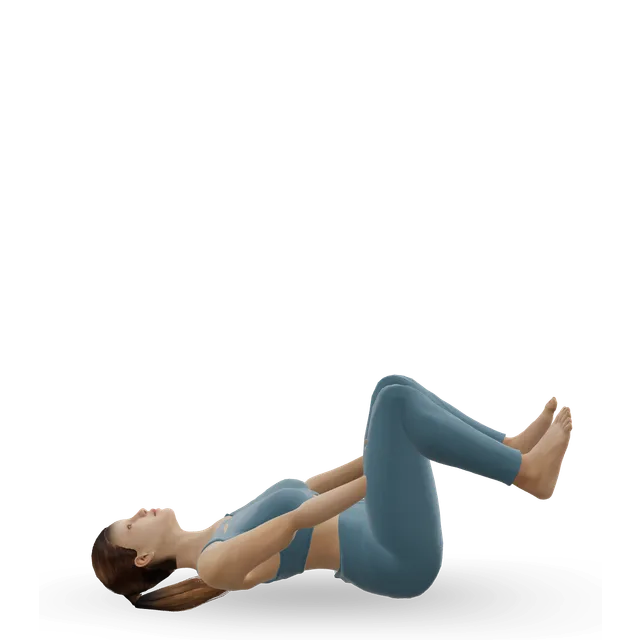
Double knee-to-chest stretch demonstrated on the 3D figure3D demoDouble knee-to-chest stretchBeginner · No equipment

Hold 20 to 30 seconds, 2 to 4 times · From the move page's dose (an editorial starting point). Keep it only if bending forward eases your pain, as our bending backwards guide says

Easier: Single knee-to-chest stretch · Harder: Overhead lat stretch at a bench (elbows on the bench)

Child's Pose (Balasana) demonstrated on the 3D figure3D demoChild's Pose (Balasana)Beginner · No equipment

Hold 1 to 3 minutes, breathing into the back ribs · From the move page's dose. Knees wide and a cushion under the chest if that's more comfortable

Harder: Extended puppy pose (Uttana Shishosana)

Cat-cow demonstrated on the 3D figure3D demoCat-cowBeginner · No equipment

8 waves, slower than feels natural · The move page's dose. Keep the arching half small for now

Harder: Half lord of the fishes (Ardha Matsyendrasana)

Hip windshield wipers demonstrated on the 3D figure3D demoHip windshield wipersBeginner · No equipment

10 slow passes side to side, 2 rounds · From the move page's dose (an editorial starting point)

Easier: Supine heel slide · Harder: 90/90 switch

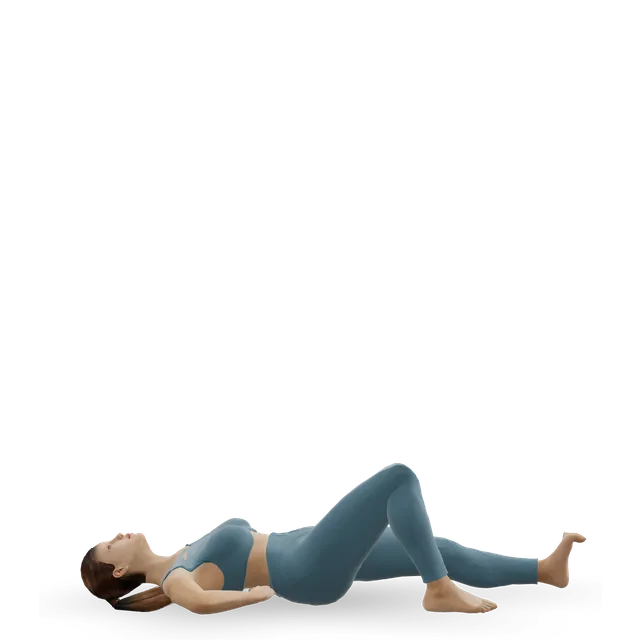
Pelvic tilt into bridge demonstrated on the 3D figure3D demoPelvic tilt into bridgeBeginner · No equipment

2 to 3 repetitions at a time, building to 2 sets of 8, 2 to 3 times a day · As in our back pain bending backwards guide (NHS inform's back exercise dose)

Harder: Glute bridge

Move on when: You can walk for 15 to 20 minutes, a class without the deep arches, lifts and big jumps leaves the back no worse the next morning, and standing upright is comfortable (editorial, as in our back pain guide).

Follow along: a timer, a cue and the next move, one step at a time.
Stage 2

Build the trunk and hips with the back still

About weeks 2 to 6, 2 or 3 sessions a week alongside lighter classes: strength around the lower back without arching it to the end of its range, and turning out from the hips. A young dancer moves on only when the physiotherapist says so.

Dead bug demonstrated on the 3D figure3D demoDead bugBeginner · No equipment

2 sets of 6 to 8 each side, lower back still · As in our back pain after yoga guide (editorial)

Easier: Dead bug heel taps · Harder: Forearm plank

Bird dog demonstrated on the 3D figure3D demoBird dogBeginner · No equipment

2 to 3 sets of 6 to 8 each side, 3 to 5 s holds, back level · As in our back pain after yoga and spondylolisthesis guides (editorial)

Easier: Bird dog, one limb at a time · Harder: Bear crawl

Glute bridge demonstrated on the 3D figure3D demoGlute bridgeBeginner · No equipment

2 to 3 sets of 10, lifting only to a straight line from shoulders to knees · As in our back pain after yoga guide (editorial): no arching at the top

Easier: Pelvic tilt into bridge · Harder: Single-leg glute bridge

Knee side plank demonstrated on the 3D figure3D demoKnee side plankBeginner · No equipment

3 holds of 15 to 20 s each side · As in our back pain after yoga guide (editorial). Side plank endurance was lower in dancers with back pain in a small study

Harder: Side plank

Clamshell demonstrated on the 3D figure3D demoClamshellBeginner · No equipment

3 sets of 12 to 15 each side · As in our runner's knee and knee pain after yoga guides (editorial). Turning the thigh out from the hip, as turnout should

Easier: Supine isometric hip abduction (belt press) · Harder: Lateral band walk

Hip-hinge practice demonstrated on the 3D figure3D demoHip-hinge practiceBeginner · No equipment

2 to 3 sets of 10 · As in our back pain after yoga guide (editorial). Bending and lifting from the hips with a long back

Harder: Kettlebell deadlift

Move on when: Every set feels controlled, a small standing arch is comfortable, and the back is no worse the next morning (editorial).

Follow along: a timer, a cue and the next move, one step at a time.
Stage 3

Bring arching and lifting back, a little at a time

About weeks 4 to 8, 2 or 3 sessions a week: arching on purpose, from small to larger, as our bending backwards guide does, and lifting with the load close. Adults with leg symptoms on arching leave the arching out and follow our spinal stenosis or sciatica guide.

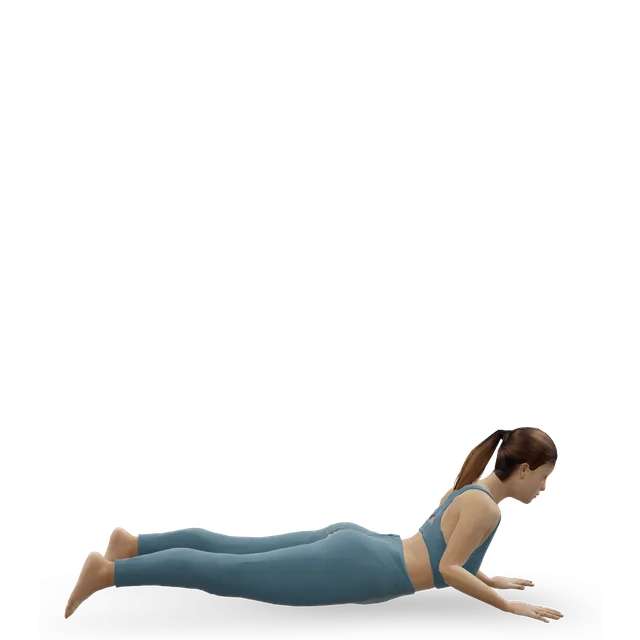
Sphinx pose (Salamba Bhujangasana) demonstrated on the 3D figure3D demoSphinx pose (Salamba Bhujangasana)Beginner · No equipment

Hold about 30 seconds, 3 to 4 times a week · As in our back pain bending backwards guide (an NHS trust leaflet's forearm back extension dose). Skip it if arching sends symptoms down a leg, as the move page says

Harder: Cobra pose (Bhujangasana)

Low cobra (Bhujangasana) demonstrated on the 3D figure3D demoLow cobra (Bhujangasana)Beginner · No equipment

3 holds of 3 to 5 breaths · As in our back pain bending backwards guide (editorial). Lift only as far as stays within the pain rule

Easier: Sphinx pose (Salamba Bhujangasana) · Harder: Cobra pose (Bhujangasana)

Locust pose (Salabhasana) demonstrated on the 3D figure3D demoLocust pose (Salabhasana)Beginner · No equipment

3 holds of 3 to 5 breaths · As in our back pain bending backwards guide (editorial). Lower the chest and legs if the back pinches, as the move page says

Easier: Seated upper-back lift (sit tall, shoulders back) · Harder: One-legged bow (half locust)

Side plank demonstrated on the 3D figure3D demoSide plankIntermediate · No equipment

3 holds of 20 to 30 s each side · As in our back pain after yoga guide (editorial)

Easier: Knee side plank · Harder: Side plank with leg lift

Kettlebell deadlift demonstrated on the 3D figure3D demoKettlebell deadliftBeginner · A kettlebell

3 sets of 8 to 10, light to start · As in our back pain after a chiropractor guide (from our back pain after flying and moving house guides). The weight held close, as a partner should be

Easier: Hip-hinge practice · Harder: Dumbbell Romanian deadlift

Half-kneeling Pallof press demonstrated on the 3D figure3D demoHalf-kneeling Pallof pressBeginner · A band + An anchor point

2 to 3 sets of 8 to 10 each side · As in our back pain after a chiropractor guide. Resisting a twist with the trunk; pad the knee, as the move page says

Harder: Pallof press

Move on when: The stage 3 moves pass the pain rule for a week, and a full class with small back bends and small jumps leaves the back no worse the next morning (editorial). Young dancers: bending forwards and backwards 10 times standing without pain, our spondylolisthesis guide's test, and the physiotherapist's clearance.

Follow along: a timer, a cue and the next move, one step at a time.
Stage 4

Back to full dancing: deep arches, lifts and jumps one at a time

From about week 6, often later, then for good: the deeper back bends, lifts, big jumps, inverts, heels and long sessions your dancing includes, one at a time, by the written steps below, with two strength sessions a week kept. No study has tested a return to dance after back pain; the order is our suggestion, built on the young athletes' trial's phased return and our bending backwards guide's ladder of back bends.

Cobra pose (Bhujangasana) demonstrated on the 3D figure3D demoCobra pose (Bhujangasana)Intermediate · No equipment

3 holds of 3 to 5 breaths · As in our back pain bending backwards guide (editorial). Clear it with a clinician if you have a diagnosed pars stress injury, as the move page says

Easier: Sphinx pose (Salamba Bhujangasana) · Harder: Upward-facing dog (Urdhva Mukha Svanasana)

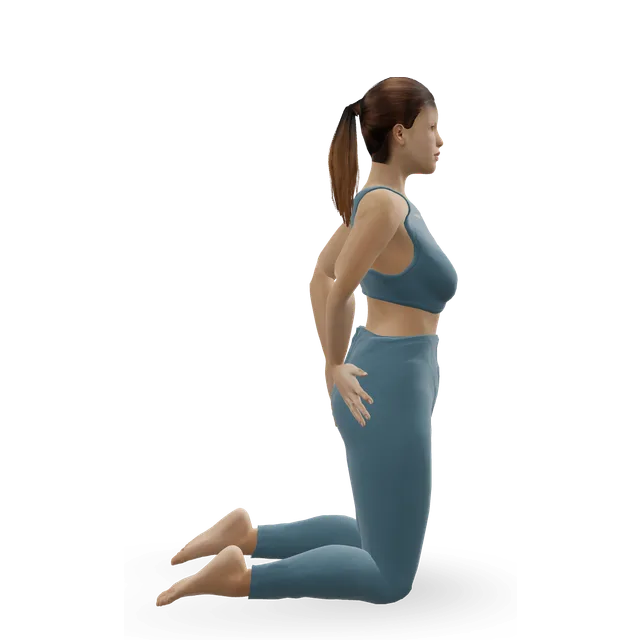
Camel pose (Ustrasana) demonstrated on the 3D figure3D demoCamel pose (Ustrasana)Intermediate · No equipment

2 or 3 holds of 3 to 5 breaths, hands on your lower back first · As in our back pain bending backwards guide (editorial). Only if your dancing needs deep back bends; come up slowly, as the move page says

Easier: Cobra pose (Bhujangasana) · Harder: Wheel pose (Urdhva Dhanurasana)

Dumbbell goblet squat demonstrated on the 3D figure3D demoDumbbell goblet squatIntermediate · A dumbbell

3 sets of 8 to 10 · As in our back pain after a chiropractor guide (from our back pain after flying and moving house guides)

Easier: Bodyweight squat · Harder: Barbell front squat

Single-leg Romanian deadlift demonstrated on the 3D figure3D demoSingle-leg Romanian deadliftAdvanced · A dumbbell

3 sets of 8 each leg · As in our runner's knee guide (editorial). Balance on one leg with a long back, as in an arabesque

Easier: Dumbbell Romanian deadlift

Snapdown to athletic landing demonstrated on the 3D figure3D demoSnapdown to athletic landingBeginner · No equipment

2 sets of 5, holding each landing for 2 s · As in our knee pain when jumping guide (editorial): soft, quiet landings first

Harder: Box drop landing

Pogo hops demonstrated on the 3D figure3D demoPogo hopsIntermediate · No equipment

3 sets of 10 on two legs · As in our knee pain when jumping guide (the first jumping dose of the largest jumper's knee trial). Small springs before big jumps

Easier: Ankle bounces (mini pogo) · Harder: Single-leg pogo hops

Move on when: Our suggestion: each element has passed the pain rule for a week before the next comes back. Keep two strength sessions a week and at least one full rest day. If it flares after a big session, go back a stage for a few days, not to bed, then build again.

Follow along: a timer, a cue and the next move, one step at a time.

What to change for now

What to do now (written steps)

Our 3D figure can't show these. They come from the NHS and a dance medicine review; no trial has tested what to do after back pain from dancing, and where a step is our suggestion, it says so.

  • 1. Keep moving: short walks and the stage 1 moves. The NHS says don't stay in bed for long periods.
  • 2. A heat pack for stiffness or spasm and, if it suits you, ibuprofen, as the NHS advises; paracetamol on its own isn't recommended for back pain.
  • 3. Change the next class, don't cancel dancing: for a few days to 2 weeks, do the parts that don't hurt, without the deep back bends, big jumps, lifts, inverts or floor spins, in a shorter or lighter session (our suggestion; a dance medicine review advises keeping injured dancers in parts of class).
  • 4. Tell your teacher, partner or rehearsal director, so the arching, lifting or jumping can change for a while (our suggestion). More than 15% of injured professional dancers hadn't reported their injury.
  • 5. A teenager whose back hurts more arching back: stop the arching and get it checked by a GP or sports physiotherapist.
  • 6. Check the warning signs: numbness around your bottom, bladder or bowel changes, leg weakness, or back pain with a fever aren't ordinary dance aches.

Sources 1, 67, 65

Next time: hours, warm-ups, lifts, arching, heels, floors and pole (written steps)

The 3D figure can't show these. They are our suggestion unless a source is named, and none has been tested as a way to prevent back pain in dancers.

  • 1. Build hours gradually: add class, rehearsal or social dancing time a little at a time at the start of a term, a production or a new style, keep at least one full rest day a week, and have lighter weeks after performances (built on the links between more hours and more injury).
  • 2. Warm up actively, with strength, balance and a raised heart rate, not only stretching and marking steps, which went with fewer overuse injuries in ballet dancers. Our dance warm-up workout follows this pattern.
  • 3. Lifts: keep your partner close, lift with the legs and a braced trunk rather than snapping the back straight, and limit the number of lifts in a session, as a lift study's findings suggest. Practise new lifts with a teacher, fresh rather than at the end of a long rehearsal.
  • 4. Arching: arch from the upper back as well as the lower, build deep back bends back gradually over weeks, and keep trunk strength work going, as our bending backwards guide sets out.
  • 5. Heels: no study links dancing in heels to back pain, so keep heels if your style needs them; for a sore back, practise in flatter shoes, bring heel height and heel time back gradually, and change into flats between dances on a long night.
  • 6. Floors: dance on a sprung or shock-absorbing floor where you can. In a touring ballet company, the stage floor whose shock absorption varied most had the highest injury rate. Avoid long sessions on concrete.
  • 7. Pole and aerial work: come back after an injury only when you've fully recovered, since returning early went with re-injury; our pole dancing page covers conditioning and landing mats.
  • 8. If it doesn't settle, get help from someone who works with dancers. In England, a GP can refer professional and pre-professional dancers to an NHS Dance Injury Clinic.

Sources 23, 24, 10, 63, 19, 70, 14, 68

A young dancer with back pain on arching

Stop the arching training and get it checked by a GP or sports physiotherapist, as our spondylolisthesis and children's back pain guides say. If it is a stress fracture, the usual care is time off the activities that hurt, then rehabilitation: bracing didn't change outcome in a meta-analysis, and in the 2026 trial, starting physiotherapy within a week did better than resting first. The physiotherapist decides when arching and dancing come back; our spondylolisthesis guide's rule, in the pain rule above, keeps the back pain-free.

Sources 52, 54

Dancing comes back (written steps)

Our suggestion; no study has tested a return to dance after back pain. It follows the shape of the young athletes' trial (rest from the painful activity, guided exercise, then a phased return) and our dance page's advice on hours.

  • 1. Class first, at a gentler level: barre, centre or a social dance without the deep arches, lifts, big jumps, inverts or floor spins.
  • 2. Small arches, small jumps and turns, then the bigger ones, one change at a time, judged by the next morning.
  • 3. Lifts with a familiar partner, the lift close to your body, a few at a time, fresh rather than at the end of the day.
  • 4. Rehearsals at your usual length, then performances, competitions or a full night out. Heels, inverts and power moves come back last, with practice in flats or on the floor first.
  • 5. Keep two strength sessions a week (the stage 2 and 3 moves, or our strength workout for dancers) and at least one full rest day.

Source 54

Positions to swap, and why

Habit or positionWhy it mattersInstead
Deep back bends, cambrés or walkovers every class while it hurtsArching is the common trigger, and repeated end-range arching is linked with stress fractures in young athletes, as our bending backwards guide says.Small arches shared with the upper back, such as the sphinx.Try: Sphinx pose (Salamba Bhujangasana)
Lifting a partner at arm's length, or snapping the back straightCompression on the lower back rose with the partner further away and a faster trunk movement in a lift study.Lift close with a braced trunk, and practise the pattern with a kettlebell.Try: Kettlebell deadlift
Many lifts or big jumps late in a long rehearsalProfessional dancers blame workload and tiredness for many injuries.Fewer lifts and big jumps, done while fresh; small springs first.Try: Pogo hops
Stretching harder to release a sore backStretching didn't prevent injuries in sport, and dancers rarely lack range.Trunk strength, such as the bird dog.Try: Bird dog
A teenager dancing through weeks of back pain on archingIt can be a stress fracture, and in young athletes, starting guided physiotherapy early did better than waiting.Stop arching and get checked; gentle trunk work the physiotherapist allows.Try: Dead bug
Hours in heels on a sore backHeels haven't been shown to arch the back, but a long night in heels is hard muscle work (our reading).Flats between dances, and heel time built back gradually.
Going back to pole inverts or aerial work before you've fully recoveredReturning early went with re-injury in pole dancers.A graded return with trunk strength first, such as side planks.Try: Side plank
Resting in bed until it stopsThe NHS says don't stay in bed for long periods.Short walks through the day.Try: Treadmill walking
Dancing through pain that changes how you moveEarly care of overuse problems went with fewer serious injuries and fewer days lost in a dance company.Tell your teacher, and see a physiotherapist early.

Routines to follow

More moves for this area

Questions people ask

Why does my lower back hurt after dancing?

Usually ordinary back pain or tired muscles after more arching, lifting, jumping or hours than your back is used to. Low back pain is common in dancers, about 3 in 4 over a year, but it rarely stops dancing for long. Keep moving, use heat, and make the next session shorter or gentler.

Is back pain normal for dancers?

It's common, but it isn't something you have to put up with: most episodes are moderate, a median of 4 out of 10, and settle. Pain that keeps coming back, changes how you dance or comes with leg symptoms needs a physiotherapist or GP.

Why does my back hurt after dancing in heels?

Heels haven't been shown to arch the lower back: in standing and walking studies the curve flattened or didn't change. A long night in heels is hard work for the legs and trunk, though, so change into flats between dances and build heel time back gradually.

Why does my back hurt after pole dancing?

Climbs, inverts and holds load the trunk and shoulders, but the back is about 1 in 10 pole injuries. Build inverts back gradually, keep trunk strength work going, and come back only when you've fully recovered: returning early went with re-injury.

My teenager's back hurts after dance. Should I worry?

Usually it's a sore muscle, but back pain that is worse arching back and lasts more than a couple of weeks can be a stress fracture in the spine, the commonest bone injury in young dancers at one clinic. See a GP or sports physiotherapist; it usually heals well without surgery, and most young athletes return to their sport.

Should I stretch my back after dancing?

Gentle movement such as cat-cow or knees to chest is fine if it eases the pain, but more stretching isn't the answer to back pain in dancers; strength is. Stretching didn't prevent sports injuries in trials.

Can I keep dancing with back pain?

Usually yes, with changes: do the parts of class that don't hurt, leave out the deep arches, lifts and big jumps for a while, and judge each session by the next morning. A teenager with pain on arching should stop arching until it's checked.

How long will it take to get better?

Ordinary back pain usually improves within a few weeks, and NHS inform says most problems improve within 6 weeks. A young dancer's stress fracture takes longer: in a 2026 trial, young athletes met the return-to-sport criteria after a median of about 2 and a half to 4 months.

Why does my upper back hurt after dancing?

Often lifts, partnering, pole or floor work: in a professional ballet company, lifting was a leading injury mechanism and the small joints of the upper back the commonest single injury site. Gentle rotation and time usually help; our upper back pain guide covers it.

Is any dance style bad for your back?

No style is bad for your back; each loads it differently. Ballet arches and lifts, contemporary and hip hop add floor work, twists and falls, and pole adds inverts. Build up the hours and the hardest moves gradually and keep strength work going.

When should I worry?

Call 999 for numbness around your genitals or bottom, new bladder or bowel trouble, or weakness or numbness in both legs. Get a same-day appointment for back pain with a fever or feeling unwell, severe pain that is getting worse quickly, or leg weakness that is getting worse; see a GP for pain spreading below the knee, a teenager's pain on arching that lasts, or pain that hasn't improved after a few weeks. In the US, call 911 where this page says 999.

Related exercise guides

Other pain guides

Sources

  1. NHS · Back pain
  2. Swain 2019 · Low back pain and injury in dance: 50 studies (systematic review, J Orthop Sports Phys Ther)
  3. Henn 2020 · Low back pain and injury in ballet, modern and hip hop dancers (systematic review, Int J Sports Phys Ther)
  4. Henn 2022 · How severe low back pain is, and how it is managed, in 289 adult US dancers (survey, J Dance Med Sci)
  5. Swain 2018 · Low back pain in 119 pre-professional and professional dancers over 9 months (prospective cohort study, Phys Ther Sport)
  6. Vassallo 2019 · Injury rates in recreational, student and professional dancers (systematic review, J Sports Sci)
  7. Domene 2018 · Injuries in non-professional salsa dancers over a year (injury surveillance study, J Phys Act Health)
  8. Hincapié 2008 · Injuries and pain in dancers (systematic review, Arch Phys Med Rehabil)
  9. Anand Prakash 2024 · The burden of injury in dancers (umbrella review, Phys Sportsmed)
  10. Junge 2024 · Health problems in professional ballet dancers: 1,627 weekly reports over a season (prospective cohort study, Sports Med Open)
  11. van Winden 2019 · Injuries in 134 contemporary dance students over a year (prospective cohort study, BMJ Open Sport Exerc Med)
  12. Smith 2015 · Injury in ballet (systematic review, Orthop J Sports Med)
  13. Jubb 2019 · Injury patterns in hip hop dancers at a London clinic (clinic case series, J Dance Med Sci)
  14. Szopa 2022 · Injury and re-injury in female pole dancers (cross-sectional survey, Sci Rep)
  15. Scott 2024 · Injuries in pole dancers (systematic review, Med Probl Perform Art)
  16. Lee 2020 · Pole dance injuries in a global online survey (survey, J Sports Med Phys Fitness)
  17. Keijsers 2023 · Injuries in ballroom DanceSport (retrospective survey, J Dance Med Sci)
  18. Henn 2023 · Spinal movements, impacts and partnering in 65 ballet, modern and hip hop videos (video analysis, J Dance Med Sci)
  19. Alderson 2009 · Lower back loads in 8 male dancers performing ballet lifts (laboratory study, J Dance Med Sci)
  20. Drysdale 2023 · Injuries in an Australian professional ballet company over 4 years (cohort study, J Orthop Sports Phys Ther)
  21. Campbell 2024 · Low back beliefs of male pre-professional and professional dancers (qualitative study, J Dance Med Sci)
  22. Smith 1989 · Injuries in elite pair skaters and ice dancers (survey, Am J Sports Med)
  23. Bronner 2018 · Injuries in professional modern dancers over 15 years (prospective cohort study, J Sports Sci)
  24. Kadel 1992 · Stress fractures in ballet dancers (observational study, Am J Sports Med)
  25. Russell 2010 · High heels and the low back curve (narrative review, J Chiropr Med)
  26. Russell 2012 · High heels and the low back curve when standing, in 50 young adults (laboratory study, J Chiropr Med)
  27. Opila 1988 · Posture standing barefoot and in high heels (laboratory study, Spine)
  28. Baaklini 2017 · High-heeled walking and the low back curve in 40 women (laboratory study, Gait Posture)
  29. Schroeder 2018 · High heels, the pelvis and the low back curve in women used to heels (laboratory study, Gait Posture)
  30. Muyor 2017 · Spinal posture and pelvic tilt in professional Latin dancers (cross-sectional study, J Back Musculoskelet Rehabil)
  31. Silva 2023 · Markers of muscle damage after one high heels dance class in 16 young women (experimental study, Transl Sports Med)
  32. Ojofeitimi 2012 · Injuries in hip hop dancers (survey, Scand J Med Sci Sports)
  33. Yin 2016 · Dance injuries in children and teenagers at a sports clinic (cross-sectional study, PM R)
  34. Micheli 1995 · Back pain in 100 young athletes and 100 adults (case series, Arch Pediatr Adolesc Med)
  35. Selhorst 2019 · Spondylolysis in 1,025 non-elite adolescent athletes with back pain (retrospective study, Clin J Sport Med)
  36. American Academy of Orthopaedic Surgeons (AAOS), OrthoInfo · Spondylolysis and spondylolisthesis
  37. van Rijn 2021 · Hypermobility and injuries in 185 pre-professional contemporary dancers (prospective cohort study, J Clin Med)
  38. Armstrong 2020 · The Beighton score and injury in 82 university dancers (prospective cohort study, J Sport Rehabil)
  39. Dondin 2023 · Hypermobility, fatigue and injury in 73 pre-professional ballet dancers (cross-sectional study, J Dance Med Sci)
  40. NHS · Joint hypermobility syndrome (past its review date: reviewed August 2023, review due August 2026)
  41. Kenny 2016 · Risk factors for injury in pre-professional dancers (systematic review, Br J Sports Med)
  42. Swain 2014 · Trunk muscle endurance and low back pain in female dance students (cross-sectional study, J Dance Med Sci)
  43. Smyers Evanson 2018 · Back muscle size in ballroom dancers with and without low back pain (cross-sectional study, Int J Sports Med)
  44. NHS inform · Back problems
  45. NHS · Sciatica
  46. NHS · Spondylolisthesis
  47. NHS · Septic arthritis
  48. NICE · Low back pain and sciatica in over 16s: assessment and management (NG59, guideline)
  49. Tofte 2017 · Imaging spondylolysis in children: 13 studies (systematic review, Spine)
  50. Masci 2006 · The one-legged arching test and MRI for spondylolysis (diagnostic study, Br J Sports Med)
  51. Alqarni 2015 · Clinical tests for spondylolysis and spondylolisthesis: 4 studies (systematic review, Phys Ther Sport)
  52. Klein 2009 · Treatment without surgery for spondylolysis and low-grade slips in young people (meta-analysis of observational studies, J Pediatr Orthop)
  53. Grazina 2019 · Return to play after spondylolysis in athletes (systematic review, Phys Ther Sport)
  54. Selhorst 2026 · Physiotherapy straight away or rest first for spondylolysis in 64 adolescent athletes (multicentre randomised trial, Br J Sports Med)
  55. Roussel 2014 · A conditioning programme or health promotion in 44 pre-professional dancers (RCT, Man Ther)
  56. Vera 2020 · An injury prevention programme in a professional ballet company (randomised controlled investigation, Orthop J Sports Med)
  57. Allen 2013 · An injury audit and conditioning programme in a ballet company over 3 years (prospective study without a comparison group, Clin J Sport Med)
  58. Dang 2023 · Physical fitness training and dance injury (systematic review, Int J Sports Med)
  59. Critchley 2026 · Injury prevention strategies in dance (systematic review, J Dance Med Sci)
  60. Lauersen 2014 · Exercise to prevent sports injuries: 25 trials (systematic review and meta-analysis, Br J Sports Med)
  61. Koutedakis 2004 · Thigh strength training in 22 professional ballerinas (randomised trial, J Strength Cond Res)
  62. Overley 2018 · Return to play in adolescent athletes with spondylolysis (meta-analysis, Global Spine J)
  63. Kaufmann 2022 · Neuromuscular or traditional ballet warm-ups and overuse injuries in 192 ballet dancers (cross-sectional survey, J Dance Med Sci)
  64. Kolokythas 2025 · The 11+ Dance warm-up and fitness in adolescent ballet dancers (randomised equivalence trial, J Dance Med Sci)
  65. Jacobs 2017 · Injury in professional dancers (international cross-sectional study, Clin J Sport Med)
  66. Bronner 2003 · Early injury management in a modern dance company (before-and-after study, Am J Sports Med)
  67. Gottschlich 2011 · Spine injuries in dancers (narrative review, Curr Sports Med Rep)
  68. National Institute of Dance Medicine and Science (NIDMS, UK) · NHS Dance Injury Clinics
  69. Smith 2017 · Should exercise be painful in long-lasting muscle and joint pain? 7 trials (meta-analysis, Br J Sports Med)
  70. Hopper 2014 · Dance floors and injuries in a touring professional ballet company (cohort study, J Sci Med Sport)
  71. NHS · Abdominal aortic aneurysm (past its review date: reviewed June 2023, review due June 2026)
  72. NICE NG234 · Spinal metastases and metastatic spinal cord compression (2023)
  73. NHS · Foot drop
  74. NHS · Ankylosing spondylitis (past its review date: reviewed January 2023, review due January 2026)
  75. Leicestershire Partnership NHS Trust · Leg pain (thigh and calf): physiotherapy leaflet (2026)
  76. NHS · Falls
  77. NHS · Heat exhaustion and heatstroke
  78. Royal Osteoporosis Society · Osteoporosis symptoms
  79. AAOS OrthoInfo · Osteoporosis and spinal fractures
  80. Gregson 2025 · The 2024 UK clinical guideline for the prevention and treatment of osteoporosis (NOGG, Archives of Osteoporosis)
  81. NICE NG259 · Osteoporosis: risk assessment (2026)
  82. Gloucestershire Hospitals NHS Foundation Trust · Caring for a stress fracture (emergency department leaflet)
  83. Mountjoy 2023 · IOC consensus statement on relative energy deficiency in sport, REDs (BJSM; a correction was published in 2024 that we couldn't read)
  84. Gordon 2017 · Functional hypothalamic amenorrhoea: Endocrine Society clinical practice guideline (J Clin Endocrinol Metab)
  85. Fredrickson 1984 · The natural history of spondylolysis and spondylolisthesis (cohort of 500 children, J Bone Joint Surg Am)
  86. Beutler 2003 · Spondylolysis and spondylolisthesis: 45-year follow-up (cohort, Spine)

Exercise education, not a diagnosis or treatment plan. It is written from the guidelines and studies listed above; review by a clinician is pending. If your pain follows an injury, is severe, is getting worse, or comes with any warning sign listed on this page, get it assessed. Health disclaimer.