Sports training
Dance fitness strength and landing workout: calves, ankles, hips, knees, trunk and quiet landings
In Zumba surveys the knees and ankles lead the injuries, aerobic dance studies put nearly two-thirds of injuries in the shins, feet and ankles, and people who take more classes a week are injured more often. No prevention programme has been tested in dance fitness, but in other sports strength training cut injuries to under a third. This session takes its exercises and doses from our strength workout for dancers and knee control warm-up: calves and ankles, hips and knees that track over the toes, a strong trunk, and landings that are quiet and controlled. You need a step 15 to 20 cm high, a light resistance loop band, a dumbbell or kettlebell, a mat and a wall.
Warm-up
- Standing march60 sBeginner · Hip flexors, Abs, Glutes · 3D demoSwing the armsEasier: Seated marchHarder: Standing band hip flexion
- Ankle CARs (controlled articular rotations)5 circles each way, each ankleBeginner · Calves, Shins · 3D demoSlow and bigEasier: Ankle circlesHarder: Toes-tucked kneeling (toe squat)
- Standing hip CARs3 slow circles each legBeginner · Glutes, Hip flexors, Hip abductors · 3D demoHold a wallEasier: Hip circles on all foursHarder: 90/90 hip lift-off
- Beginner · Quads, Glutes, Hamstrings · 3D demoFeet parallelEasier: Sit squat (partial squat)Harder: Dumbbell goblet squat




Feet and calves
Rest 30 to 45 s
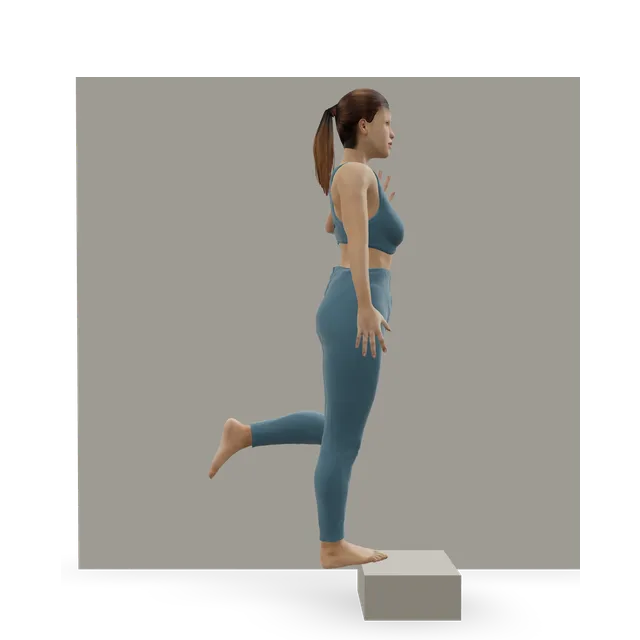
- Single-leg calf raise from a step2 × 12 each legIntermediate · Calves · 3D demoRise high over the big toe and lower for 3 secondsEasier: Slow calf raiseHarder: Single-leg pogo hops
- Band ankle eversion3 × 10 each footBeginner · Calves, Shins · 3D demoTurn the sole out against the band, then return slowlyEasier: Isometric ankle eversion against a wallHarder: Single-leg stand
- Tibialis raise3 × 10Beginner · Shins · 3D demoBack against a wall; lift the toes, then lower them slowlyHarder: Single-leg tibialis raise



Hips and knees
Rest 60 to 90 s after the squats, 30 to 45 s otherwise
- Lateral band walk2 × 10 steps each wayBeginner · Hip abductors, Glutes, Quads · 3D demoKnees over the toesEasier: Hip abduction machineHarder: Lateral band walk, band at the feet
- Dumbbell goblet squat3 × 8 to 10Intermediate · Quads, Glutes, Abs · 3D demoKnees over the middle toesEasier: Bodyweight squatHarder: Barbell front squat
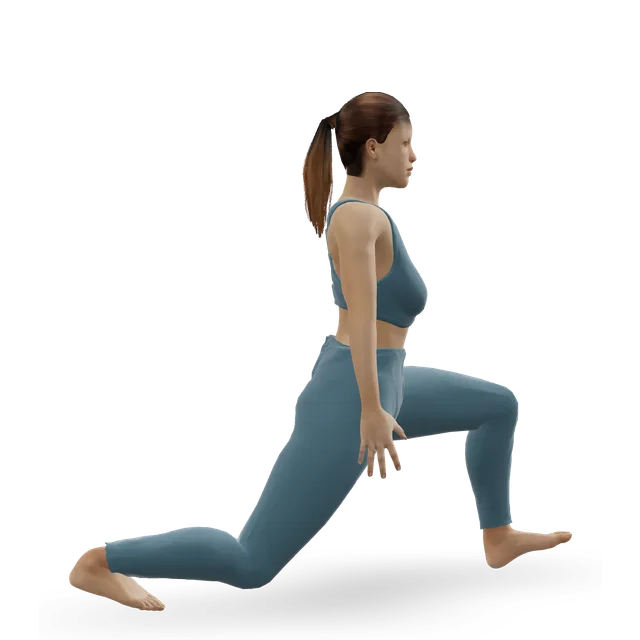
- Reverse lunge2 rounds of 8 each sideIntermediate · Quads, Glutes, Hamstrings · 3D demoFront knee over the middle of the footEasier: Split squatHarder: Split squat with dumbbells
- Patrick step-down3 × 10 each legIntermediate · Quads, Glutes, Hip abductors · 3D demoFrom a 15 to 20 cm step, slowly, with the pelvis levelEasier: Bodyweight squatHarder: Skater squat



Trunk
Rest 30 s
- Side plank2 × 30 s each sideIntermediate · Abs, Hip abductors, Shoulders · 3D demoHips highEasier: Knee side plankHarder: Side plank with leg lift
- Dead bug2 × 20Beginner · Abs, Hip flexors · 3D demoLower back pressed downEasier: Dead bug heel tapsHarder: Forearm plank


Landings
- Snapdown to athletic landing2 × 5, hold each landing for 2 sBeginner · Quads, Glutes, Hamstrings · 3D demoQuiet landing, knees over the middle toes; squeeze your pelvic floor just before you land. Leave out with leaking, a prolapse, in pregnancy, or with a painful knee or ankleHarder: Box drop landing
- Single-leg hop and stick3 × 5 each legIntermediate · Quads, Glutes, Calves · 3D demoOnly once two-leg landings are quiet; land through the foot to the heel and holdEasier: Standing broad jump with stuck landingHarder: Alternate-leg bounding


Pelvic floor
- Pelvic floor exercise (Kegel)8 holds of up to 10 s, then 8 quick squeezesBeginner · Pelvic floor · 3D demoRelax fully between squeezes

Cool-down
- Wall calf stretch (gastrocnemius)20 to 30 s each sideBeginner · Calves · 3D demoBack heel downEasier: Seated calf stretch with a towelHarder: Heel-on-step calf and hamstring stretch
- Standing quad stretch20 to 30 s each sideBeginner · Quads, Hip flexors · 3D demoHold a wallHarder: Couch stretch


Tips
- Twice a week, on days without a class or before an easy one (our suggestion).
- Build up your classes one at a time: in a survey, Zumba dancers who'd been injured took more classes a week than those who hadn't.
- If your knee hurts, follow the pain rule in our knee pain guide, and stop for a knee that swells, locks or gives way.
- Instructors need this most: in one survey they had about 7 times the odds of injury of the people they taught, and injuries rose with teaching hours in another.
- Older or unsteady? Hold a support for the lunges and step-downs, and swap the landings for the balance moves in our strength and balance exercises for seniors.
- Shoes: Zumba recommends cross-training or aerobic shoes with low-traction soles for turning. That's the brand's advice; no trial has tested shoes in dance fitness.
The doses are suggested starting points, not a prescription. Choose a range you can control and stop for sharp or increasing pain, numbness or tingling. Get individual advice after an injury or surgery, or if you are pregnant or managing a health condition.
Guides that recommend it
Find more moves like these
More sports training

Injury prevention exercises for runners
Foot, calf, balance and hop exercises taken from the running trials with positive results, in a 25-minute home routine for 3 or 4 days a week.
25 minBeginner11 movesOther / check instructions, A bench or box


Plyometrics for runners
A 20-minute hop and bound session for runners: ankle bounces to pogo hops, one-leg hops and bounding, building foot contacts slowly over 10 weeks.
20 minIntermediate8 movesCardio machine


Strength workout for cyclists (gym)
A 50-minute gym session for cyclists: heavy squats, one-leg presses, hip flexion and calf raises as in the cycling trials, plus jumps for bone.
50 minIntermediate13 movesCardio machine, A barbellQuestions people ask
How long does the dance fitness strength and landing workout: calves, ankles, hips, knees, trunk and quiet landings take?
About 40 minutes, including any warm-up and cool-down listed. Shorten it by doing fewer rounds; lengthen it by adding one.
What equipment do I need?
You need: A wall, A step, A band, A bench or box, A dumbbell. Each move links to its guide, where you can find an alternative if you are missing something.
Is it suitable for me?
It is written at intermediate level. 14 of its 18 moves have an easier option listed beside them; use them freely.
How do I make it easier or harder?
Use the easier or harder option listed under each move, change the number of rounds, or adjust the rest. Progress one change at a time.