Pain guide · Back pain

Lower back pain on the elliptical: leaning on the handles, stride, the ramp, stenosis and what helps

Lower back pain on the elliptical (cross trainer) is usually ordinary back pain meeting a longer, harder or steeper session than your back is used to, often with a hunched lean on the handles as you tire. The machine takes away impact, but in a lab study it kept the lower back a little more bent and turning than walking does, stride after stride. Where and how it hurts is the best clue: an ache across the lower back is usually ordinary back pain, buttock or leg heaviness that eases when you sit or bend forward is the pattern of spinal stenosis, pain down one leg below the knee is sciatica, and pain between the shoulder blades is the upper back. Standing tall with a light grip, shorter sessions, moderate resistance and a low ramp usually help, and no study shows the elliptical harms backs.

This guide starts with the signs that need help, from a 999 call for numbness around your genitals or bottom, new bladder or bowel trouble, weakness in both legs or chest pain on the machine, to a same-day check through the National Health Service's 111 line (NHS 111) or a general practitioner (GP) for back pain with a fever, leg weakness that is getting worse or sudden breathlessness. It then maps the causes by where and how it hurts, explains what the lab studies of the elliptical show, and don't, about posture, the handles, stride and the ramp, shows how to change your sessions today, and gives a three-stage plan with a 3D demo of every move, back to your usual workouts.

When to get help first

Exercise is for pain that has been checked or is clearly mild and settling.

Get urgent medical help if

  • Call 999 or go to A&E: loss of feeling or numbness around the genitals or bottom, new trouble peeing or controlling your bladder or bowels, changes in genital sensation during sex or problems with erections or orgasm, or pain, tingling, weakness or numbness in both legs. These are signs of cauda equina syndrome, which needs treating in hospital urgently. Don't drive yourself.
  • Call 999 or go to A&E: leg pain with numbness around the genitals or bottom, new trouble starting or controlling peeing, not knowing when you need to poo or losing control of it, sciatica in both legs, or weakness or numbness in both legs that is severe or getting worse. These can be signs of cauda equina syndrome, which needs treating in hospital as soon as possible.
  • Call 999 or go to A&E: back pain with chest pain, or back pain that started after a serious accident, such as a car crash.
  • Call 999: chest pain that started suddenly, or spreads to your arm, neck or jaw, or your chest feels tight. This could be a heart attack. Do not drive yourself to A&E.
  • Get help from NHS 111: you're suddenly more short of breath than usual; you have chest pain and you feel sick or are being sick; or you have chest pain and you feel like your heart is racing, going too slowly, skipping a beat or fluttering.
  • Get help from NHS 111: pain or tightness in your chest, neck, shoulders, jaw or arms that comes and goes, often brought on by exercise, stress, emotion or cold and easing after a few minutes' rest. It can be angina, a sign of a heart problem. If you've been diagnosed with angina, get help from NHS 111 too if it feels worse than before, is happening more often, lasts longer or happens when you're resting.
  • Someone who faints while exercising, or who has fainted and can't be woken within a minute, has chest pain or a pounding, fluttering or irregular heartbeat, or hasn't fully recovered.
  • Call 999 or go to A&E if breathing suddenly becomes difficult, if pain in your chest or upper back comes on suddenly with breathlessness or a very fast heartbeat, or if someone passes out. Do not drive yourself. It can be a blood clot that has reached the lungs.
  • Call 999: sudden, severe pain in the tummy or back, which can come with breathlessness, pale or grey skin, or collapse. It can be a burst abdominal aortic aneurysm, most common in men aged 65 or over and in people who smoke or used to smoke.
  • Same day (GP or NHS 111): back pain and you feel hot, cold, shivery or generally unwell, or severe pain that starts suddenly or is getting worse quickly.
  • Ask for an urgent GP appointment or get help from NHS 111 if you think you may have a kidney infection (often pain in your lower back or side, with burning or stinging when you pee or needing to pee more often) and you have a very high temperature or feel hot, cold or shivery, a temperature below 36C, pain in the lower tummy or in the back just under the ribs, blood in your pee, you feel or are sick, you haven't had a pee all day, or you're pregnant. Call 999 or go to A&E if you're confused, drowsy or have difficulty speaking.
  • Call 999: after a fall, you may have hurt your head, neck, back or hip, or you cannot get up.
  • Same day (NHS 111): back pain after a new, significant injury in the last 7 days, such as a fall from a height (off a box, a bar or rings) or a direct blow to the back.
  • Same day: leg weakness that is getting worse; new leg pain with a history of cancer, HIV, TB or inflammatory arthritis; or leg pain with a fever, feeling unwell, loss of appetite, unexplained weight loss or night sweats.
  • Same day: leg weakness that is getting worse.
  • Same day (urgent GP appointment or NHS 111): new difficulty lifting the front of your foot or toes (foot drop), or a foot that slaps down or catches as you walk, especially if it is getting worse. Weakness in both legs, or with numbness around the genitals or bottom or bladder or bowel changes, is the 999 emergency above.
  • Call 999 or go to A&E: a leg that is suddenly cold, pale, numb, weak or very painful. A sudden loss of blood supply to a leg is a vascular emergency.
  • Contact a GP immediately (or NHS 111 if you can't): burning leg or foot pain that carries on at rest, pale skin, wounds on the feet or legs that do not heal, or toes that go cold, numb, then red or black.
  • Same day: you have or have had cancer, and new back pain that is severe and doesn't let up, is getting steadily worse, is worse at night and disturbs your sleep, is worse when you cough, sneeze or strain, or comes with tenderness over the spine. Contact your cancer team or GP urgently. With cancer, new weakness, difficulty walking, numbness or bladder or bowel problems are an emergency.
  • Contact your GP or midwife urgently: back pain in the second or third trimester of pregnancy, or back pain in pregnancy with a fever, vaginal bleeding, pain when you pee, or pain in one or more of your sides (under your ribs). It could be early labour or an infection.

See a doctor or physiotherapist if

  • Back pain that hasn't improved after a few weeks of looking after it at home, stops you doing day-to-day activities, worries you, or you're struggling to cope.
  • Pain, tingling or numbness spreading below the knee that isn't settling after a few weeks, is getting worse or stops your normal activities: see a GP.
  • Pain that is not improving after a few weeks, is getting worse, or is stopping your normal activities.
  • Leg pain on standing and walking that eases when you sit or bend forward: possible lumbar spinal stenosis, which needs assessing. Exercise is a first-line treatment once it is diagnosed.
  • Buttock or leg pain, heaviness or tingling that comes on when you stand or walk and only eases when you sit or bend forward, or the distance you can walk keeps shrinking: see a GP or physiotherapist (possible spinal stenosis). Leg weakness that is getting worse, or numbness around your genitals or bottom, is urgent (above).
  • A change in your ability to walk, including balance problems or weakness or heaviness in your legs: see a GP. If it's new or getting worse quickly, contact your GP practice urgently, or NHS 111 if it's closed.
  • Leg ache when you walk that goes after a few minutes' rest: possible peripheral arterial disease (narrowed leg arteries), especially if you smoke or have diabetes.
  • Recurring leg pain when you walk or exercise: see a GP, even if you think it's just your age. The NHS says many people mistakenly think this is part of growing older.
  • Pain that doesn't improve with rest or is worse at night, or pain that is worse when you sneeze, cough or poo.
  • Unexplained weight loss, or a lump, swelling or change in the shape of your back.
  • Pain at the top of the back, between the shoulders, rather than in the lower back.
  • Sudden new back pain after a minor fall, lift, cough or sneeze, from 50 or past the menopause, or if you take long-term steroid tablets; or height loss, a curved spine or a change in posture: see a GP. It can be a spinal fracture.
  • Back pain that started before 45 and has lasted more than 3 months, especially if it started before 35, wakes you in the second half of the night, comes with buttock pain, gets better with movement or within 48 hours of anti-inflammatory painkillers, or you have or have had arthritis, pain where a tendon attaches to bone (enthesitis) or psoriasis, or a parent, brother, sister or child with spondyloarthritis. These can point to inflammatory back pain (axial spondyloarthritis, such as ankylosing spondylitis). The National Institute for Health and Care Excellence (NICE) asks GPs to refer people with 4 or more of these 9 features to a rheumatologist, and to do a blood test for the HLA-B27 gene marker if exactly 3 are present, referring if it is positive.
  • A teenager whose back pain is worse arching back and has lasted more than a couple of weeks: get it checked by a GP or sports physiotherapist. It can be a stress fracture of the spine (spondylolysis).
  • A strain that is getting worse, or isn't feeling better after looking after it yourself: see a GP or physiotherapist. In many areas you can refer yourself to physiotherapy.
  • Short of breath on the elliptical more than you used to be at the same setting: see a GP (our suggestion). The NHS lists shortness of breath that gets worse when you've been doing your normal activities among its reasons to see a GP.

Where does it hurt?

Location narrows the likely causes; it does not diagnose.

An ache across the lower back, on one or both sides, that builds through a session and eases when you stop, with no leg symptoms

Ordinary back pain, by far the commonest kind in our reading, though no study counts back pain on the elliptical. NHS inform says most back problems settle within 6 weeks. Standing tall with a light grip, a shorter session and moderate resistance usually help.

Read: Back pain →
Worse after leaning on the console or hanging on the bar as you tire, or hauling on the moving handles

Usually ordinary back pain. That leaning and hauling bother a sore back is our reading: the one study of the lower back on an elliptical found it more bent and turning than in walking, with hand position changing it, but it doesn't say which hand position is gentlest.

Read: Back pain →
A sudden catch on one side mid-session, sometimes with the muscles locking up

Usually a pulled back muscle or a back spasm, which settles over days to weeks.

Read: Back spasm and pulled back muscle →
Worse when you stand very tall or lean back, easing when you bend forward, from mid-life

A back that dislikes arching, often labelled facet joint pain. No test can confirm the facet joints as the source, and it is managed like other back pain.

Read: Back pain bending backwards →
Buttocks and legs aching, heavy or tingling, eased by sitting or bending forward, usually from 50

The pattern of lumbar spinal stenosis. The elliptical keeps the trunk a little bent forward, so some people with stenosis find it easier than walking: our reading, untested. A bike is the option with trial support.

Read: Lumbar spinal stenosis →
Pain down one leg below the knee, with tingling, numbness or weakness

Sciatica, from a nerve in the back; the leg often hurts more than the back.

Read: Sciatica →
Low on one side, by the dimple at the back of the pelvis, sometimes into the buttock

Possibly the sacroiliac (SI) joint.

Read: SI joint pain →
A deep ache in the groin, buttock or front of the thigh, stiff after sitting, from about 45

Possibly the hip joint, which is felt in the buttock and groin but not the lower back. Our hip pain on the elliptical guide covers it.

Read: Hip pain on the elliptical →
An ache in the calf, thigh or buttock after a set time that goes within a few minutes of standing still

Possibly narrowed leg arteries, more likely if you smoke or have diabetes: see a GP.

Read: Calf pain when walking →
Between the shoulder blades, building as you push and pull the moving handles

Usually tired upper back and shoulder-blade muscles (our reading, as our upper back pain when cycling guide says of the bars). The NHS asks a GP to check back pain between the shoulders, and chest, arm, jaw or upper back pain with effort can be the heart: see the warning signs.

Read: Upper back pain →
A dull ache across both sides the day after a new or longer session, easing day by day

Usually muscle soreness, which fades within about a week.

Read: Back pain after a workout →
The back on the treadmill or the stair climber, or the hip, knee or feet on the elliptical

Our treadmill and stair climber back guides, and our hip, knee and foot pain on the elliptical guides, cover each.

Read: Back pain on the treadmill →
Back pain after a fall from the machine

An injury, not overuse: see the warning signs at the top of this page.

Understand it

What nobody has countedEmerging evidence

No study counts the causes of back pain on the elliptical, or how many users get it. US emergency departments saw an estimated 70,302 injuries from home exercise machines in 2007 to 2011, 66% of them on treadmills; ellipticals accounted for about 3,589, and 14% of those were to the trunk. Those are injuries such as falls, not the ache that builds through a session. In the one study that asked about discomfort, 18 young adults rated their lower backs no differently on an elliptical and an arc trainer at matched efforts.

So the map on this page is built from lab studies of the machine, studies of the conditions, and NHS, NHS inform and NICE pages, and it says so.

Sources 1, 2

What the elliptical asks of the backEmerging evidence

Your feet never leave the pedals, so there is no landing: the load under the foot averaged 73% of body weight on an elliptical, against 112% walking, in 75 adults. But the trunk works differently. In 20 adults on four machines, the trunk, pelvis, hip and knee were all more bent than in walking. In 40 healthy young men, the lower back sat more bent and turned more on the elliptical, while walking produced more side-to-side movement; the total bending and arching range was similar. The buttock muscles worked harder throughout, and the back muscles only in some combinations of stride, speed and hand position. In 10 adults, the pelvis tipped forward more on an elliptical than on a bike.

So the elliptical keeps the lower back a little bent and turning with each stride, for thousands of strides. A sore back can notice that, but none of these studies measured pain or harm, and all were in people without back pain.

Sources 3, 4, 5, 6

The handles, the stride, the pace, resistance and the rampEmerging evidence

The lower back study tested two stride lengths (46 and 66 cm), two speeds and three hand positions (no hands, the fixed central bar and the moving handles), and all of them changed how the lower back moved and which muscles worked. Its abstract, the only part we could read, doesn't say which set-up was gentlest, and no study has measured the back while people lean their weight on the console or hang on the bar. That leaning or hanging forward bends a sore back further, and that hauling hard on the moving handles turns it more, is our reading. In spinal implant studies, the highest loads came when the upper body moved forward, another reason to stand tall (also our reading).

Higher resistance raised the load under the foot in 30 adults, and changing the ramp changed how far the hip and knee bent in 24 adults; neither study measured the back. That grinding at a high resistance leads people to haul on the handles, and that a steep ramp adds to the forward bend, is our reading.

Sources 5, 7, 8, 9

The hip flexorsEmerging evidence

The hip flexors work harder on an elliptical than in walking: the hip flexor moment was greater in 15 men, and the front-of-thigh muscle that also bends the hip worked harder than in walking, on a treadmill or on a bike, in 10 adults. A popular idea is that tight hip flexors pull the lower back into an arch and cause back pain. In 118 adults who hadn't sought care, those with back pain had a little less hip flexor range, but it wasn't linked with back pain once body size was taken into account.

So sore hip flexors can ache at the front of the hip (our elliptical hip guide covers them), but tight hip flexors are not a proven cause of back pain.

Sources 10, 11, 12

How the causes are told apartEmerging evidence

An ache across the lower back that builds through a session and eases when you stop, with no leg symptoms, is ordinary back pain; NHS inform says most back problems settle within 6 weeks. Pain that is worse when you stand very tall or lean back, from mid-life, is often labelled facet joint pain, but the label can't be confirmed: in 176 people with long-lasting back pain, 47% responded to a first facet injection but only 15% to a confirming one, no examination test identified the facet joints in a review of 41 studies, and facet arthritis showed on scans of about 60% to 67% of adults in a community study, with no link to back pain.

Buttock or leg ache, heaviness or tingling that comes on with standing and walking and eases when you sit or bend forward, usually from 50, is the pattern of lumbar spinal stenosis: a review describes pain provoked by arching and relieved by bending forward, and NHS inform says the symptoms are relieved by sitting or leaning forward. In 209 spine clinic patients, age over 60, pain in both legs and leg pain eased by sitting or leaning forward pointed to it, and in 45 people those with stenosis walked longer on a slope than on the flat. Because the elliptical keeps the trunk a little bent, some people with stenosis may find it easier than walking: that is our reading, untested.

Pain down one leg below the knee with tingling, numbness or weakness is sciatica, which the NHS says usually gets better in a few weeks to a few months. A deep ache in the groin, buttock or front of the thigh can be the hip joint: in 51 people with a painful hip joint, the pain was felt in the buttock in 71% and never in the lower back. A calf, thigh or buttock ache that goes within a few minutes of standing still can be narrowed leg arteries; in 53 people, calf symptoms eased by standing still pointed strongly to the arteries. Pain between the shoulder blades is the upper back, which the NHS asks a GP to check. Chest pain, tightness or breathlessness that comes on with the effort and eases with rest isn't the back: angina is often brought on by exercise.

Sources 13, 14, 15, 16, 17, 18, 19, 20, 21, 22, 23, 24, 25, 26

When a scan helps, and how it usually goesStrong evidence

Not usually. The National Institute for Health and Care Excellence (NICE) says don't routinely offer imaging for low back pain outside specialist care. In scans of 3,110 people without back pain, disc degeneration rose from 37% at 20 to 96% at 80. Stenosis is diagnosed from your story and an examination and confirmed with a scan when treatment depends on it. The warning signs decide who needs tests.

Across 33 groups of 11,166 people, new back pain fell from 52 to 23 out of 100 by 6 weeks and to 6 by a year; NHS inform says most back problems should have improved within 6 weeks. With stenosis followed for up to 3 years without surgery, about a third of people improved, about half stayed the same and 10% to 20% got worse. Back pain often comes back, which is why keeping some exercise going, such as the walking programme that delayed the next bout in a large trial, is worth it. No one can promise a date.

Sources 27, 28, 17, 29, 13, 30
What helps, and how strong the evidence is

Changing how you use the machine: sensible, but untested against back painEmerging evidence

No trial has tested posture, grip, stride, the ramp, resistance or session length against back pain on the elliptical. The written steps below are our reading of: posture and the handles (the lower back bends and turns more than in walking, and hand position changes how, in 40 young men); stride and speed (both changed lower back movement in the same study); resistance (more resistance raised the load under the foot); the ramp (it changes how far the hip bends; no study measured the back); and time (the one elliptical back pain series started at 5 to 15 minutes and added 5 minutes a week).

Sources 5, 4, 8, 9, 32

Exercise is the treatment for back painStrong evidence

A Cochrane review of 249 trials found exercise reduced long-lasting low back pain against no treatment, usual care or placebo by about 15 points out of 100, a clinically important difference, on moderate-certainty evidence. NICE asks for advice that encourages people to carry on with normal activities, and suggests a group exercise programme for a flare-up.

Sources 31, 27

The elliptical itself: two small, weak studiesEmerging evidence

In a case series of people with back pain for more than 3 months, 16 started supervised elliptical sessions three times a week and 12 finished. Most managed only 5 to 10 minutes at first; sessions grew by 5 minutes a week. Average pain fell from 4.7 to 3.2 out of 10 by week 4, and no injuries or heart problems occurred. There was no comparison group, so some of that change would have happened anyway.

In a trial of 54 people with long-lasting back pain, a seated under-desk elliptical for 15 to 30 minutes, 5 days a week for 6 weeks, lowered pain scores more than usual care alone. The trial was funded by the device's maker, nobody was blinded, and it stopped early. No trial has compared the elliptical with walking or cycling for back pain, so treat these as encouraging, not proof.

Sources 32, 33

Walking and other aerobic exercise help about as muchStrong evidence

Across 5 trials, walking did as well as other exercise in long-lasting low back pain. Across 19 trials of 2,362 people, walking or running helped a little more than minimal or no treatment, on high-certainty evidence, but less than other active treatments. In 52 inactive adults, 6 weeks of treadmill walking did as well as specific back exercises, and in 701 adults who had recovered from back pain, a progressive walking and education programme delayed the next bout that limited their activities (a median of 208 against 112 days).

So the elliptical, walking and cycling are all reasonable ways to keep moving; choose the one that passes the pain rule.

Sources 34, 35, 36, 30

Spinal stenosis: the bike has the trial evidenceEmerging evidence

First-line care for stenosis is adjusting activity, pain relief and physiotherapy, a review says, and NHS inform says it is safe to keep walking while symptoms remain manageable, with regular breaks if leaning forward helps. Across 13 trials of 1,440 people, successful exercise programmes more often included stretches, strength or trunk exercises and fitness exercise, especially cycling; in 68 people, cycling did as well as supported treadmill walking. No study has tested the elliptical in stenosis.

Sources 17, 18, 37, 38, 39

Belts, injections and surgeryStrong evidence

NICE says don't offer belts or corsets for low back pain, with or without sciatica. For stenosis, epidural steroid injections were not effective in a review, and surgery helps carefully selected people who don't improve with other care. Our back pain, sciatica and spinal stenosis guides cover painkillers, injections and surgery.

Sources 27, 39, 17

Where popular advice overstates itEmerging evidence

Reviews found no consensus that posture causes back pain, and people with back pain have the same lower back curve as people without, so standing tall on the machine is about not hanging on it, not about one correct posture. Hip flexor range wasn't linked with back pain once body size was taken into account, so stretching the hip flexors isn't a back pain fix. And no study shows the elliptical is safer or worse for backs than walking or cycling.

Sources 40, 41, 12, 5

How much pain is OK while you exercise?

Up to about 5 out of 10, settled within an hour, never into a legEmerging evidence

This guide uses the back hub's rule, as our other back movement guides do. Some discomfort during exercise is fine, and it does not mean you are doing damage. Aim for pain you would call mild to moderate, no more than about 5 out of 10. It should settle within an hour or so, and your back should be no worse the next morning. If it is worse, do less next time (fewer reps, a smaller range, a lighter load), not nothing.

Leg symptoms are the exception: stop or shrink any movement that sends pain, pins and needles or numbness further down your leg. If leg symptoms move back towards your spine, that is a good sign, even if your back aches a little more for a while.

If pain climbs day after day, or you notice any warning sign, stop and get it checked. The 5 out of 10 figure matches this site's other pain guides and has not been tested in a back pain trial; in trials of long-lasting muscle and joint pain, exercise that allowed some pain did no harm.

Calf, thigh or buttock ache that goes when you stand still isn't this rule: get it checked by a GP. Once narrowed arteries are diagnosed, the walking programme deliberately walks into the pain, as our calf pain when walking guide explains.

With the stenosis pattern, our spinal stenosis guide's walking rule applies on your feet: Walking is safe if the symptoms are acceptable, says an NHS spinal service. Walk until leg symptoms start to build, then sit or bend forward until they ease, and go again. Track your walking time and distance: that is the measure that should improve.

Chest discomfort that comes on with effort, such as brisk walking or stairs, and eases within a few minutes of rest, or feels tight, squeezing or heavy, or comes with breathlessness, sweating or feeling sick, is not a pain-rule question: that is how angina and heart attacks behave. Stop, and follow the warning signs.

On the elliptical (our suggestion, built on the same rule): judge each session by its last 5 minutes and by the next morning. Use the time, resistance, ramp and stride where your back stays at 5 out of 10 or less, settles within an hour and is no worse the next morning, aiming for 0 to 3, while standing tall with a light grip. NHS inform's back exercises use the same limit (0 to 3 minimal, 4 to 5 acceptable, 6 to 10 excessive) and say exercise shouldn't make your back pain worse overall; in trials of long-lasting pain, exercise that allowed some pain did no worse than pain-free exercise. Pain that builds steadily through a session is a sign to end it there and go shorter or lighter next time, not to stop. If you need to lean on the console or hang on the bar to keep going, the setting is too hard for now. Change one thing at a time: time, then resistance, then the ramp. With the stenosis pattern, stop when the legs start to build, sit or bend forward until they ease, and go again, or use the bike.

Sources 42, 43, 18, 17

The exercise plan: 3 stages

Start at the first stage. Each move opens a full guide with a 3D demo.

Stage 1

Settle: shorter sessions, standing tall, and the gentle back moves

About weeks 0 to 2: the elliptical or the bike 3 times a week, walking most days, the back moves daily or every other day. Keep moving within the pain rule with the written changes below, swap to the bike or walking if the elliptical keeps hurting, and start the gentle back exercises from NHS inform and our back pain guides. With the stenosis pattern, the bike first; with calf, thigh or buttock ache that goes when you stand still, see a GP first. With a diagnosed condition (sciatica or a disc, spinal stenosis, a spinal fracture, pregnancy), that guide's plan, or your team's, comes first.

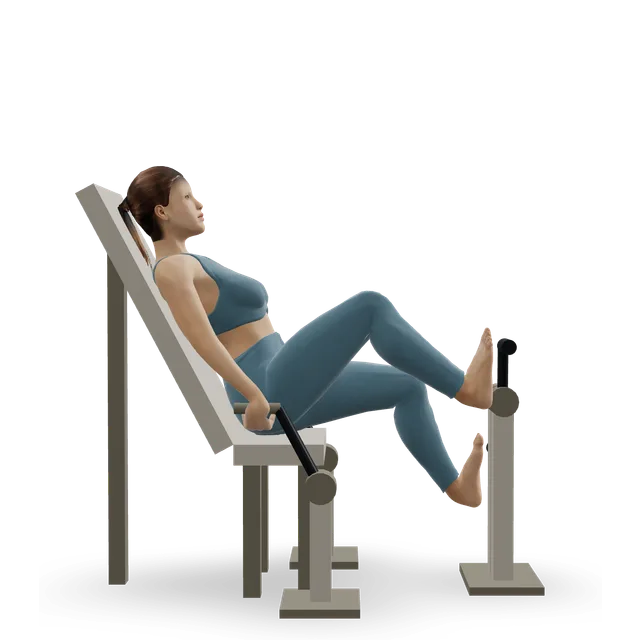
Elliptical trainer demonstrated on the 3D figure3D demoElliptical trainerBeginner · Cardio machine

Only if it passes the pain rule: 5 to 15 minutes, 3 times a week, at an easy to moderate effort, with 2 easy minutes at each end, standing tall with a light grip and the ramp low · The first sessions of a small elliptical back pain case series (most managed 5 to 10 minutes at first, stopping at 15, with a 2-minute warm-up and cool-down, 3 times a week); the settings are our reading of lab studies

Harder: Stair-stepper machine

Recumbent exercise bike demonstrated on the 3D figure3D demoRecumbent exercise bikeBeginner · Cardio machine

10 to 20 minutes at a moderate effort to start, building towards 30 (our editorial starting point). Moderate means you can talk but not sing, and those minutes count towards the 150 a week the NHS recommends. The resistance sets the effort: the Compendium rates stationary cycling from very light to very vigorous. · The move page's dose. The swap if the elliptical keeps hurting, and the first choice with the stenosis pattern: cycling featured in successful stenosis programmes and did as well as supported treadmill walking in a trial

Harder: Stationary cycling

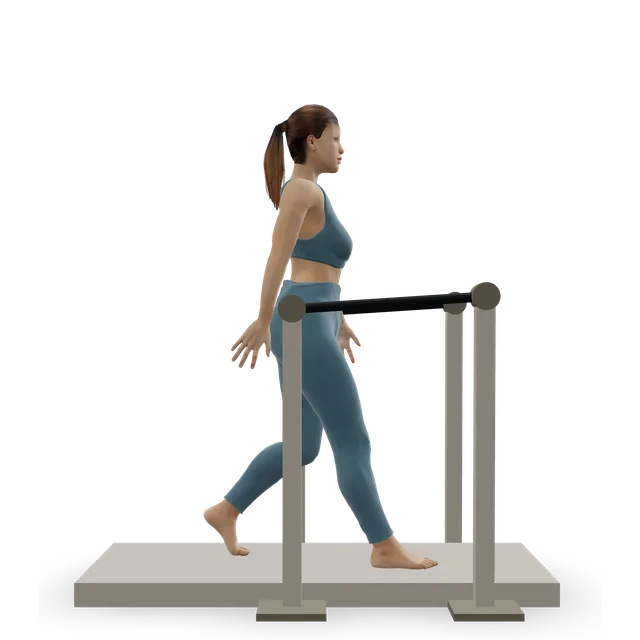
Treadmill walking demonstrated on the 3D figure3D demoTreadmill walkingBeginner · Cardio machine

5 to 10 minutes, several times a day, on the flat · As in our back pain guide (editorial); walking outdoors counts the same. The move page gives no dose

Harder: Treadmill jogging

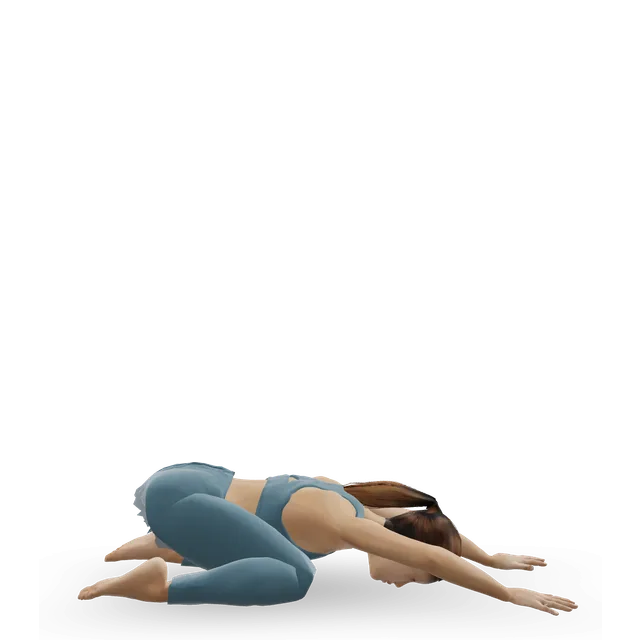
Cat-cow demonstrated on the 3D figure3D demoCat-cowBeginner · No equipment

8 waves, slower than feels natural · The move page's dose. NHS inform's back exercises include the same curl and uncurl on your hands and knees

Harder: Half lord of the fishes (Ardha Matsyendrasana)

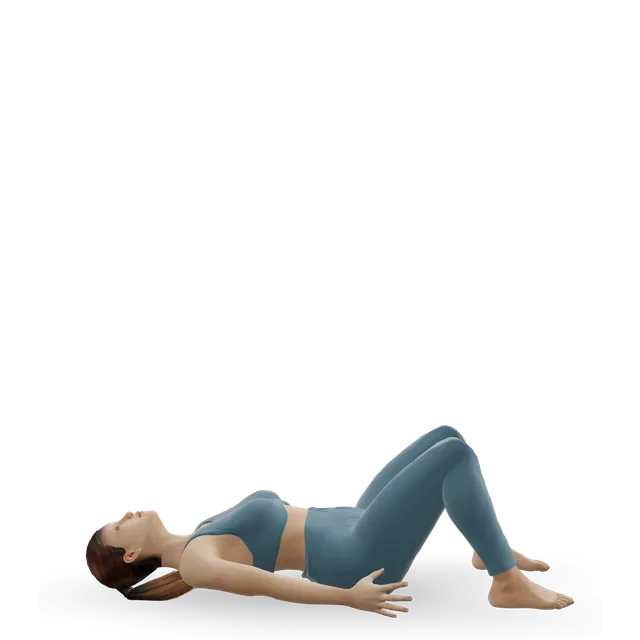
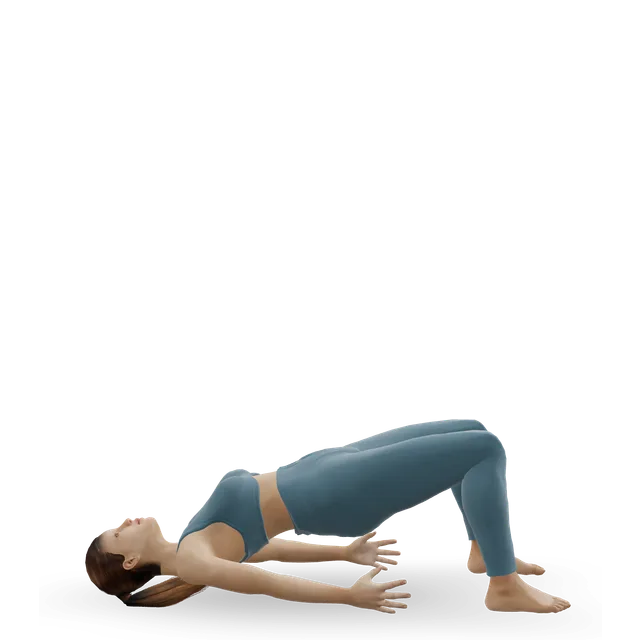
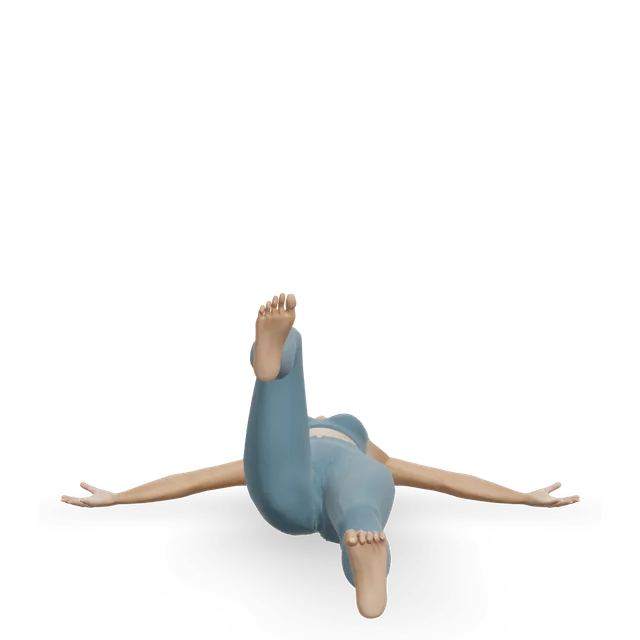
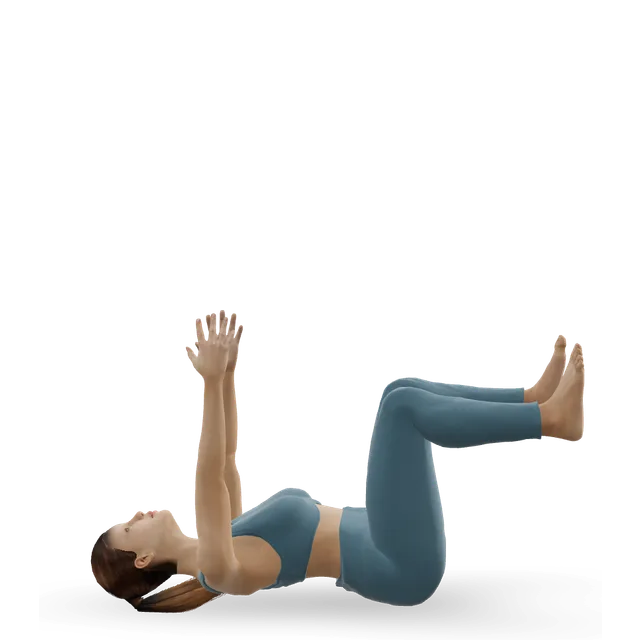
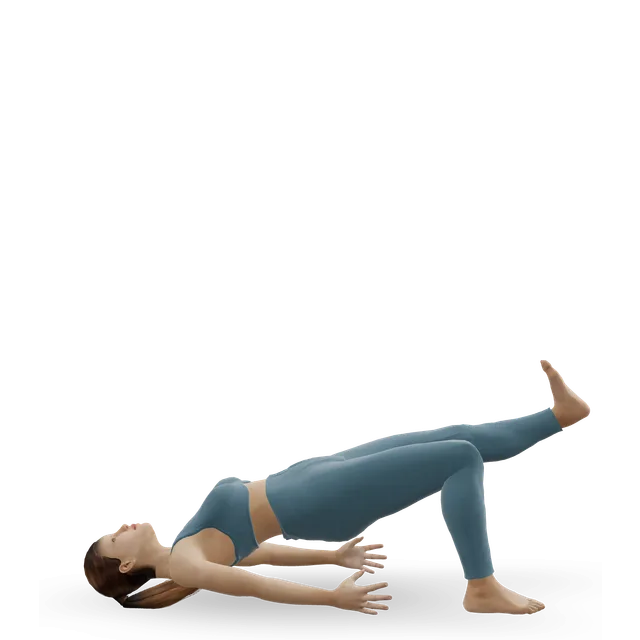
Pelvic tilt into bridge demonstrated on the 3D figure3D demoPelvic tilt into bridgeBeginner · No equipment

The tilt first, holding 2 seconds: 2 to 3 at a time, building to sets of 8 · NHS inform's pelvic tilt, with its pacing, as our treadmill back guide uses it

Harder: Glute bridge

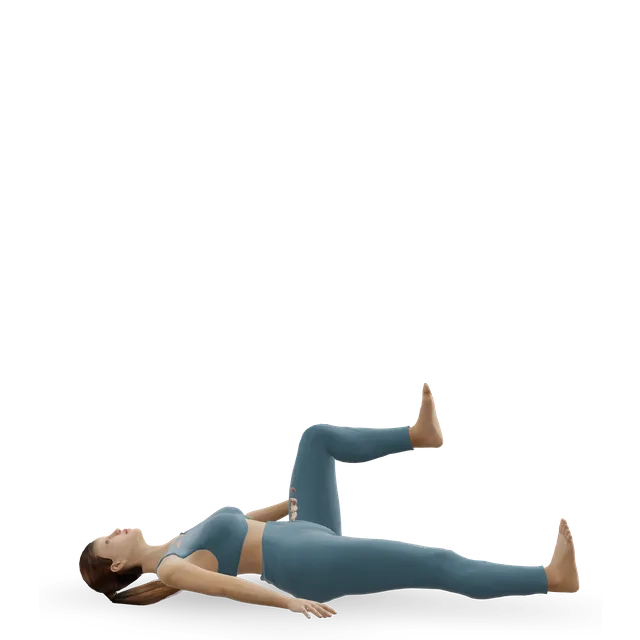
Lying sciatic nerve slider (nerve glide) demonstrated on the 3D figure3D demoLying sciatic nerve slider (nerve glide)Beginner · No equipment

10 repetitions with a 1-second pause, 2 to 3 times a day: the dose an NHS musculoskeletal service uses. Try it for two weeks and keep it only if it eases your leg. · The move page's dose. Only with pain down a leg, as our treadmill and rowing machine back guides use it

Harder: Seated sciatic nerve slider (nerve glide)

Move on when: 15 minutes on the elliptical (or 20 on the bike) and 15 to 20 minutes of walking pass the pain rule, standing tall with a light grip, and your back is no worse the next morning, for about a week (editorial, as in our treadmill back guide).

Follow along: a timer, a cue and the next move, one step at a time.
Stage 2

Build: time on the machine, and trunk and hip strength

About weeks 2 to 6: the elliptical 3 times a week, strength 2 or 3 days a week, walking most days. Build the elliptical by time towards 30 minutes, then the strength that lets you stand tall on the machine as you tire.

Elliptical trainer demonstrated on the 3D figure3D demoElliptical trainerBeginner · Cardio machine

Add about 5 minutes a week, towards 30 minutes, 3 times a week, time before resistance, the ramp still low · The case series added 5 minutes a week; time before resistance is our elliptical guide's order (editorial)

Harder: Stair-stepper machine

Glute bridge demonstrated on the 3D figure3D demoGlute bridgeBeginner · No equipment

2 to 3 sets of 10 · As in our back pain guide (editorial); the move page gives no dose

Easier: Pelvic tilt into bridge · Harder: Single-leg glute bridge

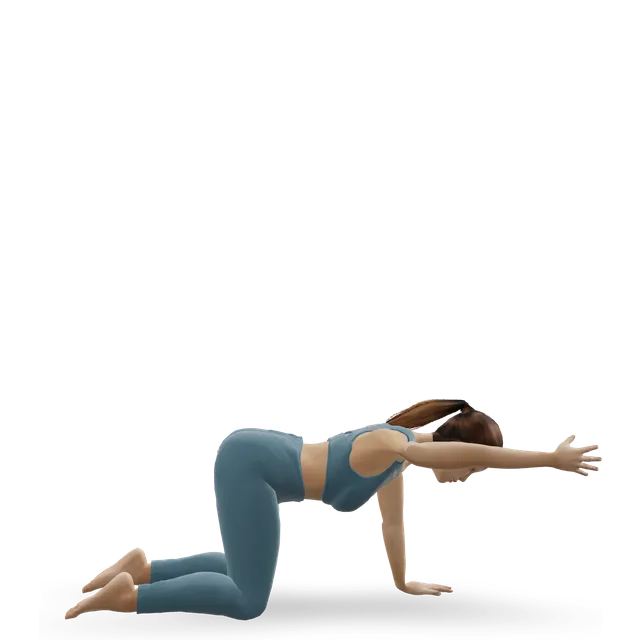
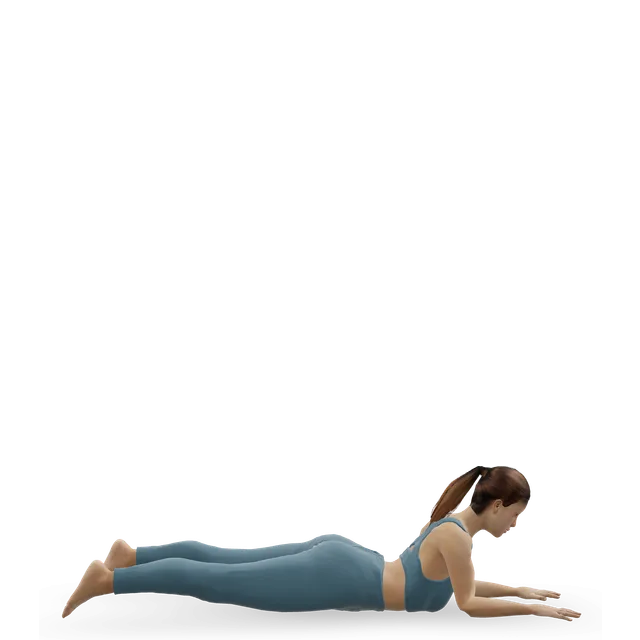
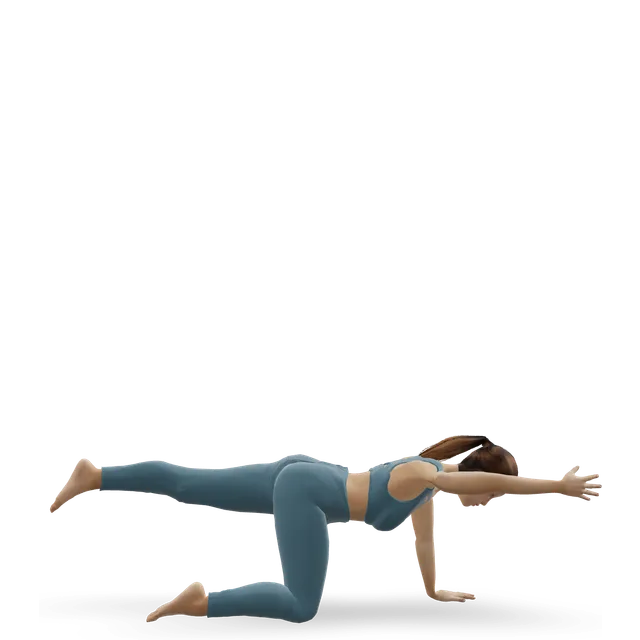
Bird dog, one limb at a time demonstrated on the 3D figure3D demoBird dog, one limb at a timeBeginner · No equipment

2 to 3 sets of 6 to 8 each side, 3 to 5 second holds · As in our back pain guide (editorial)

Easier: Side-lying tummy draw-in · Harder: Bird dog

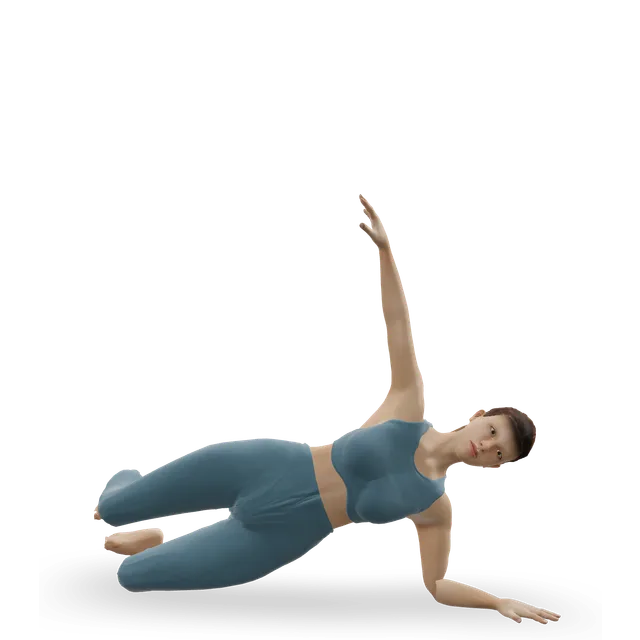
Knee side plank demonstrated on the 3D figure3D demoKnee side plankBeginner · No equipment

3 holds of 15 to 20 seconds each side · As in our back pain guide (editorial)

Harder: Side plank

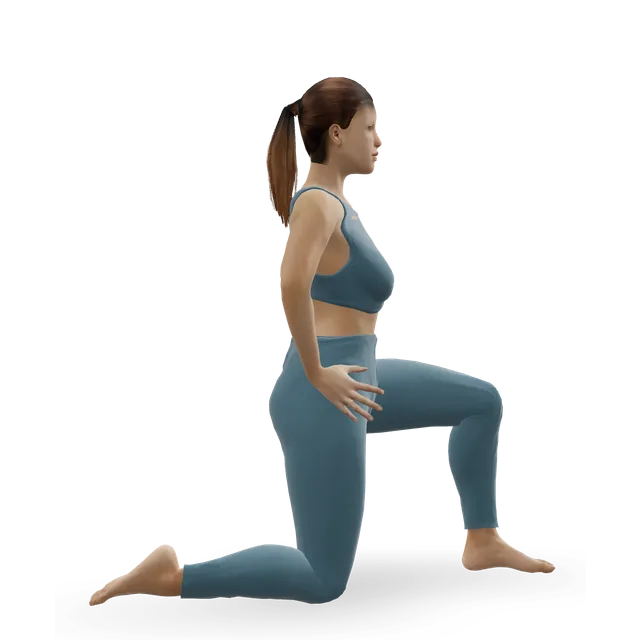
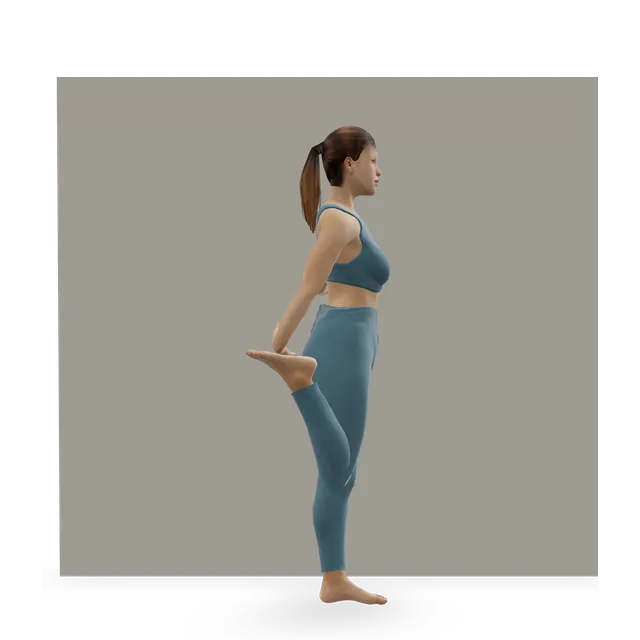
Half-kneeling hip flexor stretch demonstrated on the 3D figure3D demoHalf-kneeling hip flexor stretchBeginner · No equipment

2 to 3 holds of 20 to 30 seconds each side, pelvis tucked, back not arched · NHS inform's stretch holds (20 to 30 seconds, 2 to 3 sets); the tucked pelvis is our spinal stenosis guide's cue. For comfort at the front of the hip, not because tight hip flexors cause back pain. Pad the kneeling knee, as the move page says

Harder: Couch stretch

Thoracic rotation demonstrated on the 3D figure3D demoThoracic rotationBeginner · No equipment

6 rotations per side, moving with the breath · The move page's dose. For the upper back and the turning the elliptical asks of the trunk (our suggestion)

Easier: Side-lying open book · Harder: World's greatest stretch

Move on when: 30 minutes on the elliptical at a moderate effort leaves your back no worse the next morning, and the strength moves are controlled (editorial).

Follow along: a timer, a cue and the next move, one step at a time.
Stage 3

Back to your usual sessions, and keep strong

From about week 6, then ongoing, strength twice a week: your usual elliptical sessions, then harder ones, one change at a time by the written steps below, with heavier trunk and hip strength. No study has tested a return to the elliptical after back pain, so the order is editorial, as in our elliptical hip and knee guides.

Elliptical trainer demonstrated on the 3D figure3D demoElliptical trainerBeginner · Cardio machine

Your usual sessions; then resistance a level at a time, then the ramp, then intervals (1 minute harder, 2 minutes easy, 4 rounds building to 8), using the moving handles in time with your legs · Editorial, as in our elliptical guide and our elliptical hip and knee guides

Harder: Stair-stepper machine

Hip-hinge practice demonstrated on the 3D figure3D demoHip-hinge practiceBeginner · No equipment

2 to 3 sets of 10 · As in our back pain guide (editorial)

Harder: Kettlebell deadlift

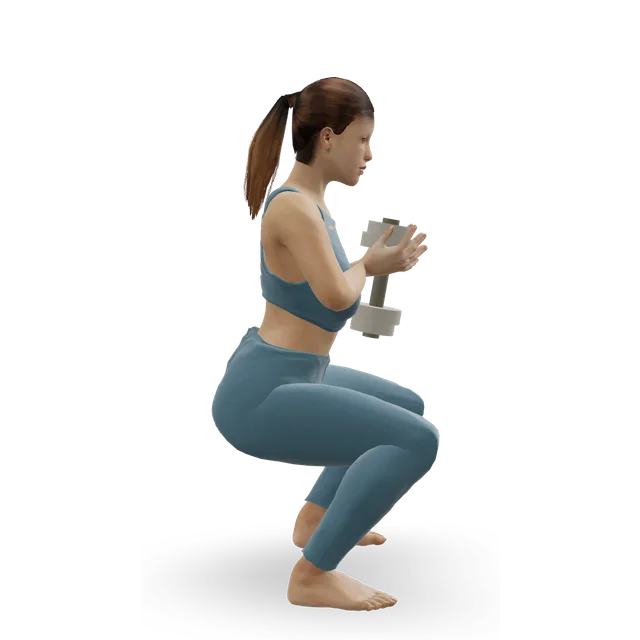
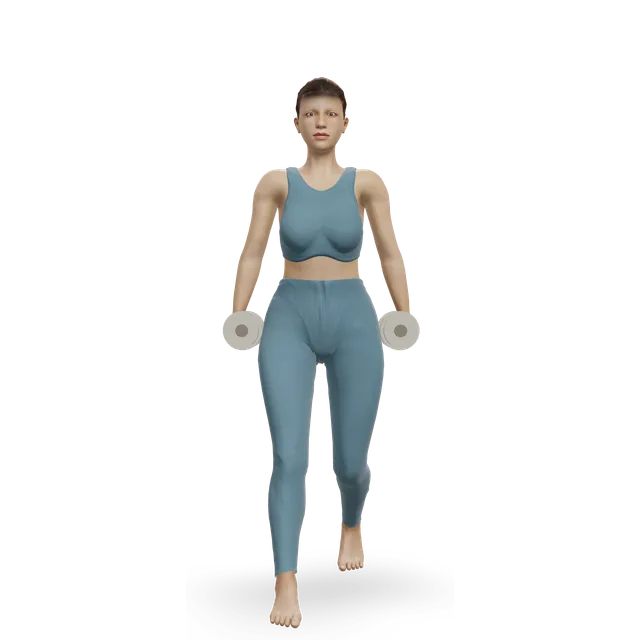
Dumbbell goblet squat demonstrated on the 3D figure3D demoDumbbell goblet squatIntermediate · A dumbbell

3 sets of 8 to 10 · As in our back pain guide (editorial)

Easier: Bodyweight squat · Harder: Barbell front squat

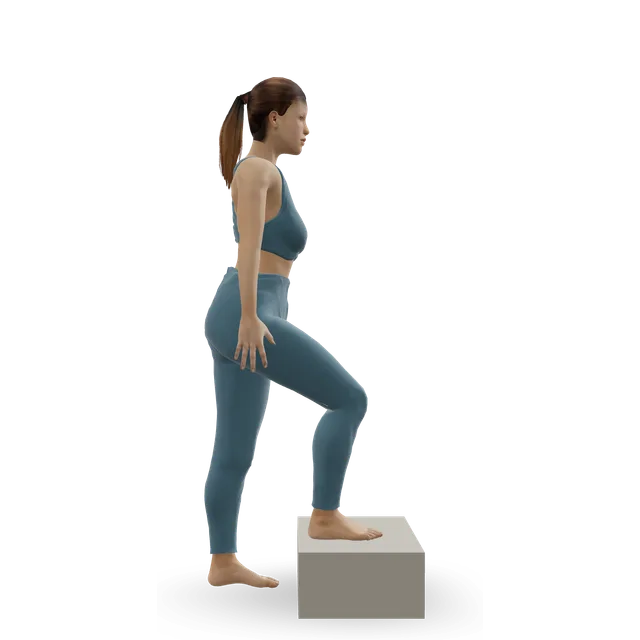
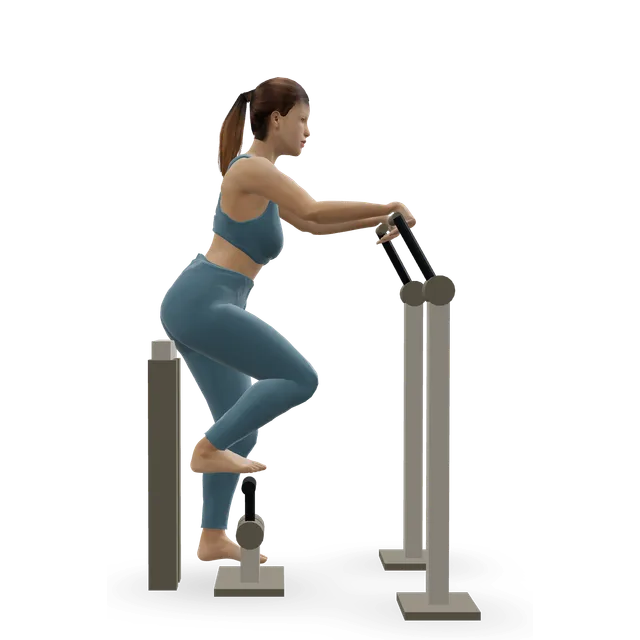
Step-up demonstrated on the 3D figure3D demoStep-upBeginner · A step

3 sets of 8 each side · As in our back pain guide (editorial)

Easier: Low step-up · Harder: Dumbbell step-up

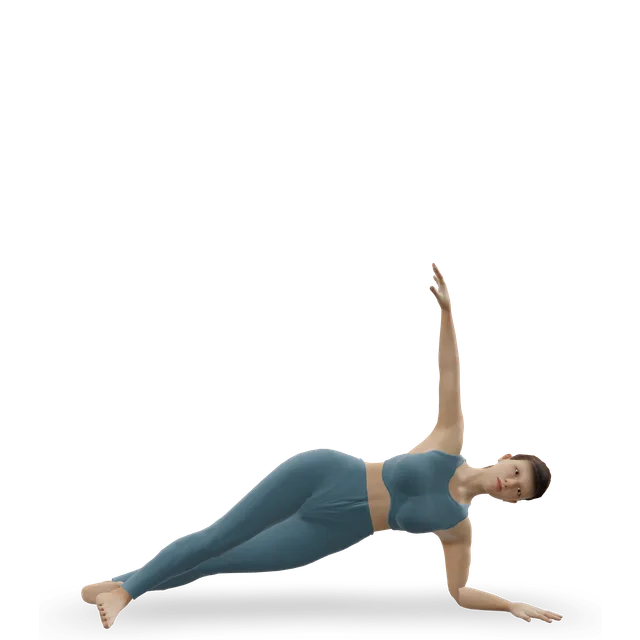
Side plank demonstrated on the 3D figure3D demoSide plankIntermediate · No equipment

3 holds of 20 to 30 seconds each side · As in our back pain guide (editorial)

Easier: Knee side plank · Harder: Side plank with leg lift

Farmer's carry demonstrated on the 3D figure3D demoFarmer's carryIntermediate · A dumbbell + A kettlebell

3 walks of 20 to 30 metres · As in our back pain guide (editorial): carrying with a tall trunk

Harder: Suitcase carry

Move on when: Your usual sessions pass the pain rule for 2 weeks. If a session flares it, go back to the last setting that was fine, not to nothing, and keep two strength days a week (editorial).

Follow along: a timer, a cue and the next move, one step at a time.

What to change for now

How to use the elliptical for now (written steps)

Our 3D figure can't show these changes. They come from lab studies of the machine, the one elliptical back pain case series, NHS pages, NHS inform, NICE and our elliptical guides; where a step is our suggestion or our reading, it says so. None has been tested against back pain on the elliptical. Keep what passes the pain rule.

  • 1. Time first: start at 5 to 15 minutes, 3 times a week, and add about 5 minutes a week, as the case series did. Two short sessions beat one long one while it's sore (our suggestion).
  • 2. Stand tall: hips under your shoulders, weight through your whole feet, eyes ahead, as our elliptical guide teaches. Don't lean on the console or hang on the fixed bar (our reading: the lower back already bends more than in walking).
  • 3. A light grip: hold the moving handles lightly and push and pull in time with your legs, or rest your hands on the fixed bar, or let go if your balance is good. Hand position changed how the lower back moved in a lab study that doesn't say which is gentlest, so try each and keep the one your back likes (our suggestion).
  • 4. Resistance: moderate, enough that you don't bounce, never a grind, as our elliptical guide says. If you have to haul on the handles, lower it (our suggestion).
  • 5. The ramp: low for now (our suggestion; no study measured the back, and the ramp changes how far the hip bends).
  • 6. Stride: if your machine lets you set it, a length that feels like your natural walking stride; if a fixed long stride makes you overreach, try another machine (our elliptical guide).
  • 7. Pace: steady rather than racing; a faster pace changed lower back movement in a lab study.
  • 8. Direction: forwards for now; backwards later, for variety (editorial; no study has measured the back going backwards).
  • 9. With the stenosis pattern: the bike first. On the elliptical, a light hold on the fixed bar with a slight forward lean from the hips may let you go further, and stop to sit when your legs build (our reading; untested).
  • 10. With pain down one leg: stop or change anything that sends it further down, and use the bike or walking for now.
  • 11. With pain between the shoulder blades: shoulders down and relaxed, elbows soft, a light grip, and swap between the moving handles and the fixed bar every few minutes (our suggestion, as our upper back pain when cycling guide advises for the bars). If it keeps happening, see a GP, as the NHS advises for pain at the top of the back.
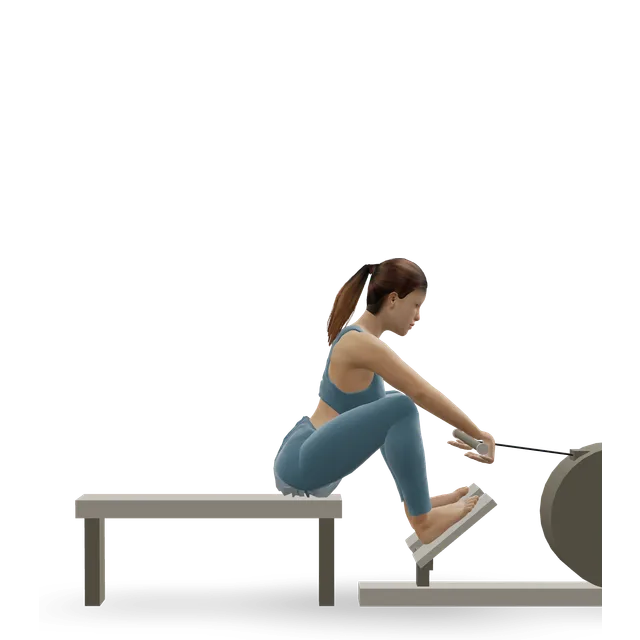
  • 12. Getting on and off: hold the fixed handles, step on with the near pedal at its lowest, and let the pedals stop before you step off (our elliptical guide).
  • 13. The rest of the day: keep active. The NHS says activities like walking, swimming, yoga and pilates may help ease back pain and not to stay in bed for long periods, and NICE asks for encouragement to carry on with normal activities.

Sources 32, 5, 4, 9, 37, 17, 18, 25, 27

How the elliptical comes back (written steps)

No trial has tested how to bring the elliptical back after back pain. These steps are our suggestion, following our elliptical guide's one-change-at-a-time order.

  • 1. Short sessions at an easy to moderate effort, standing tall with a light grip, the ramp low.
  • 2. Longer sessions, time first.
  • 3. Moderate resistance, a level at a time.
  • 4. The moving handles, pushing and pulling in time with your legs, shoulders relaxed.
  • 5. The ramp, a level at a time.
  • 6. Intervals. Backwards last, for variety, at a low resistance, for a minute or two at a time. If a session flares your back, go back a step, not to nothing.

Positions to swap, and why

Habit or positionWhy it mattersInstead
Leaning on the console or hanging on the fixed bar as you tireThe lower back already bends and turns more than in walking; that leaning adds to it is our reading.Stand tall with a light grip; end the session or lower the resistance.
Hauling on the moving handles at a high resistanceGrinding invites hauling, and hand use changed lower back movement in a lab study (our reading).Moderate resistance; push and pull lightly in time with your legs.
Long sessions straight away, or after time offThe one elliptical back pain case series built up by 5 minutes a week.5 to 15 minutes, adding 5 minutes a week.
A steep ramp or a long, overreaching stride while it's soreBoth change how the hips and back move; no study has tested them for back pain.The ramp low, and a stride that feels like walking.
Pushing on through leg tingling or numbness that spreadsLeg symptoms that spread down the leg are the exception to the pain rule.Stop, and use the recumbent bike for now.Try: Recumbent exercise bike
Standing bolt upright through heavy legs, with the stenosis patternStenosis is provoked by arching and eased by bending forward or sitting.The recumbent bike, or a light lean on the fixed bar with sitting breaks.Try: Recumbent exercise bike
Stretching the hip flexors hard to fix the backHip flexor range wasn't linked with back pain once body size was taken into account.Trunk and hip strength first, with a mild stretch for comfort only.Try: Knee side plank
Resting in bed until it stops hurtingNICE and the NHS say keep active, and most new back pain improves markedly within about 6 weeks.Short walks, little and often.Try: Treadmill walking
A back belt or corset for the ellipticalNICE says don't offer belts or corsets for low back pain.Trunk and hip strength.Try: Knee side plank
Pushing on through chest pain, chest tightness or breathlessnessThat is a heart or lung warning sign, not the back.Stop, and act on the warning signs at the top of this page.
Stepping off while the pedals turnFalls are the commonest home machine injuries, and a fall can hurt the back.Let the pedals stop, hold the fixed handles and step off on the low side.

Routines to follow

More moves for this area

Questions people ask

Why does my lower back hurt on the elliptical?

Usually ordinary back pain meeting a longer, harder or steeper session than your back is used to, often with a hunched lean on the handles. In a lab study, the elliptical kept the lower back a little more bent and turning than walking does. Stand tall with a light grip, shorten the session and keep the resistance and ramp moderate.

Is the elliptical good or bad for lower back pain?

Usually fine, if it passes the pain rule, and no study shows it harms the back. The evidence that it helps is weak: pain fell in a small case series with no comparison group, and in a seated-elliptical trial funded by the device's maker. Exercise in general helps back pain, so if the elliptical keeps hurting, walk or cycle instead.

Why does my back hurt after the elliptical?

An ache that comes on afterwards is usually tired back and hip muscles in a back that is already sore, often after a longer or harder session than usual. It should settle within an hour or so and be no worse the next morning; if not, go shorter or lighter next time. A dull ache across both sides the day after a new session is usually muscle soreness.

Should I hold the handles on the elliptical?

A light hold is fine. Where your hands go changes how your lower back moves, but the one study doesn't say which position is gentlest, so try the moving handles, the fixed bar and no hands, and keep the one your back likes. What to avoid is leaning your weight on the console or hauling on the handles, in our reading.

Elliptical, treadmill or bike for lower back pain?

Any of them, whichever passes the pain rule: walking does about as well as other exercise for back pain, and no trial has compared the elliptical with walking or cycling. With leg symptoms from spinal stenosis, a bike lets you exercise bent forward and has trial support. Our treadmill back guide covers the belt.

Can I use the elliptical with sciatica or a herniated disc?

Often yes, if it doesn't send pain, tingling or numbness further down your leg, which is the exception to the pain rule. Start short and easy, and use the bike or walking if the elliptical spreads the leg symptoms. Weakness that is getting worse, or numbness around your genitals or bottom, needs help straight away.

Is the elliptical good for spinal stenosis?

It may be, because it keeps your trunk a little bent forward, which stenosis usually prefers, but that is our reading and no study has tested it. The bike has the trial evidence. Stop when your legs start to build, sit until they ease, and go again.

Why does my upper back hurt on the elliptical?

Usually the muscles between the shoulder blades working to push and pull the handles, more with a tight grip and hunched shoulders (our reading). Relax your shoulders, loosen your grip and swap hand positions. The NHS asks a GP to check back pain between the shoulders, and chest, arm, jaw or upper back pain with effort can be the heart.

Do stride length and the ramp matter for my back?

They change how your back and hips move in lab studies, but no study has tested them against back pain. Use a stride that feels like walking and keep the ramp low while it's sore.

Are tight hip flexors causing my back pain on the elliptical?

Probably not. The hip flexors work hard on the elliptical, but in 118 adults hip flexor range wasn't linked with back pain once body size was taken into account. Strength work, with a gentle stretch for comfort, is fine.

Do I need a scan?

Usually not: NICE advises against routine scans for back pain, and disc changes are common in people without pain. The warning signs decide who needs one.

When should I see a doctor?

Call 999 for numbness around your genitals or bottom, new bladder or bowel trouble, weakness in both legs, or chest pain on the machine; get help from NHS 111 if you're suddenly more short of breath than usual. Get help the same day for back pain with a fever or feeling unwell, or leg weakness that is getting worse, and see a GP for back pain that isn't better after a few weeks, leg pain on standing and walking, pain between the shoulder blades or unexplained weight loss. In the US, call 911 where this page says 999.

Related exercise guides

Other pain guides

Sources

  1. Graves 2014 · Injuries from home exercise machines in US emergency departments, 2007 to 2011 (surveillance study, Inj Prev)
  2. Turner 2010 · Oxygen use, heart rate and discomfort on a treadmill, an elliptical and an arc trainer in 18 adults (lab study, J Strength Cond Res)
  3. Kaplan 2014 · Foot loads in walking, jogging, treadmill jogging and on an elliptical in 75 adults (lab study, Gait Posture)
  4. Burnfield 2010 · Elliptical training and walking compared on four machines in 20 adults (motion and muscle activity study, Phys Ther)
  5. Moreside 2012 · Lower back movement and trunk muscle activity on an elliptical against walking in 40 men (lab study, Clin Biomech)
  6. Damiano 2011 · Leg and pelvis movement on an elliptical, a bike, a treadmill and overground walking in 10 adults (lab study, Gait Posture)
  7. Rohlmann 2014 · Everyday activities with the highest spinal loads, measured with implants in 5 people (in vivo study, PLoS One)
  8. Kaplan 2014 · Foot loads with changing resistance and incline on an elliptical in 30 adults (lab study, Orthop J Sports Med)
  9. Hummer 2021 · Pedalling direction, ramp angle and leg movement on an elliptical in 24 adults (lab study, Knee)
  10. Lu 2007 · Joint loading in the legs during elliptical exercise against walking in 15 men (lab study, Med Sci Sports Exerc)
  11. Prosser 2011 · Thigh muscle activity on an elliptical, a bike, a treadmill and overground walking in 10 adults (muscle activity study, Gait Posture)
  12. Eimiller 2026 · Hip flexor tightness and low back pain in 118 adults who hadn't sought care (cross-sectional study, Clin Biomech)
  13. NHS inform · Back problems
  14. Schwarzer 1994 · Clinical features of facet joint pain in 176 people with long-lasting back pain (diagnostic study, Spine)
  15. Hancock 2007 · Tests to identify the disc, sacroiliac or facet joint as the source of low back pain: 41 studies (systematic review, Eur Spine J)
  16. Kalichman 2008 · Facet joint arthritis on CT scans and low back pain in 188 adults (community cross-sectional study, Spine)
  17. Katz 2022 · Diagnosis and management of lumbar spinal stenosis (review, JAMA)
  18. NHS inform · Spinal stenosis
  19. Genevay 2018 · Criteria for leg pain from spinal stenosis, developed in 209 spine clinic patients (diagnostic study, Spine J)
  20. Fritz 1997 · A two-stage treadmill test for lumbar spinal stenosis in 45 people (diagnostic study, J Spinal Disord)
  21. NHS · Sciatica
  22. Lesher 2008 · Where hip joint pain is felt: 51 people confirmed by injection (descriptive study, Pain Med)
  23. NHS · Peripheral arterial disease (PAD) (last reviewed April 2026)
  24. Nadeau 2013 · Telling spinal from vascular leg pain on walking by symptoms in 53 people (diagnostic study, Can J Surg)
  25. NHS · Back pain (last reviewed March 2026)
  26. NHS · Angina
  27. NICE NG59 · Low back pain and sciatica in over 16s: assessment and management (recommendations, last updated July 2026)
  28. Brinjikji 2015 · Spine degeneration on scans of 3,110 people without back pain (systematic review, AJNR)
  29. da C Menezes Costa 2012 · How new and persistent low back pain usually goes: 33 cohorts (meta-analysis, CMAJ)
  30. Pocovi 2024 · Walking and education to stop low back pain coming back: WalkBack (randomised trial of 701, Lancet)
  31. Hayden 2021 · Exercise therapy for long-lasting low back pain: 249 trials (Cochrane systematic review)
  32. Dillingham 2020 · Elliptical sessions for long-lasting back pain: the POWER case series of 12 people (case series, J Phys Med Rehabil)
  33. Ebrahimi 2025 · A seated under-desk elliptical for long-lasting low back pain in 54 people (randomised trial funded by the device's maker, Cureus)
  34. Vanti 2019 · Walking against other exercise for long-lasting low back pain: 5 trials (meta-analysis, Disabil Rehabil)
  35. Pocovi 2022 · Walking, cycling and swimming for low back pain: 19 trials (systematic review, J Orthop Sports Phys Ther)
  36. Shnayderman 2013 · Treadmill walking against back exercises for long-lasting low back pain in 52 adults (randomised trial, Clin Rehabil)
  37. Comer 2024 · What successful exercise programmes for spinal stenosis share: 13 trials, 1,440 people (systematic review, Clin Rehabil)
  38. Pua 2007 · Supported treadmill walking against cycling for lumbar spinal stenosis in 68 people (randomised trial, Aust J Physiother)
  39. Ammendolia 2022 · Non-surgical treatment for lumbar spinal stenosis (updated systematic review, BMJ Open)
  40. Swain 2020 · No consensus that spine postures or physical exposures cause low back pain (review of systematic reviews, J Biomech)
  41. Laird 2014 · Lower back and pelvis movement in people with and without back pain: 43 studies (systematic review and meta-analysis, BMC Musculoskelet Disord)
  42. NHS inform · Exercises for back pain
  43. Smith 2017 · Should exercises be painful in long-lasting musculoskeletal pain? 7 trials (systematic review and meta-analysis, Br J Sports Med)
  44. NHS · Shortness of breath
  45. NHS · Heart attack
  46. NHS · Chest pain (past its review date: reviewed August 2023, review due August 2026)
  47. NHS · Pulmonary embolism

Exercise education, not a diagnosis or treatment plan. It is written from the guidelines and studies listed above; review by a clinician is pending. If your pain follows an injury, is severe, is getting worse, or comes with any warning sign listed on this page, get it assessed. Health disclaimer.