Training guide

How to use an exercise bike (stationary bike): seat height and handlebars, upright or recumbent, resistance and cadence, calories, your knees, and a first workout

To use an exercise bike, set the seat first: stand beside the bike and raise the saddle to the top of your hip bone, then sit on and check that your knee keeps a slight bend with the pedal at the bottom. Set the handlebars level with the saddle or a little higher, pedal easily for a few minutes, then raise the resistance until you can talk but not sing, at a comfortable 60 to 90 rpm (pedal turns a minute).

Exercise bikes, whether upright, recumbent or spin bikes, are the gentlest of the main cardio machines on your knees, and 12 weeks of cycling raised fitness by 16 to 19% in small trials. They burn fewer calories than a treadmill at the same effort, and they don't load your bones.

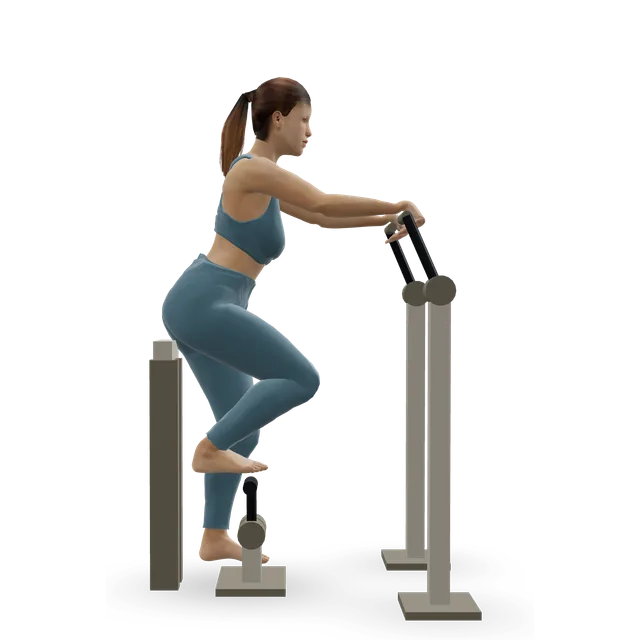
This guide covers the set-up step by step on the 3D figure, seat height, upright or recumbent, resistance and cadence, calories, your knees, saddle comfort and safety at home, with rides to follow.

The short version

Set the seat first

Set the saddle level with your hip bone, then check that your knee keeps a slight bend at the bottom of the stroke, never locked straight. The classic target, 25 to 35 degrees of knee bend measured sitting still, is a measuring convention rather than a proven number, and formulas based on leg length suited many women poorly, so adjust by feel.

Sources 1, 2, 3, 4

Handlebars up, and stand now and then

Among 3,932 men, a handlebar level with or above the saddle went with less genital numbness and fewer saddle sores, and standing for more than 20% of the ride went with less numbness. A recumbent bike or a saddle without a nose takes pressure off.

Sources 5, 6

Upright or recumbent: either works

Leg muscle activity didn't differ between an upright and a recumbent bike at a moderate workload. Peak heart rate and effort run a little lower on a recumbent, which supports your back and is easier to get on and off.

Sources 7, 8

A light to moderate resistance at a comfortable rpm

Non-cyclists settled at about 80 rpm in one study. Grinding a heavy resistance at a low rpm raises the peak load on your knees, while very fast pedalling adds to the total over an hour, so our suggestion is a smooth 60 to 90 rpm.

Sources 9, 10, 11

The knee-friendliest of the main cardio machines

In people with instrumented knee implants, cycling at an easy 60 watts put about 119% of body weight through the knee, less than walking. A history of cycling went with less knee pain and arthritis in 2,607 adults, and stationary cycling eased knee osteoarthritis pain across 11 trials.

Sources 10, 12, 13

Calories: watts are the honest number

For a 70 kg person, 30 minutes at 101 to 125 watts is about 240 calories (our arithmetic from the Compendium of Physical Activities). At the same felt effort, bikes used less energy than a treadmill, and we found no study of how accurate bike calorie displays are.

Sources 14, 15, 16

How to set up and ride an exercise bike, step by step

From our stationary cycling move page ("Set the saddle so the knee stays slightly bent at the bottom of the stroke"; "Keep the knees in line with the feet"), one maker's set-up guide (the saddle level with the hip bone; handlebars slightly higher than the saddle to start; the widest part of the foot in the toe cage), and one maker's safety page (the resistance knob as the brake). The heel check, the rules of thumb for too high or too low, the 3 to 5 minutes and 60 to 90 rpm are editorial and haven't been tested against injury.

  1. Standing beside the bike, set the saddle level with the top of your hip bone.
  2. Sit on, put the ball of each foot over the pedal axle and tighten the toe straps.
  3. Pedal to the bottom of the stroke: your knee should keep a slight bend. With your heel on the pedal there, your leg should be almost straight. Lower the saddle a little if your hips rock, raise it if your knee stays very bent.
  4. Set the handlebars level with the saddle or a little higher, elbows soft.
  5. Pedal easily against a light resistance for 3 to 5 minutes.
  6. Raise the resistance until you can talk but not sing, at a smooth 60 to 90 rpm.
  7. Sit tall with your knees in line with your feet. If the saddle area goes numb, stand on the pedals for a few strokes every 10 minutes or so.
  8. Ease the resistance off for the last 3 to 5 minutes. On a spin bike, press the resistance knob down to stop the flywheel before you get off.

Loading the 3D figure…

Gets into position, then repeats the movement. Technical checks passed; qualified exercise review is pending.

The movement on the figure: Stationary cycling

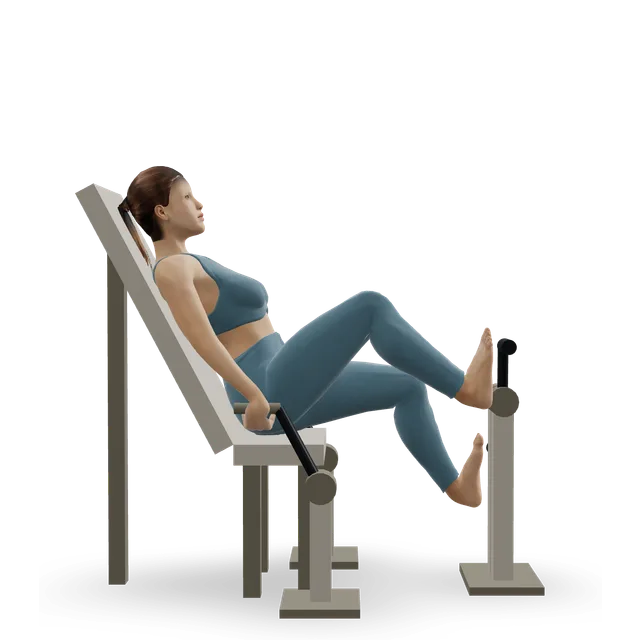
Using a recumbent bike

Our recumbent bike move page's steps, word for word. Avoid setting the seat so close that your knees come up high.

  1. Sit back in the seat and slide it so your knee stays slightly bent when the pedal is furthest away.
  2. Put your feet in the pedal straps, rest your back against the backrest and hold the side handles lightly.
  3. Pedal easily against a light resistance for a few minutes to warm up.
  4. Raise the resistance or your pace until the effort is moderate, and ease off again for the last few minutes.

Loading the 3D figure…

Gets into position, then repeats the movement. Technical checks passed; qualified exercise review is pending.

The movement on the figure: Recumbent exercise bike

Upright, recumbent, spin and air bikes

Upright exercise bike

You sit over the pedals on a saddle, with handlebars in front. The resistance comes from a magnetic brake or a friction pad on a flywheel, and the console shows the level, rpm and often watts and calories.

Recumbent bike

A low, wide seat with a backrest and the pedals out in front. The backrest supports your trunk, and the low seat is easier to get on and off than an upright bike, as our move page says.

Spin bike

A heavy flywheel, a narrow saddle and road-bike style handlebars, built for standing efforts and classes. The resistance knob is also the brake: one maker says "To stop immediately, push down on the resistance knob." On many spin bikes the pedals keep turning with the flywheel, so don't take your feet out until it has stopped. Our spin class guide covers classes.

Source 17

Air bike

A fan bike (also sold as an assault bike) with handles that move with the pedals, so your arms work too. There's no resistance knob: the faster you go, the harder the fan pushes back. It suits steady rides as well as intervals; our how to use an air bike guide covers the set-up, intervals and calories.

How hard it is

Anything from very light to very vigorous, set by the resistance and how fast you pedal: the Compendium gives stationary cycling 3.5 METs (multiples of the energy you use at rest) at 25 to 30 watts, up to 16.3 above 325 watts, and 9.0 for a spin class. The NHS counts riding a bike as moderate and riding fast or on hills as vigorous.

Sources 14, 18

What it works

Mainly the front of the thighs, with the glutes, hamstrings and calves. In 12 adults, glute, hamstring, lower-back and tummy muscle activity was low to moderate and similar on upright and recumbent bikes and a treadmill, with the calf most active on the upright bike. It builds leg endurance, but it isn't strength training.

Sources 19, 7

How people differ

The right saddle height differs with leg length, and the usual formulas fitted women worse than men. Less-trained people choose lower cadences as the resistance rises. Bikes have a maximum user weight (135 kg on one maker's spin bike), so check the label.

Sources 3, 20, 17

Seat height: what the evidence says

No single method is provenEmerging evidence

A review found methods for setting saddle height "varied and not well established", based on leg length (such as 109% of inseam or the heel method) or a range of knee bend. A 5% change in saddle height changed how the knee moved by 35% and the forces at the knee by 16%, and changes under 4% of leg length didn't seem to matter. The review suggests 25 to 30 degrees of knee bend at the bottom. Riders turn the pedals up to 5,000 times an hour, so small differences add up.

Sources 4, 21

Measured still or while pedallingEmerging evidence

The classic 25 to 35 degrees is measured sitting still with the pedal at the bottom. While you pedal, the ankle points more and the knee reads straighter, about 33 to 43 degrees at easy efforts and 30 to 40 at hard ones, and filming from the side under-reads by about 2 degrees.

Sources 2, 22, 23

Formulas often missEmerging evidence

109% of inseam fell outside 25 to 35 degrees 73% of the time in 11 trained men, and 106 to 109% of inseam was out of range in 56.5% of well-trained riders in another study. In 30 experienced indoor cyclists, only 20 to 33% of the women were in the recommended range with each formula, against 73% at their own preferred height; the formulas suited 47 to 60% of the men.

Sources 24, 25, 3

EfficiencyEmerging evidence

Oxygen use was slightly lower with the saddle set at 25 degrees than at 35 degrees or at 109% of inseam, and raising the saddle 2% above trained cyclists' own height made them slightly less efficient. These are small lab differences.

Sources 26, 24, 27

Seat height and painMixed evidence

Across 18 studies, how much people rode was the best-supported link with overuse pain, many bike-fit measures weren't linked at all, and the evidence on seat height and pain conflicted. No study has tested any seat-height method against injury, and reviews found no clear rules for handlebar height.

Sources 28, 29, 30

What to do

Start with the saddle level with the top of your hip bone, as one maker's guide says, then check the slight knee bend at the bottom; with your heel on the pedal, your leg should be almost straight. If your hips rock or you reach for the pedal, it's too high; if your knee stays very bent, too low. Change it a few millimetres at a time and note your setting. These steps are our editorial wording, as our knee pain when cycling guide explains, and haven't been tested against injury.

Source 1

Handlebars, saddle comfort and numbness

Handlebars

One maker's guide sets the lowest part of the handlebars "slightly higher than the saddle height" to start, then adjusts until your back is comfortable, with the elbows slightly bent. Reviews found no proven best height, so go by comfort.

Sources 1, 30

Numbness and saddle soresEmerging evidence

In 3,932 men, a handlebar level with or above the saddle went with lower odds of genital numbness and saddle sores, and standing for more than 20% of the ride with lower odds of numbness. Cyclists had no worse sexual or urinary function than swimmers or runners. This was a survey, so it shows links, not proof.

Source 5

Taking pressure offEmerging evidence

Across 22 studies in healthy men, a saddle without a nose and a recumbent bike lowered pressure on the area between the legs, and standing on the pedals every 10 minutes or so had indirect support.

Source 6

Feet and knees

Put the widest part of your foot in the toe cage and tighten the strap, and keep your knees in line with your second toe. With the pedals level, one maker's guide puts the front of your knee in line with the centre of the pedal; leave that alone unless something hurts, as our knee pain when cycling guide advises.

Source 1

Upright or recumbent?

The same leg musclesEmerging evidence

In 10 men who didn't cycle, leg muscle activity didn't differ between a recumbent and an upright bike at a moderate workload, and in 12 adults trunk and hip muscle activity was similar on both.

Sources 7, 19

Peaks run a little lower on a recumbentMixed evidence

Upright cycling reached a higher peak power, oxygen uptake and heart rate than recumbent cycling in 18 adults, and peak heart rate was 163 upright against 157 semi-recumbent in 20 adults with mild high blood pressure. At very low workloads a recumbent raised blood pressure and oxygen use slightly; at 100 watts, heart rate and effort were higher upright in 14 men with heart disease. Time to exhaustion at a hard effort was the same in 10 young men.

Sources 8, 31, 32, 33, 34

CaloriesEmerging evidence

In 30 experienced men working hard, a recumbent bike used 11.07 calories a minute, an upright bike 11.94 and a spin bike 12.45.

Source 16

Which to choose

Choose by comfort. The recumbent supports your back, is easier to get on and off and is kinder to the saddle area; expect it to feel a little easier at the same setting, so go by the talk test. The upright is closer to road cycling, and the spin bike suits standing efforts and classes.

Resistance and cadence (rpm)

What people chooseEmerging evidence

18 non-cyclists settled at about 80 rpm at every workload, and their leg strain felt lowest there, although their most economical cadence was about 50. Less-trained men chose about 80 rpm at 75 watts, falling to 65 rpm at 175 watts, while trained cyclists and runners held 90 to 100. The most economical cadence rises with the workload.

Sources 9, 20, 35, 36

Cadence, resistance and your kneesEmerging evidence

In 9 people with instrumented knee implants, knee forces rose with power and fell with a higher cadence. In 56 riders, 19 with knee arthritis, the push on the pedals drove the peak knee loads, while over an hour a higher cadence at the same power added to the total knee load. Heavier workloads raised knee loads in two other lab studies; cadence didn't change them in one.

Sources 10, 11, 37, 38, 39

Training at low cadencesEmerging evidence

A review found "no strong evidence for a benefit of training at low cadences".

Source 40

What to do

Pick a light to moderate resistance and pedal at a smooth, comfortable 60 to 90 rpm without bouncing in the saddle (our suggestion, from the studies above). Raise the resistance to make it harder, and lower it if you have to grind. Levels differ between bikes, so note the level, rpm and watts that felt right.

Calories, watts and the display

Calories in 30 minutes at 70 kg (our arithmetic)Strong evidence

From the Compendium's stationary cycling values (METs times your weight in kg times hours):

  • 50 watts, light (4.0 METs): about 140 calories.
  • 60 watts, light to moderate (5.0): about 175.
  • 90 to 100 watts, moderate to vigorous (6.0): about 210.
  • 101 to 125 watts (6.8): about 240.
  • 126 to 150 watts (8.0): about 280.
  • 151 to 199 watts (10.3): about 360.
  • A spin class (9.0): about 315.

Sources 14, 41

Watts are the honest numberEmerging evidence

A bike measures the work you do. At about 17 to 20% efficiency, each kilojoule of work costs about 1.2 calories (our arithmetic), so 100 watts for 30 minutes, 180 kJ of work, is about 215 calories, close to the Compendium's figure. We found no study of a gym bike's calorie display, and a standard equation overestimated oxygen use on bikes at 70 watts or less.

Sources 8, 27, 32

Bikes use less energy at the same effortEmerging evidence

In two lab studies of 13 and 19 adults, energy use at the same felt effort was lowest on the bikes and highest on the treadmill, and effort ratings ran higher cycling than jogging at the same share of each machine's peak in 10 men. Your legs tire first on a bike, which is why it can feel hard while burning less.

Sources 15, 42, 43, 16

Weight lossStrong evidence

An exercise bike helps through the energy it uses. Exercise alone took off about 2.8 kg at 150 minutes a week across 116 trials, and it doesn't take fat off your belly or thighs in particular.

Sources 44, 45

Your knees

Lower knee forces than walkingEmerging evidence

In 9 people with instrumented knee implants, cycling at 60 watts and 40 rpm peaked at about 119% of body weight, less than walking in the same people; walking reached 261% in another implant study. In 3 people, cycling peaked at about 1 times body weight against 2 for treadmill walking and 2.2 for an elliptical.

Sources 10, 46, 47

Less load over an hour than runningEmerging evidence

In 56 adults, an hour's cycling built up less knee load than running and no more than walking: it would take about 1 to 2 hours of cycling to match 1 hour of walking, and 3 to 5 hours to match 1 hour of running.

Source 48

Saddle height and the kneecapEmerging evidence

In 6 men, the force behind the kneecap rose as the saddle was lowered. In knee implants, a lower seat didn't raise the overall force but raised the shearing force. So don't ride with the saddle low (our reading).

Sources 39, 10

Cycling and knee arthritisEmerging evidence

In 2,607 adults, a history of cycling went with less frequent knee pain and less knee arthritis with symptoms, more so with more years of cycling, a link that can't prove cause. Across 11 trials (724 people), stationary cycling eased knee osteoarthritis pain against no exercise, though other changes were small. In 39 adults aged about 71 with knee arthritis, 25 minutes 3 times a week at a low effort worked as well as a harder one, without raising pain, and 12 weeks of cycling matched swimming in 48 adults. NICE recommends exercise for everyone with osteoarthritis.

Sources 12, 13, 49, 50, 51

What to do

With knee pain, keep the resistance low and the cadence comfortable, check the saddle isn't too low, and keep pain to about 5 out of 10, settled by the next morning, as our knee pain when cycling guide explains. After a knee replacement, our knee replacement guide sets the timing.

What the evidence says

Cycling builds fitness, steady or in short burstsStrong evidence

In 25 sedentary men, 12 weeks of either 45 minutes of steady cycling or three 20-second all-out sprints in a 10-minute session, 3 times a week, raised peak oxygen uptake by 19% in both groups. Across 28 trials in healthy adults, steady endurance training and interval training both raised aerobic fitness a lot.

Sources 52, 53

Gym cycling classesEmerging evidence

42 sedentary women who went to gym cycling classes about 2.6 times a week for 12 weeks raised their exercise capacity by 16% against women who didn't. A review of 13 small studies found indoor cycling may improve fitness, blood pressure, blood fats and body make-up, with diet needed for weight loss.

Sources 54, 55

It doesn't build boneEmerging evidence

Across 31 studies, road cycling didn't appear to give "any significant osteogenic benefit", and adult road cyclists had low bone density at the spine. The UK osteoporosis consensus recommends strength and impact exercise for bone, so pair cycling with them if bone matters to you.

Sources 56, 57

The talk test works on a bikeEmerging evidence

In 16 adults on a treadmill and a bike, the point where talking first got harder matched a breathing threshold measured in the lab, as our zone 2 guide explains.

Sources 58, 59

Cardio doesn't cost you muscleStrong evidence

Adding cardio to strength training doesn't reduce muscle growth or maximal strength, as our plans explain. Easy cycling before lifting is a fine warm-up.

Source 60

Spin bikes and classes

Classes run hardEmerging evidence

In 20 active women, a third to a half of class time was above the point where breathing gets hard, and the Compendium rates a spin class 9.0 METs. Ride at your own pace, whatever the instructor or the leaderboard says, as our spin class guide advises.

Sources 61, 14

Your first classEmerging evidence

In 97 published cases of rhabdomyolysis (a breakdown of muscle that can harm the kidneys) after indoor cycling, most were healthy women at their first class. Make your first ride gentle; our first spin class ride and spin class guide cover it.

Source 62

Safety at home: children, pets and the flywheel

Children's fingersStrong evidence

US children had about 1,551 emergency visits a year from stationary bikes in 2012 to 2021, and 56% of the injuries happened when nobody was riding. Stationary bikes caused 26.5% of children's injuries from home exercise equipment in 1990 to 2008.

Sources 63, 64

What to do

One maker says to keep children under 14 and pets away from its bikes at all times, to supervise or instruct older children, and to use the resistance knob as an emergency brake. Keep children away from home bikes whether they're in use or not.

Source 17

Common mistakes and how to fix them

Saddle too low

Your knees come up high and the front of the knee may ache. Raise it a little: a low saddle raised the force behind the kneecap in a lab study.

Source 39

Saddle too high

Your hips rock and you reach for the pedal. Lower it a little, as our knee pain when cycling guide advises.

Grinding a heavy resistance at a low rpm

The push on each pedal drives the peak knee load. Use a lighter resistance and a smoother cadence.

Source 11

Bouncing in the saddle

You're spinning too fast for the resistance. Add a little resistance or slow down, as our spin class guide advises.

Slumping on the bars or locking your elbows

Sit tall with your elbows soft, as our move page says.

Pedalling on your toes or arches

Put the ball of your foot over the pedal axle and tighten the strap.

Source 1

Ignoring numbness

Stand up for a few strokes every 10 minutes, raise the bars, or try another saddle or the recumbent bike.

Sources 5, 6

How long and how often

Your first sessions

10 to 20 minutes at a moderate effort, building towards 30: the recumbent bike's move page dose, which is our editorial starting point for the upright bike too. Moderate means you can talk but not sing, and those minutes count towards the 150 a week the NHS recommends.

Source 18

Building up

Then longer steady rides of 30 minutes or more, as in our easy bike ride, adding a little time every session or two. Three to five sessions a week is a sensible spread (our suggestion).

Adding intervals

Once or twice a week, with easier days between: 60 seconds hard and 120 easy, building from 4 rounds to 8, as our cardio intervals workout does, then the Norwegian 4x4.

With knee arthritis

25 minutes 3 times a week at a low to moderate effort is a tested dose.

Source 49

The bikes

The upright and recumbent bikes at 10 to 20 minutes, building towards 30 (the recumbent page's dose, editorial there); the air bike for steady rides or intervals, once 20 minutes of steady cycling is easy (its prerequisite), as our how to use an air bike guide explains.

Strength, bone and stretches that go with it

On 2 days a week: goblet squats or the leg press, 3 sets of 8 to 12 (our full-body gym and machine leg workouts); dumbbell Romanian deadlifts, 3 sets of 8 to 10, and side planks, 2 holds of 20 to 40 seconds each side; and, because cycling doesn't load bone, pogo hops or heel drops as in our strength workout for cyclists. After a ride, the quad, hip flexor and calf stretches for 30 seconds each side, for comfort.

Rides to follow

The easy bike ride is a steady ride at a pace you can talk at, indoors or out; the cardio intervals workout and the Norwegian 4x4 are the next step; the first spin class ride is a gentle first go on a spin bike.

Easy bike ride: 30 to 75 minutes at a pace you can talk at

A steady bike ride for a first triathlon or fitness: 5 to 10 minutes easy, a ride you can talk through, optional short faster bursts and an easy cool-down.

45 minBeginner4 movesCardio machine, A wall

Cardio intervals workout

A 25-minute interval session on a bike or rower: one-minute hard efforts with two minutes easy, building from 4 to 8 rounds.

25 minIntermediate1 movesCardio machine

Norwegian 4x4 interval workout

The Norwegian 4x4, a well-studied interval session for raising VO2 max: four 4-minute hard efforts with 3 easy minutes between, on a bike, rower or treadmill.

40 minIntermediate3 movesCardio machine, A wall

First spin class ride: set-up, a long warm-up and short efforts at your own pace

A 35-minute first indoor cycling ride at your own pace: set up the bike, warm up for 8 minutes, ride short steady efforts and climbs, then cool down easily.

35 minBeginner4 movesCardio machine, A wall

Cardio machines for beginners: treadmill, cross-trainer, rower and bike

A first tour of the gym's cardio machines: a few minutes each on the bike, treadmill, cross-trainer and rower, set up safely, at a talk-but-not-sing pace.

40 minBeginner7 movesCardio machine, A wall

Strength workout for cyclists (gym)

A 50-minute gym session for cyclists: heavy squats, one-leg presses, hip flexion and calf raises as in the cycling trials, plus jumps for bone.

50 minIntermediate13 movesCardio machine, A barbell

Mobility routine for cyclists

A 15-minute routine for cyclists: hips, upper back, chest, neck and wrists through the ranges riding doesn't use, plus back and neck endurance.

15 minBeginner12 movesA foam roller, A wall

Plans with rides or intervals in them

Use the exercise bike for these plans' cardio or interval days at the same effort.

Who should change it

Heart conditions and high blood pressure

At a moderate effort most people need no check first. With a heart condition, or chest pain, dizziness or breathlessness when active, see your GP before hard rides or classes. If your blood pressure is high and not yet controlled, keep to moderate effort until it is. On a beta blocker, go by the talk test rather than your heart rate.

Sources 65, 66, 67, 68

Knee pain, knee arthritis or a knee replacement

The bike is usually the easiest machine on a sore knee. Keep the resistance low, check the saddle height, and follow your surgical team's timing after a replacement.

Sources 13, 51

Back pain

A recumbent bike supports your back; on an upright bike, raise the handlebars and sit tall. If cycling makes your back worse, see our back pain when cycling guide.

Pregnancy

A stationary bike is a steady option in pregnancy, at a comfortable effort if you're new to it. The NHS says it's not recommended to start a new vigorous activity in pregnancy, and to avoid activities with a risk of falling, such as mountain biking. Raise the handlebars as your bump grows (our suggestion).

Source 69

Bone health

Cycling doesn't load bone, so if you have or are at risk of osteoporosis, add strength and impact work, as our osteoporosis guide explains.

Source 56

Before a PSA test

For 48 hours before a PSA test, the NHS says not to do anything that leaves you out of breath, such as exercise, or ride a bike, as these can raise your PSA level.

Source 70

Warning signs

Stop and get medical help

If you get chest pain or pressure, feel faint or dizzy, are unusually breathless, or your heart races or beats irregularly during exercise, as our plans advise. The American Heart Association says these need immediate medical evaluation.

Source 65

Call 999 (911 in the US)

For chest pain that feels tight, heavy or squeezing, or spreads to your arms, neck, jaw or back; a sudden, extremely painful headache, especially while straining; someone who faints while exercising; or palpitations that don't go away, or come with chest pain, breathlessness or feeling faint. Don't drive yourself to A&E.

Also call 999 for pain and swelling in one leg with breathlessness or chest pain: it can be a blood clot that has reached the lungs.

Sources 71, 72, 73, 74, 75, 76, 77

Breathlessness

Severe difficulty breathing (gasping, choking or not able to get your words out) is a 999 call; being more short of breath than usual is a call to NHS 111, as the NHS advises.

Source 78

A headache with effort

Ask for an urgent GP appointment or get help from NHS 111 for a headache that's triggered or made worse by coughing, sneezing, bending down or exercising.

Source 73

Light-headed when you stop

Keep pedalling easily for the last few minutes rather than stopping dead. See a GP after any faint, and if you keep feeling light-headed after slowing down gradually, or dizziness keeps coming back.

Sources 75, 79

Numbness between the legs

Numbness that settles soon after the ride is a saddle problem: stand up more, raise the bars, or try another saddle or the recumbent bike. Erection problems that don't settle need a GP. But new numbness around the genitals or bottom with bladder or bowel changes, or numbness in both legs, is an emergency: Call 999 or go to A&E: loss of feeling or numbness around the genitals or bottom, new trouble peeing or controlling your bladder or bowels, changes in genital sensation during sex or problems with erections or orgasm, or pain, tingling, weakness or numbness in both legs. These are signs of cauda equina syndrome, which needs treating in hospital urgently. Don't drive yourself.

Sources 5, 6, 80

After a hard first class or a big session

Same day (call NHS 111, or go to A&E if you feel very unwell): after a big or unusual session, such as hundreds of pull-ups, push-ups, dips or curls, a challenge or a new class, muscle pain, swelling or weakness far worse than the session explains, and dark pee (red, brown, tea or cola coloured), sometimes starting hours or days later. Dark pee isn't always there, so muscles far sorer, more swollen or weaker than the session explains still need the same-day check. It can be rhabdomyolysis, a breakdown of muscle that can harm the kidneys.

Source 62

Your knee

Get advice from NHS 111 now: you cannot move the knee or put any weight on it, or it is very painful, badly swollen or has changed shape; or the knee locks, gives way or clicks painfully. Painless clicking is normal.

See a GP if knee pain hasn't improved within a few weeks; our knee pain when cycling guide has the full list.

Source 81

Your calf or heel

Same day (NHS 111): throbbing pain and swelling in one calf or thigh, with warm, red or darker skin around it, which can be a blood clot in a leg vein; or a snap or pop at the back of the heel, then trouble walking or standing on tiptoe.

Source 77

Your lower back

Call 999 or go to A&E: back pain with chest pain, or back pain that started after a serious accident, such as a car crash.

See a GP if pain spreading down a leg hasn't improved after a few weeks of home treatment, is getting worse or stops your normal activities. Sciatica on both sides, or weakness or numbness in both legs that's severe or getting worse, is a 999 call or a trip to A&E.

Aim for discomfort you'd call mild to moderate, no more than about 5 out of 10. It should settle within an hour or so, and your back should be no worse the next morning, as our back pain guides say. Pain, pins and needles or numbness spreading down a leg are the exception: stop, and see our sciatica guide.

Sources 80, 82

A hernia

See a GP if you think you have a hernia, a bulge or lump that may get bigger when you strain and smaller when you lie down. Get help from NHS 111 if you have a hernia and pain in or around it, a bloated tummy, you feel or are sick, you're vomiting blood or your vomit looks like coffee grounds, you're constipated, you have a high temperature or feel hot, cold or shivery, or you've suddenly become confused. Call 999 or go to A&E for a femoral hernia (a small lump at the top of your thigh, in your groin) with very bad tummy pain, sickness, being unable to fart or poo, a high temperature or sudden confusion.

Sources 83, 84

Before you start

Speak to your GP first if you haven't exercised for some time or have medical conditions or concerns, as the NHS advises. Get advice before hard or straining work if your blood pressure is uncontrolled (140/90 or higher at a clinic, or 135/85 at home), or you have heart disease or chest pain when you're active, a pacemaker or defibrillator, diabetic eye disease, glaucoma, a hernia, recent eye or tummy surgery, or you're pregnant, as our breathing guide lists.

Sources 18, 68, 65

Sore, or hurt?

Muscle soreness for a day or two after a new or harder session is common and fades. Sharp pain, or pain that builds during a set or lingers into the next day, isn't: swap to an easier version, and see a clinician if it persists, as our plans advise. The NHS says to stop exercising straight away if you feel any pain or become unwell, and to get help from 111 if symptoms worry you or don't go away.

Source 85

Myths

"Exercise bikes are only for rehab"Strong evidence

Steady and sprint cycling each raised fitness by 19% in sedentary men in 12 weeks, gym cycling classes raised capacity by 16%, and spin classes spend a third to a half of the time above the point where breathing gets hard.

Sources 52, 54, 61

"The seat should be at hip height"Emerging evidence

Hip height is a starting point. The check is a slight knee bend at the bottom of the stroke, and formulas suited many women poorly.

Sources 1, 3, 4

"25 to 35 degrees is proven to prevent knee injury"Emerging evidence

It's a measuring convention, taken sitting still. No study has tested it against injury, and the evidence on seat height and pain conflicts.

Sources 2, 28

"A higher cadence is always better"Emerging evidence

Non-cyclists chose about 80 rpm and were most economical lower. A higher cadence lowered the peak knee force but added to the knee load over an hour.

Sources 9, 10, 11

"Recumbent bikes are a waste of time"Emerging evidence

Leg muscle activity matched the upright bike at a moderate workload. Peaks run a little lower, but what matters is how long and how hard you ride.

Sources 7, 8

"Cycling is bad for your knees"Emerging evidence

It loads the knee less than walking, a history of cycling went with less knee pain and arthritis, and stationary cycling eased knee osteoarthritis pain in trials.

Sources 10, 12, 13

"Cycling harms men's sexual health"Emerging evidence

In 3,932 men, cyclists had no worse sexual or urinary function than swimmers or runners. Numbness is a set-up problem: the handlebars, standing and the saddle.

Sources 5, 6

"Cycling builds strong bones"Emerging evidence

Road cycling showed no bone benefit across 31 studies. Add strength and impact work.

Source 56

"It takes 3,500 calories to lose a pound of fat"Emerging evidence

Weight lost from a set amount of exercise tends to be lower than that old rule predicts.

Source 45

Questions people ask

How do you set up an exercise bike?

Stand beside it and set the saddle level with the top of your hip bone, then sit on: with the pedal at the bottom, your knee should keep a slight bend. Put the balls of your feet over the pedals and tighten the straps, and set the handlebars level with the saddle or a little higher.

How high should the seat be on an exercise bike?

High enough that your knee stays slightly bent at the bottom of the stroke, never locked straight. The classic target is 25 to 35 degrees of knee bend measured sitting still, a convention rather than a proven number, and formulas based on leg length suited many women poorly, so adjust a few millimetres at a time until it feels right.

What's the difference between an exercise bike, a stationary bike and a spin bike?

"Exercise bike" and "stationary bike" mean the same thing. A spin bike is a stationary bike with a heavy flywheel and a road-bike position, built for standing efforts and classes; press its resistance knob down to brake.

Is a recumbent or an upright bike better?

Either works. Leg muscle activity didn't differ at a moderate workload, and the recumbent supports your back, is easier to get on and off and is kinder to the saddle area. Heart rate and peak effort run a little lower on it, so go by the talk test.

What rpm should I pedal at on an exercise bike?

A comfortable 60 to 90 rpm suits most people, which is our suggestion; non-cyclists settled at about 80 rpm in one study. Grinding a heavy resistance at a low rpm raises the peak load on your knees, so lower the resistance rather than straining.

Is an exercise bike good for your knees?

Yes, it's the gentlest of the main cardio machines on the knee: cycling at an easy 60 watts loaded the knee less than walking in people with knee implants. Stationary cycling eased knee osteoarthritis pain in trials. With knee pain, check the saddle isn't too low and keep the resistance moderate.

How many calories does an exercise bike burn?

For a 70 kg person, 30 minutes at 101 to 125 watts is about 240 calories and at 126 to 150 watts about 280 (our arithmetic from the Compendium of Physical Activities). Watts are the most honest number on the screen; we found no study of how accurate bike calorie displays are.

Is an exercise bike as good as walking or running?

For fitness, yes: 12 weeks of cycling raised fitness by 19% in sedentary men. At the same felt effort it burns fewer calories than a treadmill, and it doesn't load your bones, so add strength and impact work if bone health matters to you.

Is an exercise bike good for weight loss?

It helps through the energy it uses. Exercise alone takes off about 2.8 kg at 150 minutes a week on average, and eating less does more. It won't take fat off your belly or thighs in particular.

Why does my bum or groin go numb on an exercise bike?

Pressure from the saddle. Stand on the pedals for a few strokes every 10 minutes or so, set the handlebars level with the saddle or higher, and try a different saddle or a recumbent bike. New numbness around your genitals or bottom with bladder or bowel changes, or numbness in both legs, is a 999 call.

How long should I ride an exercise bike?

Start with 10 to 20 minutes at a talk-but-not-sing effort and build towards 30, then longer steady rides, with intervals once or twice a week. Riding fast or on hills counts as vigorous activity in the NHS guidelines.

Can children use or play near an exercise bike?

Keep young children away from home bikes whether they're in use or not: most children's stationary bike injuries happen when nobody is riding, and fingers get caught in chains and flywheels. One maker says to keep children under 14 and pets away at all times.

Sources

  1. Keiser · Indoor bike set-up: saddle height, fore and aft, handlebars and toe cages (maker's page)
  2. Peveler 2012 · Knee angles at rest and while pedalling in 34 cyclists (lab study, J Strength Cond Res)
  3. Encarnación-Martínez 2021 · Saddle height methods in 30 indoor cyclists, women and men (lab study, J Strength Cond Res)
  4. Bini 2011 · Saddle height, knee injury risk and cycling performance (review, Sports Med)
  5. Awad 2018 · Cycling and sexual and urinary function in 3,932 men (cross-sectional survey, Journal of Urology)
  6. Litwinowicz 2021 · Ways to reduce saddle pressure on the perineum in healthy men: 22 studies (systematic review and meta-analysis, Sports Medicine)
  7. Lopes 2014 · Leg muscle activity on recumbent and upright exercise bikes did not differ at a moderate workload (EMG, IJSPT)
  8. Wehrle 2021 · Power output and efficiency in upright, recumbent and lying cycling in 18 adults (lab study, Front Sports Act Living)
  9. Whitty 2009 · The cadence non-cyclists choose, and why, in 18 adults (lab study, Eur J Appl Physiol)
  10. Kutzner 2012 · Knee forces during exercise-bike cycling measured with instrumented implants in 9 people (lab study, J Orthop Sports Phys Ther)
  11. Ebbecke 2026 · Crank torque, cadence and knee loading in 56 cyclists with and without knee osteoarthritis (lab study, Scand J Med Sci Sports)
  12. Lo 2024 · Lifetime bicycling and knee osteoarthritis in 2,607 adults (cross-sectional analysis of a cohort, Med Sci Sports Exerc)
  13. Luan 2021 · Stationary cycling for knee osteoarthritis: 11 trials (systematic review and meta-analysis, Clin Rehabil)
  14. Compendium of Physical Activities 2024 · Bicycling: stationary cycling by watts, and a spin bike class (reference table)
  15. Zeni 1996 · Energy use on six indoor exercise machines at the same perceived effort in 13 adults (lab study, JAMA)
  16. Prieto-González 2024 · Energy use, oxygen and heart rate on seven indoor cardio machines in 30 men (lab study, Front Sports Act Living)
  17. Peloton · Product safety: the safety key, the brake, weight limits, children and pets (maker's page, UK)
  18. NHS · Physical activity guidelines for adults aged 19 to 64
  19. Bouillon 2016 · Trunk and leg muscle activity on upright and recumbent bikes, a treadmill and an outdoor elliptical bike in 12 adults (EMG study, Int J Sports Phys Ther)
  20. Marsh 1997 · Preferred and most economical cadences in cyclists, runners and less-trained men (lab study, Med Sci Sports Exerc)
  21. Holmes 1994 · Lower limb overuse in bicycling (review, Clin Sports Med)
  22. Swart 2019 · Cycling biomechanics and the evolution of bike fitting (review, Curr Sports Med Rep)
  23. Fonda 2014 · How well different bike-fitting measurement methods agree (lab study, J Sports Sci)
  24. Peveler 2011 · Saddle height methods compared in 11 well-trained cyclists (lab study, J Strength Cond Res)
  25. Ferrer-Roca 2012 · Static against dynamic saddle-height fitting in well-trained cyclists (lab study, J Strength Cond Res)
  26. Peveler 2008 · Saddle height and economy in cycling (lab study of 15 people, J Strength Cond Res)
  27. Ferrer-Roca 2014 · Small changes in saddle height and efficiency in 14 trained cyclists (lab study, J Strength Cond Res)
  28. Visentini 2022 · Factors linked with overuse injury in cyclists: 18 studies (systematic review, J Sci Med Sport)
  29. Johnston 2017 · Bike set-up, cadence, workload and knee biomechanics (systematic review, Int J Sports Phys Ther)
  30. Husband 2024 · Riding position changes and cycling biomechanics and physiology: 47 studies (systematic review, J Sports Sci)
  31. Walsh-Riddle 1989 · Upright against semi-recumbent cycle testing in 20 adults with mild high blood pressure (lab study, Med Sci Sports Exerc)
  32. Saitoh 2005 · Upright against recumbent bikes at low intensity in 31 young adults, and the ACSM equation (lab study, Arch Phys Med Rehabil)
  33. Bonzheim 1992 · Recumbent against upright cycle testing in 14 men with heart disease (randomised crossover study, Am J Cardiol)
  34. Egaña 2010 · Upright and recumbent high-intensity cycling in 10 young men (lab study, Eur J Appl Physiol)
  35. Marsh 1993 · Cycling experience and preferred and most economical cadences in 16 men (lab study, Med Sci Sports Exerc)
  36. Foss 2004 · The most economical cadence rises with workload, in 6 elite cyclists (lab study, Eur J Appl Physiol)
  37. Fang 2016 · Workload, cadence and knee loading in cycling (lab study of 18 adults, Med Sci Sports Exerc)
  38. Ericson 1986 · Forces in the knee joint during ergometer cycling (lab study of 6 people, Am J Sports Med)
  39. Ericson 1987 · Forces behind the kneecap during ergometer cycling (lab study of 6 men, Phys Ther)
  40. Hansen 2017 · Training at low imposed cadences: 7 studies (systematic review, Int J Sports Physiol Perform)
  41. Herrmann 2024 · 2024 Adult Compendium of Physical Activities: a third update of the energy costs of activities (compendium, J Sport Health Sci)
  42. Moyna 2001 · Energy use on six exercise machines at preferred efforts in 19 adults (lab study, Med Sci Sports Exerc)
  43. Thomas 1995 · Six modes of exercise at the same perceived effort in 10 men (lab study, Res Q Exerc Sport)
  44. Jayedi 2024 · Aerobic exercise and weight loss in adults: 116 trials (dose-response meta-analysis, JAMA Netw Open)
  45. Thomas 2012 · Why people do not lose more weight from a set dose of exercise (energy balance analysis, Obes Rev)
  46. Kutzner 2010 · Knee forces in daily activities measured with instrumented implants in 5 people (lab study, J Biomech)
  47. D'Lima 2008 · Knee forces during exercise and recreation measured with instrumented knee replacements in 3 people (lab study, Clin Orthop Relat Res)
  48. Ebbecke 2026 · Cumulative knee loading in cycling, walking and running in 56 adults (lab study, Scand J Med Sci Sports)
  49. Mangione 1999 · High and low-intensity stationary cycling in 39 older adults with knee arthritis (randomised trial, J Gerontol A Biol Sci Med Sci)
  50. Alkatan 2016 · Swimming or cycling for 12 weeks in 48 adults with osteoarthritis (randomised trial, J Rheumatol)
  51. NICE 2022 · Osteoarthritis in over 16s: diagnosis and management (NG226 guideline)
  52. Gillen 2016 · 12 weeks of 10-minute sprint sessions vs 50-minute endurance sessions in 25 sedentary men (RCT, PLoS One)
  53. Milanović 2015 · HIIT vs continuous endurance training for VO2 max: 28 controlled trials (meta-analysis, Sports Medicine)
  54. Hedman 2017 · 12 weeks of gym indoor-cycling classes in 42 untrained women (controlled trial, Int J Sports Med)
  55. Chavarrias 2019 · Health benefits of indoor cycling: 13 studies (systematic review, Medicina)
  56. Olmedillas 2012 · Cycling and bone health: 31 studies (systematic review, BMC Med)
  57. Brooke-Wavell 2022 · Strong, steady and straight: UK consensus statement on exercise for osteoporosis (consensus statement, BJSM)
  58. Persinger 2004 · Consistency of the talk test on a treadmill and a bike in 16 adults (study, Med Sci Sports Exerc)
  59. Foster 2008 · The talk test as a marker of exercise training intensity (study, J Cardiopulm Rehabil Prev)
  60. Schumann 2022 · Concurrent aerobic and strength training: muscle size and function (meta-analysis, Sports Medicine)
  61. Battista 2008 · Physiologic responses during indoor cycling (J Strength Cond Res)
  62. Masuda 2023 · Rhabdomyolysis after indoor cycling classes: 97 reported cases (systematic review, Physician and Sportsmedicine)
  63. Harwood 2024 · Stationary bike injuries prompting emergency department presentation in pediatric patients: an epidemiological study (Phys Sportsmed)
  64. Martinez 2011 · Home exercise equipment injuries among children in the United States, 1990 to 2008 (surveillance study, Clin Pediatr)
  65. Paluch 2024 · Resistance training with and without heart disease: 2023 update (American Heart Association scientific statement, Circulation)
  66. Bull 2020 · World Health Organization 2020 guidelines on physical activity and sedentary behaviour (guideline, BJSM)
  67. Riebe 2015 · Updating ACSM's recommendations for exercise preparticipation health screening (position statement, Med Sci Sports Exerc)
  68. NHS · High blood pressure
  69. NHS · Exercise in pregnancy
  70. NHS · PSA test
  71. NHS · Chest pain (past its review date: reviewed August 2023, review due August 2026)
  72. NHS · Heart attack
  73. NHS · Headaches
  74. NHS · Subarachnoid haemorrhage
  75. NHS · Fainting
  76. NHS · Heart palpitations
  77. NHS · Deep vein thrombosis (DVT)
  78. NHS · Shortness of breath
  79. NHS · Dizziness (past its review date: reviewed April 2023, review due April 2026)
  80. NHS · Back pain
  81. NHS · Knee pain
  82. NHS · Sciatica
  83. NHS · Hernia
  84. NHS · Femoral hernia repair
  85. NHS · How to warm up before exercising

Exercise education, not a personal prescription, and clinical review of these guides is pending. Check with a GP before starting hard training if you have a heart condition, chest pain, dizziness or breathlessness when active, and stop for sharp or increasing pain. Health disclaimer.