Pain guide · Ankle pain

Ankle pain on the elliptical: the Achilles, the front and outer ankle, the ramp and what helps

Ankle pain on the elliptical usually comes from a tendon or an old sprain meeting more time, resistance or ankle bend than it is used to. The elliptical doesn't jolt the ankle like running, and the load under the foot is below walking, but in lab studies it bends the ankle further up than walking does while the calf works less. Where it hurts is the best clue: the cord a few centimetres above the heel is usually the Achilles, pain right where it meets the heel bone is the kind that dislikes deep ankle bend, a pinch at the front at the back of each stride is often impingement after old sprains, and the outside after a sprain is usually the sprain or an unstable ankle. Moderate resistance, a smooth stride, feet flat and shorter sessions usually help, a lower ramp and letting the heel lift may ease a pinch (our reading), and the elliptical is often a good swap for running while a sprain or an Achilles settles.

This guide starts with the signs that need help, from a 999 call for a misshapen ankle after a fall or chest pain on the machine, to a same-day check through the National Health Service's 111 line (NHS 111) or a general practitioner (GP) for a pop at the back of the ankle, an ankle you can't put weight on, a hot, swollen ankle or one swollen calf. It then maps the causes by where it hurts, explains what the studies of the elliptical, the ramp, resistance and foot position show, and don't, shows how to change your sessions today, and gives a three-stage plan with a 3D demo of every move, back to your usual sessions.

When to get help first

Exercise is for pain that has been checked or is clearly mild and settling.

Get urgent medical help if

  • Call 999 or go to A&E: after an injury, you heard a crack, the foot or ankle has changed shape or points at an odd angle, a bone is sticking out, there is a bad cut over it, you're in severe pain, or the toes look blue or white, feel numb or are cold to touch. These can mean a broken bone. Don't drive yourself.
  • Same day (NHS 111 or an urgent treatment centre): after an injury, you can't put weight on it or walk more than a few steps, the pain is very bad or getting worse, there is a lot of swelling or bruising or it is getting worse, it feels very stiff, or it's not feeling any better after treating it yourself. Get the same help if you also have a very high temperature, or feel hot, cold or shivery: this could be an infection. If you think it's broken, don't treat it yourself.
  • Same day: after a twist or fall, you couldn't take four steps straight afterwards, or pressing on the back edge or tip of either ankle bone hurts. Get it checked for a broken bone: you can have a fracture and still walk.
  • Same day: a sudden snap or pop at the back of the heel or calf, or a feeling of being kicked there, then walking flat-footed and being unable to push off, stand on tiptoe or climb stairs. It could be an Achilles tendon rupture or a broken heel bone. Go to A&E or a minor injuries unit, or contact NHS 111.
  • Same day: a sudden snap, or a feeling of being hit in the back of the lower leg, then walking flat-footed and being unable to push off or stand on tiptoe. This can be an Achilles tendon rupture.
  • Same day: a sudden, very painful, hot, swollen, red joint, often the big toe but sometimes the middle of the foot (the midfoot) or the ankle, especially with a high temperature, feeling shivery or being unable to eat. It may be gout, but it could be a joint infection (septic arthritis), which is urgent.
  • Same day (urgent GP appointment or NHS 111): sudden, severe pain in one joint, with swelling, a change in skin colour or difficulty moving it, especially if you feel unwell, hot, cold or shivery or have a high temperature (although not everyone has one). It could be an infection in the joint, gout or calcium crystals (pseudogout), and only a sample of fluid from the joint can tell them apart.
  • Call 999 or go to A&E: a foot or leg that is suddenly cold, pale, numb, weak or very painful without an injury. A sudden loss of blood supply is a vascular emergency.
  • Same day (urgent GP appointment or NHS 111): throbbing pain in one leg (rarely both), usually the calf or thigh; swelling in one leg (rarely both); red, blue or darkened skin around the painful area, which may be harder to see on brown or black skin; or swollen veins. It could be a blood clot (DVT). Watch for it after an ankle injury or time in a cast or boot.
  • Call 999 or go to A&E if breathing suddenly becomes difficult, if pain in your chest or upper back comes on suddenly with breathlessness or a very fast heartbeat, or if someone passes out. Do not drive yourself. It can be a blood clot that has reached the lungs.
  • Ask for an urgent GP appointment or get help from NHS 111 if you have swelling in 1 ankle, foot or leg and you don't know what's causing it; a lot of swelling after an injury, or swelling that is getting worse; swelling that is severe, painful or starts very suddenly; swelling in other parts of your body too, such as your face or tummy; a swollen area that is red or feels hot; a very high temperature, or you feel hot, cold or shivery; or diabetes and swollen feet or ankles. Call 999 if you also feel short of breath or are struggling to breathe, your chest feels tight, heavy or painful, you're coughing up blood, your heartbeat is more noticeable (palpitations), or you feel lightheaded, faint, confused, sick or clammy.
  • Call 999: chest pain that started suddenly, or spreads to your arm, neck or jaw, or your chest feels tight. This could be a heart attack. Do not drive yourself to A&E.
  • Get help from NHS 111: pain or tightness in your chest, neck, shoulders, jaw or arms that comes and goes, often brought on by exercise, stress, emotion or cold and easing after a few minutes' rest. It can be angina, a sign of a heart problem. If you've been diagnosed with angina, get help from NHS 111 too if it feels worse than before, is happening more often, lasts longer or happens when you're resting.
  • Someone who faints while exercising, or who has fainted and can't be woken within a minute, has chest pain or a pounding, fluttering or irregular heartbeat, or hasn't fully recovered.
  • Same day: you have diabetes and a new foot problem, such as an ulcer or wound, signs of infection, or a hot, swollen foot with a change in colour, even if it doesn't hurt. Contact your diabetes foot team or GP: NICE asks for these to reach a specialist foot service within 1 working day, and a suspected Charcot foot is kept off weight until it has been checked.

See a doctor or physiotherapist if

  • Pain in one spot on the inner ankle bone, or a deep ankle pain that is hard to pinpoint, that builds with running and later hurts with every step or at night, sometimes with swelling over the bone: stop running and get it checked promptly. Stress fractures of the inner ankle bone and of the talus (the bone at the top of the ankle joint) heal less well, and the first X-ray can look normal.
  • Pain in one spot on the shin or a foot bone that you can point to with a fingertip, worse with impact and later present at rest or at night: a possible stress fracture.
  • A stress fracture from ordinary activity, more than one stress fracture, periods that have stopped or become irregular, or worries that you're eating too little for your training: see a GP about bone health and energy intake.
  • An ankle that keeps giving way months after a sprain.
  • Pain, clicking, locking or swelling that carries on despite a good rehab programme. Cartilage, tendon and other problems are common alongside an unstable ankle and need assessing.
  • Pain or swelling still there 6 to 12 weeks after a sprain, or deep pain inside the joint with catching or locking: see your GP. A damaged patch of cartilage and bone on the talus (an osteochondral lesion) is one cause, X-rays often miss it, and it has its own guide.
  • Pain along the inside of the ankle and arch, with the arch dropping on one side, or you can't rise onto tiptoe on that foot: see a GP or physiotherapist (possible posterior tibial tendon problems).
  • Pain that comes on when you walk a set distance and goes after a few minutes' rest, especially if you smoke or have diabetes. Exercise treats it well, but it needs a diagnosis first.
  • Pain that isn't better after 2 weeks of looking after it yourself, is getting worse, keeps coming back, or stops you doing normal things.
  • Tingling or loss of feeling in the foot, or a foot that feels weak.
  • Any foot pain if you have diabetes: foot problems can be more serious.
  • Numbness, burning or pins and needles in your foot or toes that is still there after your session, keeps coming back despite looser laces and roomier shoes, or is there all the time: see a GP (our suggestion).
  • Pain that is getting worse week on week despite cutting back, or is stopping your normal activities.

Where does it hurt?

Location narrows the likely causes; it does not diagnose.

The cord a few centimetres above the heel, stiff on the first steps and early in a session

Usually mid-portion Achilles tendinopathy, 2 to 7 cm above the heel. Calf loading and staying active within the pain rule are the plan.

Read: Achilles tendinopathy →
Right where the Achilles meets the heel bone, worse with deep ankle bend and where shoes press

Insertional Achilles pain, which does better when exercise avoids deep ankle bend. A lower ramp and letting the heel lift may ease it (our reading).

Read: Back of heel pain →
A sudden snap or pop at the back of the ankle, or a feeling of being kicked there, then walking flat-footed

A possible Achilles rupture: get it checked the same day.

Read: Achilles rupture →
A pinch or block at the front of the ankle at the back of each stride, worse with a high ramp or deep squats

Often anterior ankle impingement, especially after old sprains. A lower ramp, a shorter stride and letting the heel lift may ease it (our reading); a bike bends the ankle less.

Read: Anterior ankle impingement →
Deep at the back of the ankle when the foot points down

Possibly posterior ankle impingement, described mainly in dancers.

Read: Posterior ankle impingement →
The outside of the ankle after a recent sprain

A sprain that hasn't settled yet. Check the X-ray rules in the warning signs first.

Read: Sprained ankle →
An ankle that keeps giving way, months after a sprain

Possibly chronic ankle instability. Balance training and a brace for sport help.

Read: Chronic ankle instability →
Behind or below the bony bump on the outside, worse with activity

Usually the peroneal tendons, which are easy to confuse with a ligament problem.

Read: Peroneal tendinopathy →
The soft hollow in front of the outer ankle bone, with a feeling of giving way

Sinus tarsi syndrome, a label for several problems that needs assessing if it lasts.

Read: Sinus tarsi syndrome →
Behind and below the inner ankle bone, into the arch

Usually the tibialis posterior tendon, sometimes with the arch dropping on that side.

Read: Posterior tibial tendon dysfunction →
A deep ache inside the joint, swelling after activity, catching or locking, still there 6 weeks or more after a sprain

Possibly a damaged patch of cartilage and bone on the talus (an osteochondral lesion), which X-rays often miss.

Read: Talus cartilage lesion →
One spot on a bone that hurts with every step, later at night

A possible stress fracture: the elliptical isn't automatically safe for it. Get it checked.

Read: Stress fracture →
A hot, red, swollen ankle without an injury

Gout or a joint infection, not the machine: get help the same day, as the warning signs say.

Numb toes, burning or the ball of the foot rather than the ankle

Our foot pain on the elliptical guide covers shoes, laces and foot position.

Read: Foot pain on the elliptical →
The knee or the hip on the elliptical

Our knee and hip pain on the elliptical guides cover each.

Read: Knee pain on the elliptical →
Ankle pain on the treadmill, or when you walk or run

Our ankle pain on the treadmill, when walking and when running guides cover each.

Read: Ankle pain on the treadmill →

Understand it

What nobody has countedEmerging evidence

No study counts ankle pain caused by the elliptical, and none has tested an elliptical setting against ankle pain. In US emergency departments from 2007 to 2011, ellipticals accounted for about 3,589 of an estimated 70,302 injuries from home exercise machines; of the elliptical injuries, 44% were to the leg and foot and 25% were sprains or strains, with no separate count for the ankle. Those are sudden injuries, not slowly building pain.

So this map is built from lab studies of what the elliptical does to the ankle and foot in healthy people, studies and guidelines of each condition, rehabilitation protocols, and NHS, NHS inform and orthopaedic pages, and it says so. That the elliptical's deep ankle bend and long sessions are the commonest reasons it hurts a sore ankle is our reading, not a counted fact.

Source 1

What the elliptical asks of the ankleEmerging evidence

Your feet never leave the pedals, so there is no landing: the load under the foot averaged 73% of body weight on an elliptical against 112% walking and 201% jogging in 75 adults, and heel pressure was 94 kPa against 215 walking in 20 adults.

But the ankle works through a different range. In 15 men, the ankle bent further than in walking while the calf's turning force (its plantarflexor moment) was smaller; the authors of a study of 30 adults say the elliptical needs more ankle bend (dorsiflexion) than walking; and against a stationary bike, the elliptical moved the ankle further and bent it more in 10 adults. Of the leg joints, the ankle moved least like walking, and the calf and shin muscles worked less than in walking, in 20 adults. In 17 well-trained runners, leg muscle effort on the elliptical was up to 60% lower than in treadmill running. These are lab studies in healthy people.

Sources 2, 3, 4, 5, 6, 7, 8

The heel lift, the ramp, resistance and foot positionEmerging evidence

In a lab study of 30 adults, the ball of the foot stayed on the pedal throughout while the heel lifted at the back of each stride, so a little heel lift is normal; 2 people never lifted the heel. Raising the resistance raised the load under the foot, while raising the ramp didn't. An unpublished thesis found a higher ramp raised the front shin muscle's activity by 30%, and on one adjustable machine a long elliptical path pointed the ankle 95% further down than a short stepping path.

Foot position, pedal spacing and pedalling backwards have been studied only at the knee and hip: turning the toes out changed knee and hip angles in 16 men, and pedalling backwards bent the knee less in 24 adults. Machines differed in how they loaded the heel. No study has measured the ankle across ramp or stride settings, so that a lower ramp, a shorter stride and letting the heel lift bend the ankle less is our reading, inferred from three studies, none of which measured the ankle at different settings.

Sources 5, 9, 10, 11, 12, 13, 14

Who gets it, and how the causes are told apartEmerging evidence

People who switch to the elliptical because running or walking hurt, people with an old sprain or an Achilles that is already sensitive, and anyone who jumps to longer sessions, more resistance or a higher ramp (our reading). The 2024 Achilles guideline puts the prevalence of mid-portion Achilles tendinopathy at 4% to 7%, higher with age and more sport. After a first outer ankle sprain, the 2021 sprain guideline cites a cohort in which 40% went on to chronic ankle instability, and being unable to hop and land 2 weeks after a sprain predicted it in 82 people.

The cord 2 to 7 cm above the heel, stiff on the first steps, is mid-portion Achilles tendinopathy; within 2 cm of the heel bone it is the insertional kind, and heel drops into deep ankle bend helped only 32% of people with that kind. A sudden snap or pop at the back of the ankle, then walking flat-footed, can be a rupture, which is diagnosed by examination; a clinician's calf squeeze test caught 96% of ruptures in 174 patients, and missed ruptures are a known problem, often in people over 60 with a slower start.

A pinch at the front as the ankle bends is often anterior impingement, chronic front of ankle pain worse with ankle bend, squats, stairs and hills, often after old sprains; the 2021 guideline found it in 25% after an outer ankle sprain. Deep pain at the back when the foot points down can be posterior impingement, described mainly in dancers. Pain behind the outer ankle bone that worsens with activity and eases with rest is usually the peroneal tendons; the hollow in front of it is sinus tarsi syndrome; and behind the inner ankle bone is usually the tibialis posterior tendon. A deep ache with swelling, catching or locking more than 6 weeks after a sprain can be a talus cartilage lesion, found on magnetic resonance imaging (MRI) in 5.5% of 110 athletes after an acute sprain. Many conditions mimic a sprain that won't settle. A sudden hot, swollen ankle without an injury can be gout or an infection, which is urgent.

Sources 15, 16, 17, 18, 19, 20, 21, 22, 23, 24, 25, 26, 27, 28, 29, 30, 31, 32, 33

When a scan or test helps, and how it usually goesStrong evidence

After a twist or fall, the Ottawa ankle rules decide who needs an X-ray: across 27 studies of 15,581 people, a negative rule left less than a 1.4% chance of a fracture and cut unnecessary X-rays by 30% to 40%, and a 2026 update of 43 studies found about a 1% chance after a negative rule. Ligament damage is judged best by an examination 4 to 5 days after the injury. Achilles tendinopathy needs no scan when it fits the clinical signs, a rupture is diagnosed by examination with a scan sometimes added, and a sprain still causing symptoms after 6 to 8 weeks of treatment may need an MRI scan.

NHS inform says new ankle pain should begin to settle within 6 weeks; the NHS says most sprains feel better after 2 weeks, and an NHS emergency department leaflet says full healing can take about 6 weeks. Achilles pain usually takes several months or more: in one series, 80% of 34 people had fully recovered 5 years after exercise treatment, while in another cohort a fifth still had symptoms after 10 years. No one can promise a date, which is why the plan keeps calf and balance work going.

Sources 34, 35, 36, 18, 37, 38, 39, 40, 41, 42, 43, 44

What helps, and how strong the evidence is

Changing the machine: lab readings, never tested against ankle painEmerging evidence

No trial has tested an elliptical setting for ankle pain. The settings on this page are our reading of lab studies in healthy people: moderate resistance, since resistance raised the load under the foot and its authors warn that high forces may act on the leg joints at high resistance; a lower ramp, a shorter, smoother stride and letting the heel lift, to bend the ankle less, which matters most for a pinch at the front or pain at the heel bone (our reading, inferred from three studies; none measured the ankle at different settings); feet flat and pointing forwards, as our elliptical move page says; and another machine, since machines differ.

The Achilles guideline allows heel lifts in shoes as a short-term way to reduce ankle bend, and for pain at the heel bone a trial that limited ankle bend did better (below). Letting the heel rise naturally at the back of the stride does a similar job on the elliptical, in our reading. Where pressing the heel down is comfortable, there is no reason to change it.

Sources 5, 4, 45, 15, 11, 13, 6

The elliptical as a swap for running or long walksEmerging evidence

The Dutch Achilles guideline advises swapping painful activities for ones that don't provoke for a while and using a pain scale to adjust them, and an orthopaedic page names biking, elliptical exercise and swimming as low-impact options. In 40 Dutch service members with mid-portion Achilles tendinopathy, swapping running for 8 weeks of cross trainer or stair climber work (with shockwave therapy) went with symptoms improving by 9.5 points on a 100-point scale, without a comparison group. Researchers in runners say the elliptical for injured runners still needs study.

After a sprain, the NHS says avoid strenuous exercise such as running for up to 8 weeks. After ankle ligament surgery, one protocol brings in the elliptical alongside a bike from weeks 3 to 4 and raises its speed and incline before the treadmill; after an Achilles repair, another starts with the bike and adds the elliptical once you can step up an 8 inch step with control and have enough ankle bend. So the elliptical often fits between rest and running, and a bike comes first when the ankle can't yet bend far without pain (our reading).

Sources 18, 46, 47, 48, 40, 49, 50, 6

Achilles pain: keep the tendon working, as hard as it toleratesStrong evidence

The 2024 guideline makes tendon-loading exercise, with loads as high as tolerated, the first treatment, at least 3 times a week, and says to continue activities within pain tolerance rather than rest completely. In a trial of 38 people, carrying on with running and jumping under a pain-monitoring model did as well as 6 weeks of rest from them. Heavy slow calf raises and heel drops did equally well in 58 people, and people kept up the heavy slow programme more often (92% of sessions against 78%).

For pain at the heel bone, a programme that limited ankle bend, left out calf stretching and added heel lifts beat a usual programme by about 13 points on a 100-point scale at 12 weeks in 42 people, and heel drops on the flat floor rather than off a step helped 67% in a pilot of 27. NHS trust leaflets allow a mild increase in pain if it settles within 24 hours, and suggest doing fewer exercises next time if it lasts longer.

Sources 15, 51, 52, 45, 19, 53, 54

Sprains and the outer ankle: early movement, then balanceStrong evidence

An overview of 46 reviews found strong evidence for early movement after an acute sprain, strong evidence for bracing and moderate evidence for balance training to prevent another. In 522 athletes, an 8-week home balance programme cut repeat sprains from 33% to 22% over a year (9 people trained for each sprain prevented), and across 7 trials of 3,726 sporting people balance training cut sprains by about a third. The US guideline recommends bracing and balance training after a first sprain, and a Dutch guideline keeps surgery for ankles that don't respond to thorough exercise treatment. An orthopaedic page says incomplete rehabilitation is the commonest cause of an ankle that keeps giving way. Peroneal tendon problems usually settle without surgery in a UK review.

Sources 55, 56, 57, 16, 36, 38, 27

Where popular advice overstates itMixed evidence

The elliptical being zero impact, so it can't hurt your ankle: it is low impact for the foot, but it bends the ankle further than walking, which a pinched front of the ankle or a heel-end Achilles can dislike. Pressing the heels down hard: the heel naturally lifts a little at the back of each stride, and forcing it down deepens the ankle bend (our reading). Stretching the calf hard: the heel-bone trial left calf stretching out, and an NHS trust leaflet says stretching can irritate the tendon near the heel. Pedalling backwards to protect the ankle: backwards pedalling has been measured only at the knee and hip.

Sources 4, 5, 45, 53, 12

How much pain is OK while you exercise?

Up to about 5 out of 10, settled within an hour, the tendon checked the next morning, and no pinch at the frontEmerging evidence

This guide uses the foot and ankle hubs' rule, as our ankle pain on the treadmill guide carries it. Some discomfort during exercise is fine. Aim for pain you would call mild to moderate, no more than about 5 out of 10, that settles within an hour, with no more swelling or stiffness the next morning. If it's worse the next day, do a little less (a smaller range, fewer reps, a lighter band), not nothing.

The exceptions: pain in one spot on a bone should be pain-free, because it could be a stress fracture, and experts managing these fractures aim for no symptoms during, after or the day after loading. Burning, tingling or numbness means stop that movement. After a sprain, an NHS hospital leaflet moves on when the exercises are easy without discomfort, and starts hopping once jumping causes little or no discomfort.

If pain climbs day after day, or you notice a warning sign, stop and get it checked. The 5 out of 10 figure is an editorial starting point that matches this site's other pain guides, not a tested rule.

For pain at the back of the ankle, our Achilles tendinopathy guide's rule applies. In Silbernagel's 2007 trial, carrying on running and jumping while monitoring pain did no harm. The 5 out of 10 limit comes from later studies: in a 2023 study by the same research group (Hanlon), patients were told that tolerable pain, under 5 out of 10, was not harmful to recovery, and in a 2025 trial in insertional pain (Pringels), exercise moved on only while pain stayed under 5 out of 10 during exercise, 1 hour after and the next morning. The 2024 guideline recommends using pain monitoring to guide activity, and the Dutch guideline advises using a pain scale.

This site's suggested rule: pain during exercise up to 5 out of 10, back to its usual level by the next morning, and not creeping up week on week. If it is worse the next morning, lighten the load for a few sessions rather than stopping.

For a pinch at the front, our anterior ankle impingement guide's rule applies. Bending the ankle up under load (squats, lunges, stairs, the knee-to-wall rock, landings, plié): stay short of the sharp pinch at the front of the ankle. A stretch in the back of the calf is fine; a pinch at the front is not. Let the depth come back over weeks (our suggestion).

After a sprain, NHS hospital leaflets say the exercises should not increase your pain, and gentle exercise from the first week was safe in a trial: re-injury was 4% with or without it.

Chest discomfort that comes on with effort, such as brisk walking or stairs, and eases within a few minutes of rest, or feels tight, squeezing or heavy, or comes with breathlessness, sweating or feeling sick, is not a pain-rule question: that is how angina and heart attacks behave. Stop, and follow the warning signs.

On the elliptical (our suggestion, built on the same rules): judge each session by its last 5 minutes, by that evening and by the next morning, as Achilles guidance asks. Use the time, resistance, ramp and stride at which your ankle stays at 5 out of 10 or less, settles within an hour and is no more swollen or stiff the next morning, aiming for 0 to 3. NHS inform's ankle exercises use the same limit, and an NHS trust allows a mild increase if it settles within 24 hours. A pinch at the front of the ankle at the back of each stride is a sign to lower the ramp, shorten the stride and let the heel rise, not to push through. Change one thing at a time: time first, then resistance, then the ramp. A pop at the back of the ankle, an ankle you can't stand on, a hot, swollen ankle and a swollen calf aren't pain-rule questions: see the warning signs.

Sources 51, 58, 59, 53, 60

The exercise plan: 3 stages

Start at the first stage. Each move opens a full guide with a 3D demo.

Stage 1

Settle: a gentler setting or machine, and start loading

About weeks 0 to 2: cardio most days within the pain rule, the ankle and calf work daily. Keep fit on the elliptical with the written changes below, or on a bike if the ankle can't yet bend without a pinch, and start loading the tendon or the ankle that hurts. After a twist or fall, the X-ray rules and our ankle sprain guide's first two weeks come first; a pop at the back of the ankle goes to the same-day warning sign.

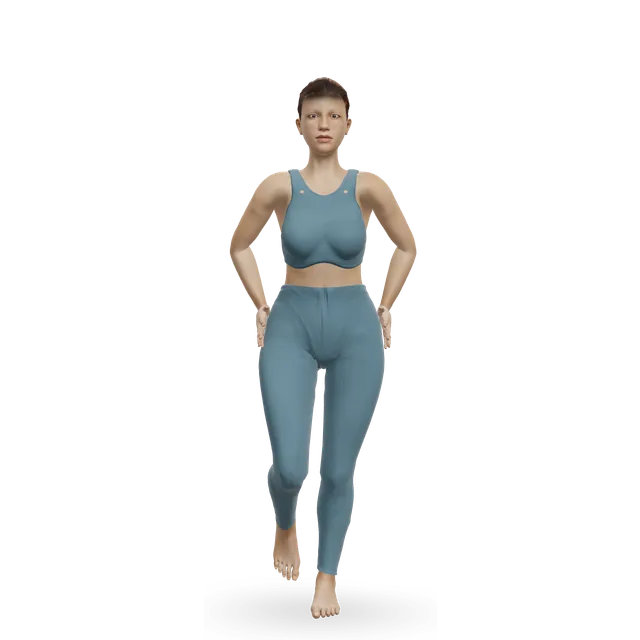
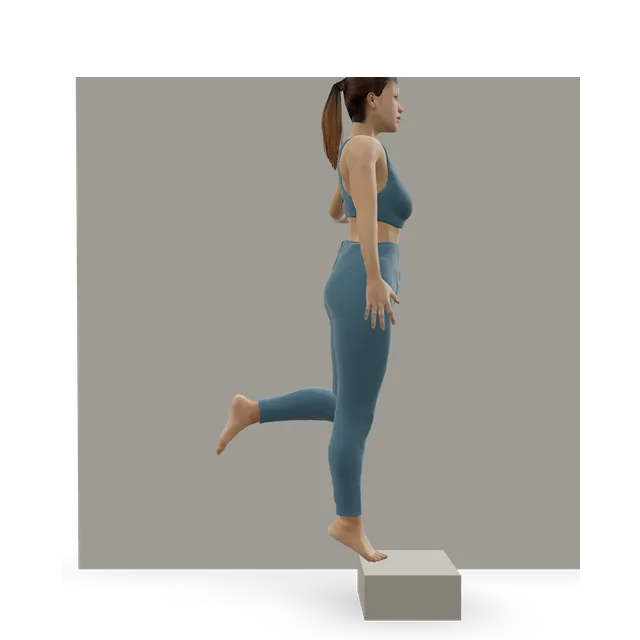
Elliptical trainer demonstrated on the 3D figure3D demoElliptical trainerBeginner · Cardio machine

10 to 15 minutes at a moderate effort, a low ramp and moderate resistance, within the pain rule · Adapted from the move page's dose (10 to 20 minutes to start); the shorter time, low ramp and moderate resistance are our suggestion

Harder: Stair-stepper machine

Recumbent exercise bike demonstrated on the 3D figure3D demoRecumbent exercise bikeBeginner · Cardio machine

10 to 20 minutes at a moderate effort to start, building towards 30 · The move page's dose (our editorial starting point). The swap when the elliptical pinches the front of the ankle or the heel-end Achilles: a bike bends the ankle less

Harder: Stationary cycling

Ankle CARs (controlled articular rotations) demonstrated on the 3D figure3D demoAnkle CARs (controlled articular rotations)Beginner · No equipment

5 slow circles each way with each ankle, morning and evening · The move page's dose (our editorial starting point). Make the circle smaller if the front of the ankle pinches, as the move page says

Easier: Ankle circles · Harder: Toes-tucked kneeling (toe squat)

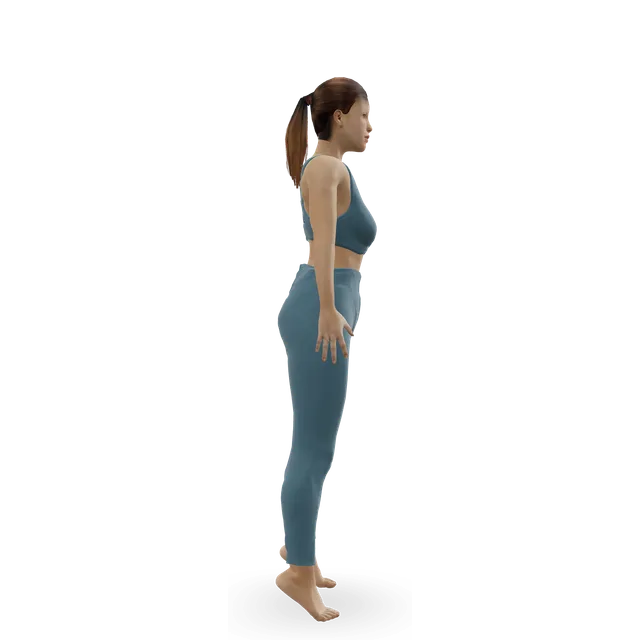
Isometric calf raise hold demonstrated on the 3D figure3D demoIsometric calf raise holdBeginner · A wall

5 holds of 30 to 45 seconds, once or twice a day · The move page's dose (an editorial starting point; the 2024 Achilles guideline lists holds among the types of tendon loading). For pain at the back of the ankle, at up to 5 out of 10

Easier: Seated bent-knee calf raise (soleus raise) · Harder: Slow calf raise

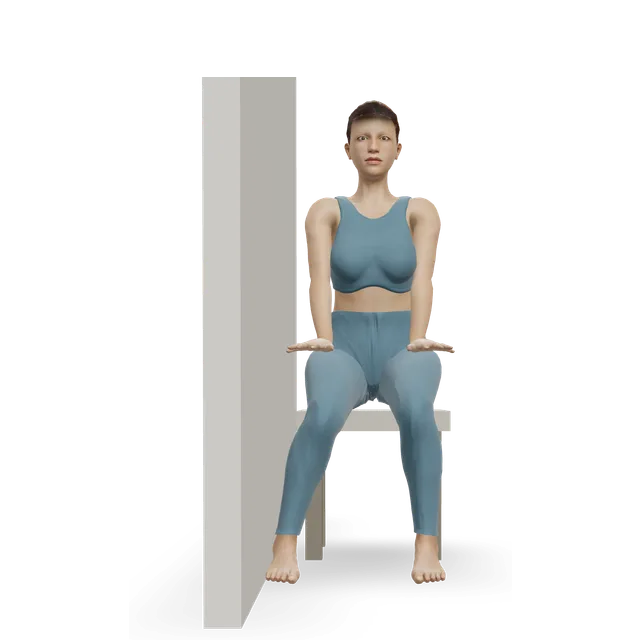
Isometric ankle eversion against a wall demonstrated on the 3D figure3D demoIsometric ankle eversion against a wallBeginner · A wall + A bench or box

8 to 12 holds of about 6 seconds, once or twice a day · As in our ankle pain on the treadmill guide (editorial): for pain on the outside of the ankle. The move page gives no dose

Harder: Band ankle eversion

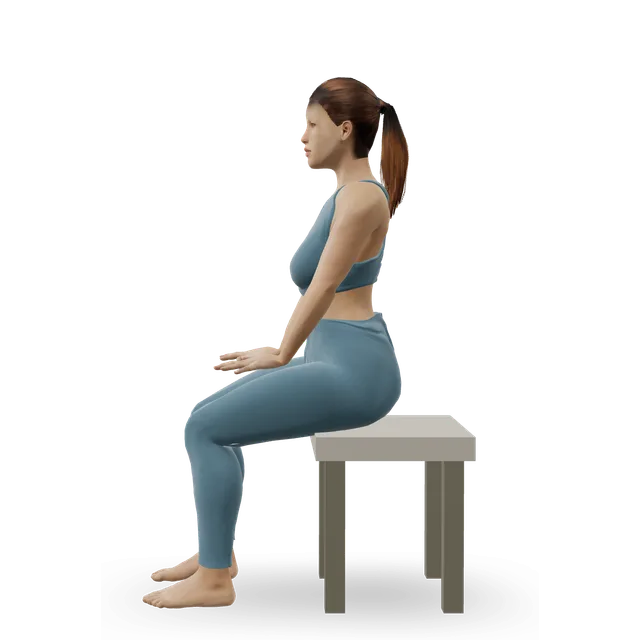
Seated bent-knee calf raise (soleus raise) demonstrated on the 3D figure3D demoSeated bent-knee calf raise (soleus raise)Beginner · A bench or box

2 to 3 at a time, building to sets of 8, 2 to 3 times a day, up to 2 sets of 15 · NHS inform's seated heel raise, with its pacing, as our ankle pain when walking guide uses it

Harder: Slow calf raise

Move on when: 20 minutes on the elliptical (or the bike) stays within the pain rule, the ankle is no more swollen or stiff the next morning, and no spot on a bone hurts to press (editorial, as in our ankle pain on the treadmill guide).

Follow along: a timer, a cue and the next move, one step at a time.
Stage 2

Build: calf strength, the ankle's side-to-side strength, and time on the machine

About weeks 2 to 6, strength at least 3 days a week, as the Achilles guideline advises. Calf strength from two legs to one, the outer and inner ankle strength that an old sprain needs, and elliptical sessions built by time first, still at a low ramp.

Slow calf raise demonstrated on the 3D figure3D demoSlow calf raiseBeginner · A wall

Holding a support: 2 to 3 at a time, building to sets of 8 and up to 2 sets of 15 · NHS inform's standing heel raise, with its pacing, as our ankle pain when walking guide uses it

Easier: Seated bent-knee calf raise (soleus raise) · Harder: Standing dumbbell calf raise

Single-leg calf raise from a step demonstrated on the 3D figure3D demoSingle-leg calf raise from a stepIntermediate · A step + A wall

3 sets of 10 to 15 each leg; with pain where the Achilles meets the heel bone, on the flat floor, not a step · As in our Achilles tendinopathy guide (editorial); the flat floor for pain at the heel bone is the Dutch guideline's advice. The move page gives no dose

Easier: Slow calf raise · Harder: Single-leg pogo hops

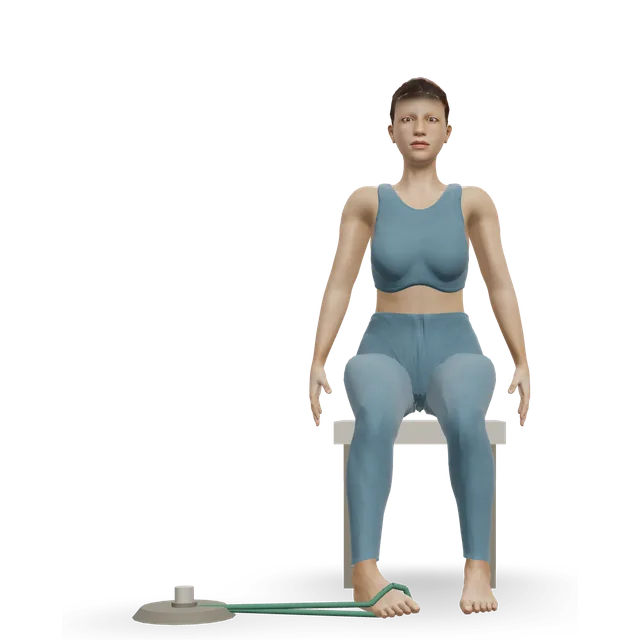
Band ankle eversion demonstrated on the 3D figure3D demoBand ankle eversionBeginner · A band + A bench or box

2 to 3 sets of 5 to 8 · As in our ankle pain guide (an NHS hospital leaflet's dose). The move page gives no dose

Easier: Isometric ankle eversion against a wall · Harder: Single-leg stand

Band ankle inversion demonstrated on the 3D figure3D demoBand ankle inversionBeginner · A band + A bench or box

After a sprain, 2 to 3 sets of 5 to 8 · The move page's dose (an NHS hospital leaflet's dose)

Harder: Single-leg calf raise from a step

Knee-to-wall ankle rock demonstrated on the 3D figure3D demoKnee-to-wall ankle rockBeginner · A wall

10 slow rocks per side, daily · The move page's dose. Use a smaller range if the front of the ankle pinches; with pain at the heel bone, stop at a gentle stretch

Harder: Deep squat hold

Elliptical trainer demonstrated on the 3D figure3D demoElliptical trainerBeginner · Cardio machine

10 to 20 minutes at a moderate effort to start, building towards 30 · The move page's dose (our editorial starting point). Still a low ramp; time first

Harder: Stair-stepper machine

Move on when: 3 sets of 10 single-leg calf raises stay within the pain rule, you can stand on the sore leg for 30 seconds without support, and 30 minutes on the elliptical leaves the ankle no worse the next morning (editorial, as in our ankle pain on the treadmill guide).

Follow along: a timer, a cue and the next move, one step at a time.
Stage 3

Back to your usual sessions: resistance, the ramp, intervals, and keep strong

From about week 6, strength twice a week, then ongoing. Heavier calf loading, balance and control for an old sprain, and your usual elliptical sessions coming back by the written steps below, with the ramp and intervals last. No study has tested a return to the elliptical after ankle pain, so the order is editorial, following our elliptical guides.

Single-leg calf raise from a step demonstrated on the 3D figure3D demoSingle-leg calf raise from a stepIntermediate · A step + A wall

3 sets of 8 to 12 each leg with a backpack or dumbbell, slow up and down; with pain at the heel bone, on the flat floor · Editorial, following the guideline's loads as high as tolerated and the heavy slow resistance trial

Easier: Slow calf raise · Harder: Single-leg pogo hops

Single-leg reach matrix demonstrated on the 3D figure3D demoSingle-leg reach matrixIntermediate · No equipment

3 rounds of 5 reaches in each direction, each leg · The move page's dose (an editorial starting point). Ease off the deep reaches in the first weeks after a sprain, as the move page says

Easier: Standing crossed-leg side reach · Harder: Single-leg Romanian deadlift

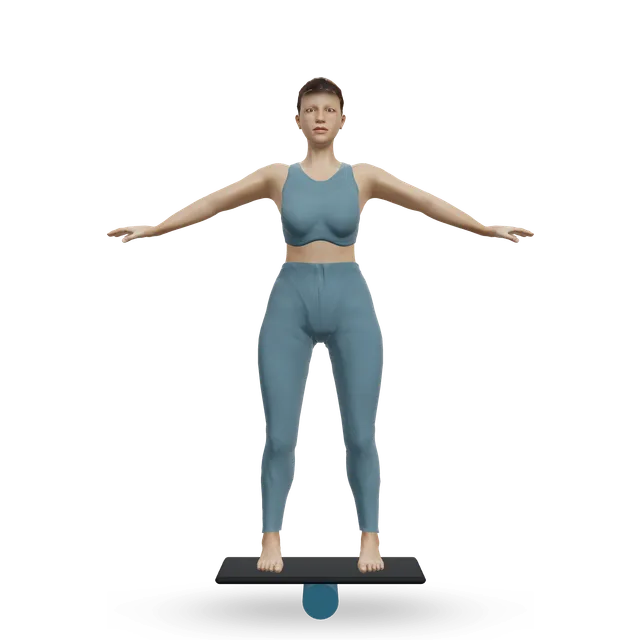
Balance board stand demonstrated on the 3D figure3D demoBalance board standBeginner · Other / check instructions

Several holds of 20 to 30 seconds on most days · The move page's dose (an editorial starting point). After a sprain, the home balance programme that cut repeat sprains ran for 8 weeks

Easier: Single-leg stand

Eccentric heel drop demonstrated on the 3D figure3D demoEccentric heel dropIntermediate · A step

3 sets of 15, knee straight and bent, twice a day · As in our Achilles tendinopathy guide (the trial programme's dose). Mid-portion pain only: with pain at the heel bone, leave it out, as an orthopaedic page says. The move page gives no dose

Easier: Slow calf raise · Harder: Single-leg pogo hops

Elliptical trainer demonstrated on the 3D figure3D demoElliptical trainerBeginner · Cardio machine

Your usual sessions: time, then resistance, then the ramp, then intervals, one at a time · Editorial, by the written steps below, building on stage 2

Harder: Stair-stepper machine

Move on when: Your usual sessions pass the pain rule for 2 weeks. Keep two calf sessions a week, and after a sprain keep a balance routine going for 8 weeks, the length of the home programme that cut repeat sprains. If you're returning to running, our ankle pain when running guide's walk-jog programme follows the elliptical (editorial).

Follow along: a timer, a cue and the next move, one step at a time.

What to change for now

On the elliptical for now (written steps)

Our 3D figure can't show the machine's settings or where your feet sit on the pedals. These steps come from lab studies of ankle and foot loading in healthy people, guidelines and rehabilitation protocols, NHS pages and our elliptical guides; where a step is our suggestion or our reading, it says so. None has been tested against ankle pain on the elliptical. Keep what passes the pain rule.

  • 1. Time first: shorter sessions while it's sore, at a moderate effort (you can talk but not sing), building by a few minutes every session or two, as our elliptical guides say.
  • 2. Resistance: moderate, enough that you don't bounce, never a grind; more resistance raised the load under the foot in a lab study.
  • 3. The ramp: low while it settles, especially with a pinch at the front of the ankle or pain at the heel bone (our reading; no study has measured the ankle at different ramp settings).
  • 4. Stride: a smooth, natural stride; if your machine sets the stride length, a shorter one may bend the ankle less (our reading, from a study of the pedal path on one machine).
  • 5. Feet: flat on the pedals and pointing forwards, the whole foot on the pedal and not jammed against the front of the foot wells, as our elliptical move page says. Turning the toes out changed knee and hip angles in a lab study; no study has tested foot position at the ankle.
  • 6. The heel: in a lab study the heel lifted a little at the back of each stride while the ball of the foot stayed on the pedal, so that is normal. With a pinch at the front of the ankle or pain at the heel bone, let it rise rather than pressing it down (our reading). With numb toes, our foot pain on the elliptical guide suggests shifting your weight back through your heels for a few strides.
  • 7. Shoes: comfortable, supportive trainers laced snugly; with pain at the heel bone, shoes that don't press on the back of the heel, as an orthopaedic page suggests for that kind of Achilles pain.
  • 8. Another machine: ellipticals differ in how they load the heel, so try another if one always hurts; a recumbent or upright bike bends the ankle least.
  • 9. Backwards: leave it until forwards is comfortable; it has been studied only at the knee and hip.
  • 10. Hands: stand tall and drive with your legs rather than leaning on the handles, as our elliptical move page says.
  • 11. Getting on and off: hold the fixed handles, step on and off at the lowest pedal and let the pedals stop first, as our elliptical guide says; most elliptical injuries seen in emergency departments are sudden ones such as falls and cuts.
  • 12. Numb feet or diabetes: shoes always, and check your feet after every session, as our foot pain on the elliptical guide says.

Sources 5, 10, 11, 46, 13, 6, 12, 1

How the elliptical comes back (written steps)

No trial has tested how to bring the elliptical back after ankle pain. These steps are our suggestion, following our elliptical guides' one-change-at-a-time order.

  • 1. Short sessions at a low ramp and moderate resistance.
  • 2. Longer sessions, time first.
  • 3. Resistance, a level at a time.
  • 4. The ramp.
  • 5. Intervals.
  • 6. Backwards for variety. If the ankle flares, go back a step, not to none.

Positions to swap, and why

Habit or positionWhy it mattersInstead
A high ramp with a pinch at the front of the ankleThe elliptical already bends the ankle further than walking, and a pinch means the front of the joint is being squeezed (our reading).A low ramp and a shorter stride, or the bike for now.Try: Recumbent exercise bike
Pressing the heels down hard with pain at the heel boneDeep ankle bend squeezes the Achilles against the heel bone, and a programme that limited it did better.Let the heel rise naturally; calf raises on the flat floor.Try: Slow calf raise
Grinding at high resistanceMore resistance raised the load under the foot.Moderate resistance; add time first.
Toes turned out or feet jammed against the foot wellsToe-out changed knee and hip angles; no study has tested ankle comfort.Feet flat and pointing forwards.
Stopping all exercise until the Achilles stops hurtingThe guideline says complete rest isn't indicated.The elliptical or a bike within the pain rule, plus calf holds.Try: Isometric calf raise hold
Heel drops off a step with pain at the heel boneThey load the tendon into deep ankle bend.Calf raises on the flat floor.Try: Slow calf raise
Stretching the calf hard as the fixThe heel-bone trial left calf stretching out, and stretching can irritate the tendon near the heel.Calf strength.Try: Seated bent-knee calf raise (soleus raise)
Going back to running straight after a sprainThe NHS says avoid strenuous exercise such as running for up to 8 weeks.The elliptical and balance work first.Try: Single-leg reach matrix
Skipping balance work once the sprain feels fineBalance training cut repeat sprains by about a third.A balance routine for 8 weeks.Try: Balance board stand
Carrying on after a pop at the back of the ankleIt can be an Achilles rupture.Stop, and get it checked the same day.
Pushing on through chest pain or breathlessnessThat is a heart or lung warning sign, not the ankle.Stop, and act on the warning signs.

Routines to follow

Elliptical workout for beginners: set-up, steady rounds and first intervals on the cross trainer

A first elliptical (cross trainer) workout: step on safely, ride steady at a talk-but-not-sing effort, then add 1-minute pushes once 20 minutes is easy.

30 minBeginner4 movesCardio machine, A wall

Ankle mobility routine: the knee-to-wall test, calf stretches and full-range calf raises

A 12-minute routine to improve how far your ankle bends: test it against a wall, rock it, stretch both calf muscles, strengthen through the full range, then use it.

12 minBeginner8 movesA wall, A step

Foot and ankle strengthening routine: toes, arches, calves and balance

A 15-minute barefoot routine for stronger toes, arches, calves and ankles, finishing with balance. You need only a towel, a wall and a resistance band.

15 minBeginner11 movesA wall, Other / check instructions

Calf workout: straight-knee and bent-knee raises with a step

A 25-minute calf workout with a step and a dumbbell: single-leg raises for the big calf muscle, then seated raises for the soleus, with gym swaps for each move.

25 minIntermediate7 movesA wall, A step

Balance exercises routine

Balance practice in 10 minutes: tandem stance, single-leg stands, marches, heel walks, tree pose and floor transfers.

10 minBeginner7 movesA wall, A bench or box

Yoga for Achilles tendinopathy: a 25-minute class with calf loading built in, heels level and no jumping

A 25-minute yoga class for Achilles tendinopathy: calf holds and slow raises built in, short standing poses, calf stretches only if stiff, and no jumping.

25 minBeginner15 movesA wall, A bench or box

Calf-loading Pilates for Achilles tendinopathy: a 25-minute class with holds, slow heel raises, heels kept level and no jumping

A 25-minute Pilates class for Achilles tendonitis: holds on tiptoe and slow heel raises first, then mat Pilates that's light on the tendon. Heels level, no jumps.

25 minBeginner13 movesA wall, A bench or box

Yoga after an ankle sprain: a 25-minute class for ankle range, calf strength and balance, built up step by step

A 25-minute yoga class after an ankle sprain: ankle range, calf and ankle strength, short standing poses and a one-leg balance progression, with no jumping.

25 minBeginner16 movesA bench or box, A wall

Ankle-steadying Pilates after a sprain: a 25-minute class for ankle strength, hips and one-leg balance

A 25-minute Pilates class for the weeks after a sprained ankle: footwork on a wall, band work in every direction, side-lying hip work and a balance progression.

25 minBeginner18 movesA bench or box, A wall

Cardio machines for beginners: treadmill, cross-trainer, rower and bike

A first tour of the gym's cardio machines: a few minutes each on the bike, treadmill, cross-trainer and rower, set up safely, at a talk-but-not-sing pace.

40 minBeginner7 movesCardio machine, A wall

More moves for this area

Questions people ask

Why does my ankle hurt on the elliptical?

Usually a tendon or an old sprain meeting more time, resistance or ankle bend than it's used to. In lab studies the elliptical bends the ankle further up than walking, which a pinch at the front or the Achilles at the heel bone can dislike. Moderate resistance, a smooth stride, a lower ramp and shorter sessions usually help.

Why does my ankle hurt after the elliptical?

An ache that evening or the next morning in the cord above the heel is the Achilles pattern, and stiffness on the outside after an old sprain is common. It should settle within a day and ease as you build up gradually. A pop at the back of the ankle, or a hot, swollen ankle, isn't ordinary soreness.

Can the elliptical cause ankle pain?

It can, after a jump in time, resistance or ramp, or if you switched to it with a sore Achilles or an old sprain. It doesn't jolt the ankle like running, but it bends it further than walking. Change one setting at a time.

Is the elliptical good for an ankle injury?

Often, as a swap for running or long walks, if it stays within the pain rule: guidelines advise swapping painful activities for ones that don't provoke, and rehabilitation protocols use it before the treadmill. If the ankle pinches at the front or can't yet bend far, a bike comes first.

Can I use the elliptical with a sprained ankle?

Usually once you can walk with little or no limp and the swelling is settling, at a low ramp and resistance for short sessions. The NHS says avoid strenuous exercise such as running for up to 8 weeks, and balance work cuts repeat sprains. If you couldn't take four steps after the injury, get it checked first.

Is the elliptical OK with Achilles tendonitis?

Often yes: an orthopaedic page names it as a low-impact option, and the guideline says keep activities within pain tolerance. Keep pain at 5 out of 10 or less, settling by the next morning, and keep the ramp low if the pain is where the tendon meets the heel bone.

Should my heels lift on the elliptical?

A little heel lift at the back of each stride is normal: in a lab study the heel lifted while the ball of the foot stayed on the pedal. With a pinch at the front of the ankle or pain at the heel bone, letting it lift is kinder in our reading. With numb toes, shifting your weight back through your heels for a few strides can help.

Does the incline on the elliptical hurt your ankles?

No study has measured it at the ankle. A higher ramp raised the front shin muscle's work in one small unpublished study, and it may bend the ankle further (our reading). Keep it low while your ankle settles and bring it back last.

What's the best foot position on the elliptical?

Feet flat, pointing forwards, the whole foot on the pedal and not jammed against the front, as our elliptical guide says. No study has tested foot position against ankle pain; turning the toes out changed knee and hip angles in a lab study.

Is it my Achilles or something worse?

A gradual ache in the cord that's stiff in the morning is tendinopathy. A sudden snap or a feeling of being kicked at the back of the ankle, then walking flat-footed, can be a rupture. Get a possible rupture checked the same day.

How long until I can go back to running?

After a sprain, the NHS says up to 8 weeks before strenuous exercise such as running, and Achilles pain often takes months. Build up the elliptical and calf strength first, then follow a walk-jog programme. No one can promise a date.

When should I see a doctor?

Get help the same day for a pop at the back of the ankle, an ankle you can't put weight on after a twist, or a hot, swollen ankle with a fever; call 999 for a misshapen ankle after a fall or chest pain on the machine. See a GP for ankle pain that isn't better after 2 weeks, one sore spot on a bone, or an ankle that keeps giving way. In the US, call 911 where this page says 999.

Related exercise guides

Other pain guides

Sources

  1. Graves 2014 · Injuries from home exercise machines in US emergency departments, 2007 to 2011 (surveillance study, Inj Prev)
  2. Kaplan 2014 · Foot loads in walking, jogging, treadmill jogging and on an elliptical in 75 adults (lab study, Gait Posture)
  3. Burnfield 2007 · Foot pressures on five cardio machines and in walking and running, in 20 adults (lab study, Med Sci Sports Exerc)
  4. Lu 2007 · Leg joint angles and loads on an elliptical against walking in 15 men (lab study, Med Sci Sports Exerc)
  5. Kaplan 2014 · Foot loads with changing resistance and incline on an elliptical in 30 adults (lab study, Orthop J Sports Med)
  6. Damiano 2011 · Elliptical, bike, treadmill and overground walking compared in 10 adults (lab study, Gait Posture)
  7. Burnfield 2010 · Joint movement and muscle work on 4 ellipticals against walking in 20 adults (lab study, Phys Ther)
  8. Eken 2022 · Leg muscle activity on a treadmill, stepper and elliptical in 17 runners (lab study, J Strength Cond Res)
  9. Alfi 2017 · Incline, resistance and leg muscle activity on an elliptical (unpublished master's thesis, Humboldt State University)
  10. Rogatzki 2012 · Ankle and knee movement on an elliptical path against a stepping path (lab study, Res Q Exerc Sport)
  11. Paquette 2015 · Foot position on an elliptical and hip and knee movement in 16 men (lab study, J Appl Biomech)
  12. Hummer 2021 · Pedalling direction, ramp angle and knee movement on an elliptical in 24 adults (lab study, Knee)
  13. Cesar 2020 · Foot pressures on four ellipticals against walking in 10 young adults (pilot study, Foot)
  14. Burnfield 2020 · Foot pressures on four ellipticals against walking in 10 older adults (lab study, Clin Biomech)
  15. Chimenti 2024 · Mid-portion Achilles tendinopathy, revision 2024 (clinical practice guideline, J Orthop Sports Phys Ther)
  16. Martin 2021 · Lateral ankle ligament sprains, revision 2021 (clinical practice guideline, J Orthop Sports Phys Ther)
  17. Doherty 2016 · Recovery from a first ankle sprain in 82 people over a year (cohort study, Am J Sports Med)
  18. de Vos 2021 · Dutch multidisciplinary guideline on Achilles tendinopathy (guideline, Br J Sports Med)
  19. Jonsson 2008 · Heel drops on the flat for Achilles pain at the heel bone in 27 people (pilot study, Br J Sports Med)
  20. Biggs 2021 · Achilles tendon rupture: what you need to know (review, Br J Hosp Med)
  21. Maffulli 1998 · The clinical tests for Achilles rupture in 174 patients (diagnostic study, Am J Sports Med)
  22. Fridén 2017 · 46 missed Achilles ruptures reported in Sweden (case review, Läkartidningen)
  23. Molstad Andresen 2025 · Compensation claims after Achilles rupture treatment in Norway, 2010 to 2020 (retrospective study, Foot Ankle Orthop)
  24. Talusan 2014 · Anterior ankle impingement (review, J Am Acad Orthop Surg)
  25. Leiber-Wackenheim 2025 · Anterior ankle impingement (review, Orthop Traumatol Surg Res)
  26. Ribbans 2015 · Posterior ankle impingement in sport (review, Foot Ankle Surg)
  27. Davda 2017 · Peroneal tendon disorders (review, EFORT Open Rev)
  28. Arshad 2021 · Sinus tarsi syndrome: 31 studies (scoping review, Foot Ankle Surg)
  29. Ross 2018 · Exercise for tibialis posterior tendon problems: 3 trials (systematic review, BMJ Open Sport Exerc Med)
  30. Gengatharan 2025 · Talus cartilage lesions in 129 people having ankle ligament surgery (retrospective study, J Foot Ankle Surg)
  31. Kim 2023 · MRI findings after acute ankle sprains in 110 athletes (cross-sectional study, Orthop J Sports Med)
  32. Vertullo 2002 · Unresolved outer ankle pain: not always just a sprain (review, Aust Fam Physician)
  33. NHS · Septic arthritis
  34. Bachmann 2003 · The Ottawa ankle rules: 27 studies, 15,581 people (systematic review, BMJ)
  35. Sharifi Razavi 2026 · The Ottawa ankle rules revisited: 43 studies, 16,503 adults (systematic review and meta-analysis, Arch Acad Emerg Med)
  36. Vuurberg 2018 · Diagnosing, treating and preventing ankle sprains: update of a Dutch evidence-based guideline (guideline, Br J Sports Med)
  37. AAOS OrthoInfo · Achilles tendon rupture (tear)
  38. AAOS OrthoInfo · Sprained ankle
  39. NHS inform · Ankle problems
  40. NHS · Sprains and strains
  41. University Hospitals Sussex NHS Foundation Trust · Ankle sprain (A&E patient leaflet, 2025)
  42. NHS inform · Achilles tendinopathy
  43. Silbernagel 2011 · Achilles tendinopathy 5 years after exercise treatment in 34 people (case series, Am J Sports Med)
  44. Lagas 2022 · Achilles tendinopathy 10 years on in 43 people (cohort study, J Sports Sci)
  45. Pringels 2025 · Less tendon compression for Achilles pain at the heel bone in 42 people (randomised trial, Br J Sports Med)
  46. AAOS OrthoInfo · Achilles tendinitis
  47. Paantjens 2026 · Swapping running for a cross trainer or stair climber in 40 service members with Achilles tendinopathy (cohort study, BMJ Mil Health)
  48. Chester 2016 · Elliptical exercise against treadmill running in 16 runners (lab study, J Appl Biomech)
  49. Vesely 2025 · Rehabilitation after outer ankle ligament repair with an internal brace (clinical commentary, Int J Sports Phys Ther)
  50. Marrone 2024 · Rehabilitation and return to sport after Achilles tendon repair (clinical commentary, Int J Sports Phys Ther)
  51. Silbernagel 2007 · Carrying on with sport under a pain-monitoring model for Achilles tendinopathy in 38 people (randomised trial, Am J Sports Med)
  52. Beyer 2015 · Heavy slow resistance against heel drops for Achilles tendinopathy in 58 people (randomised trial, Am J Sports Med)
  53. Leicestershire Partnership NHS Trust · Achilles tendinopathy (physiotherapy leaflet, July 2026)
  54. St George's University Hospitals NHS Foundation Trust · Achilles tendinopathy (physiotherapy leaflet, March 2025)
  55. Doherty 2017 · Treating and preventing ankle sprains: 46 reviews (overview of systematic reviews, Br J Sports Med)
  56. Hupperets 2009 · Home balance training after an ankle sprain in 522 athletes (randomised trial, BMJ)
  57. Schiftan 2015 · Balance training to prevent ankle sprains: 7 trials, 3,726 people (systematic review and meta-analysis, J Sci Med Sport)
  58. Silbernagel 2020 · Conservative management of Achilles tendinopathy (clinical review, J Athl Train)
  59. NHS inform · Exercises for ankle pain
  60. Smith 2017 · Painful or pain-free exercise for long-lasting pain: 7 trials, 385 people (systematic review and meta-analysis, Br J Sports Med)
  61. NHS · Ankle pain
  62. NHS · Heel pain
  63. NHS · Tendonitis (past its review date: reviewed June 2023, review due June 2026)
  64. NHS · Broken ankle
  65. NHS · Heart attack

Exercise education, not a diagnosis or treatment plan. It is written from the guidelines and studies listed above; review by a clinician is pending. If your pain follows an injury, is severe, is getting worse, or comes with any warning sign listed on this page, get it assessed. Health disclaimer.