Pain guide · Back pain

Back pain from jump rope: landings, posture and rope length, young athletes and what helps

Back pain from jump rope often comes from doing a lot of repetitive impact too soon, with high or stiff landings, a hunched posture from a rope that is too short, or a weighted rope or vest, on top of an ordinary sore back. Where and when it hurts is the best clue: an ache across the lower back that builds through your rounds is usually ordinary low back pain, a sudden catch a strain or spasm, and pain down a leg a nerve. In a teenager or young athlete, back pain that is worse arching backwards and builds over weeks can be a stress fracture of the spine, which needs checking. In lab studies, ordinary skips landed at roughly 3 to 4.5 times body weight, and jumping rope isn't known to harm the back when you build it up gradually. Low, soft two-foot bounces, a rope that fits, short rounds 2 or 3 days a week and walking or cycling while it settles usually help. No study has measured the back in rope skipping, so this guide says where each piece of advice comes from.

This guide starts with the signs that need help, from a 999 call for numbness around your genitals or bottom, new bladder or bowel trouble or weakness in both legs, to a same-day check through the National Health Service's 111 line (NHS 111) or a general practitioner (GP) for back pain with a fever, and a GP for a child under 6 with back pain or a teenager whose back hurts arching backwards. It then maps the causes by where it hurts, explains what the studies show about landings, the spine and discs, floors, shoes and young athletes, and when a scan helps, shows how to change your skipping today, and gives a three-stage plan with a 3D demo of every move, from walking and the bike back to the rope.

When to get help first

Exercise is for pain that has been checked or is clearly mild and settling.

Get urgent medical help if

  • Call 999 or go to A&E: loss of feeling or numbness around the genitals or bottom, new trouble peeing or controlling your bladder or bowels, changes in genital sensation during sex or problems with erections or orgasm, or pain, tingling, weakness or numbness in both legs. These are signs of cauda equina syndrome, which needs treating in hospital urgently. Don't drive yourself.
  • Call 999 or go to A&E: back pain with chest pain, or back pain that started after a serious accident, such as a car crash.
  • Call 999: sudden pain or discomfort in your chest that does not go away (it can feel like squeezing or pressure, burning or indigestion); pain that spreads to your left or right arm, or your neck, jaw, shoulder, stomach or back; or chest pain and you feel sweaty, sick, light-headed or short of breath. It could be a heart attack. Don't drive yourself to A&E.
  • Someone who faints while exercising, or who has fainted and can't be woken within a minute, has chest pain or a pounding, fluttering or irregular heartbeat, or hasn't fully recovered.
  • Call 999 or go to A&E if breathing suddenly becomes difficult, if pain in your chest or upper back comes on suddenly with breathlessness or a very fast heartbeat, or if someone passes out. Do not drive yourself. It can be a blood clot that has reached the lungs.
  • Call 999: sudden, severe pain in the tummy or back, which can come with breathlessness, pale or grey skin, or collapse. It can be a burst abdominal aortic aneurysm, most common in men aged 65 or over and in people who smoke or used to smoke.
  • Same day (GP or NHS 111): back pain and you feel hot, cold, shivery or generally unwell, or severe pain that starts suddenly or is getting worse quickly.
  • Same day (NHS 111): back pain after a new, significant injury in the last 7 days, such as a fall from a height (off a box, a bar or rings) or a direct blow to the back.
  • Same day (NHS 111): back pain after a new, significant injury in the last 7 days, such as a fall from a height (off a trampoline, a wall or a horse) or a direct blow to the back.
  • Call 999 or go to A&E: leg pain with numbness around the genitals or bottom, new trouble starting or controlling peeing, not knowing when you need to poo or losing control of it, sciatica in both legs, or weakness or numbness in both legs that is severe or getting worse. These can be signs of cauda equina syndrome, which needs treating in hospital as soon as possible.
  • Same day (urgent GP appointment or NHS 111): new difficulty lifting the front of your foot or toes (foot drop), or a foot that slaps down or catches as you walk, especially if it is getting worse. Weakness in both legs, or with numbness around the genitals or bottom or bladder or bowel changes, is the 999 emergency above.
  • Same day: you have or have had cancer, and new back pain that is severe and doesn't let up, is getting steadily worse, is worse at night and disturbs your sleep, is worse when you cough, sneeze or strain, or comes with tenderness over the spine. Contact your cancer team or GP urgently. With cancer, new weakness, difficulty walking, numbness or bladder or bowel problems are an emergency.
  • Call 999 or go to A&E if your child gets sudden pain in their hip, knee or thigh (hip problems can sometimes be felt in the thigh or knee), can't put any weight on their leg, their leg has changed shape or is pointing at an odd angle, they feel generally unwell and have a high temperature, or feel hot, cold or shivery, they also have severe pain in the lower part of their tummy, or their symptoms get worse.
  • A young child, usually under 5, who suddenly won't walk, stand or sit, holds their back stiff and won't bend to pick things up, or cries when their nappy is changed: get help the same day, through an urgent GP appointment or NHS 111. At this age a disc or bone infection is one cause, and young children don't always get a high temperature (our suggestion, from guidance for doctors).
  • Pain, swelling, redness and warmth over a bone, or a very high temperature with feeling generally unwell: ask for an urgent GP appointment or contact NHS 111. It could be a bone infection. Take your child to a GP if they don't want to use an arm or leg and seem irritable: young children don't always get a high temperature with a bone infection.
  • Go to A&E: severe pain after an injury, which can mean a broken bone, or you cannot put any weight on the leg. A stress fracture can become a complete break if you keep loading it.
  • Same day (call NHS 111, or go to A&E if you feel very unwell): after a big or unusual session, such as hundreds of squats, sit-ups, back extensions or burpees, a challenge or a new class, muscle pain, swelling or weakness far worse than the session explains, and dark pee (red, brown, tea or cola coloured), sometimes starting hours or days later. Dark pee isn't always there, so muscles far sorer, more swollen or weaker than the session explains still need the same-day check. It can be rhabdomyolysis, a breakdown of muscle that can harm the kidneys.
  • Same day (urgent GP appointment or NHS 111): sudden, severe pain in one joint, with swelling, a change in skin colour or difficulty moving it, especially if you feel unwell, hot, cold or shivery or have a high temperature (although not everyone has one). It could be an infection in the joint, gout or calcium crystals (pseudogout), and only a sample of fluid from the joint can tell them apart.

See a doctor or physiotherapist if

  • Back pain that hasn't improved after a few weeks of looking after it at home, stops you doing day-to-day activities, worries you, or you're struggling to cope.
  • Pain, tingling or numbness spreading below the knee that isn't settling after a few weeks, is getting worse or stops your normal activities: see a GP.
  • Pain that is not improving after a few weeks, is getting worse, or is stopping your normal activities.
  • Pain that doesn't improve with rest or is worse at night, or pain that is worse when you sneeze, cough or poo.
  • Unexplained weight loss, or a lump, swelling or change in the shape of your back.
  • A teenager in a sport that arches or twists the back, such as gymnastics, dance, diving, volleyball, cricket fast bowling, baseball pitching, weightlifting, football or rugby, with back pain that lasts more than a couple of weeks, is worse arching back or stops them training: get it checked by a GP or sports physiotherapist. It can be a stress fracture in the spine.
  • A teenager or young adult whose low back pain is worse arching backwards and hasn't settled after a couple of weeks: stop the lifts that arch the back and get it checked by a GP or a sports medicine doctor or physiotherapist. It can be a stress fracture of the spine (spondylolysis), which usually does well without surgery when it's found.
  • See a GP if your child is under 6 and has back pain, or if back pain lasts more than 4 weeks, stops them doing things, is getting worse or disturbs their sleep, or comes with weight loss, night sweats, a change in the shape of their spine, stiffness or difficulty moving, or pins and needles, weakness or numbness. This is the advice of the NHS children's physiotherapy services in Gwent (Aneurin Bevan University Health Board) and in York and Scarborough. A high temperature or feeling unwell needs help the same day, and bladder or bowel changes, numbness around the genitals or bottom, or symptoms in both legs need 999 (see above).
  • See a GP for bone pain or tenderness, particularly if it's worse at night, a lump or swelling, or looking more pale than usual, getting ill a lot or swollen glands. NICE (the National Institute for Health and Care Excellence) asks GPs to arrange a very urgent blood test for persistent or unexplained bone pain in a child, and to consider a very urgent X-ray for unexplained bone swelling or pain.
  • Low back or buttock pain on one side that comes on with running, in a distance runner, especially if your periods have stopped or become irregular, you've lost weight or you've had a stress fracture before: stop running and see a GP. It can be a stress fracture of the sacrum, which an MRI (magnetic resonance imaging) scan shows.
  • A stress fracture from ordinary activity, more than one stress fracture, periods that have stopped or become irregular, or worries that you're eating too little for your training: see a GP about bone health and energy intake.
  • Sudden new back pain after a minor fall, lift, cough or sneeze, from 50 or past the menopause, or if you take long-term steroid tablets; or height loss, a curved spine or a change in posture: see a GP. It can be a spinal fracture.
  • Back pain and stiffness that persists in a teenager or young adult. Ankylosing spondylitis tends to start at that age and can affect the whole spine.
  • Pain at the top of the back, between the shoulders, rather than in the lower back.

Where does it hurt?

Location narrows the likely causes; it does not diagnose.

An ache across the lower back that builds through the rounds or after a session, worse with long sessions, high jumps or a weighted rope or vest, easing with rest

Usually ordinary low back pain, brought on by too much impact too soon. It is the commonest kind of back pain and usually settles within weeks.

Read: Back pain →
A sudden catch or sharp pain on one side mid-round or on a bad landing, sometimes with the muscles locking up

Usually a pulled back muscle or a back spasm.

Read: Back spasm and pulled back muscle →
A dull, even ache across the lower back the day after a new class, a challenge or double-under practice

Muscle soreness.

Read: Back pain after a workout →
Down one leg past the knee, with tingling, numbness or weakness, worse bending or coughing

Sciatica, often from a disc in adults.

Read: Sciatica →
A scan report says bulging or herniated disc

Disc changes are common in people without back pain.

Read: Herniated or bulging disc →
A teenager or young athlete whose low back hurts more arching backwards, building over weeks, often in a jumping or arching sport

Possibly a stress fracture of the spine (spondylolysis): stop jumping and get it checked.

Read: Spondylolisthesis →
A child or teenager with back pain, and not sure why

Usually sore muscles, sport or a growth spurt. A child under 6, pain at night or pain lasting more than 4 weeks needs a GP.

Read: Back pain in children →
Low on one side, by the dimple at the back of the pelvis, into the buttock

Often the sacroiliac joint.

Read: SI joint pain →
Low back or buttock on one side, building with running and jumping, in someone eating too little for their training or with irregular periods

Rarely a stress fracture of the sacrum: stop the impact and see a GP.

Read: Stress fracture →
From mid-life, an ache worse standing or walking, eased by bending forward

Possibly narrowing in the lower spine.

Read: Lumbar spinal stenosis →
Between the shoulder blades or across the upper back during rounds

Usually the upper back muscles holding your arms and posture. With chest pain it is a 999 call (see the warning signs).

Read: Upper back pain →
Leaking, heaviness or pelvic pain when you jump, during pregnancy or after a baby

The pelvic floor needs attention first: see a GP or a pelvic health physiotherapist before more jumping.

The feet, the arch or the heels when you skip

Our jump rope foot guide covers the ball of the foot, the heel and stress fractures.

Read: Foot pain from jump rope →
The knees when you skip or land

Our jumping knee guide covers landings and a plan back.

Read: Knee pain when jumping →
Mainly in burpees, jumping jacks or classes

Our burpee back guide covers the landing and the plank.

Read: Back pain in burpees →
Mainly when you run

Our running back guide covers what to change and a run-walk plan.

Read: Back pain when running →
Muscles far sorer, more swollen or weaker than the session explains, with or without dark pee

Rarely muscle breakdown, which needs a same-day check (see the warning signs).

Read: Back pain after a workout →

Understand it

What skipping asks of the back, and what no study has countedEmerging evidence

Skipping is a quick, low bounce on the balls of the feet, about twice a second, with the calves and Achilles tendons doing most of the spring. In 10 adults on a force plate, ordinary skips landed at about 3.3 times body weight on one leg and 4.4 on two. In a separate study of 8 champions, elite double-unders landed at about 5.3 to 5.9 times body weight, the world champions leaning forward in a low, compact posture at top speed. The two figures come from different studies with different people and methods, so they are rough guides, not a fair comparison.

In young competitive skippers, double-unders and the speed step reached peak forces similar to running, with more work at the ankle, and in 16 teenage boys the two-foot bounce landed more gently than the alternate-foot step, with more hip and knee bend.

No study has measured spinal load, trunk movement or back pain in rope skipping. The one injury dataset for jump ropes, in US children's emergency visits, gives no share for the back, and in a 1986 trial the group that started daily skipping had more injuries and drop-outs than joggers, without saying where. So the map on this page is built from jumping studies, the back pain and spondylolysis evidence, and coaching and health-service advice.

Sources 1, 2, 3, 4, 5, 6

Impact and the spineEmerging evidence

Landings compress the spine a little. In 8 men, 50 drop jumps from 26 cm shortened the spine by 0.62 mm on average, and by 2.14 mm wearing an 8.5 kg weighted vest; in another 8 men, 50 drop jumps from 28 cm shortened it by 2.71 mm against 0.39 mm from standing, with landings at 3.2 times body weight. These were drop jumps from a box, bigger than a skip, and neither study's summary reports back pain, so the weighted vest finding is from drop jumps, not skipping.

Computer models put big sporting jumps and landings at more than ten times body weight on the lower spine, and a 35 cm drop landing at about 6.3 to 6.6 times body weight at the base of the spine, about 12% less in a special shoe that brought more bend at the hips, knees and ankles.

The discs seem to cope with moderate impact. In 79 adults, regular runners' lumbar discs looked 9.2% to 11.4% healthier on MRI (magnetic resonance imaging) than inactive people's, while fast running and high-impact jumping sat above the range linked with better discs. A 2026 review of 39 studies found running was the only kind of loading linked with better disc health (very low certainty), and it had no jumping group. No study shows that jumping rope harms the back, or that it helps it.

Sources 7, 8, 9, 10, 11, 12

A common cause: too much, too soon, with a tired or awkward landing

In our reading, the commonest pattern is an ache across the lower back that builds through the rounds or appears afterwards, worse with long sessions, a daily challenge, high or loopy jumps, stiff-legged or arched landings, a hunched posture and weighted ropes or vests, and easing with rest and short rounds. No study counts the causes. This is ordinary low back pain, which the NHS says usually improves within a few weeks.

Young athletes with back pain landed drop jumps with the same forces as those without, but braced their side tummy muscles 1.3 to 1.9 times harder in a study of 22. What that means isn't known.

Sources 13, 14

Rope length, posture, floors and shoesEmerging evidence

A rope that is too short makes you hunch, pike or jump high to clear it, and one that is too long makes you reach out with your arms (our reading). A Hong Kong government page with rope skipping association advice says stand on the middle of the rope and lift both ends, look forward with your back straight, and land with your knees slightly bent; these are expert advice, not tested against back pain.

Softer surfaces don't just soften the hop: in hopping on surfaces whose stiffness varied more than 1,000-fold, people stiffened their legs and the bounce stayed much the same. A sprung floor took up some of the landing in 7 ballet dancers. Shoes didn't change the peak force of a rope landing in a lab study. Insoles don't prevent back pain, a meta-analysis of 11 trials found too little evidence either way, and NICE says not to offer foot orthotics for low back pain. A wooden or sprung floor or a mat and comfortable trainers are sensible, but how much you skip matters more.

Sources 15, 16, 17, 1, 10, 18, 19, 20

Young athletes: a stress fracture of the spineEmerging evidence

In a children's hospital sports clinic, 47% of 100 teenage athletes with low back pain had a stress fracture of the back of a vertebra (spondylolysis), against 5% of adults with new back pain, and disc problems were 11% against 48%. In 1,025 non-elite teenage athletes with back pain, 30% had spondylolysis, across many sports. These are clinic samples, not all teenagers.

Pooled rates are highest in diving, cricket, baseball, rugby and weightlifting, with jumping sports around 10% to 14% (gymnastics 13.8%, track and field 12.0%, basketball 10.9%, volleyball 10.2%); in Spanish elite athletes the overall rate (8.02%) was not much higher than the general population's 3% to 7%. A review of children's back pain says sport that arches the lower back again and again raises the risk. Rope skipping itself has no row in these studies.

The NHS says the stress fracture form is more common in young athletes and gymnasts. The typical story is low back pain worse with activity and arching backwards and better with rest, sometimes with tight hamstrings. In 71 young active people, the one-legged arching test (the stork test) wasn't reliable enough to rule it out. A slipped disc is rarer in young people, usually at the lowest two levels and often linked with sport.

Sources 21, 22, 23, 24, 25, 26, 27, 28, 29, 30

When a scan or test mattersStrong evidence

In adults, not at first. The National Institute for Health and Care Excellence (NICE) says not to routinely offer imaging for low back pain outside specialist settings, disc changes are common without pain, and an old crack at the back of a vertebra showed on computed tomography (CT) in 11.5% of 188 adults without being linked to back pain.

In young people the threshold is lower: back pain worse arching backwards that hasn't settled after a couple of weeks needs a GP or sports physiotherapist. One review recommends two-view X-rays first, MRI for early diagnosis and CT for long-standing cases, and a children's health service lists an X-ray first, then MRI or CT if symptoms continue. Night pain and pain that doesn't let up point to rarer causes, which the warning signs cover.

Sources 20, 31, 32, 33, 28, 25

How it usually goesEmerging evidence

No study follows back pain from jump rope. In adults, most new back pain eases a lot within 6 weeks (average pain 56 out of 100 falling to 26), though some ache often lingers (21 at a year).

For young athletes with spondylolysis, return to sport averaged 3.7 months without surgery in a review of 25 publications, 92.2% returned without surgery in a pooled analysis of 376 athletes, and in a 2026 trial, starting physiotherapy within a week brought athletes back 38 days sooner (a median of 74 against 112 days). A New Zealand children's health service says most recover well with rest and physiotherapy. No one can promise a date.

Sources 34, 35, 36, 37, 28

What helps, and how strong the evidence is

Lower, fewer, softer: changes from coaching advice and lab studies (untested for back pain)Emerging evidence

No trial has tested a change to jump rope for back pain. Daily skipping from scratch brought more injuries and drop-outs than jogging in a small trial, so short rounds 2 or 3 days a week come first. The two-foot bounce landed more gently than the alternate-foot step, and double-unders work the ankle hard, so plain bounces come before speed work. A weighted vest made the spine shorten more after drop jumps, so weighted ropes and vests wait (our reading for skipping). Rope length, posture and soft knees are coaching advice.

Sources 15, 6, 4, 3, 2, 7

Floors, shoes and insoles help less clearly than people thinkMixed evidence

People stiffen their legs on soft surfaces, shoes didn't change a rope landing's peak force, and a sprung floor took up some of the landing in 7 dancers. There is strong evidence that insoles don't prevent back pain, and too little to say they treat it (11 trials); NICE says not to offer foot orthotics. A forgiving floor and comfortable shoes are sensible, but volume matters more.

Sources 16, 17, 1, 18, 19, 20

Walking and staying active help back painStrong evidence

In 701 adults recently recovered from low back pain, a progressive walking and education programme cut activity-limiting recurrences (a hazard ratio of 0.72; a median of 208 against 112 days before the next one). Across 249 trials, exercise cut long-lasting back pain by about 15 points out of 100, and advice to stay active did slightly better than bed rest. The NHS says walking, swimming, yoga and Pilates may help ease back pain. So swap the impact, not the exercise.

Sources 38, 39, 40, 13

Teenagers with spondylolysis: physiotherapy early, out of the sport, most without a braceEmerging evidence

In a 2026 trial of 64 athletes aged 10 to 19 with an active stress fracture, starting physiotherapy within a week did better than resting until pain-free first: a quicker return to sport and fewer recurrences of back pain over a year (3% against 29%). Both groups stopped their sport and nobody wore a brace. In 57 teenagers, a rigid brace gave no better healing than a soft elastic support, though only the first 14 were randomised. About 9 in 10 young athletes get back to sport, most without surgery, and the AAOS (American Academy of Orthopaedic Surgeons) says most improve without an operation.

Sources 37, 41, 36, 27

Rope training is good for young people when built up graduallyEmerging evidence

Across 21 studies, mostly of young people, rope training improved fitness, strength and jumping a little, with no clear effect on bone. Starting with daily sessions brought more injuries and drop-outs than jogging in one small trial of inactive adults, which is why the rope comes back in short rounds.

Sources 42, 6

How much pain is OK while you exercise?

Up to about 5 out of 10, settled within an hour, no worse the next morning; a teenager's arching pain stays pain-freeEmerging evidence

This guide uses the back hub's rule, as our other back movement guides do. Some discomfort during exercise is fine, and it does not mean you are doing damage. Aim for pain you would call mild to moderate, no more than about 5 out of 10. It should settle within an hour or so, and your back should be no worse the next morning. If it is worse, do less next time (fewer reps, a smaller range, a lighter load), not nothing. Leg symptoms are the exception: stop or shrink any movement that sends pain, pins and needles or numbness further down your leg. If leg symptoms move back towards your spine, that is a good sign, even if your back aches a little more for a while.

If pain climbs day after day, or you notice any warning sign, stop and get it checked. The 5 out of 10 figure matches this site's other pain guides and has not been tested in a back pain trial; in trials of long-lasting muscle and joint pain, exercise that allowed some pain did no harm.

For teenagers, our spondylolisthesis and children's back pain guides' rules apply. Young athletes with an active stress fracture: exercises and daily activities shouldn't bring on the back pain. Move to the next stage only when you can bend forwards and backwards 10 times standing without pain, and later run, jump and train without pain. Ordinary muscle effort and stretch are fine; back pain is not. If an exercise brings the pain back, tell your physiotherapist and step back for a few days. In the trial, athletes were told that pushing through pain could slow their return to sport, and a specialist programme stops or changes any activity that makes the pain worse during or after it.

A young athlete whose back hurts more arching backwards stops the sport and the moves that arch the back until it has been checked. With a diagnosed stress fracture, the spondylolisthesis guide's rule applies: exercises and daily activities shouldn't bring the back pain on, and the trial's checks (bending forwards and backwards 10 times standing without pain, then running and jumping without pain) decide each step.

For jump rope (our suggestion, built on the same rules): judge each round by how your back feels during it and the next morning. Use the version (walking, the bike, step jacks, ankle bounces, two-foot bounces, then the alternate-foot step, speed steps and double-unders), the height, the round length and the weekly minutes where your back stays at 5 out of 10 or less, settles within an hour and is no worse the next morning. End a round when your landings get loud or your posture slips. A teenager's back that hurts arching backwards isn't a 5 out of 10 question: stop jumping and get it checked. Pain, tingling or numbness down a leg, leaking or heaviness when you land, and any warning sign aren't pain-rule questions either.

Sources 13, 37, 43

The exercise plan: 3 stages

Start at the first stage. Each move opens a full guide with a 3D demo.

Stage 1

Off the rope: keep fit, settle the back

About weeks 0 to 2: daily walking, cardio without impact and trunk work within the pain rule. A teenager with a suspected or diagnosed stress fracture of the spine follows our spondylolisthesis guide's plan instead; with sciatica or a disc, that guide's plan comes first.

Treadmill walking demonstrated on the 3D figure3D demoTreadmill walkingBeginner · Cardio machine

10 to 20 min, once or twice a day, building up · Editorial, building on our back pain guide's 5 to 10 minutes several times a day. A walking programme cut back pain recurrences in a large trial

Harder: Treadmill jogging

Recumbent exercise bike demonstrated on the 3D figure3D demoRecumbent exercise bikeBeginner · Cardio machine

10 to 20 minutes at a moderate effort, building towards 30 · Adapted from the move page's dose. The backrest supports you

Harder: Stationary cycling

Elliptical trainer demonstrated on the 3D figure3D demoElliptical trainerBeginner · Cardio machine

10 to 20 minutes at a moderate effort to start, building towards 30 (our editorial starting point). Moderate means you can talk but not sing, and those minutes count towards the 150 a week the NHS recommends. · The move page's dose. No impact

Harder: Stair-stepper machine

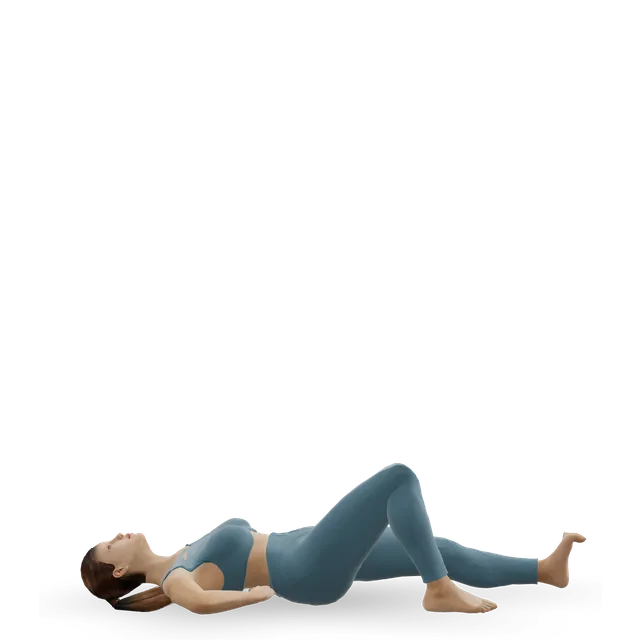
Dead bug heel taps demonstrated on the 3D figure3D demoDead bug heel tapsBeginner · No equipment

2 sets of 6 to 8 each side · As in our back pain guide (editorial)

Easier: Bent-knee fall-out · Harder: Forearm plank

Glute bridge demonstrated on the 3D figure3D demoGlute bridgeBeginner · No equipment

2 to 3 sets of 10 · As in our back pain guide (editorial)

Easier: Pelvic tilt into bridge · Harder: Single-leg glute bridge

Cat-cow demonstrated on the 3D figure3D demoCat-cowBeginner · No equipment

8 waves, slower than feels natural · The move page's dose. A small range if your back is irritable

Harder: Half lord of the fishes (Ardha Matsyendrasana)

Move on when: You can walk for 20 to 30 minutes and cycle or use the elliptical for 20 minutes within the pain rule, and your back is no worse the next morning, for a week (editorial, as in our back movement guides).

Follow along: a timer, a cue and the next move, one step at a time.
Stage 2

Trunk and calf strength, then gentle impact without a rope

About weeks 2 to 4: a trunk that holds still and calves ready for hundreds of landings, then small bounces.

Step jack (low-impact jumping jack) demonstrated on the 3D figure3D demoStep jack (low-impact jumping jack)Beginner · No equipment

30 to 45 seconds within a circuit, 2 to 3 rounds: an editorial starting point. No trial has tested this move on its own. Any rhythmic activity at a talk-but-not-sing effort counts as moderate activity in NHS guidance, and short bouts count. · The move page's dose. Cardio with no jumping

Easier: Seated march · Harder: Jumping jack

Bird dog demonstrated on the 3D figure3D demoBird dogBeginner · No equipment

2 to 3 sets of 6 to 8 each side, 3 to 5 s holds · As in our back pain guide (editorial)

Easier: Bird dog, one limb at a time · Harder: Bear crawl

Knee side plank demonstrated on the 3D figure3D demoKnee side plankBeginner · No equipment

3 holds of 15 to 20 s each side · As in our back pain guide (editorial)

Harder: Side plank

McGill curl-up demonstrated on the 3D figure3D demoMcGill curl-upBeginner · No equipment

3 to 5 holds of 8 to 10 s · As in our herniated disc and lower back leg raise guides (editorial). Skip it if bending forward sends pain down a leg, as the move page says

Harder: Crunch

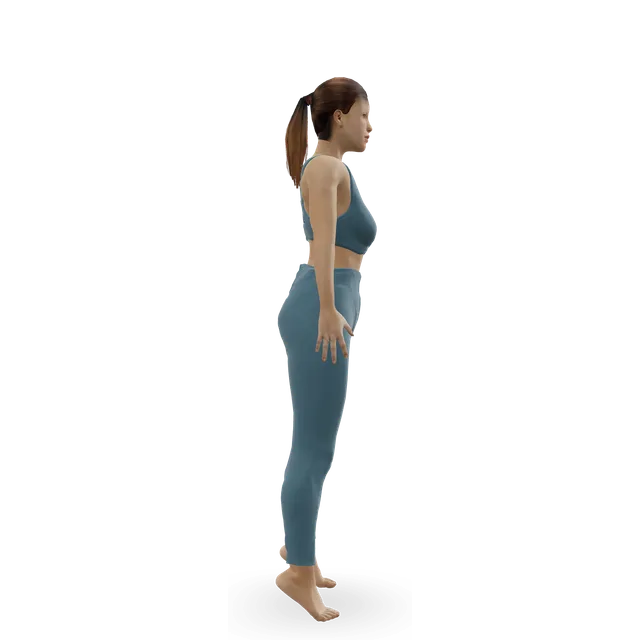
Slow calf raise demonstrated on the 3D figure3D demoSlow calf raiseBeginner · A wall

3 sets of 15, both feet, then one · As in our running and jump rope foot guides (editorial)

Easier: Seated bent-knee calf raise (soleus raise) · Harder: Standing dumbbell calf raise

Ankle bounces (mini pogo) demonstrated on the 3D figure3D demoAnkle bounces (mini pogo)Beginner · No equipment

2 to 3 sets of 20, every other day · As in our running and jump rope foot guides (editorial). Small, quiet contacts, your trunk tall

Harder: Pogo hops

Move on when: A week of ankle bounces and step jacks passes the pain rule, and your back is no worse the next morning (editorial).

Follow along: a timer, a cue and the next move, one step at a time.
Stage 3

Back to the rope

From about week 4, often later, 2 or 3 sessions a week with a day off between: two-foot bounces at a low dose, then your usual sessions, one change at a time by the written steps below. No study has tested a return to jump rope after back pain, so the order is editorial, following our jump rope guide.

Pogo hops demonstrated on the 3D figure3D demoPogo hopsIntermediate · No equipment

3 sets of 20, once ankle bounces are easy · As in our running and jump rope foot guides (editorial)

Easier: Ankle bounces (mini pogo) · Harder: Single-leg pogo hops

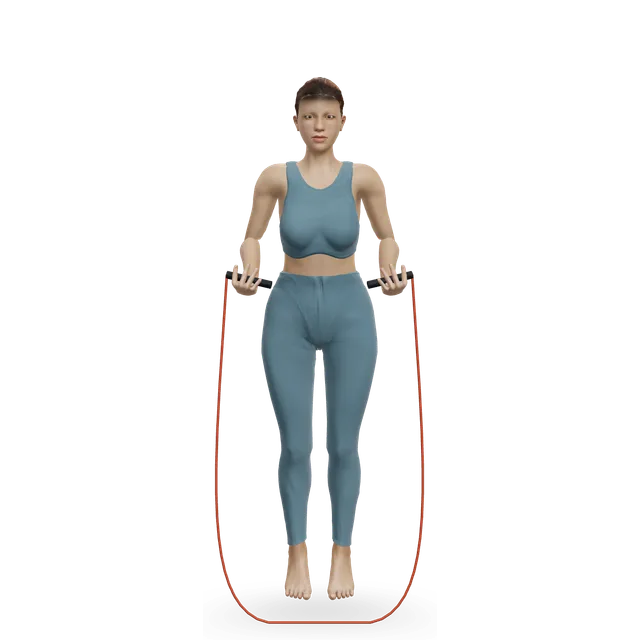
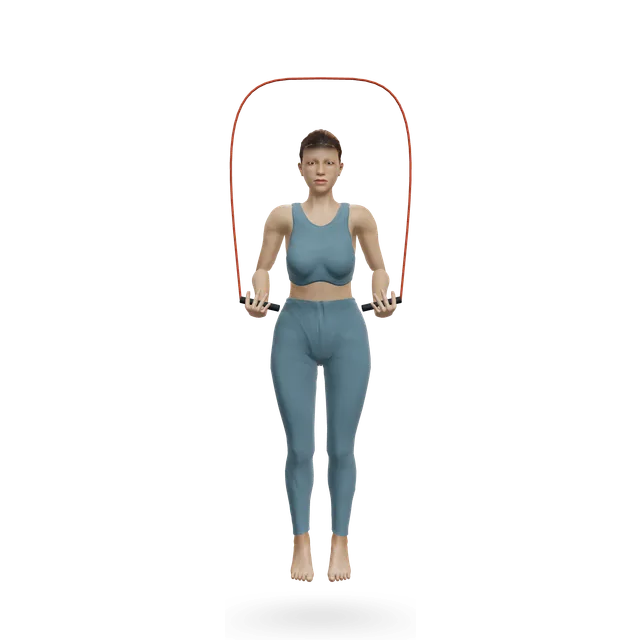
Jump rope (basic bounce) demonstrated on the 3D figure3D demoJump rope (basic bounce)Intermediate · A jump rope

5 rounds of 30 to 60 seconds with equal rest (our editorial starting point), adding no more than a few minutes in all each week. · The move page's dose. About a centimetre high, on two feet, on a forgiving floor

Easier: Ankle bounces (mini pogo) · Harder: Double-unders (jump rope)

Side plank demonstrated on the 3D figure3D demoSide plankIntermediate · No equipment

3 holds of 20 to 30 s each side · As in our back pain guide (editorial)

Easier: Knee side plank · Harder: Side plank with leg lift

Single-leg calf raise from a step demonstrated on the 3D figure3D demoSingle-leg calf raise from a stepIntermediate · A step + A wall

3 sets of 15 to 20 each leg, twice a week · As in our jump rope foot guide (editorial)

Easier: Slow calf raise · Harder: Single-leg pogo hops

Double-unders (jump rope) demonstrated on the 3D figure3D demoDouble-unders (jump rope)Advanced · A jump rope

5 to 10 minutes of short practice sets, ending each before your form slips (our editorial starting point). Once they are consistent, 5 rounds of 20 to 30 with full rest. · The move page's dose. Last, and only if you used them before

Easier: Jump rope (basic bounce)

Move on when: Your usual rope sessions pass the pain rule for 2 weeks: then the alternate-foot step, longer rounds, speed work and double-unders, one at a time. If a session flares it, go back a stage for a few days, not to nothing (editorial).

Follow along: a timer, a cue and the next move, one step at a time.

What to change for now

Your jump rope for now (written steps)

Our 3D figure shows the bounce, not the rope, the floor or your shoes. These steps come from our jump rope guide and move pages, coaching advice and lab studies; where a step is our suggestion, it says so. No trial has tested a change to jump rope for back pain.

  • 1. Height: about a centimetre, landing softly on the balls of your feet with your knees slightly bent (our jump rope guide; the Hong Kong rope skipping advice).
  • 2. Posture: stand tall and look ahead, elbows by your sides, turning the rope from your wrists (our jump rope guide; the Hong Kong advice).
  • 3. Rope length: stand on the middle and pull the handles up to your armpits or chest (our jump rope guide, from the US Centers for Disease Control and Prevention and ACE, the American Council on Exercise); shorten it only once your timing is steady.
  • 4. Volume: 5 rounds of 30 to 60 seconds with equal rest, 2 or 3 days a week, adding no more than a few minutes in all each week (our jump rope guide and move page); daily skipping from scratch brought more injuries and drop-outs in a small trial.
  • 5. Style: two-foot bounces first; the alternate-foot step, speed steps and double-unders later (our reading of the rope lab studies).
  • 6. No weighted vest or heavy rope while it's sore: a vest made the spine shorten more after drop jumps (our reading for skipping).
  • 7. Floor and shoes: a wooden or sprung floor or a mat rather than concrete, and comfortable cushioned trainers (our jump rope guide), knowing the evidence is thin. No insoles for the back.
  • 8. End a round when your landings get loud, your timing goes or your back starts to ache (our jump rope guide's rule; our suggestion for the back).

Sources 15, 6, 4, 3, 7, 16, 18

Teenagers, pregnancy, after a baby, and sport (written steps)

A teenager whose back hurts more arching backwards stops jumping and arching sport until it is checked, but not all activity, as our spondylolisthesis and children's back pain guides say; in the 2026 trial, both groups stopped their sport and physiotherapy started early. In pregnancy, the move pages say don't start new jumping or impact work, and after a baby, UK guidance suggests waiting at least 3 months before running and jumping, and only when walking, hopping and jogging on the spot cause no leaking, heaviness or pain.

Boxing, CrossFit and classes: step jacks, a fast march or the bike for the rope rounds until stage 3 passes, and double-unders last (editorial). Walking, cycling and swimming carry on as you like.

Sources 26, 37

Positions to swap, and why

Habit or positionWhy it mattersInstead
Daily sessions or a 30-day challenge from day oneDaily skipping from scratch brought more injuries and drop-outs than jogging in a small trial.2 or 3 sessions a week, short rounds, with step jacks on other days.Try: Step jack (low-impact jumping jack)
High, loopy jumps and stiff, straight-leg landingsA centimetre clears the rope (our jump rope guide), and a shoe that brought more bend at the hips, knees and ankles lowered modelled spinal load about 12% in drop jumps.Low, soft bounces.Try: Ankle bounces (mini pogo)
A rope that is too short, so you hunch or pikeIt changes your posture and timing (our reading).Re-size it: handles to the armpits or chest.
Weighted ropes or vests while it's soreA weighted vest made the spine shorten more after drop jumps (from drop jumps, not skipping).A plain rope, later.
Double-unders and speed steps while it's soreHigher landings in elite double-unders and more ankle work in young skippers.Two-foot bounces.Try: Jump rope (basic bounce)
The alternate-foot step early onThe two-foot bounce landed more gently in teenage boys.Two-foot bounces.Try: Jump rope (basic bounce)
Skipping on concrete in worn, thin shoesThe evidence is thin, but a forgiving floor and cushioned shoes are sensible (our jump rope guide).A wooden or sprung floor or a mat.
Buying insoles for your backThere is strong evidence they don't prevent back pain.Fewer, shorter rounds.
A teenager skipping on through back pain on archingIt can be a stress fracture of the spine, which needs checking.Stop jumping and get it checked; cycling meanwhile if it's pain-free.Try: Recumbent exercise bike
Jumping through pain, tingling or numbness down a legIt points to a nerve: the back hub's rule says stop or shrink any movement that sends symptoms down a leg.Moves that don't send it down the leg, such as dead bug heel taps.Try: Dead bug heel taps
Jumping through leaking or heaviness after a babyThe pelvic floor needs building first, as the move pages say.Walking and pelvic floor work.Try: Treadmill walking
Resting completely until it stops hurtingStaying active did slightly better than bed rest, and a walking programme cut back pain recurrences.Walking and the stage 1 moves.Try: Treadmill walking

Routines to follow

Low-impact cardio workout (no jumping)

A 25-minute standing cardio circuit with no jumping: marching, step jacks, sit-to-stands, punches, step-ups and wall push-ups, with a seated option for most moves.

25 minBeginner9 movesA bench or box, A step

Beginner jump rope workout

A first jump rope session in about 20 minutes: a springy warm-up, five short rope rounds with equal rest, calf and shin work, and calf stretches.

20 minBeginner7 movesA jump rope, A wall

Springy starter: calf strength and gentle bounces

A beginner's springy session: calf strength first, then heel drops, calf springs and gentle bounces, building towards skipping and pogo hops.

20 minBeginner11 movesA wall, A step

Elliptical workout for beginners: set-up, steady rounds and first intervals on the cross trainer

A first elliptical (cross trainer) workout: step on safely, ride steady at a talk-but-not-sing effort, then add 1-minute pushes once 20 minutes is easy.

30 minBeginner4 movesCardio machine, A wall

Easy bike ride: 30 to 75 minutes at a pace you can talk at

A steady bike ride for a first triathlon or fitness: 5 to 10 minutes easy, a ride you can talk through, optional short faster bursts and an easy cool-down.

45 minBeginner4 movesCardio machine, A wall

Lower back strengthening workout: bird dogs to supermans, no equipment

A 20-minute floor workout for your back muscles: bird dogs and bridges, then a face-down ladder from the locust to the superman, with side planks and dead bugs.

20 minBeginner13 movesNo equipment

McGill big 3 core routine

The McGill big three for the core: curl-ups, side planks and bird dogs, each held for 10 seconds at a time in falling sets of 5, 3 and 1 reps.

12 minBeginner3 movesNo equipment

Pilates for back pain (gentle routine)

A gentle 15-minute Pilates-based routine for ongoing low back pain, built from neutral-spine moves with options for backs that dislike bending or arching.

15 minBeginner10 movesNo equipment

More moves for this area

Questions people ask

Why does my back hurt when I jump rope?

Usually because of too much repetitive impact too soon, often with high jumps, stiff or arched landings, a rope that makes you hunch, or a weighted rope or vest. Jump about a centimetre high, land softly with your knees slightly bent, stay tall and keep your rounds short.

Is jumping rope bad for your back?

No study shows that. A set of 50 drop jumps shortened the spine by a millimetre or two in lab studies, and regular runners' discs looked healthier than inactive people's. Build up gradually, 2 or 3 sessions a week.

Can jumping rope cause lower back pain?

It can bring it on, especially if you start with daily sessions or long rounds, though no study has counted it. Daily skipping from scratch brought more injuries than jogging in a small trial.

Can I jump rope with lower back pain?

Often, once it is settling and if it doesn't send pain down your leg: start with short rounds of low two-foot bounces and keep to the pain rule. While it's sore, walking, cycling or the elliptical keep your fitness up.

Can I jump rope with a herniated disc or sciatica?

Wait until leg symptoms are settling and walking is comfortable, then bring the rope back in short, low rounds. Stop anything that sends pain further down your leg, and follow your clinician's advice if you have weakness or numbness.

My teenager's back hurts after skipping or sport. Should I worry?

Usually it is sore muscles, but back pain that is worse arching backwards and hasn't settled after a couple of weeks can be a stress fracture of the spine, which is common in young athletes with back pain. Stop jumping and see a GP or sports physiotherapist. Most heal without surgery.

Does a softer floor or better shoes help?

A little at most: people stiffen their legs on soft surfaces, and shoes didn't change the peak landing force in a rope study. A wooden floor or mat and comfortable trainers are sensible, but how much you skip matters more.

How long should my jump rope be?

Stand on the middle and pull the handles up to your armpits or chest, as our jump rope guide and a rope skipping association's advice say. A rope that is too short makes you hunch or jump higher.

What can I do instead of jump rope?

Walking, cycling, the elliptical, the rowing machine, swimming or step jacks keep your heart working without the bounce. A walking programme cut back pain recurrences in a large trial.

Do I need a scan?

Adults usually don't: NICE doesn't recommend routine imaging for back pain. A teenager with back pain on arching that hasn't settled may need an X-ray, MRI or CT.

How long will it take?

No one can promise a date. Most new back pain in adults eases a lot within 6 weeks, though some ache can linger, and young athletes with a stress fracture of the spine usually return to sport in about 3 to 4 months.

When should I see a doctor?

Call 999 for numbness around your genitals or bottom, new bladder or bowel trouble or weakness in both legs. Get a same-day check for back pain with a fever or feeling unwell, or a young child who won't walk or keeps their back stiff, and see a GP for a child under 6 with back pain, pain at night, weight loss, or a teenager whose back hurts arching backwards for more than a couple of weeks. In the US, call 911 where this page says 999.

Related exercise guides

Other pain guides

Sources

  1. Yu 2022 · Jump rope shoes and leg loads in 10 adults (lab study, Bioengineering)
  2. Zhang 2026 · Fast double-unders in 3 world and 5 junior national champions (biomechanics study, Life)
  3. Bruce 2023 · Joint loads in double-unders, the speed step and running in 16 young competitive skippers (lab study, Sports Biomech)
  4. Lin 2022 · Two-foot and alternate-foot rope jumping in 16 teenage boys (lab study, Children)
  5. Martinez 2011 · Home exercise equipment injuries in US children in emergency departments (descriptive study, Clin Pediatr)
  6. Buyze 1986 · Six weeks of rope skipping or jogging in 26 inactive adults (training study, Phys Sportsmed)
  7. Fowler 1994 · Spinal shrinkage after unloaded and loaded drop jumps in 8 men (lab study, Ergonomics)
  8. Fowler 1997 · Spinal shrinkage after drop jumps and pendulum rebounds in 8 men (lab study, Ergonomics)
  9. Schäfer 2023 · Estimated spinal loads in over 600 sports tasks (modelling study, Eur Spine J)
  10. Dehaghani 2022 · Shoes and modelled lower back loads in walking and drop jumps, 11 men (lab and modelling study, Sci Rep)
  11. Belavý 2017 · Running and disc health on MRI in 79 adults (cross-sectional study, Sci Rep)
  12. Samanna 2026 · Exercise and disc health: 39 studies (systematic review and meta-analysis, Sports Med)
  13. NHS · Back pain
  14. Mueller 2017 · Trunk muscle activity in drop jumps in 22 young athletes with and without back pain (case-control study, Front Physiol)
  15. Hong Kong Leisure and Cultural Services Department · Rope skipping for fun (public health page, with advice from the Hong Kong Rope Skipping Association)
  16. Ferris 1997 · Leg stiffness on hard and soft surfaces during hopping (lab study, J Appl Physiol)
  17. Hackney 2011 · A sprung floor and leg stiffness in a ballet jump, 7 dancers (lab study, Med Probl Perform Art)
  18. Sahar 2007 · Insoles for preventing and treating back pain: 6 trials (Cochrane review)
  19. Chuter 2014 · Shoe insoles for preventing and treating low back pain: 11 trials (meta-analysis, BMC Musculoskelet Disord)
  20. NICE NG59 · Low back pain and sciatica in over 16s: assessment and management (2016, updated 2026)
  21. Micheli 1995 · Back pain in 100 young athletes against 100 adults (case comparison, Arch Pediatr Adolesc Med)
  22. Selhorst 2019 · Stress fractures of the spine in 1,025 adolescent athletes with low back pain (retrospective study, Clin J Sport Med)
  23. Tawfik 2020 · How common pars defects are in athletes, by sport: 114 studies (review, Global Spine J)
  24. Soler 2000 · Spondylolysis in 3,152 Spanish elite athletes, sport by sport (records review, Am J Sports Med)
  25. León-Domínguez 2023 · Examining children and teenagers with back pain (review, J Child Orthop)
  26. NHS · Spondylolisthesis
  27. AAOS OrthoInfo · Spondylolysis and spondylolisthesis
  28. KidsHealth New Zealand · Spondylolysis in children and young people
  29. Masci 2006 · The one-legged hyperextension test and MRI for active spondylolysis in 71 young people (prospective study, Br J Sports Med)
  30. Musa 2025 · Lumbar disc herniation in children and teenagers: 14 studies, 861 patients (systematic review, J Craniovertebr Junction Spine)
  31. Brinjikji 2015 · Spine scan findings in people without back pain: 33 studies, 3,110 people (systematic review, AJNR)
  32. Kalichman 2009 · Spondylolysis and slips on CT in 188 adults, and back pain (community study, Spine)
  33. Tofte 2017 · Imaging spondylolysis in children and teenagers: 13 studies (systematic review, Spine)
  34. Wallwork 2024 · The course of acute, subacute and persistent low back pain: 95 studies (systematic review and meta-analysis, CMAJ)
  35. Panteliadis 2016 · Return to sport after spondylolysis with and without surgery: 25 publications (narrative review, Global Spine J)
  36. Overley 2018 · Return to play after spondylolysis in 376 adolescent athletes (meta-analysis, Global Spine J)
  37. Selhorst 2026 · Physiotherapy straight away against rest first for spondylolysis in 64 adolescent athletes (randomised trial, Br J Sports Med)
  38. Pocovi 2024 · WalkBack: walking and education to prevent low back pain recurrence in 701 adults (RCT, Lancet)
  39. Hayden 2021 · Exercise therapy for chronic low back pain, 249 trials (Cochrane review)
  40. Dahm 2010 · Advice to rest in bed or to stay active for new low back pain and sciatica (Cochrane review)
  41. Virkki 2025 · Rigid brace against an elastic support for adolescent spondylolysis in 57 young people: 2-year outcomes (controlled study, Spine)
  42. Singh 2022 · Jump rope training and fitness in young people: 21 studies, 1,021 participants (meta-analysis, J Sports Sci)
  43. Smith 2017 · Should exercises be painful in chronic musculoskeletal pain? (systematic review and meta-analysis, Br J Sports Med)

Exercise education, not a diagnosis or treatment plan. It is written from the guidelines and studies listed above; review by a clinician is pending. If your pain follows an injury, is severe, is getting worse, or comes with any warning sign listed on this page, get it assessed. Health disclaimer.