Double-unders (jump rope)
Jumping a little higher than a basic bounce, you spin the rope fast enough from the wrists to pass it under your feet twice before you land. Coach Dave Newman, interviewed for the CrossFit Journal, calls jump height the most important part: a higher jump gives the rope time. At the fastest tempos, world champions used shorter, ankle-led ground contacts and a lower, steadier centre of mass than junior champions. We found no training trials of double-unders, and hops can load the Achilles tendon to several times body weight.
Movement guide
Double-unders (jump rope)
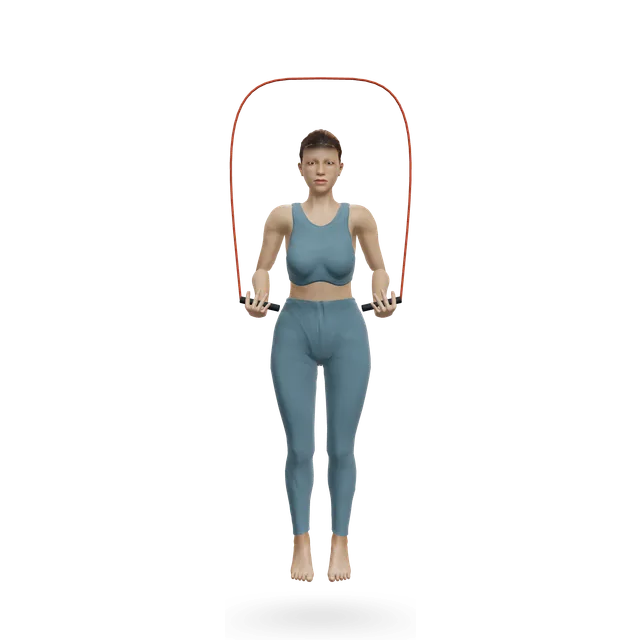
Loading the 3D figure…
Make it easier or harder
Choose a version that fits your control and comfort.
Easier option
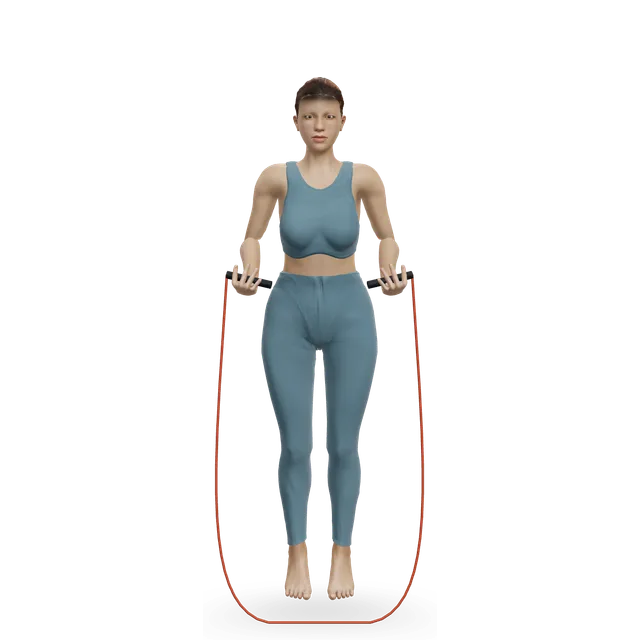 3D demoJump rope (basic bounce)Intermediate · A jump rope
Suggested next step, intermediate grade.
Harder option
Build this drill's pace or session length within its guide's advice; extra load or a different skill is not required. NHS strength exercises
Source-researched guide.
How to move
- Stand tall with your glutes and abdominals lightly braced, your hands 10 to 15 cm from your hip creases and your elbows near your sides.
- Start with basic bounces, then bounce a little higher, springing off the balls of your feet with your heels kept off the floor.
- On a higher bounce, flick the rope round twice with quick wrist circles while you are in the air, keeping your body straight and your hands by your hips.
- Land softly on the balls of your feet and rebound into the next one, or take a few basic bounces to reset.
Form cues
- Jump higher; don't just spin harder.
- Keep your hands by your hips: if they drift out, the rope gets shorter.
- Avoid: piking at the hips or kicking your heels back.
Practice and cautions
5 to 10 minutes of short practice sets, ending each before your form slips (our editorial starting point). Once they are consistent, 5 rounds of 20 to 30 with full rest.
The higher jump and faster cadence load the Achilles well beyond the basic bounce, and failed reps whip the rope across shins and forearms. Earn them in small doses, and leave them out entirely during any calf or tendon flare. In pregnancy, don't start new jumping or impact work; if you already do it, drop it when it causes leaking, heaviness or pelvic pain. After giving birth, UK guidance suggests waiting until at least 3 months before running and jumping, and only when walking, hopping and jogging on the spot cause no leaking, heaviness or pain. This timing is expert advice. With proliferative or severe non-proliferative diabetic retinopathy, avoid jumping and jarring. With numb feet from diabetes or another cause, choose low-impact options, wear well-fitting shoes, and check your feet for redness or blisters afterwards; with an open sore or ulcer, do no weight-bearing exercise until your foot team says so. With osteonecrosis (avascular necrosis) of the hip or knee, ask your specialist before impact exercise. This is movement education, not an assessment or treatment prescription. Stop for sharp or increasing pain, dizziness, numbness or tingling; seek individual guidance for symptoms, injury or restrictions.
Sources and review status
Sources support the educational description; they do not establish that this exercise is suitable for you.
- CrossFit Journal 2015 · Double, double toil and trouble (Dave Newman: singles about a centimetre high, turned from the wrists; for doubles jump higher, stay upright, hands by the hips) ↗
- Zhang 2026 · Double-unders in world and junior national champions: at the fastest tempos, shorter ground contacts, a lower and steadier centre of mass and ankle-led coordination (biomechanics, Life) ↗
- Baxter 2021 · Achilles tendon load across rehabilitation exercises, from 0.5 body weights in a seated heel raise to 7.3 in a forward single-leg hop (8 adults, Med Sci Sports Exerc) ↗
No variation is labeled clinically validated.
What it works
Muscles
Main: Calves. Also: Quads, Shoulders, Forearms.
Anatomy: Gastrocnemius, Soleus, Tibialis posterior, Popliteus, Plantaris, Flexor hallucis longus.
Equipment
A jump rope
Level
Advanced. See the easier and harder options above.
Workouts that use it
Pain guides that use it
Part of a staged plan, with when to get help first.
- Foot pain from jump rope: the ball of the foot, arch and heel, stress fractures, floors and shoes
- Back pain from jump rope: landings, posture and rope length, young athletes and what helps
- Shin pain from jump rope: shin splints, stress fractures, floors, landings and what helps
- Calf pain from jump rope: soreness, a strain, the Achilles, cramp and how to build back
Guides that use it
Similar moves
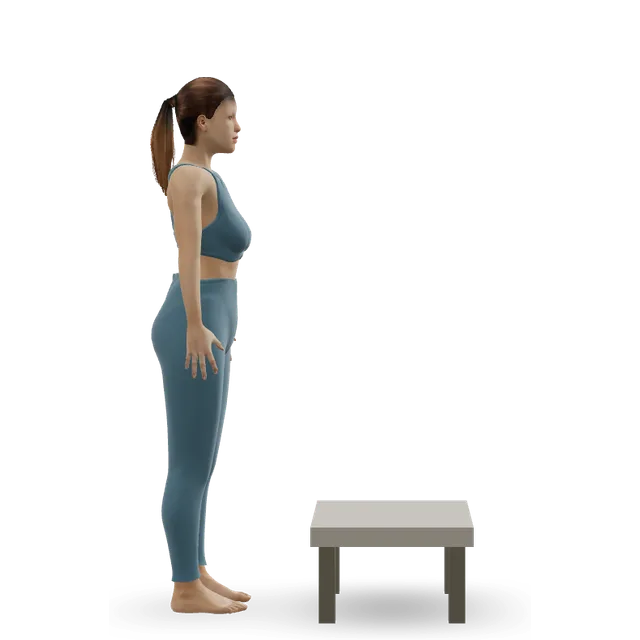
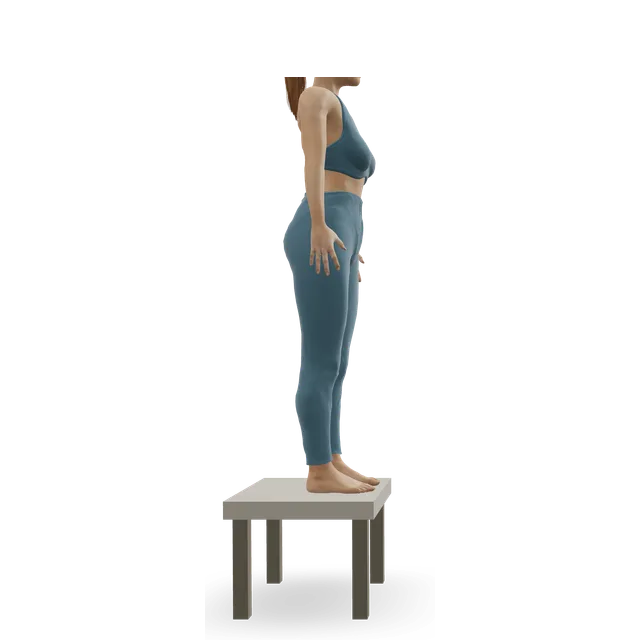
Browse more
Questions people ask
What muscles does the Double-unders (jump rope) work?
Mainly the calves, with help from the quads, shoulders and forearms.
What equipment do I need for the Double-unders (jump rope)?
A jump rope.
Is the Double-unders (jump rope) good for beginners?
It is an advanced move. Build up to it with the Jump rope (basic bounce) first.
What is an easier alternative to the Double-unders (jump rope)?
Try the Jump rope (basic bounce). It is the suggested step down from this move.