Training guide

How to do double-unders: the bounce, the wrists and the timing, the drills that build them, and your calves and Achilles

A double-under passes the jump rope under your feet twice in one jump. It takes a slightly higher, springier bounce than a single, small quick circles of your wrists with your hands by your hips, and the timing to jump just as the rope passes your knees. Start once you can do 50 easy basic bounces in a row.

No trial has tested how to learn them, so the drills here are coaching practice, and we say so. This guide covers the technique step by step on the 3D figure, the drills coaches use, how many to practise while you learn, what double-unders do and don't do compared with singles, looking after your calves and Achilles, leaking, pregnancy and who should wait.

The short version

A little higher, and quicker wrists

You need more time in the air than for a single. Coach Dave Newman, interviewed for the CrossFit Journal, says the rope doesn't have to turn faster to start with: you need to jump higher. In 76 young men a double-under needed about twice the springiness of a basic bounce. But not much higher: elite skippers cleared the rope by only a few centimetres, with short, ankle-led contacts.

Sources 1, 2, 3

Hands by your hips, rope from your wrists

Elbows by your sides and drawn back, hands 10 to 15 cm from the crease at the top of your thighs, and the wrists turning the rope while your arms stay quiet.

Source 1

Timing

Jump just after the rope passes below your knees. Practise 10 singles then 10 doubles, repeated, rather than one of each.

Source 1

Short sets while you learn

The move page's dose: "5 to 10 minutes of short practice sets, ending each before your form slips (our editorial starting point). Once they are consistent, 5 rounds of 20 to 30 with full rest." No study has tested how many are safe while you learn.

Your calves and Achilles do the work

Double-unders put 39 to 114% more braking work through the ankle than running in young competitive skippers, and hops can load the Achilles tendon to several times body weight. Keep calf soreness at 5 out of 10 or less and settled by the next morning, as our jump rope guide says.

Sources 4, 5

Leaking is common, and treatable

37% of women CrossFit competitors leaked during double-unders, and 75% of girls who compete in rope skipping leaked, mostly in double- and triple-unders. A pelvic health physiotherapist can help.

Sources 6, 7

What a double-under is, and what it works

The skill

The rope passes under your feet twice in one jump; triple-unders pass it three times. The rope has to turn twice while you're in the air, so you need a slightly higher, springier bounce, fast small wrist circles and timing to match. Coach Newman puts the rise at about 4 inches (10 cm), against about half an inch for singles.

Sources 1, 2

What it works

"In a double-under, the calves do most of the work," the coach says. The knees help more than in running, and the forearms, wrists and shoulders turn the rope. In long sets, it's the shoulders and lungs that give out.

Sources 1, 4, 8

The numbers

In 8 elite young male skippers, the rope cleared the feet by about 5 and 9 cm on its two passes at 120 double-unders a minute, falling to about 3 and 4 cm at top speed; ground contacts shortened from 184 to 93 milliseconds, and peak force was about 5.3 to 5.9 times body weight. In 76 young men, double-unders used about 70% of their best rebound jumping.

Sources 3, 2

How hard

The Compendium gives double-unders 10.0 METs (multiples of resting energy use), against 8.3 to 12.3 for single skipping depending on pace. The NHS counts skipping as vigorous activity.

Sources 9, 10, 11

How people differ

Taller people need a longer rope, and a heavier body means more load on each landing, so build up more slowly (our reading). Children who were better at double-unders ran 20 metres faster in a study of 143 schoolchildren. Women and girls leak during them more often.

Sources 12, 6

Who was studied

Small lab groups of trained or elite skippers, many of them teenagers, and surveys of CrossFit athletes. No trial has taught double-unders to beginners.

Are you ready?

50 easy bounces

Our double-unders move page asks for "50 or more unbroken basic bounces with relaxed wrists and quiet landings." Our jump rope guide teaches the basic bounce and sizes the rope.

Calves that are used to hopping

The basic bounce page asks for "Ankle bounces and pogo hops without calf or Achilles soreness the next day." If your calves are untrained, our springy starter is the bridge.

The rope

Use the length that lets you clear it comfortably for singles, as our jump rope guide says, and shorten it a little once your timing is steady. A beaded or medium-weight rope is easier to learn on: the coach thinks a heavier rope helps you feel the rhythm, and says "I don't think beginners should use speed ropes".

Source 1

Not today

Leave double-unders out while your calf, Achilles or shin is sore, if you leak or feel heaviness when you skip, and in pregnancy if you don't already do them (the warning signs and who-should-wait sections below).

How to do a double-under, step by step

From our double-unders move page and the CrossFit Journal's interview with coach Dave Newman; the stopping rule is our editorial suggestion, after our jump rope guide.

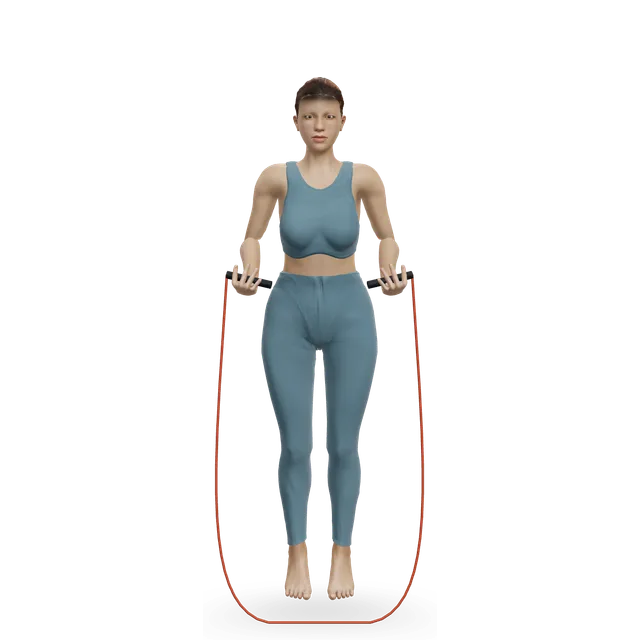
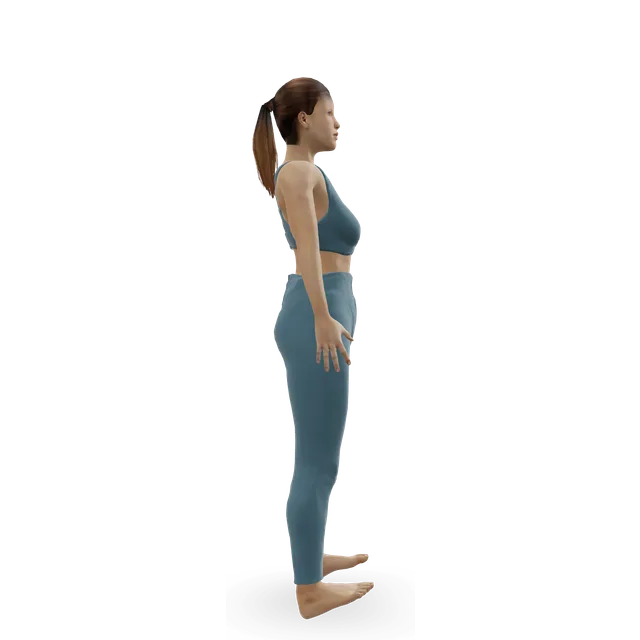
  1. Stand tall with your feet together, glutes and tummy lightly braced, elbows by your sides and drawn back, hands 10 to 15 cm from the crease at the top of your thighs.
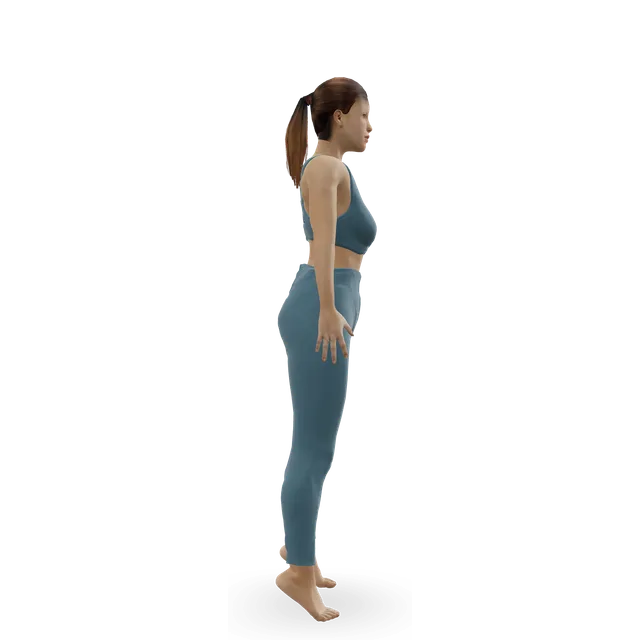
  2. Do a few basic bounces, then bounce a little higher, springing off the balls of your feet with your heels off the floor and your legs nearly straight.
  3. Keep your eyes on a spot on the floor 3 to 5 metres ahead; the rope should hit about 30 cm in front of your toes each turn.
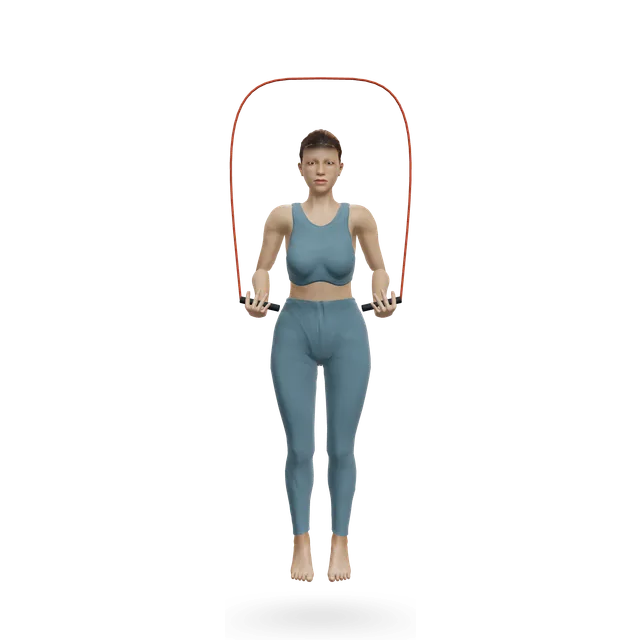
  4. On a higher bounce, flick the rope round twice with quick, small wrist circles, keeping your hands by your hips and your body straight.
  5. Jump just after the rope passes below your knees: the first turn is done as you leave the floor, the second before you reach the top.
  6. Land softly on the balls of your feet and spring straight into the next one, or take a few basic bounces to reset.
  7. Stop the set when you catch the rope twice in a row, your landings get loud or your hands drift out.

Loading the 3D figure…

Gets into position, then repeats the movement. Technical checks passed; qualified exercise review is pending.

The movement on the figure: Double-unders (jump rope)

From the bounce to the double-under

Move on when the step before is easy, quiet and leaves your calves fine the next morning. Ankle bounces 2 × 15 (our beginner jump rope workout); pogo hops 2 sets of 10 as the higher double-under bounce without a rope (our springy starter); the basic bounce, 5 rounds of 30 to 60 seconds with equal rest (adapted from its move page's dose); then double-unders. There's no demo of triple-unders or crossovers.

The drills coaches use

Coaching practice from the CrossFit Journal article; the doses are our editorial starting point. No trial has compared ways of learning double-unders.

Bound without a rope

Bounce low as for singles, then higher as for doubles, so you feel the difference: 3 sets of 10 of each (editorial). The pogo hop shows the higher bounce on the 3D figure.

Source 1

Ten and ten

10 singles, then 10 doubles, repeated. The coach prefers this to alternating one single with one double, which he thinks teaches you to switch between low and high jumps.

Source 1

The slowest double-under

Jump as high as you like and turn the rope as slowly as you can, to feel the timing.

Source 1

One at a time

A single double-under from a standstill, then from a few singles, before you try to string them (editorial).

What the evidence says

More spring than a singleEmerging evidence

In 76 young men, the rebound index (jump height for contact time) was 1.34 in double-unders against 0.60 in basic bounces, about 70% of their best rebound jumping.

Source 2

Low, quick and ankle-led at speedEmerging evidence

In 8 elite young skippers, contacts were 93 to 186 milliseconds, rope clearance about 3 to 9 cm, and the rope was turned by the wrists with fast ankle work. In 12 elite skippers, faster skipping meant smaller, stiffer bounces. These are small studies of champions.

Sources 3, 13

Hard braking work at the ankleEmerging evidence

In 16 young competitive skippers, double-unders and the speed step put 39 to 114% more braking work through the ankle than running, with similar peak forces. Achilles load ran from half body weight in a seated heel raise to 7.3 times body weight in a forward one-leg hop in 8 adults, and hopping on the spot loaded the tendon more than maximal jumps in one person with a tendon sensor. The authors of a hopping study warn that "prolonged hopping may well cause tendon damage".

Sources 4, 5, 14, 15

Long sets tire the shouldersEmerging evidence

In 10 trained athletes doing double-unders to exhaustion, they stopped because of tired lungs and shoulders, and their arm action changed as they tired.

Source 8

No injury surveillance, no learning trialMixed evidence

We found no injury surveillance for double-unders and no study of a safe learning dose; reviews of CrossFit injuries give no figures by exercise. In 18 volunteers, a hard circuit with 75 double-unders didn't thicken the tendons over the next 30 minutes, which says nothing about weeks of training.

Sources 16, 17

Rope training and fitnessEmerging evidence

Across 21 studies, mostly in young people, rope training improved fitness, jumping and sprinting a little, with no clear effect on bone. One review of 15 trials in children mentions shin bone inflammation with too much rope.

Sources 18, 19

How much, and how often

How often

2 or 3 short sessions a week with a day between, as our jump rope guide suggests for rope. Expert plyometric guidance allows 48 to 72 hours between jumping sessions.

Source 20

How much

5 to 10 minutes of short practice sets, ending each before your form slips (adapted from the move page's dose).

How many attempts

Our editorial ceiling while you learn is about 50 to 100 double-under attempts a session, counting the misses. It comes from an expert table suggesting 80 to 100 foot contacts a session for plyometric beginners, which has never been tested.

Sources 20, 21

Once they're consistent

5 rounds of 20 to 30 with full rest (adapted from the move page's dose). The coach's mark of mastery is 50 in 30 seconds and 100 in 60 seconds.

Source 1

How long it takes

No study has timed it. Our estimate: a first double-under within a few sessions to a few weeks once your singles are easy, and strings of 20 or more within weeks to a few months.

Common mistakes

Spinning harder instead of bouncing higher

"The rope doesn't have to move quicker to turn a single into a double; the athlete has to jump higher," the coach says.

Source 1

Hands drifting wide or forward

The rope shortens or lands too far out. Keep your hands where you can just see them by your hips.

Source 1

Big arm circles

They tire your shoulders and change the rope's shape. Turn from the wrists.

Source 1

Tuck jumps, piking or kicking your heels back

You clear the rope by bending, not springing. The move page cues you to avoid piking at the hips or kicking your heels back.

Jumping too early

Most people jump as soon as they see the rope. Wait until it passes your knees.

Source 1

Heels sinking between jumps

"We want to spring, not absorb," the coach says. Stay on the balls of your feet.

Source 1

Long sets to failure

Your arms take over and the rope whips your shins. End each set before your form slips.

Source 8

Calves, Achilles and shins

Twice a week, after skipping or on other days: slow calf raises 2 × 15 and tibialis raises 2 × 15 (our beginner jump rope workout); single-leg calf raises 2 to 3 sets of 8 to 12 each leg once two-leg raises are easy (our springy starter); isometric calf holds, 3 holds of 30 to 45 seconds (our springy starter; the move page builds to 5); and calf stretches, 30 seconds each side.

Looking after your calves and Achilles

The calf rule

Hops load the Achilles tendon heavily, so calf soreness in the first week or two is common. Keep it at 5 out of 10 or less and settled by the next morning, as our Achilles guide's pain rule says; if it isn't, our suggestion is to repeat the previous week.

Strong calves firstMixed evidence

Weaker calves may be a risk factor for Achilles tendon pain: limited evidence from 10 cohort studies at high risk of bias. Calf strength work twice a week is a sensible habit while you learn (our suggestion).

Source 22

Achilles

Hops load the Achilles tendon heavily, so build up slowly. A sudden pop at the back of your ankle, with pain and swelling near your heel or not being able to stand on tiptoe on that leg, can mean a torn Achilles: stop, and get help the same day.

Source 23

When you can't jump today

For sore calves or shins, leaking, pregnancy or a first week back: step jacks, 30 to 45 seconds within a circuit, 2 to 3 rounds (adapted from the move page's dose), or a brisk standing march.

Workouts

The double-under progression is the follow-along session for this guide; the beginner jump rope workout builds the singles first, and the springy starter is the bridge if your calves are untrained.

Plans

Our suggestion: practise double-unders in the Saturday interval slot of the 7-day plan, or alongside the Hyrox plan's sessions.

Leaking, pregnancy and other groups

Leaking

If you leak or feel heaviness, squeeze your pelvic floor just before you start, use shorter rounds or the no-jump options for now, and see our pelvic floor guide or a pelvic health physiotherapist.

Sources 24, 6

Pregnancy

Don't start skipping in pregnancy: the NHS advises against starting a new vigorous activity. If you already skip, our suggestion is to drop it when it causes leaking, heaviness or pelvic pain.

Source 25

After giving birth

The NHS advises avoiding high-impact exercise to start with. Our postpartum guide covers when and how to build back up to jumping.

Source 26

Older adults

UK guidelines list skipping among the impact activities for active older adults, and note that injuries are more likely in people who aren't used to exercise. Start low and build up gradually.

Knees and heart

With sore knees, use the no-jump swaps and our knee guides, including our knee pain when jumping guide. With heart, metabolic or kidney disease, or symptoms when you're active, check with your GP before hard intervals, as our HIIT guide advises.

Osteoporosis with spinal fractures

With spinal fractures, or several fractures from minor falls, the UK consensus advises impact only up to the level of brisk walking, and the Royal Osteoporosis Society suggests talking to your doctor or physiotherapist first. Our osteoporosis guide has more.

Spinal fractures from rope jumping are rare: one case report describes them in an adult without osteoporosis after strenuous skipping. Sudden mid-back pain while skipping is a reason to stop and get it checked (our suggestion).

Sources 27, 28

Diabetes

With proliferative or severe diabetic retinopathy, the American College of Sports Medicine advises avoiding activities that jar the head, such as jumping. With numb feet, our suggestion is low-impact options and a check of your feet afterwards.

Some antibiotics and steroid injections

Our suggestion, from specialist guidance: if you're taking or have recently taken ciprofloxacin or levofloxacin, or have had a steroid injection near the Achilles, leave double-unders out and ask your GP or pharmacist. These are linked with Achilles tears.

Source 23

Warning signs

Stop and get medical help

If you get chest pain or pressure, feel faint or dizzy, are unusually breathless, or your heart races or beats irregularly during exercise, as our plans advise.

Source 29

Call 999 (911 in the US)

For chest pain that comes on suddenly and doesn't go away, feels tight or like squeezing, spreads to your arms, neck, jaw, stomach or back, or comes with sweating, feeling sick, light-headedness or breathlessness; severe difficulty breathing; someone who faints while exercising; palpitations that don't go away, or come with chest pain, shortness of breath or feeling faint; or a headache that starts suddenly and is extremely painful, especially while lifting or straining, or comes with numbness or weakness, difficulty speaking or loss of vision. The NHS says a bleed on the brain may be more likely when lifting something heavy. Don't drive yourself to A&E.

Sources 30, 31, 32, 33, 34, 35

Suddenly more breathless than usual

Call NHS 111 (in the US, your doctor or an urgent care centre) if you're suddenly more short of breath than usual, or have chest pain with feeling sick or a heartbeat that races, skips or flutters.

Sources 32, 34

During a session

Stop straight away if you feel any pain or become unwell, the NHS says, and contact 111 if your symptoms worry you or don't go away.

A dull ache in your muscles for a day or two after something new is normal. Joint pain that's sharp, gets worse during a set or lingers into the next day means switching to the easier option, and seeing a GP or physiotherapist if it carries on (our plans' rule). Our muscle soreness guide has more.

Source 29

NHS 111 the same day (urgent care in the US): a pop at the back of the ankle

A snap or popping noise at the back of your ankle or heel when it happened, not being able to walk or stand on tiptoe, or swelling and bruising in your calf and ankle. Also a tendon you think you've torn, or severe pain.

Same day: a sudden snap or pop at the back of the heel or calf, or a feeling of being kicked there, then walking flat-footed and being unable to push off, stand on tiptoe or climb stairs. It could be an Achilles tendon rupture or a broken heel bone. Go to A&E or a minor injuries unit, or contact NHS 111.

Sources 36, 23

See a GP

Heel, ankle or calf pain that hasn't improved after 2 weeks of looking after it yourself, or comes with tingling in your foot. Shin pain that is getting worse or not getting better. Pain in one spot on a bone that hurts to press and gets worse when you jump can be a stress fracture: stop jumping until it's checked.

Pain in one spot on the shin or a foot bone that you can point to with a fingertip, worse with impact and later present at rest or at night: a possible stress fracture. Stop running and jumping until it has been checked.

Sources 36, 37

NHS 111: knees

A knee that is very painful, won't take your weight, is badly swollen or has changed shape, or locks or gives way.

Go to A&E (accident and emergency) if you've injured your knee and it has changed shape, it becomes very swollen very quickly, you felt a pop or snap, you can see bone sticking out, or it's bleeding heavily. Don't drive yourself: ask someone to take you, or call 999 if the pain means you can't move your leg to get there.

Source 38
Myths

"Double-unders are about jumping higher"Mixed evidence

Partly true. You need more time in the air than for a single: about 4 inches of rise against half an inch, by the coach's account, and about twice the springiness in a lab study. But skilled skippers keep the jump small, quick and ankle-led, with only a few centimetres of clearance at speed, and the wrists set the rope speed. Jump a little higher, turn the rope a little faster from the wrists, and time it.

Sources 1, 2, 3

"Spin the rope as fast as you can"Emerging evidence

For learners, the coach's advice is the opposite: a slower rope and a slightly higher bounce give you time to see the rope and get the timing.

Source 1

"Double-unders burn far more calories than singles"Strong evidence

The Compendium gives double-unders 10.0 METs, against 11.8 for moderate and 12.3 for fast single skipping. They're harder to do, not a bigger calorie burn.

Source 9

"Alternate one single and one double to learn"Emerging evidence

The coach prefers 10 singles then 10 doubles, because one-for-one teaches switching between low and high jumps. No study compares them.

Source 1

"A speed rope makes them easier"Emerging evidence

The coach doesn't recommend speed ropes for beginners and thinks a heavier rope helps you feel the rhythm.

Source 1

"Leaking during double-unders is normal, so ignore it"Emerging evidence

It's common, in 37% of women CrossFit competitors, but it's treatable. See a GP or a pelvic health physiotherapist.

Sources 6, 7

Questions people ask

How do you do a double-under?

Bounce a little higher than for a single, on the balls of your feet with your body straight, and flick the rope round twice from your wrists, keeping your hands by your hips. Jump just after the rope passes your knees. Practise 10 singles then 10 doubles, repeated.

When am I ready to learn double-unders?

When you can do 50 or more basic bounces in a row with relaxed wrists and quiet landings, as our double-unders move page asks, and your calves feel fine the morning after skipping.

Why are double-unders so hard?

You need more spring than for a single, quicker wrists and exact timing all at once. Most misses come from hands drifting out, jumping too early, or spinning harder instead of bouncing a little higher.

How high should I jump for double-unders?

Only a little higher than for a single: the coach in the CrossFit Journal puts it at about 10 cm, against about a centimetre for singles. Elite skippers clear the rope by just a few centimetres at speed. Tuck jumps and kicking your heels back are faults.

What rope is best for double-unders?

A beaded or medium-weight rope sized so you clear it comfortably, shortened a little once your timing is steady. A heavier rope helps you feel the rhythm; the coach doesn't recommend speed ropes for beginners.

How many double-unders should I practise?

5 to 10 minutes of short sets, ending each before your form slips, 2 or 3 times a week. While you learn, our suggestion is about 50 to 100 attempts a session. Once they're consistent, 5 rounds of 20 to 30 with full rest.

How long does it take to learn double-unders?

No study has timed it. Our estimate: a first one within a few sessions to a few weeks once your singles are easy, and strings of 20 or more within weeks to a few months.

Are double-unders better than single-unders?

Not for calories: the Compendium gives double-unders 10.0 METs, and moderate to fast singles 11.8 to 12.3. They're harder on your calves and Achilles and train spring and timing, so they're a skill to learn rather than a better workout.

How many single-unders equal a double-under?

No study has set an equivalence. Per minute the energy cost is similar, so if you can't do double-unders yet, swap minutes of doubles for minutes of singles.

Why do my calves or shins hurt after double-unders?

They're a calf and Achilles exercise, with more braking work at the ankle than running. Keep soreness at 5 out of 10 or less and settled by the next morning; shin pain that builds, or pain in one spot on a bone, needs checking.

Can I do double-unders when pregnant?

Don't start them in pregnancy: the NHS advises against starting a new vigorous activity. If you already do them, our suggestion is to drop them when they cause leaking, heaviness or pelvic pain.

Why do I leak during double-unders, and what helps?

It's common: 37% of women CrossFit competitors leaked during double-unders. Squeeze your pelvic floor just before you start, use shorter sets or the no-jump options for now, and see our pelvic floor guide or a pelvic health physiotherapist.

Sources

  1. CrossFit Journal 2015 · Double, double toil and trouble (coach Dave Newman on bounding, wrists and timing in double-unders)
  2. Miyaguchi 2014 · The spring in basic bounces and double-unders in 76 young men (lab study, J Strength Cond Res)
  3. Zhang 2026 · Fast double-unders in 3 world and 5 junior national champions (biomechanics study, Life)
  4. Bruce 2023 · Joint loads in double-unders, the speed step and running in 16 young competitive skippers (lab study, Sports Biomech)
  5. Baxter 2021 · Achilles tendon load across rehabilitation exercises in 8 young adults (lab study, Med Sci Sports Exerc)
  6. Wikander 2020 · Leaking during exercise in 452 women CrossFit competitors (survey, Int J Womens Health)
  7. Dobrowolski 2020 · Leaking in 103 competitive rope skippers (survey, Int Urogynecol J)
  8. Bruce 2017 · How double-under technique changes with fatigue in 10 trained athletes (lab study, J Sports Sci)
  9. Compendium of Physical Activities 2024 · Sports: rope jumping by pace, and double-unders (reference values)
  10. Compendium of Physical Activities 2024 · Conditioning exercise: rope skipping (reference values)
  11. NHS · Physical activity guidelines for adults aged 19 to 64
  12. Miyaguchi 2015 · Double-unders and sprinting in 143 schoolchildren (cross-sectional study, J Strength Cond Res)
  13. Zhou 2025 · Skipping speed and body control in 12 elite skippers (biomechanics study, Bioengineering)
  14. Fukashiro 1995 · Achilles tendon force in hops and jumps measured with an implanted sensor (case study, Eur J Appl Physiol)
  15. Lichtwark 2005 · The Achilles tendon during one-legged hopping in 10 men (lab study, J Exp Biol)
  16. Rodríguez 2022 · Injuries in CrossFit: 25 studies of 12,079 people (systematic review, Phys Sportsmed)
  17. Thygesen 2019 · A hard circuit with 75 double-unders and tendon thickness in 18 volunteers (randomised lab study, Orthop J Sports Med)
  18. Singh 2022 · Jump rope training and fitness in young people: 21 studies (meta-analysis, J Sports Sci)
  19. Zhao 2023 · Jump rope training in children aged 10 to 12: 15 trials (meta-analysis, J Sports Sci Med)
  20. Davies 2015 · Current concepts of plyometric exercise, including foot contacts a session (clinical commentary, Int J Sports Phys Ther)
  21. Chmielewski 2006 · Plyometric exercise in rehabilitation (review, J Orthop Sports Phys Ther)
  22. van der Vlist 2019 · Risk factors for Achilles tendon pain: 10 cohort studies (systematic review, Br J Sports Med)
  23. American Academy of Orthopaedic Surgeons (OrthoInfo) · Achilles tendon rupture (tear)
  24. NHS · How to help a weak bladder (past its review date: reviewed June 2023, review due June 2026)
  25. NHS · Exercise in pregnancy
  26. NHS · Your post-pregnancy body
  27. Brooke-Wavell 2022 · Strong, steady and straight: exercise for osteoporosis (UK consensus statement, Br J Sports Med)
  28. Mattei 2018 · Spine fractures after strenuous rope jumping (case report, World Neurosurg)
  29. NHS · How to warm up before exercising
  30. NHS · Chest pain (past its review date: reviewed August 2023, review due August 2026)
  31. NHS · Heart attack
  32. NHS · Shortness of breath
  33. NHS · Fainting
  34. NHS · Heart palpitations
  35. NHS · Subarachnoid haemorrhage
  36. NHS · Heel pain
  37. NHS · Shin splints (past its review date: reviewed February 2023, review due February 2026)
  38. NHS · Knee pain

Exercise education, not a personal prescription, and clinical review of these guides is pending. Check with a GP before starting hard training if you have a heart condition, chest pain, dizziness or breathlessness when active, and stop for sharp or increasing pain. Health disclaimer.