3D demo
Box-to-box depth jump
Conditioning · Quads, Glutes, Calves
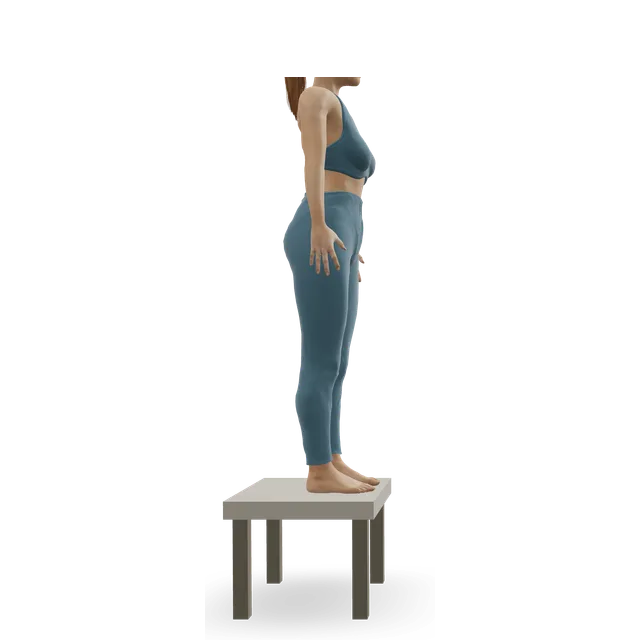
Loading the 3D figure…
The figure repeats the movement from its starting position. Drag to turn it; the arrows open the demos either side.
You step off one low box, land on both feet and rebound at once up onto a second box a stride or two ahead. Unlike the depth jump to a second box, where the second box is taller, the two boxes here can be the same low height. Plyometric training improved this kind of quick rebound, measured as reactive strength, in a meta-analysis of 61 studies (Ramírez-Campillo 2023).
Movement guide
Box-to-box depth jump
Make it easier or harder
Choose a version that fits your control and comfort.
Easier option
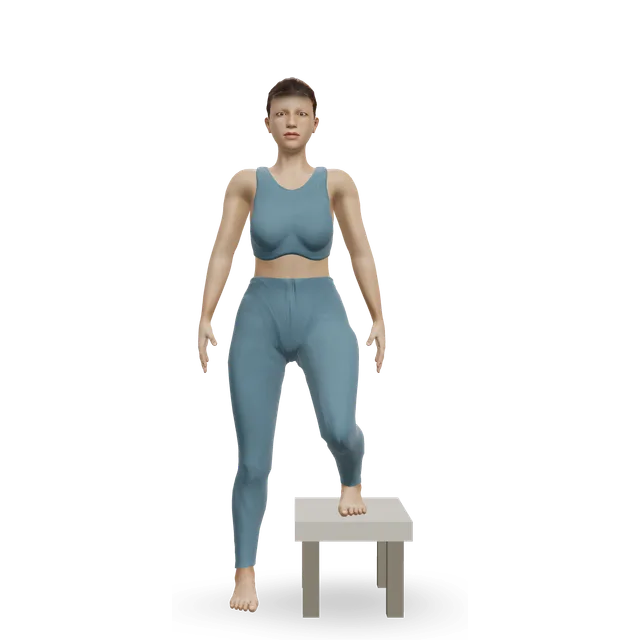 3D demoBox push-off jumpIntermediate · A step
Similar move, intermediate grade.
Harder option
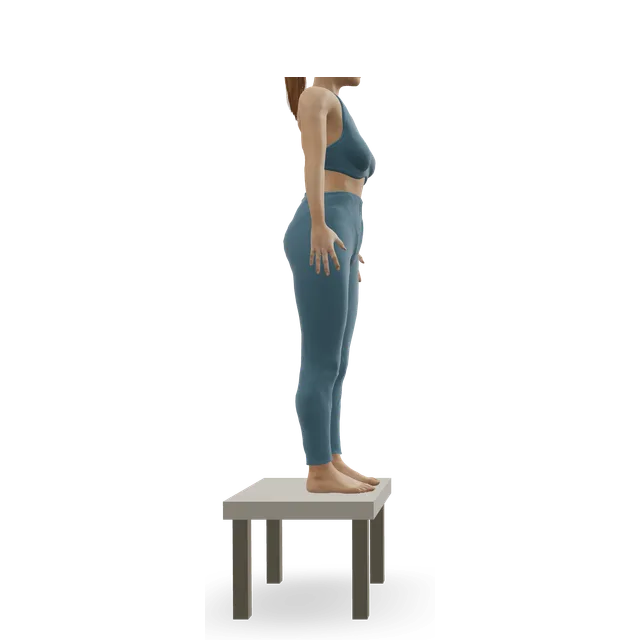 3D demoDepth jump to a second boxAdvanced · A step
Suggested next step, advanced grade.
Source-researched guide.
Form cues
- Make the floor contact short and springy, not a deep squat.
- Keep both boxes low; height is not the goal.
- Avoid: jumping off the first box instead of stepping.
Practice and cautions
2 to 3 sets of 3 to 5 jumps, resetting fully between jumps and resting 2 minutes between sets (our editorial starting point). Count each landing as a foot contact: about 80 to 100 a session suits beginners, with 48 to 72 hours between sessions (Davies 2015).
This is advanced, high-intensity jumping: keep the first box low (about 30 centimetres), learn box drop landings and box jumps first, and leave it out with knee, ankle or Achilles pain. This is movement education, not an assessment or treatment prescription. Stop for sharp or increasing pain, dizziness, numbness or tingling; seek individual guidance for symptoms, injury or restrictions.
Sources and review status
Sources support the educational description; they do not establish that this exercise is suitable for you.
- Davies 2015 · Current concepts of plyometric exercise: drills graded beginner, intermediate and advanced, about 80 to 100 foot contacts a session for beginners, and 48 to 72 hours between sessions (clinical commentary, IJSPT) ↗
- Ramírez-Campillo 2023 · Plyometric jump training improved reactive strength, the quick rebound off a drop, in healthy people aged 8 to 73 (meta-analysis of 61 studies, moderate certainty, Sports Medicine) ↗
- Buckthorpe & Della Villa 2021 · Plyometric stages after ACL reconstruction: jumps up onto a box, step-up jumps and skips in place low intensity (50 foot contacts); split jumps moderate (100); tuck jumps, hops and single-leg drop jumps high (150) (clinical commentary, IJSPT) ↗
- Free Exercise DB · community text ↗
Unlicense · Free Exercise DB contributors; derived from wrkout/exercises.json. Text import; no photographs or media. · Revision f00c92c7dcf1216a928a52c3706c7ce8e2f71ed5
No variation is labeled clinically validated.
What it works
Muscles
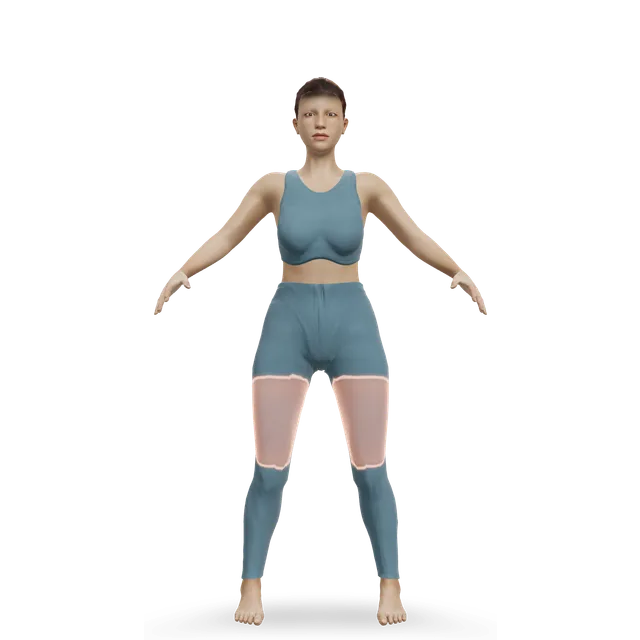
Main: Quads, Glutes, Calves. Also: Hamstrings.
Anatomy: Sartorius, Quadriceps, Rectus femoris, Vastus medialis, Vastus lateralis, Gluteus maximus.
Equipment
A bench or box
Level
Advanced. See the easier and harder options above.
Guides that use it
Similar moves
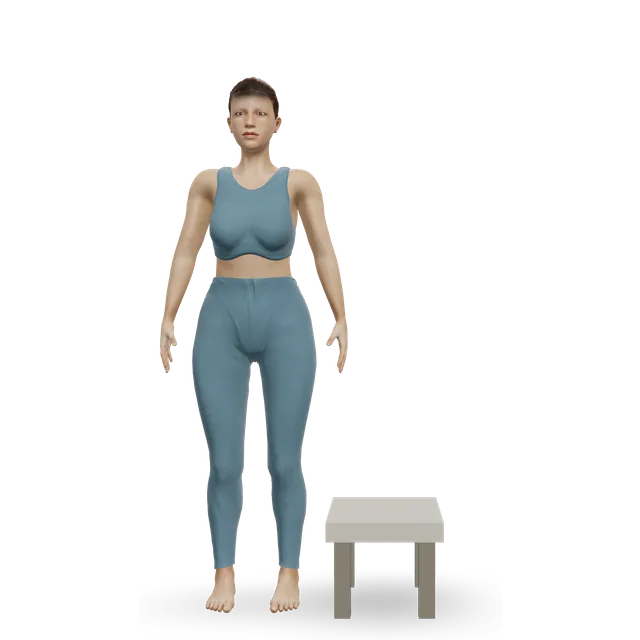
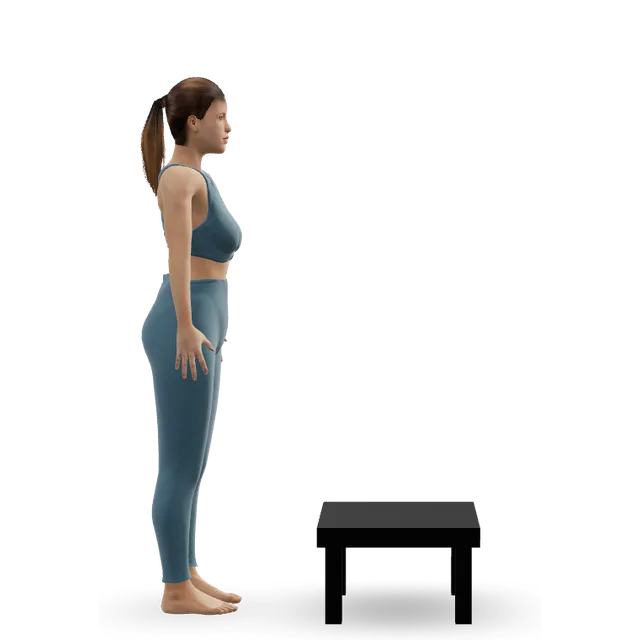
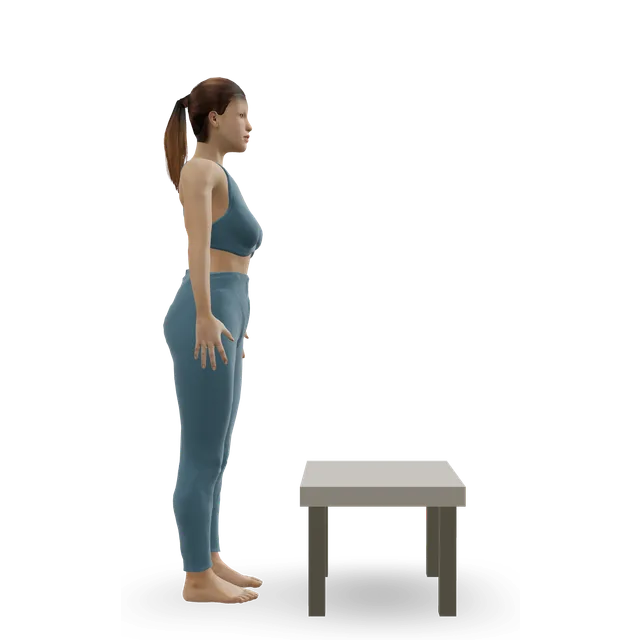
Browse more
Questions people ask
What muscles does the Box-to-box depth jump work?
Mainly the quads, glutes and calves, with help from the hamstrings.
What equipment do I need for the Box-to-box depth jump?
A bench or box.
Is the Box-to-box depth jump good for beginners?
It is an advanced move. Build up to it with the Box push-off jump first.
What is an easier alternative to the Box-to-box depth jump?
Try the Box push-off jump or the Front box jump. It works similar muscles at a lower grade.
How do I make the Box-to-box depth jump harder?
Progress to the Depth jump to a second box. Follow that guide’s technique and any stated timing.