Seated box jump with a dumbbell
Sitting on a bench with a dumbbell held at your chest, you lean forward and jump straight from the seat onto a box a short way in front. Starting seated removes the dip before the jump, so the legs work from a standstill; keep the dumbbell light, as plyometrics with added weight gave no extra gain in jump height in a meta-analysis of 56 studies (de Villarreal 2009).
Movement guide
Seated box jump with a dumbbell
Make it easier or harder
Choose a version that fits your control and comfort.
Easier option
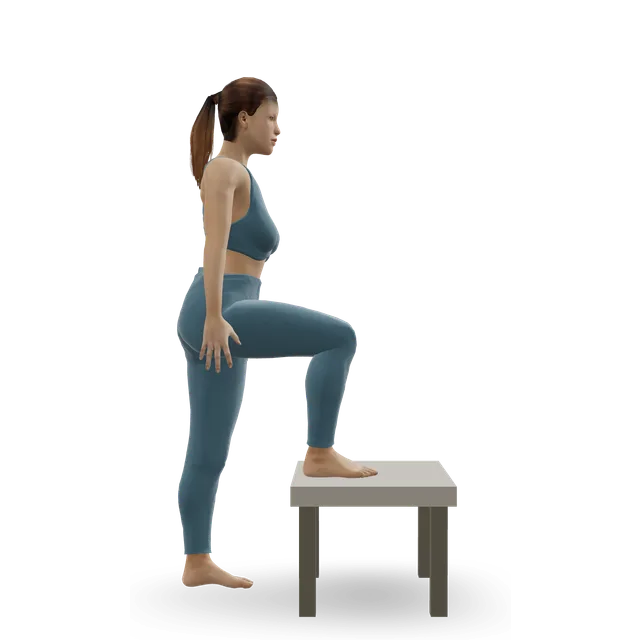 3D demoSingle-leg push-off, facing the boxBeginner · A bench or box
Similar move, beginner grade.
This move
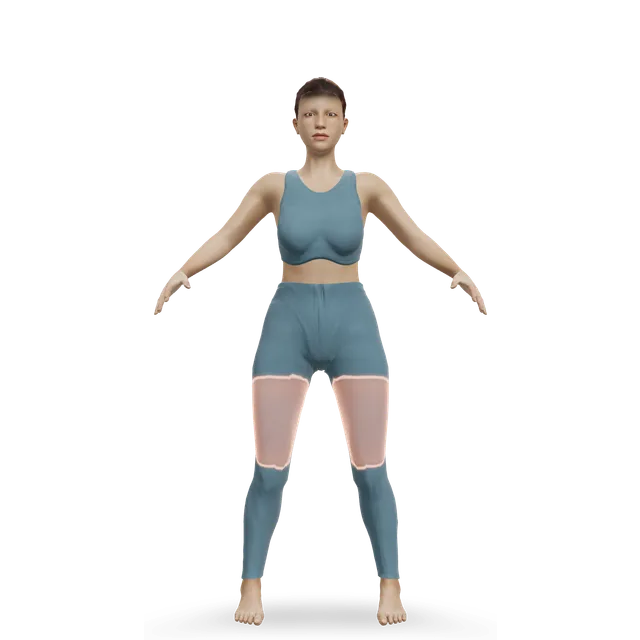 Seated box jump with a dumbbellIntermediate · A dumbbell + A bench or box
Intermediate grade.
Harder option
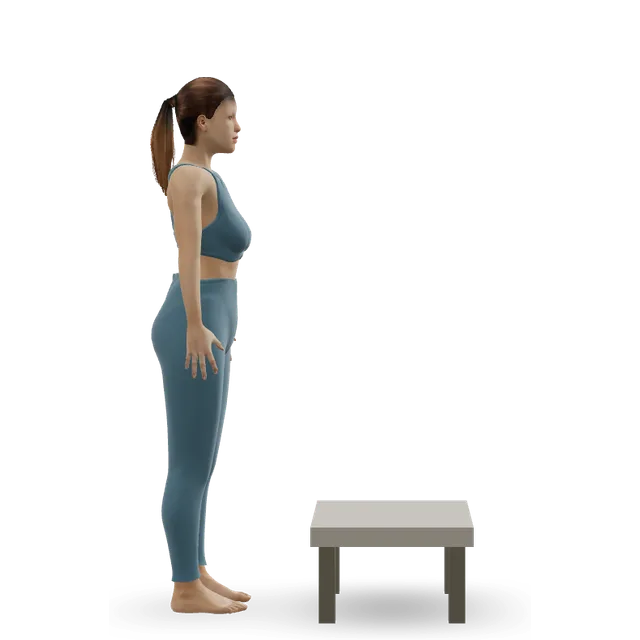 3D demoBox jump and leap offAdvanced · A bench or box
Similar move, advanced grade.
Source-researched guide.
How to move
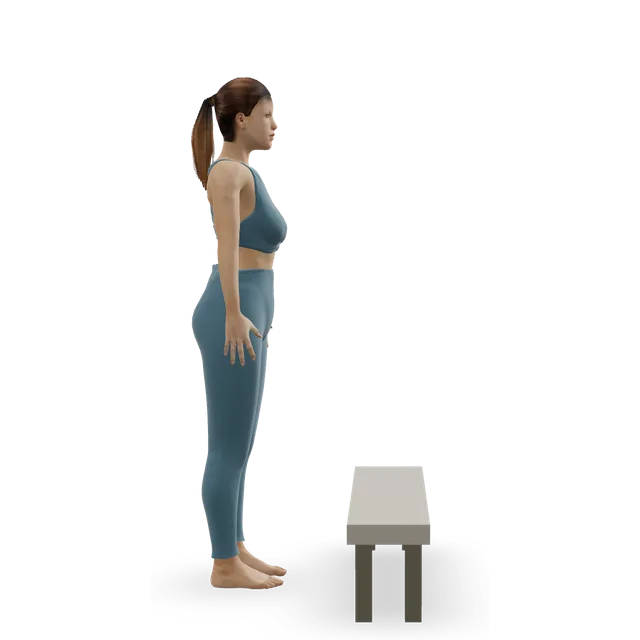
- Set a sturdy box about 60 centimetres in front of a bench. Sit near the front of the bench facing the box, holding one dumbbell against your chest with both hands.
- Plant your feet flat about hip-width apart and lean your chest forward over them.
- Drive through the hips and knees to jump up and forward off the seat.
- Land on top of the box on both feet, letting the hips and knees bend to absorb it.
- Stand tall, step down and sit again to reset.
Form cues
- Start with no dumbbell, or a light one, and a low box.
- Land with the whole foot on the box and the knees over the toes.
- Avoid: jumping back down from the box.
Practice and cautions
3 sets of 3 to 5 jumps, sitting and resetting between jumps (our editorial starting point). Count each landing as a foot contact: about 80 to 100 a session suits beginners, with 48 to 72 hours between sessions (Davies 2015).
Missing the box can scrape the shins or cause a fall: use a stable, non-slip box well below your best jump height, and step down rather than jumping down. Leave it out with knee, ankle or Achilles pain. This is movement education, not an assessment or treatment prescription. Stop for sharp or increasing pain, dizziness, numbness or tingling; seek individual guidance for symptoms, injury or restrictions.
Sources and review status
Sources support the educational description; they do not establish that this exercise is suitable for you.
- ACE · Box jumps (intermediate; learn squat jumps first, the box no higher than your vertical jump) ↗
- de Villarreal 2009 · What makes plyometric training raise jump height: added weight gave no extra benefit (meta-analysis of 56 studies, JSCR) ↗
- Davies 2015 · Current concepts of plyometric exercise: drills graded beginner, intermediate and advanced, about 80 to 100 foot contacts a session for beginners, and 48 to 72 hours between sessions (clinical commentary, IJSPT) ↗
- Free Exercise DB · community text ↗
Unlicense · Free Exercise DB contributors; derived from wrkout/exercises.json. Text import; no photographs or media. · Revision f00c92c7dcf1216a928a52c3706c7ce8e2f71ed5
No variation is labeled clinically validated.
What it works
Muscles
Main: Quads, Glutes. Also: Calves, Hamstrings.
Anatomy: Sartorius, Quadriceps, Rectus femoris, Vastus medialis, Vastus lateralis, Gluteus maximus.
Equipment
A dumbbell + A bench or box
Level
Intermediate. See the easier and harder options above.
Similar moves
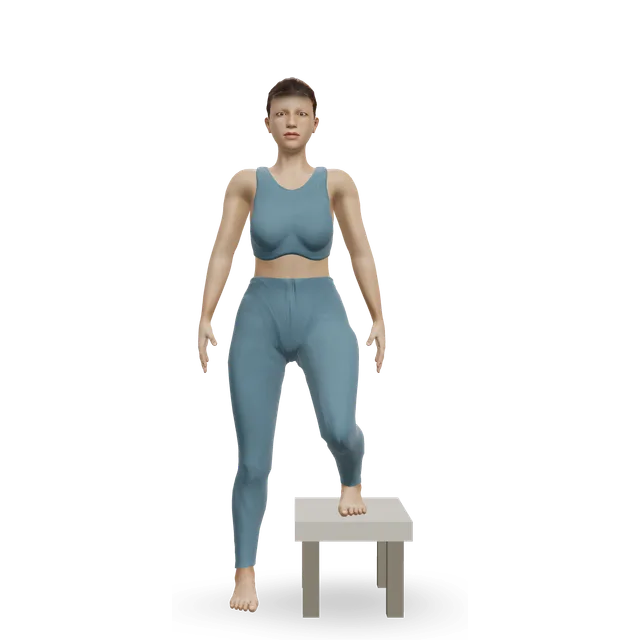
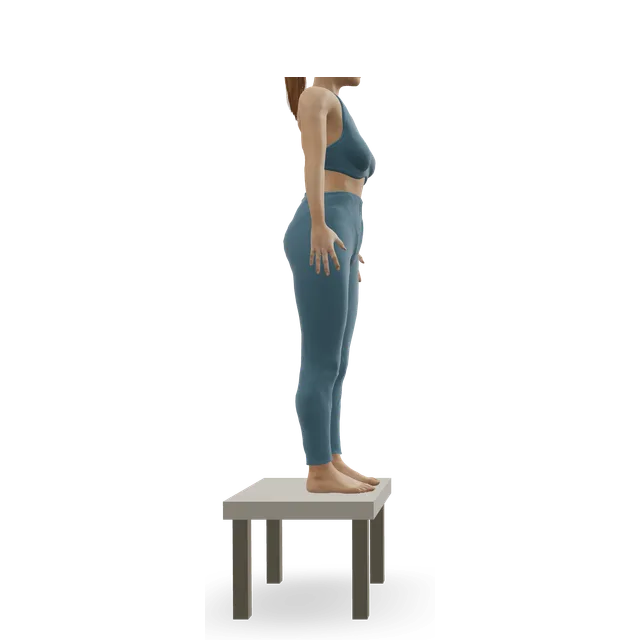
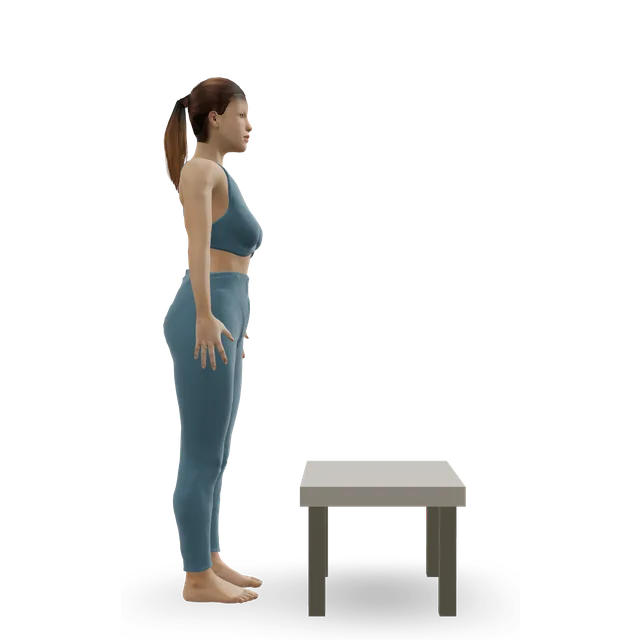
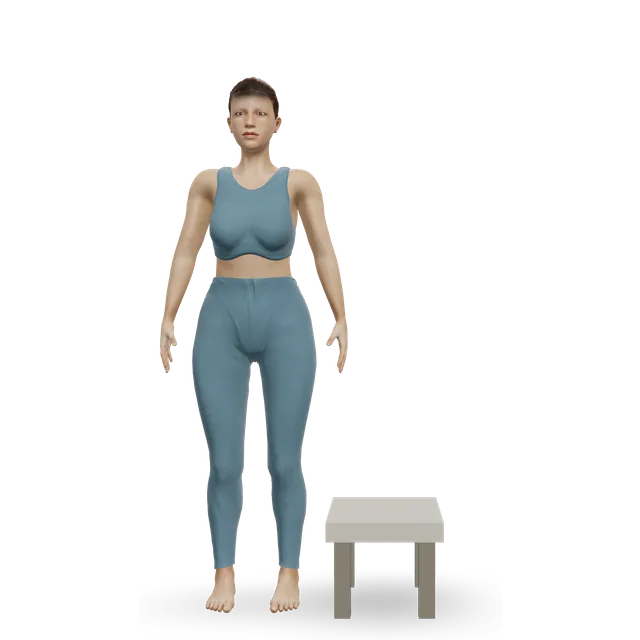
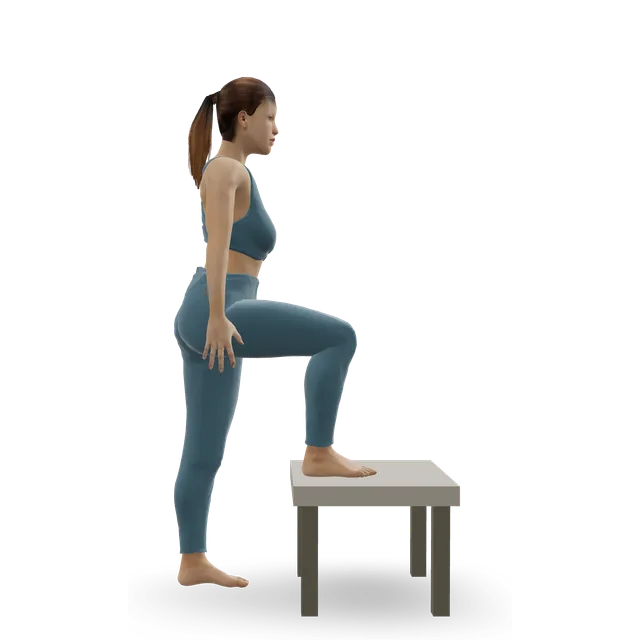
Browse more
Questions people ask
What muscles does the Seated box jump with a dumbbell work?
Mainly the quads and glutes, with help from the calves and hamstrings.
What equipment do I need for the Seated box jump with a dumbbell?
A dumbbell + A bench or box.
Is the Seated box jump with a dumbbell good for beginners?
It is graded intermediate. If it is too hard right now, start with the Single-leg push-off, facing the box.
What is an easier alternative to the Seated box jump with a dumbbell?
Try the Single-leg push-off, facing the box or the Standing long jump. It works similar muscles at a lower grade.
How do I make the Seated box jump with a dumbbell harder?
Progress to the Box jump and leap off or the Box-to-box depth jump. Follow that guide’s technique and any stated timing.