3D demo
Single-leg push-off, facing the box
Conditioning · Quads, Glutes, Calves
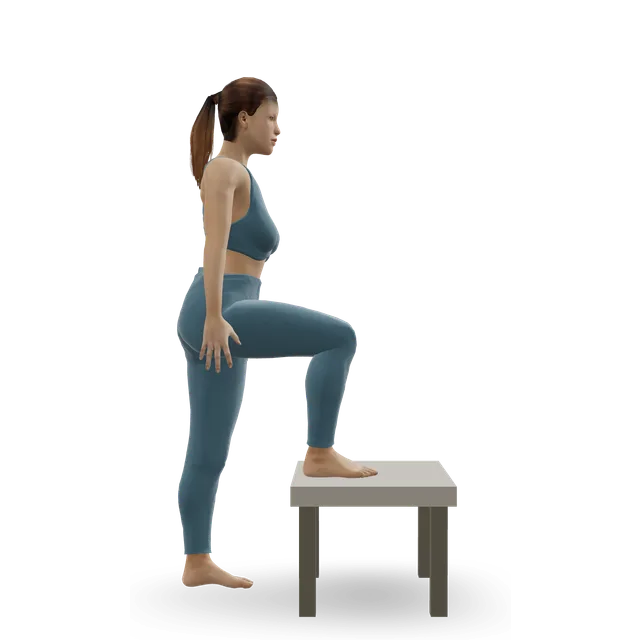
Loading the 3D figure…
The figure repeats the movement from its starting position. Drag to turn it; the arrows open the demos either side.
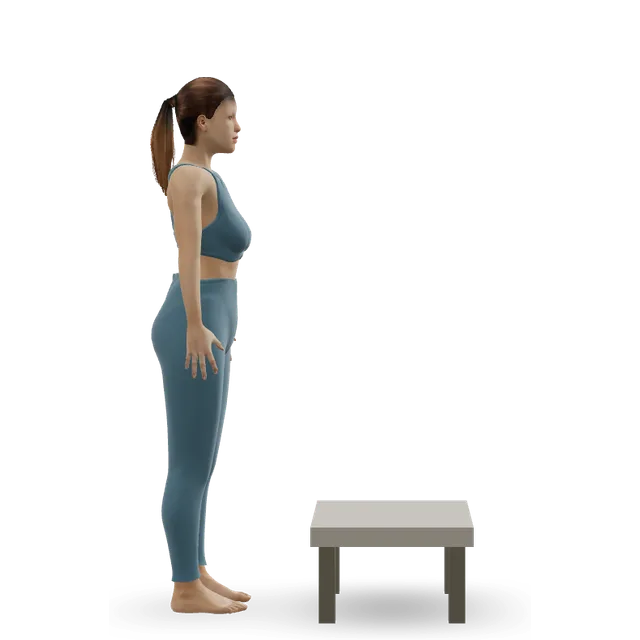
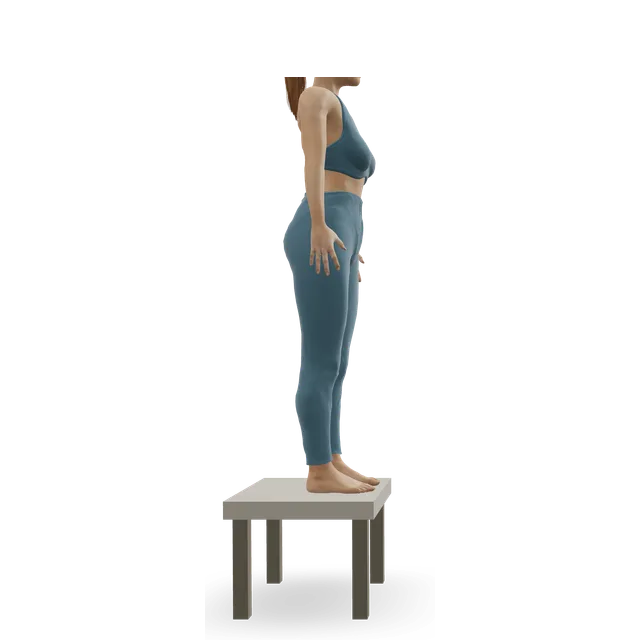
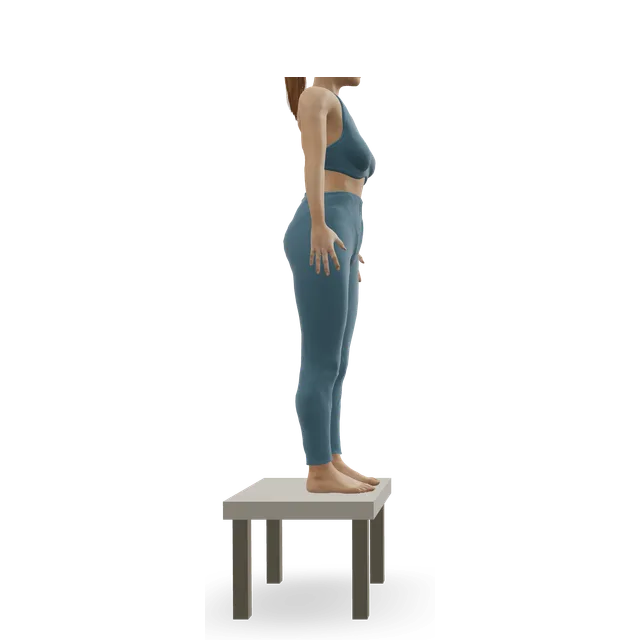
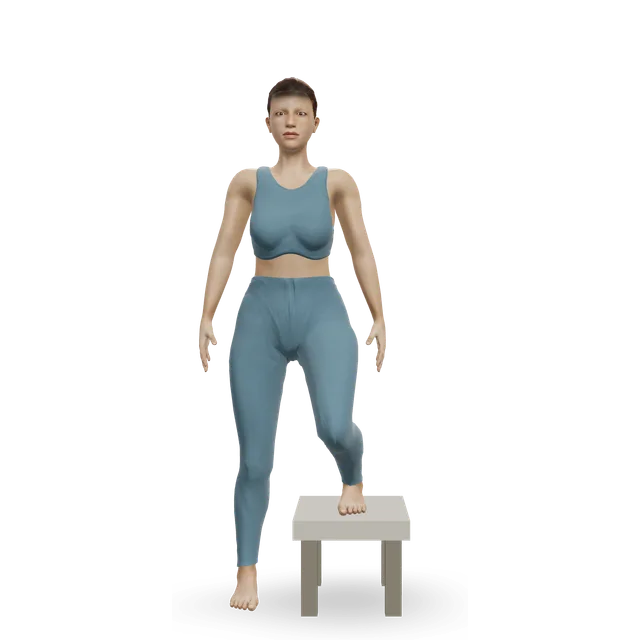
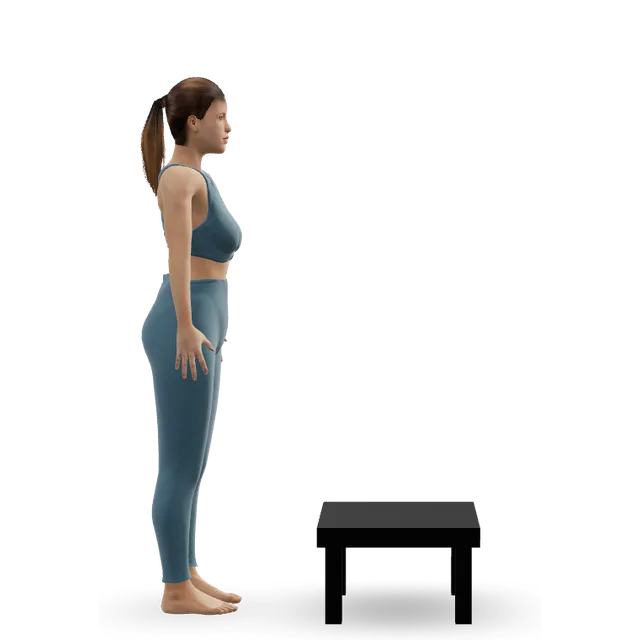
Facing a box with one foot on top, you drive through that foot to jump straight up and land back in the same position: a step-up turned into a jump. Unlike the box push-off done side-on, you face the box; ACE rates this single-leg push-off beginner, and an ACL rehabilitation programme puts step-up jumps in its lowest-intensity stage (Buckthorpe 2021).
Movement guide
Single-leg push-off, facing the box
Make it easier or harder
Choose a version that fits your control and comfort.
Easier option
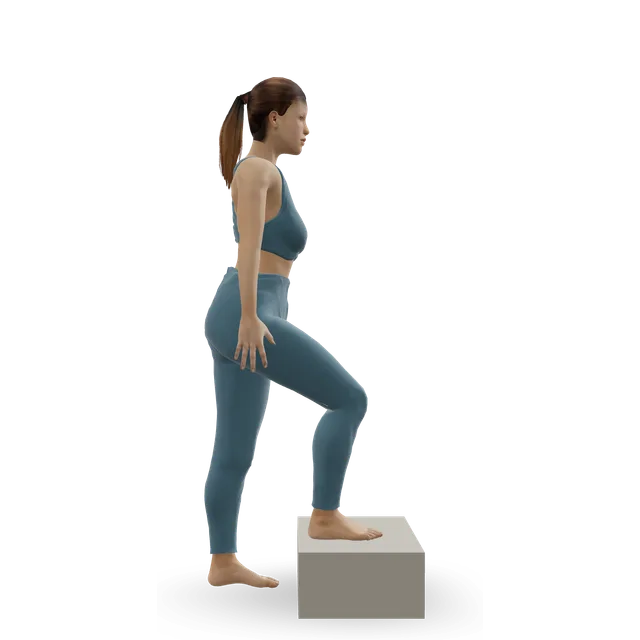 3D demoStep-upBeginner · A step
Suggested next step, beginner grade.
Harder option
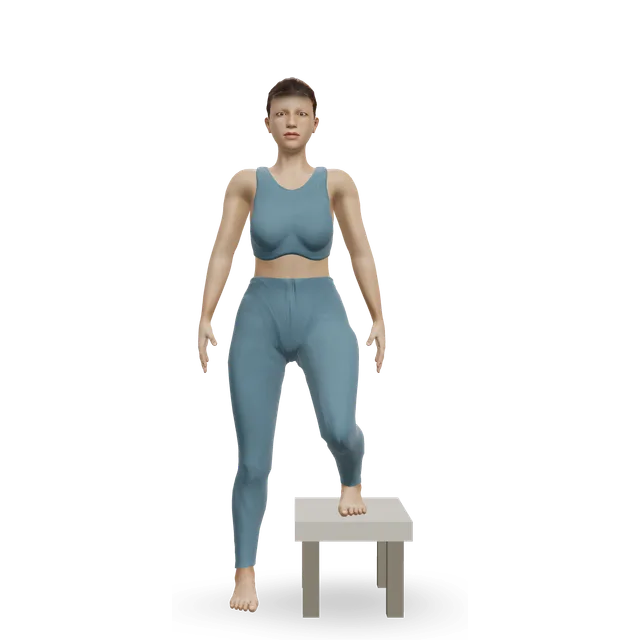 3D demoBox push-off jumpIntermediate · A step
Similar move, intermediate grade.
Source-researched guide.
Form cues
- Push through the whole top foot.
- Land with the top foot flat and the knee over the toes.
- Avoid: pushing mostly off the floor foot.
Practice and cautions
2 to 3 sets of 5 on each leg, resting a minute between sets (our editorial starting point). Count each landing as a foot contact: about 80 to 100 a session suits beginners, with 48 to 72 hours between sessions (Davies 2015).
Use a stable, non-slip box no higher than your knee, and leave it out if step-ups hurt your knee. This is movement education, not an assessment or treatment prescription. Stop for sharp or increasing pain, dizziness, numbness or tingling; seek individual guidance for symptoms, injury or restrictions.
Sources and review status
Sources support the educational description; they do not establish that this exercise is suitable for you.
- ACE · Single leg push-off (beginner; facing the box) ↗
- Buckthorpe & Della Villa 2021 · Plyometric stages after ACL reconstruction: jumps up onto a box, step-up jumps and skips in place low intensity (50 foot contacts); split jumps moderate (100); tuck jumps, hops and single-leg drop jumps high (150) (clinical commentary, IJSPT) ↗
- Davies 2015 · Current concepts of plyometric exercise: drills graded beginner, intermediate and advanced, about 80 to 100 foot contacts a session for beginners, and 48 to 72 hours between sessions (clinical commentary, IJSPT) ↗
- Free Exercise DB · community text ↗
Unlicense · Free Exercise DB contributors; derived from wrkout/exercises.json. Text import; no photographs or media. · Revision f00c92c7dcf1216a928a52c3706c7ce8e2f71ed5
No variation is labeled clinically validated.
What it works
Muscles
Main: Quads, Glutes. Also: Calves, Hamstrings.
Anatomy: Sartorius, Quadriceps, Rectus femoris, Vastus medialis, Vastus lateralis, Gluteus maximus.
Equipment
A bench or box
Level
Beginner. See the easier and harder options above.
Guides that use it
Similar moves
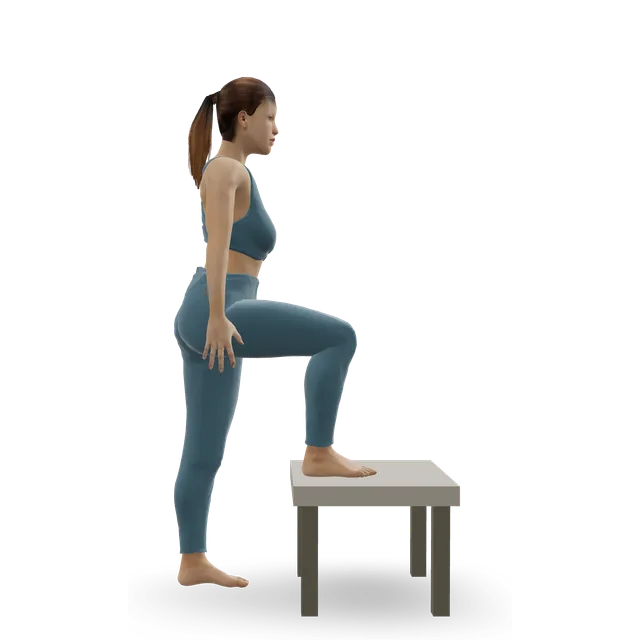 3D demoAlternate-leg box push-offAdvanced · A bench or box
 3D demoBox jump and leap offAdvanced · A bench or box
 3D demoBox-to-box depth jumpAdvanced · A bench or box
 3D demoDepth jump to a second boxAdvanced · A step
 3D demoLateral box shuffleIntermediate · A step
 3D demoBox skipAdvanced · A bench or box
Browse more
Questions people ask
What muscles does the Single-leg push-off, facing the box work?
Mainly the quads and glutes, with help from the calves and hamstrings.
What equipment do I need for the Single-leg push-off, facing the box?
A bench or box.
Is the Single-leg push-off, facing the box good for beginners?
It is graded beginner, so it suits most people starting out. When it feels easy, try the Box push-off jump.
What is an easier alternative to the Single-leg push-off, facing the box?
Try the Step-up. It is the suggested step down from this move.
How do I make the Single-leg push-off, facing the box harder?
Progress to the Box push-off jump or the Side-to-side box push-off. Follow that guide’s technique and any stated timing.