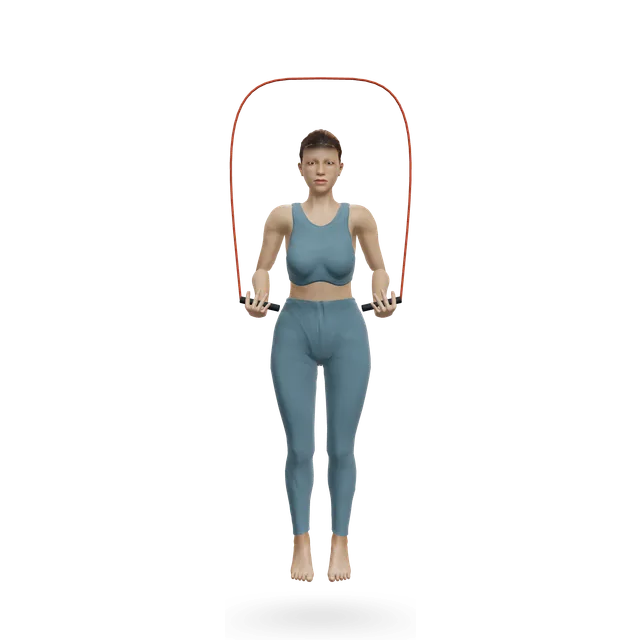
What skipping asks of the calves and Achilles, and what nobody has countedEmerging evidence
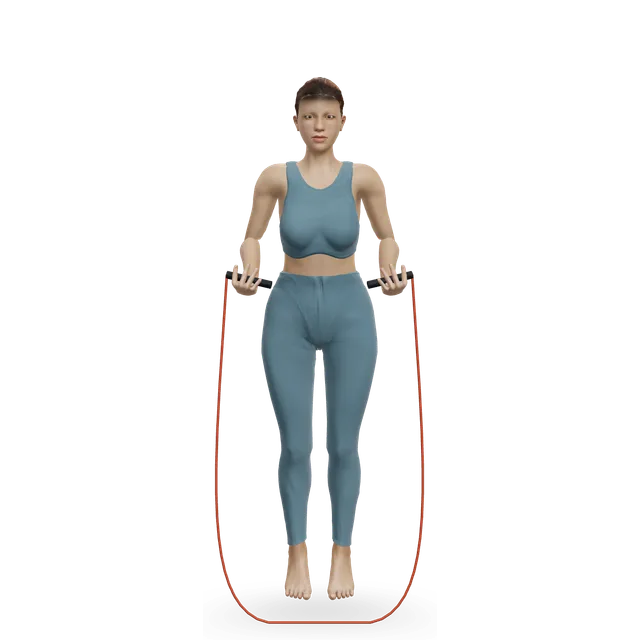
No study counts calf pain in rope skippers: the one trial that started inactive adults on daily rope sessions found more injuries and drop-outs than in joggers, without saying where. What lab studies do show is that skipping lands mainly through the front of the foot, so the calf and Achilles catch every landing. In experienced skippers the ankle produced the most power of any joint, with or without shoes, and in 16 teenage boys the two-foot bounce leaned more on the calf muscles than the alternate-foot step did.
Estimated Achilles load ran from half body weight in a seated heel raise to 7.3 times body weight in a forward one-leg hop in 8 adults. In one person with a sensor around the tendon, small repeated hops on the spot loaded the Achilles more than a maximal jump, and in 10 men hopping on one leg the tendon stretched about 8% with each hop, which its authors say means prolonged hopping may damage it. Double-unders and the speed step made the ankle absorb 39% to 114% more power than running, and elite double-unders became more ankle-led as the tempo rose. By our arithmetic, 10 minutes of skipping is well over 1,000 calf contractions.
Sources 1, 2, 3, 4, 5, 6, 7, 8, 9
Soreness, strain, Achilles or cramp: how they're told apartEmerging evidence
Muscle soreness is commonest when an activity is new. After one hard session of jumps in untrained men it rose at about 48 hours, and one session protects the muscle against the next, so the second and third sessions hurt less. This timeline comes mostly from studies of thigh muscles, not the calf.
A strain starts at a moment. An NHS trust leaflet says the upper calf (gastrocnemius) is more often injured in sudden, explosive movements such as sprinting, lunging or jumping, and the lower calf (soleus) in slower repetitive activities such as steady running, and expert clinicians say a soleus strain can feel like tightness or cramping rather than pain; this pattern rests on that leaflet and on interviews with 20 experts, not on trials. A strain where the inner calf muscle meets the deeper one (tennis leg) comes from sudden overstretching or repeated small injuries.
Achilles tendon pain sits in the cord above the heel, stiff first thing and sore after loading, and especially affects people whose activity loads the tendon. A rupture can happen when landing from a jump, often with a popping noise, and the NHS lists a snapping or popping sound and not being able to walk on tiptoe among the signs to call NHS 111. A cramp is a sudden painful tightening that lasts from a few seconds to 10 minutes, and the muscle can feel sore for up to 24 hours afterwards.
Sources 10, 11, 12, 13, 14, 15, 16, 17, 18, 19
Who gets itEmerging evidence
In our reading: people new to the rope or coming back after a break, especially with daily sessions or a 30-day challenge; anyone adding double-unders, the speed step, one-leg skipping or a weighted rope; and people skipping barefoot or switching to flat or minimal shoes, since switching runners to minimal shoes went with calf pain and Achilles problems. For calf strains, older age and a previous calf strain were the strongest risk factors across 10 studies of 5,397 athletes, and in elite Australian footballers a previous calf strain made another about 6.7 times as likely within 2 seasons.
For the Achilles, weaker calves, quinolone antibiotics, alcohol and training in the cold had limited evidence, while body weight, foot shape and activity level had none. Achilles ruptures rose most in people aged 40 to 59 in US emergency data, and jumping raises the risk; in professional basketball they happened on an explosive push-off from a standstill.
Sources 20, 21, 22, 23, 24, 25
When a scan or test mattersEmerging evidence
Most calf strains are diagnosed from the story and an examination; an NHS trust keeps an ultrasound or magnetic resonance imaging (MRI) scan for a severe injury or one not improving as expected. In elite footballers, severe damage to the tendon sheet inside the muscle on MRI meant a longer return (31.3 against 19.4 days), but the history predicted another strain better than the scan did. A suspected clot needs an ultrasound scan the same day, and a suspected Achilles rupture an examination the same day. Muscle soreness and cramp need no tests.
Sources 13, 22, 26, 17, 18
How it usually goesEmerging evidence
Soreness after a first session usually peaks around 2 days and fades within days (a timeline mostly from studies of thigh muscles), and soreness after a cramp lasts up to a day. The NHS says most sprains and strains feel better after 2 weeks and to avoid strenuous exercise such as running for up to 8 weeks; an NHS trust says mild calf strains may take a few days and more severe ones weeks or months; and NHS inform says that in many cases calf problems should begin to settle within 6 weeks. In elite footballers, deep calf (soleus) strains took 25.4 days to return against 19.1 for upper calf strains, and tennis leg usually takes 6 to 12 weeks. Achilles tendon pain often takes months. No one can promise a date.
Sources 11, 19, 27, 13, 28, 29, 15