Safe for most people
Being active is safe for most people with blood cancer, before, during and after treatment. Let your team know your plans: they'll tell you what to adjust for your blood counts and treatment.
Exercise guide
Being active is safe for most people with leukaemia, lymphoma or myeloma, before, during and after treatment, and it can ease tiredness and help you keep your strength and fitness. What changes is how: low blood counts, a stem cell transplant and, with myeloma, bone disease all change which activities suit you and when.
No safe blood count for exercise has been agreed, so your cancer team sets your limits. Exercise helps how you feel and function; in trials it made no difference to survival, and it never replaces treatment.
This guide covers low white cells, low platelets and anaemia, myeloma bone disease and the moves to leave out, recovering from a stem cell transplant, and tiredness, with a gentle routine you can do in a hospital room or at home.
Being active is safe for most people with blood cancer, before, during and after treatment. Let your team know your plans: they'll tell you what to adjust for your blood counts and treatment.
In a Cochrane review of 18 trials, aerobic exercise probably eased tiredness (moderate certainty) and may slightly ease low mood. It made no difference to survival either way.
Source 4
Advice is moving from stopping exercise when counts are low to adapting it. Your cancer team sets your limits; Anthony Nolan suggests speaking to your doctor and not exercising if your platelets are below 20.
With low white cells, avoid busy gyms, pools and spas. With low platelets, avoid contact and high-impact sports, and choose activities where you won't fall or get knocked.
Myeloma UK recommends walking, swimming and cycling, and advises against high-impact exercise, contact sports and heavy lifting. Stop and tell your team about new or increasing pain.
Call your 24-hour number straight away if your temperature reaches 37.5°C or goes below 36°C, if you feel unwell even with a normal temperature, or if you have unexplained bruising or bleeding. With myeloma, suddenly losing feeling in your legs or control of your bladder or bowels is a 999 call.
Blood cancer affects blood cells. It includes leukaemia, lymphoma and myeloma, and related conditions called myelodysplastic syndromes and myeloproliferative neoplasms. More than 40,000 people a year are diagnosed in the UK and more than 310,000 are living with it, and around 4 in 10 people are 75 or over when they're diagnosed.
Source 14
Some types grow fast (acute), others slowly (chronic). The commonest are large B-cell lymphoma, chronic lymphocytic leukaemia, myeloma, essential thrombocythaemia and acute myeloid leukaemia, and 5-year survival ranges from over 80% for some types to 22% for acute myeloid leukaemia.
Source 14
Myeloma is a cancer of plasma cells in the bone marrow. It weakens the surrounding bone, most often in the middle or lower back, the ribs and the hips, so bones can break more easily. 70% to 80% of people with myeloma have bone pain, 50% to 60% have fractures and 2% to 3% have spinal cord compression. Bone pain is often worse when you move and eased by lying down.
Treatments include chemotherapy, targeted medicines, steroids, radiotherapy and stem cell (bone marrow) transplants, using your own cells or a donor's. After a transplant you stay in your own room until it works, and recovery can take up to a year. Donor transplants can cause graft versus host disease (GvHD), which can affect the skin, gut, lungs, muscles and joints. Slow-growing types, such as chronic lymphocytic leukaemia, may be watched at first without treatment (watch and wait), and being active then can help you prepare for treatment if you need it.
Most people in the trials had acute leukaemia, lymphoma or myeloma, and 8 of the 18 trials in the Cochrane review were around stem cell transplants, mostly with walking programmes. Myeloma trials are small, and charity advice fills much of the gap.
In a Cochrane review of 18 trials (1,892 people), aerobic exercise probably eased tiredness by a small amount (9 trials, 826 people; moderate certainty) and might slightly ease low mood (low certainty). Its effects on quality of life and physical functioning were unclear.
Source 4
Exercise made no difference to the risk of dying (low-certainty evidence). It's for how you feel and function, not a treatment for the cancer.
Source 4
Across 27 studies (2,432 people), exercise around a bone marrow or stem cell transplant improved walking distance (about 29 metres further in 6 minutes), quality of life and tiredness by modest amounts, and shortened hospital stays by about 2 days, more so after donor transplants. Other reviews found gains in walking and leg strength but not consistently in tiredness or quality of life, with low-certainty evidence.
One trial in 105 people having donor transplants found less tiredness and better fitness. But the two largest single trials found no benefit: 18 weeks of supervised high-intensity training after an own-cell transplant (109 people) did no better than usual care, in which many people had physiotherapy, with no difference a year later; and brief self-directed training before a transplant (711 people) changed nothing.
In 122 people with lymphoma, 12 weeks of supervised cycling improved physical functioning, quality of life and tiredness, without interfering with treatment or how well it worked.
Source 32
In 9 trials (314 people), exercise improved fitness and strength, but not tiredness, anxiety, low mood or quality of life.
Source 33
In 15 studies of people who weren't having a transplant, exercise improved walking and fitness, but not tiredness or quality of life compared with the control groups.
Source 34
In 20 studies (1,032 people), exercise was feasible, but its effects on fitness, strength, tiredness, quality of life and pain were small and not statistically clear. Another review of 7 studies (563 people) found it safe, with no serious and 4 minor problems reported, and 5 trials found no effect on quality of life.
In 12 exercise studies (346 people), 69% to 86% had myeloma bone disease. Exercise appeared safe when people with an unstable spine, spinal cord compression or a high risk of fracture were left out, but the studies reported problems poorly.
Source 36
Chemotherapy, targeted medicines, radiotherapy and transplants treat the cancer. Exercise is there to help you feel and function better alongside them.
Your team will tell you what's safe for your counts. These notes show what the charities and one physiotherapy guideline say.
A 2025 review of 47 papers found most set a platelet cut-off for exercise, but the numbers varied widely, from under 10 to under 50, and the evidence is moving away from stopping exercise towards adapting it. Bleeding caused by exercise was rare where it was reported.
Source 5
Choose activities where you won't fall or get knocked: start with gentle seated or standing exercises, stretches and walking, and as your platelets recover, add brisk walking, step-ups and gentle strength work with bands. Avoid contact and high-impact sports such as football and rugby. Anthony Nolan suggests speaking to your doctor and not exercising if your platelets are below 20.
One Canadian physiotherapy guideline, written for professionals, adapts exercise to the platelet count: very limited activity below 15, gentle exercise without resistance from 15 to 20, light resistance from 20 to 40, and gentle aerobic exercise such as a static bike above 40, with nothing vigorous below 50 (the same numbers your blood test results show). It notes the count is an imprecise guide to bleeding, and that weeks of bed rest cause decline. One study used resistance tubing instead of dumbbells at counts of 10 to 20. These are for your team to use, not rules to follow on your own.
Avoid busy places such as gyms, pools and spas, or go at quiet times and wipe equipment down, or exercise at home or outdoors. Blood Cancer UK says outdoor, well-ventilated and less crowded activities are lower risk, and that hard exercise or shouting indoors spreads airborne viruses more. The risk is higher in the 6 to 12 months after a transplant, especially a donor one.
When your immunity is low, Macmillan advises avoiding compost heaps, dead leaves and building dust, which can carry a mould called aspergillus.
Source 15
With severe anaemia you may manage only everyday activities: rest when you need to until it improves. Contact the hospital if you're very tired, breathless or dizzy, and find out what's causing breathlessness before you exercise. Our anaemia guide has more.
Don't exercise if you have a fever, diarrhoea or vomiting, new bone, neck or back pain, chest pain, an irregular heartbeat, sudden weakness, or recent dizziness or fainting.
With blood cancer, an infection can cause only mild symptoms, you can have one without a fever, and paracetamol, steroids and aspirin can hide a fever. If you feel unwell, skip exercise and get advice.
Source 11
Myeloma UK: "You should avoid strenuous exercises like weightlifting or contact sports such as rugby. Gentle forms of exercise such as walking, swimming, cycling, gentle aqua-aerobics, gentle gym work, yoga and tai chi are good." Its bone disease guide says low-impact exercise is generally recommended, and high-impact exercise such as running, tennis or contact sports usually isn't.
Keep mobile with regular gentle exercise, ask for a physiotherapist, avoid over-exertion and heavy lifting, and know the signs of spinal cord compression.
Source 9
Our reading, from advice for cancer in the bones and the physiotherapy guideline, is to leave out twisting and repeated or loaded forward bending if myeloma affects your spine, unless your team says they're safe. Cancer Research UK says avoid twisting the spine with cancer in the bones, such as yoga twists, the rowing machine and golf or tennis swings. Macmillan says avoid repeated bending forward, such as toe touches and sit-ups. The Canadian guideline says twisting, bending forward, reaching overhead, pushing, pulling and lifting weights can cause or worsen fractures in the spine.
Activities with a high risk of falls, such as skating and skiing; lifting weights without an exercise physiologist's or physiotherapist's guidance; and possibly golf, because of the twisting swing.
Source 40
The Canadian guideline says bone lesions aren't an absolute bar to exercise, but advises avoiding high impact and extreme or twisting movements, following back-care principles, and using walking aids or braces where advised.
Source 16
Learn each exercise with a physiotherapist first. Do them about 3 times a week, not on 2 days in a row, starting with 5 of each and building gradually: "if it hurts then don't do it". Wear supportive laced shoes, hold a chair for balance work, stop to rest if you're breathless, and stop straight away and tell your team about new or increasing pain.
Source 10
The impact and heavy lifting in our osteoporosis guide aren't for myeloma bone disease. Light strength and balance work, planned with a physiotherapist, is.
Steroids can weaken your muscles, making stairs, lifting and reaching overhead harder: tell your team. Myeloma and its treatments can cause numb or tingling feet, which affects balance, so hold a counter for balance work; a static bike may be safer than cycling outside.
Myeloma UK's doses: 5 of each to start, about 3 times a week but not on 2 days in a row. Step-ups 5 times leading with each leg, resting 10 seconds between; knee straightening held for 5 seconds; band rows held for 2 to 3 seconds; curls and shrugs with light weights or tins, held for 3 to 4 seconds. The sit-to-stand and calf raises are our additions.
 3D demoLow step-upBeginner · A step
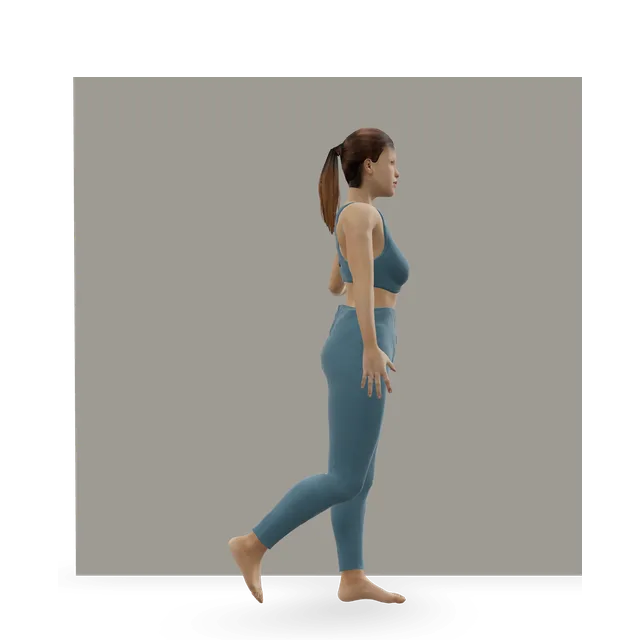 3D demoStanding hamstring curlBeginner · A wall
 3D demoSeated knee extension (chair)Beginner · A bench or box + Something with weight
 3D demoWall push-upBeginner · A wall
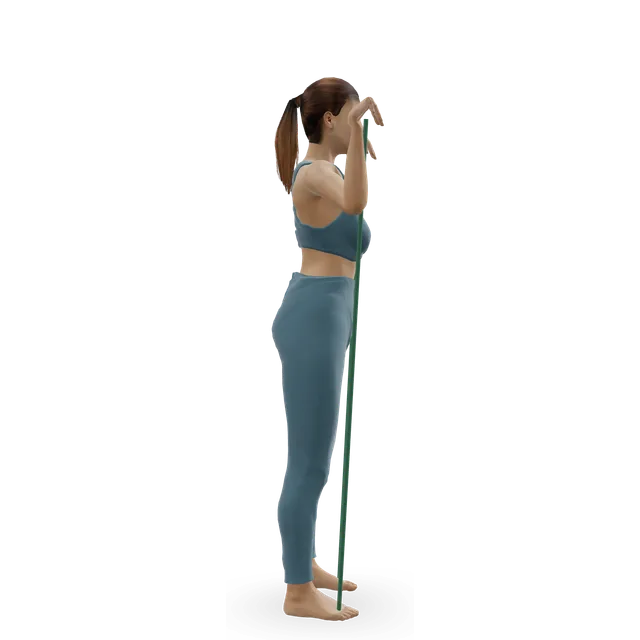
 3D demoBand rowBeginner · A band + An anchor point
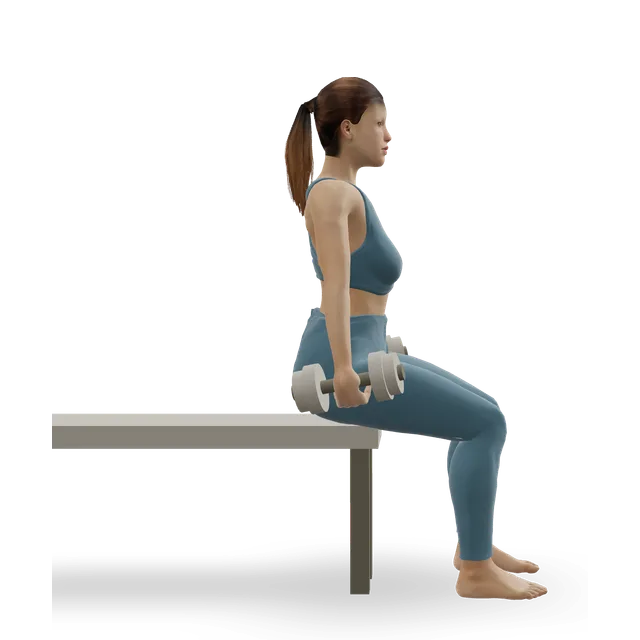 3D demoSeated dumbbell curlBeginner · A dumbbell + A bench or box
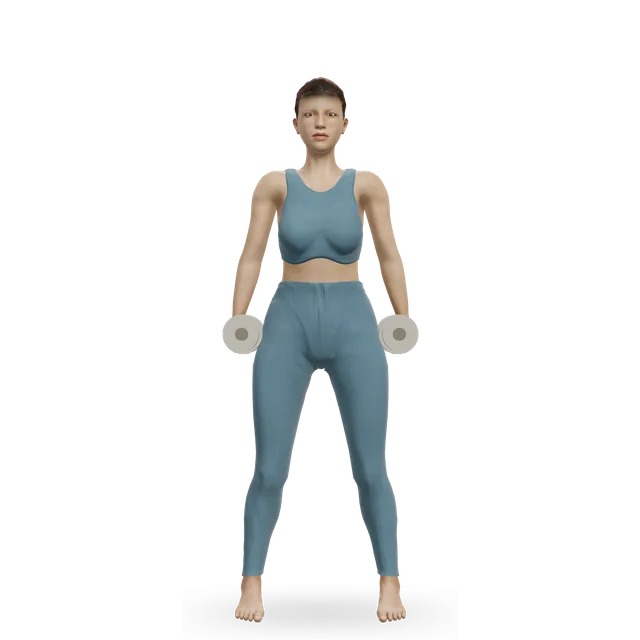 3D demoDumbbell shrugBeginner · A dumbbell
 3D demoSlow calf raiseBeginner · A wall
 3D demoSit to stand from a chairBeginner · A bench or box
Myeloma UK's doses: heel-to-toe standing and standing on one leg held for 2 to 3 seconds, 5 times, holding a chair; the calf stretch held for 3 to 4 seconds and the shoulder and neck stretches for 2 to 3 seconds, 5 each side, without pulling. The side-stepping page's dose is 10 steps each way, next to a counter.
 3D demoTandem stance and heel-to-toe walkBeginner · A wall
 3D demoSingle-leg standBeginner · A wall
 3D demoSide-stepping (sideways walking)Beginner · A wall
 3D demoWall calf stretch (gastrocnemius)Beginner · A wall
 3D demoCross-body shoulder stretchBeginner · No equipment
 3D demoUpper trap releaseBeginner · No equipment
Myeloma UK, Macmillan and Lymphoma Action advise against high-impact exercise and contact sport with myeloma bone disease, other cancer in the bones or low platelets. In our catalog, leave out:
Our reading of the advice for cancer in the bones and the physiotherapy guideline, unless your team says they're safe:
Myeloma UK advises against heavy lifting and strenuous weightlifting, so leave out barbell deadlifts and back squats, kettlebell swings and overhead presses unless a physiotherapist has planned them with your team.
With very low platelets or if you're unsteady, practising getting down to the floor and back up can wait until your team agrees (our suggestion, from the advice to avoid falls).
Source 2
Leukaemia and some other conditions can enlarge the spleen. Avoid contact sports while it's enlarged, because a knock could make it burst.
Source 41
One NHS (National Health Service) hospital's leaflet for people in their own room after a transplant suggests sitting out of bed for meals, washing and dressing yourself, and gentle exercises spread through the day at about 3 on a scale of 0 to 10: ankle pumps, thigh and buttock squeezes, deep breathing, arm raises, knee straightening, walking or marching, sit-to-stands and the ward bike. Wear a mask when you're allowed out of your room. Leukaemia Care suggests starting with 5 minutes of walking and building towards 30.
The international roundtable on exercise and cancer encourages exercise at home after a transplant: light, short and often, adjusted day by day, building up slowly. Anthony Nolan suggests aiming for 20 to 30 minutes of moderate activity a day, in chunks of 3 to 5 minutes if you need to, strength and balance exercises at least twice a week, and getting up every 30 minutes. The NHS says recovery can take up to a year: increase exercise slowly, starting with short walks.
Wait until your immune system has recovered before going back to a public gym, and check with your team before being around other people. Anthony Nolan says strenuous exercise waits until your immune system and energy have recovered. Don't swim while you have a central or PICC (peripherally inserted central catheter) line.
GvHD can make your joints swollen and your arms and legs hard to move: tell your care team. Call them too if breathing gets difficult, you start wheezing or exercise gets harder.
Source 22
With a central or PICC line, don't swim, and avoid vigorous upper-body exercise that could move the line. Pain or swelling in the arm, shoulder or chest on that side can be a clot: call your team.
Your skin may be more sensitive to the sun after a transplant, so cover up when you exercise outdoors.
Source 21
Leukaemia Care says even after a stem cell transplant you may only need a short break from activity. Once your strength is back, Anthony Nolan suggests goals such as parkrun, the NHS Couch to 5K programme or the British Transplant Games (running isn't for myeloma bone disease, because of the impact).
From St George's leaflet, at about 3 out of 10 effort, spread through the day: 4 slow deep breaths with a 2-second hold, thigh squeezes held for 5 seconds and knee straightening held for 3 seconds (the leaflet leaves the number of repeats to your physiotherapist). Walking can start at 5 minutes and build towards 30 (Leukaemia Care). The recumbent bike page's dose is 10 to 20 minutes at a moderate effort, building towards 30, for when you're well enough.
 3D demoAnkle circlesBeginner · No equipment
 3D demoQuad set (static quads)Beginner · No equipment
 3D demoLateral breathing (Pilates breathing)Beginner · No equipment
 3D demoBreath reachBeginner · No equipment3D demoSeated knee extension (chair)Beginner · A bench or box + Something with weight
 3D demoSeated marchBeginner · A bench or box3D demoSit to stand from a chairBeginner · A bench or box
 3D demoStanding marchBeginner · No equipment
 3D demoTreadmill walkingBeginner · Cardio machine
 3D demoStationary cyclingBeginner · Cardio machine
 3D demoRecumbent exercise bikeBeginner · Cardio machine
Start with the gentle routine in your room or at home. With myeloma in the spine, leave out the trunk twist in the chair workout and in the strength and balance workout for seniors, and use the band workout only if a physiotherapist adapts it, because its good morning is a loaded forward bend and its shoulder press is overhead. Skip the floor get-ups in the balance workouts while your platelets are very low or you're unsteady.
A gentle 15-minute routine for a hospital room or home during blood cancer treatment or after a stem cell transplant, with no jumping, twisting or floor work.
15 minBeginner10 movesA bench or box, Something with weightA 10-minute session for low-energy days: marching, sit-to-stands, wall push-ups, step-ups and bridges, then a short walk. Doing a little counts.
10 minBeginner7 movesA bench or box, A wallA 20-minute seated workout for older adults who cannot stand for long: marching, leg and arm strength, posture, and sit-to-stands that lead back to standing.
20 minBeginner11 movesA bench or box, Something with weightA steady 30 to 45 minute cardio session at talk-but-not-sing pace: walk, cycle, row or cross-train, counting toward weekly activity guidelines.
40 minBeginner3 movesCardio machine, A wallA 35-minute home routine for numb feet: seated ankle work, leg strength and balance at a counter, then a walk, with shoes on and a foot check before and after.
35 minBeginner13 movesA bench or box, Something with weightBalance practice in 10 minutes: tandem stance, single-leg stands, marches, heel walks, tree pose and floor transfers.
10 minBeginner7 movesA wall, A bench or boxA 40-minute strength and balance session for over-65s, built from the Otago home programme and NHS exercises, using a chair, a counter and a step.
40 minBeginner18 movesA bench or box, Something with weightA full-body resistance band workout: squats, rows, push-ups, presses, pull-aparts, band walks, good mornings and flyes.
30 minBeginner9 movesA band, An anchor pointA 6-minute breathing routine: slow breathing, crocodile breathing, alternate nostril breathing, box breathing and 4-7-8 breathing.
6 minBeginner5 movesNo equipmentAvoid boom and bust: don't overdo it on good days, rest is important too, and something is better than nothing.
Lymphoma Action suggests building up from 10 to 15 minutes on 3 days a week, adding 10 to 15 minutes over time, with a gentler day between harder ones. It can take a year or two to get back to your previous fitness.
Source 3
Aerobic exercise probably eases tiredness in blood cancers (moderate certainty). Our cancer guide covers fatigue in more detail.
Source 4
Starting points for someone without warning signs. Your team's advice comes first.
If you feel well, aim for the UK guidelines: 150 minutes of moderate activity a week, plus strength exercises twice a week. Before a transplant, getting fitter (prehabilitation) is often recommended.
Little and often, more on better days, and gentle or nothing in the days your counts are lowest or you feel unwell. Avoid busy gyms and pools when your white cells are low, and contact or high-impact sport when your platelets are low.
Short sessions spread through the day at about 3 out of 10 effort, and walking from 5 minutes towards 30.
At home: light, short and often; 20 to 30 minutes of moderate activity a day, in chunks; strength and balance twice a week; no public gyms until your immune system recovers.
Blood Cancer UK suggests starting with 5 or 10 minutes of walking and building up to 20 to 30 minutes of activity a day, plus muscle strengthening twice a week. It can take a year or two to get your fitness back.
Walking, swimming or cycling, and Myeloma UK's home exercises about 3 times a week, planned with a physiotherapist. No high-impact exercise, contact sport or heavy lifting.
The walking plan builds to 150 minutes a week over 8 weeks, once your counts and energy allow. Couch to 5K comes later, as Blood Cancer UK and Anthony Nolan suggest, but not with myeloma bone disease, because of the impact.
A free 8-week walking plan for beginners: build to 150 minutes of brisk walking a week, with intervals, hills and two short strength sessions.
6 training days40 minBeginner3 days a weekA 9-week beginner plan with the same walk-to-run shape as Couch to 5K: three run-walk sessions a week, from 1-minute jogs to 30 minutes of running.
3 training days35 minBeginnerThis is general information, not a diagnosis: your cancer team knows your treatment, so use the numbers they gave you. A&E means accident and emergency, and GP means general practitioner. In the US, call 911 where this page says 999.
Most teams advise checking your temperature if you feel unwell, and getting advice if it reaches 37.5°C or goes below 36°C. With blood cancer, symptoms can be very mild, and you can have an infection without a fever. Call the number you were given if you have:
If you're having treatment and can't get through to your number, call 999 or get someone to drive you to A&E. If you're not having treatment, call your GP or team, or 111.
Source 11
Call 999 if you have:
Call 999 (911 in the US) if any of these happen, and don't drive yourself to A&E:
Contact the hospital straight away on your 24-hour number for unexplained bruising or bleeding: nosebleeds, bleeding gums, heavy periods, blood in your pee or poo, or tiny red, brown or purple spots that may look like a rash (they can be harder to see on black or brown skin).
Source 12
Stop straight away and tell your team about new or increasing pain; sudden, severe pain can mean a broken bone. Spinal cord compression is an emergency: get medical advice immediately for back pain with numbness, weakness or tingling in your legs or arms, problems walking, or problems passing urine or opening your bowels. The NHS says call 999 if you:
Thirst, feeling sick, constipation, confusion, weakness or tiredness can be signs of high calcium: tell your team.
Source 9
Pain behind your left ribs with tenderness, dizziness and a fast heartbeat after a knock, even weeks later, can mean a ruptured spleen: go straight to A&E.
Source 41
Call your care team now for a high temperature or other signs of infection, signs of a clot, sudden breathlessness or chest pain, or difficulty breathing, wheezing or finding exercise harder. Tell them about swollen joints or difficulty moving your arms and legs.
Source 22
Pain or swelling in the arm, shoulder or chest on the side of your line can be a clot, and redness, heat, swelling or pain around it can be an infection: call your team.
Tell your team about muscle weakness. Contact the hospital if you feel thirsty all the time, pee more and feel more tired, which can mean high blood sugar.
Source 20
Anthony Nolan lists:
Source 6
Long treatment, isolation and uncertainty can wear you down. If you're thinking about suicide or can't keep yourself safe, call 999 or go to A&E. For urgent help, call Samaritans free on 116 123, any time, or in England call 111 and select the mental health option. In the US, call or text 988. Blood Cancer UK's support line is 0808 2080 888, Leukaemia Care's helpline is 08088 010 444, Lymphoma Action's helpline is 0808 808 5555, and Myeloma UK's Infoline is 0800 980 3332.
Being active is safe for most people before, during and after treatment, and aerobic exercise probably eases tiredness. Leukaemia Care says even after a stem cell transplant you may only need a short break from activity, and weeks of bed rest cause decline.
Advice is moving from stopping exercise to adapting it: gentle activity with a low risk of falls or knocks is suggested. Very low counts (Anthony Nolan: platelets below 20) are a reason to speak to your doctor and not exercise, and your team sets your limits.
Myeloma UK recommends low-impact exercise such as walking, swimming and cycling. It's high-impact exercise, contact sport and heavy lifting that aren't recommended.
That's osteoporosis advice. With myeloma bone disease, Myeloma UK advises against heavy lifting and strenuous weightlifting, and physiotherapists avoid loaded bending, twisting and heavy overhead pushing where the spine is affected. Light strength work, planned with a physiotherapist, is encouraged.
Recovery can take up to a year, but the NHS says to increase exercise slowly, starting with short walks. Guidelines encourage light, short, frequent exercise at home, and Anthony Nolan suggests building to 20 to 30 minutes of moderate activity a day, in chunks if you need to.
There's no evidence that it does: the Cochrane review found no difference in survival either way (low certainty). Exercise helps tiredness, fitness, strength and mood alongside treatment.
Source 4
With blood cancer, signs of infection can be mild, you can have an infection without a fever, and paracetamol, steroids and aspirin can hide one. If you feel unwell, skip exercise and get advice.
Source 11
Yes: being active is safe for most people with leukaemia, lymphoma or myeloma before, during and after treatment, and it helps tiredness, fitness and mood. Let your team know your plans, because what's safe depends on your blood counts, your treatment and, with myeloma, your bones. Blood Cancer UK suggests starting with 5 or 10 minutes of walking.
Usually gently, with your team's agreement. Choose activities where you won't fall or get knocked, such as walking, seated exercise or a static bike, and leave out contact sports, jumping and heavy weights. Anthony Nolan suggests speaking to your doctor and not exercising if your platelets are below 20, and contact the hospital about unexplained bruising or bleeding.
Yes, but avoid busy gyms, pools and spas, and exercise at home, outdoors or at quiet times. Don't exercise if you feel unwell, and call your 24-hour number straight away if your temperature reaches 37.5°C or goes below 36°C, or you feel unwell even with a normal temperature. Paracetamol and steroids can hide a fever.
Yes: Myeloma UK recommends low-impact activity such as walking, swimming and cycling. Wear supportive shoes, take care on uneven ground if your feet are numb, and build up gradually. Stop and tell your team about any new or increasing bone pain.
With myeloma bone disease, Myeloma UK advises against high-impact exercise such as running and tennis, contact sports and heavy lifting. Our reading of the advice for cancer in the bones is to leave out twisting and repeated or loaded bending forward too, if the spine is affected. A physiotherapist can plan safe strength exercises for you.
Yes, light strength work is encouraged: Myeloma UK's home exercises use bands, light weights or tins, about 3 times a week, starting with 5 of each. What to avoid is heavy weightlifting and loaded bending or twisting. Learn the exercises with a physiotherapist first, and follow Myeloma UK's rule: if it hurts, don't do it.
Gentle exercise often starts in hospital, with breathing, ankle and leg exercises, marching and sit-to-stands spread through the day. At home, build up slowly from short walks; Anthony Nolan suggests aiming for 20 to 30 minutes of moderate activity a day, in chunks of 3 to 5 minutes if needed, with strength and balance work twice a week. Recovery can take up to a year.
When your team says your immune system has recovered enough: the risk of infection is higher in the first 6 to 12 months, especially after a donor transplant. Until then, exercise at home or outdoors away from crowds, and don't swim while you have a central or PICC line.
Probably, yes: in a Cochrane review, aerobic exercise eased tiredness in people with blood cancers (moderate-certainty evidence). Pace yourself: a little most days, no overdoing it on good days, and rest when your counts are low. Tell your team about tiredness too, because anaemia can be treated, sometimes with a transfusion.
There's no evidence that it does: in the Cochrane review, exercise made no difference to survival either way. It's worth doing for tiredness, fitness, strength and mood, alongside your treatment and never instead of it.
Ask your team what's safe for you. The NHS advises avoiding contact sports while the spleen is enlarged, because a knock could make it burst. Go straight to A&E for pain behind your left ribs with tenderness, dizziness and a fast heartbeat after a knock, even if the knock was weeks ago.
Being active is a good idea: aim for the UK guidelines of 150 minutes of moderate activity a week, plus strength exercises twice a week, building up from where you are now. Being fitter can help you cope with treatment if you need it later.
Exercise education, not a diagnosis or treatment plan, and clinical review of these guides is pending. Stop and get advice for chest pain, unusual breathlessness, dizziness or fainting, or new pain, and check with your doctor or midwife first if they have told you to limit activity. Health disclaimer.