Yoga flows
Yoga for psoriasis: a 25-minute class at room temperature with nothing on your hands or knees, and a long rest to finish
A 25-minute class for people with psoriasis, in a room at normal temperature. It keeps weight off your hands, knees and elbows, where plaques are common and where pressure and rubbing can bring on new ones: sitting, then standing, then a bridge and a twist on your back, and a rest of 5 to 10 minutes at the end, long enough for a guided body scan or breathing recording. No trial has tested yoga on psoriasis skin. In small trials, guided meditation added to treatment helped some people's skin a little, so the long rest is the part closest to that evidence; the structure of the class is our editorial choice. Do it 2 or 3 times a week, on any day your skin is calm enough, alongside your treatment, never instead of it.
Arrive, sitting (about 3 minutes)
- Beginner · 3D demoOn a chair. In for a count of up to 5, out for up to 5, with no holdsEasier: Breath reachHarder: Crocodile breathing (prone diaphragmatic breathing)
- Breath reach5 breaths, exhale longer than inhaleBeginner · 3D demoSeated (the demo shows it standing): arms rise as you breathe in, down on a longer breath outHarder: Slow breathing (6 breaths a minute)


Loosen, sitting (about 4 minutes)
- Shoulder rolls10 each wayBeginner · Shoulders, Back, Neck · 3D demoShoulder rolls, slow and smoothHarder: Shoulder CARs (controlled articular rotations)
- Cat-cow8 slow wavesBeginner · Back, Abs · 3D demoSeated (the demo shows all fours): hands on your knees, round your back gently, then lift your chestHarder: Half lord of the fishes (Ardha Matsyendrasana)
- Thoracic rotation6 each sideBeginner · 3D demoSeated (the demo shows it standing): arms crossed, hips facing forwardEasier: Side-lying open bookHarder: World's greatest stretch
- Seated overhead side bend2 each side, 10 to 20 s holdsBeginner · Back, Abs · 3D demoSeated side bend, with both sitting bones on the seatHarder: Overhead lat stretch at a bench (elbows on the bench)




Stand (about 8 minutes)
- Standing march60 sBeginner · Hip flexors, Abs, Glutes · 3D demoEasy pace, arms swingingEasier: Seated marchHarder: Standing band hip flexion
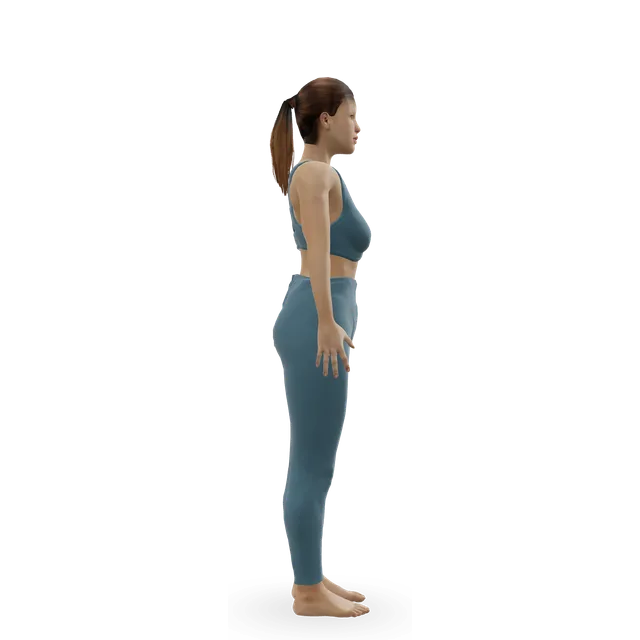
- Mountain pose (Tadasana)5 slow breathsBeginner · Calves, Back, Abs · 3D demoWeight even through both feetHarder: Tree pose (Vrksasana)
- Chair pose (Utkatasana)2 holds of 5 breathsBeginner · Quads, Glutes, Shoulders · 3D demoBreathe out as you sit back; hands on your thighs or reaching forward, not pressing on sore skinHarder: Revolved chair pose (Parivrtta Utkatasana)
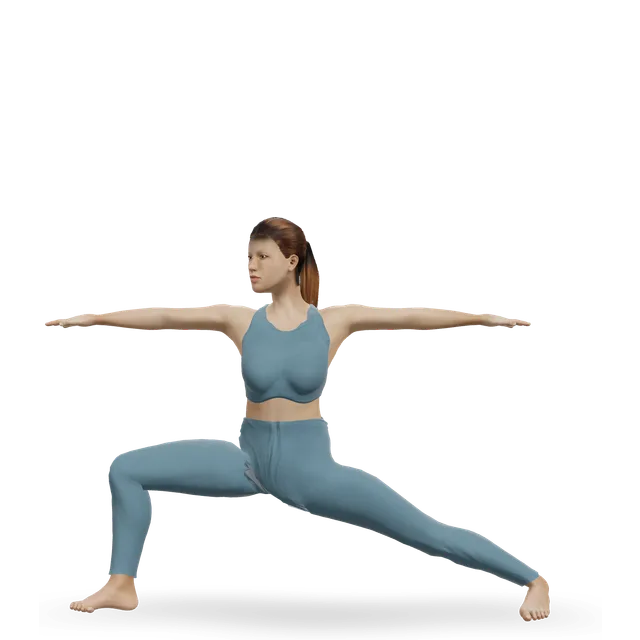
- Warrior II (Virabhadrasana II)5 breaths each sideIntermediate · Quads, Glutes, Adductors · 3D demoUpright through your chestEasier: Chair pose (Utkatasana)Harder: Extended side angle (Utthita Parsvakonasana)
- High lunge (crescent lunge, Ashta Chandrasana)5 breaths each sideIntermediate · Quads, Glutes, Hip flexors · 3D demoHands on your hips or a chair, back heel lifted; no knee downEasier: Low lunge (Anjaneyasana)Harder: Warrior III (Virabhadrasana III)
- Tree pose (Vrksasana)3 to 5 breaths each sideBeginner · Glutes, Hip abductors, Calves · 3D demoFingertips on a wall; foot on your ankle or calf, never pressed into the side of your kneeEasier: Mountain pose (Tadasana)Harder: Standing hand-to-big-toe pose (Utthita Hasta Padangusthasana)
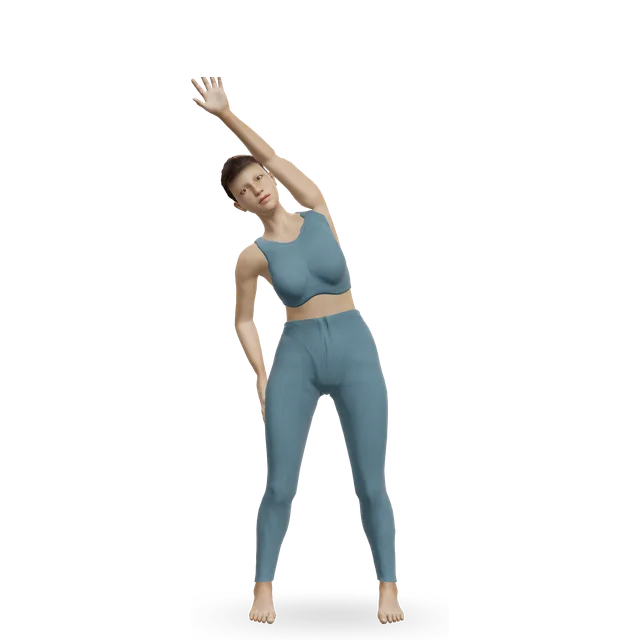
- Overhead side bend3 slow bends each sideBeginner · 3D demoBreathe out into each bendEasier: Seated overhead side bendHarder: Overhead lat stretch at a bench (elbows on the bench)






Lie on your back (about 3 minutes)
- Glute bridge6 to 8 slow liftsBeginner · Glutes, Hamstrings, Abs · 3D demoFeet and upper back on the mat, arms by your sides; a towel under your back if plaques there are soreEasier: Pelvic tilt into bridgeHarder: Single-leg glute bridge
- Supine spinal twist (Supta Matsyendrasana)45 s each sideBeginner · Back, Glutes · 3D demoA cushion under the top knee keeps the twist gentle and the knee off the floorHarder: Seated twist, bottom leg straight


Rest (about 7 to 12 minutes)
- Beginner · Adductors, Chest · 3D demoA cushion under each thigh. With psoriasis in the groin, keep it shortHarder: Wide-angle seated forward fold (Upavistha Konasana)
- Corpse pose (Savasana)5 to 10 minBeginner · 3D demoA guided body scan or breathing recording if you like, or slow breathing with your eyes closed or open. To come up, roll to your side and pause


Tips
- Before class, as our yoga for psoriatic arthritis guide says: "Wear loose cotton clothes that don't rub, and take off rings and watches." "Use your own mat, with a towel on top if a shared mat bothers your skin." "Choose a room at normal temperature, and sip water."
- After class: "Afterwards, shower, pat your skin dry and moisturise."
- With sore, cracked soles, do the sitting blocks only, or keep your socks on for the seated parts (our suggestion).
- With psoriasis in skin folds (the groin, under the breasts, between the buttocks), keep the hip-opening rest short and pat the folds dry afterwards (our suggestion, from the Psoriasis Association's advice that friction and sweat make it worse).
- With psoriatic arthritis in your hands or feet, our yoga for rheumatoid arthritis class comes first; our yoga for psoriatic arthritis guide lists it too.
- "You can say no to any hands-on adjustment, and a teacher registered with Yoga Alliance must get your explicit consent each time." Say if you'd rather not be touched on sore skin (our suggestion).
- Skip the class if your skin flares badly or you feel unwell, and see our yoga for psoriasis guide for the signs that need 999 or same-day help.
The doses are suggested starting points, not a prescription. Choose a range you can control and stop for sharp or increasing pain, numbness or tingling. Get individual advice after an injury or surgery, or if you are pregnant or managing a health condition.
Guides that recommend it
Find more moves like these
More yoga flows
Beginner yoga flow
A 20-minute beginner yoga sequence: mountain, chair, warrior II, triangle, tree, down dog, cobra and child's pose.
20 minBeginner11 movesA step

Sun salutation flow
A 20-minute flow built on sun salutations A and B, with warrior poses and a short cool-down.
20 minIntermediate8 movesNo equipment



Yoga for tight hips
A hip-opening yoga sequence: low lunge, lizard, goddess, pigeon, bound angle and happy baby.
25 minBeginner10 movesA wallQuestions people ask
How long does the yoga for psoriasis: a 25-minute class at room temperature with nothing on your hands or knees, and a long rest to finish take?
About 25 minutes, including any warm-up and cool-down listed. Shorten it by doing fewer rounds; lengthen it by adding one.
What equipment do I need?
You need: A bench or box, Firm cushion. Each move links to its guide, where you can find an alternative if you are missing something.
Is it suitable for beginners?
It is written for beginners. 8 of its 17 moves have an easier option listed beside them if you need one.
How do I make it easier or harder?
Use the easier or harder option listed under each move, change the number of rounds, or adjust the rest. Progress one change at a time.