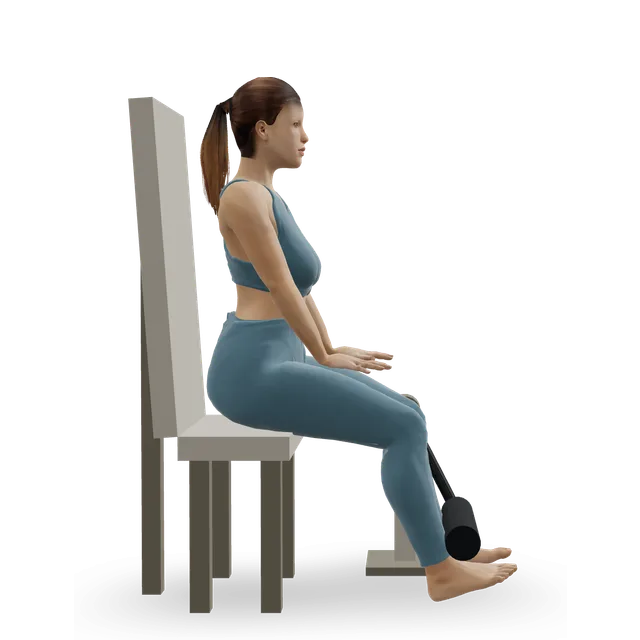
Training guide

How to use the hip abduction machine: set-up, sitting upright or leaning forward, and what it really does

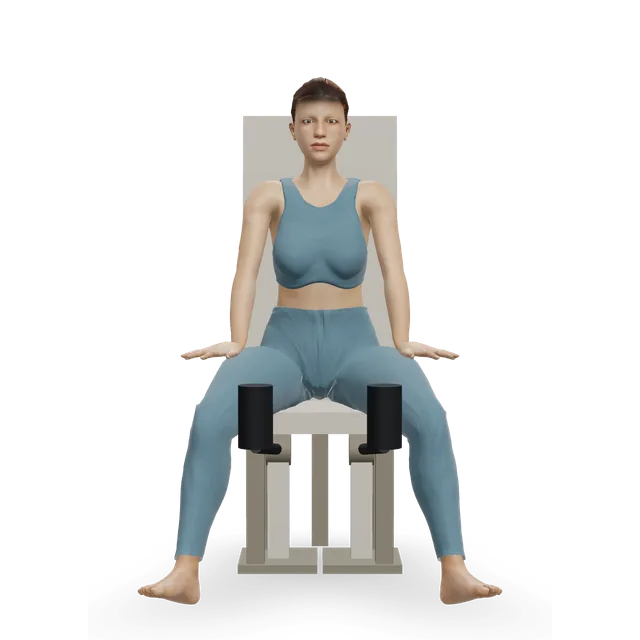
The hip abduction machine is the seated machine where you push your knees apart against pads on the outsides of your legs. Set the start width so you aren't stretched, sit back against the pad, push out as far as is comfortable, pause, and come back slowly. Do 2 to 3 sets of 12 to 20, once or twice a week.

It trains the glutes on the side of your hip, the gluteus medius and minimus, as well as floor exercises do. Sitting upright keeps the gluteus medius working hardest; leaning forward shifts more of the work to your other glutes, but no study shows it builds more. What the machine can't do is slim your thighs or change where you store fat. This guide covers the set-up, leaning, the adduction machine, sets and reps, knee and hip pain, and the claims.

The short version

What it works

The gluteus medius and minimus on the side of your hip, the upper part of the gluteus maximus and, a little, the tensor fasciae latae at the front of the hip. On the machine, the gluteus medius worked as hard as in clamshells and side-lying raises, with less help from the front of the hip than the side-lying raise; an elastic band drew more gluteus medius activity than the machine in another study.

Sources 1, 2

Sit upright, or lean only slightly if it feels better

In the one study of leaning on the machine, a preprint that hasn't been peer reviewed, a strong forward lean lowered gluteus medius activity, though the front-of-hip muscle dropped even more. Bending the hip shifts abduction work towards the gluteus maximus. No study compares muscle growth between the positions.

Sources 3, 4

It grows the side glutes a little

In one 10-week trial of 17 adults, side-hip training with a cable (not the seated machine) grew the upper gluteus maximus about 10% and the gluteus medius and minimus about 4%. In another trial, squats and hip thrusts barely grew the medius and minimus. Squats, hinges and hip thrusts still build most of the glutes.

Sources 5, 6

It won't slim your thighs

Across 13 studies of 1,158 people, training one area didn't take more fat off it. After 12 weeks of one-leg training, fat came off the arms and trunk, not the trained leg.

Sources 7, 8

Useful for knees and hips

Adding hip strengthening to knee strengthening eased kneecap pain more than knee exercises alone. For tendon pain on the outside of the hip, education plus exercise did better than a steroid injection. With outer hip pain, keep side-hip work to no extra pain over the bony point, as our outer hip pain guide says.

Sources 9, 10

How much

2 to 3 sets of 12 to 20, 60 seconds' rest, the last set 0 to 2 reps short of failure, once or twice a week, as our glute and leg workouts use it. Count it towards your weekly glute sets.

Source 11

What the machine is, and what it works

Abduction and adduction

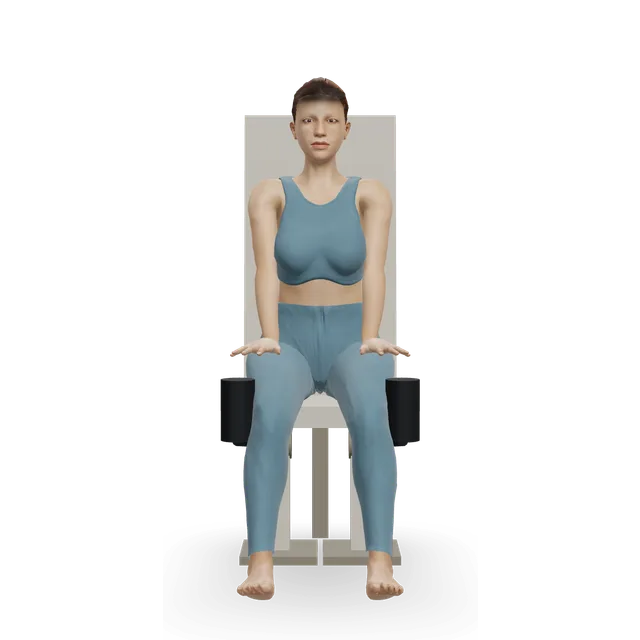
You sit with your back against a pad, knees bent and feet on footrests, with pads against the outsides of your knees, and push your knees apart (abduction). On many machines the same seat becomes the adduction or inner thigh machine by moving the pads to the insides of your knees, and you squeeze your knees together instead. A pin or lever sets the starting width.

The side-hip glutes

The gluteus medius and gluteus minimus sit on the outer side of the hip and hold your pelvis level when you stand on one leg, as when you walk or climb stairs. The machine works them about as hard as the floor exercises do.

Source 1

The upper gluteus maximus

With your hip bent, as it is when you sit, the gluteus maximus helps with abduction more, and side-hip training grew its upper part in a trial.

Sources 4, 5

The tensor fasciae latae

A small muscle at the front of the hip that also helps. It worked less on the machine than in side-lying raises, and less as the hip bent further.

Sources 1, 4

How people differ

Hip shape and how far your knees can comfortably open vary, so set the width and range to suit you. Tendon pain on the outside of the hip is more common in women: 167 of the 204 people in the main trial were women. Pregnancy-related pelvic girdle pain can be worse when you move your legs apart.

Sources 10, 12

How to use the hip abduction machine, step by step

Steps 1, 3, 4 and 5 follow our hip abduction machine and thigh abductor machine move pages; the weight guess follows our plans' method; the tempo is editorial. Step 6 is optional: no study shows a lean builds more muscle.

  1. Set the pads to the outsides of your knees, and set the start width with the pin so your knees begin close together without being squeezed.
  2. Pick a weight you could push about 15 to 20 times.
  3. Sit back with your back against the pad, feet on the footrests and hands on the handles.
  4. Breathe out and push your knees apart as far as is comfortable, moving only at your hips. Hold for a second.
  5. Bring your knees back together slowly, over 2 to 3 seconds, without letting the stack crash.
  6. If you prefer a slight forward lean, hinge from your hips with a long back and keep the same lean for the whole set.

Loading the 3D figure…

Gets into position, then repeats the movement. Technical checks passed; qualified exercise review is pending.

The movement on the figure: Hip abduction machine

Sitting upright or leaning forward

The one study of leaning on the machineMixed evidence

14 trained adults (11 men, 3 women) did 3 reps at 60% of their 6-rep maximum reclined, sitting upright and leaning forward. Gluteus medius activity was alike reclined and upright and lower leaning forward (its peak was 42% higher reclined than leaning forward). The front-of-hip muscle dropped steadily as the hip bent, so leaning forward gave the medius the biggest share of the work. It's a preprint that hasn't been peer reviewed, it measured activity rather than growth, and the participants found the angles hard to hold.

Source 3

Bending the hip brings in the gluteus maximusEmerging evidence

27 men lying on their backs held abduction at hip angles from straight to 80° bent. The gluteus maximus worked harder the more the hip was bent, the front-of-hip muscle less, and the gluteus medius the same. These were static holds, not reps on a machine.

Source 4

What to do

Sit upright with your back on the pad as your default: it kept the gluteus medius working as hard as anything tested. If a slight forward lean feels better, use it, and keep it the same every set. Nobody has tested which position builds more muscle, so neither is a must.

What the evidence says

The machine works the gluteus medius as well as floor exercisesEmerging evidence

In 11 men doing ten maximal reps of each, gluteus medius activity was the same on the machine, in clamshells and in side-lying abduction. The front-of-hip muscle worked harder in side-lying abduction, so the machine gave the medius the biggest share of the work.

Source 1

An elastic band drew more gluteus medius activityEmerging evidence

In 16 untrained women, abduction against an elastic band drew more gluteus medius activity than the seated machine, while the inner thigh muscles worked alike on the band and the adduction machine. We read this study as an abstract, which doesn't say how the band exercise was done.

Source 2

Several exercises work the gluteus medius hardEmerging evidence

Across 56 studies of muscle activity, the hip hitch, resisted standing abduction, the single-leg bridge, side-lying abduction with the hip turned in, the lateral step-up and resisted side-stepping drew high activity in the gluteus medius. The machine is one good option among several.

Source 13

Side-hip training grew the upper and side glutesEmerging evidence

17 young adults trained one leg with cable hip abduction and the other with cable hip extension, about 10 sets a week over 2 sessions, for 10 weeks. Abduction grew the upper gluteus maximus 10%, its middle 4% and lower part 1%, and the gluteus medius and minimus 4%; extension grew the gluteus maximus more overall (9% against 5%), mostly its lower part. It's one small trial, with cables rather than the seated machine, and we read it as an abstract.

Source 5

Squats and hip thrusts barely grew the side glutesEmerging evidence

In 34 untrained young adults, 9 weeks of squats or hip thrusts grew the gluteus maximus about equally, but the gluteus medius and minimus showed little to no growth with either.

Source 6

Training one area doesn't take the fat off itStrong evidence

A meta-analysis of 13 studies of 1,158 people aged 14 to 71 found no extra fat loss in a trained limb. When 11 young adults trained one leg for 12 weeks, fat fell 10.2% in the arms and 6.9% in the trunk, but not in the trained leg.

Sources 7, 8

Where you store fat is strongly influenced by genesEmerging evidence

When 12 pairs of identical twins were overfed by 1,000 kcal a day for 84 days, the weight they gained ranged from 4.3 to 13.3 kg, and each pair matched closely in where they stored fat.

Source 14

Hip strengthening helps kneecap painStrong evidence

Across 14 trials of 673 people, hip and knee strengthening eased pain and improved activity more than knee strengthening alone, and the benefit lasted after treatment. Other reviews agree, though many trials were small. The trials used a range of hip exercises, not specifically this machine.

Sources 9, 15, 16

Knee osteoarthritisEmerging evidence

In 89 people with osteoarthritis on the inner side of the knee, 12 weeks of hip abductor and adductor strengthening improved pain, function and strength but didn't change the load on the knee.

Source 17

The certainty is lower for other conditionsMixed evidence

A review of hip strengthening across trunk and leg conditions, including back pain, rated the certainty of its effects very low to uncertain.

Source 18

Outer hip tendon painStrong evidence

In 204 people aged 35 to 70 with tendon pain on the outside of the hip, 14 sessions of education plus exercise over 8 weeks succeeded for 51 of 66, against 38 of 65 after a steroid injection and 20 of 68 with wait and see; education plus exercise still led at a year.

Source 10

After a hip replacementEmerging evidence

In 7 people with sensor-fitted hip replacements, about 17 months after surgery, leg press, leg curl, leg extension and standing cable exercises loaded the hip no more than walking. The seated abduction machine wasn't tested.

Source 19

Adductor strength and groin problemsStrong evidence

In 652 semi-professional footballers, an adductor programme built on the Copenhagen exercise cut groin problems by 41%. That's evidence for the Copenhagen plank, not the adduction machine.

Source 20
What it adds to squats and hip thrusts

A side-hip move each glute day

Squats, hinges and hip thrusts build most of the gluteus maximus. The abduction machine adds work for the side glutes, which squats and hip thrusts barely grew in one trial, and for the top of the gluteus maximus, which grew most with side-hip training in another. Our glutes guide puts one side-hip move on each glute day.

Sources 5, 6

Machine, band or floor

In the one study that compared them directly, the machine, clamshells and side-lying raises worked the gluteus medius alike, and a band drew more than the machine in another. The machine is the easiest to load in small steps; bands and floor moves need no equipment.

Sources 1, 2, 13

The adduction (inner thigh) machine

Our move page. In one study it worked the inner thigh muscles about as hard as an elastic band did; like the abduction machine, it doesn't slim the thighs.

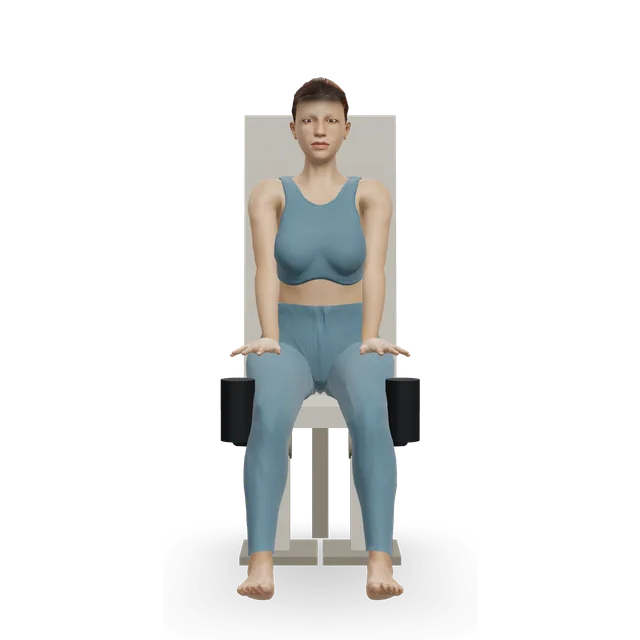
  1. Set the pads to the insides of your knees, with your legs apart only as far as is comfortable.
  2. Sit back against the pad.
  3. Press your knees in until they nearly meet and hold a moment.
  4. Open them back out slowly.

Loading the 3D figure…

Gets into position, then repeats the movement. Technical checks passed; qualified exercise review is pending.

The movement on the figure: Hip adduction machine

Sets, reps, weight and how often

Sets and reps

2 to 3 sets of 12 to 20, 60 seconds' rest, the last set 0 to 2 reps short of failure: 3 sets in our glute gym workout and 2 in our lower body, machine leg and glute challenge workouts. A heavier option is our thigh abductor move page's 2 to 3 sets of 8 to 12, stopping 2 or 3 reps short.

Source 11

If you're new

Do 2 sets and keep 3 or 4 reps to spare for your first two weeks, as our plans say.

How often

Once or twice a week, counted within your weekly glute sets: our glutes guide suggests 10 to 20 hard glute sets a week, about 5 of them side-hip work in our glute plan. The growth trial used about 10 sets of abduction a week, which is more than most people need.

Sources 11, 5

How heavy

There are no useful standards for men or women: the numbers depend on the machine's lever and pad position. Choose a weight you can push 12 to 20 times with a slow return and no rocking, and add the smallest step when every set reaches 20.

Common mistakes and how to fix them

Forcing a wide, stretched start

Use a narrower pin setting so each rep doesn't start at the end of your range.

Letting the stack slam your knees together

Come back over 2 to 3 seconds: this is the usual way the machine is misused.

Rocking your trunk to move more weight

Lighten the weight and move only at your hips.

Changing the lean partway through a set

Pick upright or a slight forward lean and keep it.

Pushing through pain over the outer hip bone

Use a smaller range and lighter weight, and follow our outer hip pain guide.

Source 10

Knee pain, outer hip pain and hip replacements

Kneecap pain

Side-hip strengthening earns its place alongside knee exercises. The machine is one way to do it; side-lying raises and band work are others. Our runner's knee guide has a full plan.

Sources 9, 16

Pain on the outside of the hip

Start with our outer hip pain guide's staged plan, which begins with gentle holds, and keep side-hip work to no extra pain over the bony point. See a GP if hip pain stops your normal activities, keeps coming back or hasn't improved after 2 weeks of looking after it yourself.

Sources 10, 21

After a hip replacement

Follow your surgeon's and physiotherapist's timeline. The one load study was about 17 months after surgery and didn't test this machine.

Source 19

The machines and floor versions

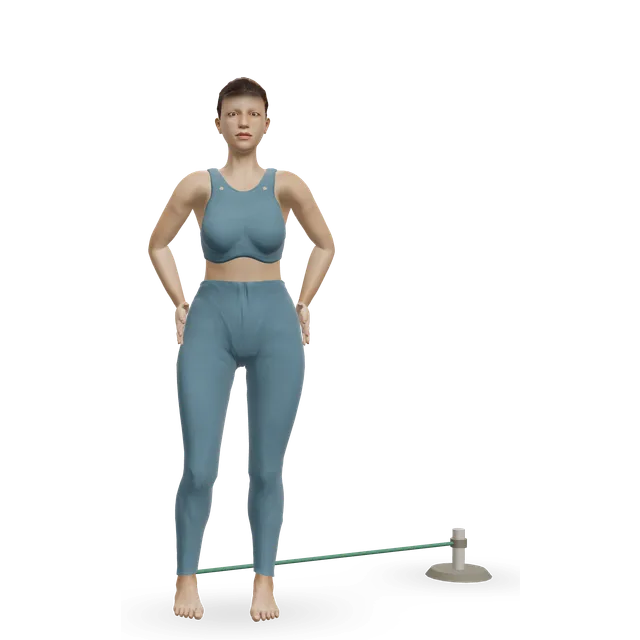
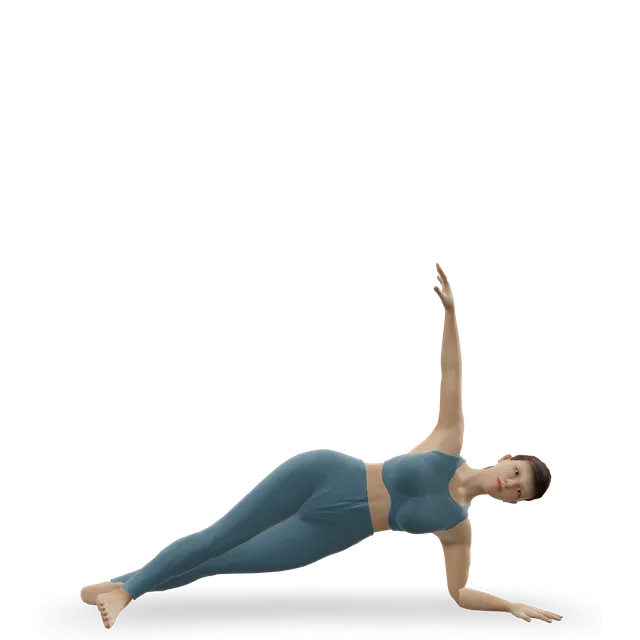
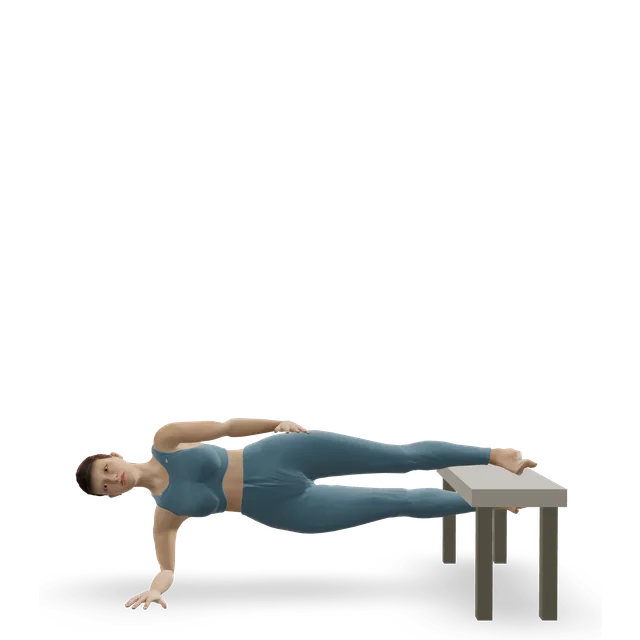
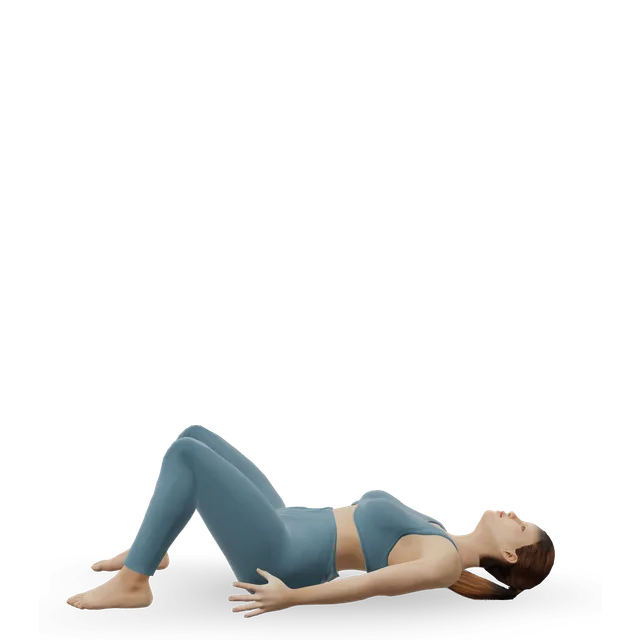
The hip abduction machine at 2 to 3 sets of 12 to 20 (our glute workouts) or its thigh abductor move page's 2 to 3 sets of 8 to 12; the adduction machine at 2 sets of 12 to 20 (our editorial starting point); side-lying leg raises, 12 each side for 3 rounds, and clamshells, 2 sets of 12 to 15 each side (our home and beginner workouts); band walks, 10 steps each way (our glute gym workout); standing band abduction, 1 to 2 sets of 12 to 15 each side (our glute challenge workout B); the side plank with a leg lift, 2 sets of 8 to 10 each side, once side planks are steady; for outer hip pain, the supine and standing holds at their move pages' doses.

Glute and inner thigh work that goes with it

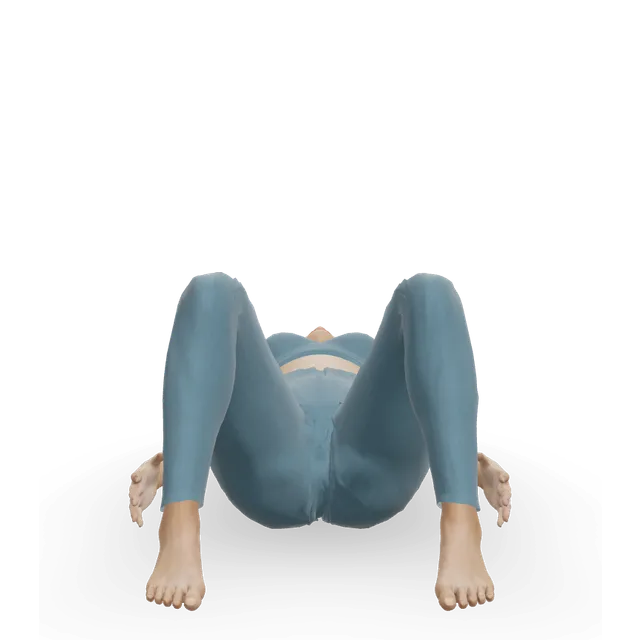
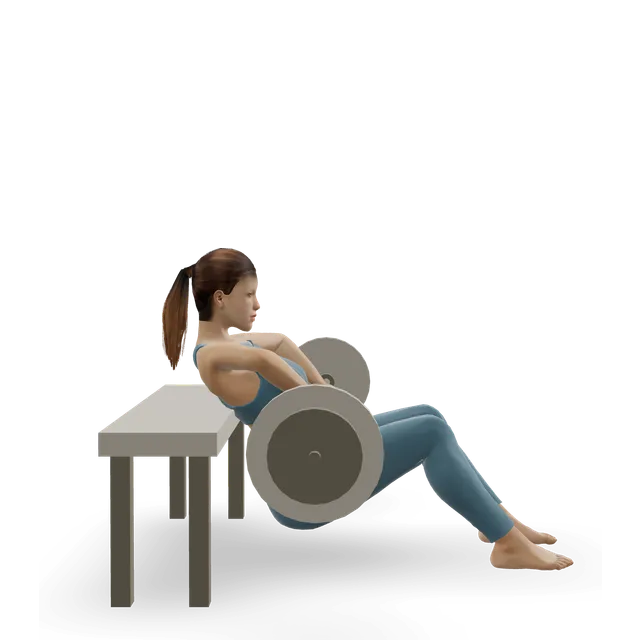
Hip thrusts, 3 sets of 6 to 10 (our glute gym workout); goblet squats, 3 sets of 8 to 12, and dumbbell Romanian deadlifts, 3 sets of 8 to 10 (our strength workout for rowers); the Copenhagen plank, 1 set of 3 to 15 each side starting with the short lever, and the lying ball squeeze, 5 holds of 5 to 10 seconds, for the inner thighs; the two stretches for 30 seconds or so if they feel good.

Who should change it

Outer hip pain

Start with gentle holds and a narrow range, and build up as our outer hip pain guide sets out.

Source 10

Pregnancy

If you're used to the machine, lighter weights are usually fine; tell the instructor you're pregnant. Pelvic girdle pain can be worse moving your legs apart, so skip it if it hurts, and call your midwife or GP if it's hard to move around or painful on stairs.

Sources 12, 22

Bladder leaks

The abduction and adduction machines aren't pelvic floor training. For stress incontinence, pelvic floor muscle training cured 56% of women against 6% with no treatment in a Cochrane review; our pelvic floor guide shows how.

Source 23

High blood pressure or heart disease

Breathe out through every effort and keep the weights moderate, as our breathing guide says. If your blood pressure is 140/90 or higher and not yet controlled, check with your GP first.

Sources 24, 25

Workouts to follow

The glute gym workout uses the machine for 3 sets; the machine leg, lower body and glute challenge workouts for 2; the home glute workout uses side-lying raises and clamshells instead.

Plans with the abduction machine in them

Each of these plans uses a workout with the hip abduction machine.

Warning signs

Stop and get medical help

If you get chest pain or pressure, feel faint or dizzy, are unusually breathless, or your heart races or beats irregularly during exercise, as our plans advise. The American Heart Association says these need immediate medical evaluation before you train again.

Source 24

Call 999 (911 in the US)

For chest pain that feels tight or like squeezing, or spreads to your arms, neck or jaw; a headache that starts suddenly and is extremely painful, especially while straining; someone who faints while exercising; palpitations that don't go away, or come with chest pain, breathlessness or feeling faint; or severe difficulty breathing. Don't drive yourself to A&E.

Sources 26, 27, 28, 29, 30, 31, 32

Your hip

Call 999 or go to A&E for severe hip pain after a fall or injury, or if you can't walk or put weight on the leg. Ask for an urgent GP appointment or call NHS 111 for severe hip pain that started suddenly without an injury, or a hip that's swollen and hot.

Source 21

A pulled muscle

Get help from NHS 111 if it's very painful or getting worse, the swelling or bruising is large or growing, you can't put weight on it, or it isn't getting better with self-care.

Source 33

A new lump or bulge in your groin or tummy

See a GP if you think you have a hernia. Get help from NHS 111 if you have a hernia and pain in or around it, a bloated tummy, sickness, constipation, a high temperature or sudden confusion. Call 999 or go to A&E only for a femoral hernia with very bad tummy pain, sickness, being unable to fart or poo, a high temperature or sudden confusion. After an inguinal hernia repair, avoid heavy lifting for at least 4 to 6 weeks.

Sources 34, 35, 36

After a faint, or dizziness that keeps coming back

See a GP after any faint, and for dizziness that won't go away or keeps coming back.

Sources 30, 37

Myths

"The hip abduction machine slims your thighs"Strong evidence

Training one area didn't take fat off it across 13 studies, and one-leg training took fat off the arms and trunk instead. ACE (the American Council on Exercise) says the same: sitting in this machine won't reduce the size of your thighs.

Sources 7, 8, 38

"The inner thigh machine gives you a thigh gap"Strong evidence

No exercise takes fat off one place, and where you store fat is strongly influenced by your genes.

Sources 7, 14

"It fixes hip dips"Emerging evidence

Exercise can't move fat to or from one place, and the side glutes grew only about 4% in 10 weeks in the one trial. The shape of the side of your hips isn't something a machine sets.

Sources 7, 5

"Lean forward to hit the glutes, lean back for the outer thighs"Mixed evidence

Leaning forward shifted the share of work towards the glutes but lowered gluteus medius activity, in a preprint; leaning back raised the front-of-hip muscle's share. No study compares growth.

Sources 4, 3

"It's a pointless machine"Emerging evidence

ACE's trainers prefer standing exercises such as band walks and step-ups. But the machine worked the gluteus medius as well as floor exercises, and side-hip training grew the side glutes, which squats and hip thrusts barely did.

Sources 1, 5, 6, 38

"It's a women's machine"Emerging evidence

The muscle studies included men and women, the side-hip glutes steady everyone's pelvis on one leg, and women and men build muscle at similar rates relative to where they start.

Sources 1, 2, 39

Questions people ask

What does the hip abduction machine work?

The gluteus medius and minimus on the side of your hip, the upper part of the gluteus maximus and the tensor fasciae latae at the front of the hip. On the machine, the gluteus medius worked as hard as in clamshells and side-lying raises.

Should I lean forward or sit upright on the hip abduction machine?

Sit upright as your default: in the one study of leaning on the machine, a preprint, upright kept the gluteus medius working hardest. A slight forward lean is fine if it feels better and shifts a little more work to your other glutes. No study shows either builds more muscle, so keep the same position each set.

How many sets and reps of hip abduction should I do?

Two or three sets of 12 to 20, resting about 60 seconds, with the last set ending 0 to 2 reps short of failure, once or twice a week. Count them within your weekly glute sets.

How much weight should I use on the hip abduction machine?

One you can push 12 to 20 times with a slow return and no rocking. The numbers differ between machines, so there are no useful standards for men or women.

Does the hip abduction machine grow your glutes?

A little. In one 10-week trial using cable abduction, the upper gluteus maximus grew about 10% and the gluteus medius and minimus about 4%. Hip thrusts, squats and hinges build most of the glutes.

Will the hip abduction machine slim my thighs or fix hip dips?

No. Training one area doesn't take fat off it, and where your body stores fat is strongly influenced by your genes. It builds strength on the side of your hips, which is worth having for its own sake.

Will the hip abduction machine make my hips bigger?

Not quickly or by much: the side glutes grew about 4% in 10 weeks of hard training in one trial. The fat over your hips doesn't change with this exercise.

What's the difference between the abduction and adduction machines?

Abduction pushes your knees apart and works the side of your hips; adduction squeezes them together and works your inner thighs. Neither slims the thighs, but both are useful strength work.

Is the hip abduction machine good for knee pain?

Side-hip strengthening added to knee exercises eased kneecap pain more than knee exercises alone in 14 trials. The machine is one way to do it; side-lying raises and band work are others.

Why does the hip abduction machine hurt my hip?

Pain on the outside of the hip bone is often the gluteal tendons. Use a narrower start, a lighter weight and a smaller range, aim for no extra pain over the bony point, and see our outer hip pain guide. See a GP if it hasn't improved after 2 weeks.

Can I use the hip abduction machine when I'm pregnant?

If you're used to it, often yes, with lighter weights; tell the instructor you're pregnant. Pelvic girdle pain can be worse moving your legs apart, so skip it if it hurts and talk to your midwife.

What can I do instead of the hip abduction machine at home?

Side-lying leg raises, clamshells, band walks and standing band abduction work the same muscles. In one study, an elastic band drew more gluteus medius activity than the machine.

Sources

  1. de Almeida Paz 2022 · Hip abduction machine, clamshell and side-lying raise compared in 11 men (muscle activity study, J Bodyw Mov Ther)
  2. Brandt 2013 · Elastic band and machine hip abduction and adduction in 16 untrained women (muscle activity study, Int J Sports Phys Ther)
  3. Farias 2026 · Hip angle on the seated abduction machine and glute activity in 14 trained adults (muscle activity study, preprint not peer reviewed, Research Square)
  4. Fujisawa 2014 · Hip bend and glute activity in hip abduction holds in 27 men (muscle activity study, J Phys Ther Sci)
  5. Attarieh 2026 · Cable hip abduction vs hip extension for regional glute growth in 17 adults (within-person trial, JSCR)
  6. Plotkin 2023 · Hip thrust vs back squat training for glute growth in 34 untrained adults (randomised trial, Front Physiol)
  7. Ramírez-Campillo 2022 · Spot reduction: 13 studies of 1,158 people (meta-analysis, Hum Mov)
  8. Ramírez-Campillo 2013 · One-leg training and where fat was lost in 11 adults (training study, JSCR)
  9. Nascimento 2018 · Hip and knee strengthening vs knee strengthening alone for kneecap pain: 14 trials (meta-analysis, JOSPT)
  10. Mellor 2018 · Education plus exercise, a steroid injection or wait and see for outer hip tendon pain in 204 people (randomised trial, BMJ)
  11. Currier 2026 · Resistance training prescription for strength and muscle: 137 reviews (ACSM position stand, Med Sci Sports Exerc)
  12. NHS · Pelvic pain in pregnancy (past its review date: reviewed December 2022, review due December 2025)
  13. Moore 2020 · Exercises that work the gluteus medius and minimus hardest: 56 studies (systematic review, Int J Sports Phys Ther)
  14. Bouchard 1990 · Overfeeding identical twins: genes and where fat is stored (12 pairs, N Engl J Med)
  15. Lack 2015 · Hip and trunk muscle rehabilitation for kneecap pain: 14 studies (meta-analysis, BJSM)
  16. Rogan 2019 · Hip abductor exercises for kneecap pain: 12 studies (meta-analysis, JSCR)
  17. Bennell 2010 · Hip strengthening in knee osteoarthritis: symptoms and knee load in 89 people (randomised trial, Osteoarthritis Cartilage)
  18. de F Silva 2022 · Hip strengthening for trunk and leg conditions, with GRADE ratings (meta-analysis, Diagnostics)
  19. Haffer 2022 · Hip joint loads on gym machines after hip replacement in 7 people (in vivo load study, Front Bioeng Biotechnol)
  20. Harøy 2019 · An adductor strengthening programme and groin problems in 652 footballers (cluster randomised trial, BJSM)
  21. NHS · Hip pain in adults
  22. Tommy's · Strength training and weight lifting in pregnancy
  23. Dumoulin 2018 · Pelvic floor muscle training for urinary incontinence in women (Cochrane systematic review)
  24. Paluch 2024 · Resistance training in people with and without heart disease (American Heart Association scientific statement, Circulation)
  25. NHS · High blood pressure
  26. NHS · Heart attack
  27. NHS · Chest pain (past its review date: reviewed August 2023, review due August 2026)
  28. NHS · Headaches
  29. NHS · Subarachnoid haemorrhage
  30. NHS · Fainting
  31. NHS · Heart palpitations
  32. NHS · Shortness of breath
  33. NHS · Sprains and strains
  34. NHS · Hernia
  35. NHS · Femoral hernia
  36. NHS · Inguinal hernia repair
  37. NHS · Dizziness (past its review date: reviewed April 2023, review due April 2026)
  38. Verstegen 2015 · Train this, not that: the leg edition (ACE expert article)
  39. Refalo 2025 · Women and men gain similar muscle relative to their starting size: 29 studies (Bayesian meta-analysis, PeerJ)

Exercise education, not a personal prescription, and clinical review of these guides is pending. Check with a GP before starting hard training if you have a heart condition, chest pain, dizziness or breathlessness when active, and stop for sharp or increasing pain. Health disclaimer.