How to use a pec deck: seat height, the fly and the reverse fly, and your shoulders
A pec deck is the seated chest machine where you sweep two handles, or two elbow pads, together in front of your chest. Set the seat so the handles sit at about chest height, set the arms a few clicks forward so you start from a comfortable stretch, keep a slight bend in your elbows, and never let the weight pull your elbows back past your chin. Do 2 or 3 sets of 10 to 15 after your presses.
In two trials it built chest muscle, the upper and lower chest alike, so it doesn't shape an 'inner chest'. This guide covers the set-up, the fly and the reverse fly step by step on the 3D figure, how heavy and how many, the pec deck against presses and dumbbell flys, and how to look after your shoulders.
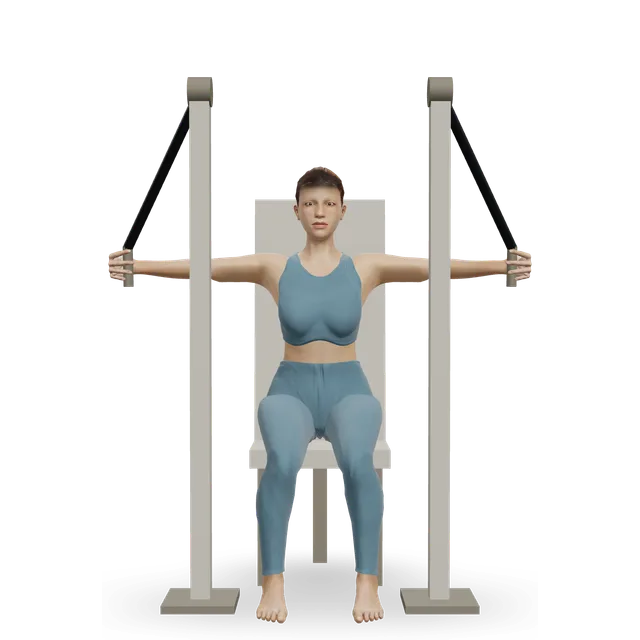
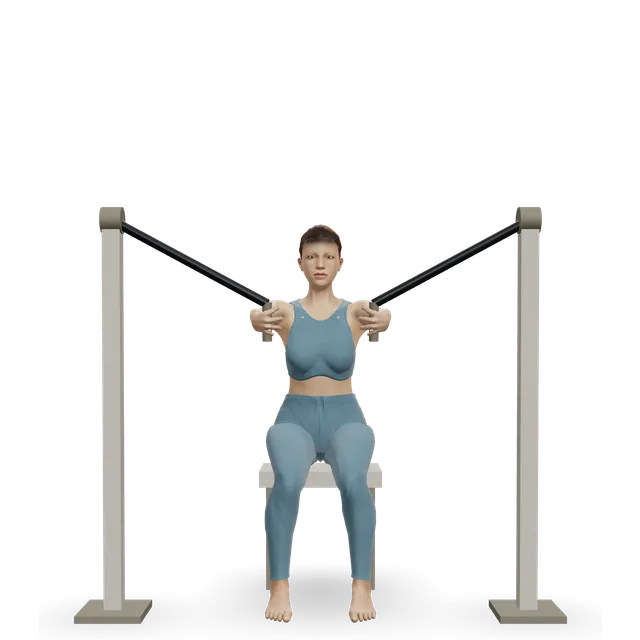
You sit with your back against the pad and sweep two handles, or two elbow pads, together in front of your chest with your elbows softly bent. The machine holds the path, so only your shoulders move. Most pec decks turn round to become a reverse fly machine for the back of the shoulders.
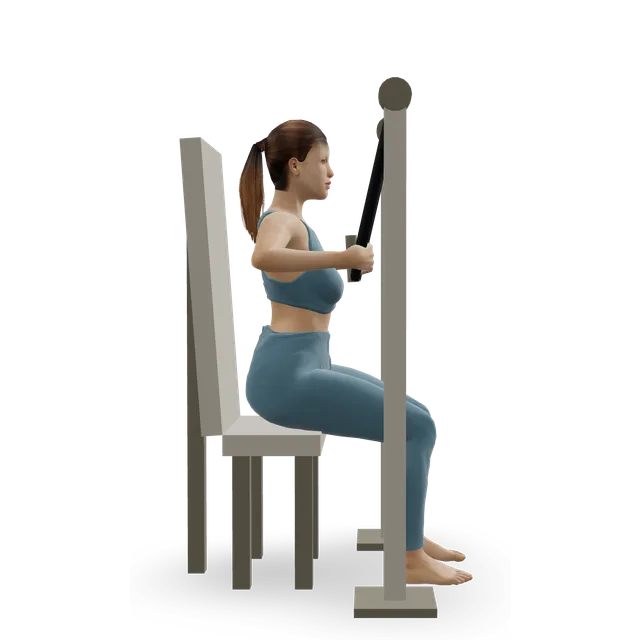
Set the seat so the handles sit at about chest height and your upper arms are about level with your shoulders, then set the range pin or dial a few clicks forward so the first rep starts from a comfortable stretch rather than your furthest reach. This is coaching practice from ACE (the American Council on Exercise) and a hospital shoulder handout: no study has tested seat height.
In 27 active adults, 8 weeks of machine flys thickened the chest by 5 to 7%. In 15 untrained men, one set of pec deck flys grew the chest as much as three sets over 12 weeks, and the upper and lower chest grew alike. There's no separate inner chest to target.
Doing the pec deck before a chest press to tire the chest first didn't make the press work the chest harder (the triceps worked harder instead), and this pre-exhaust method hasn't built more muscle than the usual order.
2 or 3 sets of 10 to 15 after your presses, most sets stopping 2 or 3 reps short of failure and the last 0 to 2 short, with 60 to 90 seconds' rest (our editorial starting point, within our plans' rules). If you're new, one or two sets is plenty to begin with.
Never let the weight pull your arms back so far that your elbows pass behind your chin. A pop or tearing feeling at the front of the armpit or chest needs checking the same day: it can be a torn chest tendon, and repair works best soon after the injury.
On the handle version you hold two upright handles and keep a slight, fixed bend in your elbows. On the pad version you bend your elbows to about a right angle at shoulder level and press your forearms against the pads: ACE's instructions are to bend your elbows 75 to 90 degrees and push the pads together until they are just about to meet. The fly is called the butterfly or the machine fly too.
The pectoralis major, the big chest muscle. It has one part from the collarbone and one from the breastbone, joined in one tendon on the upper arm bone, and it brings the arm across the body, turns it in and lifts it forward. Only the shoulder moves, so your triceps get a rest while the front of the shoulder helps, as our chest fly guide explains.
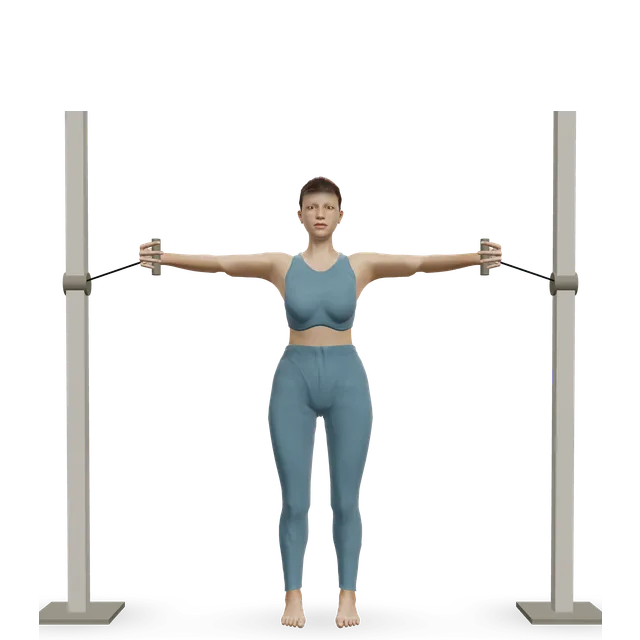
Turned round, with your chest against the pad, the same machine becomes a reverse fly for the back of the shoulders. A palms-in grip worked the rear shoulder harder than palms down in 19 trained men.
Very short or tall people may not get the handles to chest height on every machine, so note the setting that works for you. Women and men gain similar muscle relative to their starting size. The trials here were in young adults: untrained men in one, active men and women in the other.
It works the chest about as hard as the bench pressEmerging evidence
In one study of 14 men aged 19 to 30 with lifting experience, funded by ACE, reported in its own magazine and not peer reviewed, five reps (at 80% of the maximum for the weighted lifts) drew 98% of the bench press's chest activity on the pec deck, 93% in a bent-forward cable crossover, 79% on a chest press machine, 69% in incline dumbbell flys and dips, and 61 to 63% in push-ups, with wide variation between the men. Muscle activity in a few reps isn't a validated guide to which exercise grows a muscle more.
81 active young adults were split into three groups of 27 for 8 weeks. The fly group did 5 sets of 10 to 12 on a machine, 3 days a week with 90 seconds' rest, adding weight when every set reached 12: chest thickness rose 5 to 7% and strength about 10%. Fifteen minutes of chest stretching 4 days a week gave similar results, and allocation was only partly random.
One set grew the chest as much as three, in beginnersEmerging evidence
15 untrained young men trained the pec deck for 12 weeks in a within-person comparison of one set and three sets, each set to failure. The upper chest grew 17% and 18% and the lower chest 21% and 21%, and pec deck strength rose 46% and 43%. No part of the chest grew more than another. We read this trial as an abstract.
Pre-exhausting with the pec deck didn't helpEmerging evidence
In 13 men with lifting experience, the pec deck to failure straight before the chest press didn't raise chest activity in the press; the triceps worked harder. A review found no growth or strength advantage for pre-exhaustion, and in 48 trained adults over 8 weeks (leg exercises), the usual order grew slightly more muscle.
Enough hard sets matter more than the exerciseStrong evidence
An overview of 137 reviews covering more than 30,000 people found muscle grew more with 10 or more sets per muscle a week, while the type of equipment, how complex the exercise was and training to failure didn't consistently change results.
Strength is specific to what you trainStrong evidence
Across 13 studies of 1,016 people, machines and free weights built similar strength and muscle, but strength rose most on the equipment people trained with. Across 43 studies, trained strength rose about twice as much as strength in an untrained test. A stronger pec deck won't fully carry over to the bench press.
Chest tears happen under heavy loadEmerging evidence
Of 365 published pec tears, 83% came from the muscle's own pull rather than a blow and 48% happened during weight training. One report describes a 33-year-old recreational lifter, with no steroid use, who felt a whip-like pop on a chest fly machine and had a complete tear repaired. Men aged 30 to 60 and anabolic steroid use are risk factors, and the tendon is most at risk while lowering a heavy load.
Steps 1, 4, 5 and 7 follow our move page; the range setting and the chin limit follow a hospital shoulder handout, and feet and back on the pad follow ACE. No study has tested seat height. The 15-rep guess follows our plans' starting-weight method; the 2 to 3 second return is editorial.
Set the seat so the handles sit at about chest height and your upper arms are about level with your shoulders.
Set the range pin or dial a few clicks forward, so the first rep starts from a comfortable stretch, not your furthest reach.
Pick a weight you could move about 15 times, then sit tall with your back and head against the pad and your feet flat.
Take the handles one at a time if reaching back for both bothers your shoulders.
With a slight, fixed bend in your elbows, breathe out and sweep your arms together in front of your chest until the handles nearly meet.
Open slowly, over 2 to 3 seconds, stopping before your elbows pass behind your chin.
At the end of the set, bring the handles back under control rather than letting the stack pull your arms open.
Loading the 3D figure…
Drag to turn
Gets into position, then repeats the movement. Technical checks passed; qualified exercise review is pending.
Seat height, handles or pads, and the range setting
Seat height
Handles at about chest height, upper arms about level with your shoulders. ACE gives "elbows at shoulder level" for the pad version. If your shoulder pinches, try one notch lower and write down the setting that feels best.
Start a few clicks forward of the widest setting. Your first rep should begin from a comfortable stretch across the chest, not from as far back as your arms will go.
Keep your back on the pad and push the pads together until they nearly meet. ACE warns that people who load too much weight either can't finish the range or lift their upper back off the pad to finish it: both mean the weight is too heavy.
In the one study that compared them, funded by ACE and not peer reviewed, the pec deck came close to the bench press for chest activity, though activity isn't growth. The bench press also trains the triceps and the skill of pressing, and strength is specific, so if you want a bigger bench, keep benching and use the pec deck alongside it.
In the same ACE-funded study of 14 men, the chest press machine drew 79% of the bench press's chest activity against 98% for the pec deck. Both are easy to learn; the press works the triceps as well.
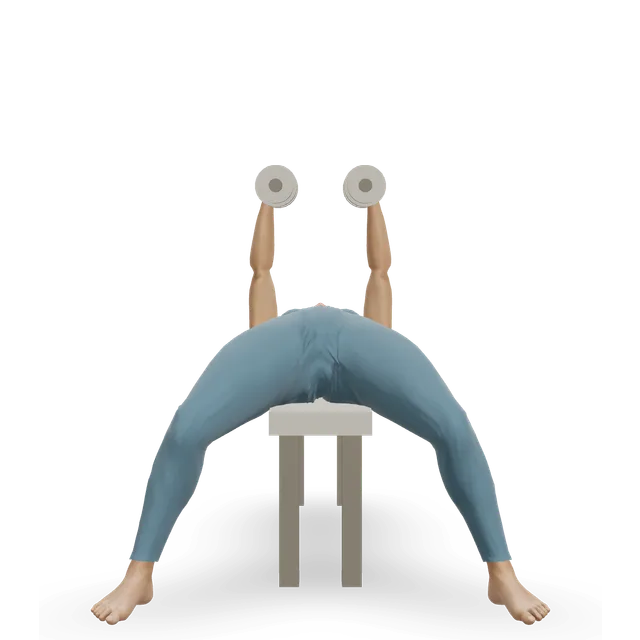
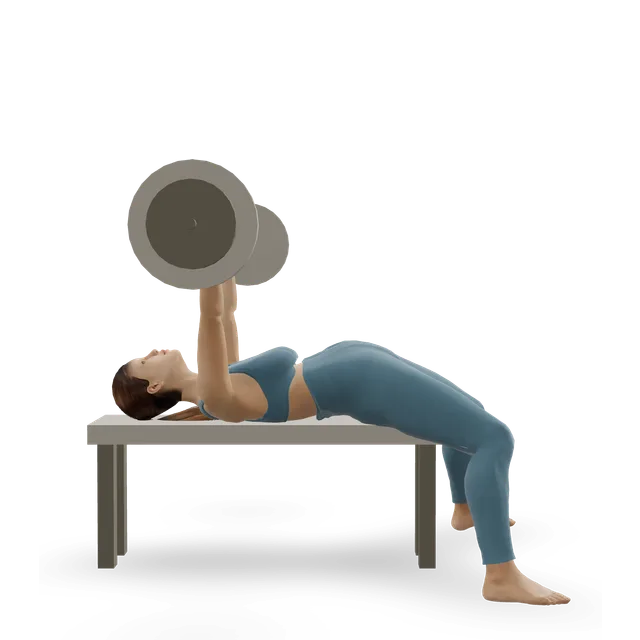
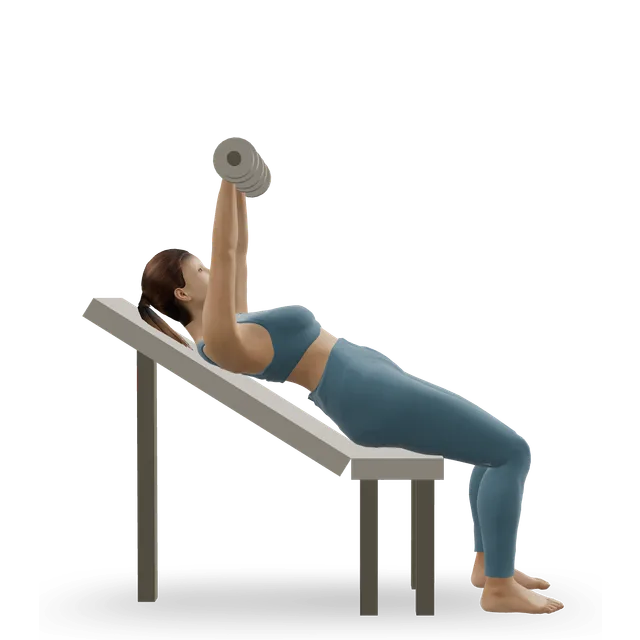
Incline dumbbell flys drew 69%, but no trial has compared their growth with the pec deck, and machines and free weights built similar muscle overall. The machine is easier to learn and to push hard safely; dumbbells need only a bench. Our chest fly guide covers dumbbell and cable flys.
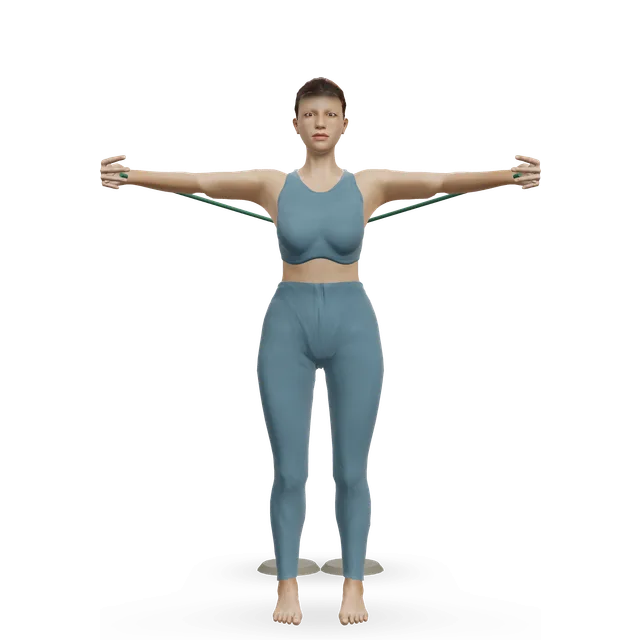
Across 8 studies, elastic bands built strength as well as machines and dumbbells, so a band chest fly anchored behind you is a fair swap when there's no machine.
After your presses, as our plans order them. It can also be your main chest exercise on days when pressing bothers your elbows or wrists (our suggestion).
Our move page and Schoenfeld 2013, where palms in worked the back of the shoulder harder than palms down. Do 2 to 3 sets of 12 to 20, as our back and biceps workout does. Our reverse fly guide covers it in full.
Move the handles to the rear position (the adjustment differs between machines) and set the seat so the handles are at shoulder height.
Sit facing the machine with your chest on the pad.
Hold the handles with your palms facing in.
Sweep your hands out and back until your arms are in line with your shoulders.
Return slowly and repeat.
Loading the 3D figure…
Drag to turn
Gets into position, then repeats the movement. Technical checks passed; qualified exercise review is pending.
2 to 3 sets of 10 to 15, most sets stopping 2 or 3 reps short of failure and the last set 0 to 2 short, with 60 to 90 seconds' rest (our editorial starting point, within our plans' rules). Our bodybuilding upper-body workout uses 2 sets of 12 to 15, slow on the way back.
Start with one or two sets and keep 3 or 4 reps to spare for your first two weeks, as our plans say. In beginners, one set grew the chest as much as three.
There are no useful pec deck weight standards: the numbers on the stack depend on each machine's levers and cams, so compare only on the same machine. Pick a weight you can move 10 to 15 times with full control. When every set reaches 15, add the smallest step and drop back to 10; the American Heart Association suggests steps of 2 to 10%.
The hospital handout starts weight training with 3 sets of 15 to 20 and advises against training to failure. Use a shorter range and keep every set 2 or more reps short.
Set the arms a few clicks forward so you don't start each rep at your shoulder's most open point.
Elbows travelling behind your chin
Shorten the range and lighten the weight.
Back or head coming off the pad to finish
The weight is too heavy: lighten it and keep the whole range.
Bending and straightening the elbows
That turns the fly into a press. Keep one fixed elbow bend all the way.
The seat far too low or high
Handles at your neck or belly change the arm angle; set them at about chest height.
Letting the stack crash at the start
Come back slowly and pause briefly before the next rep.
Your shoulders and chest
The open position
At the start of each rep your arm is out to the side and turned out, which ACE calls a vulnerable position for the front of the shoulder. ACE advises trainers to avoid the pec deck with clients who have a history of shoulder problems.
A shoulder handout from Massachusetts General Hospital lists chest flys among the weight-training exercises to avoid for shoulder safety, then gives precautions for anyone who does them: keep the elbows bent, never let the weight stretch your arms so that your elbows pass behind your chin, and set the arms a few clicks forward.
A tear usually comes with a pop or ripping feeling, then pain, bruising on the chest or inner arm, weakness pushing, or a chest, armpit fold or nipple that looks uneven. Get it checked the same day: resting and icing won't heal a tear, and surgery has the best results soon after the injury.
Shorten the range and lighten the weight, and see our shoulder pain guide. See a GP if shoulder pain is getting worse or hasn't improved after 2 weeks.
The pec deck at 2 to 3 sets of 10 to 15 (our editorial starting point; 2 sets of 12 to 15 in our bodybuilding upper-body workout); the reverse fly machine at 2 to 3 sets of 12 to 20, palms in (our back and biceps workout); the chest press machine at 3 sets of 12 to 15 (our full-body machine workout); cable flys at 3 sets of 12 to 15 (push day workout B); dumbbell flys at 2 or 3 sets of 10 to 15 (our chest fly guide); the standing band fly at home at its move page's 2 to 3 sets of 10 to 15.
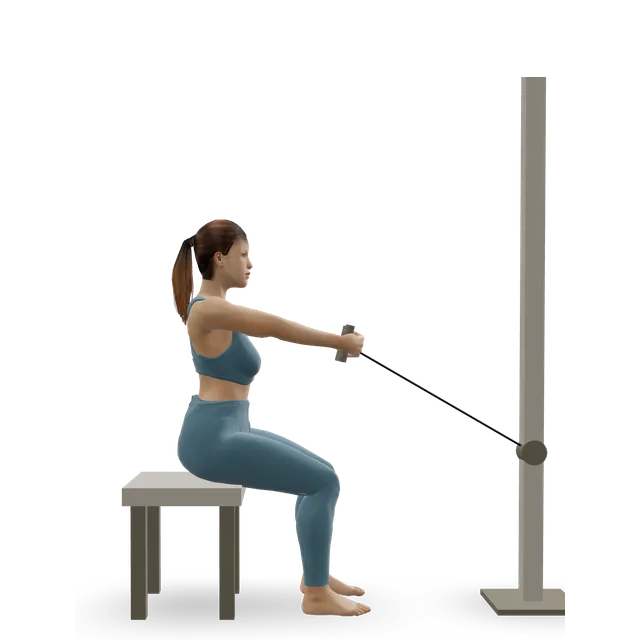
Band pull-aparts, 15 reps, and scapular push-ups, 10 reps, as a warm-up (our chest workout); face pulls, 3 sets of 12 to 20 (our pull day workout), and seated cable rows, 3 sets of 8 to 12 (our back and biceps workout), to balance the pushing; the doorway chest opener and cross-body shoulder stretch for 30 seconds if they feel good afterwards (our cable machine workout).
Use a shorter range and lighter weights, or swap to a chest press machine. ACE advises trainers to avoid the pec deck with clients who have a history of shoulder problems.
High blood pressure, heart disease, glaucoma or a hernia
Breathe out through every effort, keep the weights moderate and don't hold your breath, as our breathing guide says. If your blood pressure is 140/90 or higher when checked by a professional and not yet controlled, check with your GP first.
If you already train, you can usually carry on with lighter weights; tell the instructor you're pregnant. Stop if you feel faint, overheated or in pain.
The bodybuilding upper-body workout uses the pec deck; the push, chest and chest and triceps workouts use cable flys, and the pec deck swaps straight in; pull day B and the back and biceps workout use the reverse setting.
If you get chest pain or pressure, feel faint or dizzy, are unusually breathless, or your heart races or beats irregularly during exercise, as our plans advise. The American Heart Association says these need immediate medical evaluation before you train again.
For chest pain that feels tight or like squeezing, or spreads to your arms, neck or jaw; arm pain that comes on suddenly with pressure, heaviness or squeezing across your chest; a headache that starts suddenly and is extremely painful, especially while straining; someone who faints while exercising; palpitations that don't go away, or come with chest pain, breathlessness or feeling faint; or severe difficulty breathing. Chest pain while lifting isn't always the muscle. Don't drive yourself to A&E.
A pop in the chest or armpit: get it checked the same day
A pop or tearing feeling at the front of the armpit or chest during a set, then bruising into the chest or upper arm, a change in the shape of the chest or armpit, or weakness pushing. Go to NHS 111 or an urgent treatment centre the same day, as our pec strain guide says: don't wait for it to settle.
With bruising and a bulge in the upper arm, go to an urgent treatment centre or A&E, as our distal biceps guide says. The NHS lists an arm injury with a snapping noise or a change of shape as a reason to go.
Ask for an urgent GP appointment or call NHS 111 for sudden or very bad shoulder pain, an arm you can't move, a shoulder that has changed shape or is badly swollen, or pins and needles that don't go away. See a GP if it's getting worse or hasn't improved after 2 weeks.
See a GP if you think you have a hernia. Get help from NHS 111 if you have a hernia and pain in or around it, a bloated tummy, sickness, constipation, a high temperature or sudden confusion. Call 999 or go to A&E only for a femoral hernia with very bad tummy pain, sickness, being unable to fart or poo, a high temperature or sudden confusion. After an inguinal hernia repair, avoid heavy lifting for at least 4 to 6 weeks.
"The pec deck builds the inner chest"Mixed evidence
In the one trial that measured both parts of the chest, the upper and lower chest grew alike on the pec deck. No study shows any exercise grows a separate inner strip of the chest, and the activity measured in a fly isn't proof of where it grows.
"Flys only shape the chest; presses build it"Emerging evidence
Machine flys alone grew the chest 5 to 7% in 8 weeks in active adults, and 17 to 21% in 12 weeks in beginners. Across 137 reviews, how complex an exercise was didn't consistently change growth.
"Machines only work if you go to failure"Strong evidence
Training to failure didn't consistently change strength or muscle gains across 137 reviews. Our plans keep failure for the last set of small moves at most.
"A machine can't hurt your shoulder"Emerging evidence
ACE calls the open position vulnerable, a hospital handout sets a limit on the range, and a chest tendon tear has been reported on a chest fly machine. The machine holds the path, not the range: you set that.
Set it so the handles, or the middle of the elbow pads, sit at about chest height and your upper arms are about level with your shoulders. No study has tested seat height, so if your shoulder pinches, try a notch lower and note the setting that feels best.
Should my arms be bent or straight on the pec deck?
Slightly bent, with the same bend all the way through, so only your shoulders move. A hospital shoulder handout advises never doing a chest fly with straight elbows.
Handles or elbow pads: which is better?
Either. With pads, your elbows bend to about a right angle and your forearms push the pads together; with handles, your arms are longer and your grip joins in. No study compares them, so use what your gym has and what feels comfortable.
How many sets and reps should I do on the pec deck?
Two or three sets of 10 to 15 after your presses, resting 60 to 90 seconds, with the last set ending 0 to 2 reps short of failure. If you're new, start with one or two sets: in beginners, one set grew the chest as much as three.
How much weight should I use on the pec deck?
A weight you can move 10 to 15 times with full control, without your back leaving the pad. Stack numbers vary between machines, so compare only on the same machine, and add the smallest step once every set reaches 15.
Does the pec deck work the upper, lower or inner chest?
It works the whole chest muscle: in 15 beginners, the upper and lower chest grew alike. No exercise has been shown to target an inner chest.
Is the pec deck as good as the bench press?
For chest activity it came close in one small study, and it grew the chest in two trials. The bench press also trains your triceps and the skill of pressing, and strength is specific, so for a bigger bench, keep benching.
Pec deck, cable fly or dumbbell fly?
All three are chest flys, and no trial shows one builds more muscle. The pec deck is the easiest to learn and to push hard safely, cables let you change the angle, and dumbbells need only a bench.
Is the pec deck a push or a pull exercise?
The fly is a push exercise for the chest. Turned round as a reverse fly, the same machine works the back of the shoulders, which counts as pulling.
Why does the pec deck hurt my shoulder?
Usually the range is too wide or the weight too heavy, because the open position strains the front of the shoulder. Set the arms a few clicks forward and lighten the load. A pop or tearing feeling in the chest or armpit needs checking the same day, and shoulder pain that hasn't improved after 2 weeks needs a GP.
How do I use the pec deck for rear delts?
Move the handles to the rear position, sit facing the pad with the handles at shoulder height, hold them palms in and sweep your arms out and back to shoulder level. Do 2 to 3 sets of 12 to 20; our reverse fly guide has the details.
Can I do a pec deck exercise at home?
Use a band anchored behind you at chest height (the standing band chest fly) or dumbbell flys on a bench or the floor. Bands built strength as well as weights and machines in trials.
Exercise education, not a personal prescription, and clinical review of these guides is pending. Check with a GP before starting hard training if you have a heart condition, chest pain, dizziness or breathlessness when active, and stop for sharp or increasing pain. Health disclaimer.