Training guide

How to do glute kickbacks: cable, band, machine and on all fours, without arching your back

A glute kickback drives one leg back from the hip: on all fours with your knee bent, standing at a cable with an ankle strap, with a band, or on a kickback machine. Keep your hips square, push your heel back until your thigh is in line with your body, and stop before your lower back arches, because any extra height comes from your back, not your glutes.

Kickbacks work as an extra: in the one MRI (magnetic resonance imaging) trial, which we could read only as an abstract, 10 weeks of cable kickbacks grew the main glute muscle by 9%, mostly its lower part. They belong after squats, hip thrusts and hinges rather than instead of them.

This guide covers the cable and all-fours kickbacks step by step on the 3D figure, band and machine versions, a bent or straight leg, how heavy and how many, and keeping your lower back out of it.

The short version

The glute kickback

One leg driven back from the hip: on all fours with the knee bent (often called a donkey kick), standing with a cable ankle strap or a band, or on a kickback machine. It works the gluteus maximus, the big buttock muscle, with the hamstrings helping.

Sources 1, 2, 3

Do they grow your glutes? One small trial says yes

In 17 adults, 10 weeks of cable hip extension on one leg grew the main glute muscle by 9%, and its lower part by 14%, against 5% for cable side-leg raises (hip abduction) on the other leg. It's one small MRI trial, read as an abstract, that doesn't describe the cable set-up; a review also lists kneeling hip extensions among the exercises that grew the glutes.

Sources 4, 5

An extra, not a replacement

Hip thrusts and squats grew the glutes about equally over 9 weeks, and no trial has compared kickbacks with them. Do a squat or split squat, a hip thrust or bridge and a hinge first, then add kickbacks, as our grow your glutes guide suggests.

Source 6

Bend the knee for the glutes

In 20 adults pushing a leg back while lying face down, with the knee bent 60 degrees or more the glutes outworked the hamstrings; with it straight, the hamstrings worked hardest.

Source 7

Stop before your back arches

Lift until your thigh is in line with your body, not higher. In 20 adults lifting a leg while lying face down, bracing the tummy cut lower-back muscle activity from 49% to 17% of its maximum, raised glute activity from 24% to 52% and cut the forward tilt of the pelvis from 10 to 3 degrees.

Source 8

How heavy and how many

Cable or band kickbacks, 2 to 3 sets of 8 to 12 each side, stopping 2 or 3 reps short (their move pages); all-fours kickbacks, 2 to 3 sets of 12 to 15 each side (our editorial starting point); 45 to 60 seconds' rest. Count them in your weekly hard glute sets.

Sources 9, 10

What a glute kickback is, and what it works

The versions

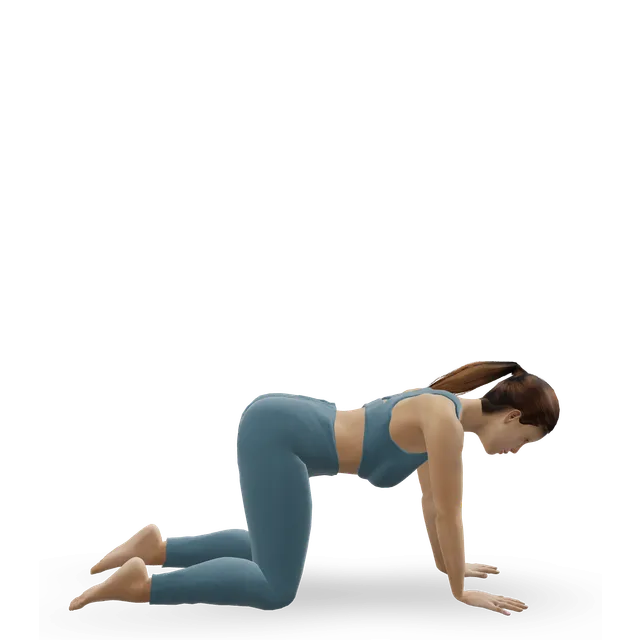
On all fours, the knee stays bent at a right angle and the heel drives up until the thigh is level with your back. Standing, an ankle cuff clips to a low cable, or a band loops round your ankle, and the leg sweeps back. A kickback machine has a chest or forearm pad and a foot plate or roller; we don't have a 3D demo of one.

Source 1

The muscles

The gluteus maximus straightens your hip, with the hamstrings helping, more so when the knee is straight. The glute medius works too: at 46.7% of its maximum on the moving side in one study. Your trunk and your standing or kneeling side hold you steady.

Sources 7, 1

Where extra height comes from

Straightening the hip is the hip movement people lose most with age. In 20 adults lifting a leg while lying face down, the pelvis tipped forward 10 degrees without bracing and 3 degrees with it: that tipping, with the lower back arching, is where extra "height" comes from.

Sources 8, 11

Donkey kicks

"Donkey kick" is a common name for the all-fours kickback with a bent knee, though names vary; studies call it quadruped hip extension.

Sources 1, 12

Activity isn't growth

Most kickback studies use EMG (electromyography: electrodes measuring how hard a muscle works over a few reps), which isn't a validated predictor of growth. Only one trial has measured the muscle itself.

Source 13

What the evidence says

Muscle activity on all foursEmerging evidence

In 24 healthy adults, the all-fours kickback worked the glute max at 59.7% of its maximum on the moving leg, eighth of 18 rehab exercises; a forearm plank lifting one bent leg came first, at 106.2%. A review of bodyweight exercises found 32.2% with the knee bent and 29.9% with it straight in one study of 20 people, against 39.9% for the single-leg bridge. In an industry-funded study of 12 people, the all-fours kickback had the highest glute activity of 8 exercises without any added weight, though nearly all were statistically similar.

Sources 1, 2, 12

Cable kickbacksEmerging evidence

15 resistance-trained women did 3 reps at 75% of their estimated maximum of six exercises. Peak glute activity in cable kickbacks, as in step-ups, was higher than in Nordic curls and leg curls, and average glute activity, as in 45-degree hip extensions, was too. Cable kickbacks also worked the outer hamstring more than Romanian deadlifts, step-ups and hip extensions.

Source 3

Knee angleEmerging evidence

In 20 adults pushing a leg back as hard as they could while lying face down, hip extension force fell as the knee bent past 60 degrees, the outer hamstring worked hardest with the knee straight, and the glute max outworked the hamstrings at 60, 90 and 110 degrees of knee bend.

Sources 7, 2

Bracing keeps your back out of itEmerging evidence

In 20 adults (10 men, 10 women) lifting a leg while lying face down, drawing the tummy in, checked with a pressure cuff, cut lower-back muscle activity from 49% to 17% of maximum, raised glute activity from 24% to 52% and cut the pelvis's forward tilt from 10 to 3 degrees. In 30 adults, drawing in raised glute activity more in those with a deep lower-back curve.

Sources 8, 14

Growth: one small MRI trialEmerging evidence

17 young adults trained one leg with cable hip extension and the other with cable hip abduction, twice a week for 10 weeks, about 10 sets a week of 8 to 12 reps. The glute max grew 9% with hip extension and 5% with abduction; extension grew its lower part most (upper 5%, middle 8%, lower 14%), and abduction its upper part (10%, 4%, 1%) and the side glutes. We could read only the summary, which doesn't describe the cable set-up.

Source 4

Training grows the glutesStrong evidence

Across 11 pooled studies in a review of 318 people, training grew the glute max by a moderate amount, with single exercises and combinations alike. The review lists hip thrusts, squats, leg presses and kneeling hip extensions among the exercises that grew it.

Source 5

Hip thrusts against squatsEmerging evidence

In untrained college-aged adults training for 9 weeks, glute growth on MRI was similar with hip thrusts and back squats, slightly favouring the hip thrust with wide variation, and the squats grew the front and inner thighs more. No trial has compared kickbacks with either.

Source 6

Donkey kicks with ankle weightsMixed evidence

111 women aged 18 to 30 did squats with a 5 kg bar, donkey kicks with 2.5 kg at each ankle, or nothing, 3 times a week for 6 weeks. "Muscle bulk" was measured as hip circumference, which fell after donkey kicks along with skinfold thickness, so the trial can't tell us whether the glutes grew.

Source 15

Heavier lifts work the glutes hard tooEmerging evidence

A review of 16 studies found very high glute activity in step-ups, hex bar and conventional deadlifts, hip thrusts, split squats and lunges. Kickbacks weren't among the loaded exercises studied.

Source 16
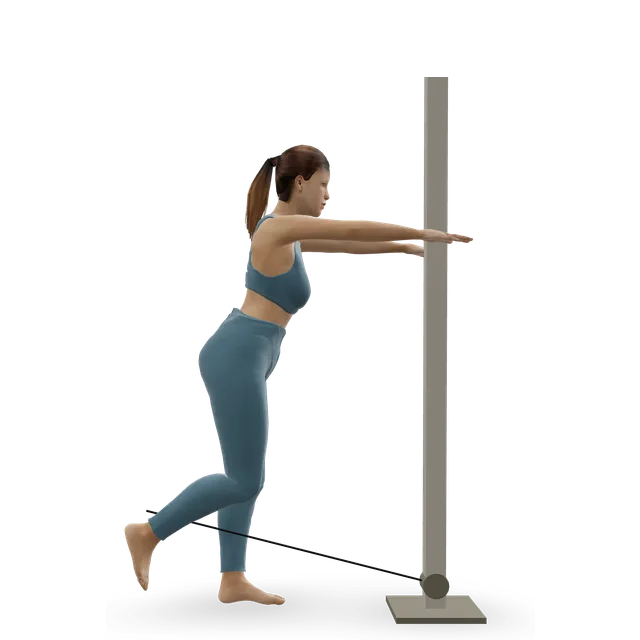
How to do a cable glute kickback, step by step

Steps and cues from our move page; keeping tension on the cable follows our cable machine guide.

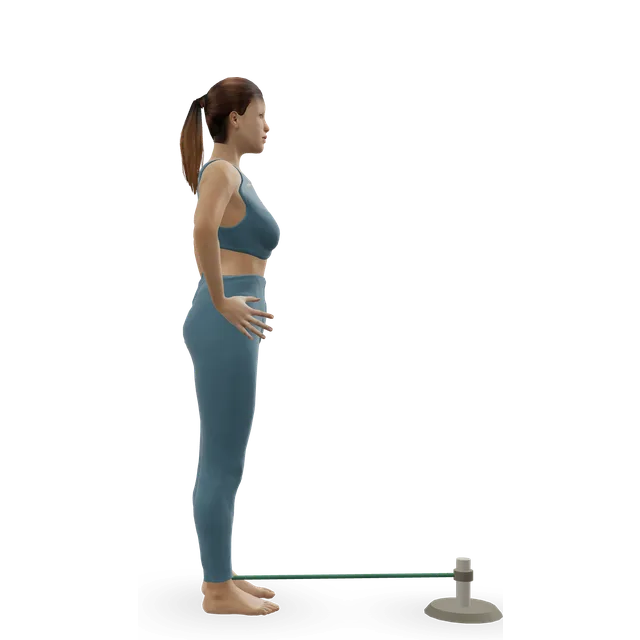
  1. Fasten an ankle cuff round one ankle and clip it to a low pulley. Stand facing the stack, about 60 cm away, and hold the frame.
  2. Bend your standing knee and hips slightly and brace your tummy.
  3. Squeeze your glute to sweep the cuffed leg back in an arc, leading with your heel, as high as is comfortable, with your hips square to the stack.
  4. Pause, then bring the leg forward slowly, keeping a little tension on the cable.
  5. Stop the leg where your lower back starts to arch. Finish the set, then change legs.

Loading the 3D figure…

Gets into position, then repeats the movement. Technical checks passed; qualified exercise review is pending.

The movement on the figure: Standing cable glute kickback

On all fours, with no equipment

Steps from our move page and the rehab study's set-up; the tummy brace follows the bracing study.

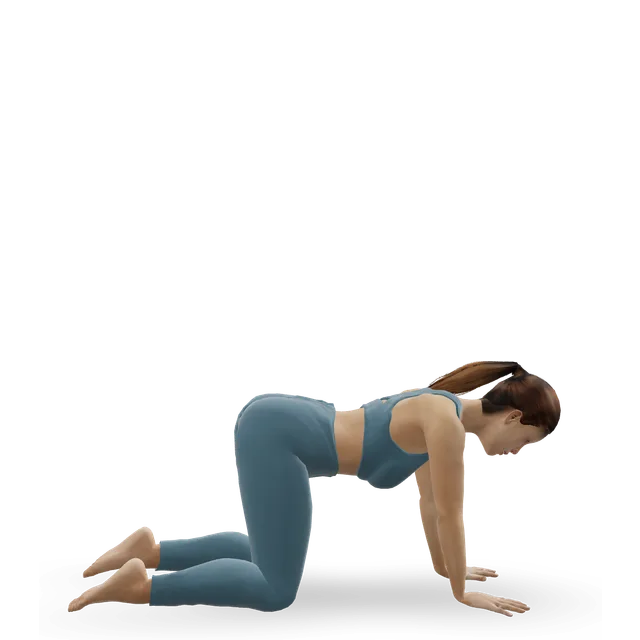
  1. Kneel on all fours with your knees under your hips and your hands under your shoulders, back flat. Pad your knees.
  2. Draw your tummy in lightly.
  3. Keeping the knee bent at a right angle, drive the heel up until your thigh is level with your back.
  4. Lower without letting your back arch or your hips tip.
  5. Do all your reps on one side, then the other. Once sets feel easy, add a band or an ankle weight.

Loading the 3D figure…

Gets into position, then repeats the movement. Technical checks passed; qualified exercise review is pending.

The movement on the figure: Glute kickback (quadruped hip extension)

Bent or straight leg?

Bent for the glutes

With the knee bent at about a right angle, the glutes do more of the work; with it straight, the hamstrings join in more.

Source 7

Straight lets you push harder

A straight leg lets you push harder, with the hamstrings helping, and cable kickbacks worked the hamstrings hard. Our standing band and all-fours straight-leg versions keep the knee straight.

Sources 7, 3

Either way

Both are hip extension. Pick the one you can do with your back still (our view).

Keep your back out of it

Stop at the line of your body

Past that point, the extra height comes from your pelvis tipping forward and your lower back arching, not from your glutes.

Source 8

Brace lightly

Drawing the tummy in cut lower-back muscle activity by about two-thirds and doubled glute activity in a lying hip extension, and the industry study's instructions say to slightly contract your abdominals to steady your torso.

Sources 8, 14, 12

Not a back pain treatment

No study has tested kickbacks for back pain. If they hurt your lower back, shorten the range and brace; our back pain guide has the exercises with evidence.

All-fours, band, cable and other kickbacks

The bird dog first, 2 sets of 6 each side (as in our fascia release for the back workout); all-fours kickbacks 2 to 3 sets of 12 to 15 each side (our editorial starting point); the all-fours straight-leg raise 1 to 2 sets of 5 to 10 each leg (its move page); band and cable kickbacks 2 to 3 sets of 8 to 12 each side, stopping 2 or 3 reps short (their move pages). The reverse hyperextension is a harder relative for later. There's no 3D demo of a kickback machine or a Smith machine kickback: the cable kickback shows the movement.

Sets, reps, weight and how often

Cable or band

2 to 3 sets of 8 to 12 each side, stopping 2 or 3 reps short (their move pages). Our glute gym workout uses 2 sets of 8 to 12 each side with 45 to 60 seconds' rest.

On all fours

2 to 3 sets of 12 to 15 each side (our editorial starting point, in line with our 30-day glute challenge's 1 to 2 sets of 12 to 15 and our home glute workout's 3 rounds of 12). Add a band or an ankle weight once sets feel easy, as the move page says.

How hard

The last set can end 0 to 2 reps short of failure, as our plans allow for small isolation moves, but the set ends when your back starts to arch.

Weekly sets

Count kickback sets in our grow your glutes guide's 10 to 20 hard glute sets a week, once or twice a week. The MRI trial used about 10 sets a week over two sessions: a study dose, not a starting point.

Sources 9, 10, 4

Weight on the cable

Enough that 8 to 12 reps feel hard while your hips stay square and your back stays still. Stack numbers differ between machines, as our cable machine guide explains, so judge by the reps you have left; people underestimate that by about 1.

Source 17

Rest

45 to 60 seconds, as our glute workouts use.

Common mistakes and how to fix them

Arching your lower back for extra height

Stop at back level and brace.

Source 8

Hips twisting open

Keep them square, as our move pages cue.

Swinging the leg

Slow down and pause at the top.

The knee straightening in the bent-knee version

Keep the right angle so your glutes do the work.

Source 7

Standing too close to the stack

If the cable goes slack, step back to about 60 cm, as our move page says.

Staying with body weight for months

Add a band, an ankle weight or a cable, as the move page's caution says.

The rest of your glute work

Hip thrusts 3 sets of 6 to 10 and the hip abduction machine 3 sets of 12 to 20 (our glute gym workout); glute bridges 3 sets of 10 to 15 (our hip thrust guide); single-leg bridges 10 each side and band walks 10 steps each way (our home glute workout); dead bugs 2 sets of 8 each side for trunk control (our Smith machine workout).

Who should change it

Lower back pain during kickbacks

Shorten the range, brace, or use a glute bridge instead; see our back pain guide.

Sore knees when kneeling

Pad them, or use the standing cable or band versions.

Sore wrists on all fours

Rest on your forearms, or stand (our suggestion).

Pregnancy

Kickbacks on all fours or standing keep you off your back; the NHS advises against lying flat on your back for more than a few minutes later in pregnancy. Keep the weights moderate and stop if you feel faint, overheated or in pain, as Tommy's says.

Sources 18, 19

Pelvic girdle pain in pregnancy

Our pelvic girdle pain guide lists standing on one leg among the things that bring it on and says to swap one-legged moves that bring on pain, and our glute challenge limits one-leg moves. Kickbacks work one leg at a time, so drop them if they bring it on (our suggestion).

After a hip replacement

Follow your surgical team's movement limits, as our hip mobility routine says.

Workouts to follow

Our glute gym workout ends with optional cable kickbacks, 2 sets of 8 to 12 each side; the home glute workout puts all-fours kickbacks in a circuit, 12 each side; session B of the 30-day glute challenge uses all-fours and band kickbacks; and the resistance band workout has band hip extensions.

Plans that use them

The glute workout plan counts 2 optional kickback sets a week; the 30-day glute challenge and the resistance band plan use the home versions.

Warning signs

Stop and get medical help

If you get chest pain or pressure, feel faint or dizzy, are unusually breathless, or your heart races or beats irregularly during exercise, as our plans advise. The American Heart Association says these need immediate medical evaluation.

Source 20

Call 999 (911 in the US)

For chest pain that feels tight or like squeezing, or spreads to your arms, neck or jaw; a headache that starts suddenly and is extremely painful, especially while straining; someone who faints while exercising; palpitations that don't go away, or come with chest pain, breathlessness or feeling faint; or severe difficulty breathing. Don't drive yourself to A&E.

Sources 21, 22, 23, 24, 25, 26, 27

Call 999 or go to A&E: back pain with these signs

Loss of feeling or numbness around the genitals or bottom, new trouble peeing or controlling your bladder or bowels, changes in genital sensation during sex or problems with erections or orgasm, or pain, tingling, weakness or numbness in both legs. These are signs of cauda equina syndrome, which needs treating in hospital urgently. Don't drive yourself.

Source 28

Call 999 or go to A&E: hip

For severe hip pain after a fall or injury, or if you can't stand, walk or put weight on your leg.

Source 29

Ask for an urgent GP appointment or get help from NHS 111

For back pain with feeling hot, cold, shivery or unwell, or severe pain that came on suddenly; severe hip pain that started without a fall or injury, or a hot, swollen hip; or a sudden sharp pain at the back of the thigh that's very painful or getting worse, with a lot of swelling or bruising, or that you can't put weight on, which may be a hamstring strain (see our hamstring strain guide).

Sources 28, 29, 30

See a GP

For back pain that isn't improving after a few weeks, or hip pain that stops your normal activities or hasn't improved after 2 weeks.

Sources 28, 29

Myths

"Kickbacks are a waste of time for the glutes"Emerging evidence

In the one MRI trial, read as an abstract, 10 weeks of cable hip extension grew the glute max by 9%, more than hip abduction did, and a review lists kneeling hip extensions among the exercises that grew the glutes. They're an extra, not a replacement for squats, hip thrusts and hinges.

Sources 4, 5

"Kickbacks build the upper glutes"Emerging evidence

In that trial, hip extension grew mostly the lower part of the glute max (14%), and abduction the upper part (10%). No study measured shape, and none can promise a look.

Source 4

"Kickbacks fix lower back pain"

No study has tested them for back pain. Done with an arched back, they load the lower back muscles more: bracing cut that activity from 49% to 17% of maximum in a lying hip extension.

Source 8

"Kick as high as you can"Emerging evidence

Past the line of your body, the extra height comes from the pelvis tipping and the back arching; our move pages stop the leg where the lower back starts to arch.

Source 8

"Donkey kicks burn fat from your bum"Mixed evidence

The one trial measured hip circumference, which can't separate fat from muscle, after donkey kicks with light ankle weights, so it can't show where fat was lost.

Source 15

"Kickbacks can replace hip thrusts and squats"Emerging evidence

No trial has compared them. Hip thrusts and squats grew the glutes about equally, so build your sessions around those and add kickbacks.

Source 6

Questions people ask

Do glute kickbacks work?

Yes, as an extra. In the one MRI trial, 10 weeks of cable kickbacks (hip extension) grew the main glute muscle by 9%, more than side-leg raises did, though it was a small trial we could read only as an abstract. On all fours with just your body weight they work the glutes only moderately, so add load as you get stronger.

Are glute kickbacks as good as hip thrusts?

No trial has compared them. Hip thrusts and squats grew the glutes about equally, so build your sessions around those and add kickbacks for extra glute work.

Should my leg be straight or bent for glute kickbacks?

Bent at about a right angle if you want the glutes to do more: with the knee bent 60 degrees or more, the glutes outworked the hamstrings. A straight leg works the hamstrings more.

Why do I feel glute kickbacks in my lower back?

You're probably lifting your leg past the line of your body, which arches your back and tips your pelvis. Brace your tummy and stop when your thigh is in line with your body: bracing cut lower-back muscle activity by about two-thirds in a study.

Are glute kickbacks and donkey kicks the same?

Usually, yes: "donkey kick" is a common name for the all-fours kickback with a bent knee, though names vary. Studies call it quadruped hip extension.

Cable, band, machine or bodyweight glute kickbacks?

Start on all fours, then add a band, an ankle weight or a cable as it gets easy, because body weight alone works the glutes only moderately. The cable version is the one tested in a growth trial.

How many sets and reps of glute kickbacks should I do?

With a cable or band, 2 to 3 sets of 8 to 12 each side, stopping 2 or 3 reps short; on all fours, 2 to 3 sets of 12 to 15 each side. Rest 45 to 60 seconds, and end the set when your back starts to arch.

Do glute kickbacks work the upper glutes?

Mostly the lower glutes: in the MRI trial, kickbacks grew the lower part of the main glute muscle most, while side-leg (abduction) work grew the upper part and the side of the hip. Do both.

How do I do cable kickbacks without an ankle strap?

Loop a long resistance band round your ankle and anchor it low, or do the all-fours version with an ankle weight. That's our suggestion; the band version has its own 3D demo on this page.

How much weight should I use for cable kickbacks?

Enough that 8 to 12 reps feel hard while your hips stay square and your back stays still. Stack numbers differ between machines, so judge it by how many reps you have left, not by the number.

Will glute kickbacks help my lower back pain?

No study has tested them for back pain. If your back is sore, glute bridges and the exercises in our back pain guide are better places to start, and kickbacks done with an arched back load the lower back muscles more.

Sources

  1. Boren 2011 · Glute activity in 18 rehab exercises in 24 healthy adults (muscle activity study, Int J Sports Phys Ther)
  2. Macadam 2019 · Glute activity in bodyweight hip extension exercises: 39 studies (systematic review, Int J Sports Phys Ther)
  3. Stevens 2022 · Glute and hamstring activity in six hip and knee exercises in 15 trained women (muscle activity study, Int J Exerc Sci)
  4. Attarieh 2026 · Regional glute growth after 10 weeks of hip extension against hip abduction training in 17 adults (within-person trial, JSCR; abstract read)
  5. Krause Neto 2025 · Resistance training and gluteus maximus growth: 11 studies (systematic review and meta-analysis, Front Physiol)
  6. Plotkin 2023 · Nine weeks of hip thrusts or back squats: glute growth on MRI and strength in 34 adults (randomised trial, Front Physiol)
  7. Kwon 2013 · Knee angle and hip extension: glute and hamstring activity in 20 adults (muscle activity study, J Phys Ther Sci)
  8. Oh 2007 · Drawing the tummy in during a lying hip extension: back, glute and hamstring activity and pelvic tilt in 20 adults (muscle activity study, JOSPT)
  9. Currier 2026 · Resistance training for muscle function, size and performance in healthy adults: 137 reviews (ACSM position stand, MSSE)
  10. Pelland 2026 · Weekly sets and training frequency against muscle growth and strength: 67 studies, 2,058 people (meta-regression, Sports Med)
  11. Roach 1991 · Hip and knee range of motion and age in 1,683 adults (survey study, Phys Ther)
  12. Anders 2006 · Glutes to the max: 8 exercises compared in 12 people (ACE-funded muscle activity study, ACE FitnessMatters)
  13. Vigotsky 2022 · Muscle activity measured in one session isn't a validated predictor of muscle growth (review, Sports Med)
  14. Kim 2015 · Drawing the tummy in during a lying hip extension in 30 adults with and without a deep lower-back curve (muscle activity study, J Phys Ther Sci)
  15. Ekechukwu 2020 · Donkey kicks or squats for 6 weeks in 111 young women (randomised trial, Int J Med Health Dev)
  16. Neto 2020 · Gluteus maximus activity in common strength exercises: 16 studies (systematic review, J Sports Sci Med)
  17. Halperin 2022 · How accurately people predict the reps they have left: 12 studies (scoping review and meta-analysis, Sports Med)
  18. NHS · Exercise in pregnancy
  19. Tommy's · Strength training in pregnancy (pregnancy charity)
  20. Paluch 2024 · Resistance exercise training with and without cardiovascular disease: 2023 update (American Heart Association scientific statement, Circulation)
  21. NHS · Heart attack
  22. NHS · Chest pain (past its review date: reviewed August 2023, review due August 2026)
  23. NHS · Headaches
  24. NHS · Subarachnoid haemorrhage
  25. NHS · Fainting
  26. NHS · Heart palpitations
  27. NHS · Shortness of breath
  28. NHS · Back pain
  29. NHS · Hip pain in adults
  30. NHS · Sprains and strains

Exercise education, not a personal prescription, and clinical review of these guides is pending. Check with a GP before starting hard training if you have a heart condition, chest pain, dizziness or breathlessness when active, and stop for sharp or increasing pain. Health disclaimer.