How to use battle ropes: the stance, waves, slams and circles, how hard it is, intervals, and how long
Battle ropes are heavy ropes looped round an anchor: you hold an end in each hand, sink into a quarter squat and whip your arms up and down to send waves to the anchor. Done in short, hard bouts with rests, they push your heart rate to about 80% of its maximum and work your shoulders, forearms and trunk hard, with no impact on your legs.
In training studies, rope intervals improved upper-body power, grip and core endurance in young athletes, but no study has measured muscle growth, and no exercise burns fat from your arms.
This guide covers the set-up and the steps on the 3D figure, waves, slams and circles, what the studies show, which rope, how many rounds and how often, seated ropes, your shoulders, and the warning signs.
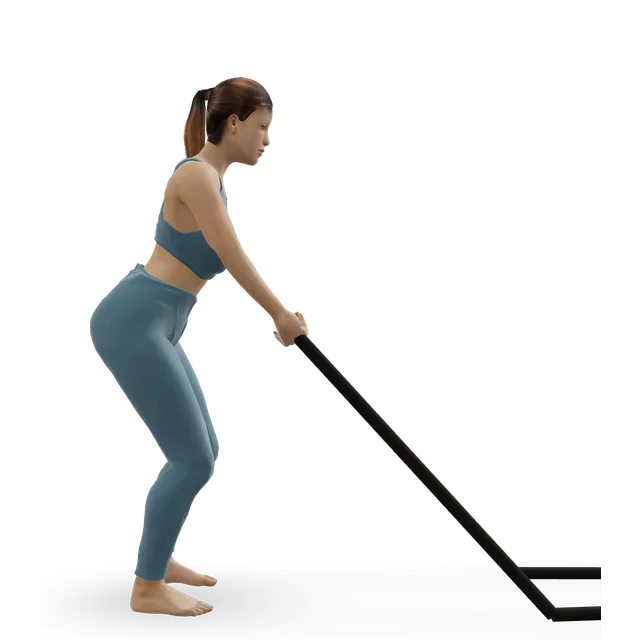
Loop a heavy rope round a sturdy anchor at its middle, take an end in each hand and walk back until it's almost straight. Stand with your feet shoulder-width apart in a quarter squat, chest up, then whip your arms up and down in turn, fast enough that the waves run to the anchor. The American Council on Exercise (ACE) set its research up the same way: knees slightly bent, back straight, a slight forward lean, elbows straight.
Ten 15-second bouts of double waves with 45 seconds' rest averaged 163 beats a minute in 11 active adults, peaking at about 10 METs (metabolic equivalents: multiples of your resting energy use). In ACE's 14-minute rope session, 14 young men averaged 79% of their maximum heart rate, peaking at 87%.
In ACE's study of 12 adults, the forearm grip muscle worked above 75% of its maximum in every rope exercise, and slams and double waves worked every muscle measured above 40%. In 21 volunteers, the front of the shoulder, the side of the trunk and the lower back worked at 51 to 73% of their maximum. That's effort in a bout, not proof of growth.
Six weeks of ten 30-second all-out bouts, 3 times a week, raised upper-body aerobic fitness and shoulder strength in 33 young adults, though the abstract describes no comparison group. In basketball players, 8 weeks of rope intervals improved more measures than shuttle-run intervals, and across 21 controlled studies of people aged 11 to 25, upper-body power, grip and core endurance improved. No study has measured muscle growth from ropes.
Start with 4 to 6 bouts of 30 seconds with 60 seconds' rest (the move page's dose), building towards the 10 bouts of the 6-week study; or 15 seconds on and 45 off while you learn. One or two hard rope sessions a week, up to three, as our HIIT guide suggests for any hard intervals.
About 10 kcal a minute across ACE's 14-minute session, 141 kcal in all. Working one part of the body doesn't remove the fat over it: training one arm for 12 weeks didn't shift the fat on it in 104 adults, and across 13 studies of 1,158 people exercising a body part didn't reduce the fat over it.
A thick, heavy rope looped round an anchor at its middle, so you hold one end in each hand and your waves travel along it to the anchor. ACE's researchers note that rope workouts are usually high-intensity intervals, and that the rope's length (10 to 100 feet) and thickness (1 to 2 inches), the speed and size of the waves, the anchor and how much of your body you use all change how hard it is. The lab ropes were 9 to 15 m long and 3 to 5 cm thick, and the training studies used ropes of about 7.5 to 18 kg.
The front of your shoulders, your forearms (grip), your trunk and, to hold the stance, your legs and hips. In ACE's study, the inner quad, glutes, lower back, side and front trunk muscles, upper trapezius, front deltoid and forearm grip muscle all worked above 40% of their maximum in slams and double waves. Among ten shoulder exercises in another ACE study, ropes worked the three parts of the deltoid moderately, about 37 to 49% of their maximum, read from the report's charts. These are effort measures over a few seconds, not growth.
Vigorous. Average heart rates were about 145 to 165 beats a minute, and blood lactate was about 8 to 14 mmol/L afterwards, a sign of hard work beyond what your aerobic system can supply. Oxygen use averaged about half of aerobic capacity across whole sessions, because the rests count too, and peaked at about two thirds to three quarters.
Nothing beyond comfortable arm raises to shoulder height and a quarter squat you can hold. The move page's advice: start with fewer, shorter bouts.
How people differ
At the same wave rate, men used 11 to 14% more oxygen than women. The 6-week study gave women a lighter rope (20 lb, about 9 kg) than men (25 lb, about 11 kg). Seated waves still reached about 72% of aerobic capacity, and wheelchair basketball players trained with them, so you don't need to stand.
Young adults and athletes aged 11 to 30, mostly men, in groups of 11 to 40, plus 18 wheelchair basketball players. We found no study in older adults, in people with heart disease, of injuries, or of which rope suits a beginner, and we say so where it matters.
From the move page and ACE's two battle rope studies (the handshake grip, the stance, waves from shoulder to waist height, swaying during rests). The anchor check and ending a bout early are editorial.
Loop the rope round a sturdy anchor at floor or knee height so both ends are the same length, and check the anchor can't move.
Take an end in each hand with a handshake grip, palms facing each other, and walk back until the rope is almost straight, with a little slack on the floor.
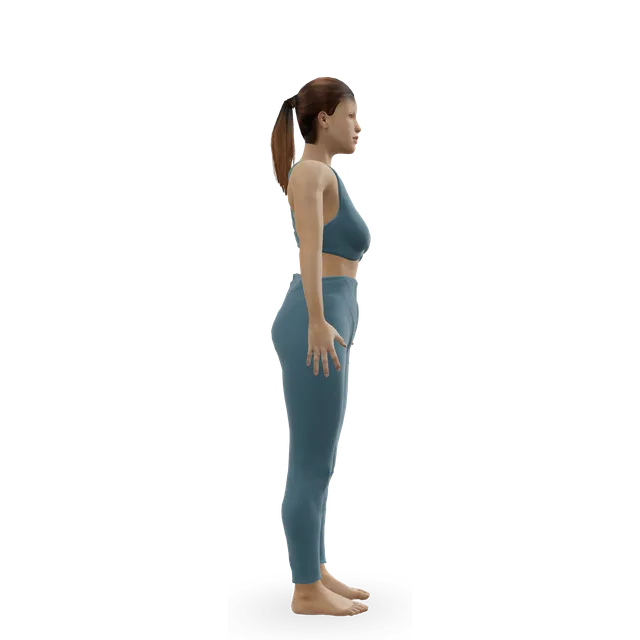
Stand with your feet shoulder-width apart, knees bent into a quarter squat, chest up and trunk leaning slightly forward with a flat back. Brace your middle.
Hold your arms in front of you with your elbows almost straight. Raise one arm quickly to about shoulder height and drive it down towards your hip as the other arm comes up.
Keep alternating as fast as you can, moving from your shoulders, so the waves run all the way to the anchor, for the length of the bout.
Keep breathing. If the waves stop reaching the anchor, end the bout early.
Lay the rope down at the end of the bout and walk or sway gently while you rest.
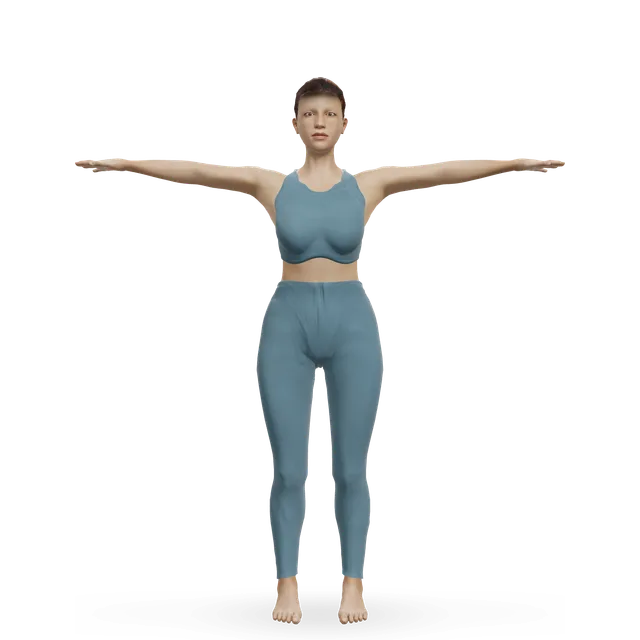
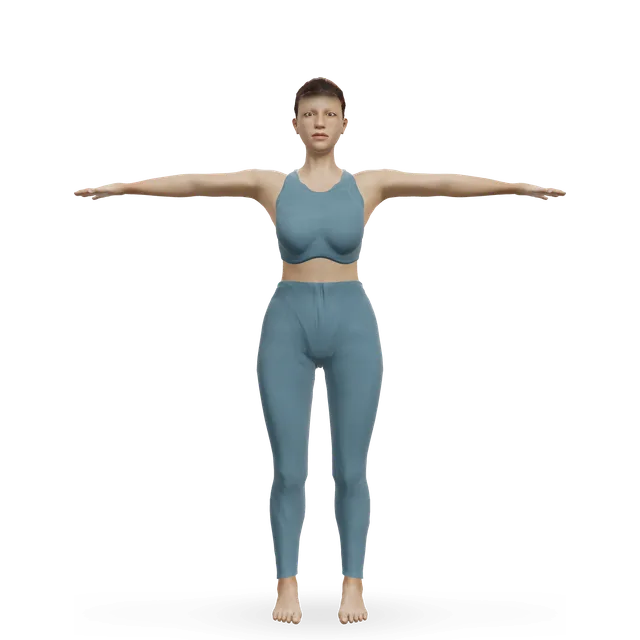
Loading the 3D figure…
Drag to turn
Gets into position, then repeats the movement. Technical checks passed; qualified exercise review is pending.
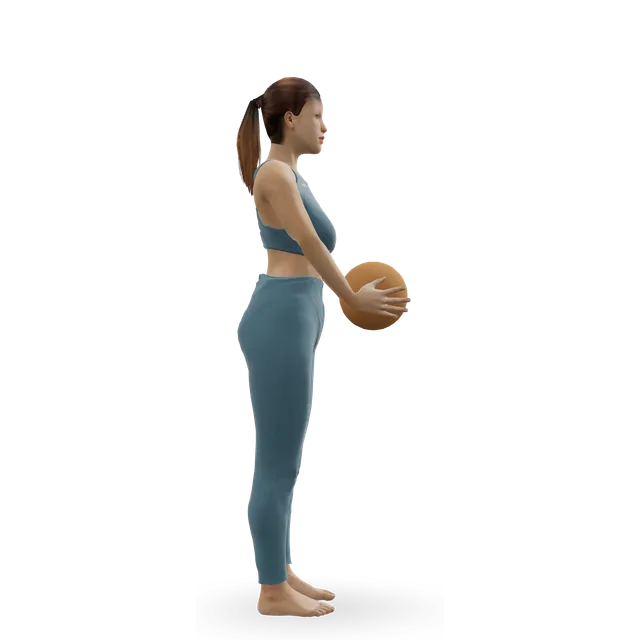
Only alternating waves have a 3D demo. The medicine-ball slam below shows the slam's overhead-to-floor action with a ball, not a rope.
Alternating waves
One arm up as the other goes down: the easiest to keep going, so learn it first. In ACE's study it worked the arms and trunk above 40% of their maximum, but not the thighs or the front trunk muscle.
Both arms up and down together. They drew more thigh and trunk activity than alternating waves in 28 students, and more lower-back activity in 21 volunteers.
Raise both ends overhead and slam them down. The most intense rope exercise by heart rate and oxygen use, and the one that worked the most muscles hardest. They ask more of your back and shoulders, so leave them out if lifting your arms overhead hurts your shoulder (our suggestion).
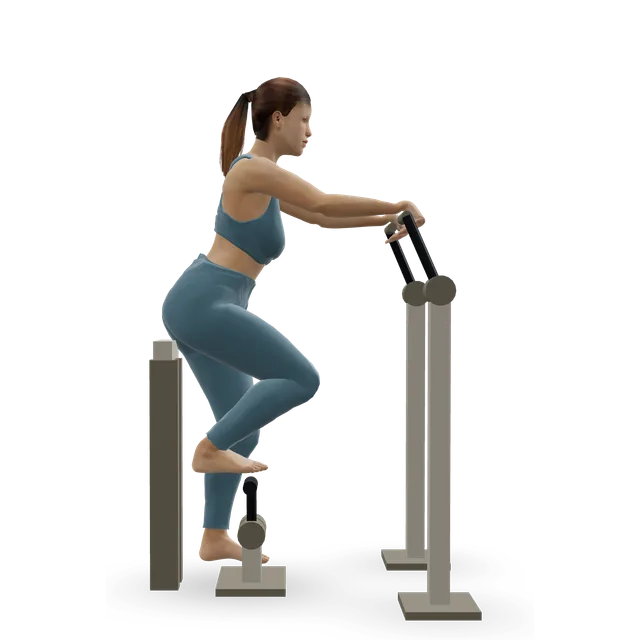
On a sturdy bench, chair or wheelchair with the brakes on. Seated waves reached about 72% of aerobic capacity in 40 healthy adults, a little above the standing version's 68%, and the authors suggest ropes for people who can't use their legs for aerobic exercise.
Ten 15-second bouts of double waves averaged 163 beats a minute and peaked at about 10 METs in 11 active adults. ACE's 14-minute session averaged 148 beats a minute, 79% of maximum heart rate, with blood lactate of 11.8 mmol/L afterwards in 14 men aged 18 to 23. In 10 trained men, a rope circuit drew the highest average oxygen use of 13 lifting and bodyweight protocols, a little above burpees (24.6 against 22.9 mL/kg/min). All of these were young adults.
In 22 young adults doing eight 30-second bouts of waves, 1 minute's rest drew more oxygen, heart rate and lactate than 2 minutes' rest, and burned 11.9 against 8.8 kcal a minute in men and 7.7 against 5.0 in women.
Grip, shoulders and trunk work hardEmerging evidence
In 12 adults with resistance training experience, the forearm grip muscle worked above 75% of its maximum in all five rope exercises, and slams worked the inner quad, glutes, lower back and front trunk harder than any other rope exercise. In 21 volunteers, the front shoulder, side trunk and lower back worked at 51 to 73% of maximum and the side hip at 14 to 18%. ACE funded its study, and its 40% mark for building strength is an assumption, not a tested rule.
The shoulders work moderately, not maximallyEmerging evidence
In ACE's comparison of ten shoulder exercises in 16 men, battling ropes drew about 49% of maximum from the front deltoid, 37% from the side and 38% from the rear, figures we read from the report's charts. Each was well below the best exercise for that part of the shoulder.
In 14 men, rope sprint intervals felt equally hard and enjoyable as 12 bouts of 10 seconds, 8 of 15 or 4 of 30, with the same work and rests three times as long as the bouts.
Muscle activity measured in one session isn't a validated predictor of muscle growth, so the figures above show how hard muscles worked, not what they will build.
In 18 men and 15 women aged about 23, ten 30-second all-out bouts with 60 seconds' rest, 3 times a week for 6 weeks, raised upper-body aerobic fitness, shoulder strength and power, and push-up and sit-up endurance after 3 and 6 weeks. Heart rate reached at least 85% of predicted maximum. The abstract describes no comparison group, so some of the change could be learning the tests.
In 30 male college basketball players, 8 weeks of rope intervals 3 times a week raised aerobic capacity by 17.6% and improved upper-body power, chest-pass speed, jump height, core endurance and shooting accuracy. The shuttle-run group, with the same sets and rests, improved aerobic capacity (12.0%) and chest-pass speed.
In 590 people aged 11 to 25, most of them male, rope training improved upper-body power, grip, upper-body muscular endurance and core endurance, but not clearly leg power. The effects were large but varied widely, and most of the studies raised concerns about how groups were chosen. Programmes ran 4 to 12 weeks, usually 3 times a week.
In 18 wheelchair basketball players, four 15-second all-out bouts of alternating waves with 45 seconds' rest, twice a week for 6 weeks, raised 12-minute push distance from 2,547 to 2,840 m, while the control group didn't change. Nothing else improved more than in the controls.
In 15 college basketball players, a 30-minute rope session cut shooting accuracy by 16.9%, raised effort to 9.9 out of 10 and left their arms very sore. Build up over weeks.
In 11 young men with raised blood pressure, ten 30-second rounds lowered blood pressure for 30 minutes afterwards, against a session of rest. In 23 trained young adults, a hard session briefly stiffened the arteries for 30 to 60 minutes. No training study has measured blood pressure over weeks.
We found no study of muscle growth from ropes, none in adults over about 30, none counting injuries, and none comparing rope lengths, thicknesses or anchor heights. The muscle figures are activity, which doesn't predict growth.
Studies used ropes 9 to 15 m long, 3.8 to 5 cm thick and about 7.5 to 18 kg. The 6-week study used a 40 ft (about 12 m), 20 lb (about 9 kg) rope for women and a 50 ft (about 15 m), 25 lb (about 11 kg) rope for men, adding 10 lb (about 4.5 kg) after 3 weeks. No study has tested which rope suits a beginner, so start with whatever rope your gym has, and shorter bouts.
ACE lists the rope's length and thickness among the dials that change the effort. Standing a little closer gives more slack and makes the waves easier to keep going (our suggestion).
The studies looped the rope round a fixed anchor at its middle, one at the base of a post. Check the anchor can't slide or tip before you start, and clear floor for about half the rope's length plus your stance (our suggestion).
6 to 10 bouts of 15 seconds with 45 seconds' rest, firm enough that the waves reach the anchor. That's our editorial starting point, from the lab sessions: ten 15-second bouts with 45 seconds' rest in one, fourteen in ACE's.
4 to 6 bouts of 30 seconds with 60 seconds' rest, hard enough that you can say only a few words. That's the move page's dose.
Building
Up to 10 bouts of 30 seconds with 60 seconds' rest, all-out by the end, 3 times a week over 6 weeks: the study the move page builds towards. Add 1 or 2 bouts a week.
3 to 5 bouts of 20 seconds with 40 seconds' rest at the end of a strength session (our editorial starting point; 20 seconds on and 40 off was a common structure in the trials).
Once or twice a week as one of your hard sessions, up to three, with an easier day between, as our HIIT guide suggests; the training studies used 2 or 3 sessions a week. The NHS asks adults for at least 150 minutes of moderate or 75 minutes of vigorous activity a week, plus strengthening activities on at least 2 days, and counts high-intensity interval training as very vigorous activity.
Add bouts first, then shorten the rests (a 1-minute rest made a session harder than 2 minutes), then lengthen the bouts or use a heavier rope, as the 6-week study did after 3 weeks.
3 to 5 minutes of easy movement, shoulder circles and two easy practice bouts, as our plans and the NHS suggest. Our battle rope workout has a 5-minute warm-up.
About 10 kcal a minute averaged across ACE's 14-minute session, 141 kcal in all, in young men. With eight 30-second bouts, the cost averaged 5 to 12 kcal a minute depending on the rest and on sex, and double waves cost about 10 kcal a minute of work in 11 active adults.
The Compendium of Physical Activities lists vigorous calisthenics, battling ropes among its examples, at 7.5 METs. By our rough arithmetic that's about 9 kcal a minute of work for a 70 kg adult, and less once you count the rests; our calories burned calculator does the sum for you.
Training one arm for 12 weeks didn't reduce the fat under the skin of that arm more than the other on MRI scans in 104 adults, and across 13 studies of 1,158 people, exercising a body part didn't reduce the fat over it. Fat comes off the whole body with your overall activity and eating, as our weight loss guide explains.
Battle rope alternating waves: 4 to 6 bouts of 30 seconds with 60 seconds' rest, building towards 10 (the move page's dose). No rope? Standing punches, 30 to 45 seconds within a circuit (the move page's dose, its editorial starting point); air bike intervals, 60 seconds hard and 120 seconds easy, 4 rounds building to 8 (our cardio intervals workout, which allows an air bike); and medicine-ball slams, 2 to 3 sets of 6 to 10 controlled slams (our editorial starting point), the nearest demo of a rope slam. Nothing copies the rope exactly, and we found no study of 'ropeless' ropes.
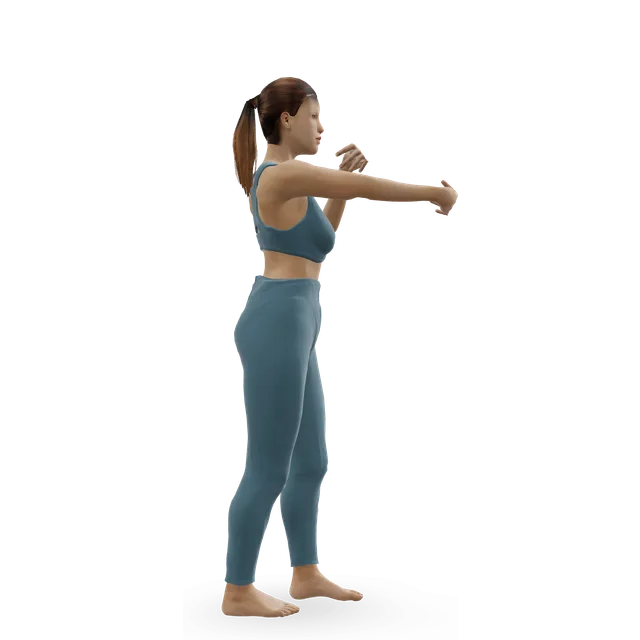
Warm up with shoulder CARs (controlled circles), 3 slow circles each way with each arm (the move page's dose), thoracic rotation, 6 each side (the move page's dose), 60 seconds of wrist and forearm circles (our power clean technique workout) and 10 bodyweight squats to your rope stance (our tabata workout's warm-up). Balance the front of your shoulders with band pull-aparts, 15 reps (our upper back posture routine), or face pulls, 3 sets of 12 to 20 (our upper body workout at home); train your grip with farmer's carries, 2 walks of 30 m (our full-body gym workout); your trunk with dead bugs, 2 sets of 6 to 8 each side (our full-body gym workout), and side planks, 2 holds of 20 to 30 seconds each side (our full-body dumbbell workout B). Cool down with the cross-body shoulder stretch, 30 seconds each side, and the doorway chest opener, 30 seconds (our upper body and stretch workouts).
Our battle rope workout builds from 4 to 10 rounds of 30-second waves. The others are interval sessions where rope waves can fill a station or an interval: 40 seconds on and 20 off at home, one-minute efforts on a bike or rower (an air bike or rope instead), tabata's 20 seconds on and 10 off, circuit stations, boxing rounds, and seated cardio in the wheelchair workout.
Keep the waves below shoulder height and leave out slams. Pain up to about 5 out of 10 during the work is acceptable if it's back to its usual level by your next session, and stop if your shoulder feels about to slip out, as our shoulder pain guide says.
Sore wrists, elbows or forearms
Use a lighter rope or stand a little closer, shorten the bouts and keep your grip relaxed. Wrist pain up to about 5 out of 10 that settles within half an hour and is no worse the next morning is acceptable; tingling is a stop sign, as our wrist pain when lifting guide says.
Back pain
Stand a little taller with a smaller squat, or sit, and skip slams. Back pain up to about 5 out of 10 that settles within an hour or so and is no worse the next morning is acceptable, but pain spreading down a leg isn't, as our back pain guide says.
High blood pressure, heart disease or eye disease
If you're inactive and have heart, metabolic or kidney disease, or get chest discomfort, unusual breathlessness, dizziness or fainting when active, check with your GP before hard intervals, and keep to moderate effort while your blood pressure isn't controlled, as our HIIT guide says. Breathe out through every effort. The American Heart Association advises against high-intensity resistance training with active proliferative diabetic eye disease. One rope session lowered blood pressure afterwards in young men with raised blood pressure, but nobody has tested ropes in heart disease.
The NHS doesn't recommend starting a new vigorous activity in pregnancy, so don't start rope intervals now. If you already use them, keep the effort moderate, standing or seated, and stop if you feel uncomfortable, too hot or unwell.
We found no rope study in older adults. Start seated or with 15-second bouts at a moderate effort, and build up over weeks (our suggestion).
Wheelchair users
Seated waves reached about 72% of aerobic capacity in healthy adults, and rope sprint intervals improved a 12-minute push test in wheelchair basketball players. Put your brakes on and anchor the rope at about knee height.
Leaking with slams or jumps is common and treatable: a reason to see our pelvic floor guide and a pelvic health physiotherapist, not to stop exercising. Waves without jumping put less pressure on your pelvic floor (our suggestion). See a GP about any leaking, as the NHS advises.
If you get chest pain or pressure, feel faint or dizzy, are unusually breathless, or your heart races or beats irregularly during exercise, as our plans advise. The American Heart Association says these need immediate medical evaluation.
For chest pain that comes on suddenly and doesn't go away, feels tight or like squeezing, spreads to your arms, neck, jaw, stomach or back, or comes with sweating, feeling sick, light-headedness or breathlessness; severe difficulty breathing; someone who faints while exercising; palpitations that don't go away, or come with chest pain, shortness of breath or feeling faint; or a sudden headache that is extremely painful, or comes with numbness or weakness, difficulty speaking or loss of vision. Don't drive yourself to A&E.
Call 999 if arm pain comes on suddenly with pressure, heaviness or squeezing across your chest. Get help from NHS 111 if your arm hurts when you exercise but the pain goes away when you rest, or it's swollen and you have a very high temperature or feel hot, cold or shivery.
Same day (call NHS 111, or go to A&E if you feel very unwell): after a big or unusual session, such as your first hard rope session or a sudden jump in rounds, muscle pain, swelling or weakness far worse than the session explains, and dark pee (red, brown, tea or cola coloured) or passing less pee, sometimes starting hours or days later. Dark pee isn't always there, so arms far sorer, more swollen or weaker than the session explains still need the same-day check. It can be rhabdomyolysis, a breakdown of muscle that can harm the kidneys.
For sudden or very bad shoulder pain, an arm you can't move, a shoulder that has changed shape or is badly swollen, pins and needles that don't go away, no feeling in your arm, pain after a fall or injury, or severe pain in both shoulders. See a GP if shoulder pain is getting worse or hasn't improved after 2 weeks. In the US, your doctor or urgent care.
If back pain comes with pain, tingling, weakness or numbness in both legs, loss of feeling around your genitals or bottom, or changes in your bladder or bowels.
"Battle ropes burn fat from your arms"Strong evidence
Training one arm for 12 weeks didn't reduce the fat over it more than over the other arm in 104 adults, and across 13 studies exercising a body part didn't reduce the fat over it. Ropes burn about 10 kcal a minute of hard work; fat comes off the whole body.
They're vigorous cardio, but they also worked the shoulders, forearms and trunk hard in muscle activity studies, and improved upper-body power, grip and core endurance in trials.
"Battle ropes build big arms and shoulders"Emerging evidence
No study has measured muscle growth from ropes, and the deltoids worked only moderately, about 37 to 49% of their maximum, against the best shoulder exercises. Lift for size, as our wider shoulders guide explains, and use ropes for conditioning.
"Battle ropes replace leg training"Emerging evidence
The pooled effect on leg power wasn't clear across 21 studies, and alternating waves left the inner quad below ACE's 40% mark. Keep your squats, lunges and hinges.
"The longer the rope session, the better"Emerging evidence
Shorter rests, not longer sessions, raised the energy cost, and a 30-minute session left athletes very sore with worse skill. The trials used 4 to 10 short bouts.
Across 15 studies, training to failure gave a trivial growth advantage at most. In rope intervals, end a bout when the waves stop reaching the anchor rather than flailing through it.
Loop the rope round a sturdy anchor at its middle, take an end in each hand and walk back until it's almost straight. Stand in a quarter squat with your chest up and whip your arms up and down in turn, fast enough that the waves reach the anchor. Work in short bouts with rests.
What muscles do battle ropes work?
Mainly your shoulders, forearms and trunk, with your legs and hips holding the stance. In lab studies the front of the shoulder, the grip muscles, the side of the trunk and the lower back worked hardest, and slams worked the legs and glutes most.
Are battle ropes cardio or strength?
Mostly cardio, with an upper-body strength-endurance bonus. Rope intervals pushed heart rate to about 80% of maximum on average, and training with them improved upper-body power, grip and core endurance in young athletes. No study has measured muscle growth from them.
How long should you do battle ropes?
Start with 4 to 6 bouts of 30 seconds with a minute's rest, and build towards 10, the dose of a 6-week study. If 30 seconds is too much, do 15-second bouts with 45 seconds' rest. That's about 10 to 15 minutes of work and rest.
How often should I do battle ropes?
Once or twice a week as one of your hard sessions, up to three, like any high-intensity interval training. The training studies used two or three sessions a week.
Do battle ropes build muscle?
We found no study that measured muscle size after rope training. They worked the shoulders only moderately compared with the best shoulder lifts in one study, so for building muscle, lifting does more.
How many calories do battle ropes burn?
About 10 calories a minute across a 14-minute rope session in young men, 141 in all, and 5 to 12 a minute depending on the rest and on sex in another study. Our calories burned calculator estimates it for your weight.
Do battle ropes burn arm fat or belly fat?
No exercise burns fat from one place: exercising a body part didn't reduce the fat over it across 13 studies. Ropes burn energy like other hard intervals, and your overall activity and eating decide fat loss.
What size battle rope should I use?
Studies used ropes 9 to 15 m long, 3.8 to 5 cm thick and about 7.5 to 18 kg, and a 6-week study used a 12 m, 9 kg rope for women and a 15 m, 11 kg rope for men. No study has tested what suits beginners, so start with your gym's rope and shorter bouts.
Battle ropes or rowing machine?
Both are hard interval tools. Ropes work your arms, shoulders and grip with little leg drive, while a rower uses your legs most, so ropes suit a day when your legs need a rest. Our rowing machine guide covers the rower.
Can you do battle ropes sitting down?
Yes. Seated rope intervals reached about 72% of aerobic capacity in healthy adults, and rope sprint intervals improved endurance in wheelchair basketball players. Sit tall on a sturdy bench, chair or locked wheelchair.
Are battle ropes bad for your shoulders?
No study has counted rope injuries. With a sore shoulder, keep the waves below shoulder height, skip slams, and keep pain to about 5 out of 10 that settles by your next session. Get help for sudden or very bad shoulder pain.
Exercise education, not a personal prescription, and clinical review of these guides is pending. Check with a GP before starting hard training if you have a heart condition, chest pain, dizziness or breathlessness when active, and stop for sharp or increasing pain. Health disclaimer.