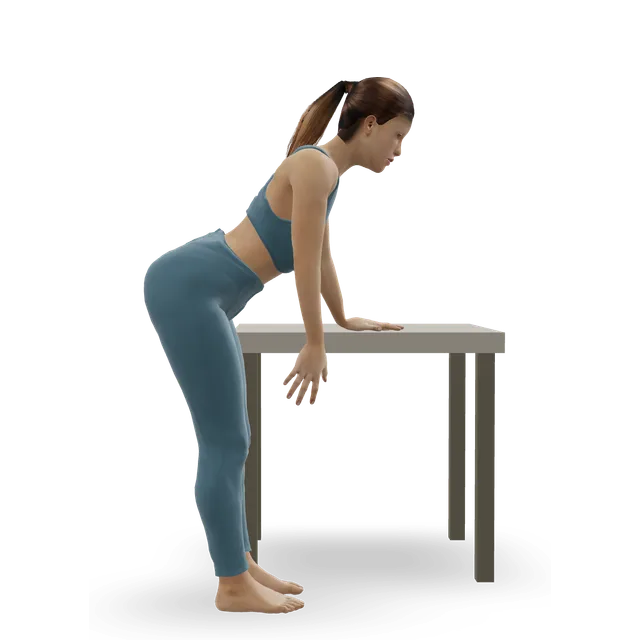
Training guide

How to do shoulder external rotations: band, cable, dumbbell or lying on your side, the rotator cuff, and how many

An external rotation turns your upper arm outwards with your elbow bent: the job of two of your rotator cuff muscles, the infraspinatus and teres minor. You can do it with a band or cable with your elbow at your side, lying on your side with a light dumbbell, or with your arm raised. Keep it light and smooth.

The research shows no single best version, and that heavier and lighter loads both work. It's a sensible part of a shoulder routine rather than a cure or a shield: exercise helps most shoulder pain, but more physiotherapy wasn't better than good advice and a home band programme, and the injury prevention evidence is for whole warm-up programmes.

This guide covers each version on the 3D figure, how heavy, how many, shoulder pain and injury prevention, and when to see someone.

The short version

Elbow at your side, turn the forearm out

With your elbow bent to a right angle and tucked at your side, turn your forearm out away from your body against a light band or cable, pause, and return slowly. It works the infraspinatus and teres minor, two of the four rotator cuff muscles.

Source 1

Elbow at your side first

NHS and sports-medicine programmes start with the elbow by your side, and add the raised-arm (90/90) versions later.

Sources 2, 3, 4

No version clearly wins

Lying on your side drew the most infraspinatus activity of seven versions in one study of 10 people, but in 30 people five versions didn't differ significantly. Pick the version you can do well.

Sources 5, 6

Light to moderate

At higher loads the deltoid takes a bigger share, but in people with rotator cuff pain, heavier and lighter 12-week programmes worked equally well. Choose a band or dumbbell you can turn smoothly 12 to 15 times.

Sources 7, 8

For shoulder pain, exercise helps, but more physio isn't better

Progressive resisted exercise beat placebo or no treatment, and exercise is the recommended first treatment; but in 708 NHS patients, up to six physiotherapy sessions of progressive exercise did no better than one advice session with a home band programme. Our shoulder pain guides have the plans.

Sources 9, 10, 11

How many

2 to 3 sets of 12 to 15 each arm, light, two or three times a week, as our shoulder routines do; an orthopaedic programme uses 3 days a week. Keep shoulder pain to about 5 out of 10, settled by your next session.

Source 12

What external rotation is, and the rotator cuff

The movement

With your elbow bent to a right angle, you turn your forearm outwards, away from your tummy, so your upper arm rotates in the shoulder socket, then return slowly. External rotation is also called lateral rotation.

Source 1

The rotator cuff

Four small muscles run from your shoulder blade to the top of your arm bone: the supraspinatus, infraspinatus, teres minor and subscapularis. Turning the arm out is the job of the infraspinatus and teres minor, with the back of the deltoid helping, and all four help keep the ball of the joint centred. The supraspinatus works more with the arm raised.

Sources 6, 13

External against internal rotation

Internal rotation turns the forearm in, across your tummy: the subscapularis, with your chest and lats. Our shoulder mobility and stability routine pairs both.

The versions on the figure

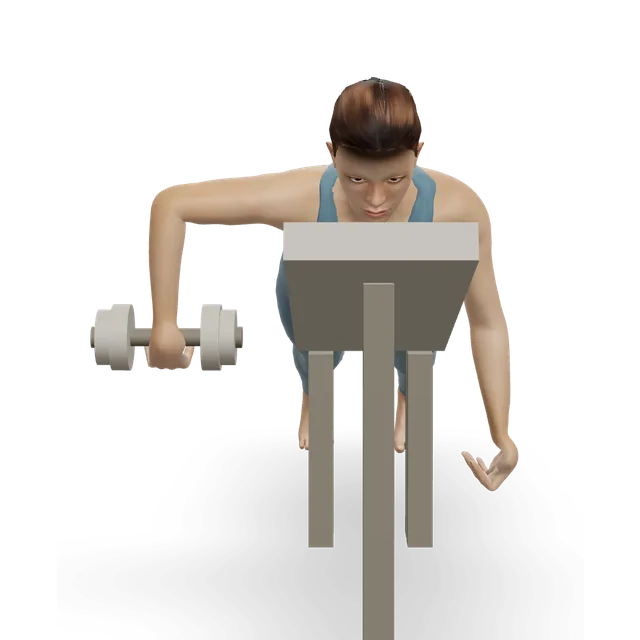
Standing with a band or cable, elbow at your side; lying on your side with a light dumbbell, on the floor or a bench; face down with your arm out at 90 degrees; standing with your arms out at 90 degrees (the 90/90, or Cuban rotation); and the Cuban press, which adds an overhead press.

What you need first

Nothing for the band version with your elbow at your side ("None beyond standing comfortably", its move page says). The raised-arm versions come once the elbow-at-side versions are pain-free.

Effort isn't growth

The percentages on this page come from EMG (electromyography: electrodes measuring how hard a muscle works over a few reps). Studies scale them differently, so they aren't comparable between studies, and they don't show what grows or what eases pain.

Sources 6, 14

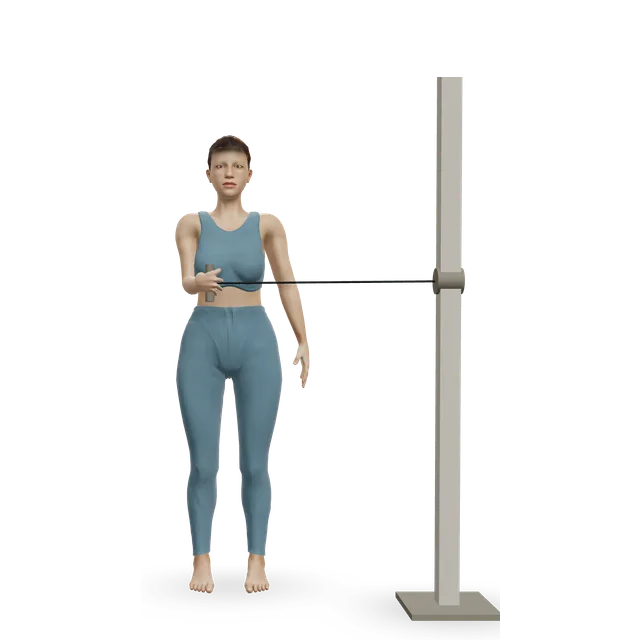
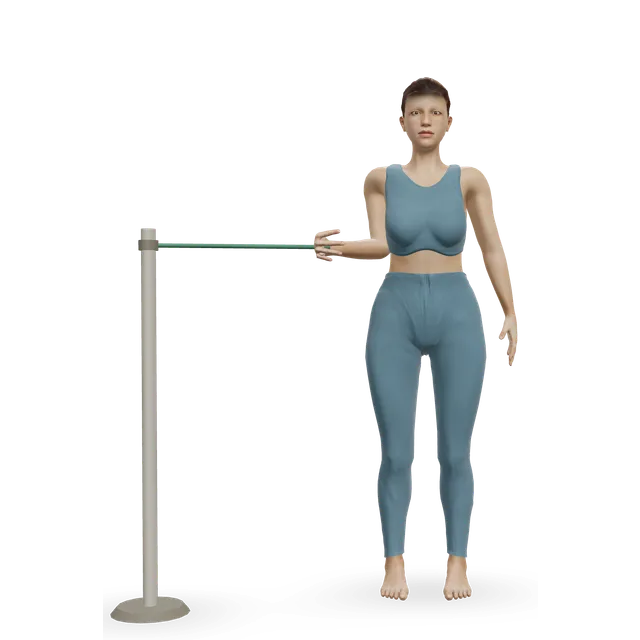
How to do a standing band external rotation, step by step

From the move page and the American Council on Exercise (ACE: the one-second pause); the pace, about 2 seconds each way, is editorial. The cable version is the same movement on a cable column at elbow height.

  1. Anchor a light band at elbow height (a closed door on the hinge side, or a post) and stand side-on to it, holding the band in the hand farther from the anchor.
  2. Tuck that elbow against your side, bent to a right angle, forearm across your tummy. A rolled towel between elbow and ribs helps it stay put.
  3. Keeping your elbow at your side and your wrist straight, turn your forearm out away from your body, as far as is comfortable.
  4. Pause for a second, then return slowly across the front, taking about as long as the turn out.
  5. Keep your shoulder down and your trunk still: don't twist your body to finish the turn.
  6. Do all your reps, then turn round and do the other arm.

Loading the 3D figure…

Gets into position, then repeats the movement. Technical checks passed; qualified exercise review is pending.

The movement on the figure: Standing band external rotation

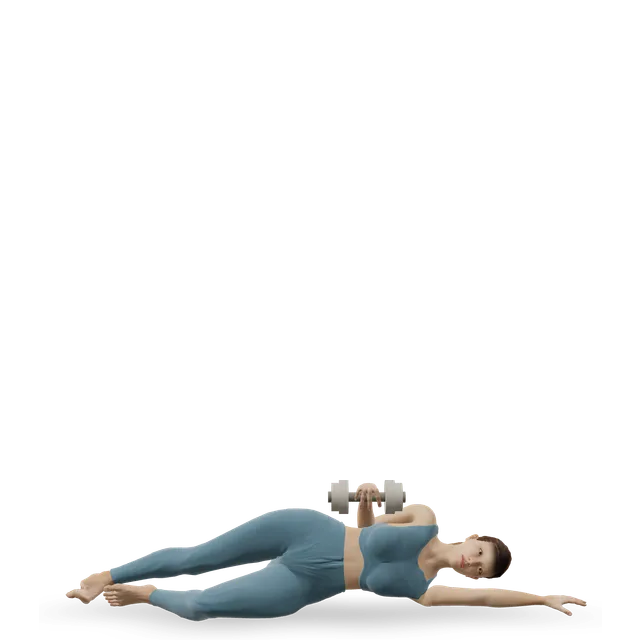
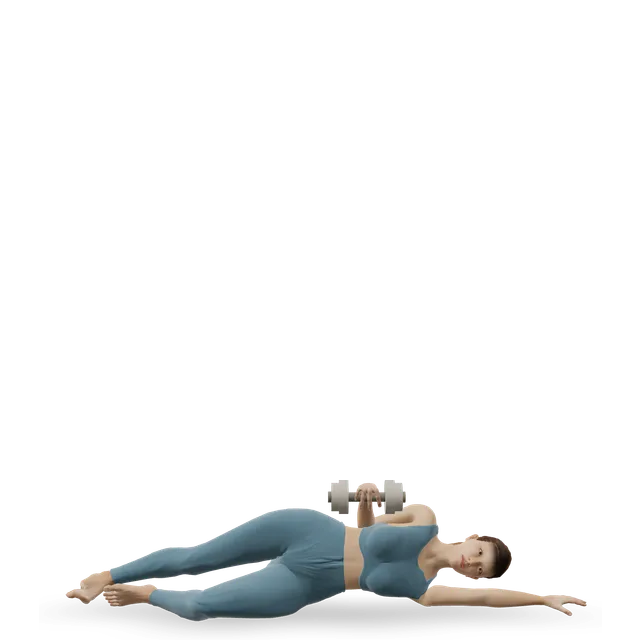
Lying on your side

The move page's steps and cues, with NHS inform's tin of beans. The bench version (its own move page) is the same exercise, easier to get on and off.

  1. Lie on your pain-free side, your head on your lower arm or a pillow.
  2. Tuck your top elbow against your ribs, bent to a right angle, with a light dumbbell or a tin of beans in that hand. A folded towel under the elbow helps keep it in place.
  3. Turn your forearm up until it points at the ceiling, your elbow staying against your ribs.
  4. Lower it slowly, and switch sides after the set.

Loading the 3D figure…

Gets into position, then repeats the movement. Technical checks passed; qualified exercise review is pending.

The movement on the figure: Side-lying external rotation

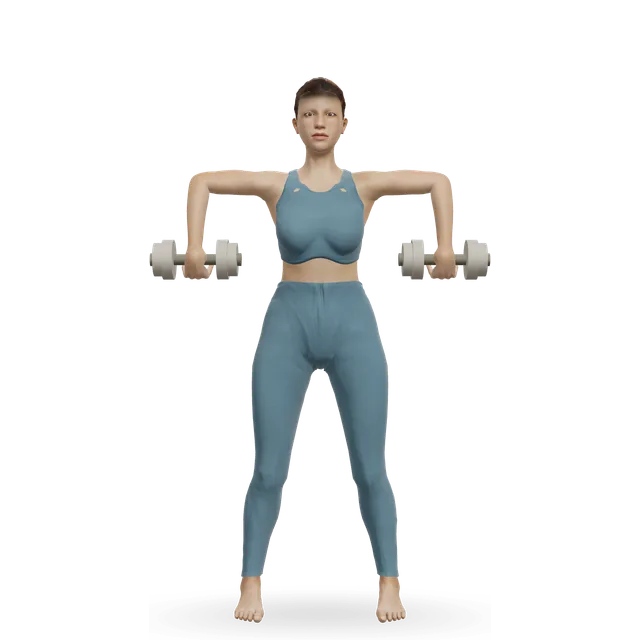
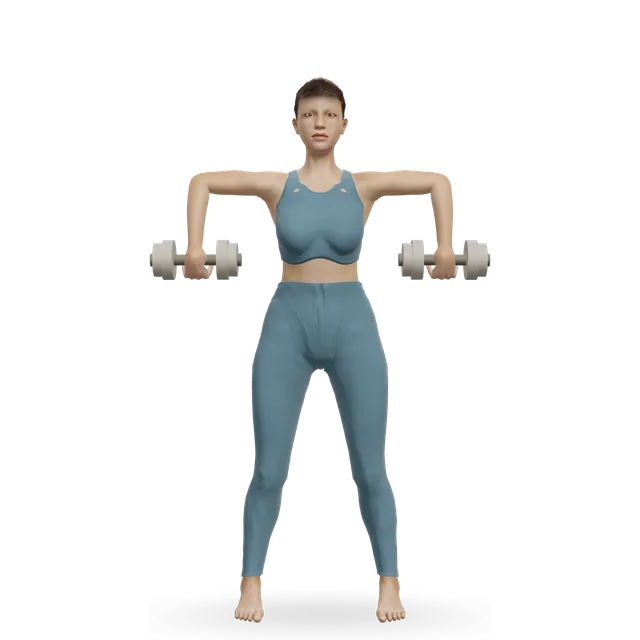
With your arm raised: the 90/90

The Cuban rotation's move page steps and cues. Face down on a bench (its own move page) the forearm turns up only to level. Only once the elbow-at-side versions are pain-free, and very light.

  1. Raise your upper arms out to shoulder height, elbows bent to a right angle and forearms hanging forward, holding very light weights or a band.
  2. Turn your forearms up until they point at the ceiling, your upper arms staying still and your elbows at shoulder height.
  3. Lower them slowly.

Loading the 3D figure…

Gets into position, then repeats the movement. Technical checks passed; qualified exercise review is pending.

The movement on the figure: Cuban rotation

Which version works best?

No clear winner for the infraspinatusMixed evidence

In 10 people, side-lying rotation drew the most infraspinatus (62% of maximum) and teres minor (67%) activity of seven versions. But in 30 people measured with fine-wire electrodes, five versions didn't differ significantly for the infraspinatus (28 to 38%), and in 13 men the band's angle made no significant difference. A review lists rotation at 0 and 90 degrees among the highest-activity rotator cuff exercises.

Sources 5, 6, 13, 15

What else works differsEmerging evidence

Standing rotation with the arm at 90 degrees drew much more supraspinatus and deltoid activity, while side-lying and standing with a towel kept the deltoid lower. A band rotation at 90 degrees worked every rotator cuff muscle above 20% of maximum.

Sources 6, 16

With rounded shouldersEmerging evidence

In 32 people with rounded shoulders, side-lying rotation gave the best balance of infraspinatus to rear-deltoid activity of the common versions tested.

Source 17

The towelEmerging evidence

A rolled towel between elbow and ribs didn't raise infraspinatus activity in two studies, and raising the arm lowered how well the infraspinatus was isolated in 10 people, though the lower part of the muscle worked harder with the arm raised in 20 people. Use the towel to keep your elbow in place: the Chartered Society of Physiotherapy's video does.

Sources 18, 19, 14, 20

So which?

Start with the band or side-lying version, elbow at your side; add the 90/90 versions later, if they're comfortable, as the move pages and professional progressions do. The one that you do well, regularly, is the best one (our view).

Sources 2, 3, 4

How heavy

Heavier loads bring in the deltoidMixed evidence

At 10 to 40% of maximum effort the infraspinatus did its biggest share of the work; at higher loads the deltoid took over, more so in people with impingement. In healthy people, though, all the rotator muscles rose together with load.

Sources 7, 21, 22, 23

Heavy and light worked equally in a trialEmerging evidence

In 100 people with rotator cuff tendinopathy, 12 weeks of heavier training (down to 6-rep maximums, 4 sets) and lighter training (20 to 25-rep maximums, 3 sets) improved function equally. One good trial.

Source 8

Dose reviews are uncertainMixed evidence

Reviews of exercise dose in rotator cuff pain are low to very low certainty and conflicting. Motor-control exercise slightly beat general exercise for disability, at moderate certainty.

Sources 24, 25

Light, slow training grew the muscleEmerging evidence

In 16 men, 8 weeks of light, slow side-lying rotation (3 sets of 10, three times a week) grew the infraspinatus by 7.3%, without a measured strength change. A moderate band drew more infraspinatus activity than a very light one in another study.

Sources 26, 13

Our starting point

A band or dumbbell you can turn smoothly 12 to 15 times with your elbow still at your side; studies used 0.5 to 2.5 kg or light bands. If your elbow lifts off, your trunk rolls or your shoulder shrugs, it's too heavy (our editorial rule).

External rotations and shoulder pain

Exercise is the first treatmentStrong evidence

For subacromial (rotator cuff related) shoulder pain, exercise is the recommended first treatment. A UK pathway suggests physiotherapy usually for 6 weeks, with a further 6 if it's improving, and NHS inform says to see a professional if the pain hasn't improved within 6 weeks.

Sources 10, 27, 28

Progressive exercise beat no exerciseEmerging evidence

Progressive resisted exercise beat placebo or no treatment by about 15 points out of 100 (low certainty); non-progressive exercise by 4, which wasn't significant. In another review, exercise beat no exercise for pain, and specific exercises beat general ones, though the evidence was very low quality.

Sources 9, 29

More physiotherapy wasn't better than a good startStrong evidence

In 708 NHS patients, up to six physiotherapy sessions of progressive exercise, focused on resisted outward rotation and arm raises 5 days a week, did no better over 12 months than one advice session with a band and home exercises. In a smaller trial, a single self-managed exercise matched usual physiotherapy.

Sources 11, 30

A specific programme and decisions for surgeryEmerging evidence

In 102 people with long-standing impingement on a waiting list for surgery, a specific rotator cuff and shoulder-blade programme (15 reps, 3 sets, twice a day for 8 weeks) changed how many chose surgery: 20% of the exercise group against 63% of the control group. Pain was allowed up to 5 out of 10 and had to settle before the next session.

Source 31

Older adultsEmerging evidence

Across 21 trials in middle-aged and older adults with rotator cuff related pain, exercise improved pain, function and range of movement, but strength gains were small and not significant.

Source 32

Our pain guides own the plans

Our shoulder impingement, rotator cuff tear, rotator cuff repair, frozen shoulder, calcific tendinitis and swimmer's shoulder guides have the staged plans. The NHS says to follow exercises from your GP or physiotherapist, not to make up your own strenuous exercises or use heavy gym equipment while your shoulder hurts, and to keep up shoulder exercises for 6 to 8 weeks to stop pain returning.

Sources 33, 34

Do they prevent injuries?

Whole warm-up programmes, mixed resultsMixed evidence

A shoulder warm-up programme (outward rotation strength, shoulder-blade strength, inward rotation range and upper-back mobility, 3 times a week) lowered the odds of shoulder problems in 660 elite handball players: 17% against 23% had problems (odds ratio 0.72), though substantial problems didn't differ significantly. Another, with outward rotation at 90 degrees among its five exercises, cut the shoulder injury rate by 56% in teenage players (hazard ratio 0.44). But a rubber-band programme made no difference in 579 players, and pooled across 3 trials the effect is uncertain (odds ratio 0.73, 0.45 to 1.17; low certainty).

Sources 35, 36, 37, 38

The effective programme didn't change rotation strengthEmerging evidence

The handball programme that worked didn't raise outward rotation strength more than usual training (+10% against +6%), and an 8-week rotation-only programme improved neither strength nor the outward-to-inward strength ratio. A youth baseball programme with no rotation strengthening also cut throwing injuries.

Sources 39, 40, 41

Weaker rotators and injury: an inconsistent linkMixed evidence

Weaker outward rotation went with more shoulder injuries in elite male handball players, youth players and professional pitchers, but not in a mixed-sex elite cohort of 329, and a review found only limited evidence.

Sources 42, 43, 44, 45, 46

In people who liftEmerging evidence

Weight trainers who strengthened their outward rotators had fewer signs of impingement and instability, and those with impingement had weaker outward rotators. Snapshot studies like these can't show cause.

Sources 47, 48, 49

How to use them

As part of a warm-up before throwing or pressing, and of a balanced upper-body routine with rows, face pulls and pressing, without promising they prevent injury. An expert consensus found prevention programmes cut upper-body injuries in female athletes, at very low certainty.

Source 50

The ladder: elbow at the side, then the arm raised

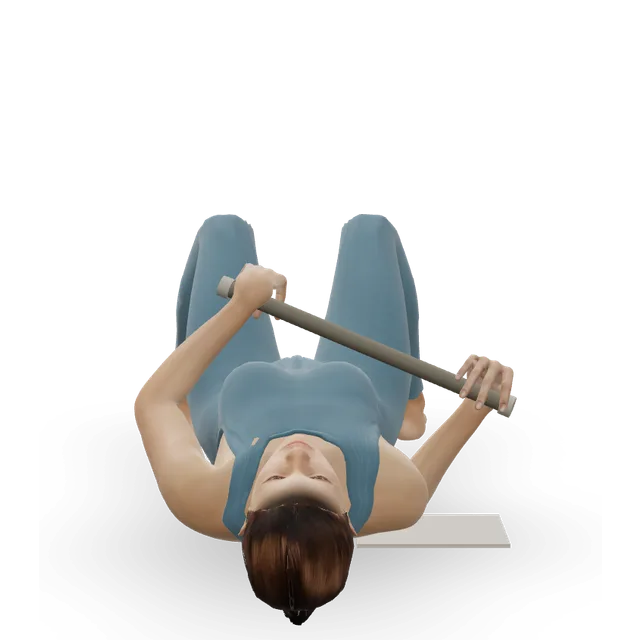
The stick-assisted rotation for a stiff or very irritable shoulder (10 slow pain-free reps twice a day, or 3 to 5 holds of 20 to 30 s once less irritable: its move page's editorial starting point). Standing band rotation, 2 × 12 to 15 each arm (our shoulder workout at home) or 2 rounds of 12 to 15 (our shoulder mobility and stability routine); the cable version, the same (our editorial suggestion). Side-lying on the floor, 2 × 8 with a tin of beans or nothing (our Pilates for shoulder pain workout); on a bench, 8 to 15 reps working up to 3 sets, and face down with the arm out, 3 × 8 to 15 with a light dumbbell (both their move pages' doses, from NHS Ayrshire & Arran); the Cuban rotation, 2 × 10, 5 s each way (our swimmers' shoulder routine); the Cuban press, 2 to 3 sets of 8 to 12 (its move page's editorial starting point).

Other versions, in words

No 3D demo for these.

Band or cable at 90 degrees

The standing rotation with your upper arm out at shoulder height, a band anchored in front. Teach it over the Cuban rotation and the face-down version, once the elbow-at-side versions are easy.

Isometric holds

Press the back of your wrist into a wall or a partner's hand, elbow at your side, and hold, without moving. Useful when moving hurts (our suggestion).

Band pull-apart into a rotation

A pull-apart that finishes with the forearms turned up; our band pull-apart guide covers it.

With a towel under the elbow

The same exercise as the figure, with a rolled towel between elbow and ribs to keep the elbow in place.

Common mistakes

Your elbow drifting away from your side

Tuck a rolled towel between elbow and ribs as a reminder.

Twisting your trunk or rolling back to finish

Use a smaller range and a lighter band.

Shrugging

Shoulder down and back, chin level.

Going heavy

At high efforts the deltoid takes over. Choose a weight you can turn smoothly 12 to 15 times.

Source 7

Snapping back

Return slowly, about as long as the turn out.

Pushing into a pinch at the end

Stop short of it: turn only as far as is comfortable.

Letting the elbows drop in the 90/90

Keep your elbows at shoulder height, as the move page's cue says.

How many and how often

Starting points from our routines and from NHS and orthopaedic programmes. The band, cable and floor side-lying move pages give no dose.

Band or cable, elbow at your side

2 to 3 sets of 12 to 15 each arm: our shoulder workout at home uses 2 × 12 to 15, our shoulder routine 2 rounds of 12 to 15, and our impingement plan 2 to 3 × 15.

Side-lying

2 to 3 sets of 12 to 15, lowering over about 3 seconds, as our impingement plan does (3 × 15). NHS inform builds from 2 sets of 8 to 2 sets of 15; the bench version's move page gives 8 to 15 reps, working up to 3 sets.

Sources 51, 2

Arm raised (90/90)

2 sets of 10, 5 seconds each way, light, as our swimmers' routine does; the face-down version's move page gives 3 × 8 to 15, light.

Rest

About 60 seconds, or none in a circuit, as in our routines.

How hard

Smooth reps, stopping 2 or 3 short of failure (the last set 1 to 2 short), and never through sharp pain: our editorial rule, in line with our plans.

How often

Two or three times a week. An orthopaedic programme uses 3 days a week, then 2 to 3 to maintain; our shoulder routine runs 3 times a week, like the handball programme it's built on. As a warm-up before throwing or pressing, 1 or 2 sets.

Sources 12, 35

Progressing

Add reps up to 15, then slow the return, then move to the next band or 0.5 to 1 kg more. The orthopaedic programme builds from 3 × 8 to 3 × 12.

Source 12

Every day?

Light daily sets are fine, and some NHS and trial programmes are daily, but for a healthy shoulder two or three times a week is plenty.

Sources 51, 31

Moves that go with it

From our shoulder mobility and stability routine: band internal rotations, 2 rounds of 12 to 15 each arm; scaption raises, 10 to 12, thumbs up, to shoulder height, lowering over 3 s; scapular push-ups, 10; Y-T-W raises, 5 of each shape; band pull-aparts, 15; and the cross-body shoulder stretch, 2 holds of 30 s each side. Face pulls, 3 sets of 12 to 20 (our face pull guide); band rows, 3 sets of 10 to 15 (the move page's dose); shoulder circles, 3 slow circles each way with each arm (the move page's dose), to warm up.

Workouts to follow

The shoulder mobility and stability routine is the band rotator cuff session, built on the parts of the handball warm-up programme; the shoulder workouts use band and Cuban rotations; the throwing, swimming, Pilates and yoga sessions are for those sports and for sore shoulders.

Shoulder mobility and rotator cuff routine (with a band)

A 25-minute band routine for healthy shoulders: move the shoulder and upper back through their range, then strengthen the rotator cuff and shoulder blades.

25 minBeginner12 movesA wall, A band

Shoulder workout at home: presses, lateral raises and rear-shoulder work

A 30-minute home shoulder workout with dumbbells or a band: presses, lateral raises for the side of the shoulder, and rear-shoulder and rotator cuff work.

30 minBeginner8 movesA band, A dumbbell

Shoulder workout

A shoulder workout for all three heads: overhead press, lateral raises, reverse flyes, face pulls and rotations.

40 minIntermediate8 movesA band, A barbell

Throwing arm strength workout

A 35-minute session for baseball and softball players: the five Shoulder Control exercises, rotator cuff and forearm work, medicine-ball throws and legs.

35 minIntermediate17 movesA dumbbell, A cable machine

Shoulder care routine for swimmers

A 20-minute rotator cuff and shoulder-blade routine for swimmers, from a 12-week trial in competitive swimmers, plus a daily cross-body stretch.

20 minBeginner9 movesA wall, A dumbbell

Step-by-step Pilates for a sore shoulder: a 20-minute class

A 20-minute Pilates class for a sore shoulder: gentle range first, then shoulder-blade and rotator cuff strength, then light weight on the arms, in steps.

20 minBeginner15 movesA bench or box, Other / check instructions

Yoga for shoulder pain: a 20-minute sequence that builds up weight on the arms

A 20-minute yoga sequence for shoulder pain: gentle movement, standing poses with the arms low, shoulder strength, and weight on the arms built up from the wall.

20 minBeginner16 movesA bench or box, A wall

Plans that use it

This plan's shoulder day uses Cuban rotations.

Who should change it

After a dislocation, or a shoulder that feels loose

Keep your elbow by your side and stop short of any feeling of slipping. With the shoulder slipping forwards, a rehabilitation protocol says not to push into outward rotation or into moving the raised arm backwards, and after a dislocation it limits rotation with the arm raised to 90 degrees to 65 to 70 degrees for about 4 to 8 weeks. So leave the 90/90 versions until your physiotherapist clears them. Your doctor or physiotherapist will advise when you can return to sport.

Sources 3, 52

After surgery

After stabilisation surgery or a rotator cuff repair, follow your surgical team's protocol; our shoulder stabilisation surgery and rotator cuff repair guides explain the stages.

Frozen shoulder

Follow our frozen shoulder guide, which sets its own pain rules for each stage; the stick-assisted version is the gentler start.

Shoulder pain

Pain up to about 5 out of 10 that is back to its usual level by your next session is acceptable, as our shoulder pain guides say; NHS inform uses 0 to 5 and "no worse the morning after". If it isn't, go lighter or smaller, not to nothing. Sharp, pinching pain, or pain that's worse after the session, is not acceptable.

Sources 51, 31

Pregnancy

Standing band and cable rotations suit pregnancy if you already exercise. Later in pregnancy the NHS advises avoiding lying flat on your back for more than a few minutes; side-lying is fine, but the stick-assisted version lies on your back.

Source 53

Warning signs

Stop and get medical help

If you get chest pain or pressure, feel faint or dizzy, are unusually breathless, or your heart races or beats irregularly during exercise, as our plans advise. The American Heart Association says these need immediate medical evaluation.

Source 54

Call 999 (911 in the US)

For chest pain that comes on suddenly and doesn't go away, feels tight or like squeezing, spreads to your arms, neck, jaw, stomach or back, or comes with sweating, feeling sick, light-headedness or breathlessness; arm pain that comes on suddenly with pressure, heaviness or squeezing across your chest; severe difficulty breathing, or a chest that feels tight or heavy; someone who faints while exercising; palpitations that don't go away, or come with chest pain, shortness of breath or feeling faint; or a headache that starts suddenly and is extremely painful, especially while lifting or straining. The NHS says a bleed on the brain may be more likely when lifting something heavy. Don't drive yourself to A&E.

Arm pain that comes with pressure, heaviness or squeezing across your chest is a 999 call, not a rotator cuff problem.

Sources 55, 56, 57, 58, 59, 60, 61, 62

Your shoulder

Ask for an urgent GP appointment or get help from NHS 111 for sudden or very bad shoulder pain, an arm you can't move, a shoulder that has changed shape or is badly swollen, pins and needles that don't go away, no feeling in your arm or shoulder, an arm or shoulder that's hot or cold to touch, pain after an injury or a fall, severe pain in both shoulders, or feeling feverish or unwell. Go to A&E if, after an injury, you can't move your arm or your shoulder looks out of place or has changed shape. See a GP if shoulder pain is getting worse or hasn't improved after 2 weeks.

Sources 33, 52

An ache over the shoulder blade with weakness

Or a muscle that looks thinner: see a GP or physiotherapist, as our back of shoulder pain guide says, because a nerve can be involved.

Weakness after an injury

Sudden weakness lifting or turning your arm after a fall or a wrench needs prompt checking: a UK pathway says an acute rotator cuff tear after an injury needs urgent referral. See a GP promptly rather than trying to strengthen it.

Source 27

Before you start

Speak to your GP first if you haven't exercised for some time or have medical conditions or concerns, as the NHS advises. Get advice before hard, explosive or straining work if your blood pressure is uncontrolled (140/90 or higher at a clinic, or 135/85 at home), or you have heart disease or chest pain when you're active, a pacemaker or defibrillator, diabetic eye disease, glaucoma, a hernia, recent eye or tummy surgery, or you're pregnant, as our breathing guide lists.

After a recent shoulder dislocation or shoulder surgery, follow our shoulder dislocation guide or your surgical team first.

Source 63

Myths

"External rotations should be done heavy"Emerging evidence

At high efforts the deltoid takes over, and in rotator cuff pain heavier and lighter programmes did equally well. Choose a weight you can turn smoothly 12 to 15 times.

Sources 7, 21, 8

"Rotator cuff work must be feather-light"Mixed evidence

Light and heavy did equally well in the trial, and a moderate band drew more infraspinatus activity than a very light one. Light to moderate is the sensible range.

Sources 8, 13

"Rotator cuff work fixes every shoulder"

Exercise is the first treatment for rotator cuff related pain, but more supervised sessions didn't beat good advice and a home band programme. Weakness after an injury, a shoulder that has changed shape, or feeling feverish and unwell need checking first.

Sources 10, 11, 27, 33

"External rotations prevent shoulder injuries"Mixed evidence

Whole warm-up programmes cut shoulder problems in some handball trials but not others, the pooled effect is uncertain, and the effective programme didn't change rotation strength. Nothing has tested the exercise alone.

Sources 35, 37, 38, 39

"Lying on your side is the only rotation that works the infraspinatus"Mixed evidence

It led in one study of 10 people; in 30 people five versions were similar.

Sources 5, 6

"A towel under the elbow makes the rotator cuff work harder"Emerging evidence

It didn't raise infraspinatus activity in two studies. Use it to keep your elbow in place.

Sources 18, 19

"External rotations fix rounded shoulders"

No trial has tested them for posture. Our rounded shoulders guide's evidence is for whole strengthening programmes, and posture isn't a reliable cause of shoulder pain.

Questions people ask

How do you do a shoulder external rotation?

With your elbow bent to a right angle and tucked at your side, turn your forearm out away from your body against a light band or cable, pause, and return slowly. Keep your elbow by your side and your trunk still.

What muscles does external rotation work?

Mainly the infraspinatus and teres minor, two of your four rotator cuff muscles, with the back of the shoulder helping. With your arm raised, the supraspinatus and deltoid work more.

Which external rotation exercise is best?

No single version clearly wins. Lying on your side drew the most infraspinatus activity in one small study, but in a larger one five versions were similar. Start with the band or side-lying version, elbow at your side.

Should I use a towel under my elbow?

If it helps keep your elbow in place, yes. It didn't make the rotator cuff work harder in two studies.

How heavy should external rotations be?

Light to moderate: a band or dumbbell you can turn smoothly 12 to 15 times. At high efforts the deltoid takes over, and in a trial in shoulder pain, heavier and lighter programmes worked equally well.

How many sets and reps of external rotations should I do?

2 to 3 sets of 12 to 15 each arm, two or three times a week. NHS and orthopaedic programmes use similar doses.

Can I do rotator cuff exercises every day?

Light sets are fine, and some NHS and trial programmes are daily. For a healthy shoulder, though, two or three times a week is plenty.

Do external rotations help shoulder pain?

Exercise is the first treatment for most rotator cuff related shoulder pain, and progressive programmes help. But in a large NHS trial, extra physiotherapy sessions did no better than one advice session with a home band programme. Our shoulder pain guides have the plans.

Do external rotations prevent shoulder injuries?

Warm-up programmes that include them cut shoulder problems in some handball trials, but not all, and the effect pooled across trials is uncertain. Nobody has tested the exercise on its own.

Why does external rotation hurt the front of my shoulder?

Often the band is too heavy, the range too big or the elbow drifting. Go lighter, turn only as far as is comfortable and keep pain to about 5 out of 10, settled by your next session. See a GP if shoulder pain is getting worse or hasn't improved after 2 weeks.

Can I do external rotations after a dislocation?

Usually yes, with your elbow by your side and stopping short of any feeling of slipping. Leave the raised-arm (90/90) versions until your physiotherapist clears them.

External rotations or face pulls?

Both train the back of the shoulder. External rotations target the rotator cuff directly; face pulls add a high row for the upper back. Many programmes use both, and our face pull guide covers those.

Sources

  1. American Council on Exercise · Rotator cuff external rotation (exercise library, rated beginner)
  2. NHS Ayrshire & Arran · Exercises for painful and weak shoulders, levels 1 to 3 (physiotherapy exercise booklet)
  3. Wilk 2006 · Non-operative rehabilitation for traumatic and atraumatic shoulder instability (rehabilitation protocol, N Am J Sports Phys Ther)
  4. Reinold 2010 · The shoulder in overhead throwing athletes, part 2: injury prevention and treatment (clinical review, Sports Health)
  5. Reinold 2004 · Rotator cuff and deltoid activity in seven external rotation exercises in 10 people (muscle activity study, J Orthop Sports Phys Ther)
  6. Alizadehkhaiyat 2015 · Shoulder muscle activity in five external rotation exercises in 30 adults (muscle activity study, Orthop J Sports Med)
  7. Bitter 2007 · Infraspinatus and deltoid in external rotation at 10, 40 and 70% of maximum, in 18 people (muscle activity study, J Shoulder Elbow Surg)
  8. Ingwersen 2017 · High-load against low-load strength training for 12 weeks in 100 people with rotator cuff tendinopathy (randomised trial, Orthop J Sports Med)
  9. Naunton 2020 · Progressive resisted or non-progressive exercise in rotator cuff related shoulder pain: 7 trials (meta-analysis, Clin Rehabil)
  10. Pieters 2020 · Physical therapy for subacromial shoulder pain: an update of 16 systematic reviews (umbrella review, J Orthop Sports Phys Ther)
  11. Hopewell 2021 · Progressive exercise against one advice session for rotator cuff pain in 708 people: the GRASP trial (randomised trial, Lancet)
  12. AAOS OrthoInfo · Rotator cuff and shoulder conditioning program (patient exercise programme, American Academy of Orthopaedic Surgeons)
  13. Sung 2026 · Arm angle and band resistance in standing external rotation in 13 men (muscle activity study, Sci Rep)
  14. Whittaker 2022 · Regional infraspinatus and supraspinatus activity in standing external rotation in 20 people (muscle activity study, Sports Health)
  15. Escamilla 2009 · Shoulder muscle activity in common rehabilitation exercises (review, Sports Med)
  16. Myers 2005 · Rotator cuff activity in 12 resistance-tubing exercises in 15 men (muscle activity study, J Athl Train)
  17. Soylu 2025 · Infraspinatus activity in four external rotation exercises in 32 people with rounded shoulders (muscle activity study, Medicina)
  18. Ryan 2018 · Infraspinatus isolation in external rotation at seven arm angles, with and without a towel, in 10 people (muscle activity study, J Sport Rehabil)
  19. Sakita 2015 · External rotation with and without a towel under the arm in 20 men (muscle activity study, J Sport Rehabil)
  20. Chartered Society of Physiotherapy · Video exercises for shoulder pain (patient information, reviewed July 2020)
  21. Clisby 2008 · Infraspinatus and deltoid in external rotation in 14 people with shoulder impingement (muscle activity study, J Shoulder Elbow Surg)
  22. Dark 2007 · Shoulder muscle recruitment in rotator cuff exercises at three intensities, in 15 people (muscle activity study, Phys Ther)
  23. Jo 2015 · Load, the external rotators and the front of the shoulder in face-down external rotation in 20 women (lab study, J Phys Ther Sci)
  24. Malliaras 2020 · Higher against lower dose exercise in rotator cuff tendinopathy: 3 trials (systematic review, Arch Phys Med Rehabil)
  25. Lafrance 2024 · Exercise for rotator cuff related shoulder pain by type and dose: 22 trials (meta-analysis, J Orthop Sports Phys Ther)
  26. Matsumura 2023 · Eight weeks of light, slow side-lying external rotation in 16 men (randomised trial, Phys Ther Res)
  27. Kulkarni 2015 · Subacromial shoulder pain: the BESS/BOA patient care pathway (UK guideline, Shoulder Elbow)
  28. NHS inform · Subacromial pain syndrome (NHS Scotland patient information)
  29. Steuri 2017 · Exercise, manual therapy and medical treatment for shoulder impingement (meta-analysis, Br J Sports Med)
  30. Littlewood 2016 · A single self-managed exercise against usual physiotherapy for rotator cuff tendinopathy: the SELF trial (randomised trial, Clin Rehabil)
  31. Holmgren 2012 · Specific exercise and the need for surgery in 102 people with long-standing impingement (randomised trial, BMJ)
  32. Vico-Rodríguez 2026 · Exercise for rotator cuff related shoulder pain in middle-aged and older adults: 21 trials (meta-analysis, BMC Musculoskelet Disord)
  33. NHS · Shoulder pain (past its review date: reviewed May 2023, review due May 2026)
  34. NHS · Shoulder impingement
  35. Andersson 2017 · A shoulder injury prevention programme in 660 elite handball players (cluster-randomised trial, Br J Sports Med)
  36. Asker 2022 · Shoulder and knee exercise programmes in adolescent elite handball players (three-armed cluster-randomised trial, Sports Med Open)
  37. Achenbach 2022 · A stretching and rubber band programme and shoulder injuries in 579 handball players (cluster-randomised trial, BMJ Open Sport Exerc Med)
  38. Yonneau 2025 · Shoulder injury prevention programmes in handball: 5 trials, 1,872 players (meta-analysis, BMJ Open Sport Exerc Med)
  39. Fredriksen 2020 · Does an effective shoulder programme change shoulder strength and range? 57 youth handball players (randomised trial, Scand J Med Sci Sports)
  40. Fredriksen 2021 · Eight weeks of external rotation strength training in 92 youth handball players (randomised trial, J Orthop Sports Phys Ther)
  41. Sakata 2019 · A stretching, mobility and balance programme and throwing injuries in 237 young baseball players (randomised trial, Am J Sports Med)
  42. Clarsen 2014 · Risk factors for shoulder injury in 206 elite male handball players (cohort study, Br J Sports Med)
  43. Achenbach 2020 · External rotation strength and shoulder injury in 138 youth elite handball players (cohort study, Knee Surg Sports Traumatol Arthrosc)
  44. Byram 2010 · Preseason shoulder strength and injury in professional baseball pitchers (cohort study, Am J Sports Med)
  45. Andersson 2018 · Risk factors for shoulder injury in 329 elite handball players, women and men (cohort study, Br J Sports Med)
  46. Asker 2018 · Risk factors for, and prevention of, shoulder injuries in overhead sports: 17 studies (systematic review, Br J Sports Med)
  47. Kolber 2013 · Signs of shoulder instability and looseness in 123 weight trainers and 36 non-lifters (cross-sectional study, J Strength Cond Res)
  48. Kolber 2014 · Signs of shoulder impingement in 77 men who lift (cross-sectional study, J Strength Cond Res)
  49. Kolber 2017 · Shoulder strength and range in 55 weight trainers with and without impingement (cross-sectional study, J Strength Cond Res)
  50. Heming 2025 · Prevention strategies and risk factors for upper-limb injury (expert consensus with reviews, Br J Sports Med)
  51. NHS inform · Exercises for shoulder problems (NHS Scotland patient information)
  52. NHS · Dislocated shoulder
  53. NHS · Exercise in pregnancy
  54. Paluch 2024 · Resistance exercise training with and without cardiovascular disease: 2023 update (American Heart Association scientific statement, Circulation)
  55. NHS · Chest pain (past its review date: reviewed August 2023, review due August 2026)
  56. NHS · Heart attack
  57. NHS · Elbow and arm pain
  58. NHS · Shortness of breath
  59. NHS · Fainting
  60. NHS · Heart palpitations
  61. NHS · Headaches
  62. NHS · Subarachnoid haemorrhage
  63. NHS · Physical activity guidelines for adults aged 19 to 64

Exercise education, not a personal prescription, and clinical review of these guides is pending. Check with a GP before starting hard training if you have a heart condition, chest pain, dizziness or breathlessness when active, and stop for sharp or increasing pain. Health disclaimer.