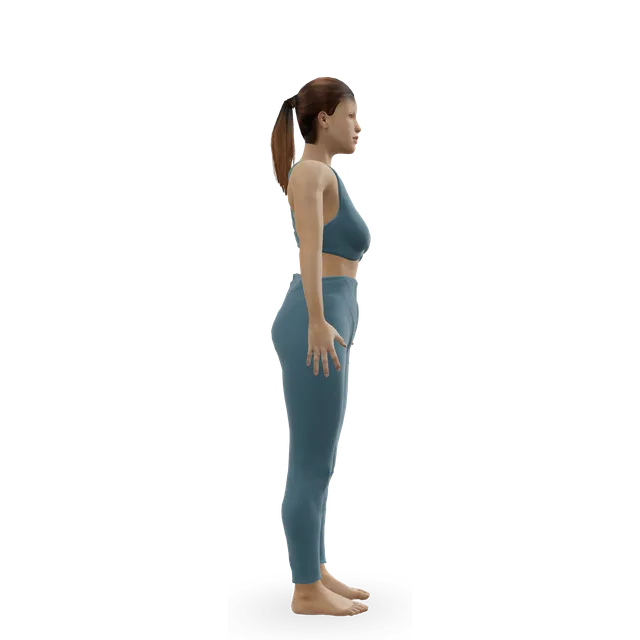
Training guide

How to do medicine ball slams: the ball, the overhead reach and the slam, your back, and how many

A medicine ball slam is a fast, whole-body throw: you reach a ball overhead as you stand tall, then slam it into the floor in front of you as your hips and trunk fold. Use a ball that doesn't bounce, start light, and keep every slam crisp.

Slams are popular and almost unstudied. There's one small lab study of the slam itself, no measurement of which muscles work or how much they load your back, and no trial of slams on their own.

This guide says what that research shows, teaches the steps on the 3D figure, and covers choosing a ball, your back and shoulders, slams for power and for fitness, how many to do, and a follow-along workout.

The short version

Reach tall, slam down, pick it up

Lift the ball overhead as your whole body extends, then throw it down hard into the floor just in front of your feet as your hips and trunk fold, and pick it up with a squat or a hinge. The American Council on Exercise (ACE) rates it intermediate.

Source 1

Use a ball that doesn't bounce

A slam ball is filled with sand or similar so it stays put; a bouncy medicine ball slammed hard can come back up at your face. ACE asks for plenty of space with a bouncing ball and a solid, stable floor for a dead one. Anything that hits your eye at high speed is an A&E trip.

Sources 1, 2

Start light

In the one lab study of the slam, ball speed fell from 12.5 m/s with a 2 kg ball to 9.0 m/s with 8 kg. The International Sports Sciences Association (ISSA) suggests starting with 4 to 8 lb (about 2 to 4 kg). Our editorial starting point: a ball you can slam crisply 8 to 10 times, for most adults 3 to 6 kg.

Sources 3, 4

The evidence is thin

One lab study of 13 male swimmers, and two studies of children's heart rate in medicine-ball circuits, where 30-second slam bouts reached about 89 to 92% of peak heart rate. We found no study of the muscles slams work, the load on your back or their energy cost in adults, and no trial of slams on their own.

Sources 3, 5, 6

A whole-body drill, not a core exercise

ACE lists the back, hips, legs and shoulders as the targets, not the abs, and slam speed tracked lat strength. Call it a whole-body power and conditioning drill; core training in general gives only marginal performance benefits.

Sources 1, 3, 7

How many

For power, 3 to 5 sets of 5 fast slams early in the session, resting 60 to 90 s; for fitness, 20 to 30 s of slams with 30 to 40 s easy, for 6 to 10 rounds. The National Academy of Sports Medicine (NASM) uses 3 to 5 low-rep sets for power work; the reps, rest and intervals are our editorial starting point. End a set when the slams slow down or your back takes over.

Source 8

What a medicine ball slam is

The exercise

Standing with your feet about shoulder-width apart, you raise a ball overhead as your whole body extends, then throw it down into the floor just in front of your feet as your hips and trunk fold, then pick it up and repeat. ACE's version drops "your weight back into your hips" as you slam.

Source 1

Coaching bodies disagree on details

ACE leans back a little at the top and picks the ball up with a hinge; ISSA says "Don't lean back and overextend your spine" and picks it up with a squat. Either pick-up works if you don't round over the ball; we keep any lean at the top small.

Sources 1, 4

One arm

The one-arm slam winds the ball up overhead in one hand and slams it down across your body from a staggered stance. Its move page puts it after the two-hand slam.

What it is, and isn't

A fast, whole-body throw: power work when done in short, crisp sets, as NASM's core power level does, and conditioning when done in timed rounds. It's a throw, not a jump, but it's often grouped with plyometrics.

Sources 8, 5

What you need first

The chest push (the move page's prerequisite), a comfortable overhead reach, and a hip hinge or squat to pick the ball up. A clinical commentary puts two-hand throws before one-hand throws, and chest throws before overhead ones.

Source 9

Choosing a ball

Slam ball, medicine ball or wall ball

A slam ball has a soft shell and is filled with sand or similar so it doesn't bounce; a classic medicine ball is firmer and often bounces; a wall ball is large and soft, for throwing at a target (our description; no study compares them). The move page's cue is "Use a ball that doesn't bounce"; ACE allows either, with plenty of space for a bouncing ball.

Source 1

How heavyEmerging evidence

In 13 male swimmers, release speed fell from 12.5 m/s with a 2 kg ball to 9.0 m/s with 8 kg, and the 4 kg ball gave the most repeatable results. In a backward overhead throw, power didn't change between 2.7 and 5.5 kg balls in 31 women. ISSA starts people with 4 to 8 lb.

Sources 3, 10, 4

Our starting point

A dead-bounce slam ball you can slam crisply 8 to 10 times: for most adults 3 to 6 kg to start, heavier only if the slam stays fast. This is our editorial starting point, not a tested dose. Coaching pages' "20 to 40 lb for men" and "10 to 20 kg for most people" aren't sourced.

The floor and the space

A solid floor or a mat, clear space around you, and nobody close. Slam a hard ball onto a hard floor and it may bounce or roll unpredictably.

Source 1

How to do a medicine ball slam, step by step

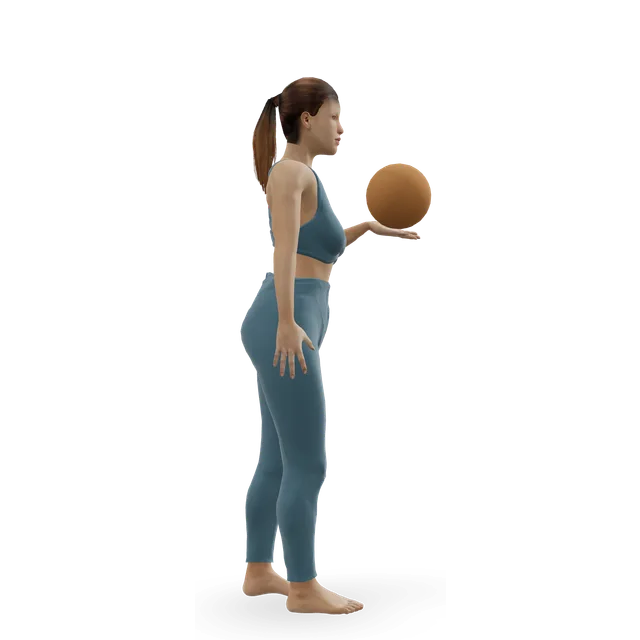
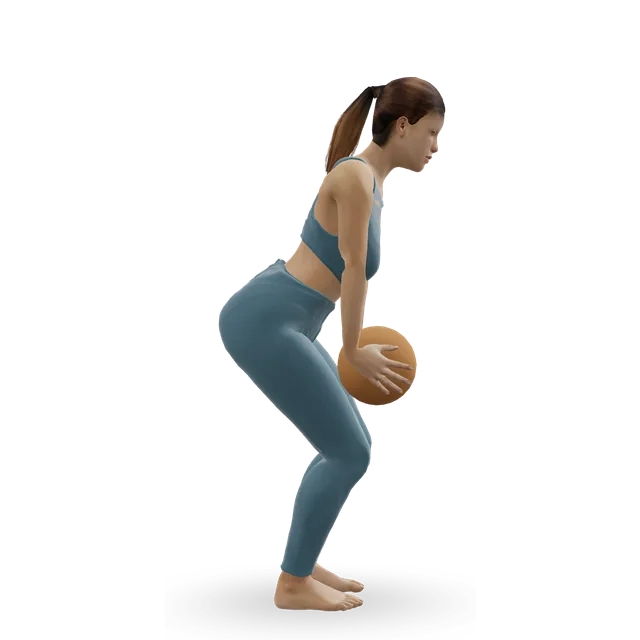
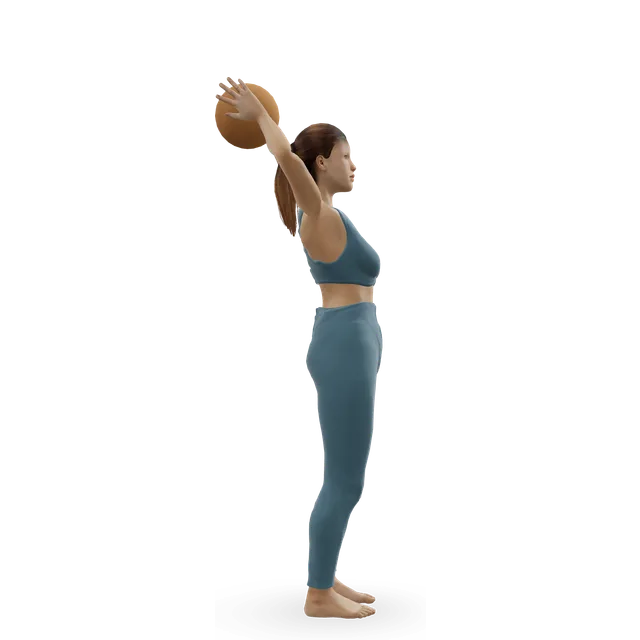
From the move page, ACE and ISSA; the distance in front of your feet and the breathing are editorial. The figure keeps the ball in its hands to show the movement; with a slam ball you let go, and pick it up once it has stopped.

  1. Use a slam ball that doesn't bounce, on a solid floor or a mat, with space around you.
  2. Stand with your feet about shoulder-width apart, holding the ball in both hands at your chest.
  3. Lift it overhead as you rise onto the balls of your feet and straighten your hips and knees, arms long but not locked. Keep your ribs down rather than leaning back.
  4. Throw it down hard into the floor about a foot in front of your feet, pulling with your arms and folding at the hips as your knees bend. Breathe out sharply as you slam.
  5. Let the ball stop. Squat or hinge to pick it up with a long back, the ball close to you, and stand up to reset.

Loading the 3D figure…

Gets into position, then repeats the movement. Technical checks passed; qualified exercise review is pending.

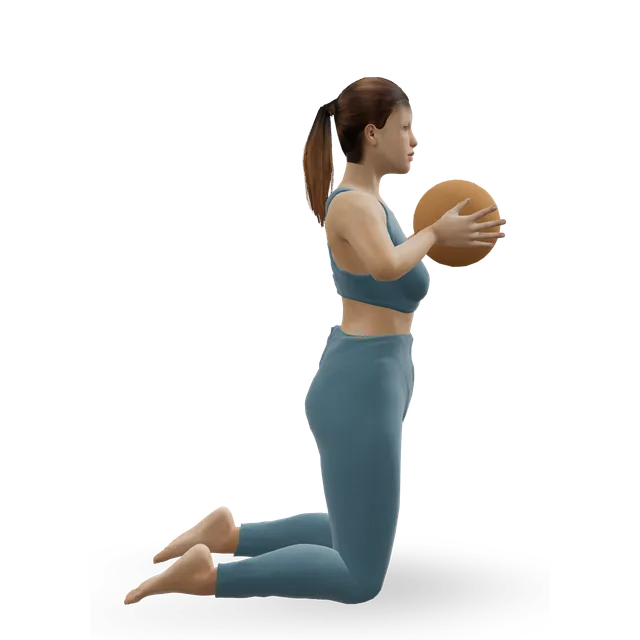
The movement on the figure: Medicine-ball slam

One arm

The move page's steps and cues. Learn the two-hand slam first; use a lighter ball than for two hands (our suggestion).

  1. Stand in a staggered stance, a slam ball in one hand.
  2. Wind it up overhead as your body extends, the free arm out for balance.
  3. Slam it down hard across your body as your trunk folds; pick it up and repeat, then change arms.

Loading the 3D figure…

Gets into position, then repeats the movement. Technical checks passed; qualified exercise review is pending.

The movement on the figure: One-arm medicine-ball slam

What the evidence says

One lab study of the slam itselfEmerging evidence

In 13 male swimmers, slam speed fell as the ball got heavier, the 4 kg ball was the most repeatable, and speed tracked lat pulldown strength (r = 0.56 to 0.73) and the second, arms-and-shoulders half of the movement. One small study of trained men.

Source 3

Heart rate climbs fastEmerging evidence

In two studies of 14 children each, 30-second slam bouts with a 2.3 kg ball at the end of a medicine-ball circuit reached about 89 to 92% of peak heart rate and 60 to 64% of peak oxygen uptake, with no injuries. Slams always came last, so fatigue from the rest of the circuit is mixed in.

Sources 5, 6

No adult energy cost

The 2024 Compendium of Physical Activities, the standard list of energy costs, has no code for slams or medicine-ball work; the nearest are circuit training and high-intensity interval training. We found no adult study.

Source 11

As a warm-upEmerging evidence

In 24 youth swimmers, 3 sets of 5 slams followed by 4 minutes' rest made a 50 m swim 1.6% faster. Slams also appear in training packages that worked, such as an 8-week functional programme in male students, but their own share can't be separated.

Sources 12, 13

Medicine-ball training and throwingMixed evidence

Medicine-ball training raised throwing speed by 14% against 3.7% in 28 female handball players, and rotational strength in 49 baseball players. Upper-body jump and throw training improved medicine-ball throws at low certainty, but a handball review found medicine-ball training alone unproven for throwing. None of these tested slams.

Sources 14, 15, 16, 17

Your shoulders work hard in overhead throwsEmerging evidence

In 10 men doing a two-hand overhead medicine-ball throw (a throw, not a slam), the shoulder muscles worked at 40 to 60% of maximum, some above 60%.

Source 18

Do slams train your core?

Untested as a core exercise

No study has measured muscle activity in a slam. A published study plan calls the slam a mainly core exercise, but has no data yet. ACE lists the back, hips, legs and shoulders as the targets, not the abs.

Sources 19, 1

Our reading: the lats and shoulders do more

Slam speed tracked lat strength and came mostly from the arms-and-shoulders half of the movement, so we think slams load the lats and shoulders more than the abs. That's our inference, not a measurement. Your trunk works to pass the force on, as in any throw: in a side throw, the outer abdominal muscle separated longer from shorter throwers.

Sources 3, 20

Core training and performanceMixed evidence

Reviews found core stability training gave "marginal" benefits for athletic performance, trunk strength plays only a minor role, and trunk training has small to moderate effects in athletes. For your trunk, planks, dead bugs and Pallof presses are the site's staples.

Sources 7, 21, 22

Your back

No study of back load in slamsEmerging evidence

We found none. The closest is the kettlebell swing, also a fast hip movement with a load: in 7 men it compressed the lower spine by about 3,200 newtons with about half of maximum back muscle activity, a moderate load. Slams fold the trunk fast, so how you move matters.

Source 23

The pick-up

Pick the ball up by bending your hips and knees with a long back, the ball close to you, not by rounding over it. ACE hinges, ISSA squats; either works.

Sources 1, 4

Injury reportsEmerging evidence

We found no injury case report for medicine or slam balls, and one review says no medical studies specifically document medicine-ball injuries. CrossFit injury surveys don't single out ball movements; about a quarter of injuries each were to the shoulder and the spine.

Sources 24, 25

With back pain

Start with chest pushes and the trunk moves, and add slams only within our back pain guides' rule. Pain you'd call mild to moderate, no more than about 5 out of 10, that settles within an hour or so, with your back no worse the next morning, is acceptable; if it is worse, do less next time (fewer reps, a smaller range, a lighter load), not nothing. Stop or shrink any movement that sends pain, pins and needles or numbness further down your leg. That's our back pain guides' rule.

Source 26

The ladder: from chest push to slam

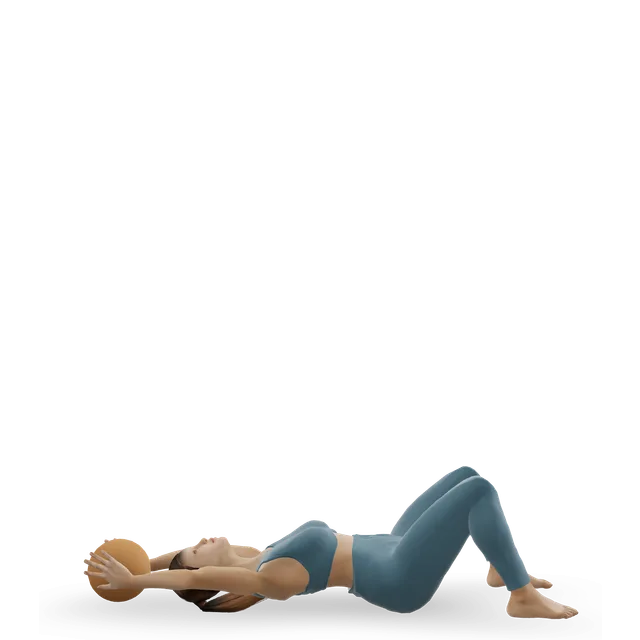
Two hands before one, and chest before overhead. The hip hinge, 2 or 3 sets of 8 (our deadlift technique workout); the chest push, 3 sets of 5 with a 2 to 4 kg ball to a wall or partner (our power and balance workout); the scoop throw, 3 sets of 3 to 5, resting a minute (its move page's editorial starting point); the two-hand overhead throw, 3 × 5 to 6 against a wall with a 2 to 3 kg ball (our throwing arm and handball workouts); then the slam and the one-arm slam (doses below, editorial). The lying two-hand throw, 3 × 5 (editorial), is a lying option.

Other versions, in words

No 3D demo for these; teach the side slam over the one-arm slam and the Pallof press with rotation.

Rotational (side) slam

Lift the ball over one shoulder, turning, and slam it down beside the opposite foot, pivoting the back foot. Learn it light.

Kneeling slam

Tall kneeling or half kneeling: less hip drive, more arms and trunk. Useful if standing slams bother your knees (our suggestion).

Slam to burpee or squat jump

A conditioning combination. Only once both moves are solid, and count the jumps as landings.

Wall balls

A squat then a throw up to a target, catching the soft ball as it comes down. A different drill with its own ball.

Common mistakes

A bouncing ball

Use a dead slam ball, or let a bouncy one settle before you pick it up. Never try to catch it off the bounce near your face.

Source 1

Arching or leaning back at the top

Ribs down, as ISSA advises; reach tall rather than back.

Source 4

Throwing with your arms only

Let your hips and trunk fold as you slam, dropping your weight back into your hips, as ACE describes.

Source 1

Rounding over to pick it up

Squat or hinge with a long back, the ball close to you.

Slamming too far in front

You end up chasing the ball and reaching for it. Aim about a foot in front of your feet (our suggestion).

Holding your breath

Breathe out as you slam. A long hold through a hard set raises the strain.

Going on when the slams slow

For power, end the set: NASM's power sets are low-rep, "where speed, not fatigue, is the quality standard".

Source 8

How many: power or fitness

No study has tested slam doses, and the move pages give none. These are our editorial starting points.

For power

3 to 5 sets of 5 fast slams, 60 to 90 s rest, early in the session. NASM's core power level uses "3 to 5 low-rep sets"; the reps and rest are editorial. Our battle ropes guide's slam swap, 2 to 3 sets of 6 to 10 controlled slams, is in the same range.

Source 8

For fitness

20 to 30 s of steady slams, then 30 to 40 s easy, for 6 to 10 rounds (editorial; the children's studies used 30 s on and 30 s off).

Source 5

How often

As power work, with your jump or strength days, twice a week. As intervals, count them within our HIIT (high-intensity interval training) guide's hard sessions, once or twice a week (up to three).

How hard

Every slam fast and crisp; end the set when they slow down or your back takes over, as our kettlebell swing guide's rule does.

Warm up first

Shoulder circles, a few hip hinges and some light throws before your first set.

Source 27

Moves that go with it

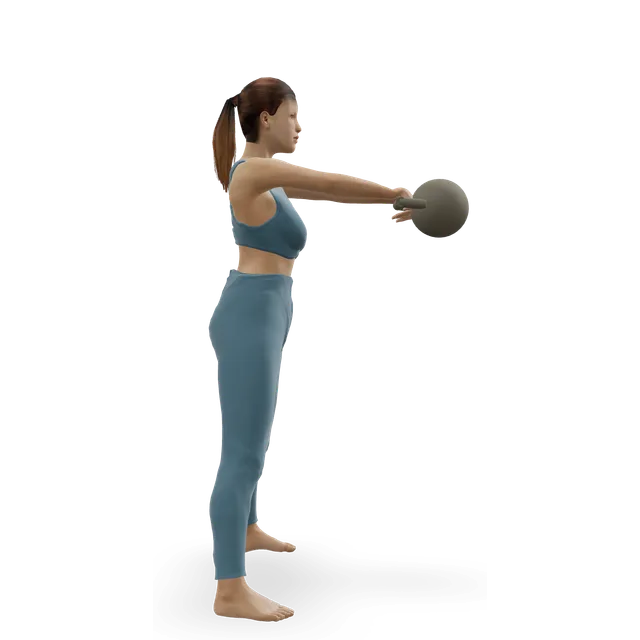
Kettlebell swings, 5 sets of 10 or 30 s on and 30 s off (our kettlebell swing guide), for fast hip drive; forearm planks, 2 holds of 20 to 45 s (our ab challenge workout); dead bugs, 2 × 8 each side (our CrossFit-style workout for beginners); half-kneeling Pallof presses, 2 × 10 each side (our basketball strength and jump workout); battle ropes, 4 to 6 bouts of 30 s with 60 s rest (its move page's editorial starting point); wall angels, 8 slow slides (our shoulder routine), and shoulder circles, 3 slow circles each way (the move page's dose), for the overhead reach.

Workouts to follow

The medicine ball workout is the follow-along for this guide: chest pushes, scoop throws and slams for power, an optional slam finisher and two trunk moves. The power and balance workout uses the chest push; the throwing, golf and boxing workouts use other medicine-ball throws.

Medicine ball workout: throws, slams and an interval finisher

A 30-minute medicine ball workout: chest pushes, scoop throws and slams for power, an optional slam interval finisher, and two trunk moves, with doses.

30 minIntermediate11 movesA wall, Medicine ball

Power and balance workout: fast lifts and one-leg control

A 40-minute session of fast sit-to-stands, step-ups and medicine-ball pushes for power, then balance holds and steps beside a counter.

40 minBeginner17 movesA wall, A bench or box

Throwing arm strength workout

A 35-minute session for baseball and softball players: the five Shoulder Control exercises, rotator cuff and forearm work, medicine-ball throws and legs.

35 minIntermediate17 movesA dumbbell, A cable machine

Strength and power workout for throwers: lifts paired with medicine-ball throws, rotation and shoulder care

A 50-minute session for throwers: hang power cleans, front squats and push presses paired with medicine-ball throws, then landmine rotations and shoulder care.

50 minIntermediate15 movesA barbell, Medicine ball

Golf strength and power workout

A 45-minute golf gym session: jumps, a medicine-ball throw and kettlebell swings for power, then squats, hinges, rows, push-ups, fast rotation and carries.

45 minIntermediate14 movesMedicine ball, A kettlebell

Strength workout for boxers: legs, power, shoulders and grip

A 45-minute strength and power workout for boxers: jumps and chest throws, squats and single-leg hinges, push-ups, rows, rotator cuff, carries and grip.

45 minIntermediate18 movesA band, Medicine ball

Slams against swings, burpees and battle ropes

Kettlebell swings

Both are fast, whole-body hip movements. Swings have more research behind them; our kettlebell swing guide covers the swing.

Burpees

Burpees add a jump and a trip to the floor; slams keep you standing and add a throw. Our burpee guide covers them.

Battle ropes

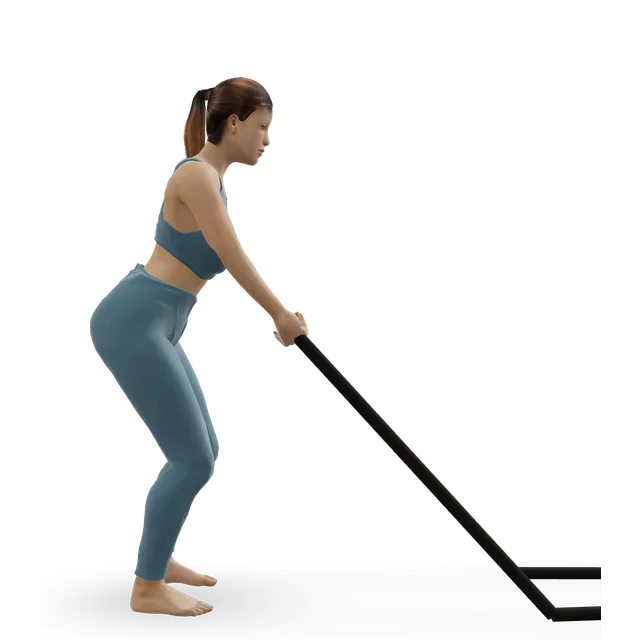
Rope slams are a different drill with their own guide; its medicine-ball slam swap uses doses in the same range as ours.

Sledgehammer and tyre

Similar in spirit. The same rules on the pick-up, your back and crisp reps apply (our view).

Who should change it

Back pain

Start with chest pushes and the trunk moves, and add slams only if they stay within our back pain guides' rule: pain no more than about 5 out of 10 that settles within an hour or so, no worse the next morning.

Source 26

Shoulder pain

Slams start with your arms overhead. If that pinches, slam from chest height instead and keep pain to about 5 out of 10, settled by your next session, as our shoulder guides say (the chest-height start is our suggestion).

Source 28

Pregnancy and after a birth

Leave slams out in pregnancy: the NHS advises against starting new vigorous activity, and slams fold your trunk fast and swing a weight near your bump (our reading). After a birth, the NHS advises avoiding high-impact exercise and heavy lifting to start with.

Sources 29, 30

Osteoporosis

The UK consensus asks people with osteoporosis to avoid postures with a lot of spinal bending, especially with a weight. Fast, loaded forward bending is what a slam is, so leave slams out, and use the chest push or the scoop throw only after individual advice (our suggestion).

Source 31

Hernia

Get advice before hard, straining work with a hernia, as our breathing guide says, and breathe out on every slam.

Source 32

High blood pressure

With controlled blood pressure, low- to moderate-intensity strength work with good breathing is safe, the American Heart Association says. If yours is uncontrolled (140/90 or higher at a clinic, or 135/85 at home), get advice before hard, explosive work.

Sources 33, 34

Diabetic eye disease

With unstable proliferative or severe diabetic retinopathy, the American College of Sports Medicine advises avoiding overhead lifting, breath holding, and activities that lower or jar the head. A slam starts overhead and lowers your head as you fold, so leave it out until your eye team says otherwise.

Source 35

Leaking

Leaking when you slam is stress incontinence, which pelvic floor exercises help. Build those up, use a lighter ball, and see a GP or pelvic health physiotherapist.

Source 36

Warning signs

Stop and get medical help

If you get chest pain or pressure, feel faint or dizzy, are unusually breathless, or your heart races or beats irregularly during exercise, as our plans advise. The American Heart Association says these need immediate medical evaluation.

Source 33

Call 999 (911 in the US)

For chest pain that comes on suddenly and doesn't go away, feels tight or like squeezing, spreads to your arms, neck, jaw, stomach or back, or comes with sweating, feeling sick, light-headedness or breathlessness; arm pain that comes on suddenly with pressure, heaviness or squeezing across your chest; severe difficulty breathing, or a chest that feels tight or heavy; someone who faints while exercising; palpitations that don't go away, or come with chest pain, shortness of breath or feeling faint; or a headache that starts suddenly and is extremely painful, especially while lifting or straining. The NHS says a bleed on the brain may be more likely when lifting something heavy. Don't drive yourself to A&E.

Sources 37, 38, 39, 40, 41, 42, 43, 44

A headache when you strain

Ask for an urgent GP appointment or get help from NHS 111 for a headache that's triggered or made worse by coughing, sneezing, bending down or exercising.

Source 43

A ball in the face

Go to A&E or call 999 if something has hit your eye at high speed, your sight changes after an eye injury, or you have severe eye pain, an eye you can't move or keep open, or blood or pus coming from it. Don't drive yourself.

Source 2

Your shoulder

Ask for an urgent GP appointment or get help from NHS 111 for sudden or very bad shoulder pain, an arm you can't move, a shoulder that has changed shape or is badly swollen, pins and needles that don't go away, no feeling in your arm or shoulder, an arm or shoulder that's hot or cold to touch, pain after an injury or a fall, severe pain in both shoulders, or feeling feverish or unwell. Go to A&E if, after an injury, you can't move your arm or your shoulder looks out of place or has changed shape. See a GP if shoulder pain is getting worse or hasn't improved after 2 weeks.

Sources 28, 45

Your wrists

Get help from NHS 111 for a wrist injury with a snap, grinding or popping noise at the time, or a wrist that has changed shape or colour.

Source 46

Back pain

Call 999 or go to A&E: loss of feeling or numbness around the genitals or bottom, new trouble peeing or controlling your bladder or bowels, changes in genital sensation during sex or problems with erections or orgasm, or pain, tingling, weakness or numbness in both legs. These are signs of cauda equina syndrome, which needs treating in hospital urgently. Don't drive yourself.

Source 26

Pain down a leg

See a GP if pain spreading down a leg hasn't improved after a few weeks of home treatment, is getting worse or stops your normal activities. Sciatica on both sides, or weakness or numbness in both legs that's severe or getting worse, is a 999 call or a trip to A&E.

Source 47

A hernia

See a GP if you think you have a hernia, a bulge or lump that may get bigger when you strain and smaller when you lie down. Get help from NHS 111 if you have a hernia and pain in or around it, a bloated tummy, you feel or are sick, you're vomiting blood or your vomit looks like coffee grounds, you're constipated, you have a high temperature or feel hot, cold or shivery, or you've suddenly become confused. Call 999 or go to A&E for a femoral hernia (a small lump at the top of your thigh, in your groin) with very bad tummy pain, sickness, being unable to fart or poo, a high temperature or sudden confusion.

Sources 32, 48

Before you start

Speak to your GP first if you haven't exercised for some time or have medical conditions or concerns, as the NHS advises. Get advice before hard, explosive or straining work if your blood pressure is uncontrolled (140/90 or higher at a clinic, or 135/85 at home), or you have heart disease or chest pain when you're active, a pacemaker or defibrillator, diabetic eye disease, glaucoma, a hernia, recent eye or tummy surgery, or you're pregnant, as our breathing guide lists.

After a recent shoulder dislocation or shoulder surgery, follow our shoulder dislocation guide or your surgical team first.

Source 49
Myths

"Slams are a core exercise"

No study has measured muscle activity in a slam; ACE lists the back, hips, legs and shoulders, and slam speed tracked lat strength. Slams are a whole-body power and conditioning drill.

Sources 1, 3, 7

"Catch the ball off the bounce"

A bouncing ball slammed hard can come back up at your face. Use a ball that doesn't bounce, and let it stop before you pick it up.

Source 2

"Heavier balls are better"Emerging evidence

Ball speed fell from 12.5 to 9.0 m/s from 2 to 8 kg, and throw power didn't change from 2.7 to 5.5 kg. For power, choose a ball you can slam fast.

Sources 3, 10

"Slams torch fat with a 24 to 48-hour afterburn"

No study has measured slams' energy cost or afterburn in adults, and the standard list of activity energy costs has no slam entry.

Source 11

"Slams are great stress relief"Strong evidence

No study has tested slams for stress. "Venting" activities that rev you up didn't reduce anger across 154 studies, and hitting a punchbag after reading that venting helps increased aggression. If slams feel good, enjoy them as exercise.

Sources 50, 51

"Slams build punching or throwing power"Mixed evidence

Untested for punching. Medicine-ball training improved throwing in some athletes, but not consistently, and none of the trials used slams.

Sources 14, 17

Questions people ask

How do you do a medicine ball slam?

Lift the ball overhead as you stand tall, then throw it down hard into the floor just in front of your feet as your hips and knees bend. Let it settle, pick it up with a squat or hinge, and reset.

What muscles do medicine ball slams work?

No study has measured it. ACE lists the back, hips, legs and shoulders, and in the one lab study, slam speed tracked how strong the lats were. It's best thought of as a whole-body power and conditioning move.

Are medicine ball slams good for your core?

Your trunk works to pass the force on, but slams haven't been tested as a core exercise, and core training in general gives only small performance benefits. Planks, dead bugs and Pallof presses are the site's core staples.

What weight slam ball should I use?

One you can slam fast 8 to 10 times; for most adults that's 3 to 6 kg to start, our editorial suggestion. Studies used 2 to 8 kg, and heavier balls were thrown more slowly.

Slam ball or medicine ball?

For slams, a slam ball that doesn't bounce: a bouncing medicine ball slammed hard can come back at your face. Use a firm medicine ball for chest passes and wall throws.

How many medicine ball slams should I do?

For power, 3 to 5 sets of 5 fast slams with 60 to 90 seconds' rest. For fitness, 20 to 30 seconds of slams with 30 to 40 seconds easy, for 6 to 10 rounds. These are our editorial starting points; stop the set when the slams slow down.

Are medicine ball slams bad for your back?

No study has measured back loads in slams. Pick the ball up with a squat or hinge rather than rounding over it, and with back pain start with chest pushes. Back pain with numbness or weakness in both legs, or bladder or bowel changes, needs a 999 call or a trip to A&E.

Do medicine ball slams burn a lot of calories?

They push your heart rate up fast, but nobody has measured their energy cost in adults. Our calories burned calculator estimates it from the activity and the minutes.

Are slams good for stress relief?

They haven't been tested for stress. Venting activities that rev you up didn't reduce anger across 154 studies, so enjoy slams as exercise rather than as anger management.

Can I do medicine ball slams while pregnant?

Leave them out: the NHS advises against starting new vigorous activity in pregnancy, and slams fold your trunk fast near your bump. Our pregnancy guide has safer options.

Medicine ball slams or kettlebell swings?

Both are fast, whole-body moves. Swings have more research behind them for building strength and power; slams have almost none. Our kettlebell swing guide covers the swing.

Sources

  1. American Council on Exercise · Overhead slams (exercise library, rated intermediate)
  2. NHS · Eye injuries
  3. Ikeda 2022 · The medicine ball overhead slam with 2 to 8 kg balls in 13 male swimmers (lab study, Sci J Sport Perform)
  4. ISSA 2024 · Medicine ball slams: form, function and variations (coaching article, International Sports Sciences Association)
  5. Faigenbaum 2018 · Heart rate and oxygen use in medicine-ball interval training in 14 children (lab study, Int J Exerc Sci)
  6. Faigenbaum 2019 · Heart rate and oxygen use in a mixed neuromuscular circuit in 14 children (lab study, J Funct Morphol Kinesiol)
  7. Reed 2012 · Core stability training and athletic performance: 24 studies (systematic review, Sports Med)
  8. Richey (NASM) · Progressive core training: programming the core beyond crunches (coaching article, National Academy of Sports Medicine)
  9. Davies 2015 · Current concepts of plyometric exercise: drill levels, foot contacts and recovery (clinical commentary, Int J Sports Phys Ther)
  10. Beckham 2023 · Medicine balls of 2.7 to 5.5 kg in the backward overhead throw, in 31 women (force plate study, Sports Biomech)
  11. Herrmann 2024 · The 2024 Adult Compendium of Physical Activities: measured energy costs for adults (reference values, J Sport Health Sci)
  12. Hill 2024 · Medicine ball slams before a 50 m swim in 24 youth swimmers (randomised crossover study, J Strength Cond Res)
  13. Li 2025 · An 8-week functional training programme, slams included, in male university students (randomised trial, Front Public Health)
  14. Raeder 2015 · Six weeks of medicine-ball training and throwing speed in 28 female handball players (randomised trial, J Strength Cond Res)
  15. Szymanski 2007 · Twelve weeks of medicine-ball training in 49 high school baseball players (randomised trial, J Strength Cond Res)
  16. Garcia-Carrillo 2023 · Upper-body plyometric training and fitness in young people and young adults: 35 studies (meta-analysis, Sports Med Open)
  17. Hadjisavvas 2024 · Resistance training and throwing in handball players: 30 studies (meta-analysis, BMC Sports Sci Med Rehabil)
  18. Cordasco 1996 · Shoulder muscle activity during a medicine-ball rehabilitation programme, in 10 men (muscle activity study, Am J Sports Med)
  19. Tsartsapakis 2025 · A core training study plan that will measure muscle activity in slams (study protocol without results, Methods Protoc)
  20. Ikeda 2009 · Trunk muscle activity in the side medicine-ball throw (lab study, J Strength Cond Res)
  21. Prieske 2016 · Trunk muscle strength, fitness and athletic performance in trained people (meta-analysis, Sports Med)
  22. Saeterbakken 2022 · Trunk muscle training and athletic performance in 693 young and adult athletes: 31 studies (meta-analysis, Sports Med)
  23. McGill 2012 · Back and hip muscle activity and lower-back load in kettlebell swings in 7 men (lab study, J Strength Cond Res)
  24. Anders 2020 · Hooverball: a medicine-ball game injury and the literature (case study and review, J Rehabil Med Clin Commun)
  25. Ángel Rodríguez 2022 · Injury in CrossFit: 25 studies, 12,079 people (systematic review, Phys Sportsmed)
  26. NHS · Back pain
  27. NHS · How to warm up before exercising
  28. NHS · Shoulder pain (past its review date: reviewed May 2023, review due May 2026)
  29. NHS · Exercise in pregnancy
  30. NHS · Your post-pregnancy body
  31. Brooke-Wavell 2022 · Strong, steady and straight: exercise for osteoporosis (UK consensus statement, Br J Sports Med)
  32. NHS · Hernia
  33. Paluch 2024 · Resistance exercise training with and without cardiovascular disease: 2023 update (American Heart Association scientific statement, Circulation)
  34. NHS · High blood pressure
  35. Kanaley 2022 · Exercise in type 2 diabetes, including diabetic eye disease (American College of Sports Medicine consensus statement, Med Sci Sports Exerc)
  36. NHS · Urinary incontinence (past its review date: reviewed June 2023, review due June 2026)
  37. NHS · Chest pain (past its review date: reviewed August 2023, review due August 2026)
  38. NHS · Heart attack
  39. NHS · Elbow and arm pain
  40. NHS · Shortness of breath
  41. NHS · Fainting
  42. NHS · Heart palpitations
  43. NHS · Headaches
  44. NHS · Subarachnoid haemorrhage
  45. NHS · Dislocated shoulder
  46. NHS · Wrist pain
  47. NHS · Sciatica
  48. NHS · Femoral hernia
  49. NHS · Physical activity guidelines for adults aged 19 to 64
  50. Kjærvik 2024 · Anger management activities that raise or lower arousal: 154 studies (meta-analysis, Clin Psychol Rev)
  51. Bushman 1999 · Venting by hitting a punching bag and later aggression (experiments, J Pers Soc Psychol)

Exercise education, not a personal prescription, and clinical review of these guides is pending. Check with a GP before starting hard training if you have a heart condition, chest pain, dizziness or breathlessness when active, and stop for sharp or increasing pain. Health disclaimer.