Training guide

How to do bench dips: bent and straight legs, your shoulders, the triceps, easier and safer versions, and how many

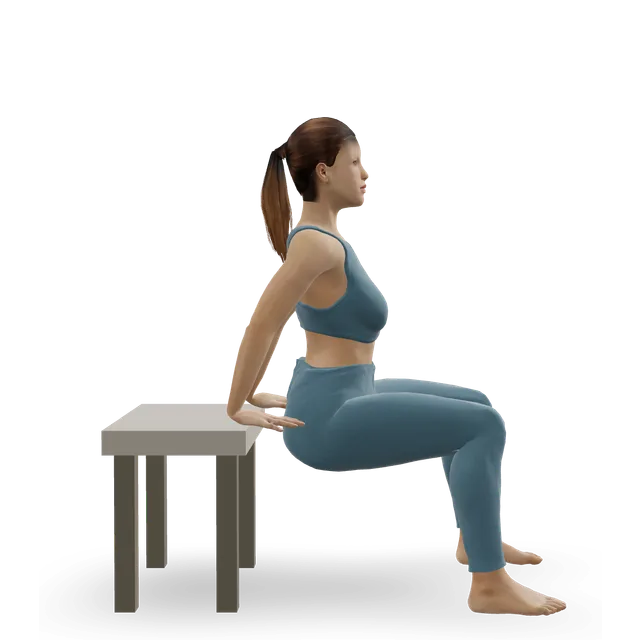
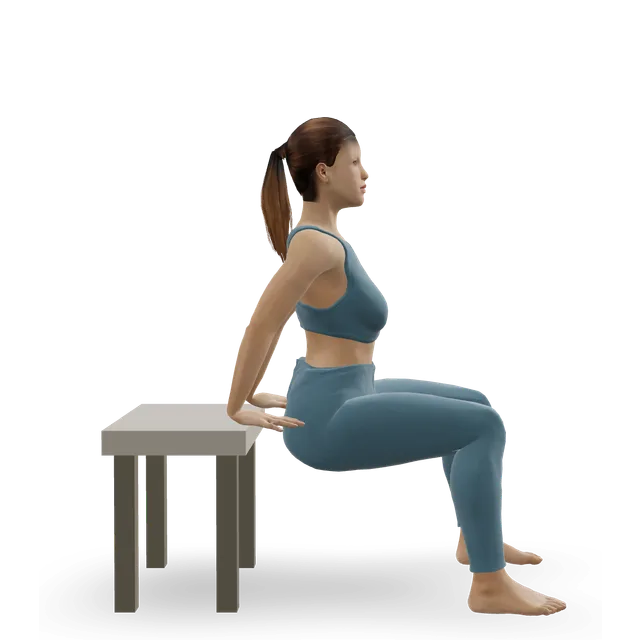
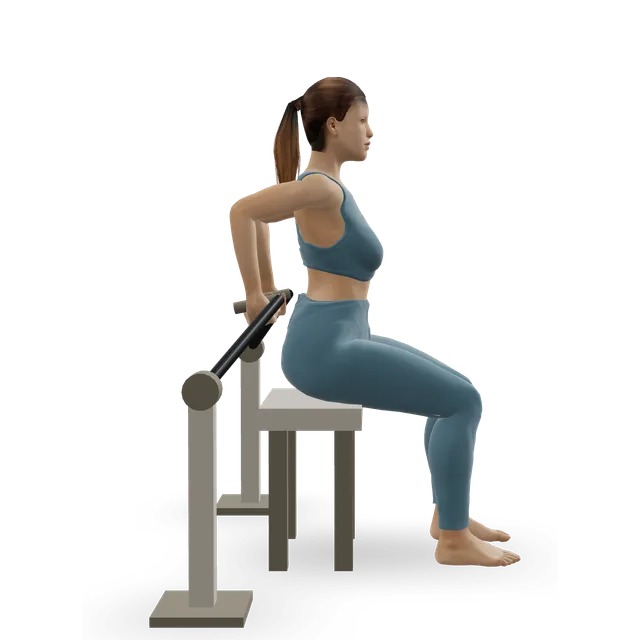
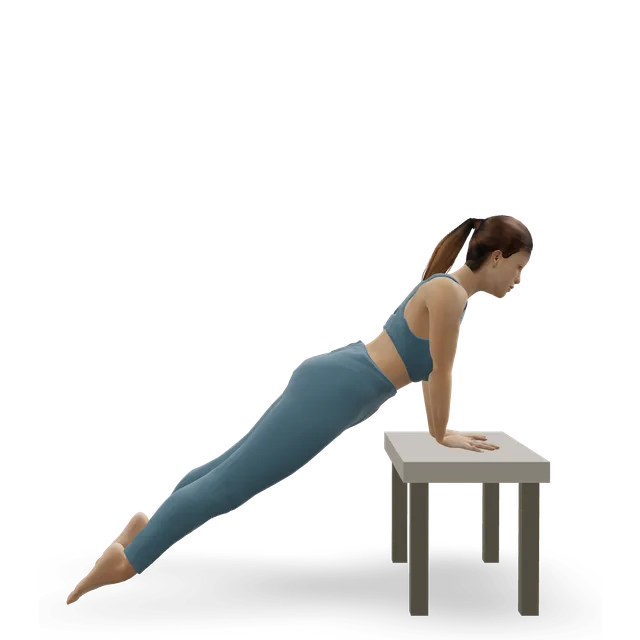
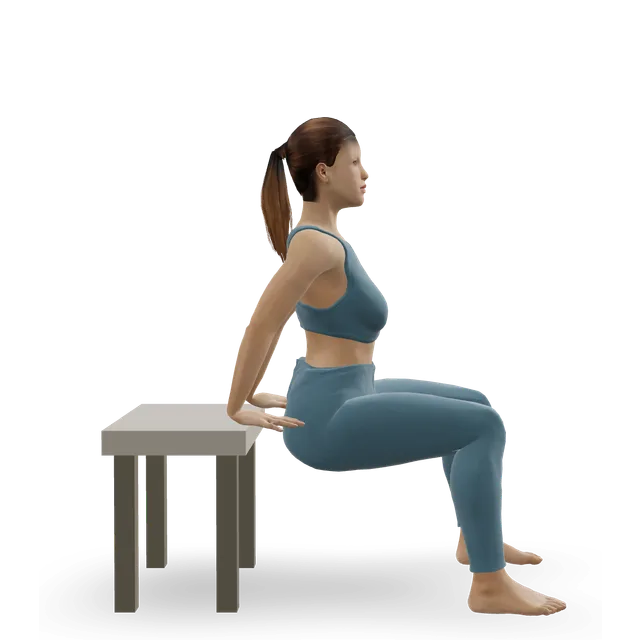
Bench dips, or chair dips, are dips with your hands on the edge of a bench or chair behind you and your feet on the floor. You bend your elbows straight back to lower until they reach about a right angle, then press back up. Bending your knees makes them easier; straightening your legs makes them harder. Each step has a 3D demo below.

They're a strong triceps exercise you can do anywhere, but they take your shoulder further back than any other dip: in a lab study of 13 experienced men, to the very end of the range each man reached in a maximal test. No study has shown that this causes injury, so the advice is proportionate: keep them shallow, and skip them if the front of your shoulder hurts.

This guide covers the technique, bent and straight legs, how deep to go, your shoulders, elbows and wrists, swaps that spare the shoulder, and how many to do.

The short version

Hands behind you, lower to a right angle, press up

Hands on the edge of a sturdy bench, or a chair pushed against a wall, fingers pointing forward and feet on the floor in front of you. Bend your elbows straight back until your upper arms are about level with the floor, then press back up. Bent knees make it easier and straight legs harder, as our move pages and NASM (the National Academy of Sports Medicine) teach it.

Source 1

A triceps exercise, and bar dips work harder

In the one motion and muscle study, 13 experienced men drew lower peak activity from 6 of 9 muscles in a bench dip than in a bar dip, the triceps included. In a study of 15 women funded by the American Council on Exercise (ACE), bench dips drew 87% of the triceps activity of the best of eight exercises.

Sources 2, 3

It takes the shoulder furthest back of any dip

Bench dips reached 101% of the shoulder range each man reached in a maximal test, against 88% for bar dips and 69% for ring dips, because your trunk can't lean forward. The researchers think loading the shoulder this far back, again and again, might strain the front of the joint; no injuries were measured.

Source 2

"Bad for your shoulders" is overstated

No study shows they cause injury. In a self-selected survey, 21% of gym users who did bench dips linked them to pain, fewer than for bodyweight triceps dips, and a physiotherapy programme for painful rotator cuffs used chair dips in its last phase. But they aren't the shoulder-friendly option: keep them shallow, and skip them if the front of your shoulder hurts.

Sources 4, 5

Bent or straight legs: nobody has measured the load

We found no study of how much of your weight your arms carry in any bench dip. Bent knees, then straight legs, is coaching practice. Past straight legs, our dips guide moves you on to a dip machine or assisted bar dips rather than raising your feet or adding weight.

Sources 6, 1

How many

3 sets of 8 to 12 at your step, stopping 1 to 3 reps short of failure, 2 or 3 times a week, as our dips guide and dip progression use them. NASM teaches 3 sets of 8 to 15.

Sources 1, 7

How to do a bench dip, step by step

From our bench dip move pages, NASM's bench dip guide and the set-up in ACE's triceps study; the 2-second lowering and the breathing are editorial. The easier start, with your knees bent and feet close, is the bent-knee bench dip in the ladder below. Skip bench dips if the front of your shoulder hurts.

  1. Use a bench, a sturdy chair pushed against a wall, or a firm step: something that can't slide or tip. Sit on the edge with your hands beside your hips, about shoulder-width apart, fingers pointing forward over the edge.
  2. Walk your feet out until your knees are over your ankles for the easier version, or further with straighter legs for the harder one. Slide your hips just off the edge on straight arms, your back close to the bench.
  3. Set your shoulders down and back, away from your ears, with your chest up.
  4. Breathe in and bend your elbows straight back, not out to the sides, lowering your hips towards the floor.
  5. Stop when your elbows reach about a right angle and your upper arms are about level with the floor, or sooner if the front of your shoulder pinches.
  6. Breathe out and press through the heels of your hands to straighten your arms, stopping just short of locking them. Use your legs only as much as you need.
  7. Take about 2 seconds to lower, and keep the whole set smooth.

Loading the 3D figure…

Gets into position, then repeats the movement. Technical checks passed; qualified exercise review is pending.

The movement on the figure: Bench dip

What bench dips are, and what they work

The same exercise on different furniture

Bench dips, chair dips, couch dips and tricep dips at home are one exercise: your hands behind you on something solid, your feet on the floor, so your legs take part of your weight. That's why they're usually the first dip people learn. The ACE study used a low bench and says just about any sturdy chair or ledge can be used.

Source 3

What they work

Mainly the triceps at the back of your upper arm, which straighten your elbow, with the chest and the front of the shoulder helping and the muscles around your shoulder blades holding you steady. In the motion study, chest and front-shoulder activity was "relatively low" in the bench dip compared with the bar dip, and one coaching source says bench dips emphasise the shoulders and triceps more than the chest.

Sources 2, 8

What happens at the shoulder

Your upper arm moves behind your body while your trunk stays upright. The men in the motion study leaned only about 13 degrees in a bench dip against about 37 on parallel bars, so the shoulder went back about 88 degrees: the end of the range each man reached in his own deepest bar dip.

Sources 2, 6

What you need first

Comfortable loading of your wrists and shoulders with your hands behind you, as our move pages ask, and no pain at the front of your shoulder when you reach behind you.

How people differ

A higher bench makes the dip easier; the motion study's author suggests raising the bench as an easier step. Longer arms on a low bench take the shoulder further back for the same elbow bend (our reasoning). People with loose or hypermobile shoulders sit nearer the end of their range: the motion study's authors urge caution at the end of the range for unstable shoulders, while a hypermobility programme still lists triceps dips on a chair or bench once neck and shoulder control are good enough.

Sources 6, 2, 9

What the evidence says

Bar dips work more muscle than bench dipsEmerging evidence

In a lab study of 13 experienced men, using electromyography (EMG), which measures muscle activity through the skin, bar dips drew higher peak activity than bench dips in six of nine muscles: the chest, the front of the shoulder, the triceps, the upper trapezius, the serratus anterior and the lats. Peak triceps activity was about 25% higher on the bars. The men used their own technique for 4 reps, and the bench dip was done on a handle set at bench height. It is one small study, and muscle activity shows effort, not what a muscle will build.

Source 2

Bench dips take the shoulder furthest backEmerging evidence

In the same men, the bench dip took the shoulder to about 88 degrees behind the body, 101% of the range each man reached in a maximal test, against 88% for bar dips and 69% for ring dips. The "maximal" test was each man's own deepest bar dip, held for 3 seconds. The author explains why: a bench dip doesn't let you tip your chest forward.

Sources 2, 6

A strong triceps exercise, with two caveatsEmerging evidence

In an ACE-funded study of 15 women aged 20 to 24 with lifting experience, the diamond push-up drew the most triceps activity of eight exercises, and bench dips and kickbacks came next at 87% of it. Overhead extensions, pushdowns, lying extensions and the close-grip bench press drew less.

Two details from the full thesis: the diamond (triangle) push-up was done on the knees, and the loads weren't matched, because the weighted exercises used 70% of each woman's maximum while dips and push-ups used body weight. It wasn't peer reviewed.

Sources 10, 3

Pain and injuries: surveys and case reportsEmerging evidence

In a self-selected online survey of 1,387 gym users, 21% of the 301 who did bench dips linked them to pain, against 35% for bodyweight triceps dips and 9% for machine dips. Nobody was examined and nobody counted how often they dipped.

Serious dip injuries are rare case reports: chest muscle tears during weighted bar dips and a ring dip, a stress fracture at the top of the breastbone from bar dips, a collarbone and rib fracture during "triceps dips", and a collarbone stress fracture in a 13-year-old after about 20 triceps dips; neither of the last two reports says which kind of dip. Case reports show what can happen, not how often.

Sources 4, 11, 12, 13, 14, 15

Studies of lifters' shoulders point at other liftsEmerging evidence

Studies of weight trainers with loose or painful shoulders link them to behind-the-neck pulldowns and presses, and to raises and upright rows above shoulder height. Their published summaries don't mention dips, and we couldn't read whether their questionnaires asked about them. No study has tested dips as a cause.

Sources 16, 17, 18

Physiotherapy still uses themEmerging evidence

An 8-week programme for 51 people with painful rotator cuff tendons used chair dips to 90 degrees at the elbow, bent legs first, in its last phase, and a hypermobility programme lists triceps dips on a chair or bench. After surgery to stabilise a dislocating shoulder, one Danish guideline waits 16 weeks before triceps dips. These programmes used dips among many exercises, so they show dips are used in rehab, not that dips themselves helped.

Sources 5, 9, 19

Bent knees, straight legs, feet up

Bent knees are easier, straight legs harder

With your knees bent and feet close, your legs take more of your weight; walking your feet out and straightening your legs puts more on your arms. NASM's easier version brings the feet closer or bends the knees. This is coaching practice that matches everyone's experience, not a measured fraction.

Sources 1, 8

Nobody has measured the load on your arms

We found no study of how much of your body weight your arms carry in any bench dip. The motion study's author reasons that it could cut either way: your feet share the load, but your body sits further in front of your hands, which may put unexpectedly high loads on your arms.

Source 6

Feet raised, or weight in your lap

Coaches make bench dips harder by putting the feet on a second bench or a plate in the lap. We don't recommend either as the next step: they add load to a shoulder position that's already at the end of its range (our reading of the motion data). Our dips guide moves on to a dip machine, assisted bar dips or bar dips instead. Neither version has a 3D demo.

Sources 8, 1, 2

Floor, chair and couch dips

Floor dips, with your hands on the floor behind you, are the shortest range of the same position (no 3D demo). On a chair, push it against a wall and use one without wheels. Use a couch or sofa only if it's solid and can't tip or slide.

How deep to go

About a right angle at the elbow

NASM teaches bench dips to about 90 degrees at the elbow, and the rotator cuff programme used chair dips to 90 degrees. A hospital sports medicine handout says never to go below 90 degrees of elbow bend on parallel bars. These are expert advice and programme rules, not trial results.

Sources 1, 5, 20

At a right angle, you're already at the end of the rangeEmerging evidence

The men in the motion study chose their own depth and still reached 101% of their maximal shoulder range in the bench dip. Going deeper pushes past it, so stop at a right angle or before.

Source 2

Tired reps can go too deepEmerging evidence

In 15 men doing bar dips to failure, the deepest joint angles didn't change as they tired, but 2 of the 4 men who failed a rep went past their maximal range. End each set before a rep fails.

Source 21

Where coaches disagree

One coaching source says to lower as far as possible; NASM says about a right angle. No study has compared bench dip depths, so we follow the motion data and our dips guide: about a right angle, or less if the front of your shoulder complains.

Sources 8, 1

Your shoulders

The worry is a theory, not a findingMixed evidence

The motion study's authors propose that repeated loading at the end of the range might strain a ligament at the front of the shoulder. Their review builds that on cadaver studies: the ligament limits how far the arm goes back, and repeated small strains stretched it in cadaver shoulders. They advise limiting depth and not taking every set to failure. No study has measured an injury from bench dips. An ACE follow-up article called dips risky for impingement, but that was opinion: the turning of the arm it described wasn't measured.

Sources 22, 6, 23, 24, 25

What that means for you

Keep shoulder pain to about 5 out of 10 or less during the exercise, back to its usual level by your next session, as our shoulder guides advise. A sharp pinch means lower, lighter or stop.

Keep the depth to about a right angle, keep your shoulders down and back, and use the swaps below if the front of your shoulder complains.

Leave them out for now

With pain at the front of the shoulder, impingement, AC (acromioclavicular) joint pain, a SLAP tear (a tear of the cartilage rim at the top of the socket), biceps tendon pain or a shoulder that has dislocated or feels loose, our dips guide and shoulder guides leave out bench dips for now. The motion study's authors suggest triangle push-ups or kickbacks for people with unstable shoulders.

Source 2

After a dislocation or shoulder surgery

After a recent shoulder dislocation, or shoulder or elbow surgery, follow your surgical team's limits first. One Danish guideline waits 16 weeks before triceps dips after surgery to stabilise the shoulder.

Source 19

If you push a manual wheelchair

If you push a manual wheelchair, dips and overhead pressing load the shoulder in positions the spinal cord injury guideline advises limiting: favour rows, pull-downs from shoulder height and rotator cuff work, and stop if it brings on shoulder pain.

The bench dip ladder

3 sets of 8 to 12 at each step, moving on at 3 sets of 12 with no pain at the front of the shoulder (our dip progression's doses and our dips guide's move-on point). After straight legs, the next step is a different exercise: the dip machine at 3 sets of 8 to 12, or the bar dip ladder in our dips guide.

Triceps without the bench dip

These keep your shoulder in front of you. Diamond push-ups, 2 sets of 6 to 12, hands on a bench to make them easier (our dip progression); close-grip push-ups and the close-grip incline push-up, 2 to 3 sets of 6 to 12, and dumbbell kickbacks, 2 to 3 sets of 12 to 15 (our arm challenge workout); pushdowns and skull crushers, 2 to 3 sets of 10 to 15, and the close-grip bench press, a lighter set then 3 sets of 6 to 8 (our tricep workout).

Sets, reps and how often

Sets and reps

3 sets of 8 to 12 at your step, as our dips guide and dip progression use them. NASM teaches 3 sets of 8 to 15; one coaching source uses 3 to 5 reps with weight and up to 20 or more without. In your first two weeks, stop with 3 or 4 reps to spare, as our plans advise.

Sources 1, 8

How hard

Stop 1 to 3 reps short of failure, and end the set early if the front of your shoulder pinches. Training to failure added at most a trivial amount of growth across 15 studies, and people misjudge the reps they have left by about one.

Sources 7, 26

Rest

About 90 seconds to 2 minutes between sets, as our plans suggest for sets of 8 to 12.

How often

2 or 3 times a week with a day between. Count each set towards your weekly triceps sets: our tricep workout counts presses and dips as about half a triceps set each, and about 10 or more hard sets a week built more muscle across reviews.

Source 27

Moving on

Add reps until every set reaches 12, then slow the lowering, then straighten your legs. Once straight-leg dips are easy, move to a dip machine or assisted bar dips, as our dips guide does, rather than climbing further up the bench dip ladder.

Common mistakes

Sinking too deep

At a right angle your shoulder is already at the end of its range. Stop there, or sooner.

Source 2

Shoulders shrugging or rolling forward

NASM lists shrugging as a mistake that adds shoulder stress. Keep your shoulders down, away from your ears, with your chest up.

Source 1

Elbows flaring out

Bend your elbows straight back, with your hands about shoulder-width apart.

Source 1

Hips drifting away from the bench

It pulls your shoulders further back. Keep your back close to the bench, as our move page cues.

Pushing with your legs

ACE's cue is to push back up using your hands rather than your legs. Your legs should help only as much as you need; if they're doing the work, do fewer, better reps.

Source 3

Bouncing at the bottom

Lower over about 2 seconds, and don't take every set to failure, as the motion study's author advises.

Source 6

A chair that slides or tips

Push it against a wall, and don't use anything with wheels.

Bench dips against bar dips, push-ups and kickbacks

Bar dipsEmerging evidence

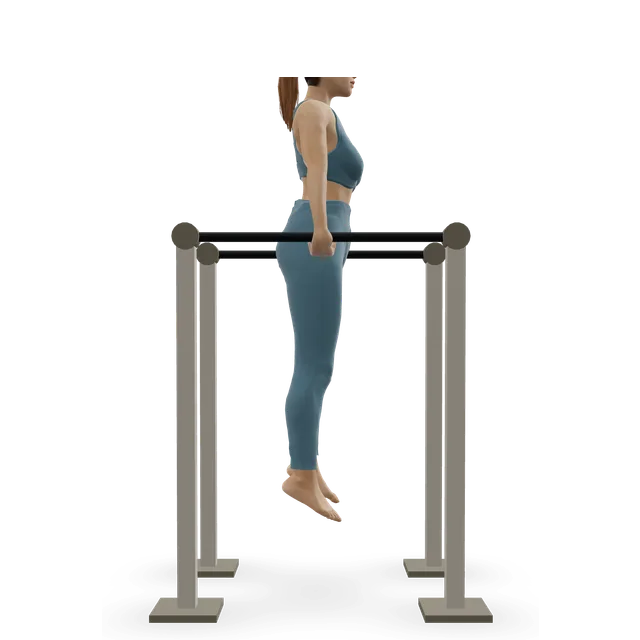
Bar dips worked the triceps, chest and front of the shoulder harder, and took the shoulder less far back (88% of the maximal range against 101%). They're harder, because your arms lift all your weight. Our dips guide has the ladder from one to the other.

Source 2

Diamond and close-grip push-upsEmerging evidence

Diamond push-ups (on the knees) topped the ACE study for triceps activity, and keep your shoulders in front of you. The motion study's authors name them for people with unstable shoulders.

Sources 10, 2

Kickbacks, pushdowns and extensionsEmerging evidence

Kickbacks matched bench dips at 87% of the top exercise's triceps activity; overhead extensions, pushdowns and lying extensions drew a little less. Their loads weren't matched to the dips, and activity isn't growth. Our tricep kickback, extension and skull crusher guides cover them.

Source 10

The dip machineEmerging evidence

Machine dips were the dip least often linked to pain in the survey (9%). The machine also lets you choose the weight.

Source 4

Warm-up and shoulder care

Shoulder circles (shoulder CARs), 3 slow circles each way with each arm, at their move page's dose; scapular push-ups, 2 sets of 10, and band pull-aparts, 2 sets of 15 (our dip progression); the wrist and forearm flow for 60 seconds and the cross-body shoulder stretch for 30 seconds each side (our arm challenge workout); the overhead triceps stretch at its move page's dose, 15 to 30 seconds, 2 to 4 times each side, skipped if your shoulder hurts.

Who should change or skip them

Shoulder problems

See "Leave them out for now" above, and use the swaps.

Sore wrists

Some discomfort during these exercises is fine and doesn't mean you are doing damage. Keep it to about 5 out of 10 or less. It should settle within half an hour or so, and your hand should be no worse the next morning. If it is, do fewer, smaller or lighter next time, not nothing. That's our wrist pain guides' rule.

Turn your fingers forward, keep the range short, or use the dip machine's handles, which let your palms face in.

Sore elbows

With triceps tendon pain, shorten the range or swap to pushdowns for a while, as our dips guide suggests, and see our triceps tendinopathy guide. We found no study of elbow load in dips.

After heart, lung or breast surgery

After heart surgery through the breastbone, a heart or lung transplant, or breast cancer surgery or reconstruction, follow your surgical team's advice before pushing or lifting with your arms, as our move pages say.

Heart failure

Ask your heart team first: our arm challenge workout notes that the British Heart Foundation advises avoiding press-ups, and a bench dip also lifts much of your body weight on your arms (our reasoning).

High blood pressure

With controlled high blood pressure, the American Heart Association considers low- to moderate-intensity strength training with proper breathing safe. Breathe out as you lift, as our breathing guide advises. Stop well short of grinding reps.

Source 28

A pacemaker or defibrillator

With a pacemaker or defibrillator, the American Heart Association asks you to check with your doctor before upper-body strength training, because repeated arm movements can damage or dislodge the leads.

Source 28

Pregnancy

Dips you already do can carry on while they're comfortable, as our dips guide says. The NHS advises starting any new exercise gently in pregnancy.

Source 29

Workouts

The dip progression walks the ladder from bent-knee bench dips to the dip machine and bar dips. The arm workouts use bench dips on a chair or bench; the tricep and chest and triceps workouts use dips or the dip machine.

Plans

Warning signs

Stop and get medical help

If you get chest pain or pressure, feel faint or dizzy, are unusually breathless, or your heart races or beats irregularly during exercise, as our plans advise. The American Heart Association says these need immediate medical evaluation.

Source 28

Call 999 (911 in the US)

For chest pain that comes on suddenly and doesn't go away, feels tight or like squeezing, spreads to your arms, neck, jaw, stomach or back, or comes with sweating, feeling sick, light-headedness or breathlessness; arm pain that comes on suddenly with pressure, heaviness or squeezing across your chest; severe difficulty breathing, or a chest that feels tight or heavy; someone who faints while exercising; palpitations that don't go away, or come with chest pain, shortness of breath or feeling faint; or a headache that starts suddenly and is extremely painful, especially while lifting or straining. The NHS says a bleed on the brain may be more likely when lifting something heavy. Don't drive yourself to A&E.

Sources 30, 31, 32, 33, 34, 35, 36, 37

A headache with effort

Ask for an urgent GP appointment or get help from NHS 111 for a headache that's triggered or made worse by coughing, sneezing, bending down or exercising.

Source 36

A pop at the front of the chest

Same day (NHS 111 or an urgent treatment centre): a pop or tearing at the front of the armpit or chest during a lift, a dip or a tackle, followed by bruising into the chest or upper arm, a change in the shape of the chest or armpit (a thinner or lost armpit fold, or a chest or nipple that looks uneven), or weakness pushing. Don't wait for it to settle: it can be a torn pec tendon. In the US, go to urgent care.

Sources 11, 38

Pain behind the breastbone

It's usually a strained chest wall or costochondritis, which the NHS links to repetitive upper body movements like lifting, and very rarely dips have caused a stress fracture there. Stop dips while it hurts. Get help from NHS 111 (in the US, urgent care) if you think you have costochondritis; call 999 for chest pain that started suddenly or spreads to your arm, neck or jaw.

Sources 39, 13

Your shoulder

Ask for an urgent GP appointment or get help from NHS 111 for sudden or very bad shoulder pain, an arm you can't move, a shoulder that has changed shape or is badly swollen, pins and needles that don't go away, no feeling in your arm or shoulder, an arm or shoulder that's hot or cold to touch, pain after an injury or a fall, severe pain in both shoulders, or feeling feverish or unwell. Go to A&E if, after an injury, you can't move your arm or your shoulder looks out of place or has changed shape. See a GP if shoulder pain is getting worse or hasn't improved after 2 weeks.

Source 40

The back of your elbow

A snap at the back of the elbow with sudden pain and weakness straightening the arm needs an urgent treatment centre or A&E. An ache there that builds over weeks: see our triceps tendinopathy guide.

Source 32

The front of your elbow

A pop or snap with sudden pain at the front of the elbow, especially with bruising, a gap at the front of the elbow or a bulge in the upper arm, can be a torn biceps tendon. Go to an urgent treatment centre or A&E (in the US, urgent care) the same day, and don't wait for it to settle, as our biceps guides say.

Source 32

Your wrist: get help from NHS 111

For severe wrist pain; feeling faint, dizzy or sick from the pain; a snap, grinding or popping noise at the time of the injury; being unable to move your wrist or hold things; a wrist that has changed shape or colour; a very painful, hot or red lump; or lost feeling in your hand. In the US, use urgent care.

Your wrist: see a GP

If wrist pain is no better after 2 weeks of home treatment, or comes with tingling, diabetes, or a hot, swollen, stiff wrist.

Sore, or hurt?

Muscle soreness for a day or two after a new or harder session is common and fades. Sharp pain, or pain that builds during a set or lingers into the next day, isn't: swap to an easier version, and see a clinician if it persists, as our plans advise. The NHS says to stop exercising straight away if you feel any pain or become unwell, and to get help from 111 if symptoms worry you or don't go away.

Source 41

Before you start

Speak to your GP first if you haven't exercised for some time or have medical conditions or concerns, as the NHS advises. Get advice before hard or straining work if your blood pressure is uncontrolled (140/90 or higher at a clinic, or 135/85 at home), or you have heart disease or chest pain when you're active, a pacemaker or defibrillator, diabetic eye disease, glaucoma, a hernia, recent eye or tummy surgery, or you're pregnant, as our breathing guide lists.

With controlled high blood pressure, the American Heart Association considers low- to moderate-intensity strength training with proper breathing safe. Breathe out as you lift, as our breathing guide advises.

With a pacemaker or defibrillator, the American Heart Association asks you to check with your doctor before upper-body strength training, because repeated arm movements can damage or dislodge the leads.

Sources 42, 43, 28
Myths

"Bench dips wreck your shoulders"Mixed evidence

Overstated, as our dips guide grades it. They do take the shoulder to the end of its range, and the researchers think that might strain the front of the joint over time, but that's a theory from cadaver studies; no study has counted injuries from bench dips. A rotator cuff rehab programme used chair dips to 90 degrees. Keep them shallow and skip them if they hurt.

Sources 2, 22, 4, 5

"Bench dips are the safe, easy dip"Emerging evidence

Easier on the arms, but the furthest-back shoulder position of any dip, and linked to pain more often than machine dips in a survey (21% against 9%).

Sources 2, 4

"Bench dips are the best triceps exercise"Emerging evidence

They drew 87% of the top exercise's triceps activity in one ACE-funded study, where the top exercise was a diamond push-up on the knees; bar dips drew more than bench dips; and muscle activity in one session doesn't predict growth.

Sources 10, 2, 44

"Bench dips build your chest"Emerging evidence

Chest activity was relatively low in bench dips. Bar dips with a forward lean, push-ups and presses train the chest.

Sources 2, 8

"Go as deep as you can"Emerging evidence

No study has compared depths, and a right angle at the elbow already puts the shoulder at the end of its range. Coaching bodies teach about 90 degrees.

Sources 2, 1

"When they're easy, raise your feet and add plates"

That's coaching practice, but it loads a position that's already at its limit. Our dips guide moves on to the dip machine and assisted bar dips instead (our editorial choice).

Sources 8, 2

Questions people ask

How do you do bench dips properly?

Sit on the edge of a sturdy bench or a chair pushed against a wall, hands beside your hips with your fingers forward, and walk your feet out. Slide your hips off the edge, bend your elbows straight back until they reach about a right angle, then press back up without shrugging. Start with your knees bent and straighten your legs as it gets easier.

What muscles do bench dips work?

Mainly your triceps, with the chest and the front of the shoulder helping. In a study of 13 experienced men, chest and shoulder activity was relatively low in bench dips and higher in bar dips.

Are bench dips bad for your shoulders?

Not for most people, but they take the shoulder to the end of its backward range, further than any other dip. No study has counted injuries from them. Keep the depth to about a right angle at the elbow, and skip them if the front of your shoulder hurts.

How deep should I go on bench dips?

Until your elbows are bent to about a right angle and your upper arms are about level with the floor, or less if the front of your shoulder complains. In the lab study, that depth already took the men's shoulders to the end of their range.

Should my legs be bent or straight for bench dips?

Bent knees make bench dips easier and straight legs harder. That's coaching practice, because nobody has measured how much weight your arms take in each. Start bent and straighten them as 3 sets of 12 get easy.

Should I put my feet up or add weight?

Coaches do, but it adds load to a shoulder position that's already at its limit. Our dips guide's next step is a dip machine or assisted bar dips instead.

How many bench dips should I do?

3 sets of 8 to 12, stopping 1 to 3 reps short of failure, 2 or 3 times a week, as our dips guide and dip progression use them. NASM teaches 3 sets of 8 to 15.

Are chair dips the same as bench dips?

Yes: the same exercise on different furniture. Use a sturdy chair without wheels, pushed against a wall so it can't slide.

Bench dips or bar dips: which is better?

Bar dips worked the triceps, chest and shoulders harder in the one comparison, and took the shoulder less far back. Bench dips are easier and need no bars; our dips guide has the ladder from one to the other.

Bench dips or diamond push-ups for triceps?

In one ACE-funded study, diamond push-ups done on the knees drew the most triceps activity of eight exercises, and bench dips 87% of it. Diamond push-ups keep your shoulders in front of you, so they're the swap if bench dips bother your shoulders.

Why do bench dips hurt my wrists or elbows?

Your wrists bend back under load with your hands behind you, and your elbows carry the movement; we found no study of either in bench dips. Turn your fingers forward and keep the range short. A snap at the back of the elbow with weakness straightening the arm needs an urgent treatment centre or A&E.

Can I do bench dips with a shoulder problem?

Not for now with pain at the front of the shoulder, impingement, AC joint pain or a shoulder that has dislocated or feels loose. After surgery to stabilise the shoulder, follow your team: one guideline waits 16 weeks before triceps dips.

Sources

  1. NASM · Bench dips (exercise library: cited for its set-up, easier versions and dose only)
  2. McKenzie 2022 · Bench, bar and ring dips: do the movement and muscle activity differ? 13 experienced men (lab study, Int J Environ Res Public Health)
  3. Boehler 2011 · ACE study identifies best triceps exercises (ACE Certified News; ACE-funded study, not peer reviewed)
  4. Bernstorff 2023 · Which gym exercises 1,387 recreational athletes linked to pain, and where (online survey, Sports)
  5. Vila-Dieguez 2025 · An 8-week resistance programme for rotator cuff tendinopathy, with chair dips in its last phase: 51 people (trial, J Electromyogr Kinesiol)
  6. McKenzie 2021 · A neuromechanical investigation of the dip in males (MSc thesis, Southern Cross University)
  7. Refalo 2023 · Training close to failure and muscle growth: 15 studies (systematic review and meta-analysis, Sports Med)
  8. Catalyst Athletics · Bench dip (exercise library, coaching source)
  9. Mittal 2021 · The GoodHope exercise and rehabilitation programme for Ehlers-Danlos syndromes and hypermobility (programme description, Front Rehabil Sci)
  10. Boehler 2011 · Triceps muscle activity in eight triceps exercises: 15 women (MS thesis, University of Wisconsin-La Crosse; funded by ACE, not peer reviewed)
  11. Carek 1998 · A chest muscle (pectoralis major) rupture during parallel bar dips (case report and review, Med Sci Sports Exerc)
  12. da Silva 2022 · Rehabilitation after surgery for a chest muscle rupture in a CrossFit athlete (case report, Int J Sports Phys Ther)
  13. Demir Benli 2023 · A stress fracture at the top of the breastbone from parallel bar dips (case report, Phys Sportsmed)
  14. Malavolta 2016 · A collarbone and second rib fracture during triceps dips (case report, J Sports Med Phys Fitness)
  15. Kang 2021 · A collarbone stress fracture in a 13-year-old boy (case report, Trauma Case Rep)
  16. Kolber 2013 · Shoulder instability and looseness in people who lift weights (cross-sectional study, J Strength Cond Res)
  17. Kolber 2014 · Shoulder impingement in recreational weight trainers (cross-sectional study, J Strength Cond Res)
  18. Gross 1993 · Front-of-shoulder instability in weight lifters (case series, Am J Sports Med)
  19. Coyle 2023 · Rehabilitation after surgery for a dislocated shoulder: what the guidelines say (systematic scoping review, Shoulder Elbow)
  20. Mass General Brigham Sports Medicine · Strength training for the shoulder (patient handout)
  21. McKenzie 2022 · Fatigue raises muscle activity but doesn't change the deepest joint angles in the bar dip: 15 men (lab study, Int J Environ Res Public Health)
  22. McKenzie 2021 · Shoulder extension and the dip: considerations for strength and conditioning coaches (narrative review, Strength Cond J)
  23. Lafosse 2016 · The hyperextension-internal rotation test for front-of-shoulder instability, with cadaver work on the front ligament (study, Orthop Traumatol Surg Res)
  24. Pollock 2000 · Repeated small strains and the shoulder's front ligament in cadavers (lab study, J Shoulder Elbow Surg)
  25. American Council on Exercise 2011 · Follow-up Q and A: dangerous dips (ACE Certified News, opinion)
  26. Halperin 2022 · How accurately people predict the reps they have left: 12 studies (scoping review and meta-analysis, Sports Med)
  27. Currier 2026 · Resistance training prescription for muscle function, size and performance in healthy adults: an overview of 137 reviews (ACSM position stand, Med Sci Sports Exerc)
  28. Paluch 2024 · Resistance training with and without heart disease: 2023 update (American Heart Association scientific statement, Circulation)
  29. NHS · Exercise in pregnancy
  30. NHS · Chest pain (past its review date: reviewed August 2023, review due August 2026)
  31. NHS · Heart attack
  32. NHS · Elbow and arm pain
  33. NHS · Shortness of breath
  34. NHS · Fainting
  35. NHS · Heart palpitations
  36. NHS · Headaches
  37. NHS · Subarachnoid haemorrhage
  38. ElMaraghy 2012 · Tears of the chest muscle (pectoralis major): 365 published cases (systematic review, J Shoulder Elbow Surg)
  39. NHS · Costochondritis
  40. NHS · Shoulder pain (past its review date: reviewed May 2023, review due May 2026)
  41. NHS · How to warm up before exercising
  42. NHS · Physical activity guidelines for adults aged 19 to 64
  43. NHS · High blood pressure
  44. Vigotsky 2022 · Muscle activity measured in one session is not a validated predictor of muscle growth (review, Sports Med)

Exercise education, not a personal prescription, and clinical review of these guides is pending. Check with a GP before starting hard training if you have a heart condition, chest pain, dizziness or breathlessness when active, and stop for sharp or increasing pain. Health disclaimer.