How to do skull crushers: EZ bar, dumbbells or a band, your elbows, and how heavy
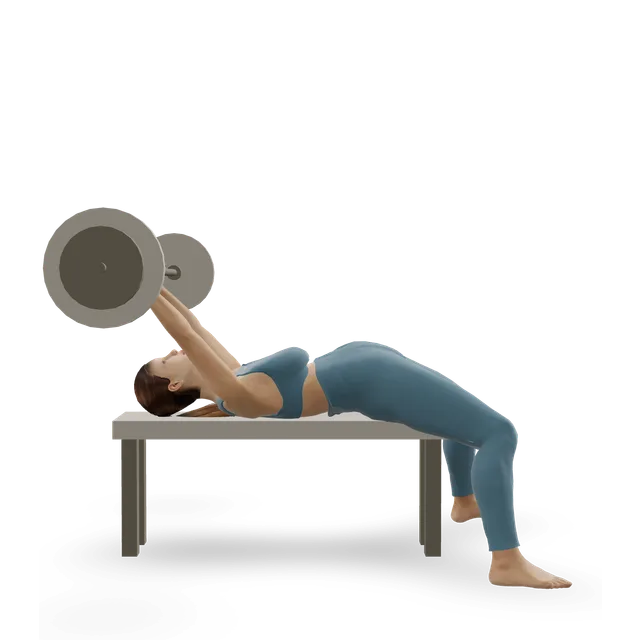
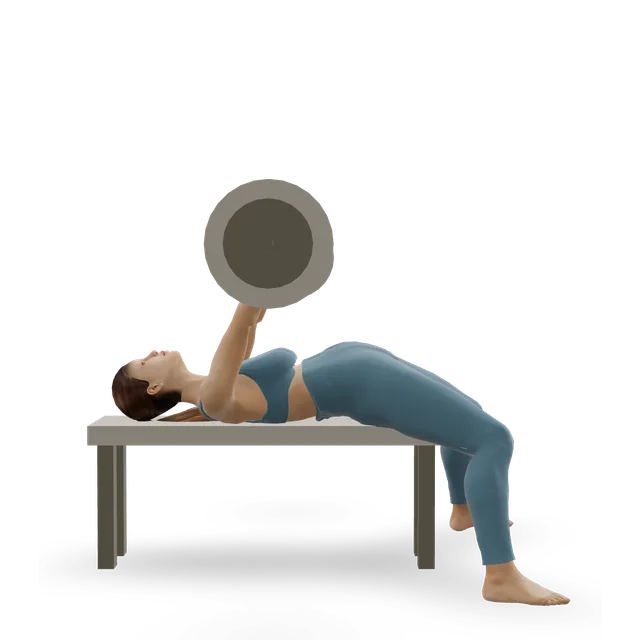
Skull crushers are a lying triceps extension: lying on a bench with your upper arms pointing up, you bend only your elbows to lower an EZ bar or dumbbells to just above your forehead, then straighten them again. The name is a warning about what happens if you lose control, so pick a weight you could stop at any point.
They work all three heads of the triceps, and in one trial lying extensions grew the long head more than bench pressing did. Overhead extensions grew the triceps more than arm-at-your-side ones in another trial, but the lying position hasn't been tested against them, and nobody has counted skull crusher injuries.
This guide covers the EZ bar and dumbbell versions step by step with a 3D demo, forehead or behind the head, your elbows, how heavy, sets and reps, the home versions, and the warning signs. Our tricep extension guide covers the overhead and pushdown versions.
Lie on a bench with your upper arms pointing up, bend only your elbows to lower the weight towards your forehead or slightly behind your head, stop just above your forehead, and straighten your arms fully. The ACE (American Council on Exercise) rates it intermediate. EZ bar or dumbbells; a band or the floor at home.
In 15 women, the lying barbell extension drew 62% of a triangle push-up's triceps activity, the long head more than the outer head. In 43 young men, lying extensions grew the long head more than bench pressing did, while bench pressing grew the outer head more.
Overhead extensions grew the triceps more than arm-at-your-side ones in a 12-week trial of 21 adults; a 6-week trial in women found no difference. The lying position, with your upper arm at shoulder height, hasn't been tested. Include an overhead version each week, and keep skull crushers if your elbows like them.
In 44 trained men, elbow extensions through the middle of the range grew the triceps more than full-range ones over 8 weeks, and half reps in the stretched part matched full reps in 30 trained adults. Stop just above your forehead, or earlier if your elbows ache.
Bending the elbow a long way squeezes the ulnar nerve, the "funny bone" nerve at the inner elbow, so tingling in your ring and little fingers means shorten the range. Heavy pushing is how triceps tendons tear. Moderate weights, a slow lowering and about 3 to 4 out of 10 discomfort at most keep most elbows happy.
A weight you can lift 10 to 15 times: 2 or 3 sets of 10 to 15 (our tricep workout), resting 60 to 90 seconds, stopping about 2 reps short. Aim for about 10 or more hard triceps sets a week, counting presses and dips as half sets.
With your upper arms pointing up from a bench, only your elbows bend and straighten, the weight passing close to your forehead. Skull crusher, lying triceps extension and lying triceps press are names for the same lift. A French press is usually a seated overhead extension, and the JM press mixes a close-grip bench press with a skull crusher.
All three heads of the triceps at the back of your upper arm. The long head also crosses the shoulder, so its length changes with your arm's angle: with the upper arm at shoulder height, as in a skull crusher, it's partly lengthened, more than with the arm by your side and less than fully overhead, in a modelling study of 10 adults.
The activity figures come from EMG (electromyography: electrodes measuring how hard a muscle works over a few reps). They show effort, not what a muscle will build.
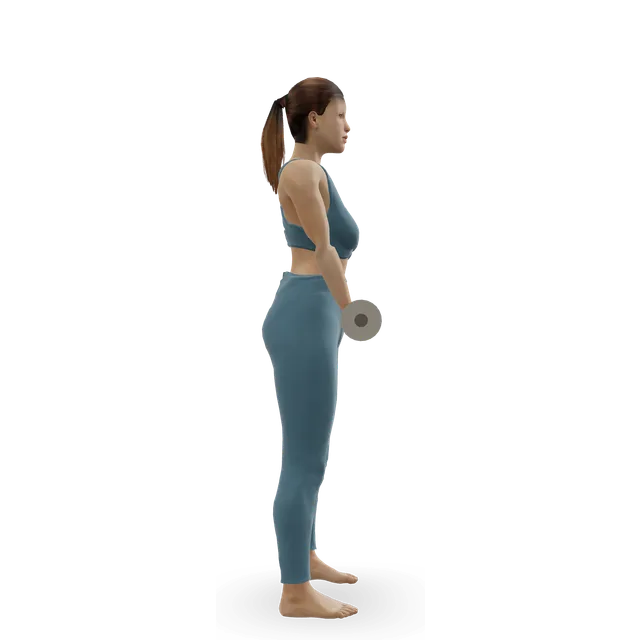
Controlled pushdowns, as the EZ bar and band move pages ask, or comfort with lighter triceps work such as the kickback, as the dumbbell page says.
How people differ
Some elbows tolerate deep bending under load better than others, people with a sensitive ulnar nerve feel tingling at the bottom of the rep, and stiff shoulders make the behind-the-head version uncomfortable (our observations). In pregnancy, lying flat after the first trimester makes some people light-headed, a pregnancy charity says.
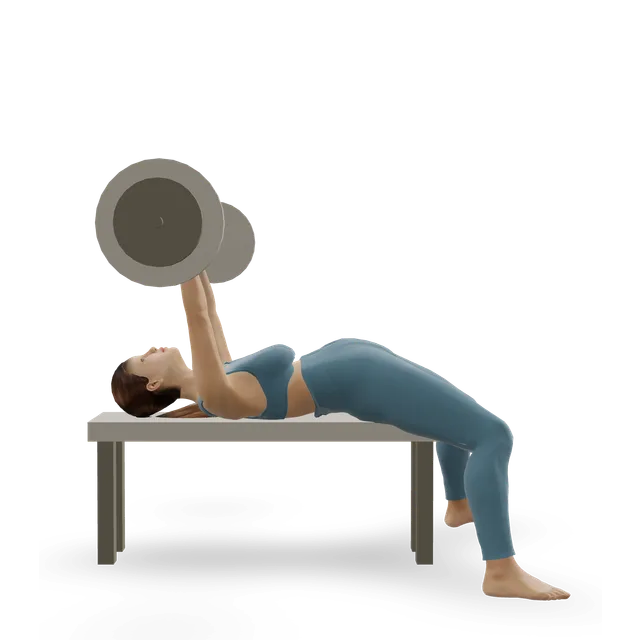
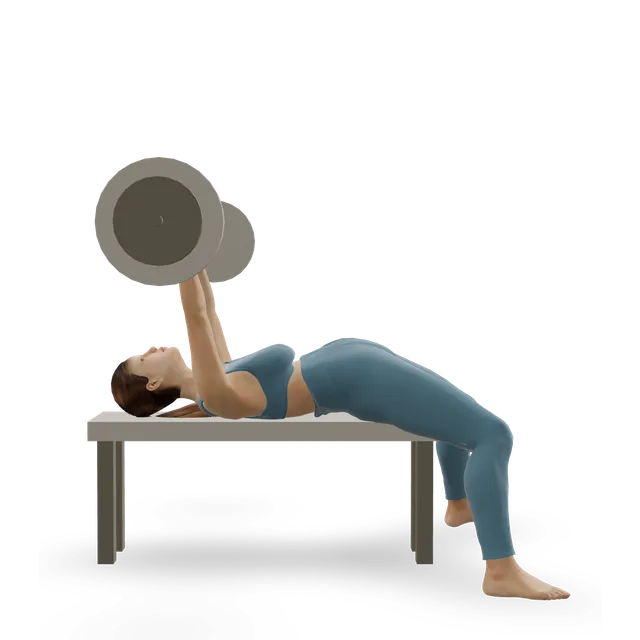
How to do skull crushers with an EZ bar, step by step
From ACE's lying barbell triceps extension: the grip, the path, the stopping point, the breathing and the full straightening. Stopping about 2 reps short follows our dumbbell upper body workout B, and finishing with the bar on your chest is our editorial suggestion.
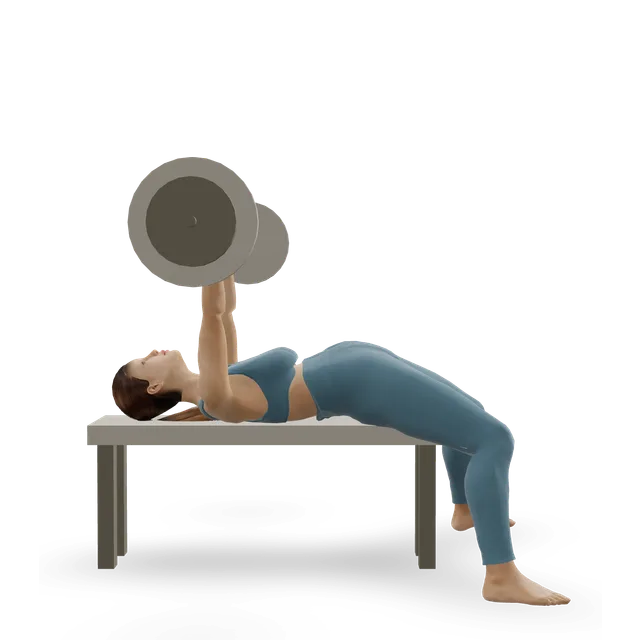
Lie on a flat bench with your feet flat on the floor, holding an EZ bar on your chest in an overhand grip, palms towards your feet and thumbs round the bar, hands on the angled inner handles about shoulder-width apart or a little narrower.
Press the bar up until it's over your face, arms straight, upper arms upright and wrists straight.
Breathe in and bend only your elbows to lower the bar slowly towards your forehead or slightly behind your head, elbows about shoulder-width apart and pointing at the ceiling.
Stop when the bar is just above your forehead, or earlier if your upper arms start to drift back, your elbows ache or your fingers tingle.
Breathe out and straighten your elbows fully, your upper arms staying still.
Use a weight you could stop at any point, and end the set about 2 reps short of failure.
At the end, lower the bar to your chest and sit up, or hand it to a spotter.
Loading the 3D figure…
Drag to turn
Gets into position, then repeats the movement. Technical checks passed; qualified exercise review is pending.
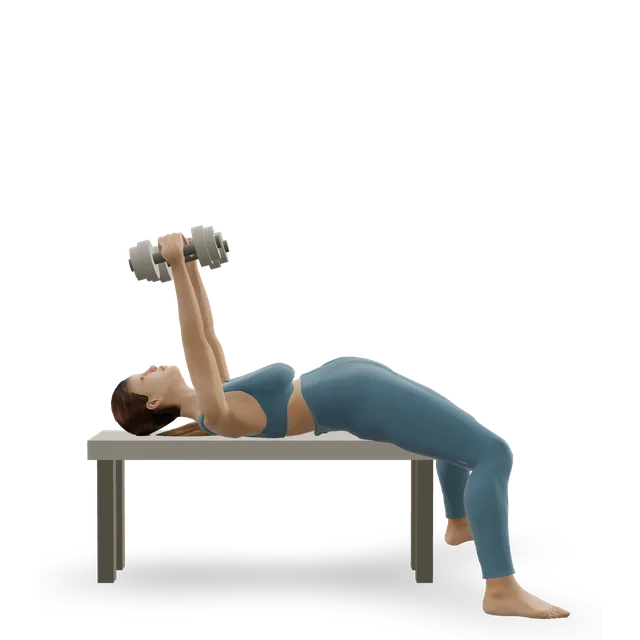
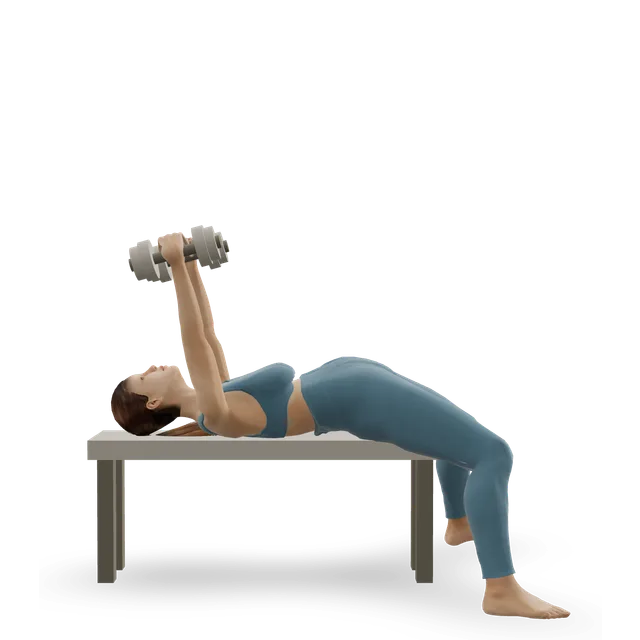
Steps from our move page; the stopping point is editorial, and stopping about 2 reps short follows our dumbbell upper body workout B. Dumbbells or an EZ bar suit the wrists and elbows better than a straight bar, as the move page says.
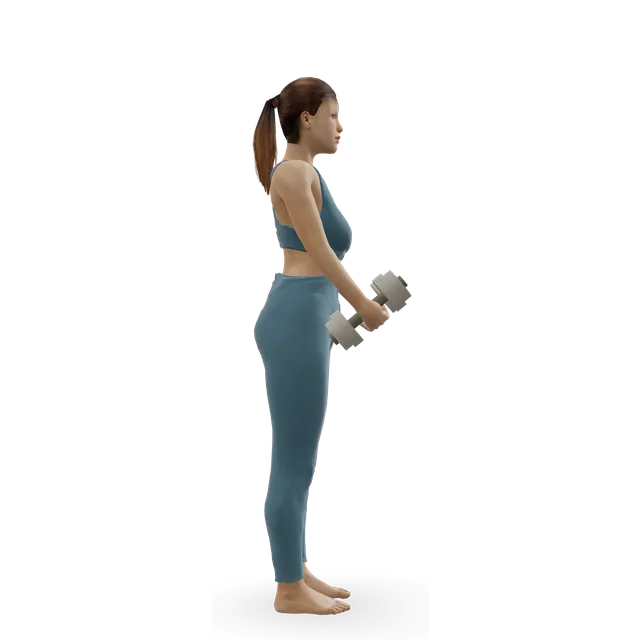
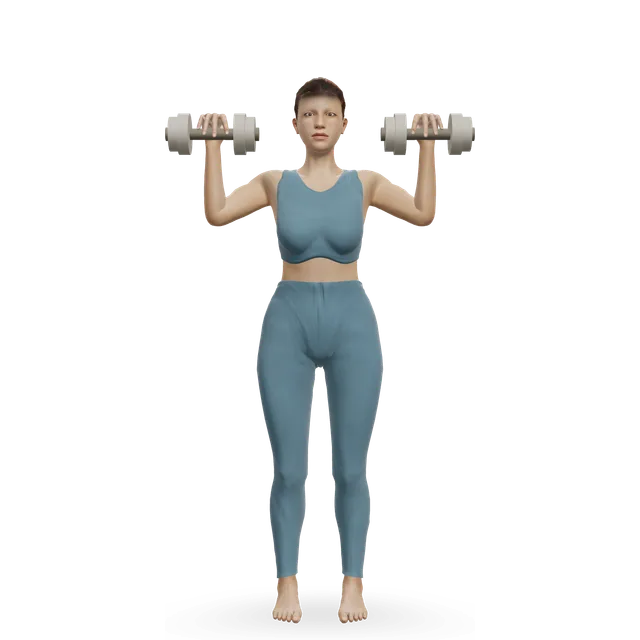
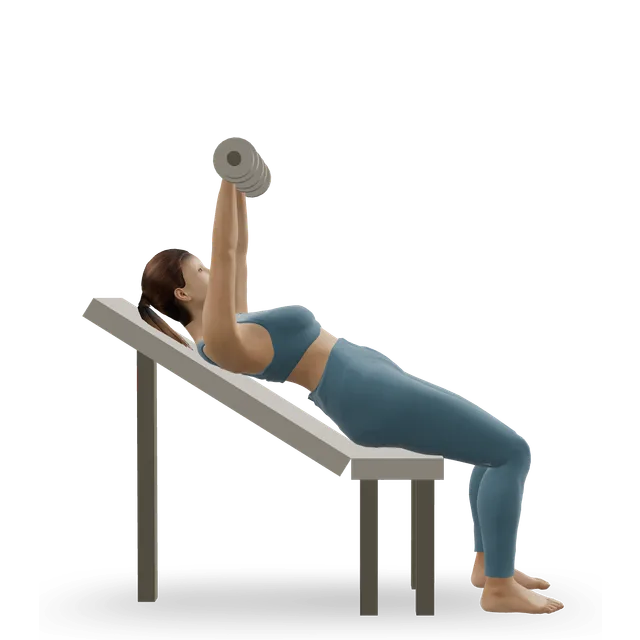
Lie on a flat bench with your feet on the floor, a dumbbell in each hand, palms facing each other, arms straight up above your eyes.
Keep your upper arms still and bend your elbows to lower the dumbbells slowly beside your forehead.
Stop at a comfortable stretch, before your elbows ache.
Press back to straight arms.
Use a weight you could stop at any point, and end the set about 2 reps short of failure.
Loading the 3D figure…
Drag to turn
Gets into position, then repeats the movement. Technical checks passed; qualified exercise review is pending.
ACE lowers the bar towards your forehead or slightly behind your head, stopping just above your forehead or as your upper arms start to drift back. Our move pages lower the dumbbells beside your forehead.
Behind the head: a little more stretch on the long head
Tilting your upper arms slightly back, so the weight passes behind your head, lengthens the long head of the triceps a little more. That's our reading of one modelling study of 10 adults, in which the long head lengthened as the arm rose to 135 degrees; no trial has tested whether it grows the triceps more. It also needs comfortable shoulders.
The lying barbell extension behind the head is on our figure as its own move. Use the same sets and reps as the forehead version.
What the evidence says
Overhead against arm at your sideMixed evidence
In a 12-week trial in 21 adults, each training one arm overhead and the other at the side, overhead extensions grew the whole triceps 19.9% against 13.9%, and the long head 28.5% against 19.6%, with 34 to 39% lighter weights. A 6-week trial in untrained women, as a 2026 review describes it, found the long head grew similarly with pushdowns and overhead extensions. Two small trials that don't agree.
We found no growth trial comparing lying extensions with overhead or arm-at-your-side extensions. In a skull crusher your upper arm points up from a bench, partway between the two positions in those trials.
Lying extensions against bench pressingEmerging evidence
In 43 young men, lying barbell extensions alone grew the whole triceps and raised the elbow extension maximum but not the bench press maximum. Bench pressing alone raised the bench and grew the chest and the triceps' outer head more, but not the whole triceps significantly; the extensions grew the long head more.
In 44 trained men over 8 weeks (3 sets of an 8-rep maximum, three times a week), training the elbow extensors through 45 to 90 degrees grew the triceps 48.7% against 28.2% through 0 to 120 degrees; a 2026 review names the exercise a lying barbell elbow extension. An 11-study review reports the same mid-range advantage for the triceps, and the 2026 review notes that the hardest part of the lift fell inside both ranges.
In 30 trained adults over 8 weeks, half reps at long muscle lengths built about as much triceps and biceps muscle as full reps, using overhead extensions and pushdowns.
In 15 women lifting 70% of their best for 7 reps, kickbacks and dips drew 87% of a triangle push-up's activity, overhead extensions 76%, rope pushdowns 74%, bar pushdowns 67%, and lying extensions and the close-grip bench 62%. Activity in a few reps doesn't predict what a muscle builds.
Holding the arm at shoulder heightEmerging evidence
In 10 young men, holding the elbow bent with the shoulder at 90 degrees, rather than by the side, shortened endurance and raised the long head's activity late in the hold. In a modelling study, the inner (medial) head produced the most force with the arm at 90 degrees or higher.
EZ bar, dumbbells, bands and other lying extensions
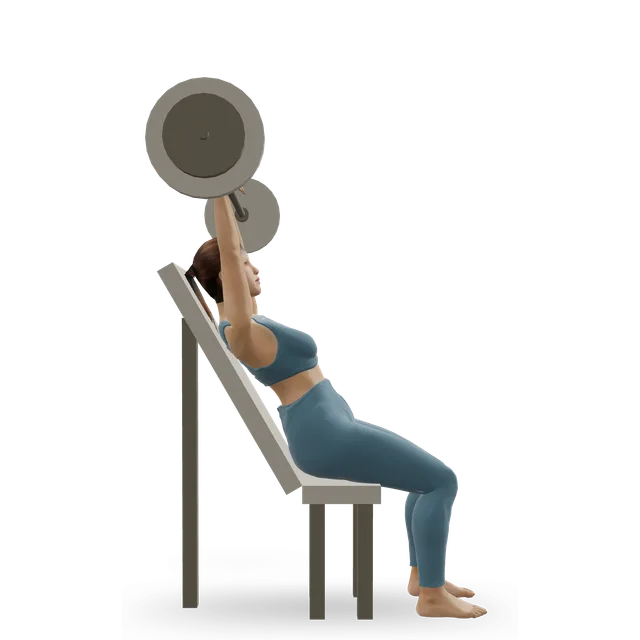
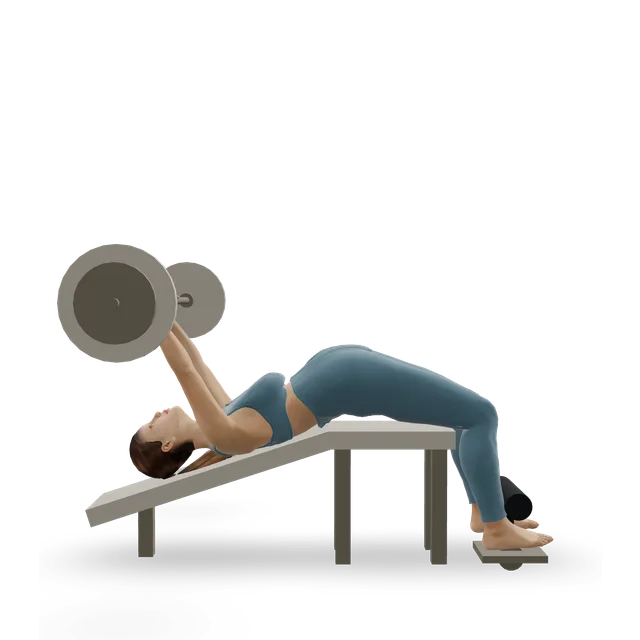
With a page dose, use it: the lying EZ-bar and dumbbell extensions and the extension to the chin, 2 to 3 sets of 8 to 12, and the bodyweight version, 2 to 3 sets of 6 to 12 (their move pages' doses). For the rest, including the behind-the-head, incline, decline, cable and band versions, use 2 to 3 sets of 10 to 15 (our tricep workout's dose; editorial for these versions).
At home: dumbbells, a band, the floor or your body weight
Dumbbells on the floor
Lie with your knees bent and your feet flat. The floor stops the weights behind your head, which limits how far your upper arms can tilt back (our view). Our figure shows the bench version.
One dumbbell in both hands
Hold it upright by its top end and lower it beside your forehead, the same as the two-dumbbell version.
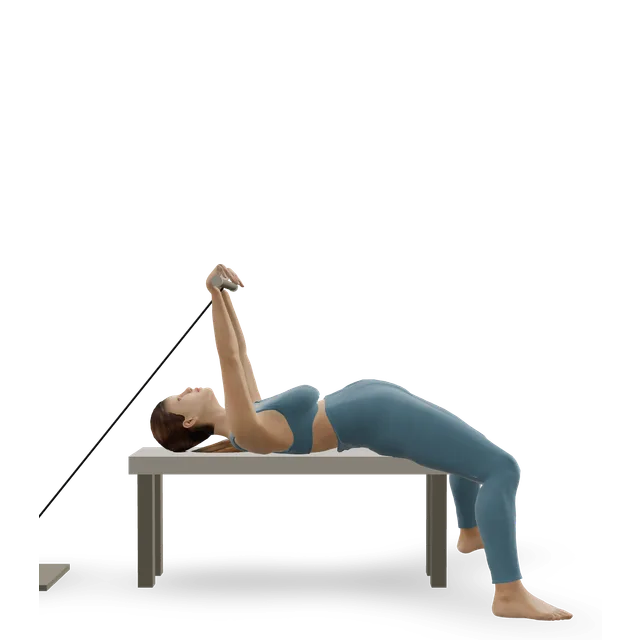
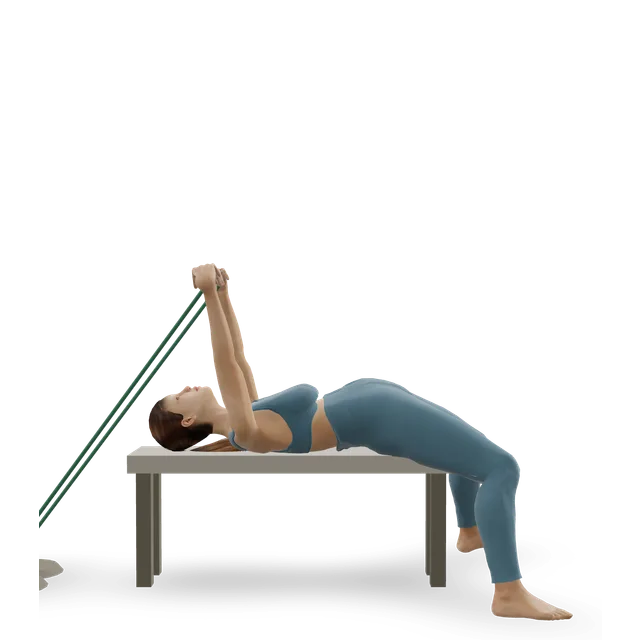
A band
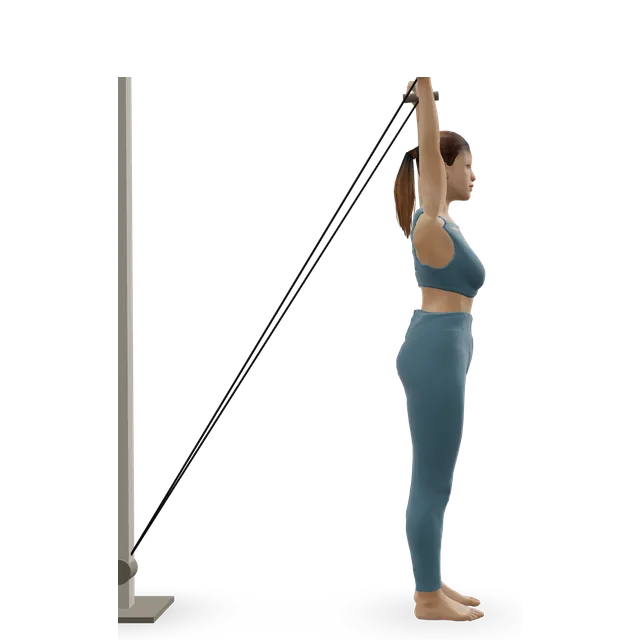
Anchor it low beyond your head and straighten your arms against it, as the band move page shows. Bands built strength about as well as weights across 8 studies.
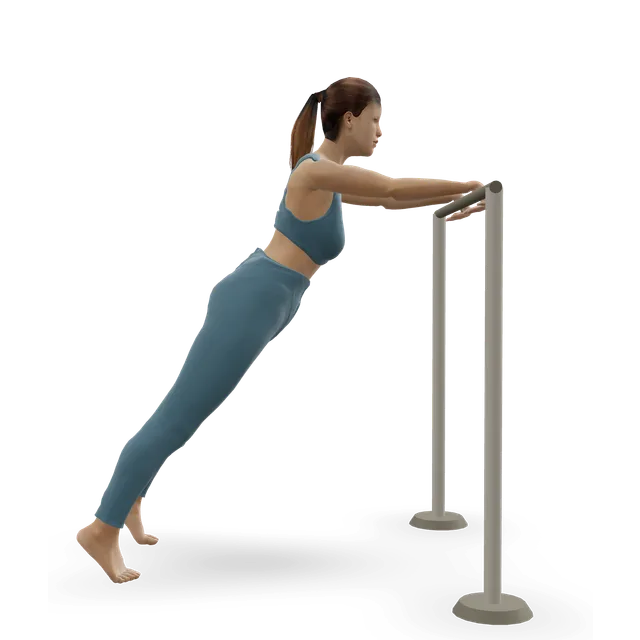
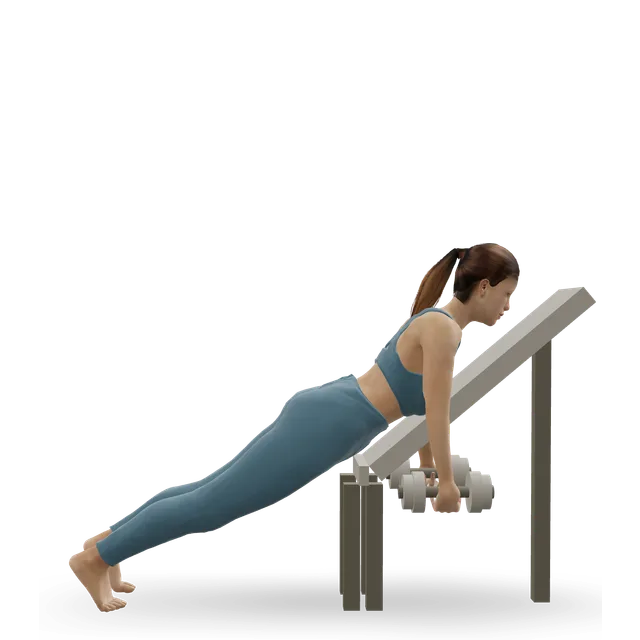
Lean on a bar locked in a rack at about chest height, arms straight, and bend your elbows to lower your forehead towards it: 2 to 3 sets of 6 to 12 (its move page's dose). Use a bar that can't roll or lift off, as the move page warns.
Learn it in steps, and build a triceps week
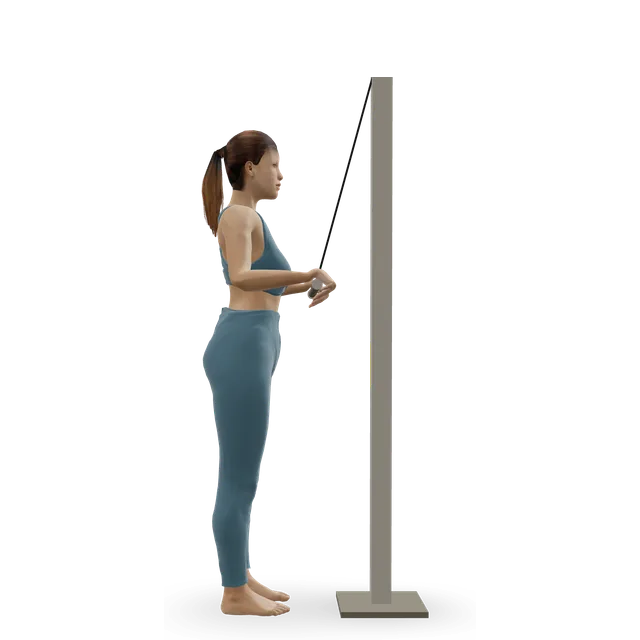
Pushdowns first, 2 to 3 sets of 10 to 15 (our tricep workout); dumbbell skull crushers, light, then the EZ bar, 2 to 3 sets of 10 to 15 (our tricep workout); and across the week an overhead extension, 3 sets of 10 to 15 on a cable (our tricep workout), and a close-grip bench press, 3 sets of 6 to 8 after a lighter set (our tricep workout), as our tricep extension and close-grip bench guides advise.
Lower slowly, with a weight you could stop at any point, as the move page warns.
Bent-back wrists
Keep them straight; an EZ bar or dumbbells make that easier.
Back arching or feet off the floor
Feet flat and back on the bench, as ACE's set-up says.
Grinding through sore elbows
Go lighter for more reps, do fewer sets, or switch to pushdowns and overhead work for a while, as the move page and our elbow guides suggest.
Too heavy to get into position safely
Start with the bar on your chest, or have a spotter hand it to you.
Skull crushers and your elbows
The elbow pain rule
Up to about 3 to 4 out of 10 during the exercise, settling within an hour, and no worse the next morning. If it's worse, go lighter next time, not to nothing, as our elbow guides say.
Tingling in your ring and little fingersEmerging evidence
In 20 cadaver elbows, bending from straight to 135 degrees shrank the tunnel behind the inner elbow by 30 to 41% and the ulnar nerve's cross-section by 33 to 50%, and from 90 degrees the pressure inside the nerve was higher than around it. So shorten the range or swap to pushdowns if your fingers tingle, as the move pages advise. The NHS says to go to an urgent treatment centre or A&E if your arm tingles or feels numb after an injury.
An ache where the triceps tendon meets the elbow, worse when you straighten against resistance, is usually a load problem: our triceps tendinopathy guide starts with holds and lighter pushdowns and brings heavy skull crushers back last. Most triceps tendon tears come from pushing a heavy load, and steroid medicines weaken the tendon.
There are no skull crusher strength standards worth following. Compare this week's weight and reps with last week's.
Sets, reps and how often
Sets and reps
2 or 3 sets of 10 to 15 (our tricep workout), or 2 to 3 sets of 8 to 12 with an EZ bar (the lying EZ-bar extension page's dose), resting 60 to 90 seconds, as our plans give for small moves.
How hard
Most sets stop 1 to 3 reps short and the last set 0 to 2 short, as our plans advise for small moves, but stop about 2 short whenever your elbows set the limit. Going to failure adds little muscle, and people underestimate the reps they have left by about 1.
About 10 or more hard triceps sets a week, counting each set of bench presses, push-ups or dips as about half a set. Counting indirect sets as half fitted the data best in a review of 67 studies.
Add reps to the top of the range, then the next dumbbell or a small plate. Note how your elbows feel the next morning: comfortable elbows are part of progress.
Skull crushers, overhead extensions, pushdowns and presses
Against overhead extensions
Overhead extensions have the better growth evidence; skull crushers are untested. Do one of each across the week if your shoulders and elbows allow (our tricep extension guide).
Pushdowns are easy to load and gentle on most elbows; skull crushers take the arm further from your side. Many people do both.
Against the JM press and the close-grip bench
Presses let you lift more and grew the outer head more in one trial, while lying extensions grew the long head more. The JM press sits between the two; use a spotter or safety bars, at 2 to 3 sets of 10 to 15 (its move page's dose). Our close-grip bench guide covers the press.
A French press is usually a seated overhead extension, so it's an overhead version: our tricep extension guide teaches it.
Workouts to follow
The tricep workout uses skull crushers at 2 to 3 sets of 10 to 15 after a close-grip press and an overhead extension. Push day B uses 2 sets of 10 to 15, the arm workout 10 to 12 reps, the shoulders and arms workout 8 to 12 with dumbbells, and dumbbell upper body workout B 10 to 15, stopping about 2 reps short.
Lighter, more reps, and pushdowns before skull crushers, as our triceps tendinopathy guide sets out.
Tingling in the ring and little fingers
Shorten the range or skip deep extensions, as our move pages and ulnar nerve guide suggest.
Sore wrists
Dumbbells held palms in, or an EZ bar, rather than a straight bar.
Shoulder pain
Lower to just above your forehead rather than behind your head, or use pushdowns, which keep your arm by your side.
Pregnancy
After the first trimester, if lying flat makes you uncomfortable or light-headed, switch to an incline bench or an overhead extension, as a pregnancy charity advises.
Follow your surgeon's limits before pushing or lifting with your arms, as our heart surgery guide says.
Warning signs
Stop and get medical help
If you get chest pain or pressure, feel faint or dizzy, are unusually breathless, or your heart races or beats irregularly during exercise, as our plans advise. The American Heart Association says these need immediate medical evaluation.
For chest pain that comes on suddenly and doesn't go away, feels tight or like squeezing, or spreads to your arms, neck, jaw, stomach or back; arm pain that comes on suddenly with pressure, heaviness or squeezing across your chest; a sudden, extremely painful headache while straining; someone who faints while exercising; palpitations that don't go away, or come with chest pain, breathlessness or feeling faint; or signs of a stroke, even if they've stopped. Don't drive yourself to A&E.
If you haven't exercised for some time or have a medical condition, speak to your GP first, as the NHS advises. Get advice before heavy lifting if your blood pressure is uncontrolled, or you have heart disease or chest pain when you're active, a pacemaker or defibrillator, diabetic eye disease, glaucoma, a hernia, recent eye or tummy surgery, or you're pregnant, as our breathing guide lists.
Go to an urgent treatment centre or A&E for a pop or snap at the back of the elbow during a push, a press or a dip, or after a fall onto an outstretched hand, then sudden pain and swelling, bruising at the back of the elbow or forearm, a gap above the point of the elbow, or weakness straightening the arm, especially overhead. Don't wait to see if it settles: a full tear in an active person is usually repaired, and expert guidance favours repairing it early.
Get it checked if you notice weakness straightening your arm without a clear injury, or back-of-elbow pain if you've had steroid injections near the elbow, have kidney disease or use anabolic steroids: these can weaken the tendon, as our triceps tendinopathy guide says.
If you have severe pain in your arm and it's difficult to move; you've injured your arm and heard a snap, or it has changed shape; or your arm tingles or feels numb. In the US, go to urgent care or the emergency department.
Get help from NHS 111 if your arm hurts when you exercise but the pain goes away when you rest. See a GP if elbow or arm pain hasn't gone after a few weeks of looking after it yourself; in many areas you can refer yourself to NHS physiotherapy. Tingling that keeps coming back is in our ulnar nerve guide.
No study has counted skull crusher injuries, and in a review of the weight-training sports, injury rates were low against team sports. Deep elbow bending does squeeze the ulnar nerve, and heavy pushing is how triceps tendons tear, so moderate weights, a controlled lowering and the elbow rule keep most elbows happy.
"Overhead extensions make skull crushers pointless"Mixed evidence
Overhead work grew the triceps more than arm-at-your-side work in one trial but not in another, and the lying position hasn't been tested; lying extensions grew the long head more than bench pressing did. Use both if your elbows like them.
ACE straightens the elbows fully on every rep, and we found no evidence that straightening under control harms the elbow. Just don't slam into the end of the movement.
"Skull crushers will raise your bench"Mixed evidence
Lying extensions alone didn't raise the bench press maximum in 43 men; bench pressing did. In 27 trained men, 6 weeks of extra work for the triceps, the chest or the front of the shoulder each raised the bench. Press and extend.
A lying triceps extension: lying on a bench with your upper arms pointing up, you bend only your elbows to lower a bar or dumbbells towards your forehead and straighten them again. The name is a warning about losing control, so use a weight you could stop at any point.
How do you do skull crushers without hurting your elbows?
Use dumbbells or an EZ bar rather than a straight bar, lower slowly to just above your forehead, and pick a weight you could stop at any point. Stop about 2 reps short of failure and let your elbows, not your muscles, set the weight. If your elbows still ache, swap to pushdowns for a while.
EZ bar, straight bar or dumbbells for skull crushers?
An EZ bar or dumbbells let your wrists and elbows sit at a friendlier angle than a straight bar; no study has compared them. Dumbbells also let each arm work on its own.
Should skull crushers go to your forehead or behind your head?
Either. ACE lowers the bar towards your forehead or slightly behind your head and stops just above your forehead. Going behind your head tilts your upper arms back a little, which lengthens the long head slightly more, though no trial has tested whether that grows it more.
What muscles do skull crushers work, and do they hit the long head?
All three heads of the triceps, with the long head more active than the outer head in one study. Lying extensions grew the long head more than bench pressing did in a trial of 43 young men.
Skull crushers or overhead tricep extensions?
Overhead extensions grew the triceps more than arm-at-your-side extensions in a 12-week trial, though a 6-week trial found no difference, and skull crushers haven't been tested against either. Do an overhead extension each week and keep skull crushers if your elbows like them.
Are skull crushers the same as tricep extensions?
They're one kind: the lying one. Overhead extensions and pushdowns are the others, and our tricep extension guide covers them.
How heavy should skull crushers be?
Light enough for 10 to 15 controlled reps, stopping about 2 reps short. Light loads build muscle as well as heavy ones when the sets are hard, and your elbows usually prefer the lighter end.
How many sets and reps of skull crushers should I do?
2 or 3 sets of 10 to 15, or 8 to 12 with an EZ bar, resting 60 to 90 seconds. Aim for about 10 or more hard triceps sets a week, counting presses and dips as half sets.
Can I do skull crushers at home?
Yes: with dumbbells on a bench or the floor, a band anchored low behind you, or a bodyweight version leaning on a bar locked in a rack. A band builds strength about as well as weights.
Should you lock out at the top of a skull crusher?
Straighten your elbows fully under control: ACE does, and we found no evidence that it harms the elbow. Just don't slam into the end of the movement.
Will skull crushers increase my bench press?
Not on their own: in 43 young men, lying extensions alone didn't raise the bench press maximum, while bench pressing did. In trained men, extra work for the triceps, the chest or the front of the shoulder each raised the bench, so press and extend.
Exercise education, not a personal prescription, and clinical review of these guides is pending. Check with a GP before starting hard training if you have a heart condition, chest pain, dizziness or breathlessness when active, and stop for sharp or increasing pain. Health disclaimer.