How to do tricep kickbacks: the hinge, the elbow and the lockout, dumbbell, cable and band versions, and how many
A tricep kickback is an elbow extension done hinged forward: your upper arm stays still along your side while your forearm swings back until your arm is straight, then lowers to a right angle. It works all three heads of the triceps, needs only a light dumbbell, and suits your shoulders when overhead extensions don't. Looking for the hip exercise? That's in our glute kickback guide.
In one muscle activity study kickbacks worked the triceps as hard as dips, but no trial has tested them for growth, and with a dumbbell they load the muscle hardest where it's shortest. So this guide teaches them as a good second triceps move beside an overhead extension.
It covers the steps on the 3D figure, the two-arm, seated, cable and band versions, how heavy and how many, your elbows, shoulders and back, and the warning signs.
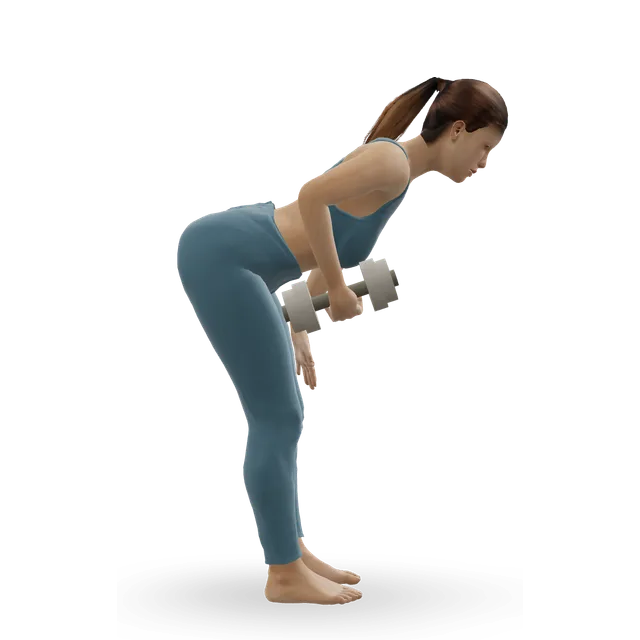
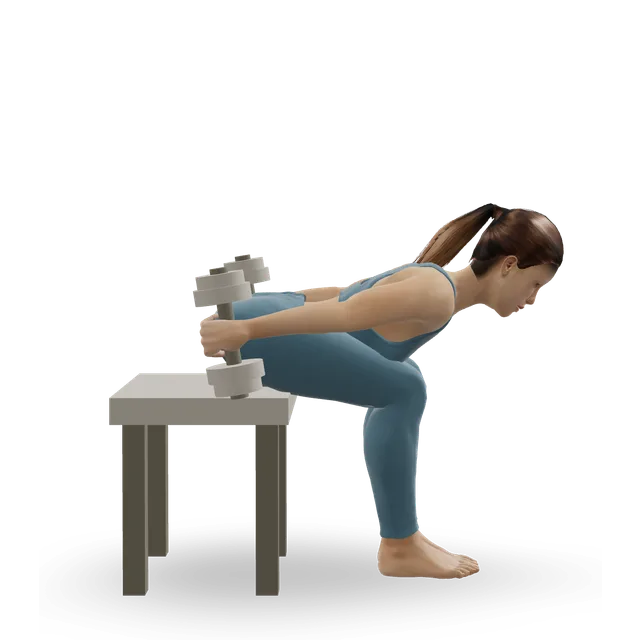
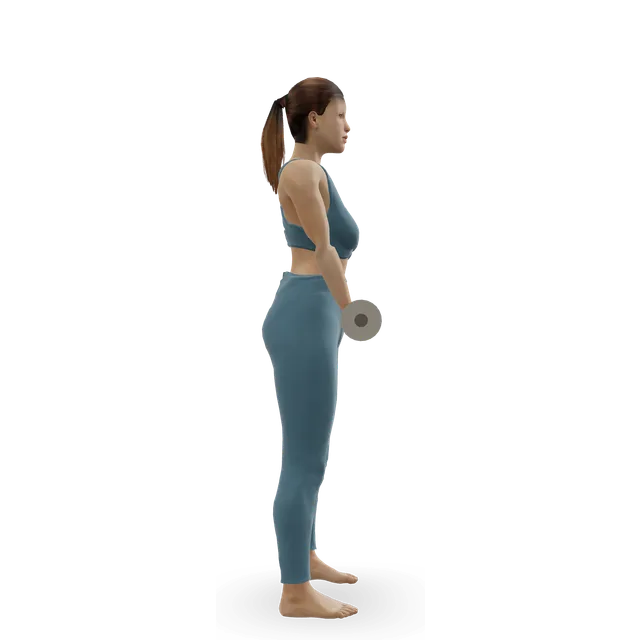
Hinge forward with a flat back, one hand on your front thigh or a bench. Hold your upper arm along your side, level with your trunk, with your elbow bent to a right angle. Breathe out and straighten your elbow until your arm is long behind you, then lower slowly: only your forearm moves. The American Council on Exercise (ACE) rates it beginner.
With a dumbbell, the load is heaviest at the lockout, when your forearm is level with the floor, and almost nothing at the start, when it hangs straight down (our reading of the mechanics). So you'll use far less weight than in a pushdown. ACE's researchers made the same point: done correctly, kickbacks don't take much weight to work hard.
In 15 trained women, kickbacks drew 87% of a triangle push-up's triceps activity, level with dips, with the long and outer heads working about equally (88 and 87%). That's effort in one set of 7 reps, not proof of growth.
We searched and found no trial that has trained kickbacks for growth. With your arm by your side the long head of the triceps is held short, and a dumbbell kickback loads the muscle hardest at the lockout, where it's shortest: that's our reading of the mechanics. A narrative review found growth is best when a muscle is loaded hard at long lengths, and overhead extensions grew the triceps about 40% more than arm-at-your-side extensions in a 12-week trial of 21 adults. So keep an overhead extension in your week too.
2 or 3 sets of 12 to 15, the last set 0 to 2 reps short of failure, with 60 to 90 seconds' rest (our arm workouts). Count them towards about 10 or more hard triceps sets a week, counting presses, push-ups and dips as half sets.
A hospital sports-medicine handout lists bent-over triceps extensions (kickbacks) and pushdowns as safe for the shoulder, and says to avoid overhead triceps work. But kickbacks won't burn the fat over your arm: training one arm for 12 weeks didn't shrink the fat over it more than over the other arm in 104 adults, and across 13 studies working a body part didn't reduce the fat over it.
An elbow extension done hinged forward. Your upper arm is held still along the side of your trunk and only your forearm moves, from hanging straight down with the elbow at a right angle to pointing straight back with the elbow straight. ACE rates it beginner, a hospital handout calls it a bent-over triceps extension, and our tricep extension guide groups it with pushdowns as an extension done with your arm at your side.
All three heads of the triceps, which join one tendon at the point of your elbow. The long head starts on your shoulder blade, so it crosses your shoulder too; the outer (lateral) and inner (medial) heads start on your upper arm. In ACE's study the long and outer heads worked equally hard, and in a modelling study of 10 adults the long head produced the most force of the three with the arm at the side. The muscles around your shoulder blade hold your upper arm up, and your trunk and hips hold the hinge (our reading).
A dumbbell pulls straight down, so your elbow works hardest when your forearm is level with the floor, which in a kickback is the lockout, and hardly at all when your forearm hangs straight down at the start. That's our reading of the mechanics: the dumbbell kickback loads the triceps most where it's shortest. A low cable in front of you pulls along the forearm's arc and keeps some tension at the start (also our reading; no study has measured it). The narrative review we draw on found that growth favours real load at long muscle lengths, which is why this guide calls the kickback a good second move rather than a first.
The ability to hold a hip hinge with a flat back, which is the move page's prerequisite, or a bench or seat to hold it for you.
How people differ
Long arms make the same dumbbell feel heavier at the lockout, because the lever is longer (our reading). A stiff or sore lower back tires in the unsupported hinge, and the bench-supported and seated versions take the hinge away. People also respond very differently to the same arm training: in 585 adults training one arm for 12 weeks, the trained biceps changed size by anything from a 2% loss to a 59% gain. Expect your triceps to vary too (our reading).
The kickback studies are small: one muscle activity study of 15 trained women and one lab study of 14 women. The growth trials compared overhead and arm-at-the-side cable extensions in 21 adults. We say so where a point rests on them.
How to do a tricep kickback, step by step
From ACE's triceps kickback and our one-arm kickback move page. The 2-second lowering follows our bicep curl guide, and the stopping cue is editorial.
Hold a light dumbbell in your left hand, palm facing in. Stand in a split stance with your right leg forward and your right hand on your right thigh, or put your right hand and right knee on a flat bench.
Brace your trunk and hinge forward from your hips with a flat back until your trunk is at about 45 degrees or nearly level, your neck long and your eyes on the floor a little ahead.
Draw your shoulder down and back. Lift your upper arm until it lies along your side, level with your trunk and close to it, your elbow bent to a right angle and your forearm hanging straight down.
Breathe out and straighten your elbow until your arm is fully straight behind you, moving only your forearm. Hold for a second.
Breathe in and lower slowly, for a count of about 2, back to the right angle, keeping your upper arm still.
Finish the set, then change arms. End the set when your upper arm starts to swing or you can't straighten fully.
Loading the 3D figure…
Drag to turn
Gets into position, then repeats the movement. Technical checks passed; qualified exercise review is pending.
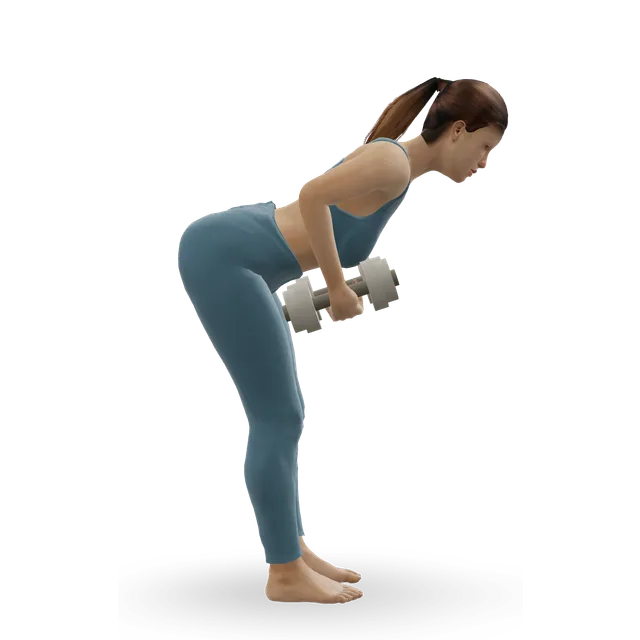
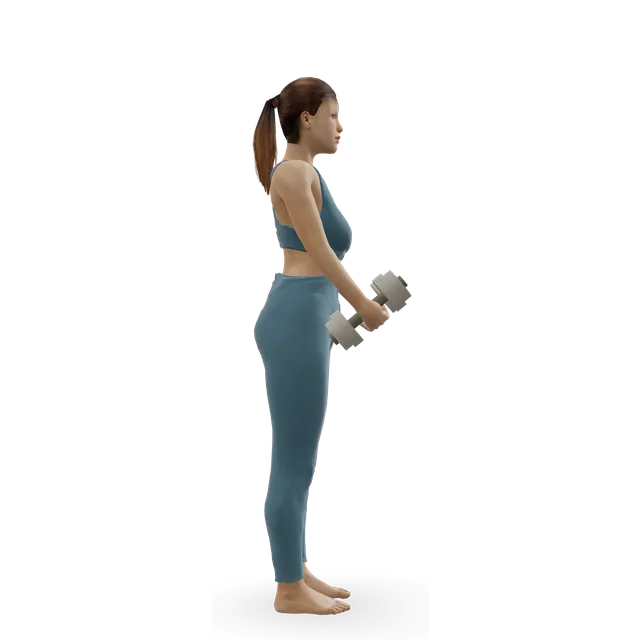
From our two-arm kickback move pages. Neither hand supports you, so it's harder on your lower back: stand up to rest between sets if your lower back tires, as the move page says.
Stand with a dumbbell in each hand, palms facing your body and knees slightly bent.
Hinge forward from your hips with a flat back until your trunk is almost level, your neck long.
Bring your upper arms up along your sides, level with your trunk, your forearms hanging straight down at a right angle.
Keeping your upper arms still, straighten your elbows until your arms are long behind you, hold for a second, then lower slowly.
Loading the 3D figure…
Drag to turn
Gets into position, then repeats the movement. Technical checks passed; qualified exercise review is pending.
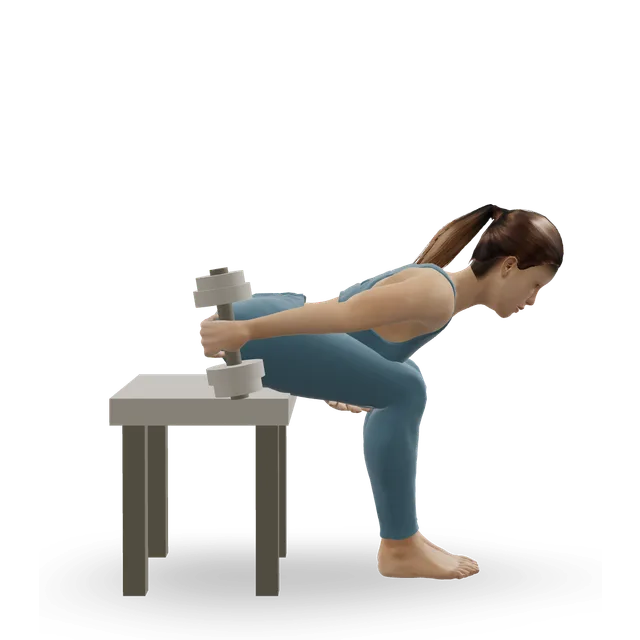
From our seated one-arm kickback move page: seated, your legs don't have to hold a standing hinge. Its dose is 2 to 3 sets of 8 to 12 with each arm, stopping with 2 or 3 reps in reserve (its editorial starting point). The seated two-arm kickback works both arms at once.
Sit on the end of a flat bench with a dumbbell in one hand, palm facing in, knees bent and feet flat.
Lean forward from your hips with a flat back until your trunk is almost level with the floor, your neck long.
Lift your working upper arm until it lies along your side, level with your trunk, your forearm hanging straight down at a right angle.
Keeping your upper arm still, straighten your elbow until your arm is long, hold for a second, then lower slowly. Change arms after the set.
Loading the 3D figure…
Drag to turn
Gets into position, then repeats the movement. Technical checks passed; qualified exercise review is pending.
In ACE's study of 15 trained women aged 20 to 24, each doing one set of 7 reps at 70% of their maximum, kickbacks drew 87% of the triangle push-up's triceps activity, the same as dips, and neither was significantly below the push-up. Overhead extensions drew 76%, rope pushdowns 74%, bar pushdowns 67%, and lying extensions and the close-grip bench press 62%. The spread between people was wide (plus or minus 27 points), ACE funded the study, and muscle activity in one set isn't a validated predictor of growth.
Growth: no kickback trial, and the nearest trials disagreeMixed evidence
We searched and found no training trial of kickbacks. The nearest evidence compares overhead with arm-at-your-side cable extensions: over 12 weeks in 21 adults, the overhead version grew the whole triceps 19.9% against 13.9%, and the long head 28.5% against 19.6%, with 34 to 39% lighter loads. A 6-week trial in women found no difference, as a 2026 narrative review describes it.
With a dumbbell, a kickback is hardest at the lockout, where the triceps is shortest, and almost unloaded at the start. That's our reading of the mechanics: no study has measured it in a kickback. The narrative review concluded that training only at short muscle lengths doesn't make the most of growth, and across 11 studies, full range and partial reps in the stretched position grew muscle more than partial reps near the top. Our reading: a good second triceps move, not the one to rely on.
The middle of the range builds it tooEmerging evidence
In 44 trained men, elbow extensions through the middle of the range (45 to 90 degrees of elbow bend) grew the triceps 48.7% against 28.2% for the full range over 8 weeks, and in 30 trained adults half reps in the stretched half matched full reps. The triceps isn't only built at full stretch, so a kickback isn't wasted, and holding the lockout for a second is fine (our reading).
With the arm at the side, the long head produced the most force of the three heads in a modelling study of 10 adults; at 90 degrees and above, the inner head took over. In a fatiguing hold in 10 men, the long head's activity rose more with the shoulder at 90 degrees than with the arm at the side. So a kickback doesn't skip the long head, though it holds it short.
Swinging (cheat) pushdowns built as much triceps as strict ones in 30 untrained adults over 8 weeks. In a kickback, though, a swing mostly moves your shoulder, so keep your upper arm still to keep the work on your triceps, as ACE cues (our reading).
In 14 women doing rest-pause kickbacks, heavier dumbbells didn't raise triceps activity in step with the force needed, and the authors advise managing weight increases carefully. It's one small lab study, read as an abstract. Our reading: a weight you can straighten fully for 12 to 15 reps is enough.
Dumbbell and seated kickbacks, and the steps before them
If a standing hinge is new to you, start with hinge practice (8 reps, as in our dumbbell leg workout) and pushdowns (2 to 3 sets of 10 to 15, our tricep workout); then the seated kickbacks (2 to 3 sets of 8 to 12, each arm for the one-arm version, stopping 2 or 3 short: their move pages' dose); then the one-arm kickback with a hand on your thigh or a bench (2 to 3 sets of 12 to 15 each arm, our suggestion); then two arms at once (2 to 3 sets of 12 to 15, the last 0 to 2 short, as in our arm workouts). Move on when 3 sets of 15 are smooth, with a full lockout and a still upper arm (our suggestion).
None of these has a 3D demo yet: the two-arm dumbbell demo above shows the movement.
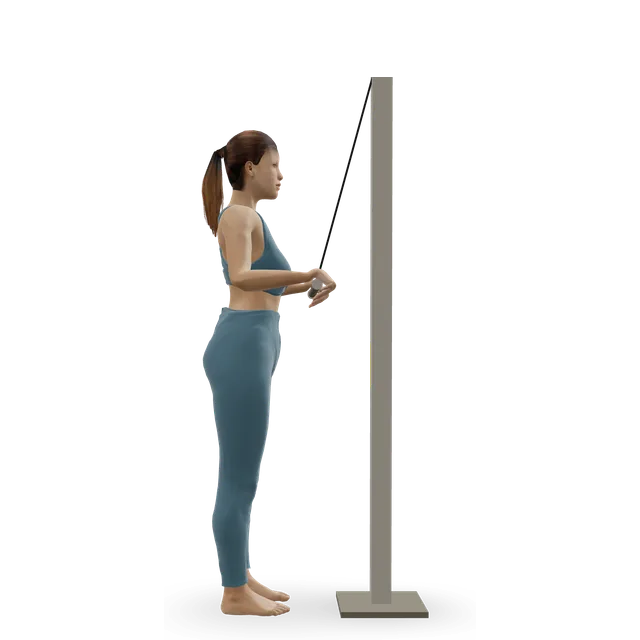
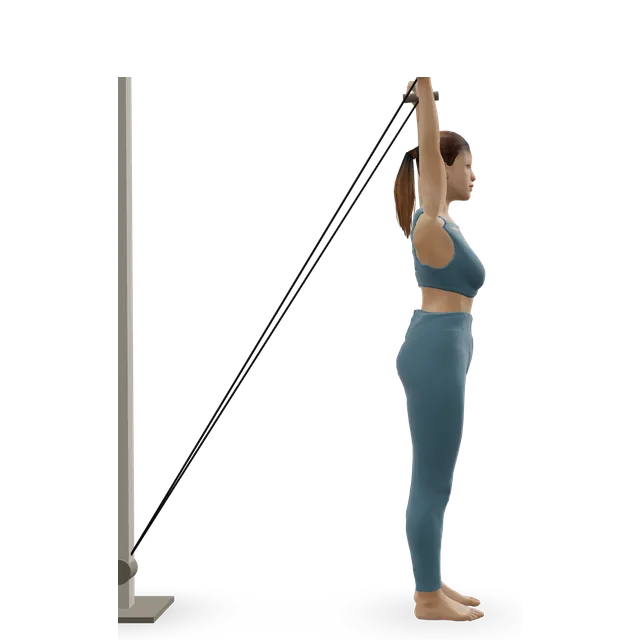
Cable kickback
Take a handle, or the bare cable end, from a low pulley in front of you, hinge forward and hold your upper arm along your side as with the dumbbell. The cable pulls along the forearm's arc, so it keeps some tension at the start of the rep, where a dumbbell gives almost none (our reading of the mechanics; no study has compared them). Add the smallest plate when 15 reps are easy.
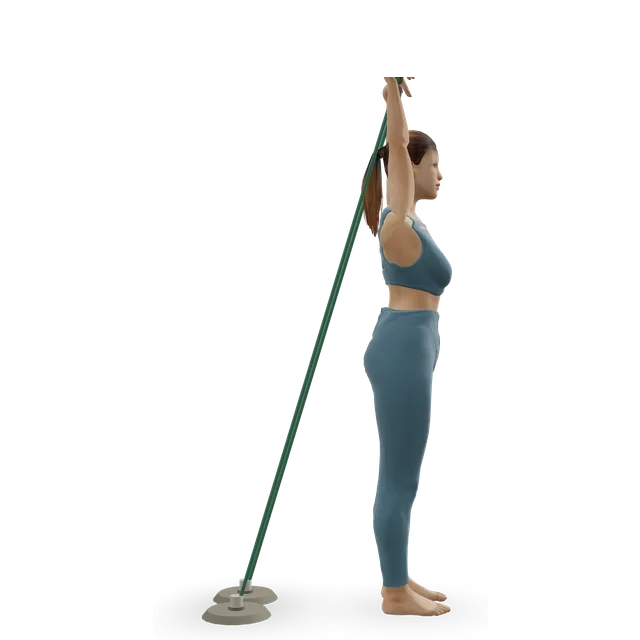
Band kickback
Stand on the band with your front foot, or anchor it low in front of you, and kick back as with the dumbbell. The band gets harder as it stretches, so the lockout is still the hardest part (our reading). Bands built strength about as well as weights in pooled trials, as our skull crusher guide reports.
Lying (prone) kickback
Lie chest down on an incline bench and kick back from there. It takes the hinge away completely, which helps if your lower back tires (coaching practice).
No bench, no weights
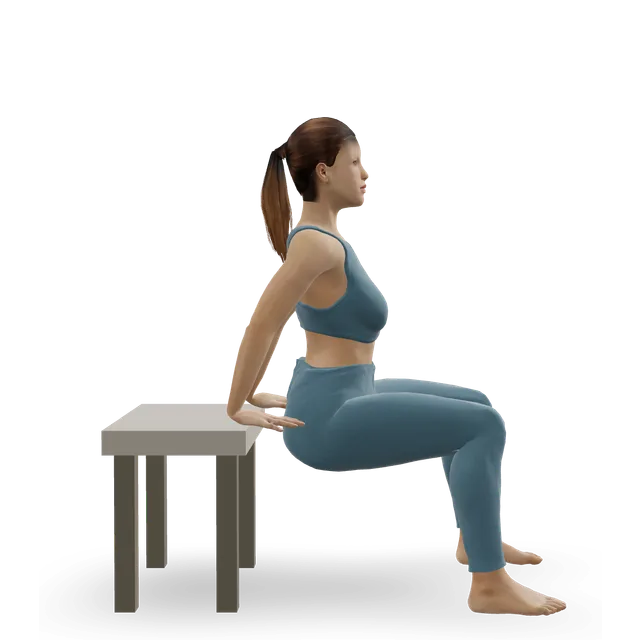
Use the split-stance version with a hand on your thigh, and a band or a filled water bottle if you have no dumbbell: the NHS's own strength routine says filled water bottles will do for light weights. Close-grip push-ups and chair dips are the bodyweight triceps moves, as our arm workout without weights uses.
Kickbacks against pushdowns, overhead extensions, skull crushers and dips
Pushdowns
Both work the triceps with your arm at your side. Pushdowns are easier to load in small steps; kickbacks need only a dumbbell, and drew a little more activity in ACE's study (87% against 67 to 74%). Both are on the hospital handout's shoulder-safe list, so use whichever suits your kit and your elbows.
They have the better growth evidence: overhead extensions grew the triceps about 40% more than arm-at-your-side extensions over 12 weeks in 21 adults. Keep one in your week unless overhead work hurts your shoulder. Our tricep extension guide covers them.
A lying extension works the triceps with your arm in front of you, at a longer length than a kickback, and takes more weight. Our skull crusher guide covers it, including sore elbows.
Dips and close-grip presses
Dips drew the same triceps activity as kickbacks in ACE's study (87%) and work your chest and shoulders too, with far more load. Count presses, push-ups and dips as half a triceps set each. Our dips, diamond push-up and close-grip bench press guides cover them.
Your shoulder takes over and your triceps does less. Lighten the weight and keep your upper arm level with your trunk: only the forearm moves, as the move page cues.
Stopping short of straight
The lockout is where a dumbbell kickback is hardest. If you can't reach it, the weight is too heavy: choose one you can straighten fully, as the move page says.
A rounded or sagging back
ACE warns against arching or sagging in your lower back or twisting your trunk. Use the bench-supported or seated version if you can't hold the hinge.
Choose a weight you can straighten fully for 12 to 15 reps with the last one or two hard. Light and heavy loads built similar muscle when sets were hard (28 studies, 747 adults). People underestimate the reps they have left by about 1, so judge honestly.
2 sets of 12 to 15, stopping with 3 or 4 reps in reserve (how many more you could have done), with 60 to 90 seconds' rest, as our plans' notes advise for a new move.
After that
2 or 3 sets of 12 to 15, most sets 1 to 3 reps short of failure and the last 0 to 2 short, with 60 to 90 seconds' rest (our arm workout at home and arm challenge workout; the plans' effort note for small moves). Stop about 2 short whenever your elbow, not your muscle, sets the limit.
Seated versions
2 to 3 sets of 8 to 12 (each arm for the one-arm version), stopping with 2 or 3 reps in reserve: the seated move pages' dose, their editorial starting point.
Each week
Count kickbacks towards about 10 or more hard triceps sets a week, with presses, push-ups and dips as half sets. Across 67 studies of 2,058 people, counting indirect sets as half sets predicted growth best, and more weekly sets built more muscle with diminishing returns.
Add reps until you reach 15 on every set, then move to the next dumbbell, as the curl guides advise for small muscles; with a cable, add the smallest plate. Adding reps and adding load both worked as progression in 43 trained people.
Pair kickbacks with one overhead extension: the dumbbell version, 2 to 3 sets of 10 to 15 (our arm workout at home), the cable rope version, 3 sets of 10 to 15 (our tricep workout), or the band version, 2 to 3 sets of 12 to 15 (our arm challenge workout). Skull crushers, 2 to 3 sets of 10 to 15 (our tricep workout); close-grip push-ups, 2 to 3 sets of 6 to 12 once you can do 10 standard push-ups, and chair dips, 2 to 3 sets of 8 to 12 with your elbows bent to a right angle at most (our arm challenge workout); and the overhead triceps stretch, held 15 to 30 seconds 2 to 4 times each side (its move page's dose, from ACE).
Some discomfort at the back of your elbow is fine if it stays at about 3 to 4 out of 10, settles within an hour and is no worse the next morning, as our elbow guides say. Tingling into your hand is a stop sign. Go lighter, straighten under control and don't snap into the lockout.
Pain that builds over weeks
Pain at the back of the elbow that builds over weeks is often tendon pain: see our triceps tendinopathy guide. See a GP if elbow or arm pain doesn't go away after a few weeks; in many areas you can refer yourself to NHS physiotherapy.
Most triceps tendon tears come from pushing a heavy load, in weightlifting or a fall on an outstretched hand. A sudden sharp pain at the back of the elbow with swelling, bruising, a gap above the point of the elbow, or weakness straightening your arm, especially overhead, needs urgent care. Steroid medicines, anabolic steroids, diabetes and kidney disease weaken the attachment.
Kickbacks are the usual swap for overhead extensions with shoulder pain, as the hospital handout suggests. If lifting your upper arm level with your trunk pinches, keep it a little lower or use pushdowns. Shoulder discomfort up to about 5 out of 10 during strengthening is acceptable if it's back to its usual level by your next session; stop if your shoulder feels about to slip out (our shoulder guide).
If your lower back tires or aches during the set, use the bench-supported or seated version. Back discomfort up to about 5 out of 10, settling within an hour and no worse the next morning, is acceptable; pain spreading down a leg isn't (our back pain guide).
Workouts to follow
The arm workout at home pairs kickbacks with the standing concentration curl as a finisher; the arm challenge workout uses them as the swap for overhead extensions with shoulder pain; the tricep workout uses them as the dumbbell option for pushdowns; the arm and chest and triceps workouts carry the overhead and pressing moves to pair them with.
Use the bench-supported or seated kickback, or pushdowns, so your back doesn't have to hold the hinge.
Shoulder pain
Kickbacks and pushdowns are the shoulder-friendly triceps moves on the hospital handout. Keep your upper arm a little below level if the top position pinches, and see our shoulder pain guide.
Go lighter, lower more slowly and keep to the elbow rule above. Our triceps tendinopathy and tennis elbow guides have the loading plans.
After heart surgery through the breastbone
Follow your cardiac rehabilitation team's timeline before lifting weights with your arms, as our heart surgery guide sets out.
Pregnancy
The NHS says strength training is fine if you already do it. Choose the bench-supported or seated version for steadiness, and stop if you feel uncomfortable, too hot or unwell.
If you haven't exercised for some time or have a medical condition, speak to your GP first, as the NHS advises. Get advice before hard lifting if you have high blood pressure, heart disease, glaucoma or diabetic eye disease, a hernia or recent surgery, as our breathing guide lists. With controlled high blood pressure, breathe out through every rep rather than holding your breath.
If you get chest pain or pressure, feel faint or dizzy, are unusually breathless, or your heart races or beats irregularly during exercise, as our plans advise. The American Heart Association says these need immediate medical evaluation.
For chest pain that comes on suddenly and doesn't go away, feels tight or like squeezing, spreads to your arms, neck, jaw, stomach or back, or comes with sweating, feeling sick, light-headedness or breathlessness; arm pain that comes on suddenly with pressure, heaviness or squeezing across your chest; someone who faints while exercising; palpitations that don't go away, or come with chest pain, shortness of breath or feeling faint; or a sudden headache that is extremely painful, or comes with numbness or weakness, difficulty speaking or loss of vision. Don't drive yourself to A&E.
If back pain comes with pain, tingling, weakness or numbness in both legs, loss of feeling around your genitals or bottom, or changes in your bladder or bowels.
Go to an urgent treatment centre or A&E if you have severe pain in your arm and it's difficult to move, you've injured your arm and heard a snap or it has changed shape, or your arm tingles or feels numb. A sudden pop or sharp pain at the back of the elbow during a push, with swelling, bruising, a gap above the point of the elbow or weakness straightening the arm, can be a torn triceps tendon: don't wait to see if it settles. In the US, urgent care or the emergency department.
If your arm hurts when you exercise but the pain goes away when you rest, or it's swollen and you have a very high temperature or feel hot, cold or shivery; or if you think you've torn a tendon.
"Kickbacks tone the backs of your arms and burn arm fat"Strong evidence
Training one arm for 12 weeks didn't reduce the fat over it more than over the other arm on MRI scans in 104 adults, and across 13 studies of 1,158 people working a body part didn't reduce the fat over it. Kickbacks strengthen the triceps underneath; fat comes off your whole body with your overall activity and eating, as our arm fat guide explains.
They drew as much triceps activity as dips in the one study, but no trial has tested them for growth, and the dumbbell version loads the triceps where it's shortest (our reading of the mechanics). A useful second move, then, not your only triceps exercise.
"Kickbacks are the best triceps exercise"Emerging evidence
That headline came from one activity study of 15 women. In the one 12-week growth trial, an overhead extension grew the triceps about 40% more than an extension with the arm at the side.
"Kickbacks only work the outer head"Emerging evidence
In the ACE study the long head worked as hard as the outer head (88 against 87%), and with the arm at the side the long head produced the most force of the three in a modelling study. All three heads share one tendon and work in every extension.
Heavier dumbbells didn't raise triceps activity in step with the force needed in 14 women, and a weight you can't straighten fully misses the part of the rep where a dumbbell kickback is hardest (our reading). Add reps first.
ACE straightens the elbow until it's fully extended, and our skull crusher guide found no evidence that straightening under control harms the elbow. Don't snap into it.
Across 15 studies, training to failure gave a trivial growth advantage at most. Stop 1 to 3 reps short on most sets, as our plans say; the last set of a small move can go closer.
Hinge forward with a flat back, one hand on your thigh or a bench, and hold your upper arm along your side with your elbow at a right angle. Straighten your elbow until your arm is long behind you, moving only your forearm, then lower slowly. Use a weight you can straighten fully.
What muscles do tricep kickbacks work?
All three heads of the triceps at the back of your upper arm, which share one tendon at the elbow. In one activity study the long and outer heads worked about equally hard. Your shoulder and back muscles hold the position.
Are tricep kickbacks a good exercise?
Yes, as a second triceps move. They drew as much triceps activity as dips in one study, but no trial has tested them for growth, and overhead extensions grew the triceps more than arm-at-your-side work in a 12-week trial. Do one overhead extension in your week too.
Are tricep kickbacks a waste of time?
No, but they shouldn't be your only triceps exercise. With a dumbbell they load the triceps most at the lockout, where it's shortest, and growth favours load at longer lengths. Pair them with an overhead extension or skull crushers.
Tricep kickbacks or pushdowns?
Both work the triceps with your arm at your side. Pushdowns are easier to load in small steps, and kickbacks need only a dumbbell. A hospital shoulder handout lists both as safe for the shoulder, so do whichever suits your kit and elbows.
Tricep kickbacks or overhead extensions?
Overhead extensions have the better growth evidence: they grew the triceps about 40% more than arm-at-your-side extensions over 12 weeks. Kickbacks are the swap when overhead work hurts your shoulder. Our tricep extension guide covers the overhead versions.
How heavy should tricep kickbacks be?
Light: a weight you can straighten fully for 12 to 15 reps, with the last rep or two hard. You'll use much less than in a pushdown, and heavier dumbbells didn't bring more triceps activity in one small study.
How many sets and reps of tricep kickbacks should I do?
2 or 3 sets of 12 to 15, resting 60 to 90 seconds, with the last set 0 to 2 reps short of failure, as our arm workouts use. Count them towards about 10 or more hard triceps sets a week, with presses and dips as half sets.
Cable or dumbbell kickbacks?
Both work. A cable from in front keeps tension at the start of the rep, where a dumbbell gives almost none; that's our reading of the mechanics, as no study has compared them. Bands work about as well as weights for strength, as our skull crusher guide reports.
Do tricep kickbacks get rid of bingo wings?
No. Training one arm didn't shrink the fat over it more than over the other arm in 104 adults, and across 13 studies working a body part didn't reduce the fat over it. Kickbacks strengthen the muscle; our arm fat guide covers what helps with fat.
Why do tricep kickbacks hurt my elbow?
Usually the weight is too heavy or the lockout too sudden. Go lighter, straighten under control and keep discomfort to about 3 to 4 out of 10, settling within an hour. A snap at the back of the elbow with weakness straightening the arm needs urgent care.
Are glute kickbacks the same thing?
No: a glute kickback is a hip exercise, with your leg pushing back from all fours or at a cable. Our glute kickback guide covers it.
Exercise education, not a personal prescription, and clinical review of these guides is pending. Check with a GP before starting hard training if you have a heart condition, chest pain, dizziness or breathlessness when active, and stop for sharp or increasing pain. Health disclaimer.