How to do concentration curls: seated and standing, the biceps peak claim, your elbow, and how many
A concentration curl is a one-arm curl done seated, leaning forward, with the back of your upper arm pressed against your inner thigh so your arm can't swing. In one study it worked the biceps harder than seven other curls and chin-ups, at about 97% of the muscle's maximum, which is why it has a name as the best biceps exercise.
Working hardest in one set isn't the same as growing most, and no study has tested concentration curls for growth or measured a "biceps peak". So this guide treats it as a strict one-arm curl worth having, not the one curl you need.
It teaches the curl step by step on the 3D figure, the standing, barbell, cable and hammer versions, what the peak claim gets wrong, how heavy and how many, and how to keep your elbow comfortable.
Brace your arm on your thigh, curl, lower all the way
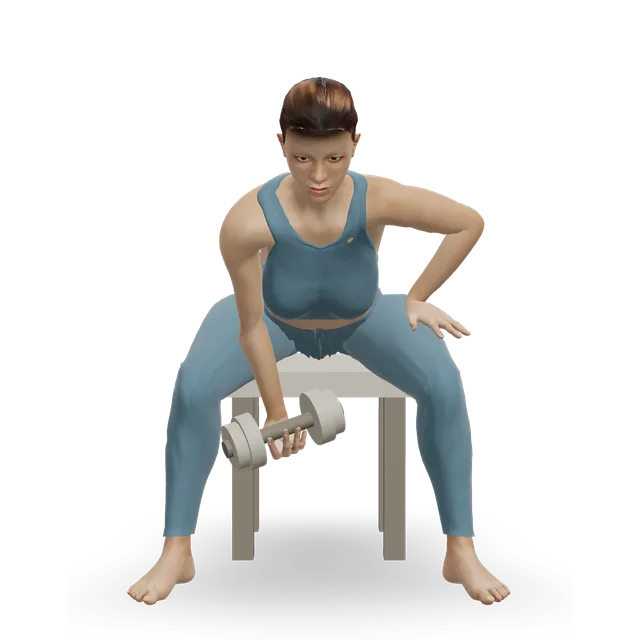
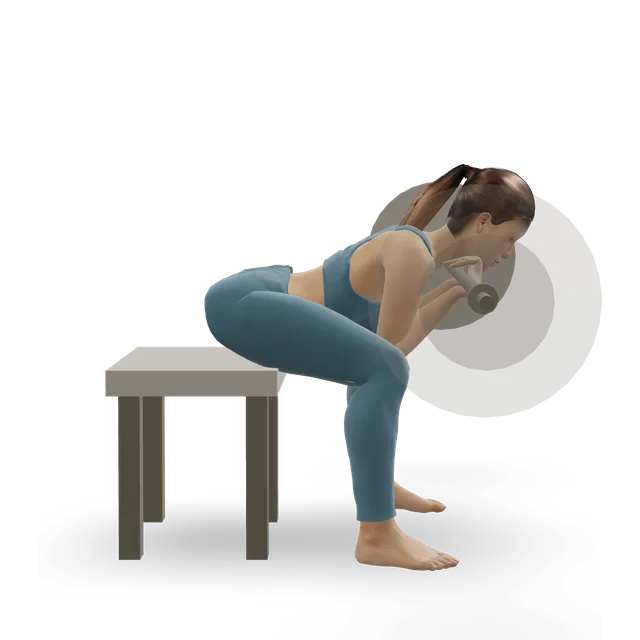
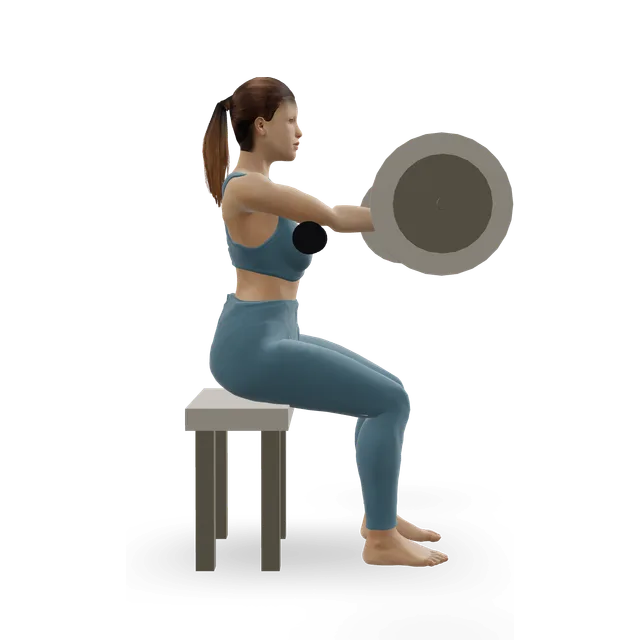
Sit on the end of a bench with your feet wide. Lean forward and rest the back of your upper arm against your inner thigh, arm long. Breathe out and curl the dumbbell towards your shoulder, turning your little finger up as you finish, hold a second, then lower slowly to a long arm. Change arms after the set.
In a study for the American Council on Exercise (ACE), 16 trained young adults curling 70% of their maximum drew about 97% of the biceps' maximum activity in the concentration curl, against about 69 to 81% in seven other curls and chin-ups. We read those figures from the report's chart, so they're approximate. It's effort in one set, not proof of growth.
We found no trial that has trained concentration curls. Curls with the upper arm in front of you, at your side or behind you built similar total arm muscle in three trials, so expect a concentration curl to build muscle like any hard curl, no more.
No study has measured a biceps "peak". Studies of where the biceps grows disagree, from more growth near the shoulder to even growth along the muscle, and people's arms respond very differently to the same training. How high your biceps bunches when you flex is mostly anatomy (our reading).
Curls through the straight-arm half of the range built more muscle than the bent-arm half (8.9% against 3.4% in 5 weeks), and the start of the curl grew the lower biceps more. The squeeze at the top is the part that built least, so the slow lowering to a long arm matters more.
2 to 3 sets of 8 to 12 with each arm, stopping 2 or 3 reps short (the move page's dose), or 10 to 12 each arm as a finisher (our arm workout at home), with 60 to 90 seconds' rest. Count every curl towards about 10 or more hard sets a week for the elbow muscles, with rows and pulldowns as half sets.
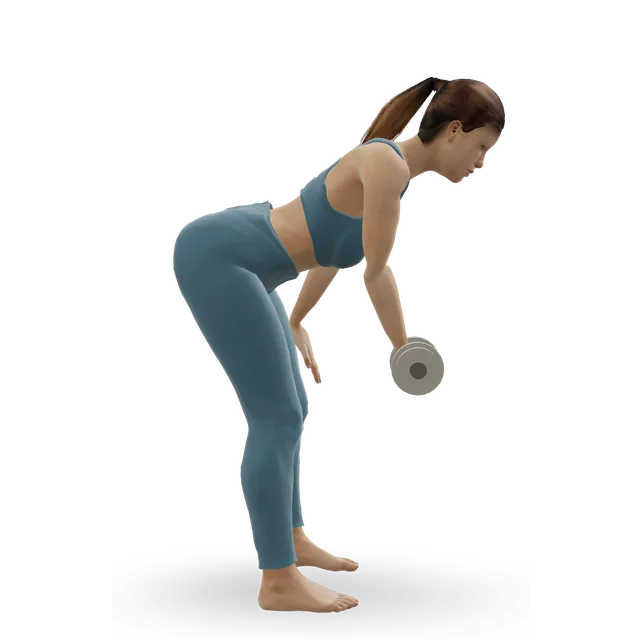
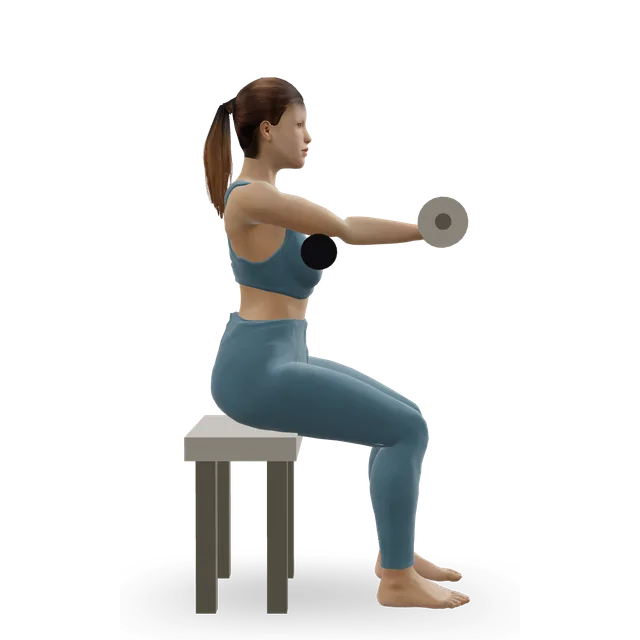
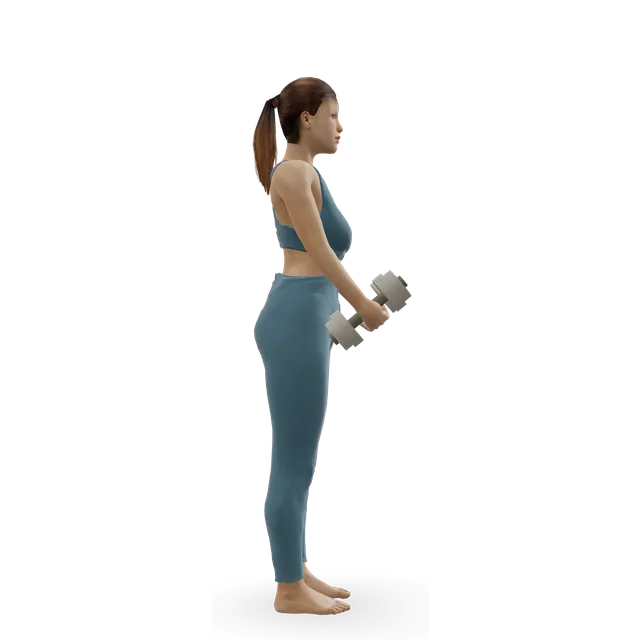
A one-arm dumbbell curl done seated and leaning forward, with the back of your upper arm pressed against your inner thigh so the arm can't swing. The curl runs from a long arm to your shoulder and back. The standing version leans well forward with your free hand on your thigh and the working arm hanging; the barbell version braces both arms on your thighs.
The three elbow benders: the biceps, whose two heads run from your shoulder to the radius below your elbow and which is the strongest palm-up turner when your elbow is bent; the brachialis underneath it; and the brachioradialis in your forearm. In ACE's study the front of the shoulder worked less than in a barbell curl.
Your upper arm points down and slightly forward, so with a dumbbell the work is hardest midway, when your forearm is level with the floor, and light at the straight-arm start (our reading of the mechanics). That's the standing curl's pattern. A preacher curl is different: its biceps activity peaked early, near the straight-arm start, in a study of 22 people.
Your upper arm sits in front of your trunk, as in a preacher curl. Curls with the arm in front, at the side or behind grew similar total arm muscle in three trials, so the position isn't a reason to choose or avoid the concentration curl.
Nothing beyond a light dumbbell and a bench or chair; the move page's prerequisite is none, so start light.
How people differ
In 585 adults training one arm for 12 weeks, the biceps changed size by anything from a 2% loss to a 59% gain. Men gained slightly more size than women, and women gained more strength relative to where they started.
One muscle activity study of 16 trained 18 to 24 year olds; the curl growth trials had 11 to 63 people each, mostly untrained. No trial has trained concentration curls. We say so where a point rests on them.
How to do a concentration curl, step by step
From our concentration curl move page and the set-up in ACE's study. The 2-second lowering follows our bicep curl guide; the free-hand position is our suggestion.
Sit on the end of a flat bench with your feet wide and flat, and pick up a dumbbell in one hand.
Lean forward and rest the back of that upper arm against your inner thigh, the arm long, your palm facing away from your thigh and the dumbbell clear of the floor. Rest your other hand on your other thigh.
Breathe out and curl the dumbbell towards your shoulder, moving only your forearm, and turn your little finger up as you finish.
Hold for a second at the top.
Breathe in and lower slowly, for a count of about 2, all the way to a long arm.
Keep your trunk still: don't rock back to lift the weight. Change arms after the set.
Loading the 3D figure…
Drag to turn
Gets into position, then repeats the movement. Technical checks passed; qualified exercise review is pending.
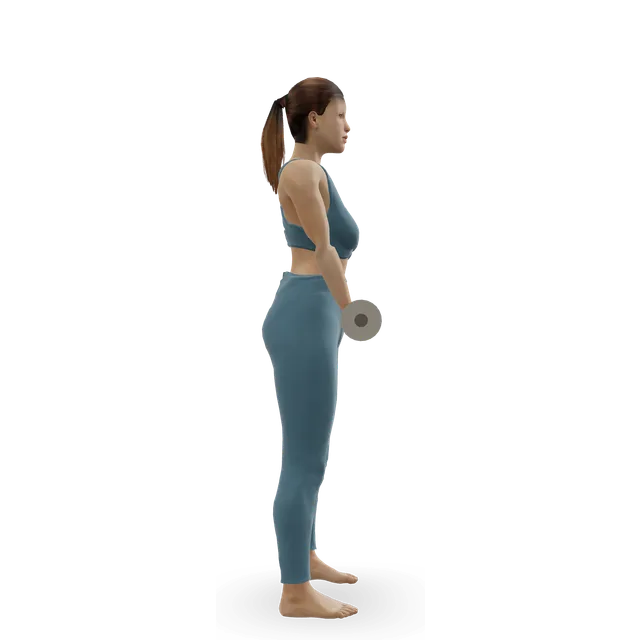
From our standing concentration curl move page. With no thigh to brace against, keeping your upper arm still is up to you. Its dose is 2 to 3 sets of 8 to 12 with each arm, stopping with 2 or 3 reps in reserve (its editorial starting point).
Hold a dumbbell in your right hand, bend your knees slightly and lean well forward from your hips, your left hand braced on your left thigh.
Let your right arm hang straight down from your shoulder, palm facing forward and elbow pointing slightly out.
Keeping your upper arm still, curl the dumbbell up towards your chest and squeeze for a second at the top.
Lower it all the way to a straight arm, then change arms after the set.
Loading the 3D figure…
Drag to turn
Gets into position, then repeats the movement. Technical checks passed; qualified exercise review is pending.
Muscle activity: the top of eightEmerging evidence
In ACE's study of 16 trained 18 to 24 year olds (8 men, 8 women) curling 70% of their maximum, the concentration curl drew significantly more biceps activity than any other exercise tested. Reading the report's chart, it was about 97% of maximum, against about 81% for the cable curl, 80% for the chin-up, 77% for the barbell curl, 75% and 72% for wide and narrow EZ-bar curls, 71% for the incline curl and 69% for the preacher curl. ACE sponsored it, the figures come from one set, and activity in one session isn't a validated predictor of growth.
The researchers credited the brace: your upper arm is pressed against your leg and can't sway. They added that the upside of the concentration curl is that you pretty much isolate the biceps, and the downside is the same.
Growth: no trial, but the curl position barely matteredEmerging evidence
We found no trial of concentration curls. In the nearest trials, preacher-position and arm-behind cable curls built equivalent muscle in 15 young men over 10 weeks; cable curls at the side or fully behind grew the arm 7 to 9% either way in 24 untrained men; and incline and preacher dumbbell curls grew the elbow muscles by the same total in 21 adults on MRI scans, though the incline grew the biceps a little more (22.1% against 18.9%) and the preacher the brachialis (21.1% against 17.1%).
In 32 untrained adults, curls through the straight-arm half of the range grew the arm 8.9% against 3.4% for the bent-arm half over 5 weeks, and in 19 young women, training the first part of the preacher curl grew the lower biceps more than the last part. A concentration curl is light at the bottom, so lowering all the way, under control, is the part to protect (our reading).
In 54 untrained young women curling 2 sets of 8 to 12, three times a week for 8 weeks, one-arm and two-arm curls grew the elbow muscles equally; one-arm training raised one-arm strength a little more on the right arm.
Swinging isn't the enemy, but the brace helps you judge the setEmerging evidence
Swinging (cheat) curls built as much muscle as strict ones in 30 untrained adults over 8 weeks. So the brace isn't magic: what it does is make each set honest, because you can't hide a failed rep behind a swing (our reading).
In 10 men, lowering at long elbow-muscle lengths caused more soreness, swelling and strength loss than at short lengths. If you lower all the way, expect some soreness after your first sessions, and leave 3 or 4 reps to spare for the first two weeks, as our plans advise.
Your biceps runs from two tendons at your shoulder to one on the radius, below your elbow. How high it bunches when you flex depends on how long the muscle belly is against its tendons and where they attach: fixed anatomy, in our reading. No study has measured a "peak" or changed one.
Where the biceps grows: studies disagreeMixed evidence
In 40 untrained men, a programme including standing barbell curls grew the biceps 12% near the shoulder and 4.7% near the elbow. In 11 untrained men, one-arm curls grew the elbow muscles evenly along their length on MRI scans. In 21 adults, incline and preacher curls grew the middle of the biceps most, whichever curl was used. In 63 young women, preacher curls grew the lower arm more and incline curls the upper arm; in 38 trained women, only the preacher group's lower site grew. None tested a concentration curl.
The same 12 weeks of one-arm training changed biceps size by anything from a 2% loss to a 59% gain in 585 adults. Some of what you see in other people's arms is their response and their anatomy, not their curl.
Build the whole biceps: enough hard sets each week, a full range with a slow lowering, and a curl you'll keep doing. The shape is yours. The preacher and hammer curl guides give the same answer to the same myth.
Learn the standing dumbbell curl first (2 to 3 sets of 10 to 15, as our arm workouts use). The seated, standing and barbell concentration curls, the curl over an incline bench and the spider curl all give 2 to 3 sets of 8 to 12 (each arm for the one-arm versions), stopping 2 or 3 reps short: their move pages' dose. The one-arm cable curl is the nearest demo to a cable concentration curl: 2 to 3 sets of 10 to 15 each arm (our suggestion, in the bicep curl guide's range).
Both upper arms rest on your inner thighs with a close underhand grip. An EZ bar is fine if your wrists prefer it: in 12 people the differences in muscle activity between the EZ bar and the straight bar were small enough to be a matter of comfort.
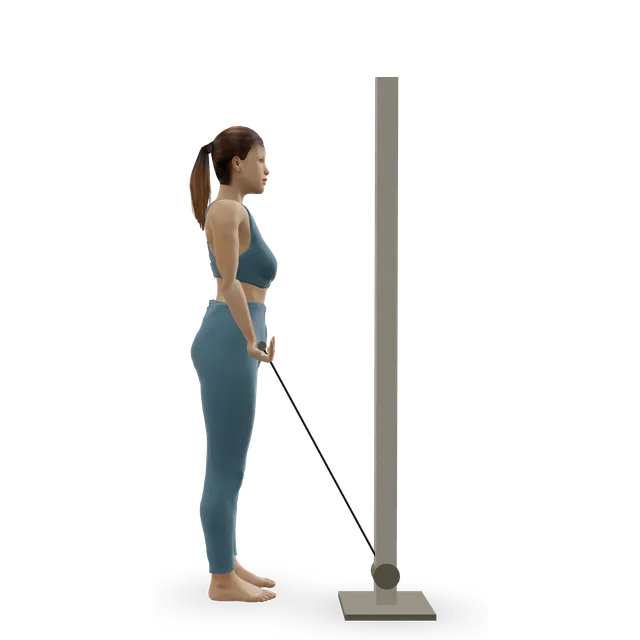
Seated or standing at a low pulley, braced the same way. The cable keeps some tension near the straight-arm start, where a dumbbell is light (our reading of the mechanics; no study has compared them). It has no 3D demo yet: the one-arm cable curl shows the cable.
Hammer concentration curl
Keep your thumb up throughout, as in our hammer curl guide, which works the brachioradialis more. It has no 3D demo of its own: the concentration curl demo shows the movement.
Its relatives
The spider curl and the one-arm curl over an incline bench also stop the swing, with your chest on a bench instead of your arm on your thigh, as our preacher curl guide shows.
Concentration curls against preacher, bicep, incline and hammer curls
Preacher curls
Both stop the swing and put your arm in front of you. A preacher curl is hardest near the straight-arm start; a concentration curl with a dumbbell is hardest midway, like a standing curl (our reading). Our preacher curl guide uses the seated concentration curl as its no-bench option.
The standing curl lets you use both arms and more weight; the concentration curl is stricter and one arm at a time. Our bicep curl guide suggests a standing dumbbell curl plus one other curl you like, and the concentration curl is a good choice for that second curl.
Incline curls
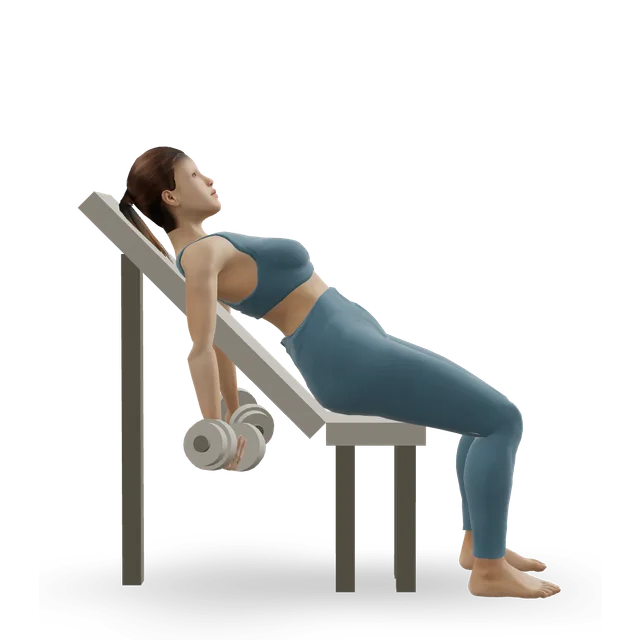
An incline curl puts your arm behind you, stretching the biceps more at the start. It grew the biceps slightly more than a preacher curl, and the preacher grew the brachialis more, but the total was the same in 21 adults. Either pairs well with a concentration curl.
Turn your little finger up gently. Forcing the twist adds nothing we know of (our cue).
Holding your breath
Breathe out as you curl and in as you lower, as our breathing guide advises.
How heavy and how many
How heavy
A weight you can curl 8 to 12 times with each arm without rocking your trunk, stopping 2 or 3 reps short. It will be lighter than your standing curl, because nothing can help. The NHS's own strength routine curls light weights and says filled water bottles will do, and light and heavy loads built similar muscle when sets were hard (28 studies, 747 adults).
2 sets of 8 to 12 with each arm, leaving 3 or 4 reps in reserve (how many more you could have done), with 60 to 90 seconds' rest, as our plans' notes advise for a new move.
After that
2 to 3 sets of 8 to 12 with each arm, stopping 2 or 3 reps short: the move page's dose, its editorial starting point. The last set can go to 0 to 2 reps short, as the plans' effort note allows for small moves, unless your elbow sets the limit.
As a finisher
2 sets of 10 to 12 standing concentration curls with each arm, paired with kickbacks, the last round 0 to 2 reps short, as our arm workout at home does.
Each week
Count concentration curls towards about 10 or more hard sets a week for the elbow muscles, with rows and pulldowns as half sets. Weekly sets mattered more than how often you train them, so once or twice a week works.
Add reps until you reach 12 with each arm on every set, then move to the next dumbbell. Dumbbell jumps are big for one arm, so reach the top of the range first, as the curl guides say. Adding reps and adding load both worked as progression in 43 trained people.
Pair concentration curls with a curl that stretches the biceps, such as the incline dumbbell curl (3 sets of 10 to 15, our bicep workout), or the preacher curl or hammer curl (2 to 3 sets of 10 to 15, our bicep and arm workouts). Chin-ups (3 to 8 reps, our arm workout without weights) count as half a biceps set each; wrist curls (15 reps, the finisher in our arm workout) cover the forearms.
Some discomfort at the front of your elbow is fine if it stays at about 3 to 4 out of 10, settles within an hour and is no worse the next morning, as our elbow guides say. Tingling into your hand is a stop sign. Go lighter and lower more slowly.
Tingling in your ring and little fingers
At the top of the curl your elbow is bent most, which stretches the ulnar nerve behind it. If your ring and little fingers tingle, shorten the range at the top, and see our ulnar nerve guide if it keeps coming back.
A torn biceps tendon
Uncommon, at 3 to 5 people in 100,000 a year, and rare in women. It usually happens when the elbow is forced straight against a load: a pop, then bruising, swelling, weakness bending the elbow or turning the palm up, and the muscle balling up in the upper arm. Repair is ideally done in the first 2 to 3 weeks, and the pain may ease after a week or two, so don't be reassured if it settles.
Pain at the front of the elbow that builds over weeks can be tendon pain: see our distal biceps tendinopathy guide. See a GP if elbow or arm pain doesn't go away after a few weeks; in many areas you can refer yourself to NHS physiotherapy.
The arm workout at home and the arm workout use the standing concentration curl; the bicep workout uses the seated one when there's no preacher bench; the arm challenge and back and biceps workouts carry the other curls and pulls to pair it with.
Go lighter, lower more slowly, try the hammer grip, and keep to the elbow rule above. Our distal biceps tendinopathy and golfer's elbow guides have the loading plans.
Tingling fingers
Shorten the top of the range and see our ulnar nerve guide.
Wrist pain
Use the hammer grip, or an EZ bar for the barbell version: the EZ bar and straight bar differed little in muscle activity, so choose by comfort.
If you haven't exercised for some time or have a medical condition, speak to your GP first, as the NHS advises. Get advice before hard lifting if you have high blood pressure, heart disease, glaucoma or diabetic eye disease, a hernia or recent surgery, as our breathing guide lists. With controlled high blood pressure, breathe out through every rep rather than holding your breath.
If you get chest pain or pressure, feel faint or dizzy, are unusually breathless, or your heart races or beats irregularly during exercise, as our plans advise. The American Heart Association says these need immediate medical evaluation.
For chest pain that comes on suddenly and doesn't go away, feels tight or like squeezing, spreads to your arms, neck, jaw, stomach or back, or comes with sweating, feeling sick, light-headedness or breathlessness; arm pain that comes on suddenly with pressure, heaviness or squeezing across your chest; someone who faints while exercising; palpitations that don't go away, or come with chest pain, shortness of breath or feeling faint; or a sudden headache that is extremely painful, or comes with numbness or weakness, difficulty speaking or loss of vision. Don't drive yourself to A&E.
A pop at the front of the elbow: urgent treatment centre or A&E
Go to an urgent treatment centre or A&E for a pop at the front of the elbow during a lift, with bruising, swelling, a bulge in the upper arm, or weakness bending the elbow or turning your palm up: a torn biceps tendon is best repaired in the first 2 to 3 weeks, and the pain may ease after a week or two, so don't wait. The same goes for severe arm pain that makes it hard to move, a snap, a changed shape, or tingling or numbness after an injury. In the US, urgent care or the emergency department.
If your arm hurts when you exercise but the pain goes away when you rest, or it's swollen and you have a very high temperature or feel hot, cold or shivery; or if you think you've torn a tendon.
After an unusually hard or high-rep arm session, very painful, swollen, tight arms with dark urine need medical help the same day: it could be rhabdomyolysis (muscle breakdown), as our elbow pain from pull-ups guide explains.
See a GP
If elbow or arm pain doesn't go away after a few weeks, or tingling in your fingers keeps coming back.
"Concentration curls build a bigger biceps peak"Mixed evidence
No study has measured a "peak", and none has trained concentration curls. Studies of where the biceps grows disagree, from more growth near the shoulder to even growth along the muscle to the middle growing most whichever curl was used. The shape is mostly anatomy, and the same training changes people's arms very differently.
"Concentration curls are the best biceps exercise"Emerging evidence
They topped ACE's activity study at about 97% of maximum, but activity in one set doesn't predict growth, and curls in different arm positions built similar total muscle in trials.
"Concentration curls work the short head (or the long head)"Emerging evidence
No study we found separated the two heads by curl, and changing the shoulder angle made little or no difference to growth in two trials. Every curl trains both.
"Squeeze hard at the top to grow the peak"Emerging evidence
The top of a curl is the part that built least: the straight-arm half grew the arm 8.9% against 3.4% for the bent-arm half. Hold the top briefly if you like, but lower all the way.
Sit on the end of a bench with your feet wide, lean forward and rest the back of your upper arm against your inner thigh. Curl the dumbbell towards your shoulder, hold a second, then lower slowly until your arm is long. Change arms after the set.
What muscles do concentration curls work?
The biceps, the brachialis underneath it and the brachioradialis in your forearm, like any curl. In one activity study the biceps worked at about 97% of its maximum, the highest of eight exercises, with less help from the front of the shoulder than in a barbell curl.
Are concentration curls the best biceps exercise?
They topped one activity study, but activity in a set doesn't predict growth, and no trial has trained them. Curls in different arm positions built similar total arm muscle, so treat the concentration curl as a good second curl.
Do concentration curls build a bigger biceps peak?
No study has measured a peak or trained concentration curls. Where the biceps grows varied between studies, and the shape when you flex is mostly how long your muscle belly is and where it attaches. Build the whole muscle and the shape is yours.
Concentration curls or preacher curls?
Both stop the swing. A preacher curl is hardest near the straight-arm start; a dumbbell concentration curl is hardest midway, like a standing curl. Either works, and our preacher curl guide covers the pad version.
Do concentration curls work the long head or the short head?
Both, as every curl does. No study we found has separated the two heads by curl, and changing the shoulder angle made little or no difference to growth in trials.
How heavy should concentration curls be?
A weight you can curl 8 to 12 times with each arm without rocking your trunk, stopping 2 or 3 reps short. It will be lighter than your standing curl, because nothing can help.
How many sets and reps of concentration curls should I do?
2 or 3 sets of 8 to 12 with each arm, resting 60 to 90 seconds, which is the move page's dose. Count them towards about 10 or more hard sets a week for your biceps, with rows and pulldowns as half sets.
Can I do concentration curls standing?
Yes: bend well forward with your free hand on your thigh, let the working arm hang, then curl without moving your upper arm. It's the version in our arm workouts; without a thigh to brace on, keeping still is up to you.
Should I turn my wrist at the top?
Turning your little finger up as you finish uses the biceps' palm-up job, and our move page cues it. Do it gently; nobody has tested whether it adds anything.
Why do concentration curls hurt my elbow?
Often too much weight, or dropping into the bottom. Go lighter and lower slowly, keeping discomfort to about 3 to 4 out of 10. A pop at the front of the elbow with bruising and a bulge in the upper arm needs urgent care, because repair works best in the first 2 to 3 weeks.
Why are they called concentration curls?
Because the braced arm makes it hard to cheat, so you concentrate on the biceps; the researchers in one study credited the brace for its high muscle activity. The name is gym lore, not a scientific term.
Exercise education, not a personal prescription, and clinical review of these guides is pending. Check with a GP before starting hard training if you have a heart condition, chest pain, dizziness or breathlessness when active, and stop for sharp or increasing pain. Health disclaimer.