Pain guide · Shoulder pain

Shoulder pain when throwing: the rotator cuff, the labrum, instability, throwing load and what helps

Shoulder pain when you throw is common in baseball, cricket, handball, tennis and other overhead sports, because a throw turns the raised arm back further and faster than almost anything else, then asks the back of the shoulder to stop it. Pain deep at the back as the arm cocks back usually means the rotator cuff is being pinched inside the joint; pain from the front to the side of the arm is the cuff; deep clicking, catching or a dead arm can be the labrum (the rim of the socket) or a loose shoulder; and in a young thrower, pain at the top of the arm can be Little League shoulder. Throwers often call it thrower's shoulder.

This guide starts with the signs that need help today, from a 999 call for chest pain or a cold, pale arm, to accident and emergency (A&E) for a shoulder that looks out of place, and an urgent general practitioner (GP) appointment or the National Health Service's 111 line (NHS 111) for a swollen, throbbing arm or a hot shoulder with a high temperature. It then sorts the causes by where it hurts and when in the throw, explains why scans mislead in throwers and why rehab comes before surgery, gives Pitch Smart's pitch counts and the England and Wales Cricket Board's bowling limits, and sets out a four-stage plan with a 3D demo of every move, ending with a shoulder warm-up and a step-by-step return to throwing.

When to get help first

Exercise is for pain that has been checked or is clearly mild and settling.

Get urgent medical help if

  • Call 999 or go to A&E: after a fall or injury, your shoulder looks out of place or has changed shape, you cannot move your arm, or your shoulder is painful, bruised or swollen. Do not drive yourself, and do not try to put it back in yourself.
  • Call 999: shoulder or arm pain with chest pain that feels tight or squeezing, or chest pain that spreads to your arms, neck or jaw, especially with shortness of breath, sweating or feeling sick. It could be a heart attack.
  • Get help from NHS 111: pain or tightness in your chest, neck, shoulders, jaw or arms that comes and goes, often brought on by exercise, stress, emotion or cold and easing after a few minutes' rest. It can be angina, a sign of a heart problem. If you've been diagnosed with angina, get help from NHS 111 too if it feels worse than before, is happening more often, lasts longer or happens when you're resting.
  • Call 999 or go to A&E: a hand or arm that suddenly turns cold, pale, blue or grey and painful, or goes numb and weak. Blood may not be getting through.
  • Same day (urgent GP appointment or NHS 111): throbbing or cramping pain, swelling, redness and warmth in one arm. These can be signs of a blood clot caused by thoracic outlet syndrome, which can be life-threatening if not treated quickly.
  • Throbbing pain and swelling in the arm, with red, blue or darker skin and swollen veins: ask for an urgent GP appointment or get help from NHS 111. It could be a blood clot.
  • Call 999 or go to A&E if breathing suddenly becomes difficult, if pain in your chest or upper back comes on suddenly with breathlessness or a very fast heartbeat, or if someone passes out. Do not drive yourself. It can be a blood clot that has reached the lungs.
  • Same day (GP or NHS 111): the shoulder or arm is hot, swollen or red, or you have a high temperature (although not everyone has one) or feel unwell. A joint infection needs same-day care.
  • Same day (GP or NHS 111): sudden or very bad shoulder pain; you cannot move your arm; the arm or shoulder is badly swollen or has changed shape; pins and needles that do not go away; no feeling in the arm; the arm is hot or cold to the touch; pain that started after an injury such as a fall; or severe pain in both shoulders.
  • Same day (GP or NHS 111): sudden weakness lifting the arm after an injury or fall. A rotator cuff tear caused by an injury needs urgent referral to a shoulder specialist. After a dislocation in anyone over 40, the rotator cuff should be checked: about 40% have a tear.
  • Same day: sudden severe pain at the top of the arm during a throw or a fall, and the arm can't be lifted or is badly swollen or bruised. A weakened growth plate can break, and it needs an X-ray.

See a doctor or physiotherapist if

  • Pain at the top or outside of the upper arm when throwing, or throws that are slower or less accurate: stop throwing and see a GP or a sports physiotherapist. X-rays of both shoulders may be needed, and stopping straight away gives the best early results.
  • Pain that comes back when throwing restarts: stop again and get it reviewed. It comes back in up to 1 in 4 children.
  • Inner-elbow pain when you throw, or a feeling that the elbow gives way, especially in a young thrower: stop throwing and see a GP or a sports physiotherapist.
  • Your shoulder has partly or fully come out of joint, or you worry it might.
  • Locking, catching or a dead arm that keeps stopping you playing despite rehab, or no improvement after about 3 months of rehab: ask for a specialist opinion.
  • Pins and needles or a cold arm alongside neck pain, or a new loss of strength or feeling in the arm that you cannot explain (a possible nerve problem).
  • Weakness or clumsiness in the hand, or the small muscles of the hand looking thinner: see a GP promptly. A specialist review says weakness or wasting caused by TOS needs a surgeon's assessment within a few weeks at most.
  • Pain that is getting worse or has not improved after 2 weeks of looking after it yourself, or it is very hard to move your arm. In many areas you can refer yourself to physiotherapy.
  • A past history of cancer, an unexplained lump or swelling, weight loss, or pain that is constant and does not ease when you change position.
  • A throwing arm that tires easily, with a hand that feels cold or turns blue, grey or pale, or pins and needles: see a GP. Rarely, a blood vessel or nerve near the top of the ribs or in the armpit is being squeezed (thoracic outlet syndrome).
  • The muscle over the back of the shoulder blade looks thinner, or turning the arm outwards is weak, even without pain: see a GP or physiotherapist. In overhead athletes this is usually a squeezed nerve, and it often settles with strengthening.
  • Losing throwing speed or control, needing a much longer warm-up, a dead arm, or pain that comes back each time you build up your throwing: see a physiotherapist or sports doctor.

Where does it hurt?

Location narrows the likely causes; it does not diagnose.

Deep at the back of the shoulder as the arm cocks back, with stiffness, a long warm-up, or lost speed or control

Usually the rotator cuff pinched inside the joint (internal impingement), often with a tight back of the shoulder. This guide covers it, and our back of shoulder pain guide maps the back of the shoulder in general.

Read: Back of shoulder pain →
From the front to the side of the upper arm, with throwing and later at rest or at night, weaker lifting and turning

Usually rotator cuff tendon pain, sometimes a partial tear.

Read: Shoulder impingement (rotator cuff pain) →
Deep inside, with clicking, catching, locking or lost throwing speed

Possibly a SLAP tear (superior labrum, anterior to posterior), a tear at the top of the labrum. Scans find these in many throwers' shoulders that don't hurt.

Read: SLAP tear →
A feeling of the shoulder slipping, a clunk, or a dead arm during or after throwing

A loose shoulder (instability) or a SLAP tear. A burning dead arm right after a tackle that settles within minutes is usually a nerve stinger instead.

Read: Shoulder dislocation and instability →
The shoulder came out of place, or looks out of place, after a fall or a tackle

A possible dislocation: go to A&E, as the warning signs say.

Read: Shoulder dislocation and instability →
The front of the shoulder at the top of the arm, worse throwing and reaching back

Often the biceps tendon, usually alongside the rotator cuff.

Read: Biceps tendinitis (shoulder) →
One point on top, at the end of the collarbone

The acromioclavicular (AC) joint.

Read: AC joint injury and pain →
The outside of the upper arm in a thrower aged about 11 to 16, sometimes with slower or wilder throws

Often Little League shoulder, a stress injury of the growth plate at the top of the arm bone. Stop throwing and get it checked.

Read: Little League shoulder →
The inside of the elbow when throwing

The elbow rather than the shoulder: our thrower's elbow and Little League elbow guides cover it.

Read: UCL injury (thrower's elbow) →
An arm that tires easily, with a cold, pale, blue or grey hand, or pins and needles, worse with the arm overhead

Rarely, thoracic outlet syndrome. A swollen, throbbing, red, warm arm needs help the same day, and a suddenly cold, pale arm is a 999 call, as the warning signs say.

Read: Thoracic outlet syndrome →
The muscle over the back of the shoulder blade looks thinner, or turning the arm out is weak, often without pain

Usually a squeezed nerve to the back of the rotator cuff, seen in volleyball players and overhead servers. See a GP or physiotherapist.

Read: Back of shoulder pain →
Neck pain with pain, pins and needles or numbness down the arm

A nerve from the neck.

Read: Pinched nerve in the neck →
Shoulder pain lifting the arm in daily life rather than throwing

Usually the rotator cuff, frozen shoulder or the AC joint.

Read: Shoulder pain lifting your arm →
Shoulder pain when you swim

The rotator cuff and swimming load.

Read: Shoulder pain when swimming →
Arm pain with chest pain, or arm or chest pain that comes on with exercise and eases with rest

Possibly the heart: see the warning signs.

Understand it

What a throw asks of the shoulder, and how common the pain isStrong evidence

A throw winds the body up from the legs through the hips and trunk, then whips the arm forward. The American Academy of Orthopaedic Surgeons (AAOS) says the late-cocking phase (the arm up and turned right back) and the follow-through put the greatest forces on the shoulder: cocking stretches the front, and the back has to slow the arm after release. In 26 skilled pitchers, the shoulder took about 1,090 newtons of compression just after release.

So a sore throwing shoulder is common and usually an overload. Half of 476 pitchers aged 9 to 14 had elbow or shoulder pain in one season, and 5% of 481 had surgery or retired from a throwing injury over 10 years. About a fifth to a third of elite handball players have shoulder problems at any one time. In one survey of English county cricketers, 23% reported a shoulder injury in a season and 18% pain on throwing, though few missed matches. No study counts the causes across all throwing sports; most of the evidence is from baseball, handball, volleyball and cricket.

Sources 1, 2, 3, 4, 5, 6, 7, 8, 9

Where it hurts and when in the throwEmerging evidence

Pain deep at the back as the arm cocks back, with stiffness, a long warm-up or lost speed or control, is typical of internal impingement: the cuff tendons at the back pinched between the ball and the rim of the socket, often with a tight back of the shoulder and some looseness at the front. Pain from the front to the side of the arm, with throwing and later at rest or at night, is typical of the rotator cuff.

Deep pain with catching, locking, popping, lost speed or a "dead arm" can be a SLAP tear (a tear at the top of the labrum) or a loose shoulder; the AAOS says that in throwers looseness develops gradually, and pain and lost speed come before any feeling of slipping. Clinical tests for SLAP tears are poor. In a young thrower, pain on the outside of the upper arm is often Little League shoulder.

Sources 3, 1, 10, 11, 12, 50, 51

What a scan shows, and what it doesn'tStrong evidence

Scans find a lot in throwing shoulders that don't hurt. In 20 elite overhead athletes without pain, 40% of throwing shoulders showed rotator cuff tears on MRI (magnetic resonance imaging), and none developed problems over 5 years; the authors say MRI alone "should not be used as a basis for operative intervention" in these athletes. The labrum looked abnormal in 79% of 14 pain-free professional pitchers' shoulders, and in 21 pain-free Major League pitchers, 11 had cuff tears and 10 SLAP tears, which didn't predict time on the injured list.

A scan helps when surgery is being considered, sometimes as an MRI with dye in the joint. A child with suspected Little League shoulder needs X-rays of both shoulders, which show widening of the growth plate on the throwing side.

Sources 15, 16, 17, 10, 50, 52

Blood vessels and nerves: rare, but worth knowingEmerging evidence

Thoracic outlet syndrome, where a nerve or blood vessel near the top of the ribs is squeezed, is mostly the nerve type (82% of 526 people referred to one centre); the vein type affects about 0.5 to 1 in 100,000 people a year and can cause a clot in the arm, with a swollen, throbbing, red, warm arm. Artery damage in throwers is rarer still: 9 athletes in 10 years at one large centre, with arm fatigue, finger numbness or a cold hand, and clots can travel to the hand. All 9 went back to professional baseball after treatment.

In volleyball players and overhead servers, the nerve to the back of the rotator cuff can be stretched, and the muscle over the back of the shoulder blade wastes, usually without pain; most players kept playing with strengthening. Quadrilateral space syndrome, a squeezed nerve and artery at the back of the armpit, is rare and diagnosed when other causes have been ruled out.

Sources 53, 54, 55, 56, 57, 58, 59, 60

How it usually goesEmerging evidence

Internal impingement usually settles with time off throwing and rehab when it is caught early, with stiffness and a slow warm-up (stage I) or pain as the arm cocks back (stage II); pain that keeps returning despite rehab is stage III. Athletes with SLAP tears who completed rehab usually returned within 6 months. In one series, Little League shoulder settled at a mean of 2.6 months and children were back in competition at 4.2 months. After a dislocation, the NHS says recovery takes 6 to 12 weeks, and up to 16 weeks for some sports. No one can promise a date.

Sources 3, 18, 51, 52, 14

What helps, and how strong the evidence is

Rehab first: throwers often do poorly after surgeryEmerging evidence

Across 5 studies of 244 athletes with SLAP tears treated without surgery, 78% of those who completed rehab returned to play. After SLAP repair, 63% of overhead athletes got back to their previous level, and in one professional baseball organisation only 7% of pitchers returned to their previous performance after surgery. In a trial of 118 people (not athletes), repair did no better than sham surgery. After a full rotator cuff repair, 1 of 12 professional pitchers returned to a high level.

These are mostly case series, but they agree: rehab is the first treatment, and surgery is for a minority who don't improve.

Sources 18, 19, 20, 21, 22, 23, 3

Throwing load: fatigue and volume matter mostEmerging evidence

In 140 adolescent pitchers, fatigue and overuse had the strongest links with shoulder or elbow surgery, and more than 100 innings in a year went with 3.5 times the risk of serious injury over 10 years. Pitch Smart, the guidelines from Major League Baseball and USA Baseball, set daily pitch limits from 50 at age 7 and 8 to 105 at 17 and 18, with rest days by pitches thrown, innings caps and at least 4 months a year off throwing.

After US high schools made pitching limits compulsory, overall shoulder and elbow injury rates didn't change, though rules with a rest-day requirement or a 105-pitch daily cap went with fewer injuries; that analysis is weak. Curveballs aren't clearly the problem: they went with more pain in one season but not with serious injury over 10 years.

Sources 36, 5, 4, 37, 38, 39

Cricket: bowling limits protect the back; throwing has no limitEmerging evidence

The England and Wales Cricket Board (ECB) caps fast bowlers aged 19 and under at 4 overs a spell and 8 a day at 11 and under, rising to 7 and 18 at 18 and 19, with guidelines on weekly overs, rest days and breaks. They aim to protect the lower back from stress fractures, and there's no limit on throwing in the field. In 28 elite cricketers, more than 75 throws a week went with more injury. Sudden spikes in bowling went with more injury in fast bowlers, though the way that spike is usually measured is disputed.

Sources 40, 41, 42, 43, 44

A shoulder warm-up 3 times a week helpsEmerging evidence

In 660 elite handball players, a warm-up done 3 times a week (turning the arm in and out, shoulder-blade strength and trunk work) lowered shoulder problems from 23% to 17% over a season. In Swedish handball schools, the Shoulder Control programme more than halved shoulder injuries, and a youth baseball warm-up cut shoulder and elbow injuries from 3.1 to 1.7 per 1,000 practices and games. These are single trials in particular sports, and a 2018 review called the overall evidence limited.

Sources 45, 46, 47, 48, 49

Lost inward turning and the shoulder blade: weak, mixed warning signsMixed evidence

Throwing arms often turn inward less than the other arm, called glenohumeral internal rotation deficit (GIRD). It predicted injury in high-school players and in pooled baseball data, but not significantly in 122 or 296 professional pitchers or across 17 studies of overhead athletes; in the largest cohort, too little outward turning mattered more. In handball and volleyball it didn't predict problems at all.

An abnormal-looking shoulder blade raised the chance of later shoulder pain from 25% to 35% in 419 athletes, but didn't predict injury in handball players, and a consensus says its role "is not clearly defined". Both are things a physiotherapist checks and trains, not proven causes.

Sources 24, 25, 26, 27, 28, 29, 30, 34, 35

Stretching the back of the shoulder: small gains, cross-body firstEmerging evidence

In 54 adults without pain, a cross-body stretch (5 holds of 30 seconds, once a day, for 4 weeks) gained about 20 degrees of inward turning, while the sleeper stretch's 12 degrees wasn't significant. Across 6 trials in overhead athletes with GIRD, stretching added about 7 degrees. No trial shows that stretching alone prevents injury, so stretch only a clear side-to-side loss.

Sources 31, 32, 33

Injections: short-lived, and one is enoughStrong evidence

The AAOS lists an injection only after rest, medicines and physiotherapy haven't helped. A 2025 UK care pathway for rotator cuff pain says one steroid injection can be considered after 6 to 8 weeks without improvement, that the benefit is short-lived (under 12 weeks), and that repeat injections add nothing. It isn't specific to throwers.

Sources 1, 77

How much pain is OK while you exercise?

Up to 5 out of 10 in strength work; soreness rules for throwingEmerging evidence

For the strength work, this guide uses the shoulder hub's rule, from the Holmgren trial: pain up to 5 out of 10 during the exercises is acceptable, and any increase should settle back to where it was before the next session; if it doesn't, use a lighter load. NHS inform's shoulder exercises use the same band (0 to 3 minimal, 4 to 5 acceptable, 6 to 10 excessive), with pain no worse the morning after. In long-lasting pain, exercise that allowed some pain did no worse than pain-free exercise.

For throwing, use the soreness rules from published interval throwing programmes. No soreness: move up a step. Sore in the warm-up but gone within the first 15 throws: repeat the last session. Sore during the session: stop, take 2 days off and drop back a step. Sore more than an hour after throwing or the next day: take a day off and repeat the last session. These rules are expert advice and haven't been tested in trials.

Two exceptions: a child with Little League shoulder keeps the top of the arm pain-free, as our Little League shoulder guide says; and with a loose shoulder, stop at any feeling of slipping (our suggestion). A dead arm, catching, a cold or swollen arm, or pins and needles that don't go away aren't pain-rule questions: see the warning signs.

Sources 68, 67, 69, 73, 72

The exercise plan: 4 stages

Start at the first stage. Each move opens a full guide with a 3D demo.

Stage 1

Settle: a spell off throwing, keep the shoulder moving, start the cuff

About the first 2 weeks, with time off throwing, bowling and serving as your clinician advises (a review suggests 4 to 6 weeks for pain at the back as the arm cocks back). Everyday use of the arm and fitness work for the legs and trunk carry on. With a diagnosed SLAP tear, dislocation, rotator cuff tear or Little League shoulder, that guide's plan replaces this one; after surgery, your surgical team's plan comes first.

Shoulder CARs (controlled articular rotations) demonstrated on the 3D figure3D demoShoulder CARs (controlled articular rotations)Beginner · No equipment

3 slow circles each way, 20 to 30 s a circle, in a pain-free range, daily · The move page's dose, an editorial starting point (daily is ours). Work round a painful arc, as the move page says

Easier: Arm circles · Harder: Sleeper stretch

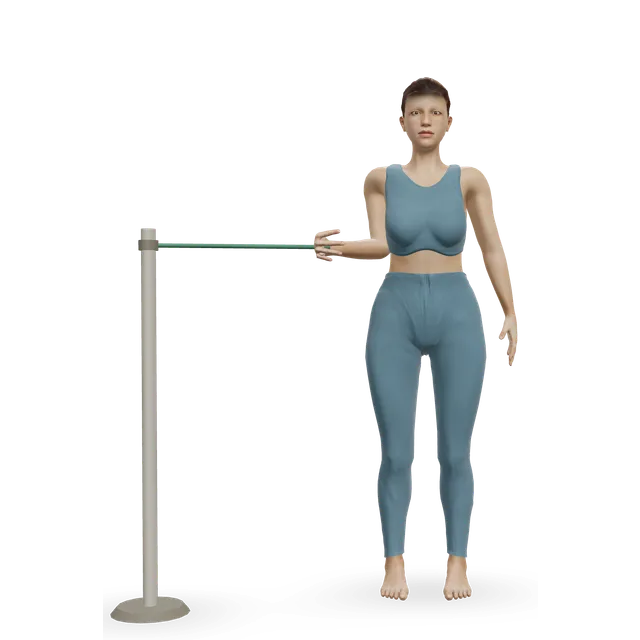
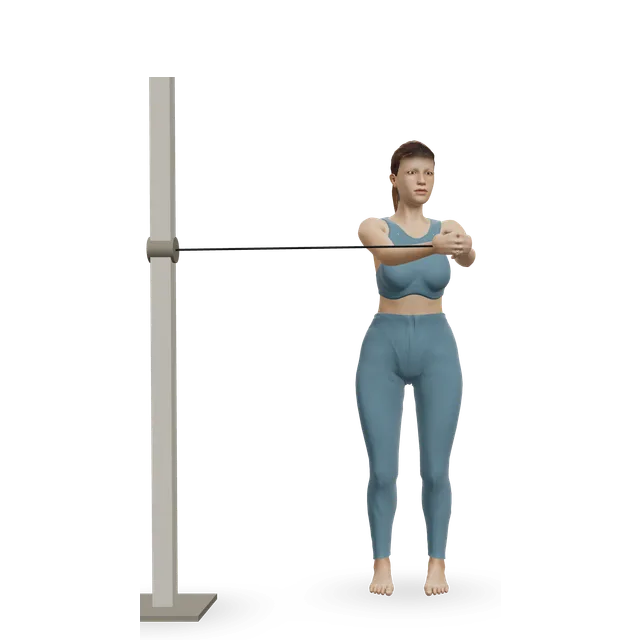
Standing band external rotation demonstrated on the 3D figure3D demoStanding band external rotationBeginner · A band + An anchor point

2 to 3 sets of 15, light band, elbow at your side, in the comfortable middle of the range · As in our SLAP tear guide; 3 sets of 15 is the Holmgren trial's dose

Easier: Stick-assisted external rotation (lying) · Harder: Side-lying external rotation

Band internal rotation demonstrated on the 3D figure3D demoBand internal rotationBeginner · A band + An anchor point

2 to 3 sets of 15, elbow at your side · As in our SLAP tear guide (editorial)

Harder: Side-lying external rotation

Band row demonstrated on the 3D figure3D demoBand rowBeginner · A band + An anchor point

3 sets of 10 to 15 · The move page's dose, an editorial starting point. Shoulder-blade work like the Holmgren trial's

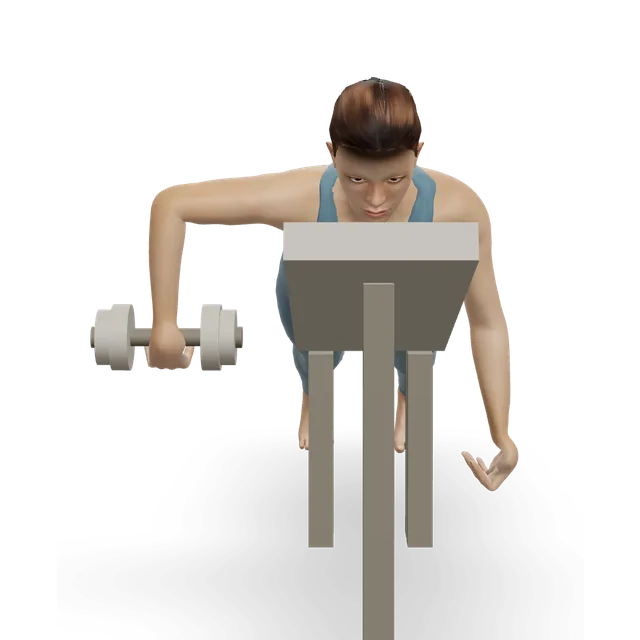
Harder: Supported single-arm dumbbell row

Cross-body shoulder stretch demonstrated on the 3D figure3D demoCross-body shoulder stretchBeginner · No equipment

Only if the throwing side has clearly lost inward turning: 5 holds of 30 s, once a day · The McClure trial's dose, in people without pain. Skip it if the end of the collarbone is sore or the shoulder feels loose, as the move page says

Harder: Sleeper stretch

Thoracic rotation demonstrated on the 3D figure3D demoThoracic rotationBeginner · No equipment

6 rotations each side, moving with the breath · The move page's dose. Upper-back mobility, part of the handball warm-up that worked

Easier: Side-lying open book · Harder: World's greatest stretch

Move on when: Daily use is comfortable, turning the arm outwards against a light band is within the pain rule, and pain at rest has settled (editorial).

Follow along: a timer, a cue and the next move, one step at a time.
Stage 2

Build: rotator cuff, shoulder blade, hips and trunk

About weeks 2 to 6, 3 to 5 days a week: the strength and control that throwing programmes ask for before any throwing, including the legs and trunk that power the throw.

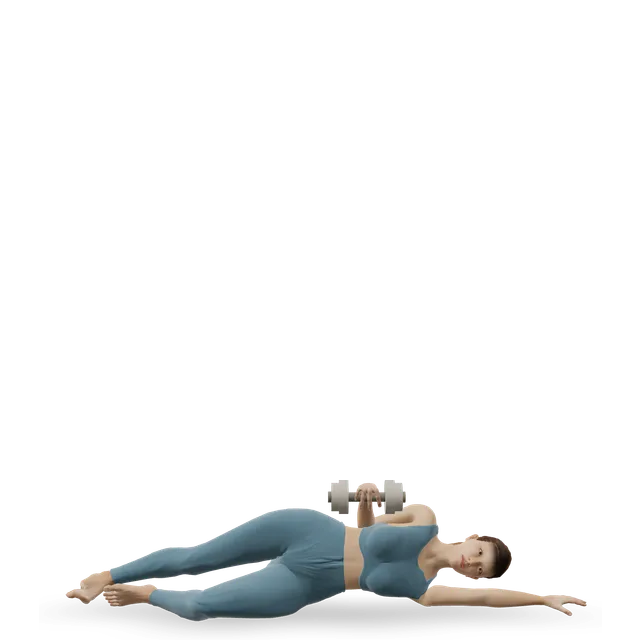
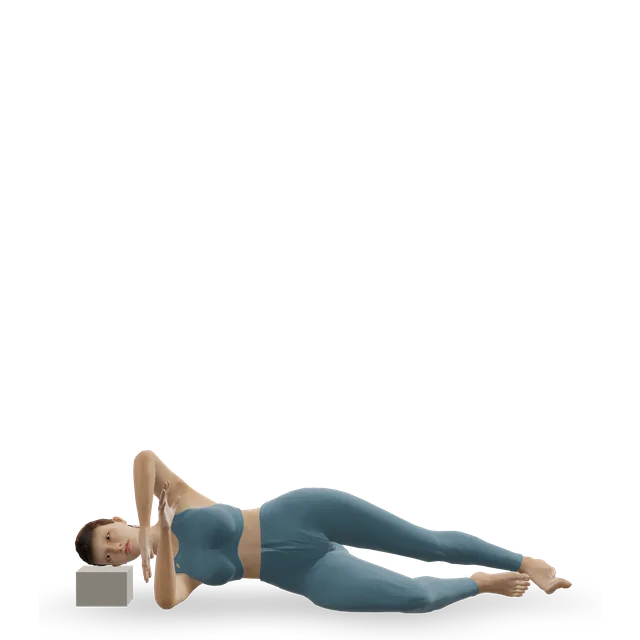
Side-lying dumbbell external rotation (on a bench) demonstrated on the 3D figure3D demoSide-lying dumbbell external rotation (on a bench)Beginner · A dumbbell + A bench or box

8 to 15 reps, working up to 3 sets, with a light dumbbell once the movement is easy without one · The move page's dose, from NHS Ayrshire and Arran. The Thrower's Ten programme includes lying on your side turning the arm out

Easier: Standing band external rotation · Harder: Incline reverse fly with external rotation

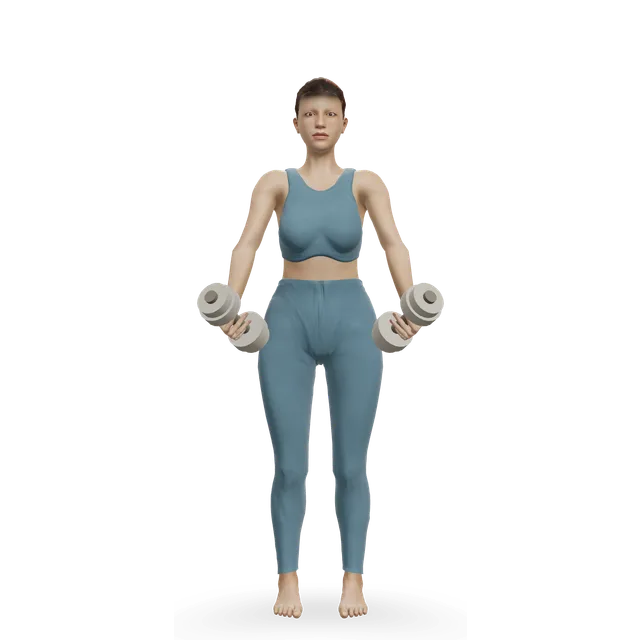
Scaption raise demonstrated on the 3D figure3D demoScaption raiseBeginner · A dumbbell

3 sets of 10, thumbs up, to shoulder height, hold 2 s at the top and lower slowly · The Thrower's Ten's dose and cue

Easier: Band lateral raise · Harder: Smith machine upright row

Prone Y-T-W raises demonstrated on the 3D figure3D demoProne Y-T-W raisesBeginner · No equipment

3 sets of 10 of each shape, forehead on a towel · The Thrower's Ten's face-down raises and rows, 3 sets of 10

Easier: Wall angel · Harder: Bent-over reverse fly

Scapular push-up (push-up plus) demonstrated on the 3D figure3D demoScapular push-up (push-up plus)Beginner · No equipment

3 sets of 10, on a wall, then a table, then the floor · The Thrower's Ten's push-up progression and dose

Easier: Dumbbell shoulder-blade punch · Harder: Push-up

Single-leg Romanian deadlift demonstrated on the 3D figure3D demoSingle-leg Romanian deadliftAdvanced · A dumbbell

2 sets of 8 each leg, no weight at first, fingertips on a wall · As in our Little League shoulder guide (editorial). The legs and trunk power the throw

Easier: Dumbbell Romanian deadlift

Half-kneeling Pallof press demonstrated on the 3D figure3D demoHalf-kneeling Pallof pressBeginner · A band + An anchor point

2 sets of 10 each side · As in our Little League shoulder guide (editorial). Trunk control

Harder: Pallof press

Move on when: Shoulder movement is full and equal to the other side, turning the arm outwards and inwards against resistance is pain-free, and strength feels similar on both sides: the usual checks before an interval throwing programme.

Follow along: a timer, a cue and the next move, one step at a time.
Stage 3

Strength in the throwing position, and power

About weeks 6 to 10, 2 or 3 days a week: strength with the arm raised to the throwing position, then light medicine-ball throws that bring the legs, trunk and arm together before you throw a ball for real.

Prone dumbbell external rotation demonstrated on the 3D figure3D demoProne dumbbell external rotationIntermediate · A dumbbell + A bench or box

3 sets of 8 to 15 with a light dumbbell · The move page's dose (NHS Ayrshire and Arran's rotation with the arm at 90 degrees). Start only when rotation with the elbow at your side is pain-free, as the move page says

Easier: Side-lying dumbbell external rotation (on a bench) · Harder: Barbell rear-delt row

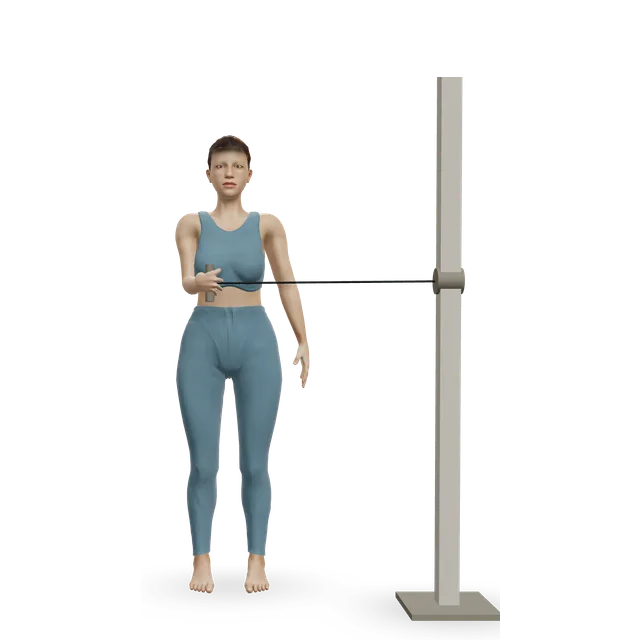
Cable external rotation demonstrated on the 3D figure3D demoCable external rotationBeginner · A cable machine

3 sets of 10 to 12, heavier · As in our SLAP tear guide (editorial)

Harder: Side-lying external rotation

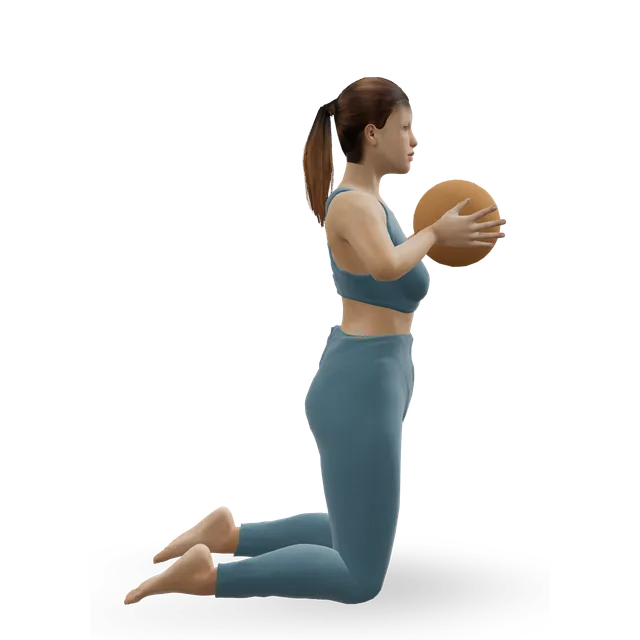
Medicine-ball chest push demonstrated on the 3D figure3D demoMedicine-ball chest pushBeginner · Medicine ball

2 sets of 5, light ball, two hands · As in our Little League shoulder guide (editorial)

Harder: Two-hand overhead throw

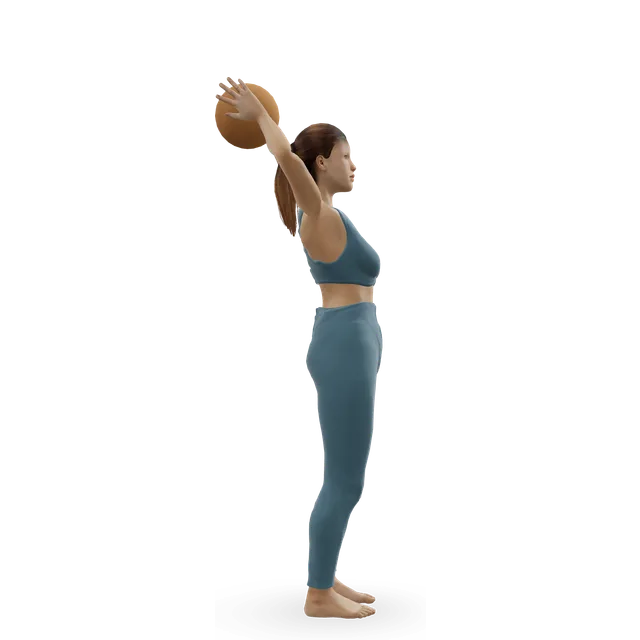
Two-hand overhead throw demonstrated on the 3D figure3D demoTwo-hand overhead throwIntermediate · Medicine ball

2 sets of 5, light ball · As in our Little League shoulder guide (editorial)

Easier: Medicine-ball chest push · Harder: Lying one-arm overhead throw

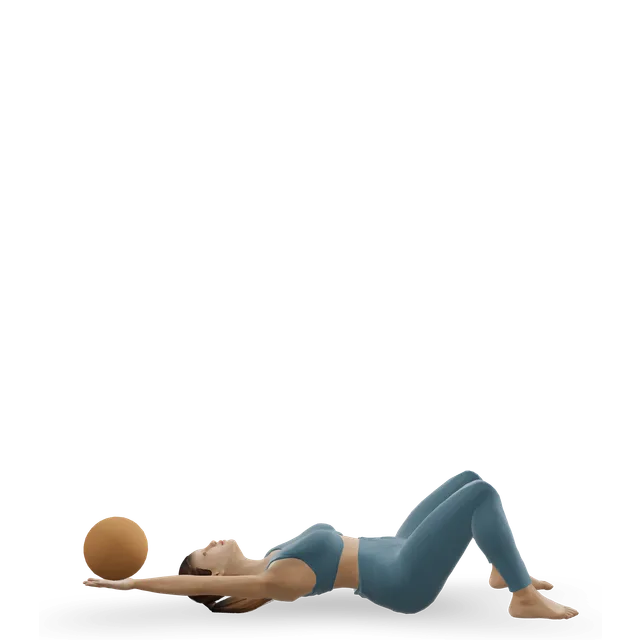
Lying one-arm overhead throw demonstrated on the 3D figure3D demoLying one-arm overhead throwIntermediate · Medicine ball

2 sets of 5 each arm, light ball · As in our Little League shoulder guide (the throwing arm strength workout's dose)

Easier: Two-hand overhead throw

Sleeper stretch demonstrated on the 3D figure3D demoSleeper stretchIntermediate · No equipment

Only for a clear loss of inward turning: 3 holds of 30 s on the throwing side, gently · As in our SLAP tear guide, the dose in a study of college baseball players. Skip it with a painful or loose shoulder, as the move page says

Easier: Cross-body shoulder stretch · Harder: Sots press

Move on when: Light medicine-ball throws cause no pain during or the next morning, and the stage 2 checks still hold (editorial).

Follow along: a timer, a cue and the next move, one step at a time.
Stage 4

Back to throwing: the warm-up and the interval programme

From about week 8 to 12, then for good: a shoulder warm-up before every session, 3 times a week or more, and a step-by-step return to throwing every other day with the soreness rules, by the written steps below. The return follows published programmes, which haven't been tested in trials.

World's greatest stretch demonstrated on the 3D figure3D demoWorld's greatest stretchIntermediate · No equipment

4 slow reps each side, as part of the warm-up · The move page's dose, an editorial starting point. Hip and upper-back mobility, as in the handball warm-up

Easier: Low lunge (Anjaneyasana) · Harder: Active pancake lift-off

Standing band external rotation demonstrated on the 3D figure3D demoStanding band external rotationBeginner · A band + An anchor point

2 sets of 15 to 30 s of steady reps · Shoulder Control's in-season dose. The programme turns the arm out with it raised to 90 degrees; this elbow-at-your-side version is our choice for a warm-up

Easier: Stick-assisted external rotation (lying) · Harder: Side-lying external rotation

Scapular push-up (push-up plus) demonstrated on the 3D figure3D demoScapular push-up (push-up plus)Beginner · No equipment

2 sets of 15 to 30 s · Shoulder Control's in-season dose; the programme includes trunk rotation in a push-up position. The move choice is ours

Easier: Dumbbell shoulder-blade punch · Harder: Push-up

Band pull-apart demonstrated on the 3D figure3D demoBand pull-apartIntermediate · A band

2 sets of 15 to 30 s · Shoulder Control's in-season dose; shoulder-blade strength, as in the handball warm-up. The move choice is ours

Easier: Prone Y-T-W raises · Harder: Tuck back lever

Cable press and rotation demonstrated on the 3D figure3D demoCable press and rotationIntermediate · A cable machine

2 sets of 10 each side · Editorial. Trunk turn and control, as in our throwing arm strength workout

Easier: Half-kneeling Pallof press · Harder: Cable wood chop

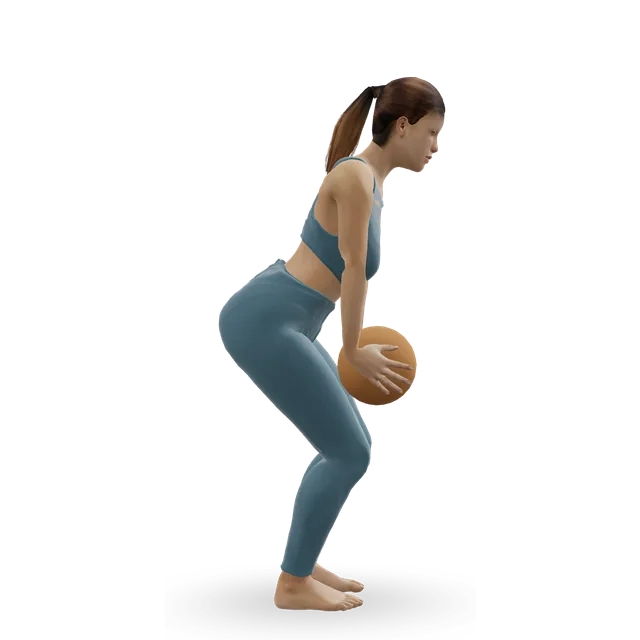
Medicine-ball scoop throw (backward overhead throw) demonstrated on the 3D figure3D demoMedicine-ball scoop throw (backward overhead throw)Beginner · Medicine ball

3 sets of 3 to 5 throws, a minute's rest between sets · The move page's dose, an editorial starting point. Whole-body power before full-effort throwing

Harder: Two-hand overhead throw

Move on when: Each throwing step is pain-free with no soreness the next day before you move on, as the programmes say; then full-effort throwing, then bowling at full pace or pitching from the mound, then matches. Keep the warm-up going 3 times a week.

Follow along: a timer, a cue and the next move, one step at a time.

What to change for now

Throwing load, rest days and the off-season (written steps)

Our 3D figure can't show these. They come from Pitch Smart, the ECB, the AAOS and NHS pages; where a step is our suggestion, it says so.

  • 1. Stop throwing, bowling and serving while it hurts to throw, and keep the arm moving for everyday jobs: the NHS says don't completely stop using your shoulder.
  • 2. Young pitchers: follow Pitch Smart for their age. Daily maximums are 50 pitches at 7 and 8, 75 at 9 and 10, 85 at 11 and 12, 95 at 13 to 16 and 105 at 17 and 18. For 9 to 14 year olds, no rest day is needed after 1 to 20 pitches, 1 day after 21 to 35, 2 after 36 to 50, 3 after 51 to 65 and 4 after 66 or more. No pitching on 3 days in a row, at most 80 innings a year at 9 to 12 and 100 at 13 and 14, at least 4 months off throwing a year, one team at a time, no catching while not pitching, and fastballs and changeups only up to 12.
  • 3. Young fast bowlers in England and Wales: follow the ECB's spell and day limits (4 overs a spell and 8 a day at 11 and under, rising to 7 and 18 at 18 and 19), at most 4 bowling days in any 7 with only one pair of days in a row, a 7 to 10-day break mid-season, a lighter week every 4 to 5 weeks and a 4-week break after the season.
  • 4. Fielding throws in cricket have no official limit. Keep the number steady from week to week, and below about 75 throws a week while it's sore (our suggestion, from one study of elite cricketers).
  • 5. Build up gradually after any break: the ECB notes that "bone strength is reduced after only two weeks" and builds bowling back step by step; the same logic suits throwing (our reading).
  • 6. Get your throwing mechanics looked at by a coach or physiotherapist once you are throwing again (the AAOS).

Sources 3, 64, 37, 40, 41, 42, 1, 78

The interval throwing programme (written steps)

From a US hospital's patient handout based on a published programme, with distances in metres. A review of 9 such programmes found they agree on the basics but "have minimal clinical validation".

  • 1. Start when you have full movement and strength without pain, and your clinician agrees.
  • 2. Throw every other day, and only move on when the last session was pain-free with no soreness the next day.
  • 3. Use a crow-hop (a hop, a skip, then the throw), an arcing throw, and don't throw flat-footed.
  • 4. Step 1: warm-up throws, 25 throws at about 14 m (45 feet), a 15-minute rest, warm-up throws, then 25 more at 14 m. Step 2: 3 sets of 25 at 14 m with 10-minute rests. Then the same pattern at about 18 m, 27 m, 37 m, 46 m and up to 55 m (60 to 180 feet), two or three steps at each distance.
  • 5. Then pitching from the mound, or full practice at your position. For cricket no programme has been published: build bowling back gradually as the ECB advises, and fielding throws by the same steps (our suggestion).
  • 6. Follow the soreness rules in the pain rule above at every step.

Sources 72, 74, 75, 73, 41

Positions to swap, and why

Habit or positionWhy it mattersInstead
Throwing through pain, or full-effort throws after a breakPain at the back as the arm cocks back settles with a spell off throwing, and fatigue and overuse go with injury.Time off throwing, then the interval programme.
Pitching or bowling on days in a row, or for two teams at oncePitch Smart and the ECB both limit it.Rest days by the guidelines, and one team at a time.
Throwing all year roundPitch Smart says take at least 4 months off throwing every year.Other sports in the off-season, and an off-season throwing routine twice a week.
Stopping all arm movement while it's soreThe NHS says don't completely stop using your shoulder.The stage 1 moves and everyday use.Try: Shoulder CARs (controlled articular rotations)
Forcing the sleeper stretch, or doing it with a painful or loose shoulderIts gain wasn't significant in a trial, and its page says skip it then.A gentle cross-body stretch, only if inward turning is clearly lost.Try: Cross-body shoulder stretch
Heavy overhead pressing in the gym while throwing hurtsThe NHS says don't make up your own strenuous exercises or use heavy gym equipment while your shoulder hurts.Cuff and shoulder-blade work first, such as scaption raises.Try: Scaption raise
Hard serves, smashes or spikes while it hurts to throwIt's the same overhead action, and the ECB asks for overhead sports to be managed together.Groundstrokes, footwork and fitness; serves come back with the interval programme (our suggestion).
Ignoring a warm-up that keeps getting longer, or lost speedThese are early signs of internal impingement, a review says.Cut your throwing and get it checked.
A child playing on with shoulder or elbow painPain at the top of the arm in a young thrower can be a growth-plate injury.Stop throwing and see a GP or sports physiotherapist.
Asking for an MRI firstChanges are common in throwers' shoulders that don't hurt.Rehab first; a scan if surgery is being considered.

Routines to follow

More moves for this area

Questions people ask

Why does my shoulder hurt when I throw?

A throw turns the raised arm back further and faster than almost any other movement, and the back of the shoulder then has to slow it down. The usual causes are an overloaded rotator cuff, the cuff pinched inside the joint at the back as the arm cocks back, a SLAP tear or a loose shoulder; in a young thrower, Little League shoulder. Where it hurts and when in the throw sort them.

Why does the back of my shoulder hurt when I throw?

In throwers, the cuff tendons at the back can be pinched inside the joint as the arm cocks back, often with stiffness, a long warm-up or lost speed, and the back of the shoulder takes the strain of slowing the arm after release. A spell off throwing, cuff and shoulder-blade work and a graded return usually come first.

Why does the front of my shoulder hurt when I throw?

Pain from the front to the side of the arm is usually the rotator cuff, sometimes with the biceps tendon. Deep pain with catching or clicking can be the labrum. Our front of shoulder pain guide covers the front in general.

What is thrower's shoulder?

It's a loose name for the shoulder problems throwers get: an overloaded or pinched rotator cuff, a SLAP tear, a loose shoulder and, in children, Little League shoulder. It usually comes from throwing volume and fatigue, which is why load, rest days and a warm-up are part of the treatment.

What is a dead arm?

A sudden loss of power, or a weak, heavy feeling in the arm during or after throwing. In throwers it can come from a loose shoulder or a SLAP tear; after a tackle, a burning dead arm that settles within minutes is usually a nerve stinger. If it keeps happening, see a physiotherapist or sports doctor.

Should I keep throwing with shoulder pain?

Not through pain: stop throwing, keep the arm moving, and come back by a step-by-step programme once your movement and strength are full and pain-free. During the return, mild soreness that settles in the warm-up is allowed, and soreness that lasts means a rest day and a step back.

How long should I rest from throwing?

It depends on the cause: a review suggests 4 to 6 weeks off throwing for pain at the back as the arm cocks back, and children with Little League shoulder usually need about 3 months. A return programme then takes several more weeks. No one can promise a date.

Why does my shoulder hurt after bowling or throwing in cricket?

Most cricketers' shoulder injuries hurt when fielding and throwing, and the causes are the same as in other throwers. The ECB limits young fast bowlers' spells and days to protect the back, and there's no throwing limit, so keep your fielding throws steady and build back gradually.

How many pitches are safe for my child?

Pitch Smart's daily maximums run from 50 pitches at 7 and 8 to 105 at 17 and 18, with rest days by pitch count, no pitching on 3 days in a row and at least 4 months off throwing a year. Our Little League shoulder guide has the full table. Pain at the top of the arm means stop and get it checked.

Do I need an MRI?

Usually not at first: scans show tears and labral changes in many throwers' shoulders that don't hurt. A scan helps when surgery is being considered, and a child with suspected Little League shoulder needs X-rays of both shoulders.

What exercises help shoulder pain from throwing?

Rotator cuff and shoulder-blade strength first, then strength with the arm in the throwing position, then light medicine-ball throws, with hip and trunk work throughout. A shoulder warm-up 3 times a week lowered shoulder problems in handball players.

When should I see a doctor?

Call 999 for arm pain with chest pain or a hand that suddenly turns cold and pale, and go to A&E for a shoulder that looks out of place. Get help the same day for a swollen, throbbing arm, a hot shoulder with a high temperature, or pins and needles that don't go away, and see a GP or physiotherapist if it hasn't improved after 2 weeks. In the US, call 911 where this page says 999.

Related exercise guides

Other pain guides

Sources

  1. AAOS OrthoInfo · Shoulder injuries in the throwing athlete (patient information, American Academy of Orthopaedic Surgeons)
  2. Fleisig 1995 · Forces on the shoulder and elbow in 26 skilled pitchers (motion study, Am J Sports Med)
  3. Corpus 2016 · Internal impingement of the shoulder in overhead athletes (review, World J Orthop)
  4. Lyman 2002 · Pitch type, pitch counts and arm pain in 476 young pitchers (cohort study, Am J Sports Med)
  5. Fleisig 2011 · Serious injury in 481 young pitchers followed for 10 years (cohort study, Am J Sports Med)
  6. Posner 2011 · Injuries in Major League Baseball, 2002 to 2008 (injury surveillance study, Am J Sports Med)
  7. Myklebust 2013 · Shoulder pain in 179 elite Norwegian female handball players (cross-sectional study, Scand J Med Sci Sports)
  8. Clarsen 2015 · Overuse injuries in five Norwegian sports, measured weekly (surveillance study, Scand J Med Sci Sports)
  9. Ranson 2008 · Shoulder injury in English professional cricketers (survey, Phys Ther Sport)
  10. AAOS OrthoInfo · SLAP tears (patient information, American Academy of Orthopaedic Surgeons)
  11. Hegedus 2012 · Which shoulder examination tests help? (systematic review and meta-analysis, BJSM)
  12. Noorani 2019 · BESS/BOA patient care pathway: atraumatic shoulder instability (UK pathway, Shoulder Elbow)
  13. Brownson 2015 · BESS/BOA patient care pathway: traumatic anterior shoulder instability (UK pathway, Shoulder Elbow)
  14. NHS · Dislocated shoulder
  15. Connor 2003 · MRI of the shoulders of 20 overhead athletes without pain, followed for 5 years (imaging study, Am J Sports Med)
  16. Miniaci 2002 · MRI of the shoulders of 14 professional pitchers without pain (imaging study, Am J Sports Med)
  17. Lesniak 2013 · MRI findings and innings pitched in 21 pain-free professional pitchers (imaging study, Am J Sports Med)
  18. Steinmetz 2022 · Return to play after non-surgical treatment of SLAP tears: 5 studies, 244 athletes (systematic review, J Shoulder Elbow Surg)
  19. Sayde 2012 · Return to play after SLAP repair: 14 studies, 506 patients (systematic review, Clin Orthop Relat Res)
  20. Fedoriw 2014 · Return to play after treatment of SLAP tears in 68 professional baseball players (case series, Am J Sports Med)
  21. Schrøder 2017 · SLAP repair, biceps tenodesis or sham surgery in 118 people (RCT, BJSM)
  22. Mazoué 2006 · Rotator cuff repair in 12 professional baseball players (case series, Am J Sports Med)
  23. Klouche 2016 · Return to sport after rotator cuff repair: 25 studies (systematic review and meta-analysis, Am J Sports Med)
  24. Wilk 2011 · Lost inward rotation and injury in 122 professional pitchers (cohort study, Am J Sports Med)
  25. Wilk 2015 · Shoulder range of motion and injury in 296 professional pitchers (cohort study, Am J Sports Med)
  26. Keller 2018 · Lost inward rotation and arm injury in overhead athletes: 17 studies (meta-analysis, Sports Health)
  27. Shanley 2011 · Shoulder range of motion and arm injury in 246 high-school softball and baseball players (cohort study, Am J Sports Med)
  28. Bullock 2018 · Shoulder range of motion and baseball arm injuries (systematic review and meta-analysis, J Athl Train)
  29. Andersson 2018 · Risk factors for overuse shoulder injuries in 329 elite handball players (cohort study, BJSM)
  30. Reeser 2010 · Risk factors for shoulder pain in 422 volleyball players (cross-sectional study, PM R)
  31. McClure 2007 · Cross-body against sleeper stretch for a tight back of the shoulder in 54 adults (RCT, JOSPT)
  32. Iida 2026 · Stretching for lost inward rotation in overhead athletes: 6 trials (systematic review and meta-analysis, PM R)
  33. Laudner 2008 · The short-term effect of sleeper stretches in 33 college baseball players (study, J Athl Train)
  34. Hickey 2018 · An abnormal shoulder blade and later shoulder pain in athletes: 5 studies, 419 athletes (meta-analysis, BJSM)
  35. Kibler 2013 · Scapular dyskinesis in shoulder injury: the 2013 consensus statement (consensus, BJSM)
  36. Olsen 2006 · Risk factors for shoulder and elbow injuries in 140 adolescent pitchers (case-control study, Am J Sports Med)
  37. MLB and USA Baseball · Pitch Smart pitching guidelines by age
  38. Kriz 2026 · Did compulsory pitching limits reduce shoulder and elbow injuries in US high-school baseball? (surveillance study, Orthop J Sports Med)
  39. Nissen 2009 · Forces on the arm in the fastball and the curveball in 29 adolescent pitchers (lab study, Am J Sports Med)
  40. England and Wales Cricket Board · Recreational cricket safety regulations: fast bowling (December 2025)
  41. England and Wales Cricket Board · Recreational cricket safety guidelines: fast bowling workload (December 2025)
  42. Saw 2011 · Throwing workload and injury in 28 elite cricketers (cohort study, BJSM)
  43. Hulin 2014 · Spikes in workload and injury in elite fast bowlers (cohort study, BJSM)
  44. Impellizzeri 2020 · The acute to chronic workload ratio: conceptual problems (review, Int J Sports Physiol Perform)
  45. Andersson 2017 · A shoulder injury prevention programme in 660 elite handball players (cluster RCT, BJSM)
  46. Asker 2022 · Shoulder and knee exercise programmes in adolescent elite handball players: Shoulder Control (cluster RCT, Sports Med Open)
  47. Sakata 2019 · A warm-up programme to prevent throwing injuries in 237 young baseball players (cluster RCT, Am J Sports Med)
  48. Al Attar 2021 · The FIFA 11+ Shoulder programme in 726 football goalkeepers (cluster RCT, Am J Sports Med)
  49. Asker 2018 · Risk factors for and prevention of shoulder injuries in overhead sports (systematic review, BJSM)
  50. Cassas 2006 · Overuse injuries in children's and teenagers' sport, including Little League shoulder (review, American Family Physician)
  51. Heyworth 2016 · Little League shoulder in 95 young athletes at one children's hospital (case series, Am J Sports Med)
  52. Bednar 2021 · Diagnosis and treatment of Little League shoulder: 23 studies, 266 children (systematic review, Orthop J Sports Med)
  53. Illig 2021 · How often thoracic outlet syndrome happens: 526 referrals to one centre (cohort study, Ann Vasc Surg)
  54. Illig 2010 · Paget-Schroetter syndrome, a clot in the arm's main vein (review, J Vasc Surg)
  55. Duwayri 2011 · Artery damage in the throwing arm of 9 elite athletes (case series, J Vasc Surg)
  56. Hangge 2018 · Quadrilateral space syndrome (review, J Clin Med)
  57. Ferretti 1987 · Suprascapular nerve problems in 96 top-level volleyball players (study, J Bone Joint Surg Am)
  58. Mazza 2021 · Suprascapular nerve problems in 82 professional volleyball players (cross-sectional study, Phys Sportsmed)
  59. Ferretti 1998 · Suprascapular nerve injury in volleyball players followed for 5.5 years (case series, Am J Sports Med)
  60. NHS · Thoracic outlet syndrome
  61. NHS · DVT (deep vein thrombosis)
  62. NCEPOD · Risking life and limb: acute limb ischaemia (patient leaflet, National Confidential Enquiry into Patient Outcome and Death, 2025)
  63. NHS · Heart attack
  64. NHS · Shoulder pain (past its review date: reviewed May 2023, review due May 2026)
  65. NHS · Septic arthritis
  66. NHS inform · Shoulder problems
  67. NHS inform · Exercises for shoulder problems
  68. Holmgren 2012 · Specific shoulder exercise against general exercise for subacromial pain in 97 people (RCT, BMJ)
  69. Smith 2017 · Should exercises be painful in chronic musculoskeletal pain? (meta-analysis of 7 trials, BJSM)
  70. University of Utah Orthopaedics · The Thrower's Ten exercise programme (patient handout adapted from the American Sports Medicine Institute)
  71. Wilk 2011 · The Advanced Thrower's Ten exercise programme (programme description, Phys Sportsmed)
  72. Langhans 2025 · Baseball interval throwing programmes: 9 programmes compared (systematic review, Sports Health)
  73. Axe 2009 · Data-based interval throwing programmes for baseball players, with soreness rules (programme paper, Sports Health)
  74. Massachusetts General Hospital · Interval throwing programme (patient handout based on Reinold 2002)
  75. Reinold 2002 · Interval sport programmes for baseball, tennis and golf (guidelines, JOSPT)
  76. Seroyer 2010 · The kinetic chain in overhand pitching (review, Sports Health)
  77. Pandey 2025 · BESS patient care pathway: subacromial pain (UK pathway, Shoulder Elbow)
  78. AAOS OrthoInfo · Baseball and softball injury prevention (patient information, American Academy of Orthopaedic Surgeons)
  79. NHS · What is bone cancer?

Exercise education, not a diagnosis or treatment plan. It is written from the guidelines and studies listed above; review by a clinician is pending. If your pain follows an injury, is severe, is getting worse, or comes with any warning sign listed on this page, get it assessed. Health disclaimer.