Pain guide · Shoulder pain

Shoulder pain when reaching behind your back: the rotator cuff, frozen shoulder, the front, dressing

Shoulder pain when you reach behind your back, doing up a bra, putting on a coat, tucking in a shirt or reaching a back pocket or seat belt, is common, and it usually comes from the rotator cuff, the tendons that lift and turn the arm. A deep ache with stiffness in every direction points to frozen shoulder, and pain at the front can be the biceps tendon. It isn't caused by bad posture, and it doesn't mean you need an operation.

This guide starts with the signs that need help today, from a 999 call or accident and emergency (A&E) to the National Health Service's 111 line (NHS 111) or a general practitioner (GP), including chest pain with arm pain and sudden weakness after a fall. It then sorts the causes by where it hurts, explains when a scan or injection helps, gives dressing, washing and reaching tips, and a three-stage plan with a 3D demo of every move that ends with reaching behind your back again.

When to get help first

Exercise is for pain that has been checked or is clearly mild and settling.

Get urgent medical help if

  • Call 999: shoulder or arm pain with chest pain that feels tight or squeezing, or chest pain that spreads to your arms, neck or jaw, especially with shortness of breath, sweating or feeling sick. It could be a heart attack.
  • Get help from NHS 111: pain or tightness in your chest, neck, shoulders, jaw or arms that comes and goes, often brought on by exercise, stress, emotion or cold and easing after a few minutes' rest. It can be angina, a sign of a heart problem. If you've been diagnosed with angina, get help from NHS 111 too if it feels worse than before, is happening more often, lasts longer or happens when you're resting.
  • Call 999 or go to A&E: after a fall or injury, your shoulder looks out of place or has changed shape, you cannot move your arm, or your shoulder is painful, bruised or swollen. Do not drive yourself, and do not try to put it back in yourself.
  • Same day (GP or NHS 111): sudden weakness lifting the arm after an injury or fall. A rotator cuff tear caused by an injury needs urgent referral to a shoulder specialist. After a dislocation, you may be offered a scan to check for damage.
  • Same day (GP or NHS 111): the shoulder or arm is hot, swollen or red, or you have a high temperature (although not everyone has one) or feel unwell. A joint infection needs same-day care.
  • Same day (GP or NHS 111): sudden or very bad shoulder pain; you cannot move your arm; the arm or shoulder is badly swollen or has changed shape; pins and needles that do not go away; no feeling in the arm; the arm is hot or cold to the touch; pain that started after an injury such as a fall; or severe pain in both shoulders.
  • Call 999: you suddenly can't fully lift both arms and keep them there, because of weakness or numbness in one arm, especially if one side of your face droops or you slur your words or sound confused. It could be a stroke. Call even if the signs have stopped.

See a doctor or physiotherapist if

  • Weakness or pain tucking your hand behind your back or pressing it into your tummy, especially after your arm was forced backwards or outwards: ask for an assessment soon, even if the pain is settling. A tear of the subscapularis, the rotator cuff tendon at the front, is easily missed, and a sudden tear is best found early.
  • Pain that is getting worse or has not improved after 2 weeks of looking after it yourself, or it is very hard to move your arm. In many areas you can refer yourself to physiotherapy.
  • Pins and needles or a cold arm alongside neck pain, or a new loss of strength or feeling in the arm that you cannot explain (a possible nerve problem).
  • See a GP if you have pain and stiffness for more than a week, especially if you're over 50, it's in both shoulders (often the neck and hips too) and the stiffness lasts longer than 45 minutes in the morning. It can be polymyalgia rheumatica.
  • A past history of cancer, an unexplained lump or swelling, weight loss, or pain that is constant and does not ease when you change position.
  • You smoke or used to, and have shoulder pain with a cough that will not go away, breathlessness or weight loss. See a GP if you've had a cough for longer than 3 weeks; if you've coughed up blood, ask for an urgent GP appointment or get help from NHS 111.
  • Your shoulder has partly or fully come out of joint, or you worry it might.

Where does it hurt?

Location narrows the likely causes; it does not diagnose.

The outside of the shoulder and upper arm, sore putting on a coat, reaching behind and lifting overhead

Usually the rotator cuff (often called impingement or subacromial pain). It hurts, but someone else can move your arm further than you can. Our shoulder impingement guide has a full plan.

Read: Shoulder impingement (rotator cuff pain) →
Weakness reaching behind or lifting the arm after a fall, a jerk or a dislocation

Possibly a rotator cuff tear: sudden weakness after an injury needs checking the same day, as the warning signs say. Our rotator cuff tear guide covers it.

Read: Rotator cuff tear →
A deep ache, stiff in every direction, hard to turn the arm out (putting on a coat) and to reach behind you (a bra or a back pocket)

Often frozen shoulder, most common from about 45 to 60 and linked with diabetes. It is often worse at night. Our frozen shoulder guide has a gentle plan matched to how sore it is.

Read: Frozen shoulder →
The front of the shoulder, worse reaching back for a seat belt or a coat sleeve, and lifting overhead

Often the biceps tendon at the front, usually alongside the rotator cuff. Our front of shoulder pain guide maps the other causes.

Read: Front of shoulder pain →
Weakness or pain tucking your hand behind your back or pressing it into your tummy, after the arm was forced backwards or out

Possibly a tear of the subscapularis, the rotator cuff tendon at the front, which is easily missed: ask for an assessment soon. Our biceps tendon guide covers the front of the shoulder.

Read: Biceps tendinitis (shoulder) →
The top of the shoulder, tender to press, worse reaching across your body

The joint at the end of the collarbone (the acromioclavicular or AC joint). It hurts more reaching across than behind. Our AC joint guide covers it.

Read: AC joint injury and pain →
A deep ache with grinding and a big loss of turning the arm out, usually over 60

Possibly arthritis of the shoulder joint, which an X-ray shows. Our shoulder arthritis guide covers it.

Read: Shoulder arthritis →
Sudden, very bad pain on the outside of the shoulder with no injury

Often calcium in a rotator cuff tendon. Sudden or very bad pain needs a same-day check, as the warning signs say. Our calcific tendinitis guide covers it.

Read: Calcific tendinitis →
Pain from the lower neck into the arm, with pins and needles or burning

Shoulder pain can come from the neck even when the neck doesn't hurt. Our pinched nerve in the neck guide covers it.

Read: Pinched nerve in the neck →
A thrower or overhead athlete with a stiff back of the shoulder

Lost inward turning in the throwing arm. Our back of shoulder pain guide covers stretches and load.

Read: Back of shoulder pain →
Pain lifting your arm or reaching up

Our shoulder pain when lifting your arm guide covers the painful arc and reaching overhead.

Read: Shoulder pain lifting your arm →
Both shoulders, often the hips too, stiff for more than 45 minutes each morning, over 50

Possibly polymyalgia rheumatica: see a GP, as the warning signs say.

With chest pain, breathlessness, sweating or feeling sick

Possibly the heart: call 999, as the warning signs say.

Understand it

Reaching behind your back is a classic trigger of rotator cuff painStrong evidence

Rotator cuff related pain, also called subacromial pain, is "the most common reason for shoulder pain", NHS inform says, and it is usually brought on by "lifting the arm above shoulder level and reaching behind the back, for example when putting a jacket on". A UK care pathway reports that rotator cuff problems account for up to 70% of shoulder pain, and a review for GPs puts them at ages 35 to 75. In UK general practice, 2.36% of adults see a GP about a shoulder each year, with new cases peaking around 50.

A torn rotator cuff can make "reaching behind your back" harder, and some tears cause weakness without much pain, US orthopaedic surgeons (AAOS) say. No study explains exactly why the movement hurts. Reaching behind combines bending the elbow, taking the arm back and out, turning it inwards and tipping the shoulder blade forward, in a study of 20 healthy young adults. Impingement is "nothing to do with your tendons being trapped by bones, as was previously thought", Arthritis UK says.

Sources 1, 2, 3, 4, 5, 6, 7

Frozen shoulder: stiff in every direction, and reaching behind is lost tooMixed evidence

Frozen shoulder typically starts slowly, with pain near the top of the upper arm and "a disproportionately severe loss of passive external rotation" (turning the arm outwards), a UK shoulder society pathway says. About 2.4 people per 1,000 get it each year, typically women between 45 and 60, and 6% to 17% get it in the other shoulder within 5 years. People with diabetes are about 5 times as likely to have it, and thyroid disease is linked too (about 1.9 times, in case-control studies).

Reaching behind the back is lost as well: an NHS trust leaflet names "twisting movements such as reaching behind the back or head". In one small study (17 people, abstract only), the affected side reached behind with much less inward turning at the shoulder joint (31 against 66 degrees), which the authors call the main cause. One person's account in a review in the British Medical Journal: "I could not lift my arm up, nor could I put it behind my back. I could wear only clothes with front fastenings".

Sources 8, 9, 10, 11, 12, 3

The front and the top of the shoulderEmerging evidence

The biceps tendon at the front causes "Pain with reaching backward, such as to put on your seatbelt in a car or to put a coat on", AAOS says. The subscapularis, the biggest rotator cuff muscle and the main inward turner, can tear after the arm is forced backwards or after a dislocation over 40. In the lift-off test, a clinician asks you to lift the back of your hand off your lower back; together with two similar tests, it picks up about 80% of these tears, a review says.

The joint at the end of the collarbone (the acromioclavicular or AC joint) hurts most reaching across the body. In 153 people in primary care, 14% had AC joint pain confirmed by an injection, the usual tests didn't pick them out, and reaching behind the back wasn't one of the features that told them apart. AC joint arthritis "typically causes few to no symptoms".

Sources 13, 14, 15, 16, 17

Other causes, and how rare they areEmerging evidence

Shoulder arthritis causes a global loss of movement, especially turning the arm out, usually from 60; an X-ray confirms it. Throwers can lose inward turning in the throwing arm, though in 2,195 athletes it wasn't clearly linked with injury. Calcium in a tendon causes sudden, severe pain that "usually necessitates an early secondary care referral".

Shoulder pain can come from the neck "even when you don't feel pain in your neck", NHS inform says, with pins and needles or burning; a pinched nerve in the neck affected about 83 people per 100,000 a year in one US population, most often at 50 to 54. A tumour at the top of the lung (a Pancoast tumour) is rare, about 5% of one kind of lung cancer as one review reports, but shoulder pain was its commonest first symptom. A tumour mimicking frozen shoulder over 40 is rare. The NHS gallstones page doesn't mention shoulder pain.

Sources 18, 17, 19, 2, 20, 21, 22, 8, 23

Tears on scans are common without painStrong evidence

In an ultrasound screening of a Japanese village, full-thickness cuff tears were found in 10.7% of people in their 50s, 26.5% in their 70s and 36.6% in their 80s, and two-thirds of the tears caused no symptoms. Across 30 studies, rotator cuff changes rose from 9.7% at 20 or under to 62% at 80 and over, "regardless of symptoms". A UK care pathway says a tear on a scan "does not imply a definite need for surgery in every case".

Sources 24, 25, 2

When a scan helpsStrong evidence

Usually not at first: an ultrasound or magnetic resonance imaging (MRI) scan of the rotator cuff "is rarely indicated in primary care", though an X-ray can help if you aren't improving. Sudden weakness after an injury needs urgent referral and a scan. Frozen shoulder is diagnosed by examination, and an X-ray tells it from arthritis. After a dislocation, "You may be offered a scan to check if your shoulder has been damaged", the NHS says. Reaching up your back or lifting your hand off it shows how far you can reach and how strong the front tendon is, but doesn't diagnose on its own.

Sources 2, 8, 18, 26, 14

How it usually goesStrong evidence

New shoulder pain "should begin to settle within 6 weeks" in many cases, NHS inform says, and the NHS suggests shoulder exercises for 6 to 8 weeks. In UK general practice, about half of people see a GP about it only once, and 13.6% are still consulting in the third year.

Frozen shoulder gets better, but slowly: NHS inform says it "can take more than 2 years to recover from", and some people keep slight stiffness that "tends to not limit their day to day activities". In 223 people followed for an average of 4.4 years, 59% were normal or near normal and 41% had some symptoms, almost all mild. Most improvement comes early, and there's no evidence of neat phases ending in full recovery. No one can promise a date.

Sources 20, 27, 4, 28, 29, 30
What helps, and how strong the evidence is

Exercise is the main treatment, and a few good exercises may be enoughStrong evidence

In 708 adults in 20 NHS trusts, one session of best-practice advice with a home programme did as well over a year as up to 6 sessions of progressive physiotherapy, and both groups improved; people did their exercises 5 days a week, focusing on the muscles that turn the arm out. In 102 people waiting for surgery, a programme of rotator cuff and shoulder-blade exercises, 3 sets of 15 twice a day for 8 weeks with pain kept at 5 out of 10 or less, did much better than general exercise (69% against 24% good results). A single self-managed loaded exercise did about as well as usual physiotherapy in a small trial.

Sources 31, 32, 33, 34, 35

Injections help for a few weeks; surgery to make room doesn't beat a placebo operationStrong evidence

In the 708-person trial, a steroid injection gave a modest improvement at 8 weeks and none at 6 or 12 months. NHS inform says injections "won't cure your condition or reduce shoulder stiffness", and a UK care pathway suggests no more than two. In a UK trial of 313 people, shaving bone to make room for the tendons did no better at 6 months than a keyhole operation that removed nothing.

Sources 31, 1, 2, 36

Frozen shoulder: an injection speeds the early stage; manipulation and release add littleStrong evidence

A UK shoulder society pathway gives a strong recommendation that a steroid injection into the joint improves symptoms faster than waiting, a conditional one for stretching the joint with fluid (hydrodilatation) in the short term, and a conditional one against manipulation or keyhole release for long-term results. Across 65 studies, only an injection into the joint was clearly better in the short term, and home exercise added benefit in the middle term. In 503 adults, physiotherapy with an injection did about as well at a year as manipulation under anaesthetic or keyhole release, with fewer serious side effects than release.

"There is no point in forcing movements through pain", an NHS trust leaflet says, and the NHS says move the shoulder, but only gently.

Sources 8, 37, 38, 39, 40

Reaching-behind stretches: health-service leaflets, no trialEmerging evidence

NHS trust frozen shoulder leaflets include "Try to reach your hands up behind your back. 5 repetitions twice a day" and a towel stretch held about 20 seconds, 3 times. No trial has tested a hand-behind-back stretch; in one trial of 70 people, a physiotherapist's hands-on mobilisation with movement added to exercise improved the reach behind the back by 20 degrees at 5 weeks.

For a tight back of the shoulder, the cross-body stretch gained 20 degrees of inward turning in 4 weeks in 54 people without pain, while the sleeper stretch's gain wasn't significant in that small trial. A 2026 review of 6 trials in overhead athletes found stretching, including the sleeper stretch, added about 7 degrees. Experts warn the sleeper stretch can pinch, so it comes last here, gently, and only for a shoulder that isn't sore.

Sources 39, 11, 41, 42, 43, 44

Posture isn't the causeEmerging evidence

Across 10 studies, there was moderate evidence of no difference in upper back rounding between people with and without shoulder pain; sitting upright gave more range in single sessions, which isn't the same as treating pain. In healthy people, the upper back's bend didn't track the shoulder when reaching behind. Sitting tall is fine for comfort, but it isn't the cause or the cure.

Sources 45, 6

A tear after an injury: urgent assessmentMixed evidence

A UK care pathway says "An acute cuff tear as a result of a traumatic event needs urgent referral". A review of 20 studies found more early improvement when such tears were repaired within 3 months, but "no significant difference in the final outcome". So the advice is to get sudden weakness checked quickly, not that early surgery is always better.

Sources 2, 3, 46

Dressing and daily tasks: NHS trust advice, borrowed from surgery leafletsEmerging evidence

Reaching behind the back is part of everyday life: shoulder questionnaires ask about washing your back and "removing something from your back pocket", and in 20 adults everyday tasks needed about 102 degrees of inward turning. The only dressing advice we could open comes from NHS trust leaflets for after shoulder surgery: dress the sore arm first and undress it last, and fasten a bra at the front before turning it round. Using it for a painful shoulder that hasn't been operated on is our borrowing.

Sources 47, 48, 49, 50

How much pain is OK while you exercise?

Up to about 5 out of 10 when strengthening; stretches behind the back only to mild discomfortEmerging evidence

Borrowed from the shoulder hub, with its frozen shoulder exception. During rotator cuff strengthening, pain up to about 5 out of 10 is acceptable, and a little is expected. By your next session it should be back to where it was. If it isn't, use a lighter band or weight or a smaller range next time, not nothing. This is how the Holmgren trial set each person's load, and NHS inform also rates up to 5 out of 10 as acceptable, with your pain "no worse the morning after you've exercised". In long-lasting pain, exercise that allowed some pain did no worse than pain-free exercise.

Reaching-behind stretches and frozen shoulder are the exception: "If pain is an issue, stretch up to the threshold of pain and use controlled rather than rapid movements", an NHS trust leaflet says, and the NHS says "Only move your shoulder gently". So (our suggestion): reach behind to a firm stretch or mild ache that eases within a few minutes, never forced and never with someone pushing the arm, a little further each week. A sharp pinch at the front, new weakness or pain that is worse the next morning means back off.

Sources 33, 51, 52, 39, 40

The exercise plan: 3 stages

Start at the first stage. Each move opens a full guide with a 3D demo.

Stage 1

Settle: keep the arm moving and start reaching behind gently

About the first 2 weeks, little and often. Use the arm for everyday jobs below the painful range, move the shoulder every day, start light rotator cuff work, and reach behind with help (the hand-up-the-back steps below). Doses come from the move pages, the Holmgren trial and our lifting-arm guide, as named, or are editorial. With a recent tear, dislocation or surgery, your team's plan comes first; with a very painful frozen shoulder, our frozen shoulder guide's gentler plan fits better.

Pendulum exercise (Codman's pendulum) demonstrated on the 3D figure3D demoPendulum exercise (Codman's pendulum)Beginner · A bench or box

About 1 minute (10 small circles each way), 2 to 3 times a day · The move page's dose (an editorial starting point)

Harder: Table slide (seated forward reach)

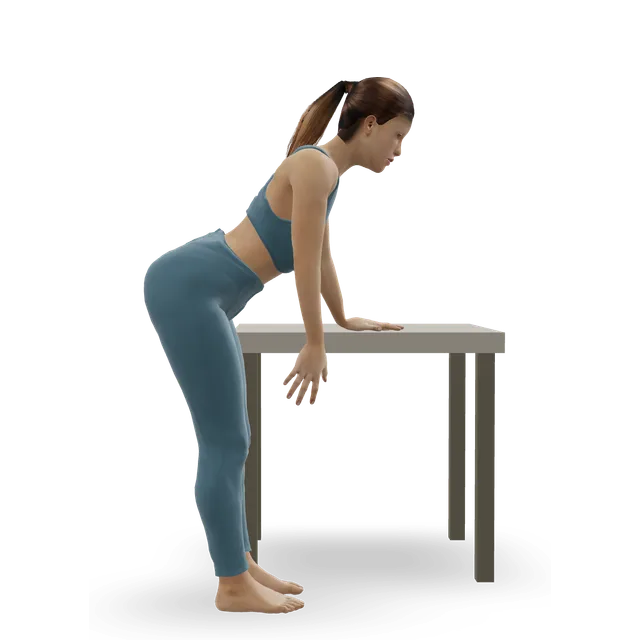
Table slide (seated forward reach) demonstrated on the 3D figure3D demoTable slide (seated forward reach)Beginner · A bench or box

10 slow reps, 1 to 3 times a day · The move page's dose (an editorial starting point)

Easier: Pendulum exercise (Codman's pendulum) · Harder: Overhead lat stretch at a bench (elbows on the bench)

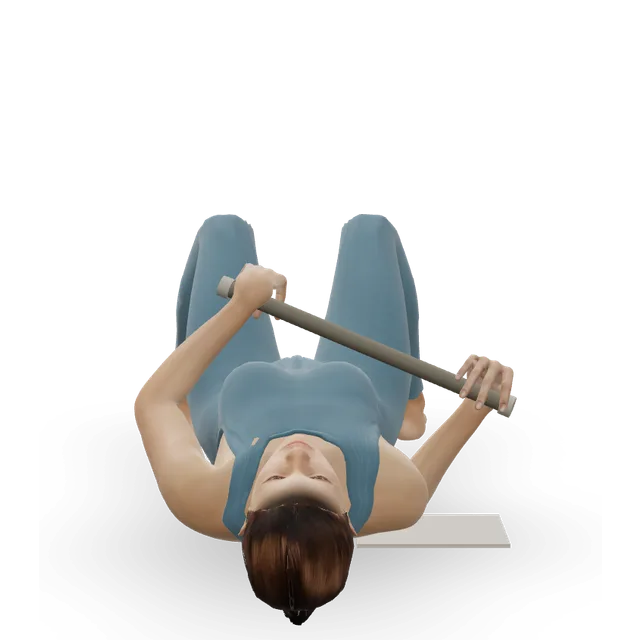
Stick-assisted external rotation (lying) demonstrated on the 3D figure3D demoStick-assisted external rotation (lying)Beginner · Other / check instructions

10 slow reps, pain-free, twice a day · The move page's dose. For a shoulder that is stiff all round; an NHS trust frozen shoulder leaflet uses the same stick rotation

Harder: Standing band external rotation

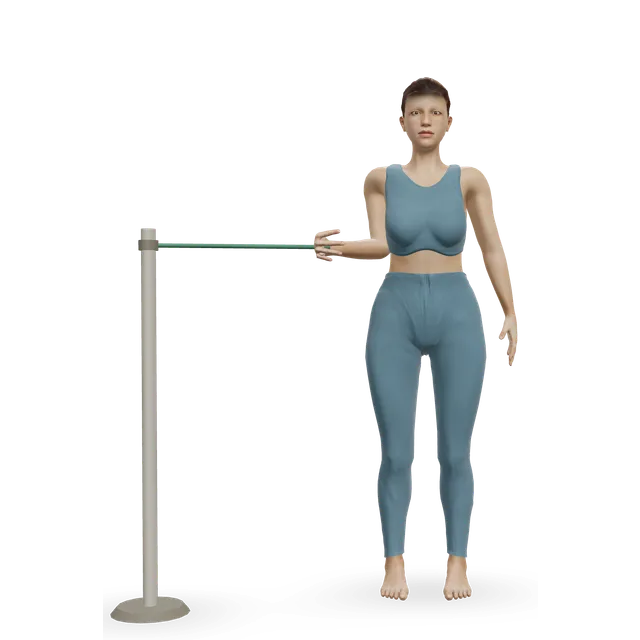
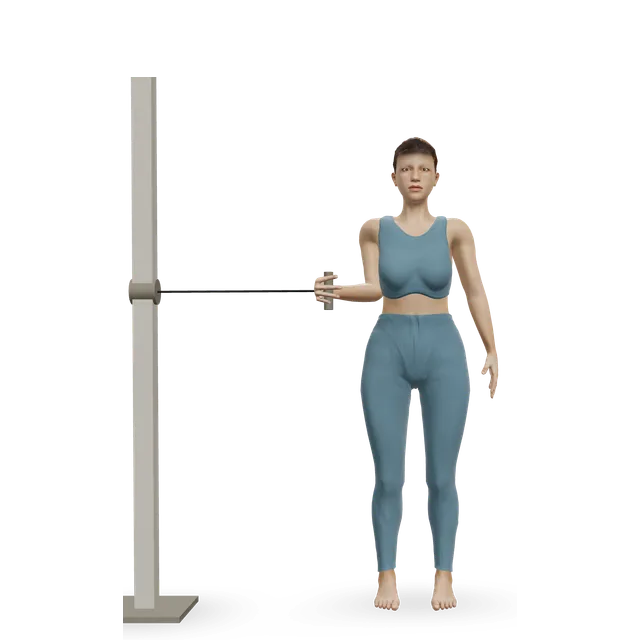
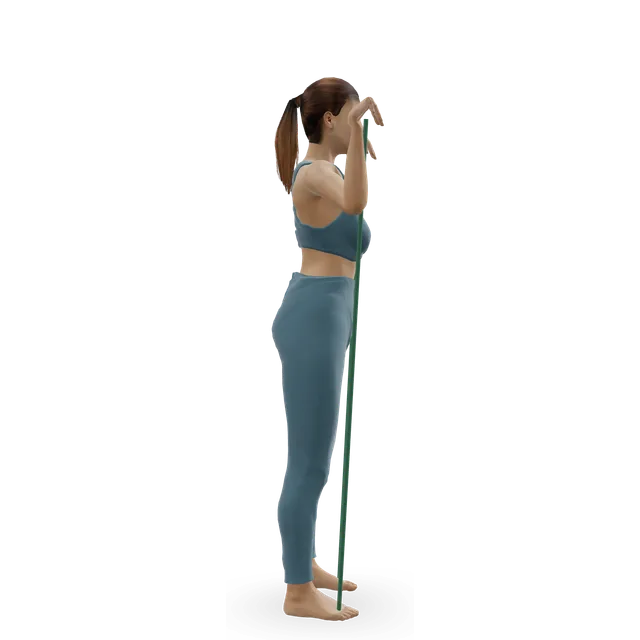
Standing band external rotation demonstrated on the 3D figure3D demoStanding band external rotationBeginner · A band + An anchor point

2 sets of 10 to 15 with a light band, elbow at your side, building to 3 sets of 15 · The start is our lifting-arm guide's (editorial); 3 sets of 15 is the Holmgren trial's dose

Easier: Stick-assisted external rotation (lying) · Harder: Side-lying external rotation

Band row demonstrated on the 3D figure3D demoBand rowBeginner · A band + An anchor point

3 sets of 10 to 15 · The move page's dose (an editorial starting point)

Harder: Supported single-arm dumbbell row

Thoracic rotation demonstrated on the 3D figure3D demoThoracic rotationBeginner · No equipment

6 rotations per side, moving with the breath · The move page's dose. Keeps the upper back moving

Easier: Side-lying open book · Harder: World's greatest stretch

Move on when: Everyday jobs below shoulder height are comfortable, your hand reaches a little higher up your back with help, and the shoulder is back to usual by the next session (editorial).

Follow along: a timer, a cue and the next move, one step at a time.
Stage 2

Build: turn the arm in and out, and take the reach higher

About weeks 2 to 8, about 5 days a week, the frequency used in the 708-person trial. Rotator cuff strength both ways and shoulder-blade work, with the reach behind your back built up within the pain rule.

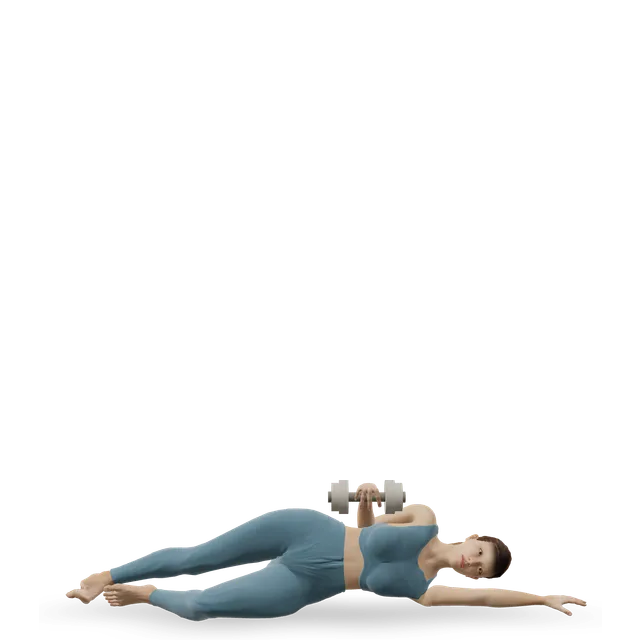
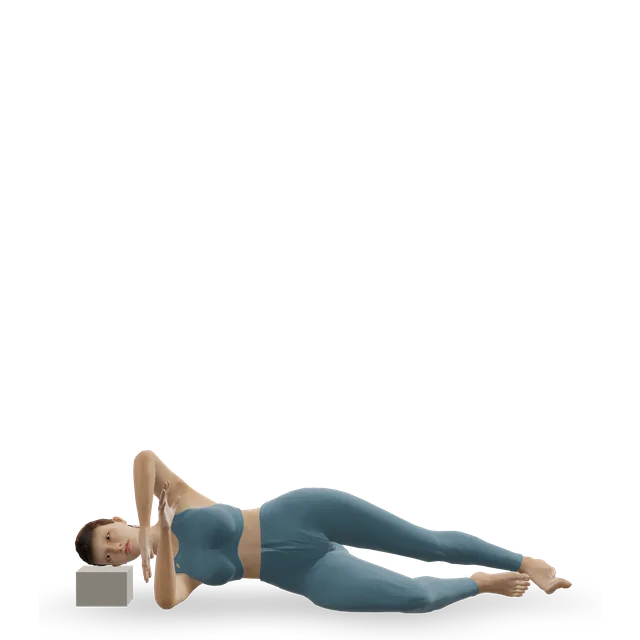
Side-lying external rotation demonstrated on the 3D figure3D demoSide-lying external rotationBeginner · A dumbbell

3 sets of 15, lowering over 3 s · The Holmgren trial's dose, as in our lifting-arm guide

Easier: Standing band external rotation · Harder: Cuban rotation

Band internal rotation demonstrated on the 3D figure3D demoBand internal rotationBeginner · A band + An anchor point

2 to 3 sets of 12 to 15, light · Editorial (the move page gives no dose), as in our front of shoulder pain guide; once a tear at the front has been ruled out or a clinician agrees

Harder: Side-lying external rotation

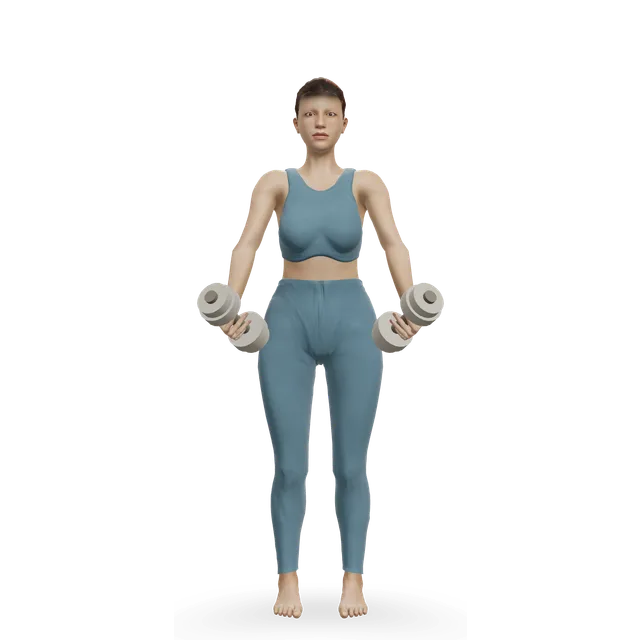
Scaption raise demonstrated on the 3D figure3D demoScaption raiseBeginner · A dumbbell

3 sets of 15, thumbs up, to shoulder height · Editorial, as in our lifting-arm guide, modelled on the Holmgren trial

Easier: Band lateral raise · Harder: Smith machine upright row

Prone Y-T-W raises demonstrated on the 3D figure3D demoProne Y-T-W raisesBeginner · No equipment

2 to 3 rounds of 8 · Editorial, as in our lifting-arm guide

Easier: Wall angel · Harder: Bent-over reverse fly

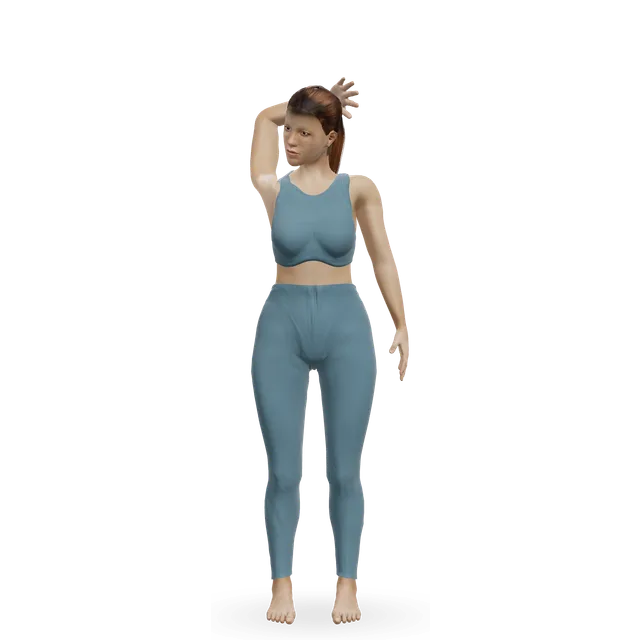
Cross-body shoulder stretch demonstrated on the 3D figure3D demoCross-body shoulder stretchBeginner · No equipment

3 holds of 20 to 30 s · Editorial, as in our frozen shoulder guide; a trial in people without pain used 5 holds of 30 s once a day. Skip it if the top of the shoulder hurts, as the move page says

Harder: Sleeper stretch

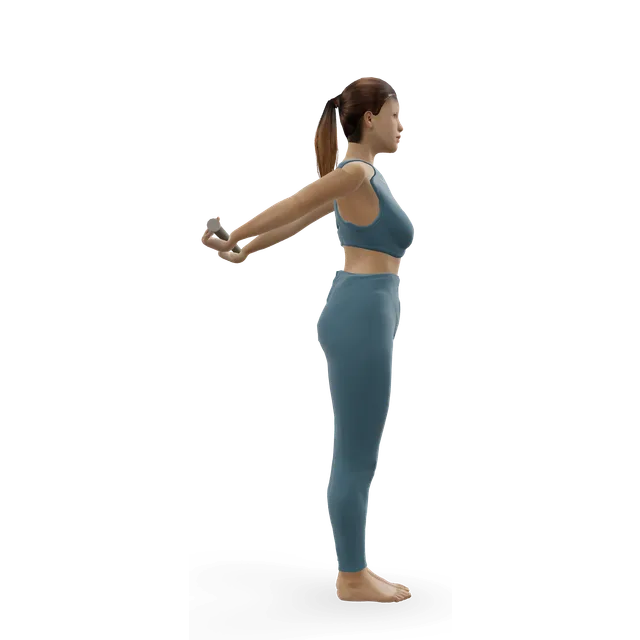
Behind-the-back stick shoulder stretch demonstrated on the 3D figure3D demoBehind-the-back stick shoulder stretchBeginner · Other / check instructions

Hold 15 to 30 s, 2 to 4 times · The move page's dose. It takes the arms back behind you, part of reaching behind; stop short of any pinch at the front, as the move page says

Easier: Chair chest and shoulder stretch · Harder: Shoulder dislocates with a strap (pass-throughs)

Move on when: You can finish every set within the pain rule, reach behind to your waistband or back pocket without a sharp pinch, and the shoulder is no worse the next day (editorial).

Follow along: a timer, a cue and the next move, one step at a time.
Stage 3

Strengthen, and everyday reaching behind comes back

From about week 8, 2 or 3 days a week, then twice a week for the long term. Heavier rotator cuff, rowing and pressing work, while dressing, washing and reaching come back by the written steps below, the hardest last. How they come back is our suggestion.

Cable internal rotation demonstrated on the 3D figure3D demoCable internal rotationBeginner · A cable machine

3 sets of 10 to 12 · Editorial (the move page gives no dose): a heavier version of the band turn-in

Easier: Band internal rotation · Harder: Side-lying external rotation

Face pull demonstrated on the 3D figure3D demoFace pullIntermediate · A band

3 sets of 12 to 15 · Editorial, as in our lifting-arm guide

Easier: Prone Y-T-W raises · Harder: Tuck back lever

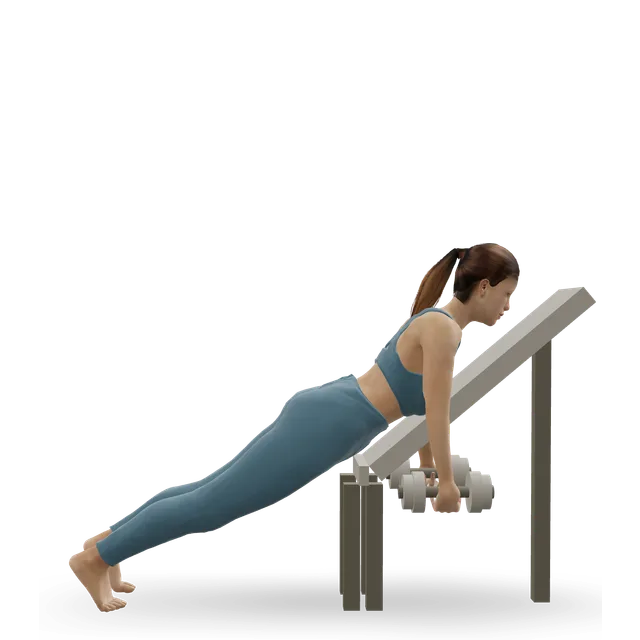
Incline push-up demonstrated on the 3D figure3D demoIncline push-upBeginner · A bench or box

3 sets of 8 to 12, then full push-ups · Editorial, as in our front of shoulder pain guide

Easier: Wall push-up · Harder: Push-up

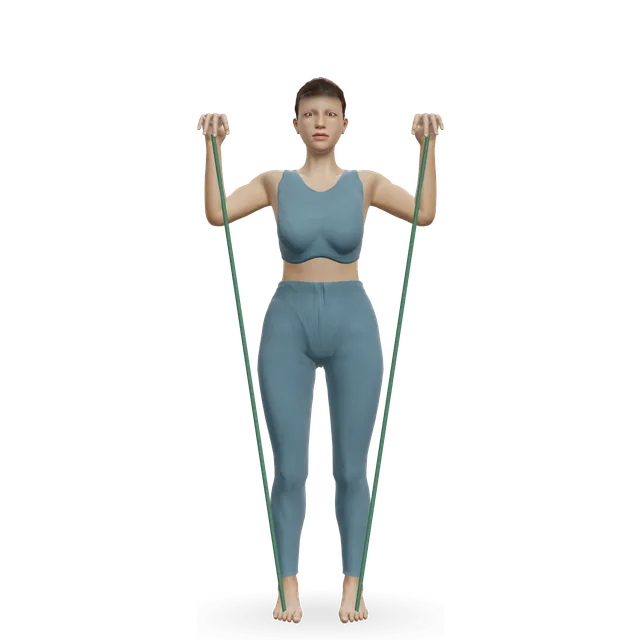
Shoulder press with a band demonstrated on the 3D figure3D demoShoulder press with a bandBeginner · A band

3 sets of 8 to 12, if overhead is comfortable · Editorial, as in our lifting-arm guide

Harder: Push press

Sleeper stretch demonstrated on the 3D figure3D demoSleeper stretchIntermediate · No equipment

3 holds of 30 s, gently, only if turning the arm in stays stiff and the shoulder isn't sore · Editorial, as in our frozen shoulder guide. The move page says skip it with a currently painful or unstable shoulder

Easier: Cross-body shoulder stretch · Harder: Sots press

Move on when: Our suggestion: bring the hardest reaching tasks back last (fastening a bra behind you, reaching into a back seat), keep two strength sessions a week, and drop back a stage for a few days if it flares rather than stopping.

Follow along: a timer, a cue and the next move, one step at a time.

What to change for now

Dressing, washing and reaching for now (written steps)

Our 3D figure can't show these. They come from NHS trust shoulder surgery leaflets (borrowed: we couldn't open a leaflet for a shoulder that hasn't been operated on), Arthritis UK and the NHS; where a step is our suggestion, it says so.

  • 1. Dress the sore arm first and undress it last; slide the sleeve past the elbow, then up to the shoulder (NHS trust leaflets).
  • 2. Bras: a front-fastening style, or fasten a back-fastening bra at the front and then turn it round (an NHS trust leaflet). Loose tops, elasticated waists and slip-on shoes help.
  • 3. Coats: sore arm into the sleeve first, then swing the coat round behind you and put the good arm in (our suggestion, following the sore-arm-first rule).
  • 4. Washing your back: a long-handled sponge or brush, with a sponge and liquid soap (an NHS trust leaflet). An occupational therapist can advise on other aids (Arthritis UK).
  • 5. The toilet: put the toilet paper on the side of your good arm; a long-handled bottom wiper can help if your reach is limited (an NHS trust leaflet).
  • 6. Seat belts and back pockets: reach the belt with your other hand or turn your body to it, and use front pockets for now (our suggestion).
  • 7. Sleep on your good side with a pillow to hug for the sore arm and another behind your back, or on your back with a pillow under the sore arm (Arthritis UK).
  • 8. Keep using the arm: "do not completely stop using your shoulder", the NHS says, but don't do things that seem to make it worse.

Sources 47, 48, 7, 27

Hand up the back (written steps; no 3D demo yet)

Our hand up the back move has no 3D demo yet, so the plan uses a stick stretch instead; these are its steps. No trial has tested it.

  • 1. Sit or stand tall, with your arms a little out to the sides and your elbows bent.
  • 2. Slowly take your hands behind your back, with the backs of your hands against you.
  • 3. Slide them up your back towards your shoulder blades, only as far as is comfortable, then slowly lower them.
  • 4. If it's hard, hold a towel behind your back with one end in each hand and let the good arm gently draw the sore arm up.
  • 5. Doses from NHS trust frozen shoulder leaflets: "Try to reach your hands up behind your back. 5 repetitions twice a day", or the towel stretch held about 20 seconds, 3 times. Stretch only to mild discomfort, never forced.

Sources 39, 11

Positions to swap, and why

Habit or positionWhy it mattersInstead
Forcing your hand up your back, or letting someone push it"There is no point in forcing movements through pain", an NHS trust leaflet says.A towel-assisted reach to a gentle stretch (the written steps).
Keeping the arm still, or in a sling, to rest itThe NHS says don't stop using your shoulder completely, because it can stop it getting better.Daily movement, such as pendulum swings and table slides.Try: Pendulum exercise (Codman's pendulum)
Fastening a bra behind your back while it's soreIt needs the full reach behind: turning the arm in, taking it back and tipping the shoulder blade.Fasten it at the front and turn it round.
Reaching back into the car for a bag or the seat belt with the sore armThe same end-of-range reach (editorial).Turn your body, or use the other arm.
The sleeper stretch on a sore shoulderExperts warn it can pinch, and its move page says skip it with a currently painful shoulder.The cross-body stretch to a gentle pull.Try: Cross-body shoulder stretch
The cross-body stretch with pain on top of the shoulderIt presses on the AC joint, as its move page says.Upper back rotation instead.Try: Thoracic rotation
Shoulder dislocates with a strapIts move page says leave it out with frozen shoulder or rotator cuff pain.Table slides.Try: Table slide (seated forward reach)
Repeated steroid injectionsA UK care pathway suggests no more than two, and the benefit lasts weeks, not months.Exercise, with one injection only if pain stops you doing it, after talking to your GP.
Asking for a scan straight awayTears are common on scans of shoulders that don't hurt, and a scan is rarely needed at first.Get checked if a warning sign appears or it isn't improving.

Routines to follow

More moves for this area

Questions people ask

Why does my shoulder hurt when I reach behind my back?

Most often it's the rotator cuff: NHS inform names reaching behind the back, for example putting on a jacket, as a typical trigger. If the shoulder is stiff in every direction it may be frozen shoulder, and pain at the front can be the biceps tendon. Chest pain or breathlessness with it is a 999 call.

Why can't I reach behind my back?

Pain from the rotator cuff can stop you, and a frozen shoulder takes away the inward turning that reaching behind needs. A sudden loss after a fall, or weakness lifting your hand off your back, needs checking.

Why does the front of my shoulder hurt when I put my arm behind my back?

The biceps tendon at the front often hurts reaching back for a seat belt or a coat. Weakness tucking your hand behind your back after the arm was forced backwards can be a tear of the subscapularis tendon, which should be assessed soon. Our front of shoulder pain guide covers both.

Why does my shoulder hurt when I do up my bra or put on a coat?

Both need the arm to turn in and go back, which loads a sore rotator cuff and is hard with a frozen shoulder. Fasten your bra at the front and turn it round, and put the sore arm into a coat first.

Is it a frozen shoulder?

Frozen shoulder usually causes a deep ache and stiffness in every direction, with turning the arm out hardest, typically between 45 and 60 and more often with diabetes. If someone else can move your arm further than you can, the rotator cuff is more likely. A GP or physiotherapist can tell them apart, sometimes with an X-ray.

How long will it take to get better?

Rotator cuff pain often settles over weeks to a few months with exercise. Frozen shoulder can take more than 2 years, and some mild stiffness can remain. No one can promise a date.

Do I need a scan?

Usually not at first: tears are common in shoulders that don't hurt, and a UK care pathway says a scan is rarely needed in primary care. Sudden weakness after an injury needs urgent assessment and a scan.

Will a steroid injection help?

It can ease rotator cuff pain for a few weeks, with no difference at 6 or 12 months in a large trial. In frozen shoulder, an injection into the joint speeds up the early recovery. A UK care pathway suggests no more than two.

Is it my posture?

Probably not: upper back posture didn't differ between people with and without shoulder pain. Sitting tall can feel more comfortable, but exercise for the shoulder itself is the treatment.

What is the Apley scratch test?

It checks how far you can reach up your back and over your shoulder, which shows stiffness but doesn't name the cause. Lifting the back of your hand off your lower back tests the subscapularis. This guide can't diagnose; a GP or physiotherapist can examine you.

What exercises help?

Rotator cuff strengthening, turning the arm both out and in, with shoulder-blade work, and a gentle hand-up-the-back stretch from NHS trust leaflets. The plan builds to rows, presses and the full reach behind your back.

When should I see a doctor?

Call 999 for shoulder or arm pain with chest pain, or if your shoulder looks out of place after a fall. Get help the same day for sudden weakness after an injury, or a hot, swollen shoulder, and see a GP if it isn't better after 2 weeks or tucking your hand behind your back is weak. In the US, call 911 where this page says 999.

Related exercise guides

Other pain guides

Sources

  1. NHS inform · Subacromial pain syndrome
  2. Kulkarni 2015 · BESS/BOA patient care pathway: subacromial shoulder pain (Shoulder & Elbow)
  3. Mitchell 2005 · Shoulder pain: diagnosis and management in primary care (clinical review, BMJ)
  4. Linsell 2006 · Adults consulting for shoulder problems in UK general practice (population study, Rheumatology)
  5. American Academy of Orthopaedic Surgeons, OrthoInfo · Rotator cuff tears
  6. Ogawa 2025 · Arm, shoulder blade and upper back movement when reaching behind the back in 20 healthy young adults (motion study, J Biomech)
  7. Arthritis UK · Shoulder pain
  8. Rupani 2025 · BESS patient care pathway: frozen shoulder (Shoulder & Elbow)
  9. Zreik 2016 · Frozen shoulder and diabetes (meta-analysis of prevalence, Muscles Ligaments Tendons J)
  10. Chuang 2023 · Frozen shoulder and thyroid disease (meta-analysis of 10 studies, J Shoulder Elbow Surg)
  11. Queen Victoria Hospital NHS Foundation Trust · Frozen shoulder (physiotherapy leaflet; past its review date: review due May 2021)
  12. Niwa 2026 · Reaching behind the back in 17 people with frozen shoulder, by 3D CT (motion study, J Shoulder Elbow Surg)
  13. AAOS OrthoInfo · Biceps tendinitis
  14. Lee 2018 · Subscapularis tears: hidden and forgotten no more (review, JSES Open Access)
  15. Cadogan 2013 · Examination tests for acromioclavicular joint pain in 153 people in primary care (diagnostic study, BMC Musculoskelet Disord)
  16. Chronopoulos 2004 · How accurate examination tests are for chronic acromioclavicular joint problems in 35 people (diagnostic study, Am J Sports Med)
  17. American Academy of Orthopaedic Surgeons, OrthoInfo · Arthritis of the shoulder
  18. Thomas 2016 · BESS/BOA patient care pathway: glenohumeral osteoarthritis (Shoulder & Elbow)
  19. Keller 2018 · Lost inward rotation and injury in overhead athletes: 17 studies, 2,195 athletes (systematic review and meta-analysis, Sports Health)
  20. NHS inform · Shoulder problems
  21. Radhakrishnan 1994 · A pinched nerve in the neck in a Minnesota population, 1976 to 1990 (population study, Brain)
  22. Wilkinson 2026 · Tumours at the top of the lung (superior sulcus tumours) first mistaken for other problems: 31 studies of 1,328 people (scoping review, J Thorac Dis)
  23. NHS · Gallstones
  24. Minagawa 2013 · Rotator cuff tears with and without symptoms: ultrasound screening of one village (J Orthop)
  25. Teunis 2014 · Rotator cuff disease becomes more common with age (systematic review and pooled analysis, JSES)
  26. NHS · Dislocated shoulder
  27. NHS · Shoulder pain (past its review date: reviewed May 2023, review due May 2026)
  28. NHS inform · Frozen shoulder
  29. Hand 2008 · Long-term outcome of frozen shoulder (cohort of 223 people, JSES)
  30. Wong 2017 · Natural history of frozen shoulder: fact or fiction? (systematic review, Physiotherapy)
  31. Hopewell 2021 · Progressive exercise vs best practice advice, with or without steroid injection, for rotator cuff disorders: GRASP (RCT, Lancet)
  32. Keene 2020 · Developing the GRASP trial's physiotherapy-led exercise programmes (Physiotherapy)
  33. Holmgren 2012 · Specific exercise and the need for surgery in subacromial impingement (RCT, BMJ)
  34. Littlewood 2016 · A single self-managed exercise against usual physiotherapy for rotator cuff tendinopathy: the SELF trial (randomised trial, Clin Rehabil)
  35. Littlewood 2012 · The SELF trial protocol: a self-managed exercise programme for rotator cuff disorders (trial protocol, BMC Musculoskelet Disord)
  36. Beard 2018 · Decompression vs placebo arthroscopy vs no treatment for subacromial pain: CSAW (placebo-controlled RCT, Lancet)
  37. Challoumas 2020 · Comparison of treatments for frozen shoulder (systematic review and network meta-analysis, JAMA Network Open)
  38. Rangan 2020 · Physiotherapy with injection vs manipulation vs capsular release for frozen shoulder: UK FROST (RCT, Lancet)
  39. Calderdale and Huddersfield NHS Foundation Trust · Frozen shoulder (physiotherapy leaflet, review due December 2027)
  40. NHS · Frozen shoulder
  41. Baeske 2024 · Mobilisation with movement added to exercise for shoulder pain in 70 people (RCT, J Physiother)
  42. McClure 2007 · Cross-body vs sleeper stretch for posterior shoulder tightness (RCT in people without shoulder pain, JOSPT)
  43. Iida 2026 · Stretching for lost inward rotation in overhead athletes: 6 trials (systematic review and meta-analysis, PM R)
  44. Wilk 2013 · The modified sleeper and cross-body stretches for throwing athletes (clinical commentary, JOSPT)
  45. Barrett 2016 · Upper-back posture and shoulder pain, range and function (systematic review, Manual Therapy)
  46. Pinto 2022 · Does early repair of a rotator cuff tear after an injury give better results? (systematic review, Acta Orthop Belg)
  47. Kingston and Richmond NHS Foundation Trust · Total shoulder replacement: daily living after surgery (occupational therapy leaflet, updated 2025)
  48. Royal Orthopaedic Hospital NHS Foundation Trust · Managing daily activities after shoulder surgery
  49. Phongamwong 2015 · The Shoulder Pain and Disability Index (SPADI) in Thai: reliability and validity (questionnaire study, Health Qual Life Outcomes)
  50. Namdari 2012 · The shoulder range everyday tasks need, in 20 adults (motion study, J Shoulder Elbow Surg)
  51. NHS inform · Exercises for shoulder problems
  52. Smith 2017 · Should exercises be painful in chronic musculoskeletal pain? (systematic review and meta-analysis, Br J Sports Med)

Exercise education, not a diagnosis or treatment plan. It is written from the guidelines and studies listed above; review by a clinician is pending. If your pain follows an injury, is severe, is getting worse, or comes with any warning sign listed on this page, get it assessed. Health disclaimer.