Pain guide · Foot pain

Foot pain in women: bunions and shoes, heel pain, Morton's neuroma, pregnancy and the menopause

Foot pain is common, and a little commoner in women than in men. The usual causes are the same for everyone: heel pain, which affects about 1 in 10 people over 50, pain under the ball of the foot, and bunions, which are about twice as common in women but often don't hurt. Shoes that are too narrow or short play a part, and high heels push more weight onto the front of the foot, though they haven't been shown to cause bunions. Pregnancy, the menopause, rheumatoid arthritis and hard training on too little food each add causes of their own.

This guide starts with the warning signs: a foot that suddenly turns cold, pale or numb needs 999 or accident and emergency (A&E), as does a red, hot, swollen foot with a very high temperature, and with diabetes any new wound or hot, swollen foot needs your foot team the same day, as the National Institute for Health and Care Excellence (NICE) asks. A swollen, throbbing calf, which is more likely in pregnancy, after a birth or with contraception or hormone replacement therapy (HRT) that contains oestrogen, needs help the same day. Then it sorts the causes by where it hurts and by life stage, says when to see a general practitioner (GP) or contact the National Health Service's 111 line (NHS 111), and gives a three-stage plan with 3D demos back to walking, work and sport.

When to get help first

Exercise is for pain that has been checked or is clearly mild and settling.

Get urgent medical help if

  • Call 999 or go to A&E: a foot or leg that is suddenly cold, pale, numb, weak or very painful without an injury. A sudden loss of blood supply is a vascular emergency.
  • Call 999 or go to A&E: after an injury, you heard a crack, the foot or ankle has changed shape or points at an odd angle, a bone is sticking out, there is a bad cut over it, you're in severe pain, or the toes look blue or white, feel numb or are cold to touch. These can mean a broken bone. Don't drive yourself.
  • Same day (urgent GP appointment or NHS 111): after an injury, you can't put weight on it or walk more than a few steps, the pain is very bad or getting worse, there is a lot of swelling or bruising or it is getting worse, or it feels very stiff. If you think it's broken, don't treat it yourself.
  • Call 999 or go to A&E: a red, hot, swollen foot with a very high temperature, feeling hot, cold or shivery, a fast heartbeat or fast breathing, purple patches on the skin, dizziness or confusion.
  • Call 999 or go to A&E: you have diabetes and a foot ulcer with a fever or signs of sepsis, an ulcer with poor circulation, or gangrene. NICE asks for these to go straight to hospital.
  • Same day: you have diabetes and a new foot problem, such as an ulcer or wound, signs of infection, or a hot, swollen foot with a change in colour, even if it doesn't hurt. Contact your diabetes foot team or GP: NICE asks for these to reach a specialist foot service within 1 working day, and a suspected Charcot foot is kept off weight until it has been checked.
  • Same day: a sudden, very painful, hot, swollen, red joint, often the big toe but sometimes the middle of the foot (the midfoot) or the ankle, especially with a high temperature, feeling shivery or being unable to eat. It may be gout, but it could be a joint infection (septic arthritis), which is urgent.
  • Same day (urgent GP appointment or NHS 111): throbbing pain in one leg (rarely both), usually the calf or thigh; swelling in one leg (rarely both); red, blue or darkened skin around the painful area, which may be harder to see on brown or black skin; or swollen veins. This can be a deep vein thrombosis (DVT). It is more likely after surgery, a hospital stay, 3 or more days in bed, a journey of over 4 hours, pregnancy or a recent birth, cancer, a previous clot, or contraception or hormone replacement therapy (HRT) that contains oestrogen.
  • Call 999 or go to A&E if breathing suddenly becomes difficult, if pain in your chest or upper back comes on suddenly with breathlessness or a very fast heartbeat, or if someone passes out. These are the NHS's signs of a blood clot in the lungs (a pulmonary embolism) or another serious condition. Don't drive yourself.
  • Get urgent medical help: you're pregnant or have given birth in the last few weeks and have symptoms of pre-eclampsia, such as pain below the ribs, a severe headache that does not go away with simple painkillers, vision problems such as blurred vision or seeing flashing lights, sudden swelling of the face, hands or feet, heartburn that does not go away with heartburn medicines, being sick, or feeling very unwell. If you're pregnant, call your maternity unit if you have the number; if you've recently given birth or cannot call your maternity unit, call 111.
  • Same day (urgent GP appointment or NHS 111): swelling in one ankle, foot or leg when you don't know what's causing it, or swelling that is severe, painful or came on very suddenly. If you're also short of breath or your chest feels tight, heavy or painful, call 999.
  • Same day: skin on the foot that is painful, hot and swollen. It could be a skin infection (cellulitis).
  • Contact a GP immediately (or NHS 111 if you can't): burning foot pain that carries on at rest, toes that go pale, then numb, then red or black, or foot wounds that won't heal. The blood supply to the foot may be failing.

See a doctor or physiotherapist if

  • Pain that isn't better after 2 weeks of looking after it yourself, is getting worse, keeps coming back, or stops you doing normal things.
  • Tingling or loss of feeling in the foot, or a foot that feels weak.
  • Any foot pain if you have diabetes: foot problems can be more serious.
  • One spot on a foot bone that hurts with every step and later at night: a possible stress fracture.
  • A stress fracture from ordinary activity, more than one stress fracture, periods that have stopped or become irregular, or worries that you're eating too little for your training: see a GP about bone health and energy intake.
  • You're 50 or over, or past the menopause, and have broken a bone: ask your GP about a fracture risk assessment. The National Institute for Health and Care Excellence (NICE) offers a bone density scan after a spinal fragility fracture.
  • Flat feet that are painful, stiff, weak or numb, that you didn't have before, or that affect only one foot.
  • Swelling in several joints, or morning stiffness that lasts more than 30 minutes: see a GP. It can be an inflammatory arthritis such as rheumatoid arthritis rather than osteoarthritis.
  • Joint aches around the menopause, with symptoms such as hot flushes, poor sleep or low mood: contact your GP if you want to know your options.
  • Joints that keep aching, spraining or popping out, often with tiredness or poor balance: see a GP if you think you have joint hypermobility syndrome. Building muscle strength and fitness is the main treatment.
  • See a GP if your Raynaud's is very bad or getting worse, affects your daily life, is only on one side of your body, comes with joint pain, skin rashes or muscle weakness, or starts for the first time after the age of 30.
  • See a GP if chilblains are not getting better after 2 to 3 weeks, keep coming back, or you have diabetes, or if there is pus coming out of your skin or you feel hot, cold or shivery.

Where does it hurt?

Location narrows the likely causes; it does not diagnose.

Under the heel, much worse on the first steps after rest

Usually plantar heel pain (plantar fasciitis).

Read: Plantar fasciitis (plantar heel pain) →
The centre of the heel pad, like a deep bruise, worse on hard floors

Possibly heel fat pad syndrome.

Read: Heel fat pad syndrome →
A bony bump at the base of the big toe, with the toe drifting towards the others

A bunion, about twice as common in women; most don't hurt.

Read: Bunions →
Burning or shooting pain between the 3rd and 4th toes, like a pebble under the foot

Often Morton's neuroma, worse in tight or high-heeled shoes.

Read: Morton's neuroma →
Aching under the ball of the foot

Often metatarsalgia, after running, standing or tight shoes.

Read: Ball of foot pain →
One spot on a bone that hurts with every step, after more walking, running or dancing than usual

Possibly a stress fracture: get it checked.

Read: Stress fracture →
The inner ankle and arch, with the arch dropping on one side, from mid-life

Often the tibialis posterior tendon, which is commonest in women over 40 and often missed.

Read: Posterior tibial tendon dysfunction →
The big toe joint, suddenly hot, red and very painful

Often gout, which becomes more likely after the menopause; with a fever, get help the same day.

Read: Big toe pain →
Bent smaller toes that rub in shoes

Hammer or claw toes, often with corns.

Read: Hammer, claw and mallet toes →
The top of the foot, under tight laces or straps

Often irritated tendons or tight shoes; one sore spot on a bone is the stress fracture row.

Read: Pain on top of the foot →
After heels, a twist or a fall

Usually a sprain; a foot that has changed shape or that you can't walk on needs the warning signs.

Read: Sprained ankle →
Several small toe joints, in both feet, swollen and stiff for more than 30 minutes each morning

Possibly rheumatoid arthritis, 2 to 3 times commoner in women: see a GP. Our rheumatoid arthritis exercise page covers staying active.

Swollen feet and ankles late in pregnancy, or feet bigger after it

Common and usually harmless, but sudden swelling of the face, hands or feet needs urgent help. Our pregnancy exercise page covers staying active.

Aches in the feet and other joints around the menopause

Joint aches are a recognised menopause symptom. Our menopause exercise page covers staying strong.

Toes that turn white, then blue or red, in the cold

Often Raynaud's, commoner in women. Our Raynaud's exercise page covers keeping warm and active.

Burning, tingling or numbness in both feet, or pain that wakes you at night

Often nerve pain, gout or cramps: our foot pain at night guide maps the causes.

Read: Foot pain at night →
A foot that is suddenly cold, pale or numb, or a new wound with diabetes

See the warning signs at the top of this page.

Understand it

Common, and a little commoner in womenStrong evidence

About 1 in 4 people aged 45 and over have frequent foot pain (31 studies, 75,505 people), most often in the toes and the front of the foot, and more often in women. In the US Framingham study, 29% of women and 19% of men had foot pain on most days, and in 3,206 adults in Adelaide it was 19.6% against 15.1%.

The causes are mostly the same in women and men. Women's feet aren't scaled-down men's feet: they differ at the arch, the outer side, the big toe and the ball of the foot, and many people wear shoes that don't fit their width or length (63% to 72% across 18 studies), women more often too small.

Sources 1, 2, 3, 4, 5

Bunions: about twice as common in women, often painlessStrong evidence

Across 76 surveys of 496,957 people, 23% of adults aged 18 to 65 and 36% of those over 65 had a bunion (hallux valgus): 30% of women and 13% of men. In 4,249 UK adults, being a woman more than doubled the odds (odds ratio 2.64). Most don't hurt: in 3,077 older adults, 44% of women had one, but only 11% had a painful one. Bunions run strongly in families, in a study of related adults of European descent.

Sources 6, 7, 8, 9

Heel pain: about 1 in 10 over 50, and the sex difference is unclearMixed evidence

In 5,109 UK adults over 50, 9.6% had pain under the heel, as common in women as in men (10.0% against 9.2%), while Dutch GP records, cited on our heel pain guide, found it more often in women. A 2026 focus-group paper says it affects women aged 40 to 60 at twice the rate of men, but we couldn't find the source for that figure.

A stiff ankle, a higher body weight and long hours on your feet go with heel pain (in a study of 50 people with plantar fasciitis, an ankle that barely bent upwards gave 23 times the odds), and the NHS adds being 40 to 60 and shoes with poor cushioning. A deep, bruise-like ache in the centre of the heel pad is heel fat pad syndrome, which may be the second commonest cause of pain under the heel, though only 7 studies have looked at it.

Sources 10, 11, 12, 13, 14

Morton's neuroma: more common in womenEmerging evidence

Morton's neuroma, an irritated nerve between the toe bones, is more common in women. In UK general practice, about 64% of new cases were in women (87.5 against 50.2 new cases per 100,000 a year), most often at 55 to 64, though those records also include other pain under the ball of the foot. Series from foot clinics and surgeons run higher (our Morton's neuroma guide cites a UK injection trial in which 85% were women), and an expert review describes the typical patient as a woman in her late 40s or early 50s.

The NHS links it with tight, pointy or high-heeled shoes, lots of running or other activity that puts pressure on the feet, and other foot problems such as flat feet, high arches, bunions or hammer toes; no controlled study has tested shoes as the cause.

Sources 15, 16, 17

The inner arch, flat feet and very flexible jointsEmerging evidence

A foot that flattens in adult life, with pain along the inner ankle and arch, is most often the tibialis posterior tendon: when women over 40 at an English GP practice were surveyed and examined, 3.3% had early stages of it, and none had been diagnosed. Flat feet on their own usually cause no problems, the NHS says: in the Framingham study, flat feet went with arch pain only in men, by a small amount, and a rolled-in foot didn't predict foot injury or bone stress in 21 studies that followed people over time. A foot that changes shape, or only one foot, needs a GP. The NHS says the main treatment for joint hypermobility syndrome is muscle strength and fitness; the evidence on very flexible feet in adults is thin.

Sources 18, 19, 20, 21, 22, 23

Young active women: stress fractures and eating enoughStrong evidence

Stress fractures are commoner in women who train: about 9.2% against 3% in military recruits, and 9.7% against 6.5% in athletes, and in runners women had about twice the bone stress injuries of men. The risk rises with eating too little for the training (which the International Olympic Committee calls relative energy deficiency in sport), missed or irregular periods, a low body weight and low bone density: in 259 girls and young women, 10.8% had a bone stress injury, rising to 46% in those with several of these together. This evidence comes from athletes and recruits.

A stress fracture hurts in one spot you can point to, worse with activity and later a constant ache, even at night.

Sources 24, 25, 26, 27, 28, 29, 30

Pregnancy and after the birthEmerging evidence

In an Australian cohort, 44% of pregnant women had foot pain by 24 weeks and 56% by 36 weeks, mostly very mild to mild and now and then. After a first pregnancy, 30 of 49 women had slightly longer feet (mostly 2 to 10 mm) and 35 had lower arches, about 19 weeks after the birth; the feet rolled in more during pregnancy, but that wasn't linked with pain, and the long-term effect is unknown. Swollen feet late in pregnancy are common, especially in hot weather or after standing, and ease with your feet up and foot exercises.

Sources 31, 32, 33, 34, 35

The menopause and the heel padEmerging evidence

The NHS lists muscle aches and joint pains among menopause symptoms, women lose bone quickly in the first years after the menopause, and gout becomes more likely after it. A 2024 review calls this cluster of joint pain and muscle and bone loss the "musculoskeletal syndrome of menopause", with nothing specific to the feet.

No study we found links the menopause itself with a thinner or weaker heel pad. The heel pad loses some of its springiness and shock absorption with age in small laboratory studies that weren't split by sex, and a 2026 focus-group study says whether there is a causal link between the menopause and heel pain is uncertain.

Sources 36, 37, 38, 39, 40, 41, 11, 42

Rheumatoid arthritis, Raynaud's and chilblainsStrong evidence

Rheumatoid arthritis affects at least 1.16% of UK women against 0.44% of men, and it often starts in the feet: the front of the foot was affected at the start in 45% of 1,000 people with it, and 35.4% of 585 said foot pain was their first symptom. The small joints of the hands and feet are often the first affected, usually on both sides, with morning stiffness that often lasts more than 30 minutes.

Raynaud's, where fingers and toes turn white, then blue or red, in the cold or with stress, is commoner in women (odds ratio 1.65, 33 studies), and 79% of 104 people with chilblains in one clinic series were women.

Sources 43, 44, 45, 46, 47, 48, 49, 50

Causes outside the muscles and jointsStrong evidence

A foot that suddenly turns cold, pale or numb can mean the blood supply has been cut off, and narrowed leg arteries cause slow-healing sores and skin that turns paler or blue. A swollen, throbbing calf can be a blood clot, more likely in pregnancy, after a birth and with contraception or HRT that contains oestrogen. A red, hot, swollen foot can be a skin infection (cellulitis), and a hot, swollen joint with a fever can be a joint infection. With diabetes, any foot problem can be more serious: NICE asks for a new ulcer, infection or hot, swollen foot to reach a specialist foot service within 1 working day.

Sources 51, 52, 53, 54, 55, 56

When a scan or test helpsStrong evidence

None of the NHS foot pages we read suggests a scan for ordinary foot pain; tests answer specific questions. After an injury, our foot pain guide explains the X-ray rules clinicians use. A suspected stress fracture may need an X-ray or another scan. For suspected rheumatoid arthritis, NICE asks for X-rays of the hands and feet when joints stay swollen, and an urgent specialist referral even if blood tests are normal. For Morton's neuroma, an ultrasound scan is as accurate as magnetic resonance imaging (MRI). A bunion is judged by how much it hurts, not how it looks: the NHS says surgery is not done just to improve how your feet look.

Sources 30, 57, 58, 54, 59, 60

How it usually goesStrong evidence

NHS inform expects most new foot pain to begin to settle within 6 weeks, and the NHS suggests a GP if heel or sole pain hasn't improved after 2 weeks of looking after it yourself. A stress fracture usually takes 6 to 8 weeks to heal. Bunions don't go away by themselves ("you cannot get rid of bunions or stop them getting worse yourself", the NHS says), but most don't hurt; Morton's neuroma often gets worse over time without changes. With rheumatoid arthritis, early treatment can stop it getting worse and reduce joint damage. Pregnancy changes to the feet may outlast the birth, though their long-term effect is unknown. No one can promise a timescale.

Sources 61, 13, 30, 59, 8, 17, 46, 32, 34
What helps, and how strong the evidence is

Shoes that fit your feetEmerging evidence

Badly fitting shoes go with foot pain, corns, calluses and bent toes in snapshot studies, women's shoes were relatively shorter and narrower than men's in older people, and most of 356 US women in one survey wore shoes too small for their feet. In a trial of 120 older people (60% of them men), roomier, extra-depth shoes cut foot pain by 11.5 points against usual shoes. The Royal College of Podiatry and Arthritis UK give the fitting advice in the written steps below.

Sources 5, 62, 63, 64, 65, 66

High heels and bunions: linked, not shown to cause themMixed evidence

Heels were linked with bunions in most observational studies: women who mostly wore high heels through adult life had 47% higher odds of a bunion in one, and 3 of 4 studies in a review were positive. But in the largest UK study, of 2,627 women recalling the shoes they wore through life, heel height wasn't linked with bunions at all, while a narrow toe box was (odds ratios 1.96 to 2.70); in a smaller UK study of 127 women, foot problems went with a history of lower heels. Bunions also run in families, men get them too, and the NHS says the cause is not always known. Narrow, pointed shoes may play a part; no study shows that heels cause bunions.

Sources 67, 8, 68, 69, 62, 70, 9, 59

What high heels doEmerging evidence

Higher heels raised the pressure under the front of the foot and shifted it towards the big toe in 35 women, and in small laboratory studies, years of daily heels shortened the calf muscle fibres, stiffened the Achilles tendon and made the calf muscles work harder when walking. High heels were linked with falls and sprains in 7 of 8 studies, and with an estimated 123,355 US emergency department visits in 2002 to 2012, highest at 20 to 29, mostly foot and ankle sprains and strains.

Sources 71, 72, 73, 68, 74

Heel pain: stretching, strength and simple insolesStrong evidence

A best-practice guide built from 51 trials (4,351 people) puts plantar fascia stretching, taping, education and shoe advice first, then shockwave therapy and insoles. Stretching eased first-step pain in the short term (standardised mean difference 1.21), and taping helped too (0.47). In 48 people, heavy heel raises on one leg with a towel under the toes, every second day, improved foot function by 29 points more than stretching at 3 months, with no difference at 1, 6 and 12 months. Across 19 trials, insoles helped a little in the medium term, and custom-made ones were no better than ready-made ones.

Sources 75, 76, 77, 78, 13

Bunions: shoes and pads first, surgery for lasting painEmerging evidence

Exercises, splints, insoles and other non-surgical treatments are more likely to ease the pain than to straighten the toe (low certainty, 18 studies), and the NHS says you can't get rid of bunions or stop them getting worse yourself. In 209 people with painful bunions (93% women), surgery beat insoles and waiting at a year (83% felt better, against 46% and 24%), and insoles eased pain for several months. Complex operations were no better for pain than simpler ones, and surgery is for pain or problems with shoes, not looks.

Sources 59, 79, 80, 81, 60

Morton's neuroma: shoes and pads first; injections help someMixed evidence

The NHS starts with wide, comfortable shoes with a low heel and soft sole, soft insoles or pads, and less running and jumping. Across 25 studies, only 7 of them randomised trials, steroid injections and manipulation had the most support, but certainty is low: in 2 trials (157 people), a steroid with local anaesthetic made little or no difference against local anaesthetic alone at 3 to 6 months, and thinning of the fat pad under the foot was one side effect (2.6%). An injection guided by ultrasound probably helps more than one without, and an expert review says about half may need surgery within 2 years of an injection.

Sources 17, 82, 83, 16

Stress fractures: eat for your trainingStrong evidence

Risk rose as the female athlete triad risk factors added up (from 10.8% overall to 46% with several together in 259 girls and young women, and risk ratios of 2.6 and 3.8 by risk level in 239 college athletes). The International Olympic Committee says low energy availability affects women and men who train. The NHS lists doing too much exercise and sudden weight loss among the causes of missed periods, and says see a GP if you've missed 3 in a row. The American Academy of Orthopaedic Surgeons advises a diet rich in calcium and vitamin D.

Sources 27, 28, 29, 84, 26

Rheumatoid arthritis: early treatment and foot careStrong evidence

The NHS says early treatment can prevent rheumatoid arthritis getting worse and reduce the risk of joint damage, and NICE refers people with suspected arthritis urgently when the small joints of the hands or feet are affected. In a UK survey, only 64% of people with rheumatoid arthritis had seen a podiatrist, and Arthritis UK advises having your feet measured and seeing one.

Sources 46, 57, 45, 47

Exercise for any foot painEmerging evidence

NHS inform's foot exercises (a calf stretch at a chair, toe raises, toe curls and seated heel raises) start with 2 to 3 repetitions at a time, every hour, adding 1 or 2 every few days, then sets of 8, 2 to 3 times a day, up to 2 sets of 15; stretches are held for 20 to 30 seconds. Arthritis UK's set is similar. NHS inform says rest the foot but avoid long periods of not moving, then build back up. This is health-service advice rather than tested treatment.

Sources 85, 86, 61

How much pain is OK while you exercise?

Up to about 5 out of 10, settled within an hour and no worse the next morning; one sore spot on a bone, or burning between the toes, are the exceptionsEmerging evidence

Some discomfort during the exercises is fine: aim for pain you would call mild to moderate, no more than about 5 out of 10, that settles within an hour, with no more swelling or stiffness the next morning. If it's worse the next day, do a little less, not nothing. That is the rule our foot guides use, and NHS inform's foot exercise page uses the same 0 to 10 scale (0 to 3 minimal, 4 to 5 acceptable, 6 to 10 too much) and the same next-morning check, and says stop exercises that make your symptoms worse or cause new pain.

The exceptions: pain in one spot on a bone should be pain-free, because it could be a stress fracture (Health New Zealand says never play through pain); burning, shooting pain, tingling or numbness between the toes means stop that movement and change it; and if your feet are numb, pain won't warn you, so check your skin after exercise. Expect some soreness in the first heavy heel-raise sessions, but if heel pain is clearly worse the next morning, lighten the load.

In pregnancy, swollen feet at the end of the day are common; sudden swelling of the face, hands or feet is not, and stop and call your midwife or maternity unit for the warning signs our pregnancy exercise page lists. A cold, pale foot, a hot, red, swollen foot with a fever, a new wound with diabetes, a swollen, throbbing calf, or not being able to walk after a fall isn't a pain-rule question: see the warning signs.

Sources 85, 30, 76, 35

The exercise plan: 3 stages

Start at the first stage. Each move opens a full guide with a 3D demo.

Stage 1

Settle: calm it and keep moving

About weeks 0 to 2, a little and often. Ease the pain with the NHS's first steps and the shoe changes below, keep the foot and ankle moving, and keep active with walking or swimming as the pain rule allows. With a diagnosed stress fracture, rheumatoid arthritis, diabetes with numb feet, or after foot surgery, that guide's or your team's plan comes first.

Plantar fascia stretch (seated) demonstrated on the 3D figure3D demoPlantar fascia stretch (seated)Beginner · A bench or box

3 to 5 holds of 10 to 30 s, 2 to 3 times a day, starting before your first steps in the morning · The move page's dose, for heel or arch pain

Harder: Toes-tucked kneeling (toe squat)

Wall calf stretch (gastrocnemius) demonstrated on the 3D figure3D demoWall calf stretch (gastrocnemius)Beginner · A wall

Hold 20 to 30 s, 2 to 3 sets, 2 to 3 times a day · NHS inform's stretch dose

Easier: Seated calf stretch with a towel · Harder: Heel-on-step calf and hamstring stretch

Towel toe curl demonstrated on the 3D figure3D demoTowel toe curlBeginner · Other / check instructions + A bench or box

2 to 3 at a time, building to sets of 8, up to 2 sets of 15 · NHS inform's toe curl, with its pacing

Easier: Big toe press (seated toe-flexor hold) · Harder: Short foot + toe splay

Seated bent-knee calf raise (soleus raise) demonstrated on the 3D figure3D demoSeated bent-knee calf raise (soleus raise)Beginner · A bench or box

2 to 3 at a time, little and often, building to sets of 8, 2 to 3 times a day, up to 2 sets of 15 · NHS inform's seated heel raise, with its pacing

Harder: Slow calf raise

Ankle circles demonstrated on the 3D figure3D demoAnkle circlesBeginner · No equipment

10 slow circles each way with each foot · The move page's dose (editorial). In pregnancy, the NHS suggests bending and stretching the foot up and down 30 times and circling each foot 8 times each way

Harder: Ankle CARs (controlled articular rotations)

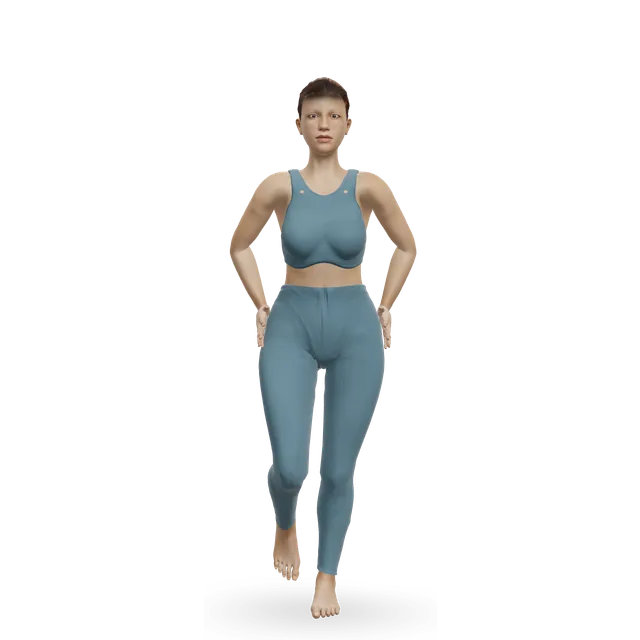
Treadmill walking demonstrated on the 3D figure3D demoTreadmill walkingBeginner · Cardio machine

10 to 30 min a day, building up, in roomy, cushioned shoes · Editorial; walking outdoors counts. Swim instead if walking hurts more than the pain rule allows

Harder: Treadmill jogging

Move on when: First steps and everyday walking are within the pain rule, and the foot is no worse the next morning (adapted from NHS inform).

Follow along: a timer, a cue and the next move, one step at a time.
Stage 2

Build: calf and foot strength

About weeks 2 to 6, with the strength work every second day, as in the heel pain trial. Stronger calves, feet and ankles, which are at the core of the heel pain programmes, and better balance.

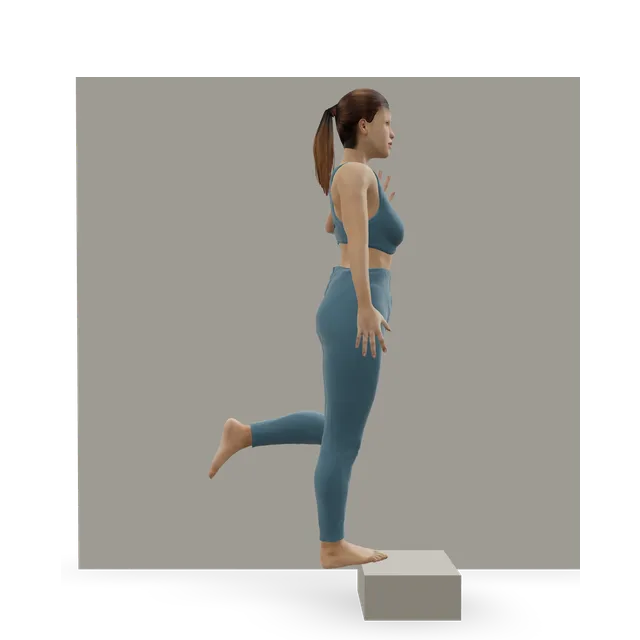
Heel raise with a towel under the toes demonstrated on the 3D figure3D demoHeel raise with a towel under the toesIntermediate · A step + Other / check instructions

Every second day; start on both feet, then one, at a load you can lift about 12 times for 3 sets, building over several weeks to heavier loads you can lift about 8 times · The move page's dose, from the trial. With a painful bunion or a stiff big toe, use the slow calf raise without the towel (our suggestion)

Easier: Slow calf raise · Harder: Standing dumbbell calf raise

Slow calf raise demonstrated on the 3D figure3D demoSlow calf raiseBeginner · A wall

3 sets of 12 · As in our foot guides (editorial). With pain in the ball of the foot or big toe arthritis, stop short of full tiptoe, as the move page says

Easier: Seated bent-knee calf raise (soleus raise) · Harder: Standing dumbbell calf raise

Tibialis raise demonstrated on the 3D figure3D demoTibialis raiseBeginner · No equipment

2 to 3 sets of 10 · As in our foot and ankle guides (editorial); NHS inform's toe raise is the seated version

Harder: Single-leg tibialis raise

Single-leg stand demonstrated on the 3D figure3D demoSingle-leg standBeginner · A wall

3 holds of 30 s each leg, a hand near a wall · As in our foot guides (editorial)

Easier: Tandem stance and heel-to-toe walk · Harder: Single-leg reach matrix

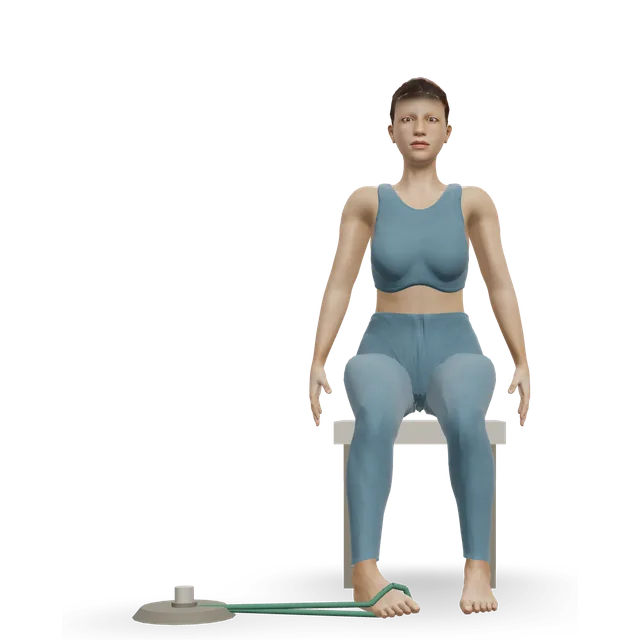
Band ankle inversion demonstrated on the 3D figure3D demoBand ankle inversionBeginner · A band + A bench or box

For pain along the inner ankle and arch: 3 sets of 15 at a resistance you can only just complete, twice a day, with a slow return, starting with a lighter band · The move page's dose, which it takes from a tibialis posterior trial

Harder: Single-leg calf raise from a step

Move on when: Heel raises on one leg are within the pain rule, a 30-second stand on one leg is steady, and a longer walk leaves the foot no worse the next morning (our suggestion).

Follow along: a timer, a cue and the next move, one step at a time.
Stage 3

Strengthen and return: walking, standing, sport and shoes

From about week 6: 2 or 3 days a week. Everyday walking, long days on your feet, sport, dancing and occasional heels back, by the written steps below. Build walking or running time before speed or hills (editorial); after a stress fracture, follow the return-to-running steps in our stress fracture guide.

Single-leg calf raise from a step demonstrated on the 3D figure3D demoSingle-leg calf raise from a stepIntermediate · A step + A wall

3 sets of 8 to 10 each leg, rising from level before you lower below it · As in our foot guides (editorial). Keep a hand on a rail, as the move page says

Easier: Slow calf raise · Harder: Single-leg pogo hops

Tandem stance and heel-to-toe walk demonstrated on the 3D figure3D demoTandem stance and heel-to-toe walkBeginner · A wall

3 holds of 30 s, then 3 to 5 lengths · Editorial, as in our foot guides

Easier: Semi-tandem stance · Harder: Single-leg stand

Single-leg reach matrix demonstrated on the 3D figure3D demoSingle-leg reach matrixIntermediate · No equipment

3 rounds of 5 reaches in each direction, each leg · The move page's dose (editorial)

Easier: Standing crossed-leg side reach · Harder: Single-leg Romanian deadlift

Heel drop (impact for bone) demonstrated on the 3D figure3D demoHeel drop (impact for bone)Beginner · No equipment

After the menopause or with low bone density, once the foot has settled: 20 to 30 drops at first, building towards about 50 on most days · The move page's dose, which it credits to the UK osteoporosis consensus. Leave it out with a stress fracture or heel pain that is still sore (our suggestion)

Harder: Jump rope (basic bounce)

Treadmill walking demonstrated on the 3D figure3D demoTreadmill walkingBeginner · Cardio machine

Build towards your usual walking, standing or running time, adding a little each week within the pain rule · Editorial

Harder: Treadmill jogging

Move on when: Our suggestion: your usual walking, work and sport for 2 weeks without a flare. Keep calf and foot strength work twice a week, and keep high heels for occasions, varying the height, as the Royal College of Podiatry advises.

Follow along: a timer, a cue and the next move, one step at a time.

What to change for now

Shoes and heels (written steps)

Our 3D figure can't show these. Each step names its source or is our suggestion.

  • 1. Fit: about 1 to 1.5 cm (a thumb's width) between your longest toe and the end of the shoe, wide enough for the broadest part of your foot, a sole that doesn't bend too easily under the arch, and laces, a strap or Velcro to hold the shoe on. Buy shoes in the afternoon, when your feet are largest, and get your feet measured if you're unsure (the Royal College of Podiatry).
  • 2. A round front deep enough for your toes to move, and a broad heel no higher than 3 cm on average (Arthritis UK). Don't buy shoes thinking they will become comfortable over time (Arthritis UK).
  • 3. Heels: vary your heel height and keep high heels for special occasions (the Royal College of Podiatry). For long spells standing, avoid heels over 2 cm and look for good shock absorption (the Royal College of Podiatry). On a day in heels, a lower, broader heel with a strap, flat shoes for the journey and a calf stretch afterwards are sensible (our suggestion).
  • 4. While a bunion, Morton's neuroma, heel pain or pain under the ball of the foot hurts, the NHS says don't wear high heels or tight, pointy shoes, and wear wide shoes with a low heel and soft sole.

Sources 65, 66, 59, 17, 78, 87

First steps for each problem, and keeping moving (written steps)

These come from the NHS and NHS inform, except where a step is our suggestion.

  • 1. Bunions: an ice pack or bag of frozen peas wrapped in a tea towel for up to 5 minutes at a time, bunion pads, and paracetamol or ibuprofen (the NHS).
  • 2. Morton's neuroma: soft insoles or pads, and less running and jumping for now (the NHS).
  • 3. Heel pain: rest and raise the foot; an ice pack wrapped in a towel for up to 20 minutes every 2 to 3 hours; cushioned shoes with insoles or heel pads; gentle stretches; and no walking barefoot on hard floors, flip-flops or backless slippers (the NHS).
  • 4. Keep moving: in the first 24 to 48 hours, cut down your activities but move as much as your symptoms allow, move your foot gently for 10 to 20 seconds every hour, and avoid long periods on your feet; then build back up (NHS inform). Swimming keeps you fit without pressure on the feet (the NHS).
  • 5. In pregnancy: avoid standing for long periods, wear comfortable shoes and socks without tight straps, rest with your feet up, and do the foot exercises (the NHS). Feet may stay a little longer and flatter after a first pregnancy, so get them measured before buying new shoes (our suggestion).
  • 6. At work: sitting breaks where you can, and shock-absorbing shoes with low heels for long spells standing (our suggestion, from NHS inform and the Royal College of Podiatry).

Sources 59, 17, 78, 13, 61, 35, 32

Bone, weight, cold feet and diabetes (written steps)

Each step names its source or is our suggestion.

  • 1. If you train hard, eat enough for your training, with calcium and vitamin D (the American Academy of Orthopaedic Surgeons), and see a GP if you've missed your period 3 times in a row (the NHS). After the menopause, strength and impact work help bone (our osteoporosis exercise page).
  • 2. The NHS pages also suggest losing weight if you're overweight, and a higher body weight goes with heel pain. It's one option among several, not a condition for getting better (our framing).
  • 3. With Raynaud's, keep your home, hands and feet warm (the NHS); see a GP for chilblains that keep coming back or don't clear in 2 to 3 weeks (the NHS).
  • 4. With diabetes or numb feet, check your skin after exercise, and see your foot team about any new wound, colour change or hot, swollen foot (NICE); see a GP or diabetes nurse for blisters or cracked skin (the NHS).

Sources 26, 84, 12, 50, 88, 54, 55

Insoles, injections, medicines and surgery

Ready-made insoles or heel pads are a sensible first step for heel pain, since custom ones did no better. Steroid injections and shockwave therapy are later options for heel pain that doesn't settle, and injections for Morton's neuroma help some people; both are decisions with a clinician. Bunion surgery is for pain or problems with shoes that don't settle, and recovery takes months: the NHS says feet up for at least 2 weeks, no driving for 6 to 8 weeks, 2 to 12 weeks off work and no sport for 3 to 6 months. Rheumatoid arthritis needs specialist medicines, started early. We found no study testing HRT for foot pain: it is a menopause decision to discuss with a GP.

Sources 77, 80, 83, 16, 13, 59, 46, 57

Positions to swap, and why

Habit or positionWhy it mattersInstead
Shoes narrower or shorter than your feetBadly fitting shoes go with foot pain, corns, bunions and bent toes.Measured feet, about a thumb's width past the longest toe, and a wide, deep toe box.
High heels every day, or for long spells standingPressure shifts onto the ball of the foot and the big toe, and years of daily heels shortened the calf muscles in small studies.Heels for special occasions, varying the height, under 2 cm for long standing, and a calf stretch afterwards.Try: Wall calf stretch (gastrocnemius)
Tight, pointy shoes with a bunion or Morton's neuromaThe NHS says don't.Wide shoes with a low heel and soft sole, with pads.
Flip-flops, backless slippers or bare feet on hard floors with heel painThe NHS says don't, and backless shoes also raise the risk of slips and falls.Cushioned shoes with arch support, insoles or heel pads.
Resting the foot completelyNHS inform says rest your foot but avoid long periods of not moving.Gentle foot movement every hour, then the first stage of the plan.Try: Ankle circles
Running, jumping or dancing through one sore spot on a boneIt may be a stress fracture, and Health New Zealand says never play through pain.Stop that activity, get it checked, and swim meanwhile.
Training hard on too little food, or ignoring missed periodsBone stress injuries become more likely as these add up.Eat for your training, and see a GP after 3 missed periods.
Buying custom insoles firstReady-made insoles did as well for heel pain.Ready-made insoles or heel pads first.
Toe spacers or exercises to straighten a bunionPain relief is more likely than any change in the angle of the toe.Roomy shoes and pads, exercises for comfort, and a specialist if the pain lasts.
Kneeling on tucked toes, or hard toe stretches, with a bunion or Morton's neuromaThe move page says ease in with a bunion or pain in the ball of the foot.Toe curls and calf work.Try: Towel toe curl
Full tiptoe raises with pain in the ball of the footThe move page says stop short of full tiptoe with pain in the ball of the foot.Seated heel raises.Try: Seated bent-knee calf raise (soleus raise)
Shoes that no longer fit after a pregnancyFeet may stay a little longer and flatter after a first pregnancy.Get your feet measured again.
Waiting to see whether a new foot problem settles when you have diabetesNICE asks for a specialist foot service within 1 working day.Your diabetes foot team or GP the same day.

Routines to follow

Plantar fascia routine

Plantar fascia and calf stretches, a gentle foot roll and the towel heel raise: the exercises the 2023 heel pain guideline supports.

8 minBeginner7 movesA bench or box, A massage ball

Foot and ankle strengthening routine: toes, arches, calves and balance

A 15-minute barefoot routine for stronger toes, arches, calves and ankles, finishing with balance. You need only a towel, a wall and a resistance band.

15 minBeginner11 movesA wall, Other / check instructions

Calf workout: straight-knee and bent-knee raises with a step

A 25-minute calf workout with a step and a dumbbell: single-leg raises for the big calf muscle, then seated raises for the soleus, with gym swaps for each move.

25 minIntermediate7 movesA wall, A step

Balance exercises routine

Balance practice in 10 minutes: tandem stance, single-leg stands, marches, heel walks, tree pose and floor transfers.

10 minBeginner7 movesA wall, A bench or box

Bone-strengthening workout

Impact, strength and balance for stronger bones, following UK osteoporosis consensus advice, with options for every level.

40 minBeginner14 movesA kettlebell, Other / check instructions

Pregnancy strength workout (no lying on your back)

A 30-minute strength workout for any trimester with dumbbells and a band: squats, rows, hinges, presses and side-lying hip work, none on your back.

30 minBeginner14 movesA dumbbell, A bench or box

Calf pump exercises for varicose veins and heavy legs

A 15-minute calf pump routine for varicose veins and heavy, swollen legs: ankle pumps, calf raises, a brisk walk, calf stretches and legs up to finish.

15 minBeginner10 movesA bench or box, A wall

Yoga for menopause: a 35-minute practice for strength, balance and winding down

Thirty-five minutes of standing strength, balance, back strengthening and a long relaxation for the menopause, with no deep forward folds or shoulder stands.

35 minBeginner15 movesFirm cushion

More moves for this area

Questions people ask

Why do women get more foot pain than men?

Only a little more: 29% of women against 19% of men had foot pain on most days in one large US study. Bunions are about twice as common in women, rheumatoid arthritis 2 to 3 times, and stress fractures are commoner in women who train, while heel pain is about equal over 50. Shoes that don't fit play a part, and so do family history and age.

Do high heels cause bunions?

Not on their own. Heels were linked with bunions in most studies, but in the largest UK study a narrow toe box mattered and heel height didn't, and bunions also run in families. Wide shoes with a low heel and soft sole ease a painful bunion.

How high a heel is OK?

The Royal College of Podiatry suggests varying your heel height, keeping high heels for special occasions and choosing heels no higher than 2 cm for long spells standing, and Arthritis UK suggests a broad heel no higher than 3 cm on average. Higher heels push more pressure onto the ball of the foot.

Can the menopause cause foot pain?

Muscle aches and joint pains are recognised menopause symptoms, bone is lost quickly in the first years after it, and gout becomes more likely. Heel pain is common at this age, but no study has shown that the menopause causes it or thins the heel's fat pad. Talk to your GP about menopause symptoms, and keep your calves and feet strong.

Why do my feet hurt in pregnancy?

Foot pain is common, affecting about half of pregnant women by late pregnancy, usually mildly. Feet swell, especially in hot weather or after standing, and feet up and foot exercises help. Sudden swelling of the face, hands or feet needs urgent help.

Do feet get bigger after pregnancy?

Sometimes, a little: after a first pregnancy, 30 of 49 women had slightly longer feet, mostly by 2 to 10 mm, and 35 had lower arches about 19 weeks after the birth. Get your feet measured before buying new shoes.

Why do my feet hurt after wearing heels?

Heels shift pressure onto the ball of the foot and the big toe and keep the calf shortened, and years of daily heels shortened the calf muscle fibres in a small study. Ease the ball of the foot with roomy, cushioned shoes and pads, and stretch your calves. Pain in one spot on a bone that doesn't settle needs checking for a stress fracture.

Why is Morton's neuroma more common in women?

It is diagnosed more often in women, about 64% of new cases in UK general practice, most often between 55 and 64. Tight, pointy and high-heeled shoes are linked with it, though no controlled study has tested them as the cause. Wide, low-heeled shoes with a soft sole and pads come first.

Is heel pain more common in women?

The evidence is mixed: in one UK study of people over 50 it was as common in women as in men (about 1 in 10), while Dutch GP records found it more often in women. Stretching, heel raises, simple insoles and cushioned shoes help either way.

Can rheumatoid arthritis start in the feet?

Yes: the front of the foot was affected at the start in 45% of 1,000 people with it, and about a third said foot pain was their first symptom. Swollen, painful toe joints with morning stiffness that lasts more than 30 minutes need a GP soon, because early treatment prevents joint damage.

Are stress fractures more common in women?

Yes, in women who train: about 9% against 3% in military recruits, and about twice as often as in men among runners. Eating too little for your training, missed periods and low bone density raise the risk, so see a GP if your periods have stopped.

What exercises help foot pain in women?

Calf stretches, toe curls and heel raises, built up gradually, are the core: stretching and strength work helped heel pain in trials. Keep walking within the pain rule, and follow the stages above.

Related exercise guides

Other pain guides

Sources

  1. Thomas 2011 · Foot and ankle pain in middle and old age (systematic review, Pain)
  2. Dufour 2009 · Foot pain and current or past shoes in the Framingham Foot Study (population study, Arthritis Rheum)
  3. Hill 2008 · How common foot pain is in 3,206 adults in Adelaide (population study, J Foot Ankle Res)
  4. Wunderlich 2001 · How women's and men's feet differ in shape (laboratory study, MSSE)
  5. Buldt 2018 · Badly fitting shoes, foot pain and foot disorders (systematic search and narrative review, J Foot Ankle Res)
  6. Nix 2010 · How common bunions are: 76 surveys, 496,957 people (systematic review and meta-analysis, J Foot Ankle Res)
  7. Roddy 2008 · How common bunions are in 4,249 UK adults, and what goes with them (population survey, Arthritis Rheum)
  8. Dufour 2014 · Characteristics associated with bunions in older adults (population foot study, Arthritis Care & Research)
  9. Hannan 2013 · How bunions and bent toes run in families in 1,370 related adults (heritability study, Arthritis Care Res)
  10. Thomas 2019 · Plantar heel pain in 5,109 adults aged 50 and over in a UK population (cross-sectional study, BMC Musculoskelet Disord)
  11. Douglas-Harris 2026 · The menopause and heel pain: women's experiences (focus groups, J Foot Ankle Res)
  12. Riddle 2003 · Risk factors for plantar fasciitis in 50 people (case-control study, J Bone Joint Surg Am)
  13. NHS · Plantar fasciitis
  14. Chang 2022 · What do we know about heel fat pad syndrome? (scoping review, J Foot Ankle Res)
  15. Latinovic 2006 · New cases of nerve compression in UK general practice, including Morton's metatarsalgia (population study, J Neurol Neurosurg Psychiatry)
  16. Gougoulias 2019 · Morton's interdigital neuroma (instructional review, EFORT Open Rev)
  17. NHS · Morton's neuroma
  18. Kohls-Gatzoulis 2009 · Tibialis posterior tendon dysfunction in women over 40 in England (survey and examination, Foot Ankle Surg)
  19. Kohls-Gatzoulis 2004 · Tibialis posterior dysfunction: a common and treatable cause of adult acquired flatfoot (clinical review, BMJ)
  20. NHS · Flat feet
  21. Menz 2013 · Flat feet, rolling-in feet and foot pain in 3,378 adults: the Framingham foot study (cross-sectional study, Arthritis Care Res)
  22. Neal 2014 · Foot posture as a risk factor for overuse injury in 21 cohorts (systematic review and meta-analysis, J Foot Ankle Res)
  23. NHS · Joint hypermobility syndrome (past its review date: reviewed August 2023, review due August 2026)
  24. Wentz 2011 · Stress fractures in women and men in the military and in sport (systematic review, Mil Med)
  25. Hollander 2021 · Running injuries in women and men compared (systematic review and meta-analysis, Sports Med)
  26. AAOS OrthoInfo · Stress fractures of the foot and ankle
  27. Barrack 2014 · Female athlete triad risk factors and bone stress injuries in 259 girls and women (cohort, AJSM)
  28. Tenforde 2017 · Female athlete triad risk and bone stress injuries in 239 college athletes (cohort study, Am J Sports Med)
  29. Mountjoy 2023 · 2023 International Olympic Committee's (IOC) consensus statement on Relative Energy Deficiency in Sport (REDs) (Br J Sports Med)
  30. Health New Zealand Te Whatu Ora · Stress fractures of the foot and shin bone
  31. Fontes 2026 · Foot pain in 419 pregnant women: the Queensland Family Cohort (cohort study, J Foot Ankle Res)
  32. Segal 2013 · Pregnancy and lasting changes in foot structure in 49 women (cohort study, Am J Phys Med Rehabil)
  33. Vico Pardo 2018 · Foot posture changes in pregnancy and pain in 62 women (cohort study, Women Birth)
  34. Zangão 2024 · Changes in the feet during pregnancy and after the birth (scoping review, Int J Environ Res Public Health)
  35. NHS · Swollen ankles, feet and fingers in pregnancy
  36. NHS · Symptoms of menopause and perimenopause
  37. NHS · Osteoporosis (past its review date: reviewed October 2022, review due October 2025)
  38. NHS · Gout (past its review date: reviewed August 2023, review due August 2026)
  39. Wright 2024 · The musculoskeletal syndrome of menopause (narrative review, Climacteric)
  40. Hsu 1998 · Heel pad properties in younger and older adults (laboratory study of 33, Archives of Physical Medicine and Rehabilitation)
  41. Kinoshita 1996 · The heel pad's cushioning in older adults (laboratory study of 30 people, Eur J Appl Physiol)
  42. Ansari 2026 · The menopause, overuse injuries and stress fractures (narrative review, Ann Rehabil Med)
  43. Symmons 2002 · How common rheumatoid arthritis is in the UK (population study, Rheumatology)
  44. Grondal 2008 · Which joints rheumatoid arthritis affects first, in 1,000 people (survey, Acta Orthop)
  45. Otter 2010 · Foot pain in 585 people with rheumatoid arthritis in the UK (survey, Clin Rheumatol)
  46. NHS · Rheumatoid arthritis (past its review date: reviewed March 2023, review due March 2026)
  47. Arthritis UK · Rheumatoid arthritis (past its review date of July 2026)
  48. Garner 2015 · How common primary Raynaud's is: 33 studies, 33,733 people (meta-analysis, BMJ Open; abstract read)
  49. Cappel 2014 · Chilblains in 104 people at the Mayo Clinic (case series, Mayo Clin Proc)
  50. NHS · Raynaud's (past its review date: reviewed July 2023, review due July 2026)
  51. NHS · Peripheral arterial disease (PAD)
  52. NHS · DVT (deep vein thrombosis)
  53. NHS · Cellulitis
  54. NICE NG19 · Diabetic foot problems: prevention and management (2015, updated 2019)
  55. NHS · Complications of type 2 diabetes
  56. NHS · Septic arthritis
  57. NICE NG100 · Rheumatoid arthritis in adults: management (2018, updated 2020)
  58. Bignotti 2015 · Ultrasound against MRI for Morton's neuroma (systematic review and meta-analysis, Eur Radiol)
  59. NHS · Bunions (past its review date: reviewed June 2023, review due June 2026)
  60. British Orthopaedic Foot and Ankle Society · A guide to bunion surgery (patient information)
  61. NHS inform · Foot and toe problems
  62. Menz 2005 · Shoe fit and foot problems in 176 older people (cross-sectional study, Gerontology)
  63. Frey 1993 · The American Orthopaedic Foot and Ankle Society women's shoe survey of 356 women (survey, Foot Ankle)
  64. Menz 2015 · Roomier off-the-shelf shoes for foot pain in 120 older people (RCT, J Gerontol A Biol Sci Med Sci)
  65. Royal College of Podiatry · Choosing the right shoes for you (patient leaflet, 2022)
  66. Arthritis UK · Footcare and footwear
  67. Nguyen 2010 · What goes with bunions in 600 older women and men: the MOBILIZE Boston study (population study, Osteoarthritis Cartilage)
  68. Barnish 2016 · High-heeled shoes and musculoskeletal injuries (narrative systematic review, BMJ Open)
  69. Menz 2016 · Shoes worn through life, foot pain and bunions in 2,627 UK women (population study, J Gerontol A Biol Sci Med Sci)
  70. Dawson 2002 · Foot problems in 127 women aged 50 to 70 (pilot case-control study, J Public Health Med)
  71. Mandato 1999 · Heel height and pressure under the front of the foot in 35 women (laboratory study, J Am Podiatr Med Assoc)
  72. Csapo 2010 · Calf muscles and the Achilles in 11 women who wear high heels every day (laboratory study, J Exp Biol)
  73. Cronin 2012 · How years of high heels change the calf muscles when walking (laboratory study, J Appl Physiol)
  74. Moore 2015 · High-heel injuries in US emergency departments, 2002 to 2012 (registry study, J Foot Ankle Surg)
  75. Morrissey 2021 · Management of plantar heel pain: a best practice guide (BJSM)
  76. Rathleff 2015 · High-load strength training for plantar fasciitis (RCT, Scand J Med Sci Sports)
  77. Whittaker 2018 · Foot orthoses for plantar heel pain: 19 trials (systematic review and meta-analysis, Br J Sports Med)
  78. NHS · Heel pain
  79. Hurn 2022 · Non-surgical treatments for bunions (systematic review and meta-analysis, Arthritis Care Res)
  80. Torkki 2001 · Surgery vs orthoses vs watchful waiting for hallux valgus (RCT of 209, JAMA)
  81. Dias 2024 · Surgical interventions for hallux valgus and bunions (Cochrane review)
  82. Matthews 2019 · Non-surgical treatments for Morton's neuroma (systematic review and meta-analysis, J Foot Ankle Res)
  83. Matthews 2024 · Treatments for Morton's neuroma (Cochrane review of 6 RCTs)
  84. NHS · Missed or late periods
  85. NHS inform · Exercises for foot problems
  86. Arthritis UK · Exercises for the toes, feet and ankles
  87. NHS · Pain in the ball of the foot
  88. NHS · Chilblains
  89. NHS · Toe pain
  90. NHS · Pre-eclampsia

Exercise education, not a diagnosis or treatment plan. It is written from the guidelines and studies listed above; review by a clinician is pending. If your pain follows an injury, is severe, is getting worse, or comes with any warning sign listed on this page, get it assessed. Health disclaimer.