Most cold weather is safe to run in
The ACSM says exercise can be done safely in most cold weather. The danger is being wet, windblown, unseen or on ice: wet clothes about double heat loss, and rain and wind cooled runners on a 10°C day.
Training guide
You can run safely in most UK winter weather: the cold itself isn't the main problem so much as being wet, windblown, unseen or on ice. Dress in thin layers so you feel a little cool for the first few minutes, warm up indoors, keep your hands, ears and feet covered, and change out of damp kit as soon as you stop.
Cold air won't freeze your lungs, which warm the air long before it reaches them, but cold, dry air can tighten the airways, especially with asthma, and the cold makes the heart work harder in people with heart disease. This guide covers what to wear, warming up, breathing cold air and asthma, the heart, Raynaud's and cold hands and feet, ice and running in the dark, and the NHS signs of hypothermia and frostbite.
The ACSM says exercise can be done safely in most cold weather. The danger is being wet, windblown, unseen or on ice: wet clothes about double heat loss, and rain and wind cooled runners on a 10°C day.
A wicking base layer, a warm layer and a windproof or waterproof top, with a hat, gloves and a buff. Change out of damp kit as soon as you stop.
A warm muscle works better, by about 2 to 5% per degree. Warm up for 5 to 10 minutes inside so you're warm but not sweaty, then start easy.
Source 6
Your airways warm the air to body temperature. In healthy runners, hard running in freezing air narrowed the airways only a little and for a short time.
Cold, dry air is a strong asthma trigger: breathe through your nose, cover your mouth and nose, warm up with short bursts and carry your reliever. With heart disease, the cold makes the heart work harder at the same pace, so warm up inside and start slowly.
On icy days, choose gritted, lit routes or a treadmill; slip-on grips cut falls on ice in older walkers. After dark, wear reflective strips on your wrists and ankles and a light.
In the cold, your body cuts blood flow to the skin, hands and feet to keep your core warm, which is why fingers and toes go numb first. Hypothermia is a body temperature below 35°C, and frostbite can happen when skin is exposed at 0°C or below.
Running makes plenty of heat, so the risk comes when you slow or stop, get wet, or face a strong wind. Heat loss in wet clothes roughly doubles at 5°C, and in 11 men running for an hour at 10°C, rain and wind lowered body temperature and raised energy use. The ACSM advises extra care when wind chill falls below -27°C, which is rare in the UK.
Your nose and airways warm and moisten the air you breathe in to body temperature (37°C) before it reaches the lungs. Breathing hard through your mouth sends colder, drier air deeper, which can narrow the airways for a while. Cold air is a trigger for symptoms rather than a cause of lung disease.
Big-city marathon runners were fastest at about 4 to 10°C, but much colder slowed them too.
Source 17
Asthma makes cold, dry air a trigger, heart disease raises the heart's workload in the cold, and Raynaud's affects the hands and feet. The NHS lists "people aged 65 and older", people with a long-term health condition and pregnant women among those more vulnerable to cold weather. People with numb feet from diabetes may not feel the cold or a blister.
The NHS advises "several loose layers of clothing with a waterproof outer layer", a hat and scarf, gloves or mittens and thick socks in very cold weather. Asthma + Lung UK: "Wear layers of thinner clothing, because a lot of thin layers can keep you warmer than one thick layer". A wicking base layer keeps sweat off your skin; cotton holds it.
Running warms you quickly, so if you're warm standing still you'll be too hot in 10 minutes and soaked in sweat later. Coaching pages suggest dressing as if it were about 11°C (20°F) warmer than it is; we found no study testing that rule, so treat it as a starting point (our editorial suggestion).
In 8 men in cold water, putting the head under (about 7% of the body's surface) added only about 10% to total heat loss, so the "40% of your heat through your head" claim doesn't hold. Wear a hat because your head is exposed.
Source 19
With the right clothing, exercise is safe in most cold weather; the ACSM advises extra care below a wind chill of -27°C. The International Ski Federation cancels cross-country ski races below -16 to -20°C. In the UK, ice, heavy rain, strong winds and the dark are the more usual reasons to stay in or go shorter.
Damp kit chills you fast once you stop. Change into dry clothes, have a warm drink and warm up gradually indoors.
Source 2
Our editorial sequence, built on the ACSM cold position stand, Asthma + Lung UK's cold weather advice, the NHS frostbite page and our Raynaud's guide.
Loading the 3D figure…
The movement on the figure: Standing march
Five to ten minutes before you go out: 1 to 2 minutes of marching or the stairs, then 30 to 45 seconds of step jacks (as our Raynaud's guide's indoor warm-up uses them, adapted from the move page's dose), then the runner's warm-up moves: ankle circles 5 each way, hip circles 3 each leg, walking lunges 6 each leg and the world's greatest stretch 3 each side. Leg swings can go in too.
 3D demoStanding marchBeginner · No equipment
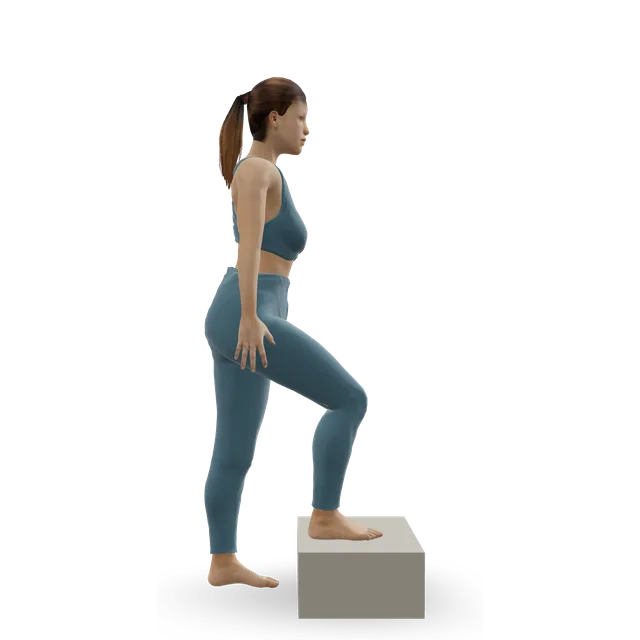 3D demoStair climbingIntermediate · A step
 3D demoStep jack (low-impact jumping jack)Beginner · No equipment
 3D demoAnkle CARs (controlled articular rotations)Beginner · No equipment
 3D demoStanding hip CARsBeginner · A wall
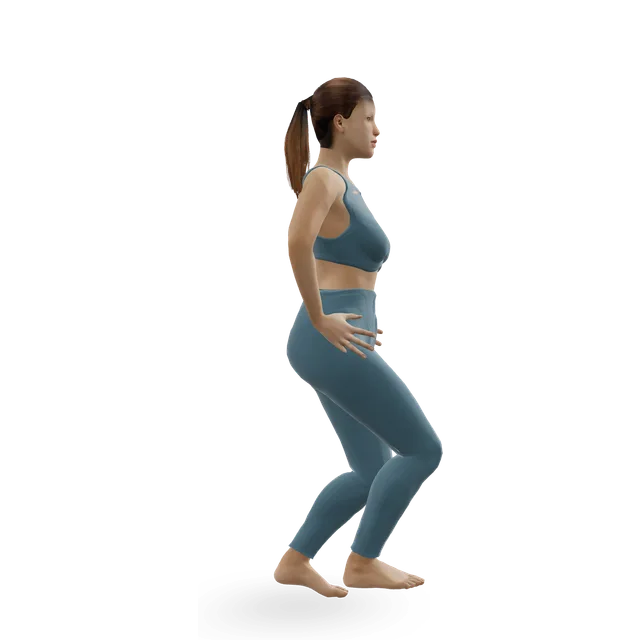 3D demoWalking lungeIntermediate · No equipment
 3D demoWorld's greatest stretchIntermediate · No equipment
 3D demoFront-to-back leg swingsBeginner · A wall
In 23 healthy, trained adults doing a hard 4-minute run at -15°C, the main lung function measure (how much air you can blow out in one second) fell 2.7% without a mask and 0.5% with one. In 13 winter athletes at -20°C it fell 4.2% 3 minutes after exercise, and after marathons at -2 to -4°C a measure of the small airways fell while the main measure didn't.
We found no evidence that ordinary cold-weather running damages healthy lungs, but the evidence is mixed. Long-term airway changes were found in elite cross-country skiers, who breathe over 100 litres a minute for hours in sub-zero air for years: airway biopsies in 40 elite skiers aged 16 to 20 showed inflammation, asthma was more common in competitive skiers (25.9% against 9.2% in a survey with a low response), and it's unknown whether the changes reverse. Yet skiers' cough reflex wasn't left oversensitive, and long-lasting cough was less common than in other people.
No study covers recreational runners, so we can't say for certain either way. Running in ordinary UK winter weather is a long way from hours of elite ski racing at -15°C (our reading).
In 13 people with asthma exercising at -25 to -15°C, lung function fell 19% with a dummy mask and 4.3% with a heat-exchanger mask. Dry air may matter more than cold air. Asthma + Lung UK advises breathing in through your nose and loosely wrapping a scarf around your nose and mouth; we found no trial of a scarf.
Across 7 randomised studies, warm-ups with short, high-intensity bursts cut the fall in lung function after exercise by about 11 percentage points, while steady, easy warm-ups made no significant difference. Our asthma warm-up follows this pattern.
A heat and moisture exchanger mask can warm -10°C air to at least 19°C, but in 23 adults at -15°C it cut the distance covered in a 4-minute time trial by 1.4%. A buff or scarf is the everyday version.
A US guideline strongly recommends a short-acting reliever before exercise for people with exercise-induced bronchoconstriction (airways that narrow with exercise). Follow your own asthma action plan, as our breathing guide says, and see your GP or asthma nurse if exercise keeps bringing on symptoms.
Source 28
Our asthma warm-up, indoors or just before the run: 5 minutes easy, then 6 bursts of 20 to 30 seconds hard with 45 to 60 seconds easy, then moving stretches. It doesn't work for everyone, so keep your reliever in your pocket.
In 16 men with stable coronary disease walking 30 minutes at -15°C against 22°C, the heart's workload was 17% higher in the cold, but there were no signs of the heart muscle going short of blood. In 42 people having heart tests, breathing -15°C air blunted the normal rise in the heart's blood flow during exercise in those with narrowed arteries, and a review found angina comes on sooner during exercise in the cold.
In 51 men with untreated high blood pressure and 32 without, 15 minutes at -10°C in wind changed heart rhythm measures in the same way in both groups.
Source 31
Shovelling heavy snow pushed 10 untrained men to 86 to 97% of their maximum heart rate, and heart attacks in Quebec men rose the day after heavy snow. A run you've built up to, started gently, is a different thing (our reading).
We found no evidence that running in the cold harms a healthy heart; healthy people in these lab studies coped normally.
Follow your cardiac team's advice, warm up indoors, cover your mouth and nose, keep the first 10 minutes easy, and move indoors on very cold, windy days. The ACSM says people with heart disease can exercise in the cold but should be monitored closely.
When your core gets cold, your body cuts the blood flow to your hands and feet. Wear layers and a hat as well as warm gloves and socks, and warm your gloves before you put them on.
In a Dutch study of 929 women, those with primary Raynaud's were as active as other women, and the NHS advises exercising regularly because it helps circulation. We found no trial of exercising in the cold with Raynaud's. Our Raynaud's guide has the detail: warming up first, layers, and warming up slowly afterwards.
Raise your heart rate and body temperature before you go out, for example by going up and down the stairs, and warm your kit before you put it on.
Sweat cooling on your skin, a cold pool, air-conditioning or the relaxation at the end of a class can bring on an attack. Change out of damp clothes, dry your skin and hair, and warm up slowly: no radiator, fire or very hot shower straight away.
Source 34
With numb feet from diabetes, wear well-fitting shoes and check your feet for redness or blisters afterwards; with an open sore or ulcer, don't run until your foot team says so.
Cold numbs feet further, so check them after cold runs (our suggestion).
In Montreal, nearly half of 960 winter outdoor falls came in three freezing-rain or refreeze spells, and most of those hurt were under 65. A slip-on traction device cut outdoor falls on snow and ice days by more than half in 109 adults over 65, and socks over shoes made icy paths feel less slippery in a small trial. No study was in runners: on icy days, choose gritted routes or a treadmill, shorten your steps and consider grips (our suggestion).
In the hardest test conditions, drivers recognised only 5% of pedestrians in black clothing, against all of those wearing reflective strips on their moving joints. Reflectors on the wrists and ankles work better than a vest, and people overestimate how visible they are. A Cochrane review found that visibility aids help drivers see people sooner, but no trials of their effect on injuries. The NHS suggests routes with plenty of lighting and reflective clothing.
Our editorial choice, since no trial in runners has tested balance training against falls on ice: single-leg stands 3 × 30 seconds each leg (our hiking training workout), 30-second heel-to-toe holds then 10 heel-to-toe steps, and single-leg calf raises 3 rounds of 12 to 20 each leg (our calf workout).
In short efforts, performance improves by about 2 to 5% for each 1°C rise in muscle temperature, which is the case for warming up before a cold run.
Source 6
In 10 lightly dressed men walking or running for an hour at 0°C against 22°C, core temperature didn't change and heart rate was lower. Extra energy comes from shivering, getting wet in the wind, snow and slippery ground. We found no study comparing running in cold and mild air directly.
The 10-minute dynamic warm-up and the mobility part of the runner's warm-up can be done indoors; the asthma warm-up is for cold-air asthma. On very cold days, run the long run as loops past home; on icy days, the easy cardio and bike sessions work indoors.
A 10-minute warm-up for any workout: raise your heart rate, move each joint through its range, rehearse the main movements, then ramp up to your first lift.
10 minBeginner12 movesA wall, A bandAn 8-minute dynamic warm-up for runners: ankle and hip mobility, lunges, skips and pogo hops.
8 minIntermediate8 movesA wallA 15-minute warm-up for exercise-induced asthma: easy movement, then short hard bursts that can reduce symptoms in the session that follows, then moving stretches.
15 minBeginner5 movesCardio machine, A wallA 40-minute easy run at a pace where you can talk in full sentences, with a brisk-walk warm-up and an easy cool-down: the base of every running plan.
40 minBeginner6 movesCardio machine, A wallA 30-minute beginner run-walk session: a brisk walk, then 1-minute jogs with 1-minute walks, building to 3-minute runs over your first three weeks.
30 minBeginner5 movesCardio machine, A wallYour weekly long run: 50 minutes at an easy, conversational pace with an optional 1-minute walk every 9 minutes, and how to fuel and drink on longer runs.
60 minIntermediate6 movesCardio machine, A wallA steady 30 to 45 minute cardio session at talk-but-not-sing pace: walk, cycle, row or cross-train, counting toward weekly activity guidelines.
40 minBeginner3 movesCardio machine, A wallA steady bike ride for a first triathlon or fitness: 5 to 10 minutes easy, a ride you can talk through, optional short faster bursts and an easy cool-down.
45 minBeginner4 movesCardio machine, A wallBalance practice in 10 minutes: tandem stance, single-leg stands, marches, heel walks, tree pose and floor transfers.
10 minBeginner7 movesA wall, A bench or boxA 15-minute barefoot routine for stronger toes, arches, calves and ankles, finishing with balance. You need only a towel, a wall and a resistance band.
15 minBeginner11 movesA wall, Other / check instructionsThe running plans' shoes and kit note already adds "lights or reflective clothing in the dark".
A 9-week beginner plan with the same walk-to-run shape as Couch to 5K: three run-walk sessions a week, from 1-minute jogs to 30 minutes of running.
3 training days35 minBeginner4 days a weekAn 8-week beginner 10K plan: three runs a week plus strength, a long run that grows about 10% at a time, optional hills and tempo runs, and a light race week.
4 training days45 minBeginner4 days a weekA 12-week beginner half marathon plan: three or four runs a week, a long run building to about 15 km, one harder session, strength, a taper and race-day tips.
4 training days50 minBeginnerCall 999 or go to A&E (accident and emergency) if, after being in very cold temperatures:
The NHS lists "people aged 65 and older", "people who have a long-term health condition" and "pregnant women" among those more vulnerable to cold weather (our suggestion: start shorter and stay near home on very cold days).
Source 18
Call 999 or go to A&E (accident and emergency) for hypothermia, such as shivering, pale cold skin, slurred speech, slow breathing, tiredness or confusion, and for frostbite with hard, frozen skin, swelling and loss of feeling, or blisters. Mountain Rescue England and Wales lists the signs to watch for in others: "Disorientation, confusion, shivering, tiredness, pale complexion and loss of circulation in hands or toes", adding that children and older people are especially at risk.
Breathe in through your nose so the air is warmed, loosely wrap a scarf around your nose and mouth or wear a mask, and check the weather: shorten your time outside if it's very cold or windy. In an Asthma + Lung UK survey, 7 in 10 people said cold air made their symptoms worse. Very hot air can tighten the airways too, and GINA advises athletes to avoid training in extreme cold or pollution.
Source 5
Carry your reliever every time. Stop the session if symptoms don't settle, and call 999 if your breathing doesn't go back to normal after exercise.
Sit up straight and try to stay calm. Then:
Source 42
Call 999 (911 in the US) if you or someone else is having an asthma attack and:
If you're no better after 10 minutes and the ambulance hasn't arrived, use your inhaler again, up to the same maximum dose. If you're still no better and it still hasn't arrived, call 999 again straight away. Don't drive yourself to A&E.
See a GP within 2 days, even if you feel better. Asthma + Lung UK suggests a same-day appointment if you managed the attack yourself. Don't exercise again until your symptoms and breathing have recovered.
Exercise brings on coughing, wheezing or a tight chest, or you need extra reliever around exercise.
Being unfit or carrying extra weight makes anyone breathless with exercise, and that breathlessness eases quickly when you stop. Inducible laryngeal obstruction (ILO), where the voice box narrows, causes noisy or difficult breathing in, a tight throat or a change in your voice that start and stop suddenly, and your reliever may not help much; it is found in about 3 in 10 people whose asthma is hard to control. Breathlessness with dizziness or tingling points to a breathing pattern problem, and breathlessness on exertion with swollen ankles needs a GP check.
Get help from NHS 111: pain or tightness in your chest, neck, shoulders, jaw or arms that comes and goes, often brought on by exercise, stress, emotion or cold and easing after a few minutes' rest. It can be angina, a sign of a heart problem. If you've been diagnosed with angina, get help from NHS 111 too if it feels worse than before, is happening more often, lasts longer or happens when you're resting.
Coronary heart disease is a narrowing of the heart's arteries by a build-up of fatty material. It can cause angina: a pain or tightness, usually in your chest, that is often brought on by exercise, stress, emotion or cold weather and stops with rest or angina medicine. A heart attack happens when the blood flow to your heart is blocked, usually by a blood clot.
With heart disease, start indoors on very cold days or warm up inside first and keep the first 10 minutes outside easy, because cold air raises blood pressure and the heart's workload at the same pace.
Source 11
If you get chest pain or pressure, feel faint or dizzy, are unusually breathless, or your heart races or beats irregularly during exercise, as our plans advise.
For chest pain that comes on suddenly and doesn't go away, feels tight or like squeezing, spreads to your arms, neck, jaw, stomach or back, or comes with sweating, feeling sick, light-headedness or breathlessness; severe difficulty breathing; someone who faints while exercising; palpitations that don't go away, or come with chest pain, shortness of breath or feeling faint; or a headache that starts suddenly and is extremely painful, especially while lifting or straining, or comes with numbness or weakness, difficulty speaking or loss of vision. The NHS says a bleed on the brain may be more likely when lifting something heavy. Don't drive yourself to A&E.
Call NHS 111 (in the US, your doctor or an urgent care centre) if you're suddenly more short of breath than usual, or have chest pain with feeling sick or a heartbeat that races, skips or flutters.
See a GP (general practitioner) if Raynaud's is very bad or getting worse, is on one side only, starts after 30, or comes with joint pain, skin rashes or muscle weakness. Get seen as soon as possible for ulcers or black areas on your fingers or toes.
Arthritis UK says get seen as soon as possible for:
Get out of the cold as soon as you can, but warm up slowly, especially if your fingers or toes have changed colour and hurt. Moving your fingers and toes helps, and tucking your hands into your armpits is the runner's trick. Don't put your hands or feet on a radiator or under hot water.
See a GP if chilblains aren't getting better after 2 to 3 weeks, there's pus coming out, you have a very high temperature or feel hot, cold or shivery, you keep getting them, or you have diabetes.
Source 46
Call 999 or go to A&E if you heard a crack, the joint or limb has changed shape or points at an odd angle, it's numb or tingling, or the skin looks blue or grey or feels cold. Get help from NHS 111 (in the US, urgent care) if it's very painful, very swollen or bruised, very stiff, or you can't put weight on it or walk more than a few steps.
Call 999 or go to A&E: after an injury, you heard a crack, the foot or ankle has changed shape or points at an odd angle, a bone is sticking out, there is a bad cut over it, you're in severe pain, or the toes look blue or white, feel numb or are cold to touch. These can mean a broken bone. Don't drive yourself.
Same day (NHS 111 or an urgent treatment centre): after an injury, you can't put weight on it or walk more than a few steps, the pain is very bad or getting worse, there is a lot of swelling or bruising or it is getting worse, it feels very stiff, or it's not feeling any better after treating it yourself. Get the same help if you also have a very high temperature, or feel hot, cold or shivery: this could be an infection. If you think it's broken, don't treat it yourself.
Stiff, achy legs for a day or two are normal at first and ease as you repeat the runs. Stop and rest if a pain is sharp, makes you limp or change how you run, or builds as you go, and skip your next run if it's worse the next morning. The NHS advises not running when you're in pain, and seeing a GP or physiotherapist if it doesn't go away; a very painful or swollen knee, or a sudden sharp pain at the back of the ankle, needs a GP straight away.
Call 999 or go to A&E: loss of feeling or numbness around the genitals or bottom, new trouble peeing or controlling your bladder or bowels, changes in genital sensation during sex or problems with erections or orgasm, or pain, tingling, weakness or numbness in both legs. These are signs of cauda equina syndrome, which needs treating in hospital urgently. Don't drive yourself.
Pain, tingling or numbness spreading below the knee that isn't settling after a few weeks, is getting worse or stops your normal activities: see a GP.
Numbness, tingling or weakness that travels down the leg from the back. That points to a nerve (sciatica) rather than the knee.
A lump in the groin, or groin pain with coughing or straining (a possible hernia).
Get help from NHS 111 if you have a hernia (a lump in the groin or tummy) and pain in or around it, a bloated tummy, you feel sick or are being sick, you're vomiting blood or your vomit looks like coffee grounds, you're constipated, you have a high temperature or feel hot, cold or shivery, or you've suddenly become confused.
Call 999 or go to A&E now if you have a femoral hernia (a small lump at the top of the thigh, in the groin) and very bad tummy pain, you feel sick or are being sick, you cannot fart or poo, you have a high temperature or feel hot, cold or shivery, or you've suddenly become confused. It may be strangulated, which is an emergency. Don't drive yourself.
Lie down with your legs raised, or sit with your head lowered between your knees, and drink some water. Crossing your legs while standing, rocking up and down on your toes or clenching your fists can help. Call 999 if someone faints while exercising.
In the heat, tiredness, dizziness, a headache, feeling sick, heavy sweating and intense thirst can be heat exhaustion: stop, get somewhere cool, drink and cool your skin, and you should feel better within 30 minutes. If you don't, or there's confusion, hot skin that has stopped sweating, a fit or a collapse, call 999 or 911: that's heatstroke.
Ask for an urgent GP appointment or get help from NHS 111 for a headache that's triggered or made worse by coughing, sneezing, bending down or exercising. In the US, contact your doctor or urgent care.
Stop straight away if you feel any pain or become unwell, the NHS says, and contact 111 if your symptoms worry you or don't go away.
A dull ache in your muscles for a day or two after something new is normal. Joint pain that's sharp, gets worse during a set or lingers into the next day means switching to the easier option, and seeing a GP or physiotherapist if it carries on (our plans' rule). Our muscle soreness guide has more.
Speak to a GP first if you haven't exercised for some time, or if you have a medical condition or concerns. Get advice first, too, if you have a health problem, an injury or symptoms, have recently had a heart attack or an operation, or are pregnant or have recently given birth.
Answer the 7 questions of the Physical Activity Readiness Questionnaire (PAR-Q+) before you start. A yes to any (a heart condition or high blood pressure, chest pain, dizziness or fainting, another long-term condition or its medicines, a bone or joint problem, or being told to exercise only under medical supervision) means checking with your doctor or a qualified exercise professional first. It also asks people over 45 who aren't used to hard, all-out effort to check before exercising that hard: think races and time trials, not easy runs. The NHS suggests speaking to a GP first if you're worried about your health.
Source 49
If you have a heart condition, follow your cardiac team's advice on how hard to work, and stop for the warning signs above. People with long-term conditions may wish to ask their specialist before starting. With uncontrolled high blood pressure, avoid straining against a held breath; the high blood pressure guide has more.
Not these plans, or not yet: myalgic encephalomyelitis or chronic fatigue syndrome (ME/CFS), where the National Institute for Health and Care Excellence (NICE) advises against programmes with fixed step-by-step increases and the NHS against vigorous unsupervised exercise such as running; and pregnancy, unless you were already running, because the NHS advises against starting a new vigorous activity such as running.
Your airways warm and moisten the air to 37°C before it reaches the lungs. We found no study suggesting freezing.
Source 7
In healthy runners the airway changes were small and brief. Long-term airway inflammation and more asthma were found in elite cross-country skiers training hard for years in sub-zero air, and no study covers recreational runners.
The head is about 7% of the body's surface, and putting it under cold water added only about 10% to total heat loss. Wear a hat because it's exposed, not because it's special.
Source 19
Not much more, unless you shiver, get wet or run through snow or on slippery ground.
Exercise is safe in most cold weather with the right clothing; the ACSM advises extra care below a wind chill of -27°C.
Source 1
People with Raynaud's are as active as others, and the NHS advises regular exercise for circulation. Staying warm before, during and after is the key, as our Raynaud's guide says.
The cold raises the heart's workload and can bring on angina sooner, but walking at -15°C caused no signs of heart strain in stable coronary disease, and the ACSM says people with heart disease can exercise in the cold with monitoring. Follow your cardiac team's advice.
Not for most people: your airways warm the air to body temperature, and in healthy runners hard running in freezing air narrowed the airways only a little and briefly. Long-term airway changes have been found in elite cross-country skiers training for years in very cold air; no study covers recreational runners.
Cold, dry air can irritate and narrow the airways for a while, especially on hard efforts. Breathe through your nose at easy paces and cover your mouth and nose with a scarf or buff. If it keeps happening, or you cough or wheeze, see a GP about exercise-induced asthma.
Warm up with a few short bursts, cover your nose and mouth, keep your reliever with you and follow your action plan. Keep hard sessions for milder days or indoors when it's very cold.
Thin layers: a wicking base layer, a warm layer and a windproof or waterproof top, plus a hat, gloves and a buff. You should feel a little cool for the first few minutes, and change out of damp kit as soon as you finish.
With the right kit, most cold weather is safe; the ACSM advises extra care below a wind chill of -27°C. Ice, snow, strong winds, heavy rain and the dark are the more usual reasons to choose a treadmill or a shorter loop near home.
For a healthy heart, we found no evidence of harm. With heart disease, the cold makes your heart work harder and angina can come on sooner, so warm up indoors, start slowly and follow your cardiac team's advice.
Yes: a warm muscle works better, by about 2 to 5% per degree. Warm up indoors for 5 to 10 minutes so you're warm but not sweaty, then start easy.
Not much more, unless you shiver, get wet or run through snow. Go by how hard the run feels, not the weather.
Keep your whole body warm, not just your hands: when your core cools, your body cuts the blood flow to your hands and feet. Gloves or mittens, sleeves pulled over them and a spare dry pair help; with Raynaud's, see our Raynaud's guide.
On snow, slow down and shorten your steps. On ice, use a gritted, lit route, a treadmill or slip-on grips, which cut falls on ice in older walkers.
Wear reflective strips on your wrists and ankles and a light: drivers spotted pedestrians with reflective strips on their joints far more easily than those in dark clothing. Choose well-lit routes.
We found no study showing that it does. The NHS says "Keeping warm over the winter months can help to prevent colds, flu and more serious health problems", so change out of damp kit and warm up soon after a cold run. If you're already ill, ease off.
Exercise education, not a personal prescription, and clinical review of these guides is pending. Check with a GP before starting hard training if you have a heart condition, chest pain, dizziness or breathlessness when active, and stop for sharp or increasing pain. Health disclaimer.














