Training guide

How to run uphill and downhill: hold your effort not your pace, take short quick steps both ways, train on hills safely, and look after your knees and calves

Running uphill costs far more energy than running on the flat, so the trick is to keep your effort steady and let your pace drop: in one study, experienced runners ran about 23% slower up the hills of an undulating course and about 14% faster down them. Shorten your steps, stand tall with a slight lean from the ankles, drive your arms, and walk the steepest parts. Going down, short, quick, light steps keep you in control.

Downhill is the part that makes your thighs sore for days, and a small dose protects you from the next one. This guide covers how hills change effort and technique, what they do to your knees, calves and shins, what hill training does (and doesn't) do for your running, how to build hills and descents into your week, and when hill pain needs a different plan.

The short version

Hold your effort, not your pace

Running uphill costs much more energy as the slope steepens, more than five times the flat at a 45% slope in a lab study. Experienced runners ran about 23% slower uphill and 14% faster downhill and still worked harder on the climbs. On easy runs, keep to a pace where you can talk, and walk the steep bits.

Sources 1, 2

Going up: short, quick steps, tall, arms driving

Shorter, quicker steps and a landing further forward on the foot come on their own uphill. People choose the most economical lean by themselves, so stand tall with a slight lean from the ankles rather than forcing a big one.

Sources 3, 4

Going down: short, light steps, weight over your feet

Downhill landings hit harder, shorter steps cut the load on the knee, and leaning back raised the stress behind the kneecap in a lab study. Don't sit back and brake.

Sources 5, 6, 7

Downhill makes you sore, and a small dose protects you

A first long, steep downhill run cut thigh strength by 7 to 21% and left soreness for 4 days. One earlier bout, even 5 minutes of downhill walking, protected against the next for weeks. Build descents in gradually and keep them regular.

Sources 8, 9, 10

Hill training helps a little, not a lot

Six weeks of uphill intervals improved 5 km times by about 2% in trained runners, flat intervals did as well or better, and pooled trials were uncertain. One hill session a week is plenty; no trial has tested hill training in beginners.

Sources 11, 12, 13

Hills aren't bad for your knees

Uphill running loads the calf, Achilles and shin more and the kneecap no more than the flat; downhill does the opposite. No study links hill running to knee injury. With a sore Achilles, calf or shin, ease off hills for a week; with kneecap pain, walk the descents.

Sources 7, 14, 15

What hills do to running

The energy cost climbs with the slope

Every metre uphill lifts your body against gravity. In 10 runners on a treadmill, running cost 3.40 joules per kilogram per metre on the level and 18.93 at a 45% slope, and it was lowest, 1.73, on a 20% downhill. Across 23 studies, uphill cost rose in a straight line with slope up to about 27%, and downhill cost was lowest at about 19%.

Sources 1, 16

A percentage, not degrees

A gradient is the rise for every 100 units travelled: a 10% hill climbs 10 m in 100 m, about 5.7 degrees (our arithmetic). Our incline walking guide explains the treadmill version.

Up and down use your legs differently

Uphill, your joints produce more power, especially at the hip, and your calves push off harder. Downhill, your thigh muscles (the quadriceps) lengthen under load as they brake each landing, which is the kind of work that makes muscles sore.

Sources 3, 17, 18

Your form changes by itself

Uphill, steps get shorter and quicker, your foot spends longer on the ground and you land further forward on the foot. Downhill, you spend longer in the air, take fewer steps a minute and land on your heel.

Sources 3, 2

Grade-adjusted pace

Watches and apps turn your hill pace into an estimated flat pace. It's a rough guide: we found no study that has tested how accurate any version is, and being economical on the flat was only weakly linked with being economical on slopes steeper than about 10%.

Source 16

What you need first, and how people differ

Run easily for 20 to 30 minutes before you start hill sessions; if you walk, build to brisk walking for 20 to 30 minutes, then hills. The people least used to downhill running get the most soreness, whatever their fitness. Most hill studies were in young men or trained runners, though one found the same protective effect in trained women, and we found none in older runners. Knee, calf or Achilles problems change which half of the hill is harder.

Sources 18, 19

Effort, not pace

Runners slow uphill and still work harderEmerging evidence

Eight experienced runners on an undulating outdoor course ran 23% slower uphill and 13.8% faster downhill than on the level, with strides 20.5% shorter uphill. They worked at about their breathing threshold on the climbs (100.4% of it) and well below it downhill (78.9%). It's one small study, as our running pace calculator says.

Source 2

Use the talk test on hills

On easy runs, slow down or walk until you can talk in full sentences again, the same rule our running plans use on the flat. In hill sessions, the effort is "a few words at most", as our hill repeats workout says. Ease back into your normal pace a few strides after the top rather than stopping.

Sources 2, 1

Walking the steepest parts costs about the sameEmerging evidence

At the steepest slopes tested, walking cost almost as much per metre as running (17.33 against 18.93 joules per kilogram per metre at 45%), which is why trail runners walk steep climbs. We found no study giving the slope at which to switch; walking when your breathing tells you to is our suggestion.

Source 1

How to run up a hill

Our editorial sequence, built on the slope studies (Minetti 2002; Townshend 2010; Vernillo 2017). The slight lean from the ankles is our reading: walkers choose their most economical lean by themselves (Best 2025), and no study has tested a deliberate lean in uphill running.

  1. Start the climb at an effort you could hold to the top, not your flat pace: your pace drops while your effort stays the same.
  2. Shorten your steps and keep them quick, landing under your body rather than reaching out in front.
  3. Stand tall with a slight lean from the ankles, not a bend at the waist, and look a few metres ahead.
  4. Drive your arms forward and back, relaxed, with your elbows bent.
  5. Check your breathing: if you're down to a few words on an easy run, slow down or walk. Walking the steepest parts is normal.
  6. Ease back to your normal pace a few strides after the top, rather than stopping.

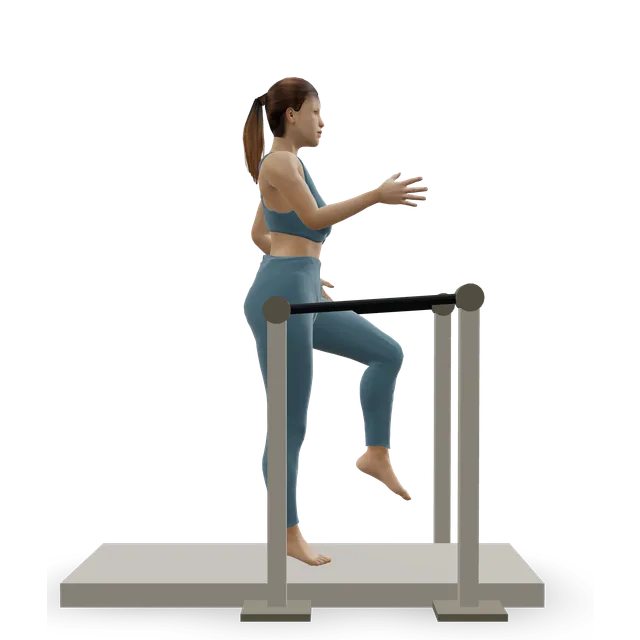
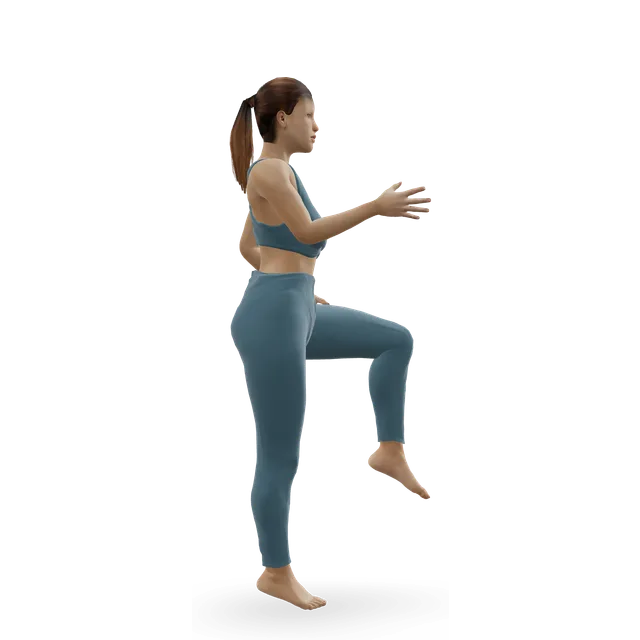
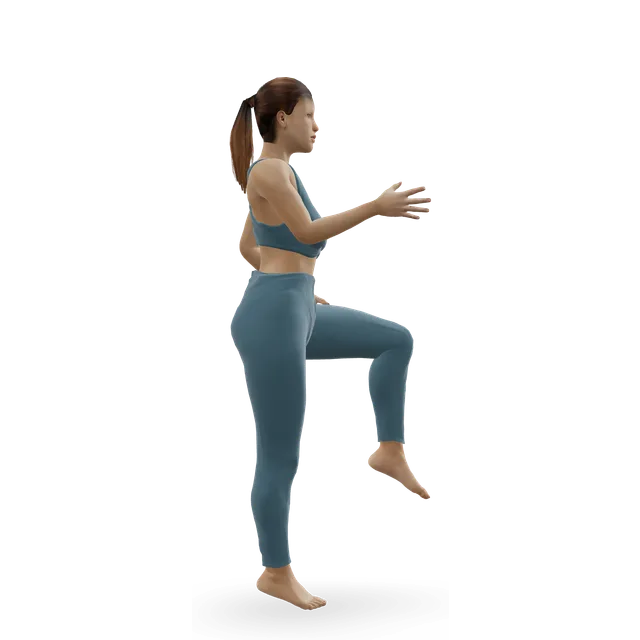
Loading the 3D figure…

Gets into position, then repeats the movement. Technical checks passed; qualified exercise review is pending.

The movement on the figure: Trail running and walking

How to run down a hill

Our editorial sequence, built on the downhill load studies (Gottschall 2005; Ho 2018; Baggaley 2020) and the downhill muscle damage studies (Chen 2007; Bontemps 2020).

  1. Keep your weight over your feet: don't lean back and brake with straight legs.
  2. Take short, quick, light steps, knees slightly bent, landing under you.
  3. Let gravity give you a little speed on gentle, smooth slopes; slow down on steep, wet or loose ground, and walk where you need to.
  4. Look a few metres ahead for roots, stones and kerbs, with your arms a little wider for balance.
  5. Expect your thighs to ache for a few days after your first long descents; next time, do a little more.

Loading the 3D figure…

Gets into position, then repeats the movement. Technical checks passed; qualified exercise review is pending.

The movement on the figure: Trail running and walking

What the evidence says

Most hill studies are small lab studies in young adults or trained runners, and many measured loads rather than injuries. The downhill muscle damage findings are the most consistent.

Steps change by themselves on slopesStrong evidence

A review describes uphill running as "a higher step frequency, increased internal mechanical work, shorter swing/aerial phase duration, and greater duty factor", with a gradual shift to a mid or forefoot landing, and downhill running as a lower step rate and a heel landing. This describes what runners do; it isn't a trial of teaching it.

Sources 3, 2

A slight lean, not a big oneEmerging evidence

In 7 walkers, people chose the trunk angle that cost the least energy, and it leaned further forward as the slope steepened. On the flat, a little more forward lean lowered stress behind the kneecap in 24 runners (20.2 against 21.5 megapascals) and in 12 runners on uneven ground. No study has tested a deliberate lean in uphill running, so a slight lean from the ankles is our reading.

Sources 4, 20, 21

Downhill landings are harder; short steps help the kneeEmerging evidence

At a 9-degree downhill, impact peaks rose 54% and braking forces 73% in 10 runners. In 19 runners, shorter steps cut the energy the knee absorbed, most of all downhill, and in another 19, a cadence 10 steps a minute quicker lowered modelled load at the shin, Achilles and kneecap together. In 20 runners, decline running raised kneecap stress because the trunk was more upright.

Sources 5, 6, 7, 14

Shorter strides and soreness: mixedMixed evidence

After a damaging downhill run, runners who took shorter strides kept the most strength and those who overstrode were sorest, and a review found strength fell 8.8% with shorter strides against 14.7% with longer ones. But changing step rate by 8% made no difference to damage in another study.

Sources 22, 18, 23

A first steep descent causes muscle damageStrong evidence

In 10 young men, 30 minutes of running down a 15% slope cut knee strength by 7 to 21%, left soreness for 4 days, and made level running cost 4 to 7% more oxygen for 3 days. A review found the people least used to downhill running were the most damaged.

Sources 8, 18

One bout protects against the nextStrong evidence

A first 30-minute downhill run protected against soreness from a second for up to 6 weeks, and the protection was gone by 9. The same effect showed in 10 recreational men at a 20% slope and in 10 trained women. A review calls earlier downhill running the most effective way to limit the damage; how it works isn't settled.

Sources 10, 24, 19, 18, 25

A small first dose is enoughEmerging evidence

Five minutes of walking down a 28% treadmill slope, a week before a 40-minute downhill walk, cut the later strength loss from 19.2% to 9.9% in 36 untrained men, while 5 minutes of level walking didn't. Twenty minutes protected for more than 4 weeks, and building weekly downhill walks from 10 to 70 minutes avoided damage while strength rose as much as with a damaging 40 minutes. These were downhill walking studies on treadmill ramps in young men; we found no trial of a downhill running programme in recreational runners.

Sources 9, 26, 27, 28

Uphill spares the kneecap and loads the calf and shinEmerging evidence

In 20 runners, kneecap stress was no different between level and uphill running and higher downhill. In 19 runners, uphill running raised modelled load at the shin and Achilles and lowered it behind the kneecap, and downhill did the reverse. In 20 recreational runners, slopes of 10% and 15% loaded the shin bone more than the flat, with no difference at 5%, and downhill lowered it by 14 to 19%. These are modelled loads, not injuries.

Sources 7, 14, 29

Hills and injuries: no link foundMixed evidence

No study that followed runners forward links hill running to injury. In 621 skyrunners descending 1,000 to 40,000 m a month, downhill training wasn't linked with knee symptoms, though people whose knees hurt may have stopped. A living review of trail running found injury rates from 0.7 to 61.2 per 1,000 hours and listed no gradient risk factor.

Sources 15, 30

Hill intervals: a few per cent in trained runnersEmerging evidence

In 20 well-trained runners on 5 uphill interval programmes for 6 weeks, 5 km times improved by about 2% whatever the intensity, as our run faster guide says. In 32 well-trained runners, uphill and level intervals both helped, level ones more; incline intervals improved parts of running economy but not muscle power; and short 30-second reps at a 10% incline helped threshold speed more than long ones.

Sources 11, 12, 31, 32

Pooled trials are uncertainMixed evidence

Across 13 randomised trials of 308 people, uphill running made no clear difference to knee strength, jumping or aerobic fitness, with low certainty; the usual protocol was 10 to 14 sprints of 30 seconds at about 10%, 2 or 3 times a week. In 40 young middle-distance runners, 8 weeks at a 7.6% slope improved 800 m and 30 m times against no hill training.

Sources 13, 33

Downhill training builds thigh strength, not economyEmerging evidence

In 18 young men, 5 weeks of downhill running raised knee strength by 9 to 24% but not aerobic fitness. In 19 trained runners, 8 weeks of extra downhill running at a 5% slope didn't improve running economy.

Sources 34, 35

Downhill and the lower backEmerging evidence

In 12 recreational runners, downhill running increased the curve of the lower back, and the authors suggest uphill first, then level, then downhill when coming back from back pain. It's one small descriptive study.

Source 36

How much, and how often

One hill session a week

For most recreational runners, one hill session a week in place of another harder session is plenty, as in our 10K and half marathon plans: 4 to 8 repeats of 60 seconds at a few words at most, walking or jogging slowly back down (our hill repeats workout; its numbers are editorial). Expect a few per cent over 6 weeks, not a transformation. Keep your other runs easy.

Sources 11, 13

Hill sprints, once you run 30 minutes easily

Short, hard efforts of 8 to 10 seconds up a moderate hill, walking back down in full: 4 to 6 of them, once a week, is our editorial starting point. The hill sprints move page asks that you can run comfortably for 20 to 30 minutes first.

Descents in small doses

Start with a few easy descents of 30 to 45 seconds on a gentle, smooth slope, walking back up, and add one or two a week; lengthen them before you try steeper slopes. Our downhill running practice workout sets this out. The doses are editorial; starting small and building is what the trials support, and the protection fades after about 6 weeks without downhill running.

Sources 9, 10, 8

Easy hilly runs count

Rolling routes at a talking pace, walking the steep bits, build hill fitness too, as our easy run says: "Paths and trails count: walk the steep bits".

No hills?

A treadmill at 4 to 6% incline, as our hill repeats workout suggests, or stairs. A treadmill can't train you for descents, so add slow step-downs and find a real slope when you can.

Strength for hills

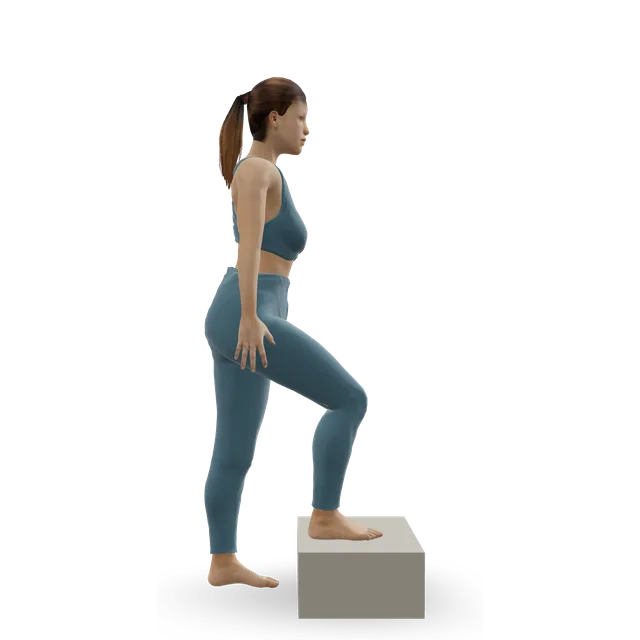
Twice a week: single-leg calf raises and bent-knee calf raises for the push-off, step-ups and split squats for the climb, and slow step-downs for the lowering work descents ask for, stopping each set 1 to 3 reps short of failure. Doses are from our calf, step-up and runners' strength workouts, below.

From walking hills to hill sessions

Walk hills, then run gentle hills easily, then hill repeats, then hill sprints. Trail running and walking is the demo for both uphill and downhill; the treadmill moves stand in on an incline. Adapted from the move page's dose for trail running and walking: 20 to 30 minutes of brisk walking at first, adding short runs on gentle slopes as it gets easier. Hill repeats and hill sprints are as in the notes above.

Strength for climbs and descents

Twice a week. Single-leg calf raises 3 rounds of 12 to 20 (our calf workout), bent-knee calf raises 15 to 20 (our strength workout for runners at home), step-ups 3 sets of 8 to 12 (our step-up workout), Bulgarian split squats 8 to 12 each side, single-leg Romanian deadlifts 8 to 10 each side, slow step-downs 2 sets of 8 lowering over 3 seconds, tibialis raises 1 to 2 sets of 15 to 20, and pogo hops 2 × 10 in a warm-up (leave them out with calf or Achilles pain).

Ankles and calves, for comfort

Ankle circles and knee-to-wall rocks before a hill run, as in our runner's warm-up, and calf stretches of 30 seconds each side afterwards, as in our hill repeats cool-down. Stretching is for comfort: it hasn't been shown to prevent running injuries.

Knees, calves and Achilles: who should change it

Sore Achilles, calf or shin

Sore Achilles, calf or shin? Skip hills that week: running uphill leans on the calves.

Uphill running loads these more, so keep slopes gentle and build up slowly, and use the matching pain guide if it doesn't settle.

Sources 14, 29

Kneecap pain

Knee pain? Walk the downhills, where the knees work hardest, and see the runner's knee guide.

Uphill may feel fine, because it loaded the kneecap no more than the flat in a lab study; descents are the part to cut back.

Source 7

Knee arthritis

Recreational runners had less hip and knee osteoarthritis than people who didn't run. If you have knee osteoarthritis, our knee arthritis guide bans no exercise: cut back what flares your knee, often hills and downhill running, just enough to stay within its pain rule.

Coming back from back pain

Downhill running arches the lower back more. Uphill first, then level, then downhill is the order one small study suggests (our reading).

Source 36

On trails

Trails count. Take small steps downhill, where the knees work hardest, and tell someone your route on remote paths.

Workouts to follow

Hill repeats are the uphill session; downhill running practice builds descents in small doses. The warm-up comes first, and the strength workouts go on other days.

Hill repeats for beginners

A 35-minute hill session for beginners: an easy warm-up jog, then 6 uphill runs of 60 seconds at a hard effort, walking back down between them.

35 minIntermediate7 movesCardio machine, A wall

Downhill running practice: short, easy descents for stronger thighs

A 30-minute session of short, easy runs down a gentle slope, walking back up between them, to get your thighs used to descents a little at a time.

30 minIntermediate7 movesCardio machine, A wall

Runner's warm-up

An 8-minute dynamic warm-up for runners: ankle and hip mobility, lunges, skips and pogo hops.

8 minIntermediate8 movesA wall

Calf workout: straight-knee and bent-knee raises with a step

A 25-minute calf workout with a step and a dumbbell: single-leg raises for the big calf muscle, then seated raises for the soleus, with gym swaps for each move.

25 minIntermediate7 movesA wall, A step

Step-up workout: from the bottom stair to a loaded box

A 30-minute step-up workout at home or in the gym: step-ups, split squats, step-downs and calf raises on one step, with the height set to your level.

30 minBeginner9 movesA wall, A step

Strength workout for runners at home

A 40-minute strength workout for runners at home: hops, Bulgarian split squats, single-leg deadlifts, step-ups, calf raises and side planks.

40 minIntermediate15 movesA wall, A bench or box

Plyometrics for runners

A 20-minute hop and bound session for runners: ankle bounces to pogo hops, one-leg hops and bounding, building foot contacts slowly over 10 weeks.

20 minIntermediate8 movesCardio machine

Incline treadmill workout: building up to 12% for 30 minutes

A steep treadmill walk that builds over weeks to the 12-3-30 settings (12% incline, 3 mph, 30 minutes), with a warm-up, a cool-down and stop rules.

40 minIntermediate3 movesCardio machine, A wall

Post-run stretches

Seven stretches for after a run: calves, soleus, quads, hip flexors, hamstrings and glutes.

10 minBeginner7 movesA wall

Plans

The 10K plan adds hills in weeks 3 and 4 and the half marathon plan in weeks 2 to 5; the 5K and marathon plans use the hill session too, and the strength plan fits two sessions a week around your runs.

Warning signs: when to stop and get help

Stop and get medical help

If you get chest pain or pressure, feel faint or dizzy, are unusually breathless, or your heart races or beats irregularly during exercise, as our plans advise.

Call 999 (911 in the US)

For chest pain that comes on suddenly and doesn't go away, feels tight or like squeezing, spreads to your arms, neck, jaw, stomach or back, or comes with sweating, feeling sick, light-headedness or breathlessness; severe difficulty breathing; someone who faints while exercising; palpitations that don't go away, or come with chest pain, shortness of breath or feeling faint; or a headache that starts suddenly and is extremely painful, especially while lifting or straining, or comes with numbness or weakness, difficulty speaking or loss of vision. The NHS says a bleed on the brain may be more likely when lifting something heavy. Don't drive yourself to A&E.

Sources 37, 38, 39

Suddenly more breathless than usual

Call NHS 111 (in the US, your doctor or an urgent care centre) if you're suddenly more short of breath than usual, or have chest pain with feeling sick or a heartbeat that races, skips or flutters.

Aches, pain and when to stop

Stiff, achy legs for a day or two are normal at first and ease as you repeat the runs. Stop and rest if a pain is sharp, makes you limp or change how you run, or builds as you go, and skip your next run if it's worse the next morning. The NHS advises not running when you're in pain, and seeing a GP or physiotherapist if it doesn't go away; a very painful or swollen knee, or a sudden sharp pain at the back of the ankle, needs a GP straight away.

Pain in one spot on a bone that hurts to press, gets worse with each step and later aches at rest can be a stress fracture: stop running and get it checked. When you can walk briskly without pain, restart a week or two back in the plan. In one study, injured new runners took a median of about 10 weeks to recover, so it pays to stop early.

Our guides to knee, hip, foot, lower back, ankle, calf, hamstring and groin pain when running show what to change and how to build back.

Source 40

A bone that hurts in one spot

Pain in one spot on the shin or a foot bone that you can point to with a fingertip, worse with impact and later present at rest or at night: a possible stress fracture. Stop running and jumping until it has been checked.

A snap at the back of the heel

Same day: a sudden snap or pop at the back of the heel or calf, or a feeling of being kicked there, then walking flat-footed and being unable to push off, stand on tiptoe or climb stairs. It could be an Achilles tendon rupture or a broken heel bone. Go to A&E or a minor injuries unit, or contact NHS 111.

A fall, or a twisted knee or ankle on a hill or trail

Call 999 or go to A&E if you heard a crack, the joint or limb has changed shape or points at an odd angle, it's numb or tingling, or the skin looks blue or grey or feels cold. Get help from NHS 111 (in the US, urgent care) if it's very painful, very swollen or bruised, very stiff, or you can't put weight on it or walk more than a few steps.

Source 41

Knee injuries

Go to A&E (accident and emergency) if you've injured your knee and it has changed shape, it becomes very swollen very quickly, you felt a pop or snap, you can see bone sticking out, or it's bleeding heavily. Don't drive yourself: ask someone to take you, or call 999 if the pain means you can't move your leg to get there.

Get advice from NHS 111 now: you cannot move the knee or put any weight on it, or it is very painful, badly swollen or has changed shape.

You hurt your knee and cannot take 4 steps, or you are 55 or over and have injured it: get it checked the same day for a broken bone.

The knee is locked and you cannot fully straighten it.

Get advice from NHS 111 now: the knee locks, gives way or clicks painfully. Painless clicking is normal.

Source 42

Ankle injuries

Call 999 or go to A&E: after an injury, you heard a crack, the foot or ankle has changed shape or points at an odd angle, a bone is sticking out, there is a bad cut over it, you're in severe pain, or the toes look blue or white, feel numb or are cold to touch. These can mean a broken bone. Don't drive yourself.

Same day (NHS 111 or an urgent treatment centre): after an injury, you can't put weight on it or walk more than a few steps, the pain is very bad or getting worse, there is a lot of swelling or bruising or it is getting worse, it feels very stiff, or it's not feeling any better after treating it yourself. Get the same help if you also have a very high temperature, or feel hot, cold or shivery: this could be an infection. If you think it's broken, don't treat it yourself.

  • An ankle that keeps giving way months after a sprain.

Sources 43, 44

After an unusually hard or long run

Call NHS 111 or ask for an urgent GP appointment (in the US, your doctor or urgent care) if you're suddenly more short of breath than usual, or your muscles are very sore and weak with dark, red or cola-coloured pee after an unusually hard run.

Not ordinary soreness

After hard or unfamiliar exercise, these are not ordinary soreness. They can be signs of rhabdomyolysis, a breakdown of muscle that NHS clinical guidance describes as potentially life-threatening; its main danger is damage to the kidneys. Get urgent medical help if you have:

  • Muscle cramps, severe pain or weakness, worse than you'd expect from the workout.
  • Feeling so weak or tired that you can't finish a workout or everyday tasks you could do before.
  • Red or brown pee, or dark pee that looks like tea or cola.
  • A high temperature as well as the muscle pain.
  • Peeing a lot less than usual, feeling very thirsty, being sick, or feeling confused or sleepy.

Why it happens

NHS clinical guidance links it to exercise that is unaccustomed (too much, too fast, too hard or too soon) or done when fasting, dehydrated or ill. Symptoms may not start until hours or days after the exercise, so don't ignore them. If you take a statin such as atorvastatin, the NHS says to call 111 if you think you might be having serious side effects, which include muscle cramps, severe pain and weakness.

Sore thighs after your first descents (our suggestion)

Thighs that ache for 2 to 4 days after your first steep or long descent are expected, the usual pattern after downhill running in the lab studies above. Knee pain that is sharp, catches or swells is not that soreness: use the knee lines above.

In the heat

In the heat, tiredness, dizziness, a headache, feeling sick, heavy sweating and intense thirst can be heat exhaustion: stop, get somewhere cool, drink and cool your skin, and you should feel better within 30 minutes. If you don't, or there's confusion, hot skin that has stopped sweating, a fit or a collapse, call 999 or 911: that's heatstroke.

Source 45

Back pain, and pain spreading down a leg

Call 999 or go to A&E: loss of feeling or numbness around the genitals or bottom, new trouble peeing or controlling your bladder or bowels, changes in genital sensation during sex or problems with erections or orgasm, or pain, tingling, weakness or numbness in both legs. These are signs of cauda equina syndrome, which needs treating in hospital urgently. Don't drive yourself.

Pain, tingling or numbness spreading below the knee that isn't settling after a few weeks, is getting worse or stops your normal activities: see a GP.

Numbness, tingling or weakness that travels down the leg from the back. That points to a nerve (sciatica) rather than the knee.

A lump in the groin

A lump in the groin, or groin pain with coughing or straining (a possible hernia).

Get help from NHS 111 if you have a hernia (a lump in the groin or tummy) and pain in or around it, a bloated tummy, you feel sick or are being sick, you're vomiting blood or your vomit looks like coffee grounds, you're constipated, you have a high temperature or feel hot, cold or shivery, or you've suddenly become confused.

Call 999 or go to A&E now if you have a femoral hernia (a small lump at the top of the thigh, in the groin) and very bad tummy pain, you feel sick or are being sick, you cannot fart or poo, you have a high temperature or feel hot, cold or shivery, or you've suddenly become confused. It may be strangulated, which is an emergency. Don't drive yourself.

If you feel faint after a hard effort

Lie down with your legs raised, or sit with your head lowered between your knees, and drink some water. Crossing your legs while standing, rocking up and down on your toes or clenching your fists can help. Call 999 if someone faints while exercising.

Ask for an urgent GP appointment or call NHS 111

Ask for an urgent GP appointment or get help from NHS 111 for a headache that's triggered or made worse by coughing, sneezing, bending down or exercising. In the US, contact your doctor or urgent care.

During any session

Stop straight away if you feel any pain or become unwell, the NHS says, and contact 111 if your symptoms worry you or don't go away.

A dull ache in your muscles for a day or two after something new is normal. Joint pain that's sharp, gets worse during a set or lingers into the next day means switching to the easier option, and seeing a GP or physiotherapist if it carries on (our plans' rule). Our muscle soreness guide has more.

Check first

Speak to a GP first if you haven't exercised for some time, or if you have a medical condition or concerns. Get advice first, too, if you have a health problem, an injury or symptoms, have recently had a heart attack or an operation, or are pregnant or have recently given birth.

Answer the 7 questions of the Physical Activity Readiness Questionnaire (PAR-Q+) before you start. A yes to any (a heart condition or high blood pressure, chest pain, dizziness or fainting, another long-term condition or its medicines, a bone or joint problem, or being told to exercise only under medical supervision) means checking with your doctor or a qualified exercise professional first. It also asks people over 45 who aren't used to hard, all-out effort to check before exercising that hard: think races and time trials, not easy runs. The NHS suggests speaking to a GP first if you're worried about your health.

Source 46

A heart condition

If you have a heart condition, follow your cardiac team's advice on how hard to work, and stop for the warning signs above. People with long-term conditions may wish to ask their specialist before starting. With uncontrolled high blood pressure, avoid straining against a held breath; the high blood pressure guide has more.

Not these plans, or not yet

Not these plans, or not yet: myalgic encephalomyelitis or chronic fatigue syndrome (ME/CFS), where the National Institute for Health and Care Excellence (NICE) advises against programmes with fixed step-by-step increases and the NHS against vigorous unsupervised exercise such as running; and pregnancy, unless you were already running, because the NHS advises against starting a new vigorous activity such as running.

Myths

"Hills are bad for your knees"Mixed evidence

Uphill running loaded the kneecap no more than the flat, and downhill loads it more per step, but no study links hill running to knee injury, and skyrunners' knee symptoms weren't linked with how much they ran downhill. If a knee already hurts, descents are the part to cut back.

Sources 7, 14, 15

"Lean into the hill as far as the slope"Emerging evidence

No study has tested it in running, and walkers choose their most economical lean by themselves. A slight lean from the ankles, not a bend at the waist, is our reading.

Source 4

"Run hills on your toes"Emerging evidence

Runners shift to a mid or forefoot landing uphill on their own; there's no need to force it, and our running form guide advises against changing your strike on the flat.

Source 3

"Hill training will transform your running"Mixed evidence

Uphill intervals improved 5 km times by about 2% in trained runners, flat intervals did as well or better, and pooled trials found no clear effect, with low certainty.

Sources 11, 12, 13

"Downhill is the easy part"Strong evidence

Downhill causes the muscle damage: strength down 7 to 21% and soreness for days after a first steep run, most in people least used to it, and landings are harder.

Sources 8, 18, 5

"Sore legs after a hilly race mean you're unfit"Emerging evidence

The people least used to downhill running get the most soreness, whatever their fitness, and one earlier bout protects for weeks.

Sources 18, 10, 9

"Keep the same pace up the hill"Emerging evidence

Runners naturally slowed about 23% uphill and still worked harder there. Keep the effort, not the pace.

Source 2

Questions people ask

How do I run uphill without getting tired?

Slow down and keep your effort steady rather than your pace: runners naturally go about 23% slower uphill and still work harder there. Take short, quick steps, stand tall with a slight lean from the ankles, and walk the steepest parts if you need to. Hills feel easier once you run them regularly.

What is the right technique for running uphill?

Shorten your stride and keep your steps quick, stay tall with a slight lean from the ankles, look a few metres ahead and drive your arms forward and back. Your foot lands a little further forward on its own; there's no need to force it.

How do I run downhill without hurting my knees?

Take short, quick, light steps with your knees slightly bent, keep your weight over your feet rather than leaning back, and slow down where it's steep or loose. Shorter steps cut the load on the knee in lab studies, and leaning back raised the stress behind the kneecap. If your knee already hurts, walk the descents.

Is running uphill bad for your knees?

Not for most people: uphill running loaded the kneecap joint no more than the flat in lab studies. It works the calves, Achilles and shins harder, so build up if those are sore. Downhill is the harder part for knees.

Why are my thighs so sore after a hilly run?

Running downhill makes your thigh muscles brake each step while they lengthen, which causes soreness and strength loss for a few days, especially the first time. One earlier session protects you for weeks, so add descents a little at a time.

Is running uphill or downhill harder?

Uphill is harder for your heart and lungs, because it costs far more energy per metre. Downhill is harder on your muscles and knees, and it's what makes you sore the next day.

Do hill sprints or hill repeats make you faster?

A little: six weeks of uphill intervals improved 5 km times by about 2% in trained runners, though flat intervals did as well. One hill session a week is enough, and easy hilly runs count as practice too.

How often should I run hills?

Once a week, in place of another harder session, is plenty for most runners, as in our 10K and half marathon plans. Keep your other runs easy, and skip hills for a week if your Achilles, calf or shin is sore.

What is grade-adjusted pace?

It's your watch's estimate of what your hill pace would be on the flat. It's a rough guide, but we found no study that checks how accurate any version is, so go by effort.

Should I walk up steep hills?

Yes, if your breathing tells you to: on very steep slopes, walking costs about the same energy per metre as running. Most trail runners walk the steepest climbs.

How do I train for hills if I don't have any?

Use a treadmill at 4 to 6% incline, or stairs, and add step-ups and calf raises twice a week. A treadmill can't train you for descents, so add slow step-downs and practise on a real slope when you can.

Is running uphill good for shin splints or Achilles pain?

Not usually at first: uphill running raises the load on the shin bone and the Achilles. Keep slopes gentle, follow the matching pain guide, and skip hills for a week if they're sore.

Sources

  1. Minetti 2002 · The energy cost of walking and running on steep uphill and downhill slopes, in 10 runners (lab study, J Appl Physiol)
  2. Townshend 2010 · How eight experienced runners paced themselves over hills (study, MSSE)
  3. Vernillo 2017 · Biomechanics and physiology of uphill and downhill running (review, Sports Med)
  4. Best 2025 · Trunk angle and energy cost in 7 people walking on the flat and up slopes (lab study, J Exp Biol)
  5. Gottschall 2005 · Ground forces in 10 people running downhill and uphill (lab study, J Biomech)
  6. Baggaley 2020 · Step length, slope and the load on the knee in 19 runners (lab study, Eur J Sport Sci)
  7. Ho 2018 · Stress behind the kneecap in 20 runners running up and down a 6-degree slope (lab study, Phys Ther Sport)
  8. Chen 2007 · Running economy after 30 minutes of downhill running in 10 young men (study, J Sports Sci)
  9. Maeo 2017 · A 5-minute downhill walk prevents muscle damage from a 40-minute downhill walk a week later, in 36 men (trial, PLoS One)
  10. Byrnes 1985 · Muscle soreness after repeated bouts of downhill running (study, J Appl Physiol)
  11. Barnes 2013 · Five uphill interval programmes for 6 weeks in 20 well-trained runners (randomised trial, IJSPP)
  12. Ferley 2013 · Uphill against level interval training for 6 weeks in 32 well-trained runners (randomised trial, JSCR)
  13. Tham 2026 · Uphill running and strength, jumping and aerobic fitness: 13 randomised trials (meta-analysis, Medicine)
  14. Van Hooren 2024 · Speed, slope and cadence and the load on the shin, Achilles and kneecap in 19 runners (lab study, Scand J Med Sci Sports)
  15. Roi 2015 · Knee symptoms and downhill training in 621 skyrunners (survey, PLoS One)
  16. Espeit 2026 · The energy cost of running on the level and on slopes: 23 studies reanalysed (secondary analysis, Sports Med)
  17. Eston 1995 · Lengthening muscle work and muscle damage in downhill running (review, BJSM)
  18. Bontemps 2020 · Downhill running: what are the effects and how can we adapt? (narrative review, Sports Med)
  19. Tallis 2024 · The repeated bout effect of downhill running in 10 trained women runners (study, Sports)
  20. Teng 2014 · Trunk posture and stress behind the kneecap in 24 runners (lab study, JOSPT)
  21. AminiAghdam 2022 · Leaning the trunk forward and knee loading in 12 runners on uneven ground (lab study, JSCR)
  22. Rowlands 2001 · Stride length and muscle damage after downhill running in 18 men (trial, J Sports Sci)
  23. Eston 2000 · Stride frequency and muscle damage in a second downhill run in 18 adults (trial, Scand J Med Sci Sports)
  24. Khassetarash 2022 · Repeated bouts of downhill running in 10 recreational men (study, J Sport Health Sci)
  25. McHugh 2003 · The repeated bout effect: one bout of lowering exercise protects against the next (review, Scand J Med Sci Sports)
  26. Maeo 2015 · A 20-minute downhill walk protects against muscle damage from a longer one 1 or 4 weeks later, in 42 young adults (trial, Appl Physiol Nutr Metab)
  27. Maeo 2016 · Downhill walking training built up gradually, with and without muscle damage, in 30 young men (trial, J Sports Sci)
  28. Eston 1996 · Lengthening knee exercise before downhill running and later soreness, in 10 men (trial, J Sports Sci)
  29. Rice 2024 · Speed, slope and the load inside the shin bone in 20 runners (lab study, J Sport Health Sci)
  30. Viljoen 2022 · Injury risk factors in trail running (living systematic review, BJSM)
  31. Ferley 2014 · Incline against level treadmill intervals, running economy and muscle power in 32 well-trained runners (randomised trial, JSCR)
  32. Ferley 2016 · Short against long incline treadmill intervals for 6 weeks in 24 runners (randomised trial, Int J Sports Med)
  33. Alemu 2025 · Eight weeks of uphill training in 40 young middle-distance runners (randomised trial, Sci Rep)
  34. Toyomura 2018 · Five weeks of downhill running training and thigh strength in 18 young men (randomised trial, Appl Physiol Nutr Metab)
  35. Shaw 2018 · Eight weeks of extra downhill running and running economy in 19 trained runners (randomised trial, Eur J Sport Sci)
  36. Engeler 2025 · Posture and muscle activity in 12 recreational runners running up and down slopes (lab study, Int J Sports Phys Ther)
  37. NHS · Chest pain (past its review date: reviewed August 2023, review due August 2026)
  38. NHS · Fainting
  39. NHS · Heart palpitations
  40. NHS · Knee pain and other running injuries (past its review date: reviewed November 2022, review due November 2025)
  41. NHS · Sprains and strains
  42. NHS · Knee pain
  43. NHS · Ankle pain
  44. NHS · Broken ankle
  45. NHS · Heat exhaustion and heatstroke
  46. NHS · Physical activity guidelines for adults aged 19 to 64

Exercise education, not a personal prescription, and clinical review of these guides is pending. Check with a GP before starting hard training if you have a heart condition, chest pain, dizziness or breathlessness when active, and stop for sharp or increasing pain. Health disclaimer.