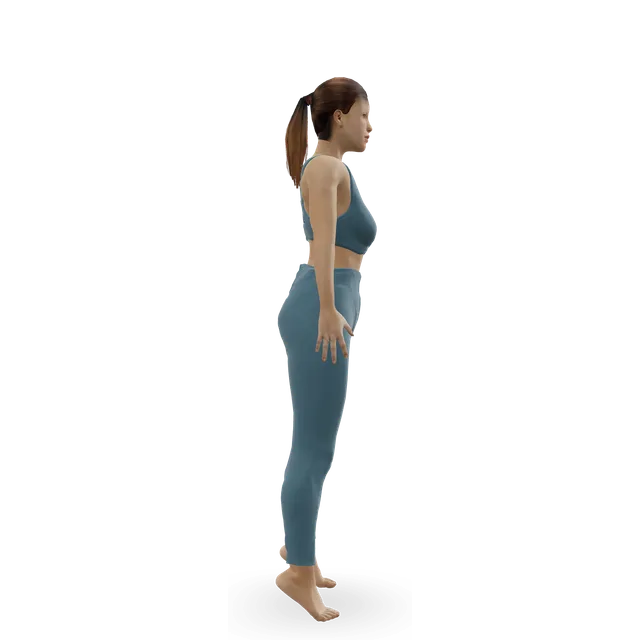
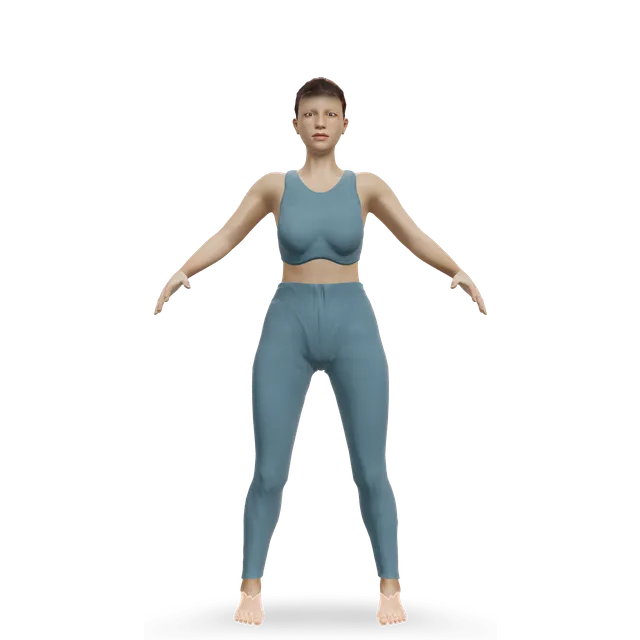
Training guide

How to strengthen your calves: straight and bent-knee raises, for running, the Achilles and balance, how often and how heavy, and when calf pain needs a different plan

Your calves are two muscles: the gastrocnemius, which works best with your knee straight, and the soleus underneath, which works whatever your knee does. Strengthening them takes straight-knee calf raises, building to one leg off a step, with a few bent-knee raises and, for running and sport, springy work last, about twice a week.

In a 12-week trial, standing raises grew the main calf muscle 9 to 12% while seated raises barely did, and 12 hard sets a week grew the calves more than 6. Strong calves are part of running fitness, but no trial shows they prevent running injuries, and calf raises on their own haven't been shown to prevent falls.

This guide covers what your calves do, the calf strengthening exercises with doses, how many single-leg raises you should manage, running, your Achilles and balance, and the signs, such as a snap at the back of the heel or one swollen calf, that need help first. Our calf workout puts it into one session.

The short version

Two muscles, two kinds of raise

The gastrocnemius crosses the knee and works hardest with it straight; the soleus underneath crosses only the ankle. In a 12-week trial, standing raises grew the gastrocnemius 9 to 12% against under 2% for seated raises, while the soleus grew about the same either way. Make straight-knee raises the main lift and seated raises the extra.

Source 1

Enough hard sets, any load

Twelve sets a week grew the calves more than 6 in a 6-week trial (12.0% against 6.9%), and light and heavy loads grew them alike when the sets went to failure. Strength can rise before any change in size shows.

Sources 2, 3, 4

How much

Two or 3 sets of 10 to 20 straight-knee raises, single-leg from a step once you can, plus a few bent-knee sets, twice a week, the last set 0 to 2 reps short of failure, as our calf raise guide and plans' notes suggest. The NHS starts with 5 slow raises holding a chair.

Sources 5, 6

Test yourself

Healthy adults under 60 averaged about 28 single-leg raises in a row in one study, and larger studies found middle figures of 21 to 25. Fewer is a reason to train, not to worry.

Sources 7, 8, 9

Running and balance: the honest version

The calves do much of the supporting and pushing off when you run, but no trial shows that calf strengthening prevents running injuries. Foot and ankle exercises on their own haven't been shown to cut falls; programmes that mix balance, functional and strength work cut them by about a third.

Sources 10, 11, 12, 13

When it isn't a strengthening job

A snap at the back of the heel, one swollen, throbbing calf, or calf pain on walking that eases with rest needs checking first: see the warning signs below.

Your calves: two muscles and three jobs

The muscles

The gastrocnemius, with its two heads, is the bulge you can see. It crosses the knee and the ankle, so it works hardest with a straight knee and slackens when the knee bends. The soleus lies underneath and crosses only the ankle, so it works whatever your knee does. Both join the Achilles tendon. Our gastrocnemius, soleus and plantaris pages have the anatomy.

Three jobs

Our editorial grouping: force, to rise onto your toes and push off (raises with a straight and a bent knee); endurance, for walking, running and hiking (the single-leg raise test below); and springiness, for running and jumping (bounces and hops, added last).

What they do when you run

In a computer model of running, the soleus and gastrocnemius were the greatest contributors to support and push-off in the second half of each step on the ground.

Source 10

How hard each move loads your Achilles

In lab studies, the Achilles took about half your body weight in a seated raise and up to 7.3 times your body weight in a forward single-leg hop. In 21 men, a single-leg standing raise loaded it about 13 times more than a seated raise. That's why the ladder runs from seated raises to two legs, one leg, added weight and, last, hops.

Sources 14, 15

How people differ

In 566 adults, men did more single-leg raises than women (a median of 24 against 21), but women over 60 outdid men over 60, and in 500 adults, being less active, female or heavier went with fewer reps while age didn't. Men aged 65 to 81 still raised calf strength by about 22% in 16 weeks. Calf size is partly inherited (a heritability of 0.18 to 0.23 in one large family study), yet trained adults still grew their calves about 7 to 10% in 8 weeks.

Sources 8, 9, 16, 17, 18

Strength, not size

This guide is about strength for everyday life, running and sport. Our bigger calves guide covers size, and our calf raise guide teaches the move itself.

What the evidence says

Most of these trials are small, short and in untrained young adults; the falls evidence, later on, is the exception.

Standing raises grow the main calf muscleEmerging evidence

In 14 untrained adults (7 women) training one leg standing and one seated, 5 sets of 10 at 70% of their maximum twice a week for 12 weeks, the gastrocnemius grew 9.2 to 12.4% with standing raises against 0.6 to 1.7% with seated raises, while the soleus grew about equally (2.1% against 2.9%).

Source 1

More hard sets, more growthEmerging evidence

In 61 untrained young women training 3 days a week for 6 weeks, 12 sets a week grew the whole calf 12.0% against 6.9% for 6 sets; 9 sets didn't clearly differ from either. The trial measured muscle thickness, not strength.

Source 2

Light or heavy, if the sets are hardEmerging evidence

In 26 untrained men training one leg light (20 to 30 reps) and one heavy (6 to 10 reps), with every set to failure, for 8 weeks, the calves grew alike and strength rose by about 10% in both legs. Across muscles, light and heavy loads build similar muscle when the sets are hard, while heavier loads build more maximal strength.

Sources 3, 19, 20

Use the stretched bottom of the rangeEmerging evidence

In 42 young women, raises through the bottom half of the range grew the inner calf 15.2% in 8 weeks against 6.7% for full raises; in 23 trained adults the edge was small and uncertain. Lower into a full, comfortable stretch on every rep.

Sources 21, 18

Strength before sizeEmerging evidence

In 28 men and women doing 24 heavy calf sessions over 8 weeks, calf strength rose with no measurable growth in the muscle.

Source 4

Older adultsEmerging evidence

In 16 men aged 65 to 81, calf raises and leg presses at 80% of their maximum 3 times a week for 16 weeks raised calf strength 21.6%, calf power 33.1% and calf muscle size 5.0%. There was no comparison group.

Source 16

The guidelinesStrong evidence

The World Health Organization (WHO) and the NHS ask adults for strength work for all the major muscle groups, the legs included, on 2 or more days a week, and adults 65 and over for activities that improve strength, balance and flexibility on at least 2 days. In the 2026 American College of Sports Medicine (ACSM) overview of 137 reviews, strength rose most with heavier loads, a full range, 2 to 3 sets and 2 or more sessions a week.

Sources 6, 22, 23, 24

How to strengthen your calves: how much and how often

How often

Twice a week, at least a day apart, as our bigger calves guide and calf workout suggest. The trials that grew calves trained them 2 or 3 times a week.

Sources 1, 2

Sets and reps

Two or 3 sets of 10 to 20 straight-knee raises, plus a few bent-knee sets (our calf raise guide's editorial starting point). Single-leg raises from a step, 3 sets of 12 to 20 each leg, as our calf workout does. If you're new to it, start with the NHS's 5 slow raises holding a chair and build to 10 to 20.

Source 5

How hard, and rest

Take the last set to 0 to 2 reps short of failure and the others to 1 to 3, which our guides call RIR (reps in reserve: how many more reps you could have done). In your first two weeks, stop every set with 3 or 4 to spare. Rest 60 to 90 seconds between sets, as our plans' notes say.

Progress

Add reps until you reach 20, then hold a dumbbell or wear a loaded backpack, then move to a calf machine, as our calf raise guide suggests. About 12 hard sets a week grew the calves most in one trial, but fewer still work.

Source 2

How long

Strength rose within 8 weeks in a trial, and size changed over 6 to 12 weeks. Count your single-leg raises every 4 weeks, as our bigger calves guide suggests.

Sources 4, 2, 1

With a sore Achilles: the pain rule

This site's suggested rule: pain during exercise up to 5 out of 10, back to its usual level by the next morning, and not creeping up week on week. If it is worse the next morning, lighten the load for a few sessions rather than stopping.

With pain where the Achilles meets the heel, do every raise on flat ground and lower only to the floor, as our Achilles guide says. After an Achilles rupture, follow your team's stages.

A calf strength session, step by step

Our editorial order, the shape of our calf workout, with doses from our calf raise, bigger calves and ankles guides and our plans' notes. With pain where the Achilles meets the heel, stay on flat ground, as our Achilles guide says. Our calf raise guide teaches the move shown.

  1. Warm up: ankle circles, 5 slow circles each way, then 15 easy calf raises on both feet with a hand on a wall.
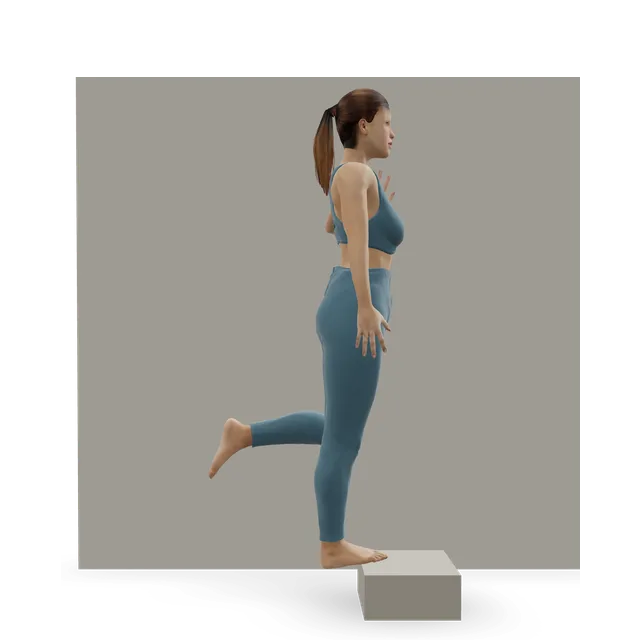
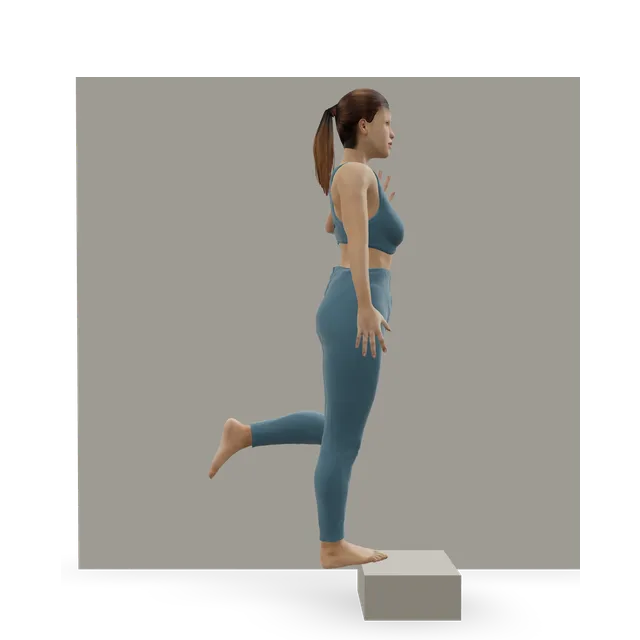
  2. Straight knee: single-leg calf raises from a step, 3 sets of 12 to 20 each leg, a hand on a rail. Lower your heel below the step into a comfortable stretch, pause, then rise as high as you can, about 2 seconds each way.
  3. Rest 60 to 90 seconds between sets, and take the last set to 0 to 2 reps short of failure.
  4. Bent knee: seated calf raises with a dumbbell on your knee, 3 sets of 12 to 20 each leg.
  5. Front of the shin: tibialis raises with your back against a wall, 1 or 2 sets of 15 to 20.
  6. For running or sport, once single-leg raises with extra weight feel easy: ankle bounces, 2 sets of 20, then pogo hops.
  7. Next time, add reps; when every set reaches 20, hold a dumbbell or wear a loaded backpack.

Loading the 3D figure…

Gets into position, then repeats the movement. Technical checks passed; qualified exercise review is pending.

The movement on the figure: Single-leg calf raise from a step

Straight-knee raises: the main lift and its ladder

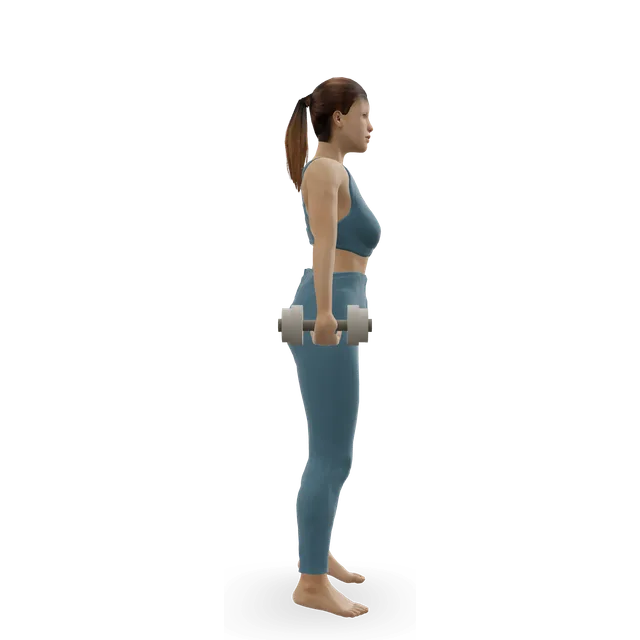
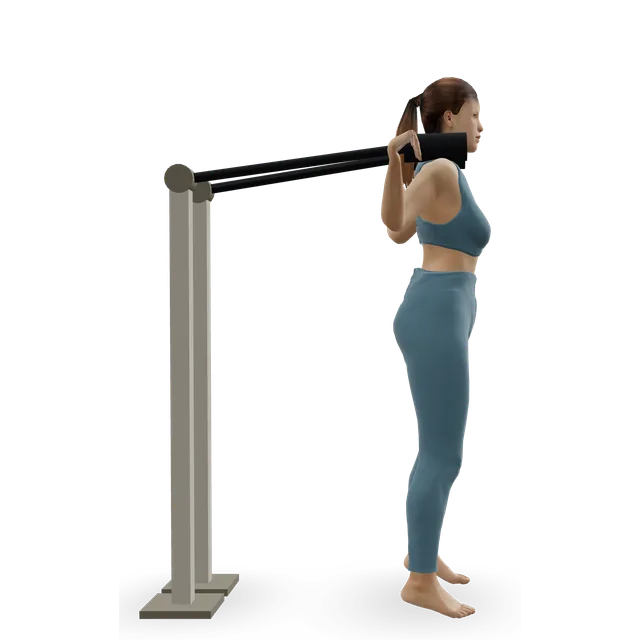
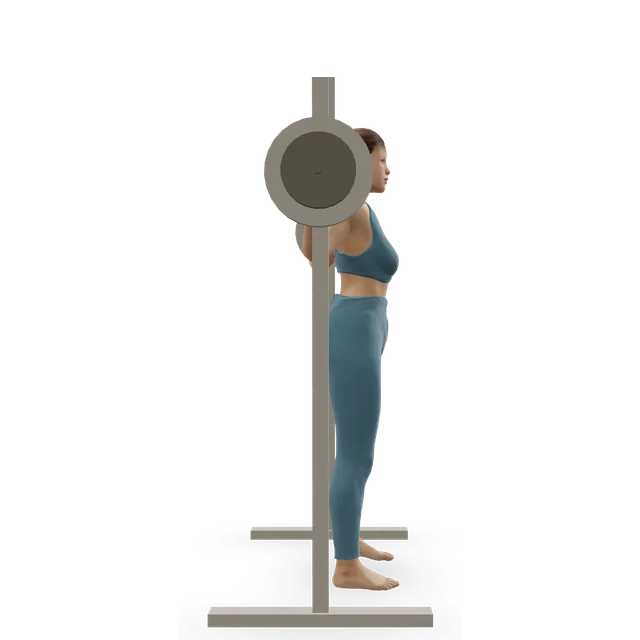
From a counter to one leg on a step: slow calf raises on both feet, then single-leg raises from a step, 3 sets of 12 to 20 each leg (our calf workout), then holding a dumbbell or wearing a loaded backpack once 20 are easy (our calf raise guide). The calf raise on a dumbbell: the move page's dose is 3 sets of 15 each leg; once that is easy, hold a weight or wear a loaded backpack (the Achilles loading programme in Silbernagel 2020). In a gym, the standing calf machine, the leg press calf press or the Smith machine, 2 or 3 sets of 10 to 20 (our calf raise guide). Lower into the stretch, pause, and don't bounce. There's no 3D demo of a single-leg raise on flat ground: the step version shows the same action.

Bent-knee raises: extra soleus work

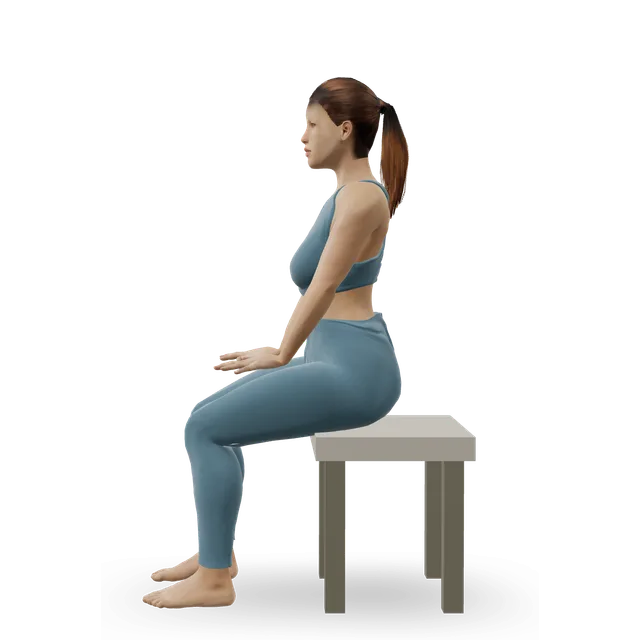
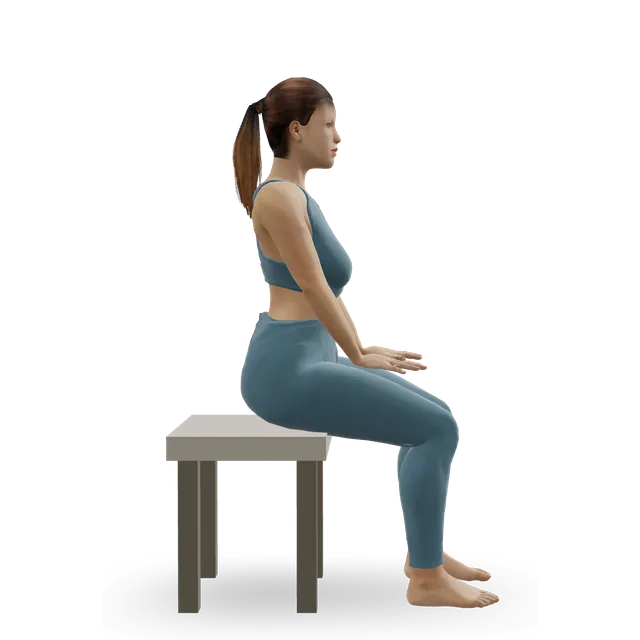
Seated calf raises with a weight on your knee, 3 sets of 12 to 20 each leg (our calf workout). Standing raises grew the soleus about as much in a 12-week trial, so these are an extra, not a replacement; they also suit sore knees and shaky balance (our calf raise guide).

Spring: for running and jumping, once strength is in place

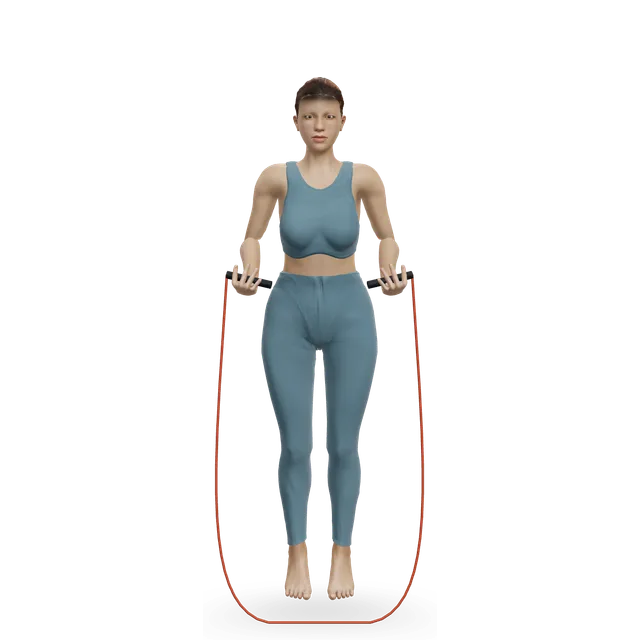
Ankle bounces, 2 sets of 20 (our ankles guide), then pogo hops, 3 sets of 20, and skipping, 3 sets of 20 m (our calf pain and Achilles guides' return stages). Skipping with a rope: the move page's dose is 5 rounds of 30 to 60 seconds with equal rest (our editorial starting point), adding no more than a few minutes in all each week. Single-leg hop and stick, 2 sets of 3 forward and 3 sideways each leg, for active people (our ankles guide). Leave hopping until single-leg raises with extra weight feel easy, as our bigger calves guide says.

Balance and the rest of the lower leg

Tibialis raises, 1 to 2 sets of 15 to 20 (our calf workout); one-leg stands next to a counter, 2 holds of 30 seconds each side (our legs guide); heel walks (our ankles guide); and the two calf stretches, 30 seconds each leg, after the session (our calf workout).

How many calf raises should you manage?

The single-leg raise testEmerging evidence

Stand on one leg with your fingertips on a wall and rise as high as you can, as many times as you can at a steady pace. In 203 adults aged 20 to 59 the average was 27.9, and the authors suggest 25 as the mark of normal.

Source 7

What larger studies foundEmerging evidence

In 566 adults aged 20 to 81 the median was 24 for men and 21 for women, women over 60 outdid men over 60, and retests varied by about 6 reps. In 500 adults aged 18 to 81 the median was 25 on the dominant leg and 24 on the other, with no link to age in that active group.

Sources 8, 9

No fixed normEmerging evidence

A review of 49 articles found the methods so varied that no definitive normal values could be set. Compare yourself with yourself, and one leg with the other; our calf raise guide has more on the test.

Source 25

Calves for running, balance and sport

Weak calves and Achilles painEmerging evidence

Thirty-nine runners with Achilles tendinopathy were weaker in both calves than 38 without it, and in 69 army cadets, lower calf strength predicted Achilles overuse injuries, though the cut-off was useless as a screening test. Links like these aren't proof that strengthening prevents injury.

Sources 26, 27

Preventing running injuries isn't provenMixed evidence

We found no trial showing that calf strengthening prevents running injuries. Reviews rate the risk-factor evidence limited to very low, calf endurance didn't predict leg pain over a season in 59 college runners, and preventive tendon exercises didn't reduce injuries in 209 professional footballers.

Sources 11, 28, 29, 30

If you run

Train calves because running needs them: two short sessions a week of single-leg raises, straight and bent knee, building to added weight, then ankle bounces and pogo hops (our suggestion). Our strength training plan for runners and injury prevention exercises for runners put them in a week.

Balance and fallsMixed evidence

In 16 trials of 651 older people, foot and ankle exercises raised calf strength a little and balance with the eyes open, but no effect on falls was shown. In 176 people aged about 80, weak toes and disabling foot pain predicted falls, and in 101 older adults who hadn't fallen, leg strength didn't predict who would.

Sources 12, 31, 32, 33

What does cut fallsStrong evidence

Across 108 trials of 23,407 people, exercise cut the rate of falls by 23%, and programmes mixing balance, functional and strength work by about a third. The Otago home exercise programme cut falls in 233 women over 80, and a podiatry package that included foot and ankle exercises cut them in 305 people with foot pain, though its parts can't be separated. Do calf raises at a counter inside strength and balance work, not instead of it.

Sources 13, 34, 35

Calf strainsEmerging evidence

Across 10 studies of 5,397 athletes, older age and a previous calf strain were the strongest risk factors for a new one, and in elite athletics, age and a previous leg injury mattered, not sex. We found no trial of calf strengthening to prevent strains; expert clinicians use targets such as at least 30 single-leg raises but say one prevention programme may not suit everyone.

Sources 36, 37, 38

At home

A step and a wall are all you need: single-leg raises from the bottom stair, a dumbbell or loaded backpack once 20 are easy, and seated raises with a weight on your knee. Our calf workout puts them together.

Workouts to follow

The calf workout is the main session, and the machine calf workout is its gym version. The foot and ankle routine and the seniors' sessions add balance; the bounce and load starter and the runners' sessions add springy work; the tendon strengthening workout loads the Achilles slowly and heavily. The calf pump exercises are for circulation, not strength.

Calf workout: straight-knee and bent-knee raises with a step

A 25-minute calf workout with a step and a dumbbell: single-leg raises for the big calf muscle, then seated raises for the soleus, with gym swaps for each move.

25 minIntermediate7 movesA wall, A step

Machine calf workout: the standing calf machine, the leg press and the seated calf machine

A 20-minute calf session on gym machines: straight-knee raises on the standing machine or leg press, then bent-knee raises on the seated calf machine.

20 minBeginner7 movesA wall, Strength machine

Foot and ankle strengthening routine: toes, arches, calves and balance

A 15-minute barefoot routine for stronger toes, arches, calves and ankles, finishing with balance. You need only a towel, a wall and a resistance band.

15 minBeginner11 movesA wall, Other / check instructions

Springy starter: calf strength and gentle bounces

A beginner's springy session: calf strength first, then heel drops, calf springs and gentle bounces, building towards skipping and pogo hops.

20 minBeginner11 movesA wall, A step

Injury prevention exercises for runners

Foot, calf, balance and hop exercises taken from the running trials with positive results, in a 25-minute home routine for 3 or 4 days a week.

25 minBeginner11 movesOther / check instructions, A bench or box

Strength workout for runners at home

A 40-minute strength workout for runners at home: hops, Bulgarian split squats, single-leg deadlifts, step-ups, calf raises and side planks.

40 minIntermediate15 movesA wall, A bench or box

Strength and balance exercises for seniors

A 40-minute strength and balance session for over-65s, built from the Otago home programme and NHS exercises, using a chair, a counter and a step.

40 minBeginner18 movesA bench or box, Something with weight

Chair exercises for seniors: a seated workout

A 20-minute seated workout for older adults who cannot stand for long: marching, leg and arm strength, posture, and sit-to-stands that lead back to standing.

20 minBeginner11 movesA bench or box, Something with weight

Tendon strengthening workout: holds, heavy slow calf and leg work, then springs

A 35-minute editorial session for healthy tendons: calf and Spanish squat holds, heavy slow leg and calf lifts, then springs once the heavy work is easy.

35 minIntermediate13 movesA wall, A band

Calf pump exercises for varicose veins and heavy legs

A 15-minute calf pump routine for varicose veins and heavy, swollen legs: ankle pumps, calf raises, a brisk walk, calf stretches and legs up to finish.

15 minBeginner10 movesA bench or box, A wall

Plans

Each has calf raises once or twice a week, as our calf raise guide suggests.

Who should change their calf training

A sore Achilles

Achilles pain during or after calf raises should stay at about 5 out of 10 or less and settle by the next morning, as our Achilles tendinopathy guide says. See a GP or physiotherapist if it keeps getting worse.

Our Achilles tendinopathy guide has the stages.

After an Achilles rupture

Follow your team's stages, which build calf strength over months; our Achilles rupture guide covers them.

After a calf strain

Mild discomfort during exercise, up to about 3 to 4 out of 10 (this site's suggestion), is acceptable if it settles within the day. Sharp pain, or a limp afterwards, means drop back a step for a few days.

Older age and a previous calf strain are the strongest risk factors for a future calf strain, in a review of 10 mostly high-risk-of-bias studies. If you have strained a calf before, keep the stage 3 strength work going once you are back.

Big toe or ball-of-foot pain

Rise only as high as is comfortable, short of full tiptoe, or use seated raises (our suggestion).

Shaky balance

Stop if you feel dizzy or light-headed. Keep a counter or wall within reach, and have someone nearby for the hardest moves if you've fallen recently (our suggestion, as in our older adults guide).

Numb feet

The exceptions: pain in one spot on a bone should be pain-free, because it could be a stress fracture; burning, tingling or numbness means stop that movement; and if your feet are numb, pain won't warn you, so check your skin after exercise.

Warning signs: when to get help

A snap at the back of the heel or calf

A sudden snap or pop at the back of the heel or calf, or a feeling of being kicked there, then walking flat-footed and being unable to push off, stand on tiptoe or climb stairs. It could be an Achilles tendon rupture or a broken heel bone: go to A&E or a minor injuries unit, or contact NHS 111, the same day, as our Achilles rupture guide explains. In the US, go to urgent care or the emergency department.

A suspected rupture that was never examined, or a weak push-off weeks after what seemed to be a sprain or calf strain: ask for an assessment. A rupture found late may need different treatment.

Source 39

A clot in the leg

Same day (urgent GP appointment or NHS 111): throbbing pain in one leg (rarely both), usually the calf or thigh; swelling in one leg (rarely both); red, blue or darkened skin around the painful area, which may be harder to see on brown or black skin; or swollen veins. It could be a blood clot (deep vein thrombosis, DVT), which is more likely while you're moving about much less than usual or after a hospital stay.

Also call 999 for pain and swelling in one leg with breathlessness or chest pain: it can be a blood clot that has reached the lungs.

Source 40

Sudden, severe calf pain, or a cold, pale leg

Call 999 or go to A&E: sudden, severe pain in a muscle, which may be worse when you stretch it, with swelling, numbness, weakness or pins and needles, or tightness or difficulty moving the leg. This can be acute compartment syndrome, which needs surgery as soon as possible. It usually follows an injury or a bandage or cast that is too tight, but rarely it can follow very hard exercise. Do not drive yourself to A&E.

Call 999 or go to A&E: a leg that is suddenly cold, pale, numb, weak or very painful. A sudden loss of blood supply to a leg is a vascular emergency.

A calf strain

A sudden sharp pain in the calf as you push off can be a strain. Stop, and see our calf pain guide.

Calf pain on walking that eases with rest

Calf pain that comes on with walking and eases when you rest needs a GP check; our calf pain when walking guide explains why.

Pain that comes on when you walk a set distance and goes after a few minutes' rest, especially if you smoke or have diabetes. Exercise treats it well, but it needs a diagnosis first.

Cramps that need a GP

Cramps that disturb your sleep, last longer than 10 minutes, or come with numbness or swelling.

Source 41

Achilles pain that keeps getting worse

Pain that is getting worse week on week despite cutting back, or is stopping your normal activities.

Pain in one spot on a bone

Pain in one spot on a bone that's worse with jumping or running, eases with rest and hurts when you press it: stop jumping, as it can be a stress fracture, and see a GP. See a GP too for heel pain that hasn't improved after 2 weeks of looking after it yourself, or shin pain that's getting worse or isn't improving.

After unusually hard training

Call NHS 111 (in the US, your doctor or urgent care) for severe muscle pain and weakness with dark (cola-coloured) or reduced urine after unusually hard training. This can be rhabdomyolysis, which can harm the kidneys and needs prompt care.

Stop and get medical help

If you get chest pain or pressure, feel faint or dizzy, are unusually breathless, or your heart races or beats irregularly during exercise, as our plans advise.

Call 999 (911 in the US)

For chest pain that comes on suddenly and doesn't go away, feels tight or like squeezing, spreads to your arms, neck, jaw, stomach or back, or comes with sweating, feeling sick, light-headedness or breathlessness; severe difficulty breathing; someone who faints while exercising; palpitations that don't go away, or come with chest pain, shortness of breath or feeling faint; or a headache that starts suddenly and is extremely painful, especially while lifting or straining, or comes with numbness or weakness, difficulty speaking or loss of vision. The NHS says a bleed on the brain may be more likely when lifting something heavy. Don't drive yourself to A&E.

Ask for an urgent GP appointment or call NHS 111

Ask for an urgent GP appointment or get help from NHS 111 for a headache that's triggered or made worse by coughing, sneezing, bending down or exercising. In the US, contact your doctor or urgent care.

During any session

Stop straight away if you feel any pain or become unwell, the NHS says, and contact 111 if your symptoms worry you or don't go away.

A dull ache in your muscles for a day or two after something new is normal. Joint pain that's sharp, gets worse during a set or lingers into the next day means switching to the easier option, and seeing a GP or physiotherapist if it carries on (our plans' rule). Our muscle soreness guide has more.

Check first

Speak to your GP first if you haven't exercised for some time or have medical conditions or concerns, as the NHS advises. Get advice before heavy lifting or hard straining work if your blood pressure is uncontrolled, or you have heart disease or chest pain when you're active, a pacemaker or defibrillator, diabetic eye disease, glaucoma, a hernia, recent eye or tummy surgery, or you're pregnant, as our breathing guide lists. After a recent shoulder dislocation or shoulder surgery, follow our shoulder dislocation guide or your surgical team first.

Speak to a GP first if you haven't exercised for some time, or if you have a medical condition or concerns. Get advice first, too, if you have a health problem, an injury or symptoms, have recently had a heart attack or an operation, or are pregnant or have recently given birth.

Source 22

Hernia

See a GP if you think you have a hernia, a bulge or lump that may get bigger when you strain and smaller when you lie down. Get help from NHS 111 if you have a hernia and pain in or around it, a bloated tummy, you feel or are sick, you're vomiting blood or your vomit looks like coffee grounds, you're constipated, you have a high temperature or feel hot, cold or shivery, or you've suddenly become confused. Call 999 or go to A&E for a femoral hernia (a small lump at the top of your thigh, in your groin) with very bad tummy pain, sickness, being unable to fart or poo, a high temperature or sudden confusion.

Sources 42, 43

Myths

"Calves are all genetics, so training them is pointless"Mixed evidence

Calf size is partly inherited, and calves can grow more slowly than other muscles, but they grew in every trial that trained them hard: 9 to 15% in the gastrocnemius over 8 to 12 weeks, and 12% for the whole calf with 12 sets a week in 6 weeks. Strength can rise even before the size shows.

Sources 17, 16, 1, 21, 2, 4

"Strong calves prevent running injuries"Mixed evidence

No trial shows it. Weaker calves go with Achilles pain, and low calf strength predicted Achilles overuse in army cadets, but the reviews rate the evidence limited to very low, calf endurance didn't predict leg pain in college runners, and preventive tendon exercises didn't prevent injuries in footballers. Strong calves are part of running fitness; protection is unproven.

Sources 26, 27, 11, 29, 30

"Calf raises will stop you falling"Mixed evidence

On their own, foot and ankle exercises raised calf strength and balance a little, with no effect on falls shown. Balance and functional exercise, with strength, is what cut falls.

Sources 12, 31, 13
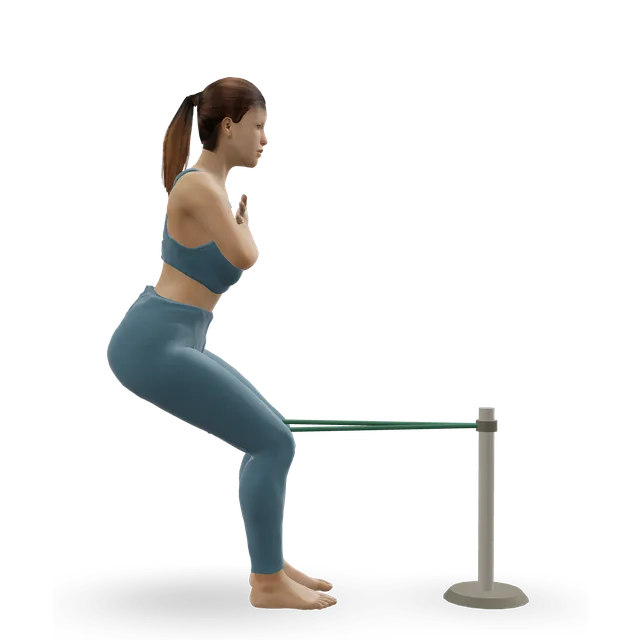
"Seated raises are the way to train the soleus"Emerging evidence

The soleus grew about as much with standing raises (2.1%) as with seated ones (2.9%) in a 12-week trial, and standing raises grew the gastrocnemius too. Keep seated raises as the extra.

Source 1

"Calves need 50 or 100 reps"Emerging evidence

They grew with sets of 10 at 70% of the maximum, with sets of 15 to 20, and with light or heavy loads alike, as long as the sets were hard.

Sources 1, 2, 3

"Train calves every day"Emerging evidence

The trials that grew calves trained them 2 or 3 times a week, and our bigger calves guide explains that how often matters little once the weekly sets are the same. Every day isn't needed.

Sources 1, 2

Questions people ask

What's the best way to strengthen your calves?

Calf raises with a straight knee, building to single-leg raises off a step, plus a few seated (bent-knee) raises: 2 or 3 sets of 10 to 20, twice a week. Add weight once 20 reps are easy. In a 12-week trial, standing raises grew the main calf muscle 9 to 12% while seated raises barely did.

How do I strengthen my calves at home?

All you need is a step and a wall: single-leg raises with your heel dropping below the step, then a dumbbell or a loaded backpack when 20 are easy. Seated raises with a weight on your knee cover the soleus. Our calf workout puts them together.

How do I strengthen my calves for running?

Twice a week, single-leg raises with a straight and a bent knee, building to added weight, then ankle bounces and pogo hops once that's easy. The calves do much of the pushing off in running, but no trial shows that calf strengthening prevents running injuries, so train them for fitness rather than as a guarantee.

How many calf raises should I be able to do?

Healthy adults aged 20 to 59 averaged about 28 single-leg raises in a row in one study, and 25 is used as the mark of normal. In two larger studies the middle figure was 21 to 25. Methods vary, so compare yourself with yourself.

Are standing or seated calf raises better?

Mostly standing: they grew the main calf muscle 9 to 12% in 12 weeks against under 2% for seated raises, and the deeper soleus grew about the same with either. Seated raises are a useful extra, and kind to sore knees and shaky balance.

How often should I train my calves?

Twice a week, a day or two apart. The trials that strengthened calves trained them 2 or 3 times a week, and every day isn't needed.

Should I use heavy weights or high reps for my calves?

Either, if the sets are hard: light and heavy calf training grew the calves and raised strength alike in a trial. Across muscles, heavier loads build more maximal strength.

How can older adults strengthen their calves?

Start with the NHS's 5 slow calf raises holding a chair, build to 10 to 20, then one leg at a time, and pair them with balance work. Men aged 65 to 81 raised calf strength by about 22% in 16 weeks, and programmes mixing balance and strength work cut falls by about a third.

Do strong calves help balance and prevent falls?

They help you push off and steady yourself, but foot and ankle exercises on their own haven't been shown to cut falls. Balance practice combined with strength work did.

How long does it take to strengthen your calves?

Strength can rise within 8 weeks, sometimes before the muscle looks any bigger, and the size trials ran 6 to 12 weeks. Count your single-leg raises every 4 weeks.

Are calf raises good for the Achilles tendon?

Usually: heavy slow calf raises helped Achilles tendon pain as much as heel drops in a trial. Keep pain at 5 out of 10 or less and settled by the next morning, and see our Achilles tendinopathy guide. A snap at the back of the heel needs a same-day check: see the warning signs.

How do I strengthen my soleus?

Bent-knee raises, seated with a weight on your knee, plus your standing raises, which grew the soleus just as much in a trial. Our soleus page has the anatomy.

Sources

  1. Kinoshita 2023 · Standing against seated calf raises for 12 weeks: calf muscle growth in 14 adults (within-person trial, Front Physiol)
  2. Kassiano 2024 · 6, 9 or 12 weekly sets of calf raises in 61 untrained young women (randomised trial, Int J Sports Med)
  3. Schoenfeld 2020 · Light against heavy calf training in 26 untrained men (within-person trial, Physiol Rep)
  4. Weiss 1988 · Eight weeks of heavy calf training in 56 men and women (randomised trial, Phys Ther)
  5. NHS · Strength exercises
  6. Bull 2020 · World Health Organization 2020 guidelines on physical activity and sedentary behaviour (guideline, BJSM)
  7. Lunsford 1995 · The standing heel-rise test: normal values in 203 adults aged 20 to 59 (normative study, Phys Ther)
  8. Hébert-Losier 2017 · Reliability and normal values for the heel-rise test in 566 adults aged 20 to 81 (normative study, Physiotherapy)
  9. Visser 2025 · Calf raise endurance norms in 500 adults (cross-sectional study, Braz J Phys Ther)
  10. Hamner 2010 · Muscle contributions to propulsion and support during running (modelling study, J Biomech)
  11. van der Vlist 2019 · Clinical risk factors for Achilles tendinopathy: 10 cohorts (systematic review, BJSM)
  12. Liang 2025 · Ankle and foot exercises, strength, balance and falls in older people: 16 trials, 651 people (systematic review and meta-analysis, Phys Ther)
  13. Sherrington 2019 · Exercise for preventing falls in older people living in the community: 108 trials (Cochrane review)
  14. Baxter 2021 · Achilles tendon load across rehabilitation exercises in 8 adults (lab study, Med Sci Sports Exerc)
  15. Revak 2017 · Achilles tendon loading in seated, two-leg and one-leg heel raises in 21 healthy men (modelling study, J Athl Train)
  16. Ferri 2003 · Strength training of the calf and thigh muscles in 16 men aged 65 to 81 (trial, Acta Physiol Scand)
  17. Prior 2007 · Genes, environment and muscle size in 444 adults from large families of African heritage (family study, J Appl Physiol)
  18. Larsen 2025 · Bottom-half calf raises against full range plus top-half partials in 23 trained adults (within-person trial, Eur J Sport Sci)
  19. Schoenfeld 2017 · Light against heavy loads for strength and muscle growth: 21 studies (meta-analysis, J Strength Cond Res)
  20. Lopez 2021 · Light, moderate and heavy loads for muscle growth and strength: 28 studies, 747 adults (network meta-analysis, Med Sci Sports Exerc)
  21. Kassiano 2023 · Calf raises in the bottom half, the top half or the full range in 42 young women (trial, J Strength Cond Res)
  22. NHS · Physical activity guidelines for adults aged 19 to 64
  23. NHS · Physical activity guidelines for older adults
  24. Currier 2026 · ACSM position stand: resistance training prescription for muscle function, size and performance, an overview of 137 reviews (position stand, Med Sci Sports Exerc)
  25. Hébert-Losier 2009 · Raising the standards of the calf-raise test: 49 articles (systematic review, J Sci Med Sport)
  26. O'Neill 2019 · Calf strength in 39 runners with Achilles tendinopathy and 38 without (case-control study, Phys Ther Sport)
  27. Mahieu 2006 · Risk factors for Achilles tendon overuse injury in 69 army cadets (prospective study, Am J Sports Med)
  28. Christopher 2019 · Strength, flexibility and alignment as predictors of running injuries: 7 cohorts (systematic review, Arch Physiother)
  29. Bennett 2012 · Calf endurance and leg pain over a season in 59 college cross-country runners (cohort study, Int J Sports Phys Ther)
  30. Fredberg 2008 · Preventive tendon training in 209 professional footballers (randomised trial, AJSM)
  31. Schwenk 2013 · Foot and ankle exercise and the risk of falling in older adults: 8 trials (systematic review and meta-analysis, J Am Podiatr Med Assoc)
  32. Menz 2006 · Foot and ankle risk factors for falls in 176 older people (cohort study, J Gerontol A)
  33. Porto 2021 · Leg strength and falls over a year in 101 older adults who hadn't fallen (cohort study, J Appl Gerontol)
  34. Campbell 1997 · A home exercise programme to prevent falls in 233 women aged 80 and over (randomised trial, BMJ)
  35. Spink 2011 · A podiatry programme with foot and ankle exercises to prevent falls in 305 older people (randomised trial, BMJ)
  36. Green 2017 · Risk factors for calf strains: 10 studies, 5,397 athletes (systematic review, Br J Sports Med)
  37. Kelly 2026 · Calf muscle injuries in elite athletics over 8 seasons (cohort study, J Sci Med Sport)
  38. Green 2022 · How 20 expert sports clinicians manage calf strains (qualitative study, Sports Med Open)
  39. NHS · Heel pain
  40. NHS · DVT (deep vein thrombosis)
  41. NHS · Leg cramps
  42. NHS · Hernia
  43. NHS · Femoral hernia

Exercise education, not a personal prescription, and clinical review of these guides is pending. Check with a GP before starting hard training if you have a heart condition, chest pain, dizziness or breathlessness when active, and stop for sharp or increasing pain. Health disclaimer.