Pilates hasn't been properly tested after a sprain
Our searches found no trial in a fresh sprain. In the one study in unstable ankles, 51 footballers chose Pilates or balance training, and balance training did better on reach tests.
Pilates guide
Most sprained ankles recover with early, protected movement rather than rest, and the bigger problem is the next sprain: balance training cuts repeat sprains, and it's the part of rehab with the best evidence. Pilates hasn't been properly tested after a sprain. The one study, in footballers with ankles that kept giving way, let players choose their group, and plain balance training did better on reach tests.
So this guide shows how to fit what works into Pilates: what you can do on the mat in the first days while the foot rests, band work and footwork from about week 2, standing and one-leg balance from about week 6 (timings borrowed from our sprained ankle guide), the moves that roll the ankle in, the reformer, and a 25-minute class. It starts with the signs that mean an X-ray or a check, including an ankle that keeps giving way.
Our searches found no trial in a fresh sprain. In the one study in unstable ankles, 51 footballers chose Pilates or balance training, and balance training did better on reach tests.
A brace or tape, gradually more weight through the foot, then exercise for range, strength and balance is the US physiotherapy guideline's top-graded treatment, and gentle exercise from the first week was safe in a trial.
Breathing, curl-ups, bridges, leg circles and side kicks leave the ankle alone. Band work and footwork come in from about week 2, and one-leg balance and jumping from about week 6, as in our sprained ankle guide (timings borrowed from that guide, not tested in Pilates).
Source 3
In the largest trial, a home balance programme cut repeat sprains from 33% to 22%. Mat Pilates alone didn't improve one-leg balance in older adults, so add standing and one-leg work.
Adding hip strengthening to ankle rehab helped balance a little in two 2026 reviews, which differ on how much; on its own it didn't beat balance training.
Up to 40% of people develop an ankle that keeps giving way after a first sprain. Keep the balance work going after you're back, wear a brace for sport, and see a GP or physiotherapist if your ankle keeps giving way.
A sprain is an injury to the ligaments. Most happen when the foot rolls inwards, injuring the ligaments on the outside of the ankle, which may be stretched, partly torn or fully torn. The NHS says most sprains feel better after 2 weeks, but to avoid strenuous exercise such as running for up to 8 weeks, and severe sprains can take months.
Source 5
Across 181 studies, sprains were more common in women than men, in children and teenagers than adults, and in indoor and court sports. The US guideline lists being female, weak hip muscles, poor balance and hopping tests, and playing court sports as risk factors.
Across 31 studies, 5% to 33% of people still had pain a year after a sprain, and 3% to 34% sprained again. Up to 40% go on to an ankle that keeps giving way (chronic ankle instability). In 82 people, not being able to manage jump-landing tests 2 weeks after a first sprain predicted it.
People with unstable ankles have weaker hips in every direction than people without, in studies that measured them at one time point. That's the honest link to Pilates hip work.
Source 15
Clinicians use the Ottawa ankle rules, which almost never miss an ankle or midfoot fracture (27 studies, 15,581 people). They aren't a self-test: our sprained ankle guide explains them, and the warning signs below say when to get help.
Pain above the ankle, between the shin bones, is a high ankle sprain. In 83 professional American football players, return to play took a median of 27 days without a major tear or fracture and much longer with one, so get it assessed.
Source 18
Most mat work leaves the ankle unloaded. Footwork, on the reformer's footbar or with your feet on a wall, points and flexes the ankle while you lie down. Standing work, wall work and one-leg balance load it fully and train balance. A few positions put the ankle back into the sprain position or press on its front: side-sitting, sitting on the outer edges of your feet and kneeling with the tops of your feet flat (our reading).
Source 3
The stage timings are borrowed from our sprained ankle guide, which follows NHS hospital leaflets; they are ranges, not tested Pilates rules. Move on when the ankle is ready, not by the calendar.
If you couldn't take four steps after the injury, if pressing a bony point of the ankle or midfoot hurts, or if the ankle looks out of shape, get it checked before any exercise (the warning signs below).
Wear the brace or tape you've been given and walk as comfort allows. For the first 2 to 3 days the NHS advises protection, rest, ice, compression and raising the ankle. Mat work that leaves the foot alone is fine, plus gentle ankle circles and holds that don't move the ankle.
When you can walk with little or no limp, add band work in every direction, calf raises, footwork on a wall or a light reformer spring, and standing balance with a hand on a counter.
Source 3
When you can do 12 calf raises without pain and stand on the injured leg for 30 seconds with your eyes closed (our sprained ankle guide's check), add one-leg reaches, standing leg lifts and, later, hops and the jump board.
Footwork in parallel on a light spring, heels moving straight, is a gentle way to load the ankle once walking is easy. Leave rising high onto the balls of the feet, one-foot work and the jump board until the later stage (our suggestion).
Source 3
An international consensus bases the return to sport on pain, ankle strength and range, confidence, balance and sport tests, not on time alone. Our sprained ankle guide has the hops and drills.
Source 19
In the 2BFit trial of 522 athletes, an 8-week home balance programme cut repeat sprains from 33% to 22%: one fewer sprain for every 9 people who trained, even though only 23% did all of it. Sessions were three a week of up to 30 minutes, from a flat floor to eyes shut to a wobble board. Several meta-analyses agree that exercise and balance training cut repeat sprains by roughly a third to a half.
In 384 athletes, 15% sprained again with a brace against 27% with home balance training alone. The US guideline recommends both a brace and balance training after a first sprain.
Two 2026 reviews of 9 trials each found that adding hip strengthening to ankle rehab improved reach balance and function a little; they differ on how much, and one found no extra benefit from hip work on its own. In 45 people, hip strengthening alone didn't beat balance training.
In 133 youth footballers, stronger hip extension went with fewer sprains, and in 152 young athletes lower back-muscle endurance predicted sprains. These were small studies with few sprains, and they show a link, not cause.
Add a balance block to every class: stand on one leg near a counter, then without a hand, then with your eyes closed, then on a cushion, about three times a week (our suggestion, from the 2BFit programme).
Source 6
Our searches of PubMed, Europe PMC and ClinicalTrials.gov in November 2026 found no trial of Pilates after an acute sprain and none that counted repeat sprains. One Pilates trial in footballers with unstable ankles was registered in 2025 and wasn't yet recruiting.
In South Korea, 51 male college footballers with unstable ankles did 6 weeks of mat Pilates or balance training, 60 minutes 3 times a week. Players chose their own group, and there was no group that didn't train. Both groups improved; Pilates did better on a triple hop test, and balance training did better on two reach tests. The Pilates was all lying and sitting mat work. It can't show that Pilates works.
Source 2
In 48 healthy people of about 70, 8 weeks of balance training beat mat Pilates on reach and one-leg balance, and Pilates against no exercise was unclear. Reformer Pilates once a week improved balance and walking tests in 55 adults aged 65 to 95, and across 39 studies Pilates improved balance in older adults about as much as other exercise.
Across 11 small studies of 444 people with arm and leg muscle and joint problems, Pilates eased pain and disability, at very low certainty; balance couldn't be pooled.
Source 31
The US guideline's top grade goes to a brace or tape with gradually more weight through the foot, and to structured exercise for range, strength and balance. For severe sprains, a short spell in a cast may help: in 584 people, a 10-day cast recovered faster than a bandage at 3 months, with no difference by 9 months. In 101 people with mild to moderate sprains, exercise in the first week improved function, and re-injury was 4% in each group.
In 60 active adults on standard rehab, ice for 3 days lowered pain at day 7 by about 1 point out of 10, less than the change patients notice, with no difference in function or re-injury.
Source 34
A 2026 review of 9 small trials found tai chi improved how stable people felt and one reach test, with results that varied a lot between trials. No mind-body trial has counted repeat sprains.
Source 35
Lateral breathing: "5 to 8 breaths at the start of every session" (the move page's dose). Ankle circles: 10 each way, 3 to 4 times a day, in a comfortable range (our sprained ankle guide's dose, from an NHS hospital leaflet). Seated calf raise: 2 sets of 10, and ankle eversion holds against a wall: 8 to 12 gentle holds of about 6 seconds (both from our sprained ankle guide's plan, editorial there). Heel slide: "10 slow repetitions each side, once or twice a day" (the move page's dose). Knee fold: "2 sets of 5 to 10 each side, every other day" (the move page's dose). Side kick: "8 to 10 each side" (the move page's dose), with the foot hanging free. Clamshell: 10 each side (our editorial starting point). Swan: "5 to 6 reps" (the move page's dose).
 3D demoLateral breathing (Pilates breathing)Beginner · No equipment
 3D demoAnkle CARs (controlled articular rotations)Beginner · No equipment
 3D demoSeated bent-knee calf raise (soleus raise)Beginner · A bench or box
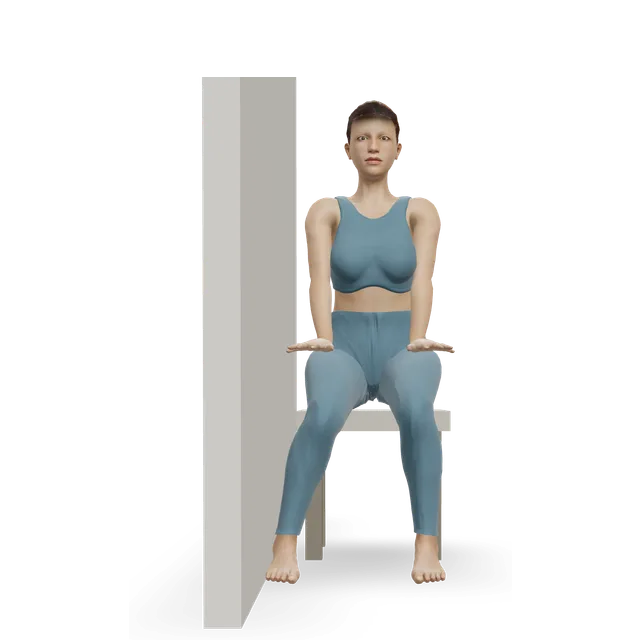 3D demoIsometric ankle eversion against a wallBeginner · A wall + A bench or box
 3D demoSupine heel slideBeginner · No equipment
 3D demoKnee foldBeginner · No equipment
 3D demoSide kick (Pilates side kick series)Beginner · No equipment
 3D demoClamshellBeginner · No equipment
 3D demoSwan (Pilates swan dive)Intermediate · No equipment
Band eversion: 2 to 3 sets of 5 to 8 (our sprained ankle guide's dose, from an NHS hospital leaflet). Band inversion: "After a sprain, 2 to 3 sets of 5 to 8" (the move page's dose), in a pain-free range. Knee-to-wall rock: "10 slow rocks per side, daily" (the move page's dose). Wall bridge: "8 to 10 reps" (the move page's dose); press through the whole foot, heels level, as a footwork exercise. Slow calf raise: 12, 3 times a day, and single-leg stand: up to 30 seconds, holding a counter, then without, then eyes closed (our sprained ankle guide's doses, from NHS hospital leaflets). Tibialis raise: 2 to 3 sets of 8 to 10 (our sprained ankle guide's plan). Heel-to-toe walk: 3 to 5 lengths, and calf and soleus stretches: 3 holds of 20 to 30 seconds (our sprained ankle guide's doses).
 3D demoBand ankle eversionBeginner · A band + A bench or box
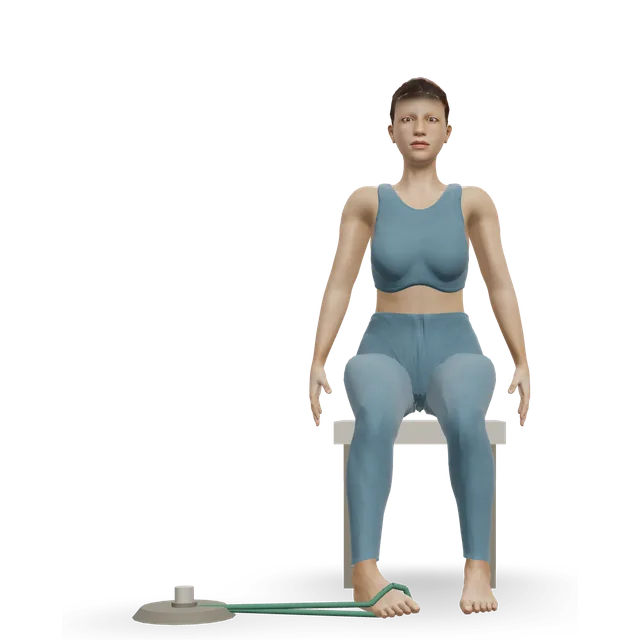 3D demoBand ankle inversionBeginner · A band + A bench or box
 3D demoKnee-to-wall ankle rockBeginner · A wall
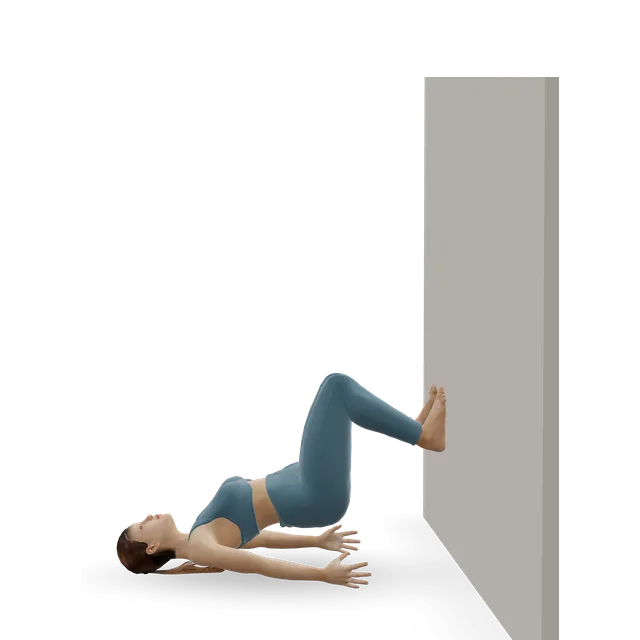 3D demoWall bridge (feet-on-wall bridge)Beginner · A wall
 3D demoSlow calf raiseBeginner · A wall
 3D demoTibialis raiseBeginner · No equipment
 3D demoSingle-leg standBeginner · A wall
 3D demoTandem stance and heel-to-toe walkBeginner · A wall
 3D demoWall calf stretch (gastrocnemius)Beginner · A wall
 3D demoSoleus wall stretchBeginner · A wall
Single-leg reach matrix: "3 rounds of 5 reaches in each direction, each leg" (the move page's dose); its page says to ease off the deep reaches in the first weeks after a sprain. Wall side leg lift: "10 to 12 each side" (the move page's dose), standing on the injured leg. Hip airplane: "2 sets of 5 slow turns each leg" (the move page's dose), once one-leg standing is steady. Single-leg calf raise from a step: 12, 3 times a day (our sprained ankle guide's dose, from an NHS hospital leaflet). Side-lying leg circles: "8 each direction, each side" (the move page's dose). Hops and sport drills are in our sprained ankle guide.
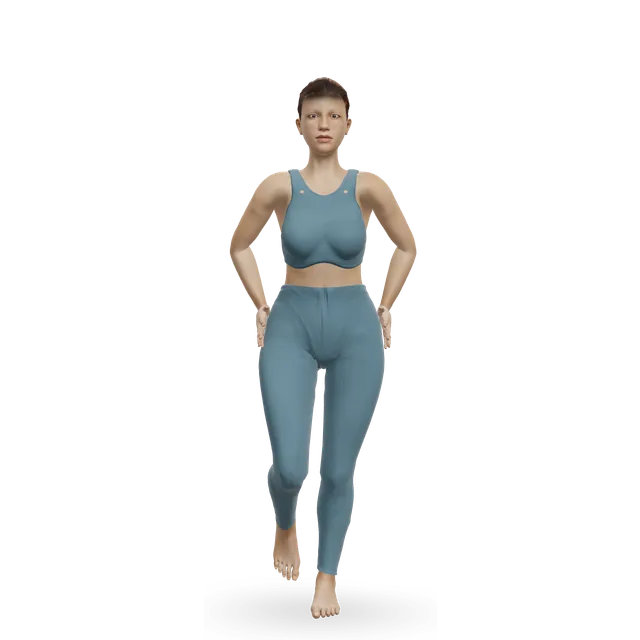 3D demoSingle-leg reach matrixIntermediate · No equipment
 3D demoWall side leg lift (standing side kick at the wall)Beginner · A wall
 3D demoHip airplaneAdvanced · No equipment
 3D demoSingle-leg calf raise from a stepIntermediate · A step + A wall
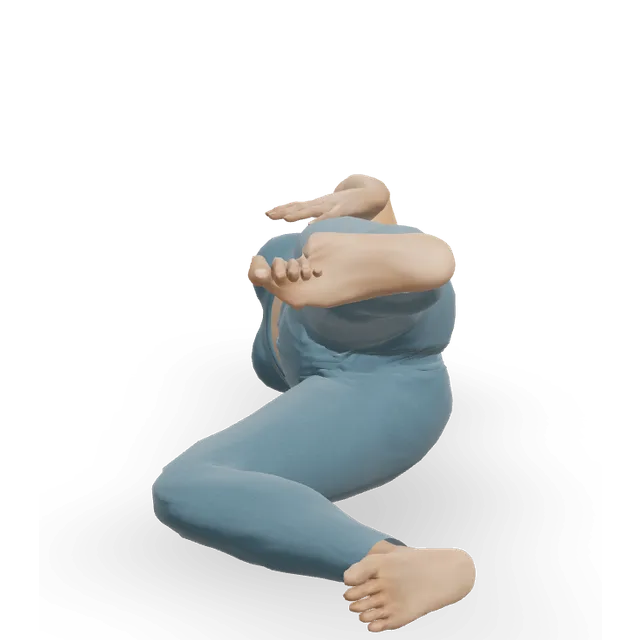 3D demoSide-lying leg circles (Pilates side kick series)Beginner · No equipment
No study has tested any of these after a sprain; they are our suggestions, from how sprains happen and the moves' own cautions.
Our peroneal stretch's page says to skip it in the first weeks after an ankle sprain, because turning the sole inwards is the movement that sprains the outer ankle. On the mat, that also means sitting on the outer edges of your feet and deep cross-legged sitting.
Child's pose, the kneeling side kick and side-sitting in the mermaid stretch the front of the ankle. Pad under the ankles, sit on a block, or use a chair for the first weeks.
The knee hover, leg pull front and Pilates push-up bend the ankle under load: use forearm or wall versions until it bends comfortably.
Wait until you can do 12 calf raises without pain and stand on the injured leg for 30 seconds with your eyes closed, as our sprained ankle guide's check says.
Source 3
For standing work, use bare feet or grip socks, as our Pilates for the feet guide suggests.
Our 25-minute class puts the parts with evidence into a Pilates session: footwork on a wall, band work in every direction, side-lying hip work, then calf raises and balance, with a stop point before the one-leg block. No trial has tested it: its order and doses are our editorial choice, from NHS hospital leaflets in our sprained ankle guide and the balance trials. The balance routine and the foot and ankle routine suit the later stage; the yoga class is our yoga page's version.
A 25-minute Pilates class for the weeks after a sprained ankle: footwork on a wall, band work in every direction, side-lying hip work and a balance progression.
25 minBeginner18 movesA bench or box, A wallBalance practice in 10 minutes: tandem stance, single-leg stands, marches, heel walks, tree pose and floor transfers.
10 minBeginner7 movesA wall, A bench or boxA 15-minute barefoot routine for stronger toes, arches, calves and ankles, finishing with balance. You need only a towel, a wall and a resistance band.
15 minBeginner11 movesA wall, Other / check instructionsA 25-minute yoga class after an ankle sprain: ankle range, calf and ankle strength, short standing poses and a one-leg balance progression, with no jumping.
25 minBeginner16 movesA bench or box, A wallA 25-minute Pilates class for flat feet: seated foot and ankle work, standing heel raises and balance, then Pilates for the hips and a gentle calf stretch.
25 minBeginner14 movesOther / check instructions, A bench or boxA 25-minute Pilates class for steadier balance: standing balance and leg strength at a kitchen counter, then mat work for your trunk and hips.
25 minBeginner17 movesA wall, A bench or boxA 12-minute routine to improve how far your ankle bends: test it against a wall, rock it, stretch both calf muscles, strengthen through the full range, then use it.
12 minBeginner8 movesA wall, A stepThe ankle lines are from our ankle pain and sprained ankle guides, word for word, and the heart lines from our other Pilates guides. This is general information, not a diagnosis. A&E means accident and emergency; in the US, call 911 for 999, and use your doctor's urgent line or urgent care for NHS 111.
Same day (NHS 111 or an urgent treatment centre): after an injury, you can't put weight on it or walk more than a few steps, the pain is very bad or getting worse, there is a lot of swelling or bruising or it is getting worse, it feels very stiff, or it's not feeling any better after treating it yourself. Get the same help if you also have a very high temperature, or feel hot, cold or shivery: this could be an infection. If you think it's broken, don't treat it yourself.
Contact NHS 111: after an injury, severe ankle pain, feeling faint, dizzy or sick from the pain, a snap, grinding or popping noise at the time of the injury, the ankle or foot at an odd angle, or not being able to walk. These might be signs of a broken ankle or an infection.
Same day: a sudden snap or pop at the back of the heel or calf, or a feeling of being kicked there, then walking flat-footed and being unable to push off, stand on tiptoe or climb stairs. It could be an Achilles tendon rupture or a broken heel bone. Go to A&E or a minor injuries unit, or contact NHS 111.
Source 44
Same day (urgent GP appointment or NHS 111): throbbing pain in one leg (rarely both), usually the calf or thigh; swelling in one leg (rarely both); red, blue or darkened skin around the painful area, which may be harder to see on brown or black skin; or swollen veins. It could be a blood clot (DVT). Watch for it after an ankle injury or time in a cast or boot.
Same day: in a cast or boot, pain that is getting worse, toes that are numb or burning, a cast that feels too tight, toes that are swollen, blue or white, or a bad smell from under the cast.
Source 36
Some discomfort during exercise is fine. Aim for pain you would call mild to moderate, no more than about 5 out of 10, that settles within an hour, with no more swelling or stiffness the next morning. If it's worse the next day, do a little less (a smaller range, fewer reps, a lighter band), not nothing.
After a sprain, NHS hospital leaflets say the exercises should not increase your pain, and gentle exercise from the first week was safe in a trial: re-injury was 4% with or without it.
Source 4
If you're hypermobile, don't use mobility work to push further: the NHS says "do not overextend your joints just because you can". See a GP if you think you have joint hypermobility syndrome: for example, your joints keep dislocating, or you keep getting sprains, strains, pain or stiffness.
Source 38
Call 999 or go to A&E (accident and emergency) straight away for severe difficulty breathing (gasping, choking or not able to get words out), a chest that feels tight or heavy, pain that spreads to your arms, back, neck and jaw, lips or skin turning very pale, blue or grey, or sudden confusion. If you're more short of breath than usual, or your heart is racing, fluttering or skipping beats, contact NHS 111.
Source 42
You feel any pain or become unwell, as the NHS advises for its Pilates videos, and especially for chest pain or pressure, unusual breathlessness, dizziness or fainting. If you have a health problem, an injury or any symptoms, get advice from a healthcare professional, such as a GP, before you start.
Source 43
The NHS advises getting advice from a healthcare professional first if you have a health problem, an injury or symptoms, or have recently had a heart attack or an operation.
Source 43
A brace or tape, gradually more weight and early exercise are the guideline's top-graded treatment, and exercise in the first week improved function without more re-injury. The NHS's rest, ice, compression and elevation are for the first 2 to 3 days.
Up to 40% develop an ankle that keeps giving way, and many sprain again. Balance training after you're back is what cuts repeat sprains.
It hasn't been properly tested: in the one study, balance training beat Pilates on reach tests, and mat Pilates alone didn't improve one-leg balance in older adults. Pilates helps when it includes standing, one-leg work and band work.
Hip and trunk strength go with fewer sprains in young athletes, but hip work on its own didn't beat balance training. Do both.
The programme that cut repeat sprains used a floor, then eyes closed, then a wobble board at home. No study has tested reformer footwork after a sprain.
Ice gave a small, short-lived drop in pain on top of rehab. Exercise is the treatment.
Source 34
Yes, most of a mat class, as long as the foot can rest: breathing, curl-ups, bridges, leg circles and side kicks don't load the ankle. Gentle exercise from the first week was safe in a trial. First check the X-ray signs: if you couldn't take four steps, or pressing a bony point hurts, get it checked.
Mat work that leaves the foot alone can start within days; standing work, footwork and band work from about week 2, once you can walk with little or no limp; one-leg balance and the jump board from about week 6. These timings are borrowed from our sprained ankle guide, so go by how the ankle feels, not the calendar.
It can carry the parts of rehab that work: ankle strength in every direction and balance training, which cuts repeat sprains. But Pilates itself hasn't been properly tested, and in the one study balance training did better on reach tests.
Yes, with changes: keep footwork in parallel on a light spring, heels moving straight, and leave out the jump board and work on the balls of one foot until you can stand on that leg for 30 seconds with your eyes closed and do 12 pain-free calf raises. Tell your teacher which ankle it is.
Band work turning the foot in and out, calf raises, lifting the front of the foot, footwork with your feet on a wall and one-leg balance, plus side-lying hip work. Our ankle sprain class puts them in order; for weak ankles without a sprain, see our Pilates for the feet guide.
For the first weeks, anything that rolls the sole inwards or presses the front of the ankle: side-sitting, sitting on the outer edges of your feet and kneeling with the tops of your feet flat. Leave jumps and hops until the later stage.
No trial has counted sprains after Pilates. What prevents another sprain is balance training, about three times a week for 8 weeks once you're back, and a brace for sport; Pilates hip and trunk work helps as an extra.
Early on, a brace or tape with walking is the guideline's first choice, but on the mat you don't need it for moves that leave the foot alone. For sport afterwards, a brace cuts repeat sprains.
Neither has been tested after a sprain, and both can carry balance and strength work. Our yoga for a sprained ankle guide covers yoga, and our sprained ankle guide has the full plan.
Up to 40% of people develop an ankle that keeps giving way after a first sprain. See a GP or physiotherapist: balance and strength work help, and other problems in the joint sometimes need checking.
Only what your fracture clinic allows; the NHS says to move your toes and bend your knee gently in the boot or cast. Upper-body work and the other leg are often fine, but ask first; our broken ankle guide covers the recovery.
Exercise education, not a personal prescription, and clinical review of these guides is pending. If you are pregnant, have a health condition or have had recent surgery, check with a doctor, midwife or physiotherapist before starting, and stop for sharp or increasing pain. Health disclaimer.





