Pilates doesn't treat vertigo
Our searches found no study of Pilates in vertigo or dizziness of any cause.
Source 1
Pilates guide
Pilates doesn't treat vertigo, and no study has tested it. What treats vertigo depends on the cause: a repositioning manoeuvre for benign paroxysmal positional vertigo (BPPV), the most common cause, and vestibular rehabilitation exercises for dizziness that lingers after an inner-ear illness. Pilates can sit alongside them, for strength, balance and confidence, once a GP has checked your dizziness.
A lot of mat Pilates uses the positions most likely to set off a spin: lying back, rolling up, rolling over and tipping your head down. This guide explains which moves those are and how to change them, how to tell a spin from feeling light-headed after a class, and the reformer. It ends with a 20-minute class that never lies down or tips your head down, and it starts with the signs that dizziness could be a stroke.
Our searches found no study of Pilates in vertigo or dizziness of any cause.
Source 1
BPPV is treated with a repositioning manoeuvre such as the Epley, done by a trained clinician, and lasting dizziness after an inner-ear illness with vestibular rehabilitation exercises. Get dizziness checked before you work round it.
Lying back, sitting up, rolling over, lying on your side and tipping your head down can set off a spin in BPPV. In Pilates that means the roll-up, the rolling moves and the moves that take your legs over your head.
Begin with seated Pilates and standing work at a counter, and add lying work once any BPPV is treated and only if it doesn't bring on a spin. The NHS says to move your head carefully and slowly.
Source 7
Feeling light-headed as you stand up after a class is usually a drop in blood pressure, not vertigo: that's our reading, not something studied in Pilates. Get up in stages, and see a GP if it keeps happening or the room spins.
Source 8
Call 999 for dizziness with a drooping face, weak arm, slurred speech, double vision or sudden severe headache, even if it passes.
Our exercises for vertigo and yoga for vertigo guides cover the causes in more detail.
The NHS says vertigo "feels like you or everything around you is spinning", and "It's more than just feeling dizzy". Dizziness also covers feeling off-balance, giddy, light-headed or faint.
Tiny crystals in the inner ear move into the wrong place, so certain head movements bring on a spin lasting "seconds to a couple of minutes", as ENT UK puts it. About 2.4% of adults have it at some point; a 2025 UK review found it in about 1 in 10 75-year-olds and in 39% of people sent to a falls clinic, a quarter of whom didn't mention dizziness. It often comes back, more often in older adults and in women.
Labyrinthitis and vestibular neuritis cause vertigo, often after a cold or flu, and dizziness can linger. In a small study, people who did balance exercises after vestibular neuritis swayed much less a month later than people who didn't.
Attacks of vertigo with hearing loss, ringing or a full feeling in the ear. ENT UK says vestibular rehabilitation "can help improve stability, especially in the later stages".
Vestibular migraine causes episodes of vertigo lasting 5 minutes to 72 hours in people with migraine. Persistent postural-perceptual dizziness (PPPD) is dizziness or unsteadiness on most days for 3 months or more, worse when upright, moving or in busy places.
A drop in blood pressure as you stand is common: in 13 studies of people aged 65 and over, 29% had a large drop in the first seconds after standing, and low blood pressure on standing went with more falls. The NHS links dizziness when standing or sitting up suddenly to a sudden drop in blood pressure.
Rarely, dizziness is a stroke: in US emergency departments, 3.2% of people over 44 with dizziness, vertigo or imbalance had a stroke or a mini-stroke, 0.7% of those with dizziness alone. NICE asks for immediate referral when sudden dizziness comes with other signs such as new unsteadiness.
Classical mat work moves the head through every BPPV trigger: lying back (the hundred, curl-ups), rolling up to sitting (the roll-up, teaser, neck pull), rolling on the spine (rolling like a ball, the seal), taking the hips over the head (the roll-over, jack knife, control balance, boomerang), lying on your side (the side kick series) and bending forward (the spine stretch, the wall roll-down). On the reformer, the short spine lifts the hips over the head, and getting on and off the carriage means lying down and sitting up (our reading of the moves).
Source 24
In a Cochrane review of 11 trials (745 people), the Epley manoeuvre cleared BPPV far more often than a sham manoeuvre, though it came back in about a third. US ear, nose and throat surgeons strongly recommend diagnosing it with a positional test and treating it with a repositioning manoeuvre, and NICE asks for a trained professional to do both.
The US guideline strongly recommends against restrictions on movement after a successful manoeuvre, and a 2025 UK review says head movement restrictions "are not indicated". Some leaflets, including ENT UK's, still advise sitting upright for the rest of the day and not sleeping on the affected side for a few days, so follow your own clinician. There's no reason to stop Pilates for weeks; leave the trigger moves out for a day or two if they bring on symptoms (our suggestion).
In 81 people, 80.5% were clear a week after one repositioning manoeuvre against 25% with Brandt-Daroff exercises, and the 2025 UK review advises choosing a repositioning manoeuvre instead. Our exercises for vertigo guide covers them.
In a Cochrane review of 39 studies (2,441 people), vestibular rehabilitation reduced dizziness and its effect on daily life, with no side effects. The US physiotherapy guideline sets gaze exercises at least 3 times a day and balance exercises for at least 20 minutes a day for 4 to 6 weeks. Pilates doesn't replace these: they are specific, daily and progressed by a physiotherapist.
Our searches of PubMed, Europe PMC and ClinicalTrials.gov in November 2026 found no study of Pilates in vertigo, BPPV, vestibular weakness, vestibular migraine, Ménière's disease or PPPD. The Pilates balance trials in older adults didn't measure dizziness.
In 22 trials of 1,876 older people with dizziness, vestibular rehabilitation beat usual care for balance and symptoms. Pilates improved balance tests in older adults generally, about as much as other exercise. NICE recommends falls prevention exercise for balance and strength in older people, and the NHS has balance exercises to try.
In 32 people, yoga helped movement sensitivity and vestibular exercises helped daily-life dizziness scores more. Tai chi helped whole-body stability and vestibular rehabilitation helped gaze in a small trial. A review of 7 trials in older people with dizziness found too little good evidence to judge.
A 2023 Cochrane review could say almost nothing about non-drug treatments. A 2026 review of 7 small, mostly uncontrolled studies found large falls in dizziness scores with vestibular rehabilitation, with results that varied a lot. ENT UK says regular exercise, sleep and diet help reduce attacks.
Inactive older women were more likely to have BPPV in one survey, and older adults with BPPV were less active, partly from fear of bringing on symptoms. Intense exercise came before BPPV in only 9 of 430 cases. None of this shows that exercise prevents or causes it.
These are the BPPV trigger positions in Pilates terms. Leave them out until a clinician has checked and treated your dizziness, and during a bad spell; afterwards, bring them back slowly if they don't set off a spin (our suggestions, from the BPPV triggers and the NHS advice).
The roll-over, jack knife, control balance and boomerang, and on the reformer the short spine. Their own cautions for glaucoma, blood pressure and the neck apply too.
Rolling like a ball, the open-leg rocker, the seal and the crab. Leave them out.
Source 5
The roll-up, teaser, neck pull and half roll back. Roll onto your side to come up instead, and lie back slowly with your head on a cushion or wedge.
The wall roll-down and standing roll-downs on the reformer: roll down only partway, with your head no lower than your heart, and come up slowly, or skip them. The NHS says not to bend over to pick things up during vertigo.
Source 7
Keep your head in line with your spine in the swan and swimming, and turn it slowly. The NHS says not to stretch your neck during vertigo.
Source 7
Do the side kick series on the side that doesn't set off a spin.
Source 5
Close your eyes in balance work only once eyes-open balance is easy, and skip hot classes and breath holds (our suggestion, as our yoga for vertigo guide advises).
A short spin when you lie back, roll up or turn over points to BPPV, which needs checking rather than pushing through. Feeling light-headed or faint as you stand up after lying down is more likely a drop in blood pressure. That's our reading of the NHS's descriptions; no one has studied dizziness in Pilates classes.
Stay still with your eyes on one point until it passes, then come out slowly and sit down (our suggestion). An NHS leaflet says the positions that bring on BPPV symptoms "are not harmful", but get them diagnosed and treated.
Source 6
The NHS's advice when you feel dizzy includes drinking plenty of fluids and not getting up suddenly. Skip hot classes and breath holds if you get dizzy (our suggestion).
Source 8
See a GP if dizziness keeps coming back. A GP can test for BPPV with a quick positional test and arrange treatment.
These are our Pilates for PoTS guide's steps, word for word. The NHS vertigo advice is the same idea: get up slowly and sit for a while before standing.
See the movement on the 3D figure: Get up and down from the floor
Sit tall on a firm chair, eyes on a point ahead. Lateral breathing: "5 to 8 breaths at the start of every session" (the move page's dose). Seated march: "1 to 2 minutes as a warm-up" (the move page's dose). Shoulder rolls: "10 to 15 slow circles each way" (the move page's dose). Seated upper-back lift: "3 to 5 repetitions, each held 3 to 5 seconds" (the move page's dose). Thoracic rotation: "6 rotations per side, moving with the breath" (the move page's dose); let your head turn slowly with your chest. Seated side bend: "Hold 10 to 20 seconds, 2 or 3 times each side" (the move page's dose). Breath reach: "5 breaths, exhale longer than inhale" (the move page's dose).
 3D demoLateral breathing (Pilates breathing)Beginner · No equipment
 3D demoSeated marchBeginner · A bench or box
 3D demoShoulder rollsBeginner · No equipment
 3D demoSeated upper-back lift (sit tall, shoulders back)Beginner · A bench or box
 3D demoThoracic rotationBeginner · No equipment
 3D demoSeated overhead side bendBeginner · A bench or box
 3D demoBreath reachBeginner · No equipment
A kitchen counter in front of you and a firm chair behind. Sit to stand: 2 sets of 5 to 8, slowly; wall push-up: 8 to 10; slow calf raise: 10; semi-tandem stance: 3 holds of up to 30 seconds, eyes open; heel-to-toe walk: 3 lengths beside the counter; wall angel: 6 to 8 slow reps (all our editorial starting points). Wall side leg lift: "10 to 12 each side" (the move page's dose). Side-stepping: "10 steps each way, next to a counter" (the move page's dose). One-leg stand: later, up to 30 seconds each leg with a hand ready on the counter (our editorial starting point).
 3D demoSit to stand from a chairBeginner · A bench or box
 3D demoWall push-upBeginner · A wall
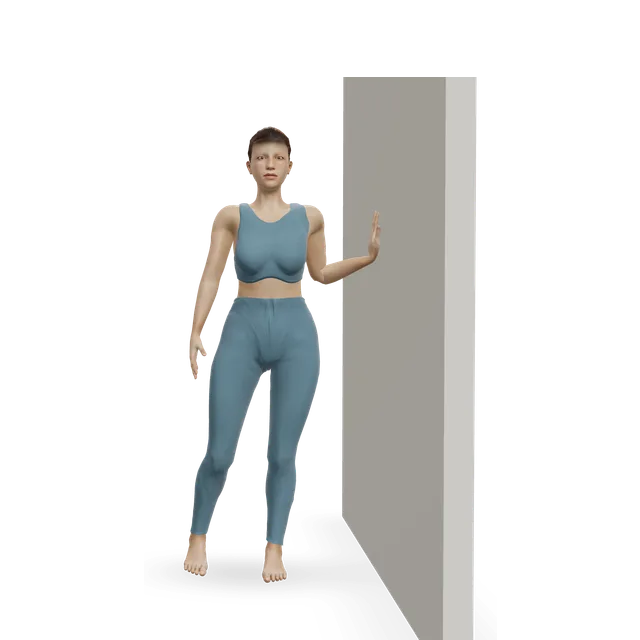 3D demoWall side leg lift (standing side kick at the wall)Beginner · A wall
 3D demoSlow calf raiseBeginner · A wall
 3D demoSemi-tandem stanceBeginner · A wall
 3D demoSide-stepping (sideways walking)Beginner · A wall
 3D demoTandem stance and heel-to-toe walkBeginner · A wall
 3D demoSingle-leg standBeginner · A wall
 3D demoWall angelBeginner · A wall
Only once a clinician has treated any BPPV, or your dizziness isn't brought on by position, and only if these don't set off a spin. Lie back slowly with your head on a cushion or wedge, and use the getting-up steps each time. Pelvic tilt into bridge: 6 to 8 lifts (our editorial starting point). Knee fold: "2 sets of 5 to 10 each side, every other day" (the move page's dose). Side kick: "8 to 10 each side" (the move page's dose), on the side that doesn't set off a spin. Side-lying open book: "8 to 10 slow openings each side, pausing 2 seconds at the end" (the move page's dose), eyes following your hand slowly.
Getting onto the carriage means lying down and getting off means sitting up, both BPPV triggers: move slowly, sit on the edge for a moment before standing, and keep a hand on the frame (our suggestion).
The short spine and other moves that take your hips over your head, and fast changes of position. Standing work beside the reformer, or on a counter, is a good start.
Source 24
Say that you get dizzy, so they can offer head-up options and give you time to change position (our suggestion).
Our 20-minute head-up class never lies down, rolls or tips your head down: seated Pilates, then legs and balance at a kitchen counter. No trial has tested it: its order and doses are our editorial choice, from the NHS's advice on vertigo and balance. If you've been given vestibular rehabilitation exercises, do them every day as well. The seated classes suit a wobbly day; the balance class comes later, as it gets down to the floor.
A 20-minute Pilates class that never lies down, rolls or tips your head down: Pilates breathing and spine work in a chair, then legs and balance at a counter.
20 minBeginner16 movesA bench or box, A wallA 15-minute routine for lasting dizziness from an inner-ear problem: the vertigo guide's head and eye exercises, then balance at a counter and a short walk.
15 minBeginner7 movesA wall, Cardio machineA 20-minute yoga class for people who get dizzy: slow breathing and spine moves sitting down, then strength and balance at a counter, with no head-down poses.
20 minBeginner15 movesA bench or box, A wallA 15-minute chair Pilates class done entirely sitting down, in a chair or wheelchair: breathing, spine moves, and leg and arm strength with water bottles.
15 minBeginner13 movesA bench or box, Something with weightA 20-minute chair Pilates workout for beginners and older adults: breathing, sitting tall, gentle spine and leg moves, and a standing finish at the chair.
20 minBeginner14 movesA bench or box, Something with weightBalance practice in 10 minutes: tandem stance, single-leg stands, marches, heel walks, tree pose and floor transfers.
10 minBeginner7 movesA wall, A bench or boxA 40-minute strength and balance session for over-65s, built from the Otago home programme and NHS exercises, using a chair, a counter and a step.
40 minBeginner18 movesA bench or box, Something with weightA 25-minute Pilates class for steadier balance: standing balance and leg strength at a kitchen counter, then mat work for your trunk and hips.
25 minBeginner17 movesA wall, A bench or boxFor older adults, the plan builds strength, balance and walking, which NICE recommends to prevent falls.
The vertigo and stroke lines are from our exercises for vertigo and yoga for vertigo guides, the head injury line from our Pilates guides, word for word, and the heart lines from our other Pilates guides. This is general information, not a diagnosis. A&E means accident and emergency; in the US, call 911 for 999, and use your doctor's urgent line or urgent care for NHS 111.
Call 999 if someone has hit their head and has been knocked out and hasn't woken up, can't stay awake or keep their eyes open, has a fit, has fallen from a height of more than 1 metre or 5 stairs, has problems with their vision or hearing, has clear fluid coming from their ears or nose, has new numbness or weakness, has problems with walking, balance, understanding, speaking or writing, hit their head at high speed, or their behaviour has changed. Get help from NHS 111 if they're being sick, feel dizzy or take medicine that thins the blood. If you're told to go to A&E (accident and emergency), don't drive yourself there if you have hit your head.
Source 42
Stop, and don't start again until a doctor says it's safe, if the exercises bring on:
No Pilates (our suggestion). The NHS says to lie still in a quiet, dark room to reduce the spinning feeling.
Source 7
Call 999 or go to A&E (accident and emergency) straight away for severe difficulty breathing (gasping, choking or not able to get words out), a chest that feels tight or heavy, pain that spreads to your arms, back, neck and jaw, lips or skin turning very pale, blue or grey, or sudden confusion. If you're more short of breath than usual, or your heart is racing, fluttering or skipping beats, contact NHS 111.
Source 47
You feel any pain or become unwell, as the NHS advises for its Pilates videos, and especially for chest pain or pressure, unusual breathlessness, dizziness or fainting. If you have a health problem, an injury or any symptoms, get advice from a healthcare professional, such as a GP, before you start.
Source 48
The NHS advises getting advice from a healthcare professional first if you have a health problem, an injury or symptoms, or have recently had a heart attack or an operation.
Source 48
No study has tested Pilates for vertigo. BPPV is treated with a repositioning manoeuvre, and lasting dizziness with vestibular rehabilitation.
No study shows it causes BPPV or any other vertigo. The moves can set off a spin in someone who already has BPPV, because lying back, rolling up and tipping the head are its triggers.
No study supports it, and head-down positions are BPPV triggers.
Lie still during a bad attack, but moving again helps recovery: exercises after vestibular neuritis improved balance, and vestibular rehabilitation works by bringing on mild dizziness in a controlled way.
The US guideline strongly recommends against restrictions after a successful manoeuvre, and a UK review says they aren't needed. Follow your own clinician.
General fitness work isn't vestibular rehabilitation; the gaze and balance exercises are specific and daily.
Source 28
It isn't a treatment: no study has tested it. BPPV is treated with a repositioning manoeuvre, and lasting dizziness with vestibular rehabilitation exercises. Pilates can help you stay strong and steady alongside them, once a GP has checked your dizziness.
It can set off a spin if you have BPPV, because lying back, sitting up, rolling and tipping your head down are the classic triggers. The spins aren't harmful, but leave those moves out until BPPV is treated, and change them afterwards if they still bother you.
No study shows that it causes BPPV or any other vertigo. If a class brings on a spin, it's more likely showing BPPV you already have; see a GP, who can test for it.
Feeling light-headed as you stand up after lying down is often a drop in blood pressure, which usually passes quickly; that's our reading, as it hasn't been studied in Pilates. Finish your lying moves, roll to your side, sit for a minute, then stand slowly. If the room spins, or it keeps happening, see a GP.
The roll-over, jack knife, control balance and boomerang, rolling like a ball and the seal, the roll-up and teaser, and head-down roll-downs; on the reformer, the short spine. Do side-lying work on the side that doesn't set off a spin.
Yes, with care: getting on and off the carriage means lying down and sitting up, so do it slowly, and skip the moves that take your hips over your head. Standing work at the reformer or a counter is a good start.
Seated breathing, spine and shoulder work, then standing strength and balance at a kitchen counter with your eyes on a fixed point. Our head-up class has no lying down at all.
No. The NHS says to lie still in a quiet, dark room during an attack. Start again gently once it has settled.
Yes. The US guideline strongly recommends against restrictions after a successful manoeuvre, though some UK leaflets still say to sit upright for the rest of the day. Follow your clinician, and leave the trigger moves out for a day or two if you like.
It hasn't been tested. Regular exercise is part of migraine self-care, and vestibular rehabilitation helped in small, mostly uncontrolled studies. Leave out head-down moves if they bring on symptoms; our Pilates for headaches guide covers migraine.
Pilates improved balance tests in older adults, but those trials didn't include people with dizziness. If you get dizzy, the specific vestibular exercises come first.
Call 999 for dizziness with a drooping face, a weak arm or slurred speech, double vision, hearing loss, a sudden severe headache, or numbness or weakness, even if it passes. Also call 999 after a fall with a head injury and any of the signs in our warning section.
Exercise education, not a personal prescription, and clinical review of these guides is pending. If you are pregnant, have a health condition or have had recent surgery, check with a doctor, midwife or physiotherapist before starting, and stop for sharp or increasing pain. Health disclaimer.









