Pilates
Head-up Pilates for vertigo and dizziness: a 20-minute chair and counter class
If you get vertigo or dizziness, the positions that most often set it off are lying back, sitting up, rolling over and putting your head down, which is a lot of a mat Pilates class. This class leaves all of them out. You sit for the first part, with Pilates breathing and gentle spine and shoulder work, then stand at a kitchen counter for leg strength and balance, with a chair behind you. It isn't a treatment for vertigo: BPPV is treated with a repositioning manoeuvre, and lasting dizziness with vestibular rehabilitation exercises, which you do as well as this class. Don't do it during an attack, and get new dizziness checked first. No trial has tested this class: its order and doses are our editorial choice, from the NHS's advice on vertigo and balance.
In a chair (about 8 minutes)
- Beginner · Abs · 3D demoSit tall, feet flat; breathe into the sides of your ribsHarder: Roll-up (Pilates)
- Seated march1 minBeginner · Hip flexors, Quads, Abs · 3D demoEyes on a point aheadHarder: Standing march
- Shoulder rolls10 each wayBeginner · Shoulders, Back, Neck · 3D demoSlow; keep your head stillHarder: Shoulder CARs (controlled articular rotations)
- Seated upper-back lift (sit tall, shoulders back)5, holding 3 sBeginner · Back, Shoulders, Neck · 3D demoLift through the breastbone; chin levelEasier: Elbows backHarder: Prone Y-T-W raises
- Thoracic rotation6 each sideBeginner · 3D demoTurn your chest slowly; let your head follow, eyes on the horizonEasier: Side-lying open bookHarder: World's greatest stretch
- Seated overhead side bend2 holds of 10 s each sideBeginner · Back, Abs · 3D demoReach up and over; keep your head in lineHarder: Overhead lat stretch at a bench (elbows on the bench)
- Breath reach5 breathsBeginner · 3D demoBreathe out for longer than you breathe inHarder: Slow breathing (6 breaths a minute)







At a counter, with a chair behind you (about 10 minutes)
- Sit to stand from a chair2 sets of 5Beginner · Quads, Glutes, Hamstrings · 3D demoStand up slowly; pause before you let go of the counterEasier: Sit to stand, pushing on the thighsHarder: Bodyweight squat
- Beginner · Chest, Triceps, Shoulders · 3D demoHands on the counter or a wall; eyes forward, not downHarder: Push-up
- Beginner · Hip abductors, Glutes, Abs · 3D demoA hand on the counter; lift the leg out to the sideHarder: Lateral band walk, band at the feet
- Beginner · Calves · 3D demoBoth hands on the counter; up for 2, down for 3Easier: Seated bent-knee calf raise (soleus raise)Harder: Standing dumbbell calf raise
- Semi-tandem stance3 holds of up to 30 sBeginner · Calves, Hip abductors · 3D demoEyes open, on a point ahead; a hand ready on the counterHarder: Tandem stance and heel-to-toe walk
- Side-stepping (sideways walking)10 steps each wayBeginner · Hip abductors, Glutes, Adductors · 3D demoAlong the counter, eyes forwardHarder: Lateral band walk
- Tandem stance and heel-to-toe walk3 lengthsBeginner · Calves, Hip abductors · 3D demoBeside the counterEasier: Semi-tandem stanceHarder: Single-leg stand
- Beginner · Back, Shoulders · 3D demoBack of the head on the wall only if that's comfortableEasier: Table slide (seated forward reach)Harder: Prone Y-T-W raises








Sit down to finish (about 2 minutes)
- Beginner · 3D demoSitting; in for about 4, out for about 6Easier: Breath reachHarder: Crocodile breathing (prone diaphragmatic breathing)

Tips
- Set up at a kitchen counter on a clear floor, with a firm chair without wheels behind you (our suggestion).
- Don't do it during an attack: the NHS says to lie still in a quiet, dark room.
- Move slowly between sitting and standing, and sit down straight away if you feel dizzy, as the NHS advises.
- If you've been given vestibular rehabilitation exercises, do them every day as well; this class doesn't replace them.
- Leave the balance holds with your eyes closed until eyes-open work is easy (our suggestion).
- Call 999 for dizziness with a drooping face, a weak arm, slurred speech, double vision or a sudden severe headache: see the warning signs on our Pilates for vertigo guide.
The doses are suggested starting points, not a prescription. Choose a range you can control and stop for sharp or increasing pain, numbness or tingling. Get individual advice after an injury or surgery, or if you are pregnant or managing a health condition.
Guides that recommend it
Find more moves like these
More pilates




Beginner Pilates workout
A 20-minute mat Pilates workout for complete beginners. It covers breathing, spine position and the foundation moves, each with an easier option.
20 minBeginner13 movesNo equipment

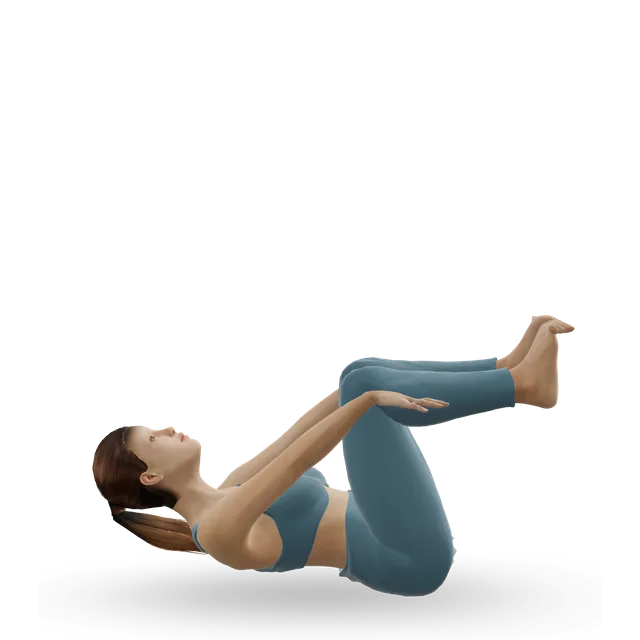
10-minute Pilates abs
Ten minutes of the classic Pilates abdominal series: the hundred, the roll-up and the series of five, with a plank to finish.
10 minIntermediate11 movesNo equipment
Full-body mat Pilates workout
A 30-minute intermediate mat Pilates class that follows the classical order, from the hundred to the push-up, with prep versions of the hardest moves.
30 minIntermediate22 movesNo equipmentQuestions people ask
How long does the head-up pilates for vertigo and dizziness: a 20-minute chair and counter class take?
About 20 minutes, including any warm-up and cool-down listed. Shorten it by doing fewer rounds; lengthen it by adding one.
What equipment do I need?
You need: A bench or box, A wall. Each move links to its guide, where you can find an alternative if you are missing something.
Is it suitable for beginners?
It is written for beginners. 7 of its 16 moves have an easier option listed beside them if you need one.
How do I make it easier or harder?
Use the easier or harder option listed under each move, change the number of rounds, or adjust the rest. Progress one change at a time.