Yoga guide

Yoga for hikers: hips, knees and ankles, balance on rough ground, before and after a hike, and what the evidence shows

Yoga suits hikers and hill walkers best after a hike and on rest days: stretches for calves, thighs and hips that have climbed and descended all day, and one-leg poses that train the balance that rough ground and descents ask for. Before a hike, you don't need long stretches: start slowly for the first 10 minutes and do a few moving drills.

No trial has tested yoga in hikers, and no stretch prevents hiking injuries. What does help: balance training for ankle sprains, leg strength and lowering practice for descents, poles on the way down, and planning for the weather, the route and your kit. This guide covers where hikers get hurt, what yoga can add, the warning signs, and a 25-minute class with a 10-minute standing version and 3D demos.

The short version

Hikers mostly hurt their legs, and mostly on the way down

Blisters and ankle sprains lead, and the lower limb was the commonest injury site in all 7 hiking studies. In the Austrian Alps, 75.3% of 5,665 fall victims fell going down, and over 60% of accidents from 2015 to 2021 happened on the descent.

Sources 1, 2, 3

Descents load knees and balance

Modelled knee force reached about 8 times body weight walking downhill, against 3.9 on the flat, and poles cut knee forces by 12% to 25% on a steep descent. Thirty minutes of simulated downhill walking disturbed leg control and balance in young adults.

Sources 4, 5, 6

Balance training cuts ankle sprains

Balance training cut ankle sprains by about 40% across 17 studies, and by about half after a previous sprain. Yoga's one-leg poses are balance training, but no trial has tested yoga for ankle sprains.

Sources 7, 8

Yoga improves balance a little

In people aged 60 and over, yoga improved balance by a small amount, less clearly in the newest review. Make it harder over time: balance training worked best at about 3 sessions a week for 11 to 12 weeks, in trials in young adults.

Sources 9, 10, 11

Stretching won't prevent hiking injuries

Across 25 trials, stretching didn't prevent sports injuries, and it barely changes next-day soreness. Before a hike, start slowly; after a hike, hold stretches if they feel good.

Sources 12, 13, 14

Yoga sits beside the real preparation

Leg strength, hill and loaded walks, poles on descents, planning for the weather, the route and your kit, food and water, and turning back when you need to. With a heart condition, diabetes or high cholesterol, see your GP before a big trip.

Sources 15, 16, 17

Where hikers get hurt

Mostly minor, mostly legsEmerging evidence

Across 7 hiking studies (17,757 injured hikers), the lower limb was the commonest injury site. Blisters made up 8% to 33% of injuries, ankle sprains were common, and most injuries were minor.

Source 1

Falls happen on the way downEmerging evidence

In the Austrian Alps, 75.3% of 5,665 fall victims fell going down, and 80.9% were on marked trails; ankle and foot made up 37.8% of non-fatal injuries, and the head 12.8%. From 2015 to 2021, falls, trips or stumbles caused over 70% of 7,552 hiking accidents, and over 60% happened on the descent.

Sources 2, 3

Who fallsMixed evidence

Fall victims in Tyrol (405 people) averaged 56 years, 70% reported poor eyesight, and few said they had felt tired.

Source 18

HeartsEmerging evidence

Sudden cardiac death is about half of all deaths in mountain hiking, mostly in men over 34. A previous heart attack (about 11 times the odds), diabetes (about 7 times) and high cholesterol (about 3 times) raised the risk, about half the deaths happened on the first day, and regular mountain activity was protective. Heart and circulation deaths were more common in mountain activities older people prefer, such as hiking and trekking.

Sources 17, 19

Knees and balance on the way down

Descents load the kneeEmerging evidence

Knee forces were much higher walking down a slope than on the flat: modelled force reached about 8 times body weight against 3.9, and knee implants measured 346% of body weight going down stairs against 261% walking on the flat.

Sources 20, 4, 21

Poles helpEmerging evidence

Poles cut knee forces by 12% to 25% on a steep descent in 8 men, and lowered joint loads walking downhill with packs of 15% and 30% of body weight. A review: poles "decrease lower extremity loading and forces but increase cardiovascular demand".

Sources 5, 22, 23

Tiring descents disturb balanceMixed evidence

Thirty minutes of simulated downhill walking disturbed leg control and front-to-back balance in 59 young adults without weakening their legs. An hour of uphill or downhill walking disturbed standing balance with the eyes closed, and older adults needed more side-to-side control on steeper slopes. Mountain Rescue England and Wales notes that "many accidents occur towards the end of the day".

Sources 6, 24, 25, 26

Train for descentsEmerging evidence

One bout of lowering or downhill exercise 2 to 4 days before a hard one reduced later soreness and helped strength come back sooner, across 23 studies with varied results. Our hiking training workout builds in slow step-downs and downhill walking.

Source 27

Balance and ankles

Balance training cuts ankle sprainsStrong evidence

Proprioceptive (balance) training cut ankle sprains by about 40% across 17 studies, and by about half in people with a previous sprain. Neuromuscular training halved ankle injuries in 13 trials of 1,476 athletes. Preventing a first-ever sprain is less certain than preventing a repeat.

Sources 7, 28, 29, 30

Yoga and balanceMixed evidence

In people aged 60 and over, yoga improved balance by a small amount (6 trials, 307 people), clearly against no exercise but not against other exercise. The newest review of 21 studies found the gains in moving balance weren't robust. In healthy people of all ages, 11 of 15 studies found some benefit, with weak designs.

Sources 9, 31, 10, 32

In athletesMixed evidence

College athletes gained about 4 seconds of one-leg balance in 10 weeks of yoga, and in 20 fencers, 8 weeks of yoga or Pilates improved moving balance in both groups.

Sources 33, 34

No yoga trial for ankle sprainsMixed evidence

In one 8-week beginners' yoga class for middle-aged and older adults with past sprains, with no comparison group, one-leg balance improved in the older group.

Source 8

How hard, and how oftenEmerging evidence

Balance training in healthy young adults worked best at about 3 sessions a week, 11 to 15 minutes a session, for 11 to 12 weeks. That dose comes from young adults, not hikers. Make poses harder step by step: eyes closed near a wall, head turns, a cushion underfoot, moving reaches.

Source 11

Falls in older hikersStrong evidence

Exercise that challenges balance cut falls in people over 60 by about a quarter (high certainty). No trial tested flexibility exercise alone.

Sources 35, 36

Before and after a hike

No stretch prevents hiking injuriesStrong evidence

Across 25 trials (26,610 people), stretching didn't prevent sports injuries, and stretching researchers don't recommend it for injury prevention in general.

Sources 12, 13

A survey isn't proofMixed evidence

In a survey of 1,295 Appalachian Trail hikers, those who didn't train had nearly 3 times the odds of injury, and strength training, stretching or yoga and endurance training were linked with fewer injuries. A survey can't show cause.

Source 37

Before: start slowlyStrong evidence

Long holds just before an effort cost a little performance, and moving afterwards removed most of the loss. Our hiking guide's warm-up is the first 10 minutes at an easy pace and a few moving drills.

Sources 38, 13

After: hold if it feels goodStrong evidence

Stretching barely changes next-day soreness, about 1 point on a 100-point scale, and didn't change running economy across 15 studies. Hold stretches after a hike or on rest days for comfort and range.

Sources 14, 39

Yoga beside the real preparation

Leg strength

Yoga's standing poses load the thighs, but most yoga doesn't keep adding load. Our hiking training workout (step-ups, reverse lunges, calf raises, slow step-downs, one-leg hinges and carries) is the strength plan; yoga adds balance, hips and ankles.

Plan the dayStrong evidence

AdventureSmart's three questions before you set off are about your skills, the weather and your kit. Tell someone your route, and turn back when you need to.

Sources 16, 26, 15

Eat and drink

The Ramblers warn that if you don't eat and drink enough, "you're more likely to trip or slip and decision making becomes more difficult".

Source 15

Check first with a heart conditionEmerging evidence

With a heart condition, diabetes or high cholesterol: see your GP before a big trip, build up regular hill walking, and take the first day easy (our hiking guide).

Source 17

Walking countsStrong evidence

Brisk walking counts towards 150 minutes of moderate activity a week. Adults aged 65 and over should add activities for strength, balance and flexibility on at least 2 days a week.

Sources 40, 41

How much

After a hike

The 10-minute standing block of our class, at the car or at home, after you've had a drink and cooled down (our editorial starting point).

On rest days

The full 25-minute class 2 or 3 times a week, alongside our hiking training workout. Keep the balance block above all, especially if you've sprained an ankle before (our editorial starting point, framed on balance training at about 3 sessions a week).

Source 11

Before a hike (standing, no mat)

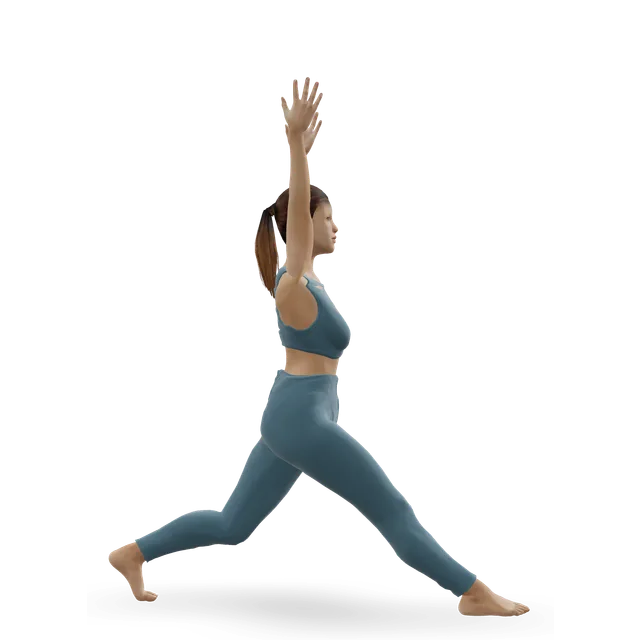
After the first easy 10 minutes, or at the trailhead. Ankle circles: 5 each way with each ankle; hip circles: 3 slow circles each way with each leg, holding a pole or wall; slow calf raises: 10; front-to-back leg swings: 8 each leg (our hiking guide's warm-up). Low lunge, moved in and out with your breath: 5 slow rocks each side, no long holds (our yoga for athletes guide).

After a hike (at the car, or on a mat at home)

Calf and soleus stretches at a wall: 30 seconds each side; kneeling hip flexor stretch: 45 seconds each side (our post-run stretches). Standing quad stretch: 30 seconds each side, holding a wall (our hill and stair conditioning). Standing figure four: 30 seconds each side, hand on a wall (our hip openers guide). Downward dog: 2 holds of 5 breaths, knees bent; strap hamstring stretch and reclined figure four: 45 seconds each side; child's pose: 50 seconds; legs up the wall: 2 minutes, optional, for comfort only (our yoga for runners class).

Balance and ankles (rest days, about 3 times a week)

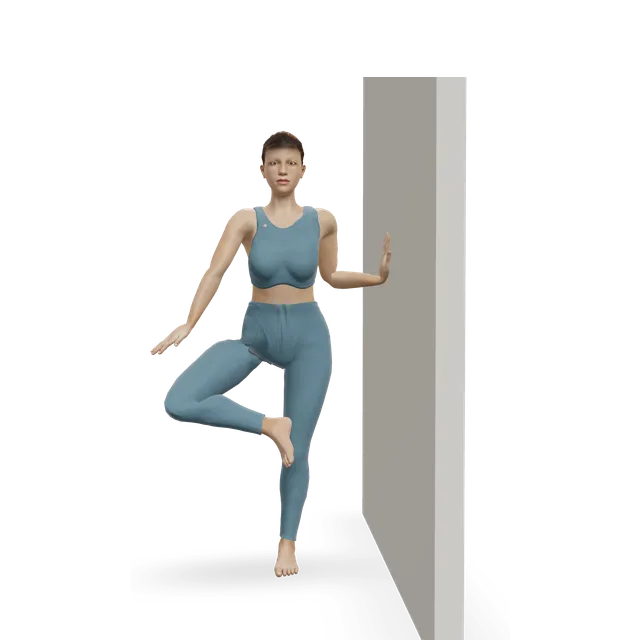
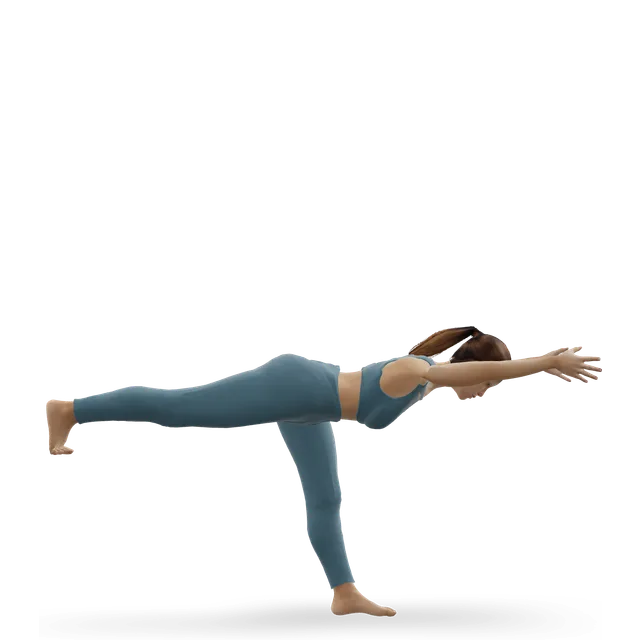
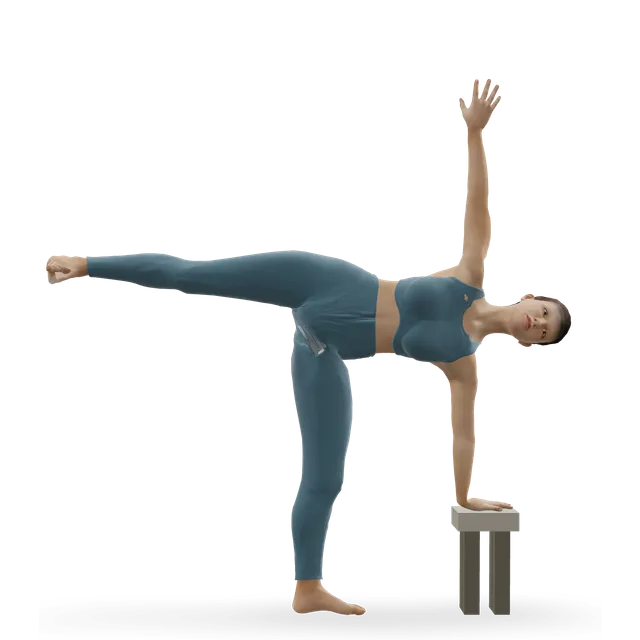
One-leg stand: 2 holds of 30 seconds each leg, then with head turns or eyes closed near a wall (our foot and ankle routine and our balance guide's ladder). Tree: 3 to 5 breaths each side, fingertips on a wall at first; warrior III: 3 breaths each side, twice, hands on a chair; one-leg reach: 2 rounds of 5 reaches each way, each leg; half moon: 3 breaths each side, back to a wall and a hand on a block or chair; tandem stance: 30 seconds each way round, then 10 heel-to-toe steps (our yoga for balance class).

Legs for climbs and descents

Chair pose: 2 holds of 30 seconds, and one-leg bridge: 8 each side (our yoga for footballers class). Warrior II and high lunge: 5 breaths each side (our yoga for balance class). Slow calf raises: 2 sets of 10 to 15, and tibialis raises: 10 to 15 (our yoga for legs class). Slow step-downs: 2 to 3 sets of 8 each leg, lowering over 3 seconds from a low step (our hiking training workout): strength, not yoga, but it belongs beside it.

What to change or leave out

Long holds before a hikeStrong evidence

Not needed: start slowly instead (our hiking guide).

Sources 38, 13

Advanced balances on the trailMixed evidence

Dancer pose and an unsupported standing hand-to-big-toe pose: keep hard balance work for home, near a wall, when you're not tired.

Sources 6, 24

Kneeling on stony ground, or with sore knees

Hero pose and a deep child's pose: pad them or use standing versions (our yoga for knee pain guide).

Long holds on a tired, hot day

Drink and cool down first.

Source 42

Head-down poses

With glaucoma or blood pressure that isn't controlled, keep downward dog brief or do it with your hands on a wall: downward dog raised eye pressure by about three-quarters in a lab study.

Source 43

Our yoga class for hikers and other workouts

Our 25-minute class has a 10-minute standing block for after a hike, and balance, leg and floor blocks for rest days. The hiking training workout is the strength plan; the foot and ankle and balance routines add more balance work.

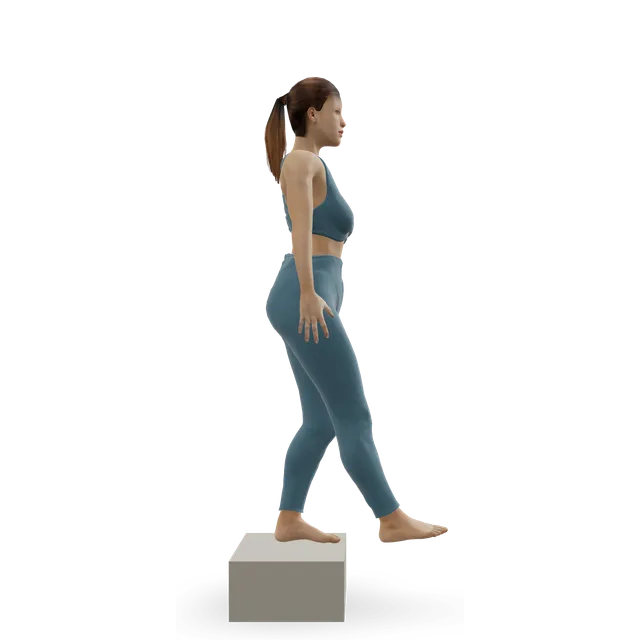
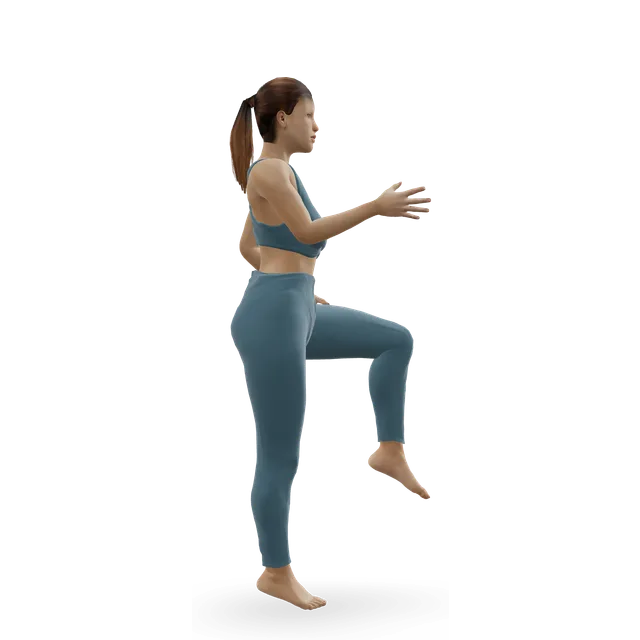
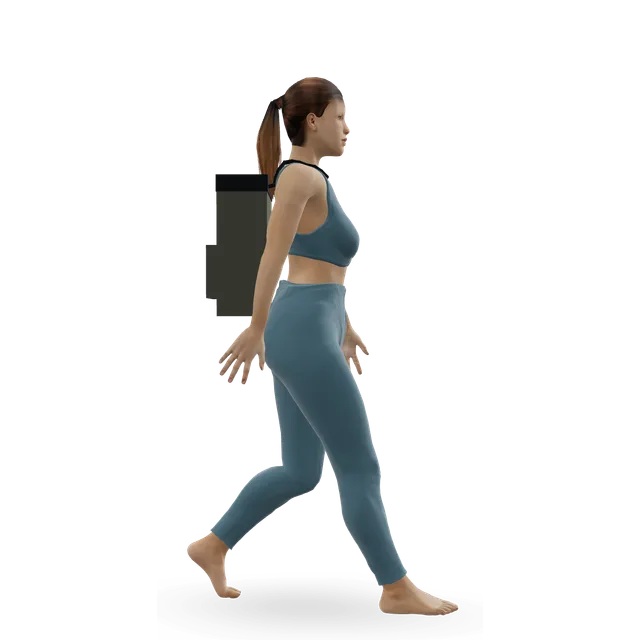
Trail yoga: a 25-minute class for after a hike or a rest day, with a 10-minute standing version

A 25-minute yoga class for hikers: a 10-minute standing stretch for after a hike, then balance, legs and floor blocks for rest days.

25 minBeginner16 movesA wall

Hiking training workout

A 35-minute strength workout for hikers: step-ups, lunges and calf raises for climbs, slow step-downs for descents, single-leg hinges, carries and balance.

35 minBeginner13 movesA wall, A step

Hill and stair conditioning

Stair or hill climbs with the walk down as recovery, then a loaded walk with your rucksack, building towards the hills, pack and days of your trip.

40 minBeginner5 movesA step, Something with weight

Yoga for balance: a 30-minute standing class, from steady to moving

Thirty minutes of standing yoga for balance: strong standing poses, one-leg poses at the wall, and side steps, backward steps, reaches and sit-to-stands.

30 minBeginner16 movesA wall, A bench or box

Yoga for legs: a 25-minute strength and stretch routine for thighs, glutes and calves

A 25-minute yoga routine for your legs: standing holds for the thighs, one-leg poses for the glutes, bridges, calf and shin raises, then hip and hamstring stretches.

25 minBeginner17 movesA step, A wall

Yoga for runners: 20 minutes after a run or on a rest day

A 20-minute yoga cool-down for runners: calves, hip flexors, hamstrings and glutes, one balance pose and a rest, after an easy run or on a rest day.

20 minBeginner11 movesA wall

Foot and ankle strengthening routine: toes, arches, calves and balance

A 15-minute barefoot routine for stronger toes, arches, calves and ankles, finishing with balance. You need only a towel, a wall and a resistance band.

15 minBeginner11 movesA wall, Other / check instructions

Balance training workout: from standing still to moving

A 20-minute balance workout for steady adults: harder stances, head turns and eyes closed, single-leg reaches and hinges, step-ups and stuck landings.

20 minIntermediate13 movesA wall, A dumbbell

Post-run stretches

Seven stretches for after a run: calves, soleus, quads, hip flexors, hamstrings and glutes.

10 minBeginner7 movesA wall

Plan

The walking plan builds to 150 minutes a week.

Warning signs: when to stop and get help

These follow our hiking, football yoga and balance guides word for word. This is general information, not a diagnosis. In the US, call 911 where this page says 999, and contact your doctor or urgent care where it says NHS 111.

On the hill: call 999 or 112

For an injury, illness or someone lost or overdue, dial 999 or 112 and ask for the Police, then Mountain Rescue.

Sources 26, 16

Sprains, knees and possible fractures

Call 999 or go to A&E if you heard a crack, the injured part has changed shape or points at an odd angle, it's numb or tingling, or the skin has turned blue or grey or is cold. Get help from NHS 111 if it's very painful or swollen, you can't put weight on it or walk more than a few steps, or a knee locks or gives way.

Source 44

A knee injury

Go to A&E (accident and emergency) if you've injured your knee and it has changed shape, it becomes very swollen very quickly, you felt a pop or snap, you can see bone sticking out, or it's bleeding heavily. Don't drive yourself: ask someone to take you, or call 999 if the pain means you can't move your leg to get there.

Get advice from NHS 111 now: you cannot move the knee or put any weight on it, or it is very painful, badly swollen or has changed shape, or it locks, gives way or clicks painfully. A pop, quick swelling and a knee that gives way point to an ACL injury: our ACL injury guide says what to do.

After a fall: call 999

If someone has fallen and may have hurt their head, neck, back or hip, or can't get up. For sudden unsteadiness with signs of a stroke: a face drooping on one side, weakness in one arm, or speech problems; also sudden blurred vision or loss of sight, feeling dizzy or falling over, or a severe headache. Call even if the signs stop.

After a fall: NHS 111 or an urgent GP appointment

If someone has fallen and may be in pain, injured or unwell. In the US, contact your doctor or urgent care.

Chest pain or fainting: call 999

Call 999 if:

  • You get sudden pain or discomfort in your chest that doesn't go away; it can feel like squeezing or pressure, burning or indigestion.
  • The pain spreads to your left or right arm, or your neck, jaw, stomach or back.
  • You have chest pain and feel sweaty, sick, light-headed or short of breath.
  • Someone faints while exercising, can't be woken within 1 minute, or has chest pain or a pounding, fluttering or irregular heartbeat.

Sources 45, 46

Heatstroke: call 999

The NHS says to call 999 for signs of heatstroke: still being unwell after 30 minutes of resting somewhere cool, being cooled and drinking; a very high temperature; hot skin that isn't sweating; a fast heartbeat; fast breathing or breathlessness; confusion and lack of coordination; a seizure; or loss of consciousness.

Source 42

Hypothermia and frostbite

Call 999 or go to A&E (accident and emergency) for hypothermia, such as shivering, pale cold skin, slurred speech, slow breathing, tiredness or confusion, and for frostbite with hard, frozen skin, swelling and loss of feeling, or blisters. Mountain Rescue England and Wales lists the signs to watch for in others: "Disorientation, confusion, shivering, tiredness, pale complexion and loss of circulation in hands or toes", adding that children and older people are especially at risk.

Sources 47, 26

Altitude: get medical help straight away

The NHS says to get medical help immediately, and go 300 to 1,000 m lower if you can, if someone with altitude sickness feels very unwell, is confused, has problems with balance or coordination, sees or hears things that aren't there, is short of breath at rest, has a cough with frothy or bloody spit, has blue or grey skin, lips, tongue or nails, or is very sleepy or hard to wake.

Source 48

During yoga

Stop if you feel dizzy or light-headed. Keep a counter or wall within reach, and have someone nearby for the hardest moves if you've fallen recently (our suggestion, as in our older adults guide).

Our knee guides use this rule: rate your knee pain from 0 to 10 during and after exercise; 0 to 2 counts as safe, up to 5 as acceptable and above 5 as too much, and your knee should be back to its usual level by the next morning.


Myths

"Stretching before a hike prevents injury"Strong evidence

No effect across 25 trials, and stretching researchers don't recommend it for injury prevention. Start slowly instead (our hiking guide).

Sources 12, 13

"Yoga keeps you injury-free on the trail"Mixed evidence

No trial has tested it, and the one survey linking stretching or yoga with fewer injuries can't show cause. Balance training does cut ankle sprains.

Sources 37, 7

"Downhill is the easy part"Emerging evidence

Most falls (75.3%) and accidents (over 60%) happen on the descent, and knee loads are much higher going down.

Sources 2, 3, 4, 21

"Stretching after a hike stops sore legs", or "flushes lactic acid"Strong evidence

Stretching barely changes soreness, while a bout of downhill or lowering work days before protects. Next-day soreness "isn't lactic acid" (our muscle soreness guide).

Sources 14, 27

"Tight hamstrings or iliotibial (IT) bands wreck your knees, so stretch them long"Mixed evidence

No study shows longer holds protect hikers' knees. Poles cut knee forces on descents, and strength for lowering helps (our hiking guide).

Source 5

"Legs up the wall drains your legs after a hike"

It eased calf swelling by only a few millimetres in a small study, and no study shows it drains lymph (our wall yoga guide). Do it because it feels good.

"Tired legs cause falls"Mixed evidence

Lab descents disturb balance, but most fall victims didn't feel tired; older age and poor eyesight stood out.

Sources 6, 24, 18

"Balance poses on the trail are good practice"Mixed evidence

Balance training works best progressed, at home, when you're fresh. Hard balances on rough ground add fall risk (our suggestion).

Source 11

Questions people ask

Is yoga good for hikers?

It can add single-leg balance, ankle and hip range, some leg strength and a calm after-hike routine. No trial has tested yoga in hikers, but balance training, which yoga's one-leg poses provide, cuts ankle sprains.

Should I do yoga before or after hiking?

Mostly after, or on rest days. Before a hike, start slowly for the first 10 minutes and do a few moving drills; long holds aren't needed and don't prevent injuries.

What are the best yoga poses after a long hike?

Calf and soleus stretches at a wall, a standing quad stretch, a kneeling hip flexor stretch, a strap hamstring stretch and the reclined figure four, held for 30 to 45 seconds. Drink and cool down first.

Can yoga prevent hiking injuries?

No trial shows it. Stretching doesn't prevent sports injuries, but balance training cuts ankle sprains and strength training cuts injuries in general.

Will yoga help my knees on descents?

Not directly. Knee loads are much higher going downhill; poles cut them by 12% to 25%, and strength for lowering, such as slow step-downs, helps your legs cope. Yoga's lunges and chair pose add some leg strength.

Does yoga help with balance on rough ground?

A little: yoga improved balance tests in older adults, less clearly in the newest review, and college athletes gained about 4 seconds of one-leg balance. Make it harder over time with your eyes closed near a wall, head turns or a cushion underfoot.

How do I avoid spraining an ankle?

Watch your footing on descents and loose ground, and train your balance, especially if you've sprained an ankle before: balance training cut repeat sprains in trials. Our ankle sprain guide has the programme.

Will stretching stop sore legs after a hike?

Barely: by about 1 point on a 100-point scale. Building some downhill walking into your training before a big trip protects your muscles better.

Can I do yoga on a multi-day trek?

Short, gentle standing stretches at the end of the day are fine; save balance work and long floor holds for home (our suggestion). Eat, drink and rest first.

Is yoga enough to train for a hike?

No. Leg strength (step-ups, lunges, step-downs), stair or hill walks and longer walks with your pack are the preparation, as in our hiking training workout. Add yoga for balance and recovery.

I have a heart condition. Is hill walking safe?

For many people it is, but sudden cardiac death on the hill is linked with a past heart attack, diabetes and high cholesterol, and often happens on the first day. See your GP before a big trip, build up regular hill walking, and take the first day easy.

Sources

  1. Braybrook 2023 · Injuries in mountain bikers and hikers: 24 studies (systematic review, PLoS One; full text read)
  2. Faulhaber 2017 · Falls while hiking in the Austrian Alps: 5,665 people over 9 years (police records study, BMJ Open Sport Exerc Med; full text read)
  3. Rausch 2024 · Hiking accidents in the Austrian Alps 2015 to 2021: 7,552 people (police records study, AIMS Public Health; full text read)
  4. Kuster 1997 · Knee joint forces downhill and on the flat: 12 people (modelling study, J Bone Joint Surg Br)
  5. Schwameder 1999 · Knee forces walking downhill with and without poles: 8 men (lab study, J Sports Sci)
  6. Werner 2023 · Simulated downhill walking, leg control and balance: 59 young adults (lab study, Int J Environ Res Public Health)
  7. Wang 2023 · Preventing ankle sprains: 17 studies (systematic review and meta-analysis, Clin Rehabil)
  8. Gribble 2023 · Yoga for balance after an ankle sprain in middle-aged and older adults (exploratory study without a comparison group, J Bodyw Mov Ther)
  9. Youkhana 2016 · Yoga for balance and mobility in people aged 60 and over: 6 trials, 307 people (systematic review and meta-analysis, Age Ageing)
  10. Guo 2026 · Yoga, leg strength, balance and quality of life in older adults: 21 studies, 1,471 people (systematic review and meta-analysis, Exp Gerontol)
  11. Lesinski 2015 · How much balance training, in healthy young adults: 25 trials (systematic review and meta-analysis, Sports Med)
  12. Lauersen 2014 · Exercise programmes to prevent sports injuries: 25 trials, 26,610 people (systematic review and meta-analysis, Br J Sports Med)
  13. Warneke 2025 · Practical recommendations on stretching: an international expert consensus (Delphi study, J Sport Health Sci; full text read)
  14. Herbert 2011 · Stretching to prevent or reduce muscle soreness after exercise: 12 studies (Cochrane review)
  15. The Ramblers · Top tips for mountain and hill walking
  16. AdventureSmart UK · Be AdventureSmart: three questions before you set off
  17. Niebauer 2021 · Sudden cardiac death in skiers and mountain hikers, and how to prevent it (review of case-control studies, Int J Environ Res Public Health; full text read)
  18. Faulhaber 2020 · Who falls when mountain hiking: 405 people in Tyrol (questionnaire study, Int J Environ Res Public Health)
  19. Gatterer 2019 · Deaths in summer mountain sports (narrative review, Int J Environ Res Public Health)
  20. Kuster 1995 · Knee loads walking downhill and on the flat: 12 people (lab study, Clin Biomech)
  21. Kutzner 2010 · Knee forces in daily activities measured with knee implants: 5 people (in vivo study, J Biomech)
  22. Bohne 2007 · Trekking poles and joint loads downhill with packs: 15 hikers (lab study, Med Sci Sports Exerc)
  23. Hawke 2020 · Are trekking poles helping or hindering? (review, Wilderness Environ Med)
  24. Paillard 2026 · Fatigue from uphill or downhill walking and standing balance: 19 adults (lab study, Brain Sci)
  25. Hong 2026 · Age, slope and balance walking downhill: 30 adults (lab study, Gait Posture)
  26. Mountain Rescue England and Wales · Stay safe
  27. Boyd 2023 · A first bout of lowering exercise protects against later muscle damage: 23 studies (systematic review and meta-analysis, Sports Med)
  28. Xiang 2026 · Neuromuscular training to prevent ankle injuries in athletes: 13 trials, 1,476 athletes (systematic review and meta-analysis, Front Physiol)
  29. Bellows 2018 · Bracing and balance training for ankle sprains in athletes: 8 trials (systematic review and meta-analysis, Int J Sports Phys Ther)
  30. Doherty 2017 · Treating and preventing ankle sprains: 46 reviews (overview of systematic reviews, Br J Sports Med)
  31. Sivaramakrishnan 2019 · Yoga and physical function in older adults: 22 trials (systematic review and meta-analysis, Int J Behav Nutr Phys Act)
  32. Jeter 2014 · Yoga for balance in healthy people: 15 studies, 688 people (systematic review, J Altern Complement Med)
  33. Polsgrove 2016 · Ten weeks of yoga, flexibility and balance in college athletes: 26 men (non-randomised controlled study, Int J Yoga)
  34. Lim 2024 · Pilates or yoga and dynamic balance in fencers: 20 athletes (randomised trial, Life)
  35. Sherrington 2019 · Exercise to prevent falls in older people: 108 trials, 23,407 people (Cochrane review)
  36. Tiedemann 2025 · Exercise Sports Science Australia position statement on exercise to prevent falls (J Sci Med Sport)
  37. Chrusch 2021 · Injuries and preparation in Appalachian Trail hikers: 1,295 hikers (self-report survey, Wilderness Environ Med)
  38. Behm 2016 · Acute effects of stretching on performance, range of movement and injury (systematic review, Appl Physiol Nutr Metab)
  39. Warneke 2025 · Stretching and running economy: 15 studies (systematic review and meta-analysis, Sports Med Open)
  40. NHS · Walking for health (past its review date: reviewed December 2022, review due December 2025)
  41. UK Chief Medical Officers · Physical activity guidelines (updated July 2026; full text read)
  42. NHS · Heat exhaustion and heatstroke
  43. Jasien 2015 · Eye pressure in four yoga poses: 20 people (lab study, PLoS One)
  44. NHS · Sprains and strains
  45. NHS · Chest pain (past its review date: reviewed August 2023, review due August 2026)
  46. NHS · Fainting
  47. NHS · Hypothermia (past its review date: reviewed June 2023, review due June 2026)
  48. NHS · Altitude sickness (past its review date: reviewed July 2023, review due July 2026)

Exercise education, not a personal prescription, and clinical review of these guides is pending. If you are pregnant, have a health condition such as glaucoma, high blood pressure or osteoporosis, or have had recent surgery, check with a doctor, midwife or physiotherapist before starting, and stop for sharp or increasing pain. Health disclaimer.