Training guide

How to build muscle after 50: what changes, how to train, protein and staying safe

You can build muscle at 50, 60, 70 and beyond. In trials, adults over 50 gained about a quarter to a third in strength and about a kilo of muscle in five months, and people in their 90s more than doubled their leg strength. What changes with age is mostly how fast strength and power fade if you don't train, and how much the training needs to build up.

This guide covers what changes after 50, strength training over 50 (how often, how heavy and how many sets), power and balance, protein, joints, the menopause, testosterone and health conditions, a 12-week starting plan with 3D demos, and how long it takes. If you've had a fall, are frail or are over 65 and less steady on your feet, start with our older adults guide.

The short version

You can build muscle after 50, 60 and beyond

Adults over 50 gained 24 to 33% in strength across 47 studies, and about 1.1 kg of lean mass in about 20 weeks across 49 studies. People aged 75 and over gained strength and muscle in 22 trials, and nursing-home residents aged about 90 gained 174% in strength in 8 weeks.

Sources 1, 2, 3, 4

Similar gains, relative to where you start

In 287 untrained people aged 19 to 78 on the same programmes, age didn't change the response, though people varied hugely. Absolute gains are a little smaller at older ages, and gains fade faster when you stop.

Sources 5, 2, 6, 7

What changes is mostly strength and power

Muscle shrinks slowly through adult life, and strength falls 2 to 5 times faster than muscle size. The UK guidelines date the natural decline in muscle and bone from around 50, and say strength training helps delay it.

Sources 8, 9, 10

How to train

Two or three full-body sessions a week, the big moves first, building over a month or so from a moderate effort to hard sets of about 6 to 12 reps, 2 to 3 sets, stopping 2 or 3 reps short of failure. Add power and balance work, and walk on other days.

Sources 9, 12, 13, 14

Protein matters a little more

Expert groups advise at least 1.0 to 1.2 g of protein per kg of body weight a day from 65, and 1.2 g or more if you're active. Our protein calculator works out your range. With kidney disease, ask your doctor first.

Sources 17, 18, 19

Safe for most people, and the checks are simple

Exercise didn't raise serious harm in trials with more than 38,000 people, over 11,000 of them older adults. Check with your GP first if you have heart disease, take diabetes medicines, have osteoporosis with fractures, or have had a recent fall or operation.

Sources 14, 9

Check first

Who should see a GP first

See your GP first if you get chest pain, breathlessness or dizziness when you are active, if you have a heart condition and want to exercise harder, or if you have had a fall.

Speak to your GP first if you haven't exercised for some time or have medical conditions or concerns, as the NHS advises. Get advice before heavy lifting or hard straining work if your blood pressure is uncontrolled, or you have heart disease or chest pain when you're active, a pacemaker or defibrillator, diabetic eye disease, glaucoma, a hernia, recent eye or tummy surgery, or you're pregnant, as our breathing guide lists. After a recent shoulder dislocation or shoulder surgery, follow our shoulder dislocation guide or your surgical team first.

Source 30

Heart conditions and blood pressure

If you have a heart condition, follow your cardiac team's advice on how hard to work, and stop for the warning signs above. People with long-term conditions may wish to ask their specialist before starting. With uncontrolled high blood pressure, avoid straining against a held breath; the high blood pressure guide has more.

Diabetes medicines

Most people can start walking without a check-up first. Plan with your team first if you take insulin or a sulfonylurea, which can cause hypos, or have eye, foot, kidney or heart problems. With numb feet, wear good shoes and check your feet every day. With advanced eye disease (proliferative retinopathy), avoid straining, jumping and head-down positions.

Source 32

Osteoporosis

With osteoporosis or a past spinal fracture, avoid repeated or loaded deep rounding of the back, and bend from the hips. The osteoporosis guide covers impact and lifting.

Source 27

What changes after 50

Muscle

Muscle shrinks slowly through adult life, by roughly half a percent a year on average, and faster after about 70 to 75. The UK guidelines say strength activities help delay the natural decline in muscle mass and bone density that starts from around 50.

Sources 8, 10

Strength and power

Strength falls 2 to 5 times faster than muscle size: at 75, by about 3 to 4% a year in men and 2.5 to 3% in women. The NSCA (the US National Strength and Conditioning Association) puts the loss at 0.8 to 3.6% a year in healthy older adults. Power, strength produced quickly, falls faster still, which is why lifting briskly matters.

Sources 8, 9

Muscle responds a little less to protein

In 49 trials, the extra muscle from protein supplements was smaller with age, and responses to exercise or protein may be blunted in older women. More protein, spread through the day, helps make up for it.

Sources 20, 21

Hormones

The NHS says men's testosterone falls steadily, by about 1% a year from around 30 to 40, which is unlikely to cause any problems in itself. Around the menopause, women's lean mass tends to be a little lower, though high-quality evidence linking the menopause with sarcopenia is lacking.

Sources 22, 21

Sarcopenia

Sarcopenia is the loss of muscle strength and mass that becomes a disorder. It's defined first by low strength (a grip under 27 kg for men or 16 kg for women, or more than 15 seconds for 5 chair rises) and confirmed by low muscle mass. It can begin earlier in life. Our sarcopenia guide covers it.

Source 11

What the evidence says

Strength rises by a quarter to a thirdStrong evidence

In 47 studies of 1,079 people aged 50 to 92, training on about 2 or 3 days a week at about 70% of their one-rep max raised strength by 24 to 33% on the lifts tested. Harder training gave bigger gains.

Source 1

About a kilo of lean mass in 5 monthsStrong evidence

In 49 studies of 1,328 people aged 50 to 83, about 20 weeks of training added 1.1 kg of lean mass. More sets added more, and older age a little less.

Source 2

Getting up from a chair gets easierStrong evidence

A Cochrane review of 121 trials of 6,700 older people, mostly training 2 or 3 times a week at high effort, found large strength gains, easier chair rising, slightly faster walking and a little less osteoarthritis pain. Serious harms were rare, though they were poorly reported.

Source 23

Gains at 75, 80 and 90Strong evidence

In 22 trials of people aged 75 and over, training raised strength and muscle size, with few reported harms. Ten frail nursing-home residents aged about 90 gained 174% in strength, 9% in thigh muscle and 48% in walking speed in 8 weeks.

Sources 3, 4

Age doesn't change the response muchEmerging evidence

In 287 untrained people aged 19 to 78 training twice a week for 20 to 24 weeks, age and sex didn't affect the response: muscle size changed by anything from minus 11% to plus 30%, and strength by minus 8% to plus 60%. In another trial, older adults gained 28% in one-rep max against 34% in young adults.

Sources 5, 6

The doses that workStrong evidence

The NSCA works towards 2 to 3 sets of 1 or 2 big moves per muscle group at 70 to 85% of your one-rep max, 2 or 3 times a week, plus power work at 40 to 60%. A UK prescription for sarcopenia uses 2 full-body sessions a week, 1 to 3 sets of 6 to 12, building from a moderate to a hard effort. International guidance starts at 1 or 2 sets and builds to 2 or 3 sets of 8 to 12. A pooled analysis of 25 trials found 2 sessions a week, 2 or 3 sets of 7 to 9 reps at 70 to 79% of one-rep max worked best for strength, though the trials were of poor quality.

Sources 9, 12, 13, 24

You don't need to go to failureStrong evidence

The American College of Sports Medicine (ACSM) found that training to failure made no consistent difference, and that it may be inadvisable for older people. Heavier loads built the most strength, and 10 or more sets per muscle a week built more muscle.

Sources 14, 9

Power training helps a little moreEmerging evidence

In 20 trials of 566 older adults, lifting fast improved everyday function a little more than standard strength training, but the evidence is of low certainty. Minor problems were about 3 per 1,000 sessions against 2, and none were serious.

Source 15

Balance and strength cut fallsStrong evidence

In 108 trials of 23,407 older people, exercise cut the rate of falls by 23%, and programmes combining balance work with strength training probably by about a third.

Source 16

More protein helps a littleEmerging evidence

In 74 trials, eating more protein during strength training added a little more lean mass. In people 65 and over, the benefit showed at 1.2 to 1.59 g per kg a day, but that finding is of low certainty. Across ages, protein gains levelled off at about 1.6 g per kg.

Sources 19, 20

It's safe for most peopleStrong evidence

Across more than 38,000 trial participants, over 11,000 of them older adults, exercise didn't raise serious harm. The NSCA calls a well-designed programme with good instruction safe for healthy older adults; injuries came mainly from heavy, repetitive loads, poor positions or the wrong exercise.

Sources 14, 9

Strength training over 50: how often, how heavy, how many sets

How often

Two full-body sessions a week, at least 2 days apart, or 3 if you enjoy it. Once a week still built strength in a large study of gym records, and is a reasonable start if you're very weak.

Sources 12, 9, 25

Which moves

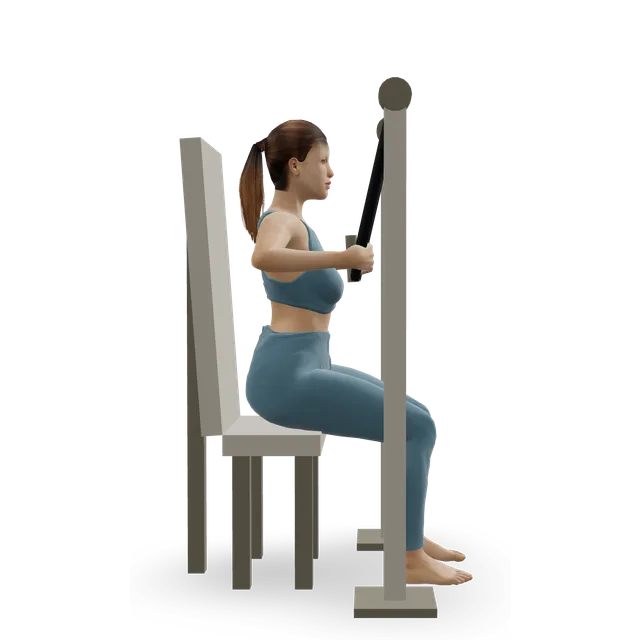
A squat or leg press, a hinge, a push, a pull, a calf move and a carry. The UK prescription uses 7 machines: leg press, knee extension, leg curl, calf raise, chest press, seated row and pulldown. Free weights work too, and the NHS's gentle home routine starts with 5 sit-to-stands and 3 sets of 5 to 10 wall press-ups, at least twice a week.

Sources 12, 31

How hard

Weeks 1 to 4: 1 or 2 sets of 10 to 12 at a moderate effort, about 3 to 5 out of 10. Then hard, about 6 to 8 out of 10: 2 or 3 sets of 8 to 12, stopping about 2 reps short of failure. That learning month is longer than our plans' 2 weeks, as our gym workout for seniors does; fitter people over 50 can use the plans' 2 weeks (our suggestion).

Sources 12, 9, 14

How many sets

Two or three hard sets of a main move per session gives each muscle about 4 to 6 a week over two sessions, more with a third session or a second move. Muscle growth was greater at 10 or more sets a week, so our plans for over-50s start below that on purpose and build.

Source 14

Rest and progress

Rest 1 to 2 minutes between sets, longer on heavy lifts. Add reps until every set reaches the top of its range, then the smallest weight step.

Source 12

Power

Once a move is learned, stand up or press briskly and lower over 2 to 3 seconds. Guidelines suggest power work at moderate loads, 40 to 60% of your one-rep max. The benefit is modest.

Sources 9, 13, 15

Balance and cardio

A few minutes of balance work after each session and on another day, next to a counter. Build up to 150 minutes a week of moderate activity, such as brisk walking.

Sources 16, 30

Your first 12 weeks, step by step

Our editorial starting point, built on the UK prescription for sarcopenia, the NSCA position statement, international guidance for older adults and our plans' shared notes.

  1. Check the list in "Check first". With heart disease, diabetes medicines, osteoporosis or a recent fall or operation, agree the plan with your GP or team.
  2. Train your whole body twice a week, at least 2 days apart: a squat or leg press, a hinge, a push, a pull, and a calf or carry move.
  3. Weeks 1 to 4: 1 or 2 sets of 10 to 12 at a moderate effort, about 3 to 5 out of 10, while you learn the moves.
  4. From week 5: 2 or 3 sets of 8 to 12 at a hard effort, about 6 to 8 out of 10, stopping about 2 reps short of failure.
  5. When you can do 12 good reps with a couple to spare, add the smallest weight step.
  6. Once a move is learned, stand up or press briskly and lower over 2 to 3 seconds.
  7. Finish with balance work next to a counter, and walk on other days, building towards 150 minutes a week.
  8. At week 12, repeat a simple test, such as our chair stand or grip strength test, and keep going: gains fade within months if you stop.

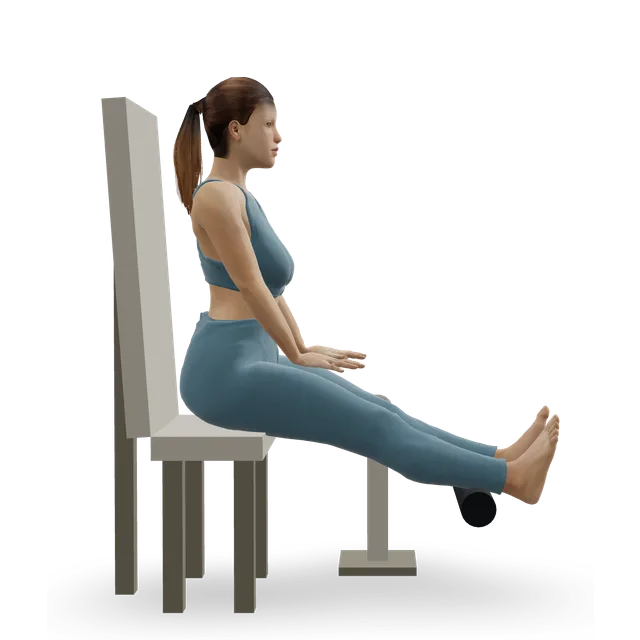
Loading the 3D figure…

Gets into position, then repeats the movement. Technical checks passed; qualified exercise review is pending.

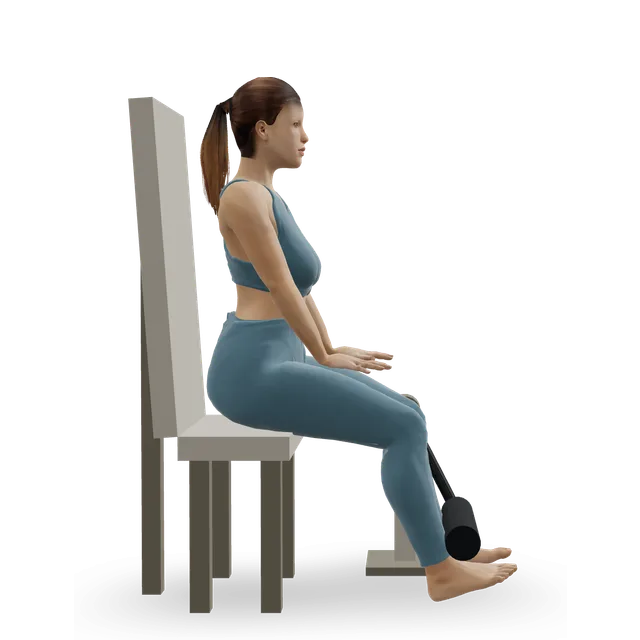
The movement on the figure: Leg press

In the gym: the machines and the main lifts

Twice a week, at least 2 days apart. Our gym workout for seniors puts the machines in order with their doses; the free-weight lifts are in our strength and balance and full-body gym workouts.

At home: a chair, a step, a band and dumbbells

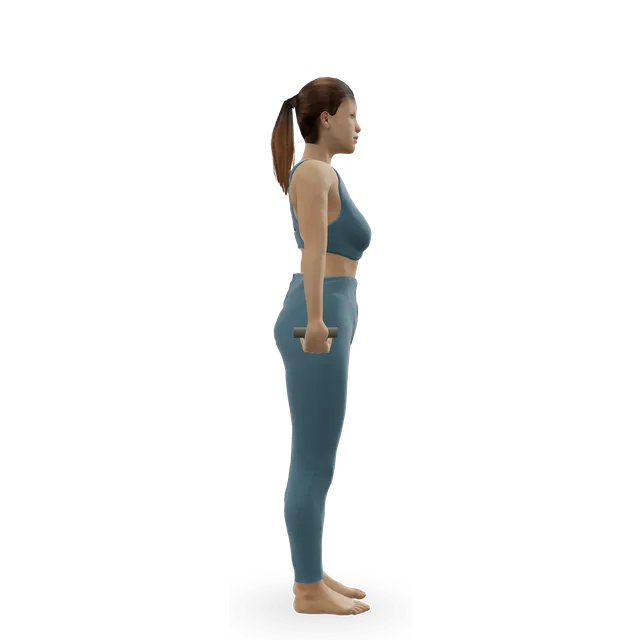
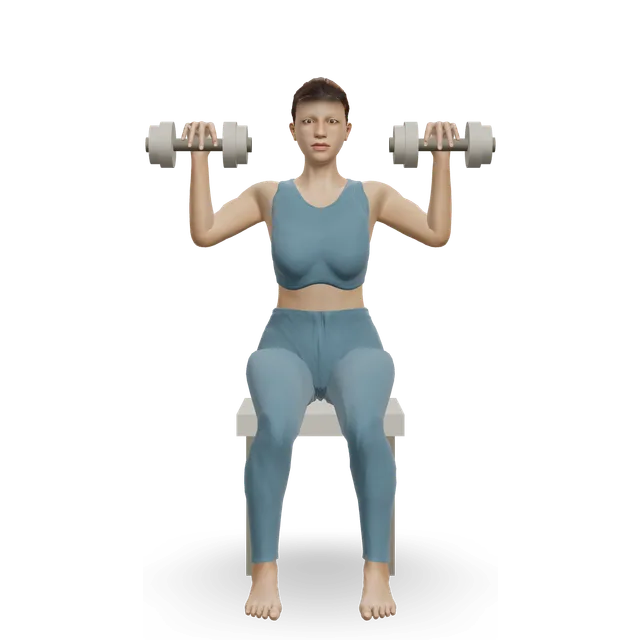
Every move has an easier version. Add load as reps get easy: a higher step, a stronger band, dumbbells. The NHS starts with 5 sit-to-stands and 3 sets of 5 to 10 wall press-ups, at least twice a week.

Power and balance: lift briskly, stay steady

Once a move is learned, lift it briskly and lower it slowly, as in our power and balance workout. Do balance work next to a counter.

Protein, food and supplements

How much protein

From 65, expert groups advise at least 1.0 to 1.2 g of protein per kg of body weight a day for health, 1.2 g or more if you're active, and 1.2 to 1.5 g with an illness. Between 50 and 64, our protein calculator's building-muscle setting (about 1.6 g per kg) applies, as for younger adults.

Sources 17, 18, 20

What the trials show

With training, eating more protein added a little more lean mass in people over 65 at 1.2 to 1.59 g per kg a day. That's a small effect, and the certainty is low. Our protein calculator gives a range of 1.2 to 1.6 g per kg from 65 when you're building muscle.

Source 19

Spread it over your meals

Food first: meat, fish, eggs, dairy, beans, lentils and tofu all count. Include some protein at breakfast and lunch as well as your evening meal (our suggestion).

Kidney disease

If you have kidney disease, ask your doctor before raising your protein or taking creatine; the safety studies were in healthy people.

The PROT-AGE expert group makes the same exception for severe kidney disease.

Source 17

Supplements

You don't need any. In 22 trials of 721 older adults, creatine taken during strength training added more lean tissue than a placebo. No guideline for sarcopenia recommends it, and our sarcopenia guide covers a newer review that found a small extra strength gain but no clear extra muscle. Ask your doctor first if you have kidney disease.

Source 28

Joints, bones, the menopause, testosterone and health conditions

Osteoarthritis

Strength training eased osteoarthritis pain a little in trials. Joints may ache a little at first, as our older adults guide says; if a joint is hot and swollen, or pain keeps getting worse, get it checked.

Source 23

Osteoporosis and bone

In 101 postmenopausal women with low bone mass, 8 months of supervised heavy lifting and impact work raised spine bone density by 2.9%, against a 1.2% fall with gentle home exercise, with one minor back spasm. It was closely supervised, so learn heavier lifts with a physiotherapist or qualified coach first. Our osteoporosis guide covers which moves to change.

Source 27

The menopause

Strength training keeps muscle and strength through the menopause, and strength and impact work help bone. High-quality evidence that the menopause itself causes sarcopenia is lacking. Hot flushes and HRT are for your GP; our menopause guide has the exercise side.

Source 21

Testosterone

You don't need to chase it. The NHS calls the "male menopause" a misleading label: testosterone falls steadily and slowly. If you have symptoms such as low sex drive, erection problems or low mood, see your GP; our testosterone guide covers what exercise does.

Source 22

Heart disease, blood pressure and diabetes

Follow your cardiac or diabetes team's advice (see "Check first"). With high blood pressure, breathe out through every effort rather than holding your breath, as our breathing guide explains.

Women and men over 50

The same training works

In pooled trials, age and sex made little difference to the average response. Our plan for women over 50 adds bone-loading and pelvic floor work; our plan for men over 50 adds power, heart fitness and notes on the prostate.

Source 5

How long it takes, and keeping it

Weeks for strength, months for muscle

You'll usually feel stronger within a few weeks, and fitness rose within 3 weeks of training in older men in a small trial. Lean mass rose about 1.1 kg over about 20 weeks in pooled trials. People vary a lot, so compare yourself with your own log.

Sources 29, 2

The first year

In 14,690 adults training once a week, strength rose by about 30 to 50% in the first year and levelled off by 1 to 2 years, with age making little difference. That study was observational.

Source 25

Keep it

Older adults needed about 2 sessions a week to keep the muscle they had built, while strength held up on less. If you stop, older adults lose strength faster than younger ones.

Sources 7, 26, 6

Common slips

Training too gently for too long; only walking, which doesn't build much strength; skipping legs; going to failure on every set; too little protein at breakfast and lunch; and stopping after 12 weeks (our suggestions).

Workouts to follow

Our gym workout for seniors uses the UK sarcopenia prescription's 7 machines. The strength and balance, bone-strengthening and power and balance workouts cover home and the free weights.

Gym workout for seniors: machine strength training for muscle loss

A 50-minute gym session for older adults and sarcopenia: 7 machines for the legs, chest and back from the UK prescription, then a short balance finish.

50 minBeginner12 movesCardio machine, A bench or box

Strength and balance workout

Strength and balance in one session: squats, Romanian deadlifts, push-ups, rows, step-ups, back extensions, carries and single-leg balance.

45 minBeginner14 movesA wall, A dumbbell

Bone-strengthening workout

Impact, strength and balance for stronger bones, following UK osteoporosis consensus advice, with options for every level.

40 minBeginner14 movesA kettlebell, Other / check instructions

Power and balance workout: fast lifts and one-leg control

A 40-minute session of fast sit-to-stands, step-ups and medicine-ball pushes for power, then balance holds and steps beside a counter.

40 minBeginner17 movesA wall, A bench or box

Full-body gym workout A

A beginner full-body gym workout: goblet squats, dumbbell bench press, lat pulldowns, Romanian deadlifts and dead bugs, with sets, reps and rest.

45 minBeginner12 movesCardio machine, A band

Full-body gym workout B

Full-body gym workout B: trap bar deadlifts, cable rows, seated dumbbell press, step-ups, leg curls, push-ups and a Pallof press.

50 minBeginner13 movesCardio machine, Other / check instructions

Full-body dumbbell workout

A 35-minute full-body strength workout with dumbbells: goblet squats, presses, rows, Romanian deadlifts and carries.

35 minIntermediate9 movesA band, A dumbbell

Strength and balance exercises for seniors

A 40-minute strength and balance session for over-65s, built from the Otago home programme and NHS exercises, using a chair, a counter and a step.

40 minBeginner18 movesA bench or box, Something with weight

Balance exercises routine

Balance practice in 10 minutes: tandem stance, single-leg stands, marches, heel walks, tree pose and floor transfers.

10 minBeginner7 movesA wall, A bench or box

Chair exercises for seniors: a seated workout

A 20-minute seated workout for older adults who cannot stand for long: marching, leg and arm strength, posture, and sit-to-stands that lead back to standing.

20 minBeginner11 movesA bench or box, Something with weight

Easy cardio workout

A steady 30 to 45 minute cardio session at talk-but-not-sing pace: walk, cycle, row or cross-train, counting toward weekly activity guidelines.

40 minBeginner3 movesCardio machine, A wall

Plans for over-50s

The plans for women over 50 and men over 50 put the training, balance and cardio into a week. Over 65 or less steady on your feet, start with the seniors plan.

3 days a week

Workout plan for women over 50

A weekly plan for women over 50: strength, bone-loading and balance on 3 days plus walking, built on UK osteoporosis consensus advice.

3 training days45 minBeginner
3 days a week

Workout plan for men over 50: strength, power, balance and heart, 3 or 4 days a week

A 12-week workout plan for men over 50: three strength days with power and balance work, cardio and recovery, at the gym or at home, with a 4-day option.

3 training days45 minBeginner
3 days a week

Workout plan for men over 40

A 3-day strength plan for men over 40 with power and bone work, two cardio days and mobility, built on research on ageing muscle.

3 training days45 minBeginner
3 days a week

Workout plan for women over 40: strength, bone and heart through the perimenopause

A 12-week plan for women over 40: three strength days, impact for bone, cardio and recovery through the perimenopause, in a gym or at home, with a 4-day option.

3 training days45 minBeginner
3 days a week

Workout plan for seniors (65 and over)

A 12-week exercise plan for over-65s: strength and balance three times a week, short balance sessions and daily walks, based on falls-prevention trials.

3 training days40 minBeginner
3 days a week

Beginner strength program: a 5x5-style barbell plan

A 12-week beginner barbell program: squat every session, alternate bench and row with press and deadlift, and add weight each time until it stalls.

3 training days50 minBeginner
3 days a week

3-day full-body workout plan

A 3-day workout plan: three full-body gym sessions a week, alternating workouts A and B, with sets, reps, rest and an 8-week progression.

3 training days45 minBeginner

Warning signs: when to stop and get help

Stop and get medical help

If you get chest pain or pressure, feel faint or dizzy, are unusually breathless, or your heart races or beats irregularly during exercise, as our plans advise.

Call 999 (911 in the US)

For chest pain that comes on suddenly and doesn't go away, feels tight or like squeezing, spreads to your arms, neck, jaw, stomach or back, or comes with sweating, feeling sick, light-headedness or breathlessness; severe difficulty breathing; someone who faints while exercising; palpitations that don't go away, or come with chest pain, shortness of breath or feeling faint; or a headache that starts suddenly and is extremely painful, especially while lifting or straining, or comes with numbness or weakness, difficulty speaking or loss of vision. The NHS says a bleed on the brain may be more likely when lifting something heavy. Don't drive yourself to A&E.

Sources 36, 37, 38, 39, 40

Signs of a stroke

Signs of a stroke: the face drooping, weakness in an arm, or speech problems. Call even if the signs stop.

Source 34

After a fall

Call 999 (911 in the US) if you or someone else has fallen and may have hurt their head, back, neck or hip, or cannot get up. Keep them comfortable and warm, and don't try to lift them yourself. Get help from NHS 111 if someone has fallen and may be in pain, injured or unwell.

NICE asks for a full falls assessment for people who have fallen in the past year and are frail, were injured, could not get up on their own, lost consciousness, or have fallen twice or more. A falls service can offer a supervised programme such as Otago.

Source 33

Stop for today and contact your GP or NHS 111

Get advice soon for any of these:

  • Dizziness, light-headedness, unusual breathlessness, clamminess or chest tightness that settles when you stop.
  • Any fall or near-fall, new unsteadiness, or a new fear of falling: ask about a falls assessment.
  • Joint or muscle pain during an exercise that does not ease when you check your position and try again.
  • A newly swollen joint, or pain that is worse the next day and keeps getting worse (our editorial rule).

Weakness that isn't from training

Muscle weakness you can't explain, or that's getting worse (our suggestion).

Our suggestion: trouble gripping, or a foot that catches, that is getting worse over months is a reason to see a GP rather than to train harder.

Source 35

Ask for an urgent GP appointment or call NHS 111

Ask for an urgent GP appointment or get help from NHS 111 for a headache that's triggered or made worse by coughing, sneezing, bending down or exercising. In the US, contact your doctor or urgent care.

Source 41

Back pain that needs 999 or A&E

Call 999 or go to A&E: loss of feeling or numbness around the genitals or bottom, new trouble peeing or controlling your bladder or bowels, changes in genital sensation during sex or problems with erections or orgasm, or pain, tingling, weakness or numbness in both legs. These are signs of cauda equina syndrome, which needs treating in hospital urgently. Don't drive yourself.

Same day (GP or NHS 111): back pain and you feel hot, cold, shivery or generally unwell, or severe pain that starts suddenly or is getting worse quickly.

Source 42

Pain down a leg

See a GP if pain spreading down a leg hasn't improved after a few weeks of home treatment, is getting worse or stops your normal activities. Sciatica on both sides, or weakness or numbness in both legs that's severe or getting worse, is a 999 call or a trip to A&E.

Source 43

Hernia

See a GP if you think you have a hernia, a bulge or lump that may get bigger when you strain and smaller when you lie down. Get help from NHS 111 if you have a hernia and pain in or around it, a bloated tummy, you feel or are sick, you're vomiting blood or your vomit looks like coffee grounds, you're constipated, you have a high temperature or feel hot, cold or shivery, or you've suddenly become confused. Call 999 or go to A&E for a femoral hernia (a small lump at the top of your thigh, in your groin) with very bad tummy pain, sickness, being unable to fart or poo, a high temperature or sudden confusion.

Sources 44, 45

A pop while pressing or pulling

A pop or tearing at the front of the armpit or chest during a lift, followed by bruising into the chest or upper arm, a change in the shape of the chest or armpit, or weakness pushing, can be a torn chest tendon. Don't wait for it to settle: get help the same day from NHS 111 or an urgent treatment centre, as our pec strain guide explains.

A sudden pop at the front of the elbow during a heavy pull, with bruising, a gap at the front of the elbow or a bulge in the upper arm, can be a torn biceps tendon. Go to an urgent treatment centre or A&E (in the US, urgent care or the emergency department), and don't wait for it to settle: repair is best done within the first 2 to 3 weeks.

After heart surgery

After heart surgery through the breastbone, or a heart or lung transplant, follow your surgeon's advice before pushing, pulling or lifting with your arms.

Myths

"You can't build muscle after 50"Strong evidence

Adults over 50 gained about 1.1 kg of lean mass and 24 to 33% in strength in pooled trials, and people over 75 and in their 90s gained too.

Sources 2, 1, 3, 4

"Lifting weights is dangerous for older adults"Strong evidence

Serious harm wasn't raised in over 11,000 older trial participants, and serious problems were rare in 121 trials. The real risks are poor technique, heavy repetitive loads and the wrong exercise, which good instruction prevents.


Sources 14, 23, 9

"Older adults should only lift light weights"Strong evidence

Most trials used high effort, the NSCA works towards 70 to 85% of your one-rep max, and international guidance calls hard training feasible and effective even in people who are severely frail. Start moderate and build.

Sources 23, 9, 13

"Walking is enough to keep your muscles"Strong evidence

Walking is good for your heart, but it doesn't build much strength, as our older adults guide says, and walking programmes haven't been shown to prevent falls. Strength and balance work do the job.

Source 16

"You need far more protein after 50"Emerging evidence

A little more, not huge amounts: at least 1.0 to 1.2 g per kg a day over 65, or 1.2 g or more if active, and extra protein added only a little muscle in trials.

Sources 17, 19, 20

"Low testosterone stops men building muscle after 50"Emerging evidence

The NHS says testosterone falls by about 1% a year, which is unlikely to cause problems by itself, and men over 50 gain muscle and strength with training.

Sources 22, 5

"Women can't build muscle after the menopause"Emerging evidence

High-quality evidence linking the menopause with sarcopenia is lacking, and in pooled trials women and men gained alike, relative to where they started.

Sources 21, 5

Questions people ask

Can you build muscle after 50?

Yes. In pooled trials, adults over 50 gained about 1.1 kg of lean mass in about 20 weeks and 24 to 33% in strength, and people over 75 gained strength and muscle too.

Is it harder to build muscle after 50?

A little. Relative gains were similar from 19 to 78 in one large pooled study, but older adults gain slightly less in absolute terms and lose it faster if they stop. Keeping 2 sessions a week holds on to it.

What's the best way to build muscle after 50?

Two or three full-body strength sessions a week, building over a month from a moderate effort to hard sets of 6 to 12 reps that stop a couple of reps short of failure, plus balance work and enough protein. Our plans for women and men over 50 put it into a week.

How often should I lift weights after 50?

Twice a week is the core of the UK prescription for muscle loss, and up to 3 times suits many people. Once a week still builds strength, and keeping two sessions a week helps you keep the muscle you build.

Should I lift heavy or light weights after 50?

Build up to fairly heavy: the NSCA works towards loads of 70 to 85% of your one-rep max, about 6 to 12 reps. Start at a moderate effort while you learn the moves, and you don't need to go to failure.

How much protein do I need to build muscle after 50?

From 65, at least 1.0 to 1.2 g per kg of body weight a day for health, and 1.2 g or more if you're active; under 65, the usual building-muscle amount of about 1.6 g per kg. Our protein calculator gives your range. With kidney disease, ask your doctor first.

Can I build muscle after 60 or 70?

Yes. Trials in people aged 75 and over found gains in strength and muscle size, and frail people aged about 90 gained 174% in strength in 8 weeks. Our seniors plan and gym workout for seniors start gently.

Can women build muscle after the menopause?

Yes. Women gained strength and muscle with training in the same trials as men, relative to where they started, and high-quality evidence that the menopause itself causes sarcopenia is lacking. Strength and impact work also help bone; our menopause guide has more.

Do men over 50 need testosterone to build muscle?

No. The NHS says testosterone falls by about 1% a year from around 30 to 40, which is unlikely to cause problems by itself, and training builds muscle at any age. Symptoms such as low sex drive or erection problems are for your GP.

Is lifting weights safe with arthritis or osteoporosis?

For most people, yes, with the right moves. Strength training eased osteoarthritis pain a little in trials, and supervised heavy lifting raised spine bone density in women with low bone mass. With osteoporosis or a past spinal fracture, avoid loaded deep rounding of your back and get advice before heavy lifting.

Should I take creatine or protein shakes after 50?

You don't need either. Creatine added some lean tissue in trials of older adults, but no sarcopenia guideline recommends it, and food can cover your protein. Ask your doctor first if you have kidney disease.

How long does it take to build muscle after 50?

You'll usually feel stronger within a few weeks, and in trials lean mass rose about 1.1 kg over about 20 weeks. Strength rose 30 to 50% in the first year of once-weekly training in a large study. People vary a lot, so compare yourself with your own log.

Sources

  1. Peterson 2010 · Resistance exercise and strength in adults over 50: 47 studies (meta-analysis, Ageing Research Reviews)
  2. Peterson 2011 · Resistance exercise and lean body mass in adults over 50: 49 studies (meta-analysis, MSSE)
  3. Grgic 2020 · Resistance training and muscle size and strength in adults aged 75 and over: 22 trials (meta-analysis, Sports Med)
  4. Fiatarone 1990 · High-intensity strength training in nonagenarians (trial, JAMA)
  5. Ahtiainen 2016 · Strength and muscle responses to training in 287 men and women aged 19 to 78 (pooled analysis, Age)
  6. Lemmer 2000 · Strength gains and losses over 9 weeks of training and 31 weeks off in young and older adults (trial, MSSE)
  7. Bickel 2011 · Exercise doses to keep strength training gains in young and older adults (RCT, MSSE)
  8. Mitchell 2012 · Muscle size and strength with advancing age (quantitative review, Frontiers in Physiology)
  9. Fragala 2019 · Resistance training for older adults (NSCA position statement, J Strength Cond Res)
  10. UK Chief Medical Officers 2019 · Physical activity guidelines (updated July 2026, with the 2026 evidence update for adults, GOV.UK)
  11. Cruz-Jentoft 2019 · Sarcopenia: revised European consensus on definition and diagnosis (EWGSOP2, Age and Ageing)
  12. Hurst 2022 · Resistance exercise as a treatment for sarcopenia: prescription and delivery (UK expert review, Age and Ageing)
  13. Izquierdo 2021 · International exercise recommendations in older adults (ICFSR expert consensus guidelines, J Nutr Health Aging)
  14. Currier 2026 · Resistance training for muscle function, size and performance in healthy adults: 137 reviews (ACSM position stand, MSSE)
  15. Balachandran 2022 · Power training against standard strength training for physical function in older adults: 20 trials (meta-analysis, JAMA Netw Open)
  16. Sherrington 2019 · Exercise for preventing falls in older people living in the community (Cochrane review)
  17. Bauer 2013 · Protein intake in older people (PROT-AGE position paper, J Am Med Dir Assoc)
  18. Deutz 2014 · Protein intake and exercise for muscle function with ageing (ESPEN expert group recommendations, Clinical Nutrition)
  19. Nunes 2022 · Protein intake for muscle mass and function in healthy adults: 74 trials (systematic review and meta-analysis, J Cachexia Sarcopenia Muscle)
  20. Morton 2018 · Protein supplements and gains from resistance training: 49 trials (meta-analysis, BJSM)
  21. Menzies 2026 · Menopause, female sex hormones and skeletal muscle (narrative review, J Cachexia Sarcopenia Muscle)
  22. NHS · The "male menopause" (past its review date: reviewed October 2022, review due October 2025)
  23. Liu 2009 · Progressive resistance strength training for physical function in older adults: 121 trials (Cochrane review)
  24. Borde 2015 · Dose-response relationships of resistance training in healthy older adults: 25 RCTs (meta-analysis, Sports Med)
  25. Steele 2023 · Strength over up to 6.8 years of once-weekly minimal-dose training in 14,690 adults (retrospective cohort, Res Q Exerc Sport)
  26. Spiering 2021 · The minimal dose of exercise to keep endurance and strength (review, J Strength Cond Res)
  27. Watson 2018 · High-intensity resistance and impact training in postmenopausal women with low bone mass: the LIFTMOR trial (RCT, JBMR)
  28. Chilibeck 2017 · Creatine during resistance training in older adults: 22 trials, 721 people (meta-analysis, Open Access J Sports Med)
  29. Murias 2010 · How fast fitness rises with training in 8 older and 8 young men (trial, J Appl Physiol)
  30. NHS · Physical activity guidelines for older adults
  31. NHS · Strength exercises
  32. NHS · Low blood sugar (hypoglycaemia) (past its review date: reviewed August 2023, review due August 2026)
  33. NHS · Falls
  34. NHS · Symptoms of a stroke
  35. NHS · Motor neurone disease (MND)
  36. NHS · Chest pain (past its review date: reviewed August 2023, review due August 2026)
  37. NHS · Heart attack
  38. NHS · Heart palpitations
  39. NHS · Fainting
  40. NHS · Subarachnoid haemorrhage
  41. NHS · Headaches
  42. NHS · Back pain
  43. NHS · Sciatica
  44. NHS · Hernia
  45. NHS · Femoral hernia

Exercise education, not a personal prescription, and clinical review of these guides is pending. Check with a GP before starting hard training if you have a heart condition, chest pain, dizziness or breathlessness when active, and stop for sharp or increasing pain. Health disclaimer.