Pilates for longevity: strength, balance and fitness as you age, Pilates against weights and walking, the evidence, and a class
One large study has linked Pilates with a longer life: in 55,023 American adults, people who did Pilates were less likely to die over about a decade. It can't show that Pilates caused that, and its authors say people who do Pilates may already be more active and health-conscious. What clearly goes with living longer and staying independent is being active, strong, steady on your feet and fit, and Pilates can help with some of that.
Our Pilates over 50 and Pilates for seniors guides cover starting later in life, bones and joints. This guide explains what the evidence shows about Pilates and ageing, what strength, balance and fitness mean for a long life, how Pilates compares with strength training and walking, why it isn't enough on its own, and a class that puts strength, balance and getting up from the floor in one session.
One study links Pilates with a longer life, and it can't show cause
In 55,023 US adults, people who did Pilates had a 36% lower risk of dying during about a decade of follow-up. The authors call the study exploratory and say general activity and healthier habits may explain it. No trial has tested whether Pilates adds years.
What goes with a longer life: active, strong, steady and fit
In large studies, any physical activity, strength work, a stronger grip, being able to stand on one leg for 10 seconds, and fitness all go with lower mortality. These are links, not proof that one causes the other.
Exercise trials in older adults haven't shown fewer deaths, partly because deaths are few over a few years. They have shown less disability and fewer falls.
Against doing nothing, Pilates improved balance, strength and everyday function in people over 60, though reviews disagree on strength. It hasn't been shown to beat other exercise, and it hasn't been shown to cut falls.
Strength training has the stronger record for muscle and bone, and Pilates hasn't been shown to build bone. Pilates is light to moderate work, so walking or other brisk activity builds the fitness that goes with a longer life.
People who became active in their 40s to early 60s had lower mortality than those who stayed inactive, much like people active all along, and strength training can be adapted even for frailty.
Longevity means living longer, and most people asking about Pilates also mean staying strong, steady and independent for longer. Ageing isn't a problem to fix; the aim is to keep doing what matters to you. Exercise can't stop ageing, but the UK guidelines say activities that keep muscles strong and improve balance are essential throughout life, and help keep independence in older age.
Large studies follow people for years and compare death rates by how active, strong or fit they were. They show links, not cause: healthier people find it easier to be active, so the authors warn that "bias from reverse causation might persist" and that "causal inferences cannot be made".
A method of exercise "designed to stretch, strengthen, and balance the body", developed by Joseph Pilates, who was born in Germany in 1883. The NHS describes Pilates as suitable "for people of all ages and fitness levels" and lists it among the activities that strengthen muscles in older adults.
Mostly healthy women in their 60s and early 70s: across 51 trials in adults over 55 (average age 66.5), 31 included only women and one only men. We found no published Pilates trial in people who are frail or have sarcopenia (age-related muscle loss); trials in these groups are registered but haven't reported.
We could read only the study's summary (its abstract), not the full paper.
What it foundEmerging evidence
Researchers used US national health surveys from 2007 and 2012, with 55,023 adults, and followed deaths to 2019 (5,530 deaths). Of 21 complementary health practices, only yoga and Pilates stayed linked with lower mortality after adjustment: a hazard ratio of 0.64 for Pilates (from 0.49 to 0.85) and 0.73 for yoga. That means people who did Pilates had about a 36% lower risk of dying in the follow-up than people who didn't.
It's an association, not proof. The authors write that "general physical activity and health-conscious selection" may explain the link. In an interview, the lead author said healthier people may be the ones signing up, and that Pilates "might just be a very visible flag" of someone who takes care of themselves.
Because we could read only the abstract, we couldn't check how many people did Pilates, how many of them died, exactly what the researchers adjusted for, or how the question about Pilates was asked.
Other big studies didn't count PilatesEmerging evidence
An earlier survey of 26,727 US adults found most types of exercise "indistinguishable in relation to longevity". A study of 272,550 older adults didn't ask about yoga or stretching, and the largest study of strength training and mortality "did not capture other forms of strength training like calisthenics and Pilates", so its findings can't be borrowed for Pilates.
In the one Pilates study of telomeres (the protective ends of chromosomes that shorten with age), 11 women who had done Pilates for years didn't differ from 11 inactive women over 12 months. Across exercise studies, the effect on telomeres is small to moderate, and in 3,556 UK adults, physical activity, with yoga or Pilates as one listed activity, was linked with slower ageing on 3 of 7 ageing clocks measured in the blood.
All of these come from studies that follow people over time, which show links, not cause.
Being activeStrong evidence
In 36,383 adults wearing activity monitors, "Any physical activity, regardless of intensity, was associated with lower risk of mortality": the most active quarter had about a quarter of the risk of the least active. The NHS says exercise can "lower your risk of early death by up to 30%", and the World Health Organization (WHO) that people who are insufficiently active have a 20% to 30% higher risk of death than those who are sufficiently active.
Most of the benefit comes by the guideline amountStrong evidence
In 661,137 adults, doing 1 to 2 times the minimum of 150 minutes of moderate activity a week went with about 31% lower mortality, and 3 to 5 times the minimum 39%: more helped, but "the additional benefit was modest". In people over 60, the link with daily steps levelled off at about 6,000 to 8,000 steps.
Muscle-strengthening activity was linked with 10 to 17% lower mortality, the biggest drop (about 10 to 20%) at 30 to 60 minutes a week; in 147,374 adults followed up to 30 years, 90 to 119 minutes a week went with 13% lower mortality and "No additional benefit was observed above 120 min/week." Across about 1.9 million people, a stronger grip went with lower mortality (hazard ratio 0.69).
Sarcopenia (low muscle strength and mass) went with a higher death rate across 17 studies. Europe's definition calls it "a muscle disease (muscle failure) rooted in adverse muscle changes that accrue across a lifetime".
In 1,702 adults aged 51 to 75 at one clinic, being unable to stand on one leg for 10 seconds went with higher mortality (hazard ratio 1.84); the same clinic found low sitting-rising test scores predicted deaths. Each 0.1 m/s faster walking speed went with 12% lower mortality in 34,485 people over 65, and in 13,423 adults over 65, the best up-and-go, one-leg stance and chair-stand scores went with about half the risk.
Across 199 studies, high cardiorespiratory fitness went with about half the mortality of low fitness (very low to moderate certainty), and each step up in fitness with 11 to 17% lower risk.
Flexibility, only at the stiff endEmerging evidence
Very stiff older adults did worse, but "gains beyond a moderate functional range yielded no further survival benefit", and trunk flexibility showed no pattern with mortality in a Canadian study. Being more flexible is good for comfort and movement, not a longevity lever.
In 315,059 Americans aged 50 to 71, people inactive for most of adult life who became active at 40 to 61 had lower mortality (hazard ratio 0.65), "suggesting that midlife is not too late to start physical activity". In 14,599 UK adults, becoming active over 5 years went with 24% lower mortality.
In Norway, 5 years of supervised training in 1,567 people aged 70 to 77 "has no effect on all cause mortality compared with recommended physical activity levels", in a healthy, active group. In the US LIFE trial (1,635 inactive people aged 70 to 89), "Physical activity did not decrease the death rate." Across 29 long-term trials, exercise didn't significantly change deaths. Deaths are few over a few years, so trials struggle to show a difference.
LIFE's walking, strength, flexibility and balance programme cut major mobility disability (30.1% against 35.5%). Long-term exercise cut falls by about 12% and injurious falls by about 26%. In the Cochrane review of 108 trials, balance and functional exercise cut the rate of falls by 24% (high certainty), and 3 or more hours a week including balance and functional work cut it by 42%.
Progressive resistance training gave older adults large strength gains across 121 trials and improved getting up from a chair and walking speed. The National Strength and Conditioning Association says programmes "can be adapted for older adults with frailty, mobility limitations, cognitive impairment, or other chronic conditions".
What the evidence says about Pilates and ageing well
Most Pilates trials in older adults are small, short, in women, and against doing nothing. We say where the evidence is thin.
Against doing nothing: better balance and functionEmerging evidence
A 2021 review of 39 studies in people 60 and over found Pilates improved balance, flexibility and everyday function against doing nothing (low certainty). Across 51 trials in adults over 55, gains were larger against inactive groups than active ones, and the up-and-go test (standing, walking 3 metres and sitting) improved by about a second in 6 trials.
The 2021 review found a moderate strength gain against doing nothing, at moderate certainty, but a 2024 review of 24 trials found no clear gain (low quality) and called it "not feasible" to recommend Pilates for strength in older adults. In 60 women aged 60 to 80, Pilates and resistance training each did better on different strength tests.
Against other exercise: no betterEmerging evidence
Pilates was no better than other exercise for strength, balance or flexibility (very low to low certainty). In 44 adults in their 60s, an aerobic programme of the same 90 minutes a week beat Pilates for walking speed and balance; in 153 adults over 55, the Pilates group didn't improve significantly over 24 weeks. Pilates and traditional balance training helped balance equally in 31 people at risk of falls. A 2026 analysis of 423 trials found 18 of 19 types of exercise improved balance, adding that "These estimates do not establish superiority."
Reviews say Pilates "can be recommended to enhance static and dynamic postural balance in older adults, but not to reduce the number of falls", and note "an absence of high-quality evidence" on falls. Only two trials counted falls: one found fewer with Pilates but compared women in two different care homes, and a 53-person pilot found fewer fall injuries that weren't statistically clear. The 2021 review's large effect on "risk of falls" may be a risk score rather than counted falls, so it doesn't show fewer falls.
One review found less fear of falling with Pilates. Reviews link holistic exercise such as Pilates, yoga or tai chi with bigger drops in fear of falling, and the world falls guidelines note that supervised holistic classes in the community had the largest effects on concerns about falling.
Pilates or yoga didn't change bone density in 591 women aged 45 to 78. In women with low bone mass, supervised high-intensity resistance and impact training raised spine bone density. Our Pilates for osteoporosis guide covers bones.
Mat and apparatus Pilates gave similar gains in strength and function in 48 women about 65. Reformer Pilates once a week improved balance and walking in 55 adults aged 65 to 95 at risk of falls.
Strength training: the stronger recordStrong evidence
For muscle and bone, strength training with load you keep increasing has the stronger evidence. Pilates counts toward your strength days when you work hard enough, and more so with bands, springs or weights; our Pilates for strength guide explains how to make it harder.
A Pilates session is light to moderate work, about 3 METs (3 times your energy use at rest). Brisk walking, cycling or swimming build the cardiorespiratory fitness that tracks most strongly with survival.
The UK guidelines ask older adults to do activities that improve strength, balance and flexibility on at least 2 days a week, 150 minutes of moderate activity, and to break up long spells of sitting. The WHO asks older adults for varied activity emphasising balance and strength on 3 or more days. Pilates covers part of this.
The world falls guidelines recommend balance and functional exercise 3 or more times a week, made harder over at least 12 weeks, and add that "General physical activity alone (e.g. walking) is unlikely to prevent falls." Our Pilates for balance guide shows how to make Pilates more like the programmes that work.
Sit to stand (2 sets of 5 slow, our Pilates for balance class), the goblet squat (3 sets of 8 to 12, our strength and balance workout, with sit to stands to start), the step-up (2 sets of 8 reps each side, our strength and balance workout; a hand on a rail is fine) and the slow calf raise (5 to 8 slow, our Pilates for balance class).
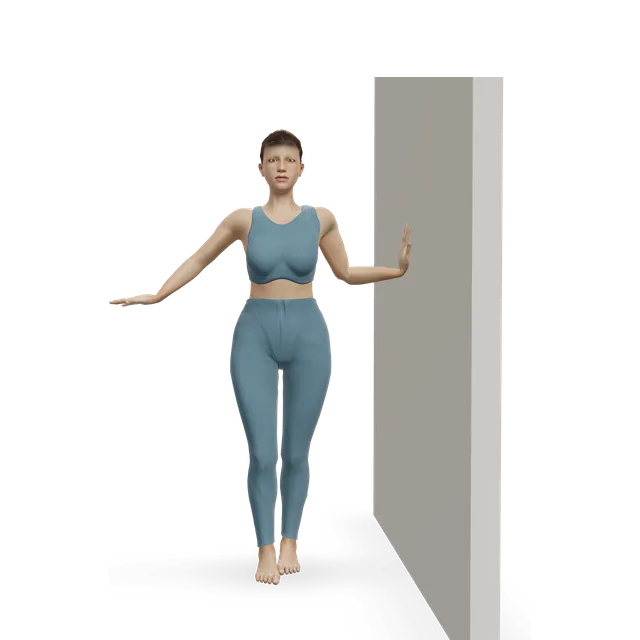
Wall push-ups (5 to 10, our strength and balance exercises for seniors class), the band row (3 sets of 10 to 15, stopping 2 to 3 reps short of failure, with 60 to 90 seconds' rest, from the move page's dose) and the farmer's carry (2 × 30 m, our strength and balance workout; full shopping bags work too).
Tandem stance and heel-to-toe walk (hold 10 s each way, then 5 steps heel to toe, twice), the single-leg stand (3 holds of 5 to 10 s each side), both our Pilates for balance class's; side-stepping (10 steps each way, next to a counter (the NHS balance exercises), from the move page's dose); the wall side leg lift (10 to 12 each side, from the move page's dose); and getting down to the floor and up again (5 to 8 slow cycles down and up, changing the leading leg (our editorial starting point), from the move page's dose), practised with someone nearby and a sturdy chair close by, as its page says.
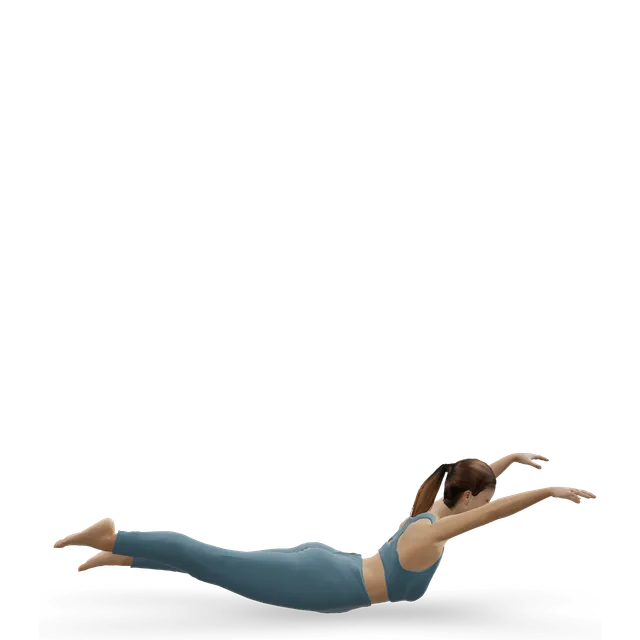
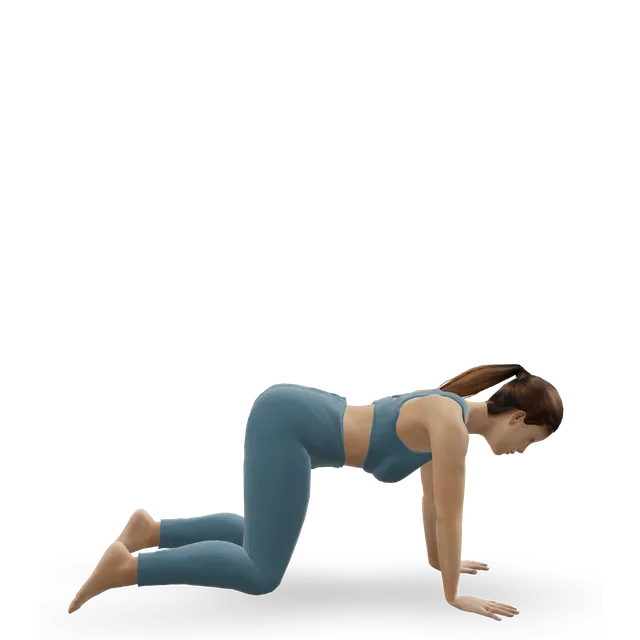
Swimming (2 to 3 sets of 20 to 30 seconds, from the move page's dose), the seated upper-back lift (3 to 5 repetitions, each held 3 to 5 seconds, at least twice a week, from the move page's dose), the side kick (8 to 10 each side, from the move page's dose), the bird dog (5 each side, 3 s hold, our Pilates for balance class), the knee hover (3 holds of 15 to 30 seconds, from the move page's dose) and lateral breathing (5 to 8 breaths at the start of every session, from the move page's dose). None of them rounds the spine under load.
A brisk walk (20 minutes at a pace where you can talk but not sing, our walk and Pilates workout) or, indoors, marching on the spot (2 minutes to warm up, our walk and Pilates workout).
Our editorial starting point, following the UK Chief Medical Officers' guidelines, the NHS and the world falls guidelines. Doses are starting points, not prescriptions.
Do our strength, balance and stamina Pilates class twice a week, or the Pilates for balance class and the Pilates strength workout on separate days.
Walk briskly, cycle or swim on most other days, building toward 150 minutes a week.
If falls are a worry, do balance work 3 or more times a week and make it a little harder every week or two.
Get up and move during long spells of sitting.
Add load as moves get easy: a heavier band or weight, or a harder version.
Keep going: the benefits in studies come from staying active over years.
Classes to follow
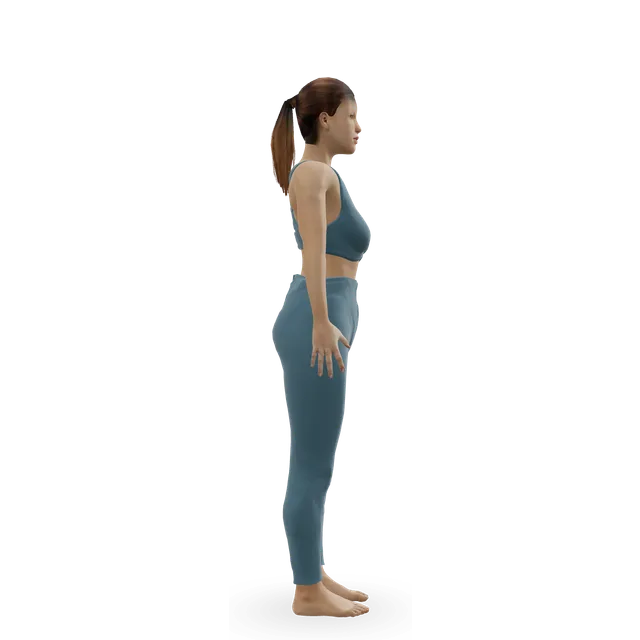
Our strength, balance and stamina class puts a brisk start, strength, balance at a counter, getting down to the floor and up again, and mat Pilates in one 35-minute session; no trial has tested the class itself. The balance and over-50 classes are gentler ways in, and the strength workout adds weights or a band.
Leave out loaded rounding moves such as the roll-up, teaser and roll-over, and use head-down versions of curl-ups; our Pilates for osteoporosis and Pilates over 50 guides explain which moves to keep and swap. The class on this page has no rounding moves.
Unsteady on your feet
Do every standing move at a sturdy counter with a chair behind you, as our Pilates for balance class sets up, and keep a hand on the counter with numb feet, as the balance move pages say.
After a hip or knee replacement
Check which floor positions are allowed with your surgeon or physiotherapist before practising getting down and up, as that move's page says.
Heart conditions
Keep breathing during holds and ask your cardiac team before long planks, as the plank move pages say; our Pilates for heart health guide covers more.
When to check first, and when to stop
This is general information, not a diagnosis. A&E means accident and emergency; in the US, call 911 for 999, and use your doctor's urgent line or urgent care for NHS 111.
See your GP first if
See your GP first if you get chest pain, breathlessness or dizziness when you are active, if you have a heart condition and want to exercise harder, or if you have had a fall.
If you have a heart, lung or joint condition, are pregnant or have recently been unwell, start gently and read our guide for your condition. Muscle soreness for a day or two after a new exercise is common and fades as you repeat it.
Start with supervision if
You're frail, have moderate to severe dementia, have had a spinal fracture or fall regularly: the UK guidelines suggest any new exercise is supervised by a trained professional at first.
Call 999 or go to A&E (accident and emergency) straight away for severe difficulty breathing (gasping, choking or not able to get words out), a chest that feels tight or heavy, pain that spreads to your arms, back, neck and jaw, lips or skin turning very pale, blue or grey, or sudden confusion. If you're more short of breath than usual, or your heart is racing, fluttering or skipping beats, contact NHS 111.
You feel any pain or become unwell, as the NHS advises for its Pilates videos, and especially for chest pain or pressure, unusual breathlessness, dizziness or fainting. If you have a health problem, an injury or any symptoms, get advice from a healthcare professional, such as a GP, before you start.
Call 999 if you or someone else has fallen and may have injured the head, back, neck or hip, or cannot get up.
Get help from NHS 111 if you or someone else has fallen and may be in pain, injured or unwell.
See a GP if you're worried about your balance or mobility, or you've had a fall. You may be able to refer yourself to a falls service, which can include strength and balance training.
If you take insulin or a sulfonylurea, exercise can bring on a hypo: see our type 2 diabetes guide. If you're on weight loss injections, see the exercise advice in our exercise for weight loss guide.
Before you start
The NHS advises getting advice from a healthcare professional first if you have a health problem, an injury or symptoms, or have recently had a heart attack or an operation.
"Pilates adds years to your life"Emerging evidence
One exploratory study linked Pilates with lower mortality, and its authors say general activity and healthier habits may explain it. No trial has tested it, and even exercise trials in older adults haven't shown fewer deaths. Being active, strong, steady and fit does go with a longer life.
"Pilates alone is enough for healthy ageing"Strong evidence
The UK guidelines ask for strength, balance and flexibility work plus 150 minutes of moderate activity. Pilates is light to moderate work, no better than other exercise for strength, and it doesn't build bone.
Becoming active in midlife went with mortality as low as being active all along, Pilates trials have included people up to 95, and strength training can be adapted for frailty.
Very stiff older adults did worse in one study, but more flexibility beyond a moderate range added nothing. The line attributed to Joseph Pilates, "If your spine is inflexibly stiff at 30, you are old; if it is completely flexible at 60, you are young", is a slogan, not evidence.
One large US study linked Pilates with a 36% lower risk of dying over about a decade, but it can't show that Pilates caused it: people who do Pilates may be more active and healthier anyway, as the authors say. What clearly goes with a longer life is being active, strong, steady and fit, and Pilates can help with some of that.
Does Pilates help you live longer than other exercise?
No study shows that. In the same survey yoga was linked with lower mortality too, and earlier work found most types of exercise were linked with longevity about equally.
Pilates or strength training for longevity?
Strength training has the stronger evidence: 30 to 60 minutes a week is linked with 10 to 20% lower mortality, and it builds muscle and bone. Pilates counts as strength work if you work hard enough, but it's no better than other exercise for strength, so doing both is a good plan.
Pilates or yoga for longevity?
Both were linked with lower mortality in the same 2026 survey, and neither has a trial behind it. Choose the one you'll keep doing, and add walking and strength work.
Is Pilates enough exercise as you get older?
Not on its own. The UK guidelines ask for strength, balance and flexibility work on at least 2 days, 150 minutes of moderate activity such as brisk walking, and less sitting; Pilates covers part of the first.
Does Pilates prevent falls?
It improves balance tests, but trials haven't shown fewer falls. Programmes that cut falls use challenging balance and functional exercise 3 or more times a week for at least 12 weeks.
Can you start Pilates at 60, 70 or 80?
Yes. Pilates trials have included people up to 95, and becoming active later in life is linked with lower mortality. If you're frail, have had a fall or a spinal fracture, start with supervision.
Does Pilates slow ageing?
In the one study of Pilates and telomeres, a marker of cell ageing, women who did Pilates for years didn't differ from inactive women. Exercise in general has a small to moderate effect on telomeres.
Does Pilates make you look younger?
No study has measured that. It can help you move more easily and feel steadier, which changes how you feel and carry yourself.
Is reformer Pilates good for longevity?
No study has compared mat and reformer Pilates for long-term health. In older women, mat and apparatus Pilates gave similar gains in strength and function.
How old was Joseph Pilates?
He was born in Germany in 1883. One person's life story can't tell us whether a method adds years; the studies on this page are the better guide.
How often should I do Pilates for healthy ageing?
Two or three times a week, with strength and balance in it, alongside brisk walking or other activity on most days. Our strength, balance and stamina class puts strength, balance and a floor get-up in one 35-minute session.
Exercise education, not a personal prescription, and clinical review of these guides is pending. If you are pregnant, have a health condition or have had recent surgery, check with a doctor, midwife or physiotherapist before starting, and stop for sharp or increasing pain. Health disclaimer.