No yoga trial
Our searches found no trial of yoga for bunions, and none of toe yoga by that name. Toe movements like it are studied as foot muscle exercises, which is where this guide's evidence comes from.
Yoga guide
No trial has tested yoga for bunions, and no trial has tested toe yoga by that name. What the studies show is that foot exercises may ease bunion pain a little, on low-certainty evidence, while a straighter toe is less likely; the NHS says you can't get rid of a bunion or stop it getting worse yourself. Wide, soft shoes come first, and surgery is for pain that affects daily life, not for looks.
This guide covers what a bunion is and who gets one, toe yoga and big toe mobility as written steps, the standing and balance poses that build steadier feet, which poses to change when the big toe hurts, shoes, separators and surgery, what the evidence shows, and the classes to follow. If your big toe is suddenly hot, red and swollen, or you have diabetes and a new foot problem, go straight to the warning signs.
Our searches found no trial of yoga for bunions, and none of toe yoga by that name. Toe movements like it are studied as foot muscle exercises, which is where this guide's evidence comes from.
The NHS says "You cannot get rid of bunions or stop them getting worse yourself", and that surgery is the only way to remove one. Podiatrists agree that only surgery corrects the shape.
About 23% of adults aged 18 to 65 and about 36% of people over 65 have one, women about twice as often as men, and they run in families. Many don't hurt. About 1 in 3 got worse over 7 years in adults over 50, and nothing predicted who.
Across 18 studies, on low-certainty evidence, less pain was more likely than a straighter toe. The best single trial, in 56 women, combined foot mobilisation, toe strengthening and a toe separator. Keeping the exercises up is the hard part.
The NHS starts with wide shoes with a low heel and soft sole, bunion pads and painkillers. Insoles eased pain for a few months in a trial; a year after surgery, 83% felt better, against 24% of people who waited.
Toe yoga and big toe mobility sitting down, then standing and balance poses for steadier feet: older people with bunions walk less steadily and fall more. Change the poses that bend a sore big toe back under your weight.
The NHS: "Bunions are bony lumps that form on the side of the feet", by the big toe, which "may point towards your other toes", with pain usually worse in shoes and when walking. The medical name is hallux valgus. A stiff, painful big toe with a lump on top is a different problem, big toe arthritis, and a lump by the little toe is a tailor's bunion.
Pooled across 76 surveys, about 23% of adults aged 18 to 65 and 35.7% of people over 65 had one, more often women. A 2023 review put it at 19% overall (about 24% of women and 11% of men), and a UK survey of general practice patients over 30 found 28.4%.
Bunions are "highly heritable" in a large family study, and a 2026 review found a strong hereditary part and more women affected. Shoes matter too: in older people, most wore shoes narrower than their feet; women who wore very narrow shoes in their twenties had more bunions later; and narrow-toed shoes were linked more strongly than high heels. All of this is association, not proof that shoes cause bunions.
In 3,077 older adults, 44% of women and 22% of men had a bunion, but only 11% and 3% had a painful one. Quality of life fell as bunions became more severe.
In 1,482 adults over 50, about 1 in 3 bunions got worse over 7 years, and nothing measured at the start predicted which. On X-rays, the angle grew by about 0.19 degrees a year on average, faster in about 1 foot in 6.
Older people with moderate to severe bunions walked more slowly with shorter steps, and across studies bunions went with more falls (about 1.9 times the odds). In a study that followed older people, weak toe muscles and disabling foot pain predicted falls, which is one reason to keep the feet strong.
Standing and balance poses spread weight through the big toe joint. Toes-tucked kneeling, the back foot in high lunge and warrior I, and rising onto tiptoe bend the big toe back under your weight; downward dog and plank put weight on bent toes; hero pose presses the top of the foot and toes into the floor. No study has measured any of these in people with bunions; this is our reading.
Shoes, insoles and, for lasting pain, surgery carry the evidence for bunion pain. Foot exercise has small trials; yoga has none.
Our searches of PubMed, Europe PMC and ClinicalTrials.gov found no trial of yoga for bunions. "Toe yoga" is a name some foot strength reviews use for lifting the big toe and the other toes separately. In 8 healthy runners, the big toe lift, the lesser toe lift, toe spreading and the short foot exercise each worked the small muscles of the sole.
The best summary, of 18 studies, found most were small with concerns about bias, and that "a reduction in pain appears more likely than improvement in HV angle" (HV is hallux valgus, the bunion angle).
Source 9
In 56 women with moderate bunions, 36 sessions over 3 months of foot mobilisation, big toe strengthening, toe grip, an ankle stretch and a toe separator did better than a waiting list, with benefits at a year. It was one small trial against no treatment, and the author says more research is needed on which parts helped.
Source 10
In 24 young adults with mostly mild bunions, adding a toe-spreading exercise to a foot orthosis for 8 weeks reduced the angle from about 18 to 15 degrees, against almost no change with the orthosis alone. The study was small and short, and didn't measure pain.
Source 25
One 2026 review of 11 small trials (401 people) reported that exercise reduced the angle by about 3 degrees, and more with taping or insoles added. A letter about it and the authors' reply have been published, and we couldn't read either, so treat the number with caution. A few degrees is a small change, of uncertain importance.
Source 26
In a pilot of shoes, insoles and an app-based foot programme in 28 women, only 7% completed at least three quarters of the exercise sessions, and they found it "quite challenging". In a small trial, supervised exercise did better than a home programme. A regular group class is one way to keep going (our reading; untested).
Across 13 trials, training the small foot muscles improved foot and ankle outcomes, and in people over 60, stronger toe muscles went with better balance. These studies weren't in people with bunions.
A 2004 Cochrane review of non-surgical treatment was withdrawn in 2009 as out of date and hasn't been replaced, so it shouldn't be quoted as current.
Source 30
These have no 3D demo, so they're given as written steps. Do them sitting, most days, within comfort, before your standing poses; skip them while the joint is hot, red and swollen.
The steps and dose from our yoga for feet guide: 5 to 10 slow repetitions of each part, once a day, sitting at first, then standing (an editorial starting point). No study has tested toe yoga by that name in people with bunions.
The first stage of our bunions guide, which follows the parts of the best exercise trial. Its doses are editorial, except toe spreading, from Arthritis UK's exercise sheet, and the big toe press, whose move page says: "For bunions, 10 holds of 5 to 10 seconds is an editorial starting point".
Towel toe curl: 10 to 20 reps (our bunions guide, from Arthritis UK's sheet); ankle circles, from the move's page: "10 slow circles each way with each foot (our editorial starting point). An NHS leaflet suggests doing ankle range of movement exercises regularly through the day while an ankle is stiff." Seated calf raise: 15 (our foot and ankle strengthening routine); wall calf stretch: 3 holds of 30 seconds each side (our bunions guide). Foot roll, from the move's page: "1 to 2 minutes per foot (our editorial starting point)." Keep the roller off the bunion itself (our suggestion).
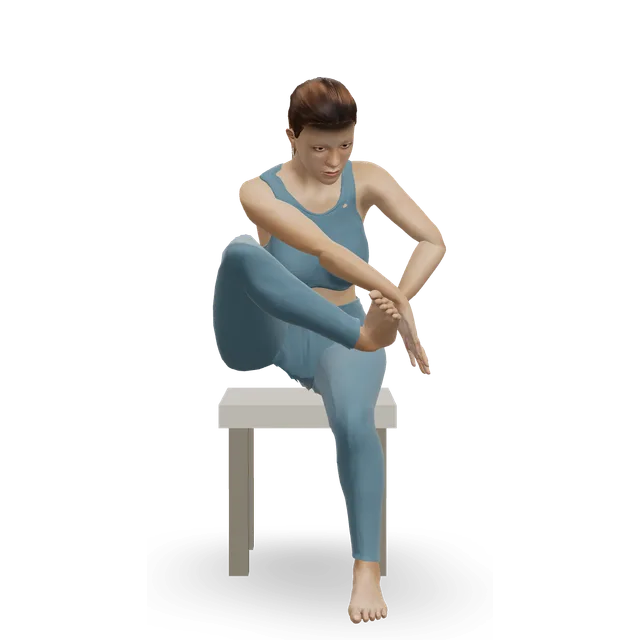
 3D demoTowel toe curlBeginner · Other / check instructions + A bench or box
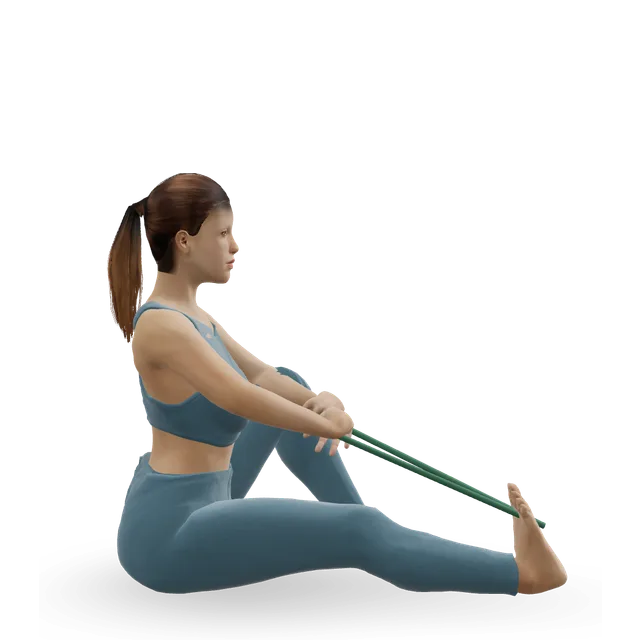
 3D demoAnkle circlesBeginner · No equipment
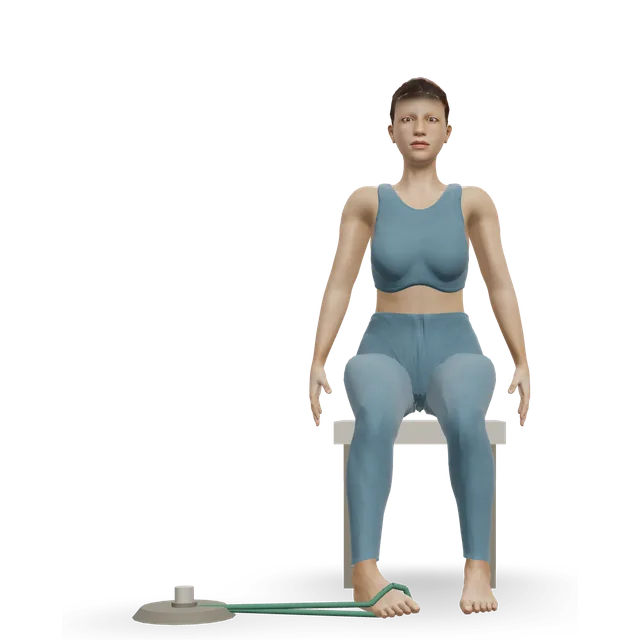
 3D demoSeated bent-knee calf raise (soleus raise)Beginner · A bench or box
 3D demoWall calf stretch (gastrocnemius)Beginner · A wall
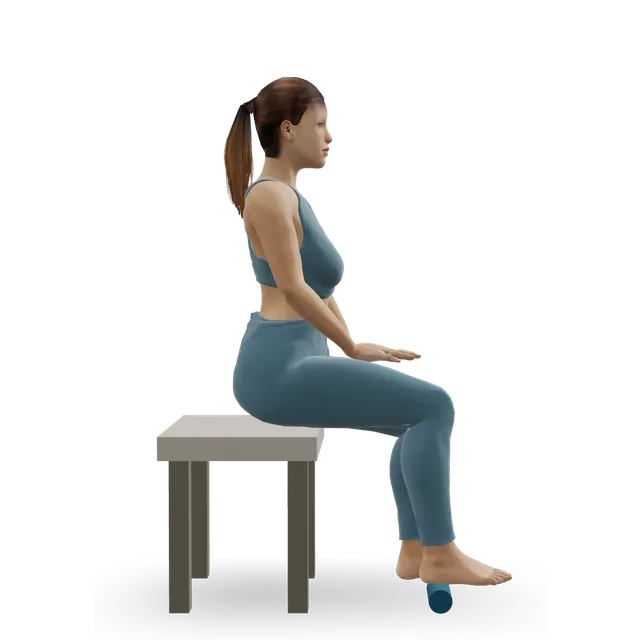 3D demoFoot roll (ball or roller)Beginner · A massage ball
After 4 weeks or so of the toe moves, as in our bunions guide's second stage. Mountain pose, from the move's page: "Stand for 5 to 10 slow breaths, 2 or 3 times. Once you feel steady, add a round with your eyes closed, within reach of a wall (our editorial starting point)." Lift and spread your toes, then let them rest. Slow calf raise: 3 sets of 10 to 15, pushing up through the big toe; single-leg stand: 3 holds of 30 seconds each leg, next to a counter; tibialis raise: 2 sets of 10 to 15 (our bunions guide). Tree pose: 2 holds of 20 to 30 seconds each side, fingertips on a wall, the lifted foot at your ankle; chair pose: 2 holds of 3 to 5 breaths; warrior II: 3 to 5 breaths each side, short stance (our yoga for plantar fasciitis class). Tandem stance: 30 seconds each way round, then 10 steps (our yoga for balance class).
 3D demoMountain pose (Tadasana)Beginner · No equipment
 3D demoSlow calf raiseBeginner · A wall
 3D demoSingle-leg standBeginner · A wall
 3D demoTibialis raiseBeginner · No equipment
 3D demoTree pose (Vrksasana)Beginner · No equipment
 3D demoChair pose (Utkatasana)Beginner · No equipment
 3D demoWarrior II (Virabhadrasana II)Intermediate · No equipment
 3D demoTandem stance and heel-to-toe walkBeginner · A wall
From the move pages' cautions and our bunion guides; where it says our suggestion, no study has tested it.
The toes-tucked kneeling page says: "Ease in with a bunion, an arthritic big toe, pain in the ball of the foot (including Morton's neuroma) or a recent foot injury." Untuck your toes, or leave it out while the bunion hurts.
The slow calf raise's own caution: "With pain in the ball of the foot or big toe arthritis, stop short of full tiptoe." Doing the same with a painful bunion, in calf raises and balances on the toes, is our suggestion.
High lunge and warrior I bend the back big toe under load. Lower the back knee to a padded floor with the toes untucked, as in low lunge, or shorten the stance (our suggestion).
Fine for most people. If weight on bent toes hurts the bunion, keep the heels lower, or come onto your forearms and knees (our suggestion).
These press the top of the foot and the big toe into the floor. Pad under your ankles or sit on a block (our suggestion).
Don't pull the big toe straight with your hand or a strap, and don't wear a toe separator in balance poses (our suggestion). Separators haven't been shown to change the shape.
If standing barefoot hurts, roomy, soft shoes are fine for standing poses (our suggestion, following the NHS's advice to wear wide shoes with a low heel and soft sole). With numb feet or diabetes, our yoga for feet guide suggests well-fitting shoes for standing poses, or chair yoga, and a foot check after each session.
Source 3
The NHS: wear wide shoes with a low heel and soft sole, try bunion pads, hold an ice pack wrapped in a tea towel to the bunion for up to 5 minutes at a time, and take paracetamol or ibuprofen; don't wear high heels or tight, pointy shoes. A GP or podiatrist can advise on insoles, toe spacers and splints, and in some areas you can refer yourself to an NHS podiatrist.
Source 3
In 209 people with painful bunions, foot orthoses eased pain at 6 months, but the benefit had faded by a year. Orthoses haven't been shown to slow a bunion's progress.
A dynamic splint eased pain in 70 people but "showed no effect on hallux valgus position". An insole with a toe separator eased pain without changing the toe angles in 30 women. A silicone separator worn 6 hours a night for a year changed the angle by about 3 degrees in one trial. Reviews of separators found small, poorly reported studies, and podiatrists say there is no evidence they correct the shape.
A year after surgery, 83% felt better, against 46% with orthoses and 24% on a waiting list. A Cochrane review rates surgery as possibly reducing pain against no treatment, at low certainty. About 1 in 10 people are dissatisfied, and how often bunions come back, from about 1 in 20 to about a quarter, depends on how it's measured. The National Institute for Health and Care Excellence (NICE) allows minimally invasive surgery. The NHS says surgery isn't done just to improve how feet look.
The NHS advises avoiding sports for 3 to 6 months, and the British Orthopaedic Foot and Ankle Society says full recovery can take up to a year. Breathing and upper body practice can come sooner; standing poses wait until your surgical team says so (our suggestion). Our bunion surgery guide has the stages.
No class includes the toe moves, because they have no 3D demo, so do them on their own first. Then the foot and ankle strengthening routine or the yoga for plantar fasciitis class, 3 times a week, and the yoga for balance class once a week, in shoes if barefoot standing hurts (our editorial order). In the plantar fasciitis class, skip toes-tucked kneeling, as it says, and ease off the sole stretch if pulling the big toe back hurts.
A 15-minute barefoot routine for stronger toes, arches, calves and ankles, finishing with balance. You need only a towel, a wall and a resistance band.
15 minBeginner11 movesA wall, Other / check instructionsA 25-minute yoga class for heel pain: sole and calf stretches before you stand, heavy heel raises every second day, short standing poses and a rest.
25 minBeginner14 movesA bench or box, Other / check instructionsThirty minutes of standing yoga for balance: strong standing poses, one-leg poses at the wall, and side steps, backward steps, reaches and sit-to-stands.
30 minBeginner16 movesA wall, A bench or boxA 25-minute Pilates class for flat feet: seated foot and ankle work, standing heel raises and balance, then Pilates for the hips and a gentle calf stretch.
25 minBeginner14 movesOther / check instructions, A bench or boxA 25-minute yoga class for numb or tingling feet and hands: seated breathing, foot, ankle and hand work, standing poses at a counter in shoes, and a seated finish.
25 minBeginner17 movesA bench or box, Something with weightStrength, balance and walking for older adults, over several weeks.
These are the same warning signs as our bunions, big toe pain and foot pain guides, word for word, apart from the lines marked as our suggestion. This is general information, not a diagnosis. A&E means accident and emergency; in the US, call 911 for 999.
The NHS bunions page sends red, hot, swollen skin over the joint to its gout page: a big toe joint that suddenly turns hot, red and swollen isn't a bunion flare.
A stiff, painful big toe that won't bend up, with a bump on top, is more likely big toe arthritis than a bunion: our big toe arthritis guide covers it (our suggestion).
The toe drifting back, metalwork you can feel that rubs, or pain under the ball of the foot that isn't settling: see your team.
Our bunion surgery guide has the full list.
Some discomfort during exercise is fine. Aim for pain you would call mild to moderate, no more than about 5 out of 10, that settles within an hour, with no more swelling or stiffness the next morning. If it's worse the next day, do a little less (a smaller range, fewer reps, a lighter band), not nothing.
Call 999 if:
Call 999 or go to A&E (accident and emergency) straight away for severe difficulty breathing (gasping, choking or not able to get words out), a chest that feels tight or heavy, pain that spreads to your arms, back, neck and jaw, lips or skin turning very pale, blue or grey, or sudden confusion. If you're more short of breath than usual, or your heart is racing, fluttering or skipping beats, contact NHS 111.
Source 48
A joint pain that is sharp, gets worse during a session, lingers into the next day or changes how you move is a reason to use an easier version, and to see a GP or physiotherapist if it keeps happening (the rule in our plans). Muscle soreness for a day or two after something new is normal. In a hot class, stop if you feel dizzy, sick or unwell; our hot yoga guide lists the signs of heat illness.
The NHS advises getting advice from a healthcare professional first if you have a health problem, an injury or symptoms, or have recently had a heart attack or an operation.
No trial has tested toe yoga in bunions. Non-surgical care was more likely to ease pain than change the angle, and the best exercise trial was a package with a toe separator. Podiatrists say there's no evidence exercises correct the shape.
No trial has measured progression after exercise. About a third of bunions get worse, nothing at the start predicted which, and orthoses haven't been shown to slow them. A US surgeons' page says non-surgical care can keep a bunion from getting worse, but no trial shows it, and the NHS says you can't stop it yourself.
They may ease pain. Changes in the angle were absent or a few degrees, and a year of nightly wear changed it by about 3 degrees in one trial. Reviews found the studies poor.
Bunions are mostly inherited. Narrow toe boxes are linked more strongly than heels, and all of it is association.
Most are painless: 44% of older women had one, and 11% a painful one. Surgery is for pain that affects daily life, not looks.
It may reduce pain, but about 1 in 10 people are dissatisfied, and bunions can come back.
No study shows harm, and none shows safety either. The poses that press on a painful bunion (toes tucked under, full tiptoe, the back foot in lunges) can be changed.
Source 1
It can help your feet feel stronger and steadier and may ease pain a little, but it won't straighten the toe. No trial has tested yoga for bunions, and across 18 studies of non-surgical care, less pain was more likely than a straighter toe. Wide, soft shoes come first.
No. The NHS says you can't get rid of bunions or stop them getting worse yourself, and surgery is the only way to remove one.
Toe yoga means lifting your big toe while the others stay down, then the reverse, and spreading your toes. These movements work the small muscles in your feet, but no study has tested toe yoga by that name in bunions; toe spreading added to an orthosis reduced the angle a little in one small trial.
Mountain pose with your toes lifting and spreading, tree pose next to a wall, and calf raises through the big toe, after toe yoga and big toe mobility sitting down. They build foot strength and balance, which matter more as bunions get worse.
No study shows harm. Change the poses that press a painful big toe: untuck your toes in kneeling poses, stop short of full tiptoe, and lower the back knee in lunges.
Most people can. If standing barefoot hurts, roomy, soft shoes are fine for standing poses. With diabetes or numb feet, wear shoes and check your feet every day, as our yoga for feet guide says.
They may ease pain or rubbing, but trials found little or no change in the shape of the toe; a year of wearing one at night changed the angle by about 3 degrees in one trial. Don't wear one during balance poses.
No study has shown that. About a third of bunions got worse over 7 years in adults over 50, and nothing at the start predicted which.
There's no evidence it does. Bunions are mostly inherited, and narrow shoes are the strongest outside link.
When your surgical team says so: the NHS advises avoiding sports for 3 to 6 months, and full recovery can take up to a year. Gentle upper body and breathing practice can come sooner; standing poses wait. Our bunion surgery guide has the stages.
A bunion is a lump on the side of the big toe joint with the toe leaning in; big toe arthritis makes the joint stiff and painful, often with a lump on top. Our big toe arthritis guide covers it, and both are worth showing a GP or podiatrist if they hurt.
Probably not: that's a sign of gout or a joint infection, especially with a high temperature, and it needs help the same day. Skip yoga on that foot until it has been checked.
Exercise education, not a personal prescription, and clinical review of these guides is pending. If you are pregnant, have a health condition such as glaucoma, high blood pressure or osteoporosis, or have had recent surgery, check with a doctor, midwife or physiotherapist before starting, and stop for sharp or increasing pain. Health disclaimer.