Pilates guide

Pilates for Down syndrome: low muscle tone and loose joints, the neck, balance and strength, heart checks, the evidence, and a routine

Pilates can be a good way for children and adults with Down syndrome (also called Down's syndrome) to build trunk control, balance and strength, alongside strength training, sport and the usual health checks. In the one published trial, 40 children aged 8 to 10 who swapped half of their physiotherapy session for Pilates, 3 times a week for 12 weeks, gained more balance and coordination than children who had physiotherapy alone. It was small, in one clinic, nobody was followed up afterwards, and it may overstate the effect. No Pilates trial has included adults.

Because muscle tone is lower and ligaments are looser, the aim is stronger muscles and better control, not more stretching, and a few classical moves that put weight through the head and neck are best left out. Down syndrome is a genetic condition, not something Pilates treats.

This guide covers what the evidence shows, strength before stretch, the neck warning signs, the heart and the talk test, teaching a class, and a free 25-minute class to do with a buddy.

The short version

Pilates can help, but it doesn't treat Down syndrome

"Down's syndrome is when you're born with an extra chromosome." (the Down's Syndrome Association) Pilates can help children and adults build trunk control, balance and strength around loose joints, alongside strength training, sport and the usual health checks.

Sources 1, 2

One small trial, in children, that may overstate the effect

In Egypt, 40 children aged 8 to 10 had physiotherapy 3 times a week for 12 weeks, either a 90-minute session or 45 minutes of it plus 45 minutes of Pilates; the Pilates group gained more in balance, coordination and quality of life scores. It was small and short, its registry record came after it started and planned a different number of children, and its data are unusually tidy. No Pilates trial has included adults.

Sources 3, 4, 5, 6

Strength training has the best evidence

Across 16 trials, resistance training increased strength by a large amount, and "There were no serious adverse effects." Pilates fits beside it, not instead of it; our exercise for Down syndrome guide has the strength plan.

Sources 7, 8

Strength and control, not more stretching

Low muscle tone and loose ligaments lead "to excessive flexibility in the joints", and "Physiotherapy can help to strengthen the muscles around the joints and can improve stability and coordination." Keep every move in the middle of its range.

Source 2

Leave out moves that load the neck, and know the signs

Leave out roll-overs, jack knives and other legs-overhead moves (our suggestion, from the neck guidance). Without symptoms, routine neck X-rays aren't recommended, and the Down's Syndrome Association says "there should be no additional anxiety about them taking part in non-contact, low impact sporting activities". Stop and see a doctor if a neck warning sign appears.

Sources 9, 10

Check the heart first, and use the talk test

"About half of all children who have Down's syndrome are born with a heart condition", so ask the heart team what is safe. Maximum heart rate is lower in Down syndrome, so the usual heart rate zones aim too high: if you can talk but not sing, the effort is moderate.

Sources 11, 12, 13

Down syndrome, muscle tone and joints, and what a Pilates class asks

What Down syndrome is, and the words to use

The Down's Syndrome Association: "People who have Down's syndrome will have some level of learning disability." It says both "Down's syndrome" and "Down syndrome" can be used, and asks for person-first words: a person who has Down syndrome. Our exercise for Down syndrome guide covers how common it is.

Source 1

Low muscle tone and loose joints

The Down's Syndrome Association says muscle and joint problems are "mainly due to low muscle tone (hypotonia) and loose ligaments (ligament laxity), leading to excessive flexibility in the joints", and that joint hypermobility "can make it harder for children and adults to stabilise their joints and maintain a good posture". In 503 Irish children with Down syndrome, joint laxity was almost universal and flat feet affected 91%.

Sources 2, 14

Fitness and heart rate

Work capacity and peak fitness are lower on average, along with a lower maximum heart rate. A physiotherapy programme for adults estimates maximum heart rate with a formula made for Down syndrome, 179 minus 0.56 times age, rather than the usual one.

Sources 12, 15

The neck

"Underlying neck instability is more common in people who have Down's syndrome than in the general population." (the Down's Syndrome Association) The UK's Down Syndrome Medical Interest Group (DSMIG) says in its 2024 guidance that as many as a third of children have extra movement at the top of the neck, mostly without symptoms, and that instability causing symptoms affects about 2%; the American Academy of Pediatrics (AAP) gives 1% to 2%.

Sources 9, 10, 16

The heart

"About half of all children who have Down's syndrome are born with a heart condition." Heart conditions "can also occur later in life", and everyone with Down syndrome aged 14 and over is entitled to a free Annual Health Check with their GP.

Source 11

Other things that change a class

In children, the AAP lists hearing loss (75%), vision problems (60% to 80%), thyroid disease and autism among common conditions. A physiotherapy programme for adults describes people with Down syndrome as often "Excellent visual learners", and notes that pain may show late.

Sources 16, 15

What a Pilates class asks

Many classes reward flexibility (the spine stretch forward, the saw, splits); curl-ups lift the head; roll-overs and jack knives put body weight on the neck; planks load wrists and elbows that may bend back too far; standing balance work is where the trial found gains; and quick spoken cues in a group suit few people (our list).

Sources 2, 9, 3

Activity, families and Pilates together

Children with Down syndrome are often less active than the guidelines suggest, and in a European survey, "caregivers who exercised regularly had up to thirteen-fold higher odds of having a physically active family member with DS". The Down's Syndrome Association's free online sessions include Pilates: "From dance and discos to a workout and a Pilates session, there is something to suit everyone."

Sources 17, 18, 19

What the evidence says

Strength training carries the best evidence in Down syndrome. Pilates has one small trial, in children.

One Pilates trial, in childrenEmerging evidence

In a Cairo clinic, 40 children aged 8 to 10 were randomised to 90 minutes of physiotherapy, or 45 minutes of it plus 45 minutes of Pilates, 3 times a week for 12 weeks. The Pilates block was a bridge, the Hundred, toe taps, leg circles, side kicks, arm and leg raises on all fours, a kneeling twist, standing side leg raises, heel-to-toe walking and a wall squat, done "slowly and smoothly". The Pilates group ended with better balance, coordination and quality of life scores than the physiotherapy-only group.

Source 3

Why it may overstate the effectMixed evidence

The authors note "A small sample size and a specific age range were included." and "Also, the children's follow-up was not documented." The paper doesn't report side effects or any neck checks, although its Hundred lifts the head. Its registry record was submitted about 5 months after the start date the paper gives, and planned 30 children with no quality of life measure. Its spreads of results are very small and its effect very large, tidier than real data usually are. Two newer reviews rate it fair quality.

Sources 3, 4, 5, 6

No other trial, and none in adultsStrong evidence

Our searches on 2 November 2026 found only that trial. A 22-child trial in Pakistan finished in 2023 with no results posted, a third trial is recruiting, and a 2009 report described 4 young people with no comparison group. No Pilates trial has included adults with Down syndrome.

Sources 20, 21, 22, 23

Balance training in childrenEmerging evidence

Across 8 trials (260 children, all from 4 countries), balance exercise improved dynamic balance, and a review of 11 studies says the findings must be read with caution because of a high risk of bias. Core stability work added to physiotherapy improved balance in 45 children aged 4 to 6 in one trial.

Sources 24, 25, 26, 27

Strength training: the best evidenceStrong evidence

Across 16 trials, resistance training increased strength by a large amount and improved physical function, and "There were no serious adverse effects." A 2026 review of 8 trials in 266 teenagers and young adults found a moderate effect, larger in the legs. Walking and stair climbing didn't clearly change. In an Australian trial, 68 young people trained on machines twice a week with a student buddy and attended 92% of their sessions.

Sources 7, 28, 29, 8

Fitness and weightEmerging evidence

Exercise programmes raised peak fitness across 10 trials, and "No adverse effects were reported in any of the studies." The only Cochrane review, from 2010, found too little evidence in adults. Body weight fell only slightly across 13 trials, so Pilates isn't a weight-loss plan.

Sources 30, 31, 32

AdultsEmerging evidence

Combined exercise raised upper and lower body strength in adults, with low to moderate certainty. A 12-month trial in 81 adults found remote group exercise 3 times a week workable, though it didn't change memory or overall thinking scores, and adults in it who had a heart condition had no more side effects than the others.

Sources 33, 34, 35

Fitness guidelines are on the wayStrong evidence

International experts met in 2025 to plan fitness guidelines for people with Down syndrome; none had been published by November 2026.

Source 36

Strength and control before stretch

The aim: stronger muscles around loose jointsStrong evidence

With low muscle tone and loose ligaments, joints need stability, not more range. Physiotherapy builds strength around the joints, and flexibility work needs care. In Pilates, that means slow, controlled moves held in the middle of the range.

Sources 2, 15, 37

The middle of the range

Keep knees and elbows soft, stop short of the end of each movement, and choose control over height or depth. Supportive shoes or a non-slip mat help flat feet (our suggestion; our Pilates for flat feet guide has more).

Sources 2, 14

Do it togetherEmerging evidence

In the strength trials, a student buddy trained alongside each young person, and attendance was 90% or more. Families where the carers exercise tend to be more active too. Our class is written for two.

Sources 8, 38, 18

How often

Pilates 2 or 3 times a week as part of the week's strength and balance work, beside 2 strength sessions and walking, swimming or sport for adults, and active play for children (our editorial starting point, from the trial's 3 sessions a week, the strength trials' 2 and the UK guidelines' strength and balance activities on at least 2 days a week). The UK guidelines for disabled adults add: "Even a little movement is better than nothing."

Sources 3, 8, 13, 39

Core and balanceEmerging evidence

The trial's gains were in balance and coordination, and core stability training also helped balance in young children. Our class keeps the trial's standing balance moves, beside a counter or wall.

Sources 3, 27

The neck: instability, X-rays and the warning signs

What neck instability isStrong evidence

Loose ligaments can let the top two bones of the neck move more than usual. DSMIG's 2024 guidance: "The incidence of clinically significant/symptomatic atlantoaxial instability is approximately 2%." About 1% need an operation.

Sources 10, 16, 9

Without symptoms: no routine X-rays, and take partStrong evidence

DSMIG: "routine radiological screening for asymptomatic people with Down syndrome is not recommended by DSMIG, the American Academy of Paediatrics and others", and people without symptoms "should not be barred from normal sporting activities". The US guideline for adults says the same for adults.

Sources 10, 16, 40, 9

Special Olympics rules differMixed evidence

DSMIG's 2024 guidance says the Special Olympics "no longer requires radiographic screening of athletes with Down syndrome". But Special Olympics Ireland's 2023 rules still ask for a doctor's examination, including neck X-rays, before some events. The rules differ between programmes, so check with yours.

Sources 10, 41

The warning signs

Stop sport and see a doctor if any of these appear; get an urgent appointment if they come on suddenly (our neck pain in children guide covers the other causes of a child's neck pain):

  • Pain anywhere along the neck, or a stiff neck that doesn't get better quickly.
  • An unusual head position, such as a tilted head.
  • A change in walking, unsteadiness, or tiring more easily when walking.
  • Hands becoming clumsier.
  • Difficulty holding the head up, nodding or turning it.
  • Weakness in the arms or legs, or new bladder or bowel problems.
  • Frequent falls, or new breathing problems, sleep apnoea or swallowing difficulties (signs the UK's 2024 guidance added).

Sources 9, 42, 16, 10

Signs that can be put down to something else

DSMIG's 2024 guidance says the signs "may overlap with other pathologies seen in Down syndrome, such as feeding problems, obstructive sleep apnoea or Alzheimer disease in adulthood". In adults, new clumsiness or unsteady walking can be the neck, not dementia, so get it checked. The Down's Syndrome Association: "If symptoms come on suddenly, an urgent appointment is needed."

Sources 10, 9

Moves that put weight through the head and neck

Our suggestion, from the advice on neck instability: leave out headstands, shoulderstands, the plough and Pilates roll-overs, which put body weight through the head and neck, unless a doctor has checked your neck. There's no direct evidence about these moves; Special Olympics Ireland restricts activities that put direct pressure on the neck or upper spine.

In Pilates, we suggest leaving out the jack knife, control balance, boomerang, crab and high scissors and bicycle too, on the same reasoning.

Sources 9, 41

Head lifts

Keep the head down in the Hundred and other curl moves, and never pull on the head. The trial lifted the head; keeping it down is our suggestion, and no study has looked at curl-ups and neck instability. With any neck warning sign, stop Pilates and see a doctor first.

Sources 3, 9

The heart: checks, the talk test and breath holds

Ask the heart team firstStrong evidence

About half of children with Down syndrome are born with a heart condition, and problems can appear later in life. With a heart condition, past heart surgery or high blood pressure in the lungs, ask the heart team what level of activity is safe before starting.

Sources 11, 43

Use the talk test, not heart rate zonesStrong evidence

Maximum heart rate is lower in Down syndrome, so the usual heart rate zones aim too high. If you can talk but not sing, you're working at a moderate effort.

Sources 12, 13

Leave out breath holdsMixed evidence

Holding the breath raised blood pressure during practice in a lab study of 20 healthy adults. Pilates breathing doesn't need holds; with a heart condition, leave them out (our suggestion).

Source 44

Exercise with a heart conditionEmerging evidence

In a supervised exercise trial, 36 adults with Down syndrome and congenital heart disease had no more side effects than those without. The summary we read doesn't say which heart conditions they had.

Source 35

Keep up the checks

Everyone with Down syndrome aged 14 and over is entitled to a free Annual Health Check with their GP. Children's heart, thyroid, sight and hearing checks carry on alongside any exercise.

Sources 11, 16

Teaching a class

Show it, then do it together

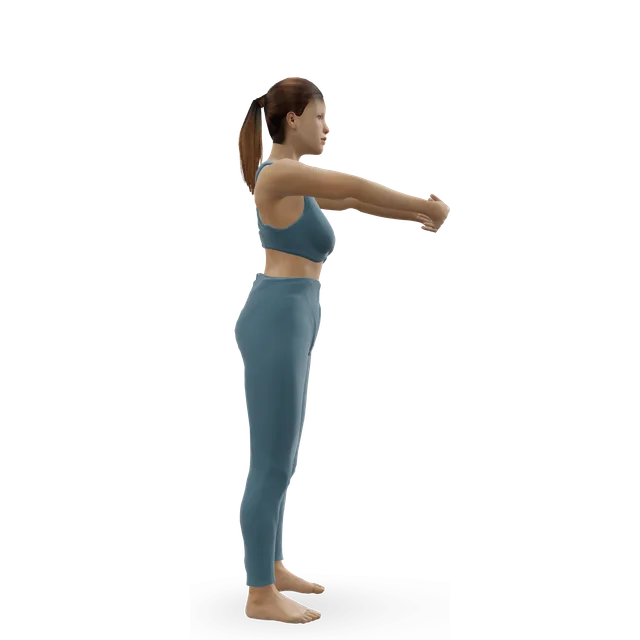
Many people with Down syndrome are "Excellent visual learners". Show each move, or use the 3D figure, do it alongside, and check each move is done well before making it harder.

Source 15

Face the person, one instruction at a time

Hearing and vision problems are common, so face the person, keep instructions short and give one at a time (our suggestion).

Source 16

The same order every time

Keep the order fixed, count out loud together, and use the same words for each move each time (our suggestion).

Source 15

Children

For young children, the physiotherapist leads: the NHS lists "a physiotherapist for help walking, if your child has low muscle tone". Keep it playful and short. Without neck warning signs, children can join ordinary classes; leave out legs-overhead and rolling moves (our suggestion).

Sources 45, 9

Adults and older adults

New clumsiness or unsteady walking can be the neck rather than dementia, so get it checked. A chair-based class in the same order (our chair Pilates for dementia class) suits adults who are less steady on their feet.

Source 10

Pain may show late

Some people with Down syndrome show pain late or in other ways, so watch for limping, guarding a limb or a change in mood, and stop to check (our suggestion, from a physiotherapy programme for adults).

Source 15

Reformers

A reformer's springs and moving carriage need close one-to-one teaching from someone who knows loose joints and the neck. Mat Pilates is the only kind tested in Down syndrome (our suggestion).

Source 3

Breathing and rest

Lateral breathing: 5 to 8 breaths at the start of every session (from the move page's dose), with no holding the breath; breath reach: "5 breaths, exhale longer than inhale" (the move page's dose); corpse pose: 2 to 3 minutes with a folded blanket under the head, sitting up at any time (our yoga for Down syndrome class gives 3 minutes; shorter than the move page's dose).

Lying down: the trial's trunk moves

Glute bridge: 10, holding each for 5 seconds (the physiotherapy programme for adults with Down syndrome, as our exercise guide gives it); dead bug heel taps: 5 to 10 each side (our cerebral palsy Pilates class); single-leg circle: 5 small circles each way, each leg, the other knee bent (adapted from the move page's dose); the Hundred: 30 to 50 beats, head down and knees bent (our cerebral palsy class; head down is our suggestion).

On your side, on all fours and sitting

Side kick: 6 to 8 each side, bottom knee bent, small swings (our cerebral palsy class); clamshell: 8 each side (our hypermobility class); bird dog, one limb at a time: 5 each arm and leg with a 3-second hold, reaching long, not high (our yoga for Down syndrome class); thoracic rotation: "6 rotations per side, moving with the breath" (the move page's dose), sitting on a chair.

Standing, with a chair, wall or counter

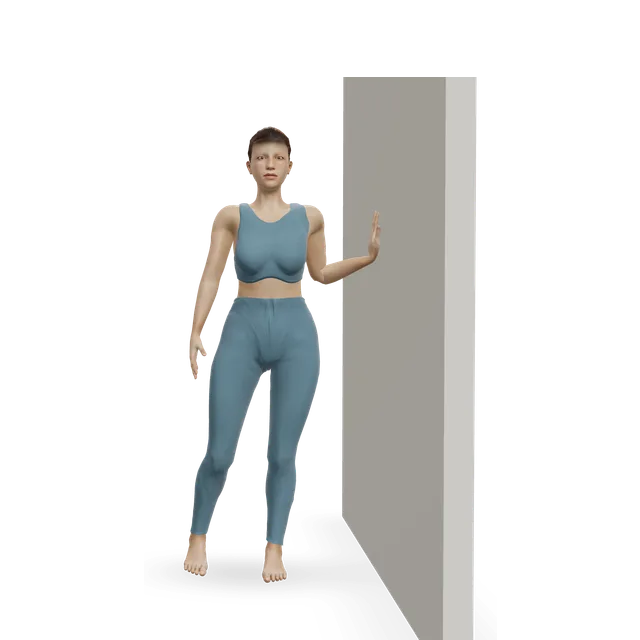
Sit to stand: 10, holding on at first, and wall push-up: 8 slow, elbows soft (our yoga for Down syndrome class); sit squat: 5 to 8 shallow, back near a wall (our cerebral palsy class); wall side leg lift: 8 each side and heel-to-toe walk: hold 10 seconds each way, then 5 steps heel to toe, twice (our standing Pilates for balance class); single-leg and semi-tandem stands: 3 holds of 10 seconds each side, next to a counter (our exercise for Down syndrome guide's editorial starting point).

Moves to change or leave out

Each change is our suggestion, from the sources named; none has been tested in a trial.

Moves that put body weight through the head and neck

The roll-over, jack knife, control balance, boomerang, high scissors, high bicycle and the crab: leave them out. Our exercise for Down syndrome guide already says this of roll-overs; the others are ours, on the same reasoning.

Sources 9, 41

Rolling like a ball, the seal and the open-leg rocker

They roll onto the shoulder blades, not the neck, and the Down's Syndrome Association says there's no evidence that forward rolls carry more risk for a child without symptoms. They add little that a bridge and the Hundred don't, so our class leaves them out, and never do them with a warning sign.

Source 9

Head lifts

The chest lift, single-leg stretch, criss-cross, the Hundred with the head up and the neck pull: head down, or hands behind the head without pulling. Stop and see a doctor if any neck warning sign appears.

Sources 3, 9

Deep stretches at the end of the range

The saw, the spine stretch forward, splits and long holds at the end of a joint's range: leave them out or keep them small.

Source 2

Weight on straight arms

The leg pull front, knee hover and push-up: elbows soft, and fists or forearms for the wrists, as the moves' hypermobility cautions say. Start with the wall push-up.

Source 2

Breath holds

None in this class, and leave them out with a heart condition.

Source 44

Classes to follow

Our Pilates class with a buddy is new and untested: it's built from the moves in the one Pilates trial in children with Down syndrome, with the head down throughout and nothing that loads the neck. The strength workout follows the strength trials and has the best evidence; the yoga class is done with a buddy too; the hypermobility class suits teenagers and adults (do its chest lift with the head down); the cerebral palsy class uses similar moves; the balance class suits people who walk steadily; and chair Pilates suits people who are less mobile.

Buddy Pilates for Down syndrome: a 25-minute class for trunk control, balance and strength, with nothing on the head or neck

A 25-minute Pilates class for children and adults with Down syndrome, done with a buddy: trunk control, balance and strength, with nothing on the head or neck.

25 minBeginner15 movesBench or box, wall

Strength workout for Down syndrome: a gym routine with a training buddy

The gym routine from the Down syndrome strength trials: 7 machine exercises for arms, legs and trunk, done with a buddy twice a week, and a balance finish.

40 minBeginner11 movesCardio machine, cable machine

Yoga with a buddy for Down syndrome: a 20-minute strength, balance and calm class with nothing on the head or neck

A 20-minute yoga class for children and adults with Down syndrome, done with a buddy: strength, balance at a wall, gentle movement and rest, nothing on the neck.

20 minBeginner14 movesBench or box, wall

Pilates for hypermobility: a supported 20-minute class

A 20-minute Pilates class for hypermobile joints, HSD and hEDS: supported positions first, mid-range control, slow changes and steady breathing.

20 minBeginner17 movesOther / check instructions, band

Supported Pilates for cerebral palsy: a 25-minute class lying, sitting and standing with a chair, for trunk control and balance

A 25-minute adapted Pilates class for children and adults with cerebral palsy: lying, sitting and standing with a chair, with a seated option for each block.

25 minBeginner16 movesBench or box, wall

Standing Pilates for balance: a 25-minute counter and mat class

A 25-minute Pilates class for steadier balance: standing balance and leg strength at a kitchen counter, then mat work for your trunk and hips.

25 minBeginner17 movesWall, bench or box

Chair Pilates workout

A 20-minute chair Pilates workout for beginners and older adults: breathing, sitting tall, gentle spine and leg moves, and a standing finish at the chair.

20 minBeginner14 movesBench or box, something with weight

Warning signs: when to stop and get help

This is general information, not a diagnosis. A&E means accident and emergency; in the US, call 911 for 999, and use your doctor's urgent line or urgent care for NHS 111.

Call 999 (911 in the US)

  • Chest pain that feels tight or heavy or spreads to the arms, neck or jaw, or severe difficulty breathing.
  • Lips, tongue, face or skin suddenly turning blue or grey, confusion or dizziness, or a heartbeat that's very fast or irregular.
  • Fainting while exercising.
  • After a fall, if they may have hurt their head, neck or back, or can't get up. Don't try to lift them; keep them warm.

Sources 46, 47, 48, 49

Urgent appointment the same day

  • Neck warning signs that come on suddenly.
  • A teenager with new hip, thigh or knee pain and a limp, or who won't put weight on a leg: a slipped upper thigh bone at the hip (slipped upper femoral epiphysis) is more common in Down syndrome and needs treatment quickly.

Sources 9, 2

Stop sport and see a doctor

If any neck warning signs appear (see the neck section above). The Down's Syndrome Association says any parent, carer or coach with concerns "must refer the person for medical assessment". In adults, these changes can be wrongly put down to dementia.

Sources 9, 42, 16

See a GP or the heart team

  • Breathing difficulties, unusual tiredness, dizziness or faints, or chest pain.
  • Increasing tiredness or breathlessness when active, or a new heart murmur.
  • Snoring or sleepiness in the day, which can be sleep apnoea, or weight gain and tiredness, which can be an underactive thyroid.

Sources 11, 16

Stop exercising

For chest pain, dizziness or unusual breathlessness, and don't start again that day (our suggestion). Support: the Down's Syndrome Association helpline is 0333 1212 300.

The Down's Syndrome Association's helpline is open Monday to Friday, 10am to 4pm.

Sources 46, 48, 9

Stop the session if

You feel any pain or become unwell, as the NHS advises for its Pilates videos, and especially for chest pain or pressure, unusual breathlessness, dizziness or fainting. If you have a health problem, an injury or any symptoms, get advice from a healthcare professional, such as a GP, before you start.

Source 50

Falls

The NHS's advice:

  • Call 999 if you or someone else has fallen and may have injured the head, back, neck or hip, or cannot get up.
  • Get help from NHS 111 if you or someone else has fallen and may be in pain, injured or unwell.
  • See a GP if you're worried about your balance or mobility, or you've had a fall. You may be able to refer yourself to a falls service, which can include strength and balance training.

Source 49

Myths

"Pilates can treat Down syndrome or fix low muscle tone"Strong evidence

Down syndrome is a genetic condition. Pilates, like other exercise, can build strength and control around loose joints, but no study shows it changes muscle tone itself.

Sources 1, 2, 7

"People with Down syndrome are naturally flexible, so Pilates stretches are perfect"Strong evidence

The flexibility comes from low muscle tone and loose ligaments, which make joints harder to stabilise. The aim is strength and control in the middle of the range.

Source 2

"People with Down syndrome shouldn't exercise because of the neck"Strong evidence

Without symptoms, the Down's Syndrome Association says people "should be encouraged to take part in recreational exercise and sporting activities for the same benefits as anyone else in the population." Everyday neck movement is fine; what's left out is putting body weight through the head and neck, and anything at all once a warning sign appears.

Sources 9, 10

"Everyone with Down syndrome needs a neck X-ray before Pilates"Strong evidence

Not without symptoms: UK and US guidance advises against routine X-rays, because they don't predict who will have problems. Some sports bodies, such as Special Olympics Ireland, have their own rules for some events; ask them.

Sources 10, 16, 41

"Exercise is risky with Down syndrome"Strong evidence

Strength trials reported no serious side effects, the UK guidelines found no evidence that appropriate activity is a risk for disabled adults, and adults with a heart condition in a supervised trial had no more side effects than others. Know the neck and heart signs.

Sources 7, 51, 35

"Weights and strength work are too much for people with Down syndrome"Strong evidence

Machine training twice a week made teenagers and young people stronger in randomised trials, with 90% or more of sessions attended. Pilates is a complement to strength training, not a replacement.

Sources 38, 8

"Heart rate zones work the same way"Emerging evidence

Maximum heart rate is lower in Down syndrome, so age-based zones aim too high. Use the talk test.

Sources 12, 15

"You need a reformer for real Pilates"Strong evidence

The one trial used mat, ball and wall work, and the NHS's own Pilates videos are mat and chair classes. A reformer needs a teacher who knows loose joints and the neck (our suggestion).

Sources 3, 50, 52

Questions people ask

Is Pilates good for Down syndrome?

It can be a good way to build trunk control, balance and strength. In the one trial, 40 children aged 8 to 10 who did Pilates as part of their physiotherapy gained more balance and coordination than children who had physiotherapy alone, though the trial was small and may overstate the effect. Strength training has the most evidence, and Pilates fits alongside it.

Can children with Down syndrome do Pilates?

Yes, with their care team's agreement. Keep it playful and short, show each move, use the same order each time, and leave out moves that put weight on the head or neck. Children without neck warning signs can join ordinary classes.

Is Pilates good for adults with Down syndrome?

It can help strength and balance, though no Pilates trial has included adults. Exercise builds strength in adults with Down syndrome, and a year of remote group exercise 3 times a week worked well for adults in a 2026 trial. The Down's Syndrome Association's free online sessions include Pilates.

Can Pilates help low muscle tone?

It can help build strength and control around the joints, which is what physiotherapy for Down syndrome aims at. It doesn't change muscle tone itself, so hold moves in the middle of the range rather than stretching further.

Which Pilates exercises suit Down syndrome?

The moves from the trial: bridges, heel taps lying on your back, small leg circles, side kicks, arm and leg reaches on all fours, a seated twist, standing side leg lifts, heel-to-toe walking and a shallow wall squat, plus sit-to-stands and wall push-ups. Our 25-minute class puts them in order.

Which Pilates moves should people with Down syndrome avoid?

Roll-overs, jack knives and other moves that take the legs overhead and put weight on the neck, deep end-of-range stretches, and any move once a warning sign appears. Keeping the head down in curl moves is our suggestion too.

Does someone with Down syndrome need a neck X-ray before Pilates?

Not if they have no symptoms: UK and US guidance doesn't recommend routine neck X-rays, because they don't predict who will have problems. Some sports programmes have their own rules for some events. With any warning sign, stop and see a doctor first.

What are the neck warning signs in Down syndrome?

Neck pain or a stiff neck that doesn't settle, an unusual head position, a change in walking or tiring more easily, clumsier hands, trouble holding the head up, weakness, new bladder or bowel problems, frequent falls, or new breathing, sleep apnoea or swallowing problems. Stop sport and see a doctor; if they come on suddenly, get an urgent appointment.

Can people with Down syndrome and a heart condition do Pilates?

Usually, but ask the heart team what level of activity is safe first. About half of children with Down syndrome are born with a heart condition, and problems can appear later, so keep up heart checks. Leave out breath holds, and use the talk test.

Is reformer Pilates safe with Down syndrome?

It hasn't been tested. A reformer's springs and moving carriage need close one-to-one teaching, movement in the middle of the range and no moves that load the neck; mat Pilates is the tested option (our suggestion).

How often should someone with Down syndrome do Pilates?

Two or three times a week is a good start; the trial ran 3 sessions a week for 12 weeks. Add strength training twice a week for teenagers and adults, and plenty of active play for children.

How do you teach Pilates to someone with Down syndrome?

Show each move or use the 3D figure, face the person, give one short instruction at a time, keep the same order, and do it together with a buddy. Check each move is done well before making it harder.


Sources

  1. Down's Syndrome Association · About Down's syndrome, with its guide to the words to use
  2. Down's Syndrome Association 2025 · Musculoskeletal issues and Down's syndrome (Health Series)
  3. Al-Nemr 2024 · Pilates added to physiotherapy in 40 children with Down syndrome aged 8 to 10 (randomised trial, Acta Neurol Belg; read in full)
  4. ClinicalTrials.gov · NCT05928949: the registry record of the Egyptian Pilates trial in Down syndrome
  5. Leale 2026 · Physical activity, movement, balance and wellbeing in children and teenagers with Down syndrome (systematic review, J Clin Med; read in full)
  6. Kanopoulou 2026 · Physiotherapy for balance in children with Down syndrome: 14 trials (systematic review, Eur J Pediatr; read in full)
  7. Benzo Iglesias 2026 · Resistance training in Down syndrome: 16 trials (systematic review and meta-analysis, J Appl Res Intellect Disabil)
  8. Shields 2013 · Community strength training in 68 young people with Down syndrome (randomised trial, Res Dev Disabil)
  9. Down's Syndrome Association · Neck instability in people who have Down's syndrome (Health Series)
  10. Down Syndrome Medical Interest Group (UK) 2024 · Cervical spine disorders: craniovertebral instability (revised guidance; read in full)
  11. Down's Syndrome Association · The heart and circulation
  12. Fernhall 2013 · Why work capacity is lower in Down syndrome (review, Exerc Sport Sci Rev)
  13. UK Chief Medical Officers · Physical activity for disabled adults (infographic text, updated July 2026)
  14. Foley 2019 · Muscle, bone and joint differences in 503 children with Down syndrome (observational study, Arch Dis Child; read in full)
  15. Mann 2023 · A physiotherapy-based exercise programme for adults with Down syndrome (programme development, Int J Environ Res Public Health; read in full)
  16. Bull 2022 · Health supervision for children and adolescents with Down syndrome (American Academy of Pediatrics clinical report, Pediatrics; read in full)
  17. Fox 2019 · Physical activity levels of children with Down syndrome (systematic review, Pediatr Phys Ther)
  18. Cahill 2026 · Caregivers' activity and the activity of people with Down syndrome (European survey, Nutrients)
  19. Down's Syndrome Association · Lifestyle and weight
  20. PubMed · Our search for Pilates studies in Down syndrome: 4 records, one trial and 3 reviews (2 November 2026; Europe PMC and Crossref also searched)
  21. ClinicalTrials.gov · NCT05969873: Pilates and balance in 22 children with Down syndrome (completed 2023; no results posted)
  22. ClinicalTrials.gov · NCT07428837: cognitive-motor training or Pilates in children with Down syndrome (recruiting)
  23. Castro 2009 · Pilates in 4 young people with Down syndrome (congress report, FIEP Bulletin; read in full)
  24. Lei 2025 · Exercise and balance in children with Down syndrome: 8 trials, 260 children (meta-analysis, BMC Sports Sci Med Rehabil; read in full)
  25. Maïano 2019 · Exercise and balance in children and teenagers with Down syndrome: 11 studies (systematic review, Phys Ther)
  26. Zolghadr 2025 · Exercise and postural control in Down syndrome: 6 studies (meta-analysis, BMC Sports Sci Med Rehabil)
  27. Alsakhawi 2019 · Core stability exercise and treadmill training for balance in 45 children with Down syndrome (randomised trial, Adv Ther)
  28. Díaz-Hernández 2026 · Muscle training in teenagers and young adults with Down syndrome: 8 trials, 266 people (meta-analysis, Disabil Rehabil)
  29. Kuo 2024 · Resistance training, body composition and physical function in Down syndrome (meta-analysis, Diagnostics)
  30. Bahiraei 2023 · Exercise and heart and lung fitness in Down syndrome: 10 trials (meta-analysis, Prev Med Rep)
  31. Andriolo 2010 · Aerobic exercise for adults with Down syndrome: 3 studies (Cochrane review)
  32. Meira 2026 · Exercise and health in Down syndrome: randomised trials (meta-analysis, J Sports Med Phys Fitness)
  33. Méndez-Martínez 2023 · Exercise and movement in adults with Down syndrome (meta-analysis, Sci Rep)
  34. Ptomey 2026 · A 12-month remote group exercise programme in 81 adults with Down syndrome (randomised trial, Disabil Health J)
  35. Clina 2026 · Exercise in adults with Down syndrome and congenital heart disease (secondary analysis of a trial, J Intellect Disabil Res)
  36. Oreskovic 2026 · The international summit on physical fitness for people with Down syndrome (meeting report, Am J Med Genet A)
  37. National Down Syndrome Society (US) · Physical activity and Down syndrome
  38. Shields 2010 · Student-led strength training in teenagers with Down syndrome (randomised trial, J Physiother)
  39. UK Chief Medical Officers 2022 · Physical activity for disabled children and disabled young people (infographic text)
  40. Tsou 2020 · Medical care of adults with Down syndrome (clinical guideline, JAMA)
  41. Special Olympics Ireland 2023 · Participation by people with Down syndrome who have atlanto-axial instability (rules; read in full)
  42. Down Syndrome Medical Interest Group (UK) 2012 · Neck (cervical spine) instability: medical surveillance guidance (superseded by the 2024 revision; read in full)
  43. Dimopoulos 2023 · Heart and circulation problems in Down syndrome (scoping review and expert consensus, Circulation; read in full)
  44. Nivethitha 2021 · Heart rate and blood pressure during four yogic breathing techniques: 20 healthy adults (lab study, Int J Yoga; read in full)
  45. NHS · Down's syndrome: medical support (last reviewed October 2026)
  46. NHS · Heart attack
  47. NHS · Congenital heart disease
  48. NHS · Fainting
  49. NHS · Falls
  50. NHS · Pilates video for beginners, with its safety advice
  51. UK Chief Medical Officers 2019 · Physical activity guidelines (updated July 2026, GOV.UK)
  52. NHS · Chair-based Pilates exercise video (past its review date: reviewed August 2022, review due August 2025)

Exercise education, not a personal prescription, and clinical review of these guides is pending. If you are pregnant, have a health condition or have had recent surgery, check with a doctor, midwife or physiotherapist before starting, and stop for sharp or increasing pain. Health disclaimer.