Pilates
Pilates for spinal stenosis: a 25-minute bend-forward class, from chair to mat to counter
A 25-minute Pilates class for lumbar spinal stenosis that leans forward rather than arching back. It starts on a chair, moves to gently rounded and neutral-spine work on the mat, builds hip and leg strength, and finishes with balance at a kitchen counter, with sitting breaks whenever your legs build up. There are no face-down back bends. Unlike our chair Pilates and balance classes, it includes the bending-forward exercises and stretches the stenosis trials used. No trial has tested Pilates for stenosis, and a 2026 analysis found no exercise clearly beat placebo, so expect gradual gains in how far you can walk; the structure is our editorial choice, built from the stenosis trials' programmes.
Seated warm-up (about 4 minutes)
- Seated march1 minuteBeginner · Hip flexors, Quads, Abs · 3D demoSit tall on a firm chair and lift alternate kneesHarder: Standing march
- Thoracic rotation6 each sideBeginner · 3D demoArms crossed, turn your chest slowlyEasier: Side-lying open bookHarder: World's greatest stretch
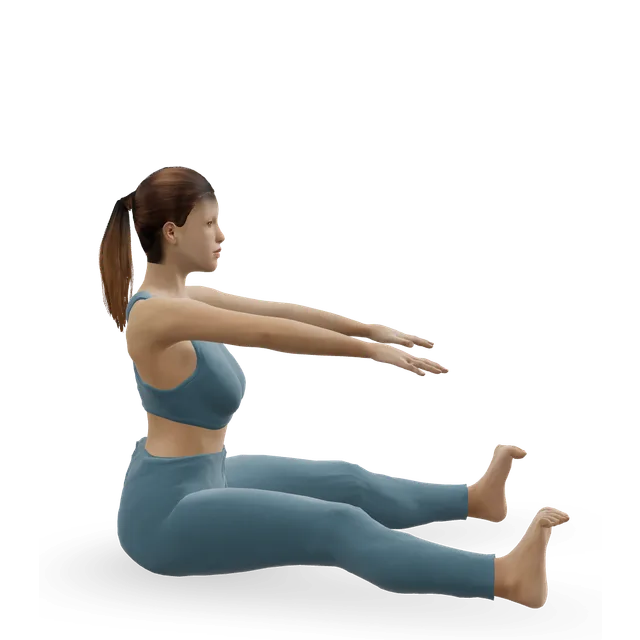
- Beginner · Back, Abs, Hamstrings · 3D demoOn the chair, knees bent: round forward from your head down, then roll back upHarder: Saw (Pilates)



Bend forward, on your back (about 5 minutes)
- Pelvic tilt into bridge10 slow tiltsBeginner · Glutes, Abs, Hamstrings · 3D demoTilt only: flatten your lower back, then releaseHarder: Glute bridge
- Double knee-to-chest stretch3 holds of 20 to 30 secondsBeginner · Back, Glutes · 3D demoHug both knees in gentlyEasier: Single knee-to-chest stretchHarder: Overhead lat stretch at a bench (elbows on the bench)
- Knee fold6 each sideBeginner · Abs, Hip flexors · 3D demoOne bent leg up to a tabletop and downEasier: Supine heel slideHarder: Dead bug heel taps
- Dead bug heel taps2 sets of 8 each sideBeginner · Abs, Hip flexors · 3D demoLower back flat; tap one heel at a timeEasier: Bent-knee fall-outHarder: Forearm plank
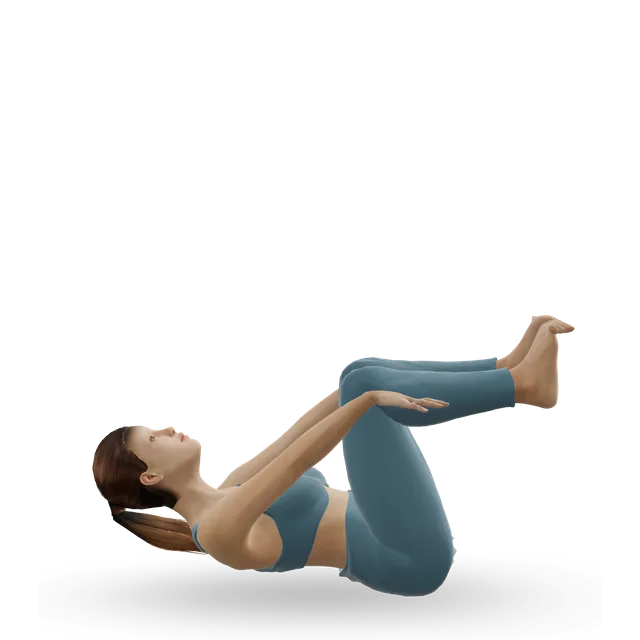
- Hundred (Pilates)50 beatsIntermediate · Abs, Hip flexors, Shoulders · 3D demoKnees bent at a tabletop, head down; pump the armsEasier: Wall hundred (wall Pilates)Harder: Boomerang (Pilates)




Strength on your back and side (about 6 minutes)
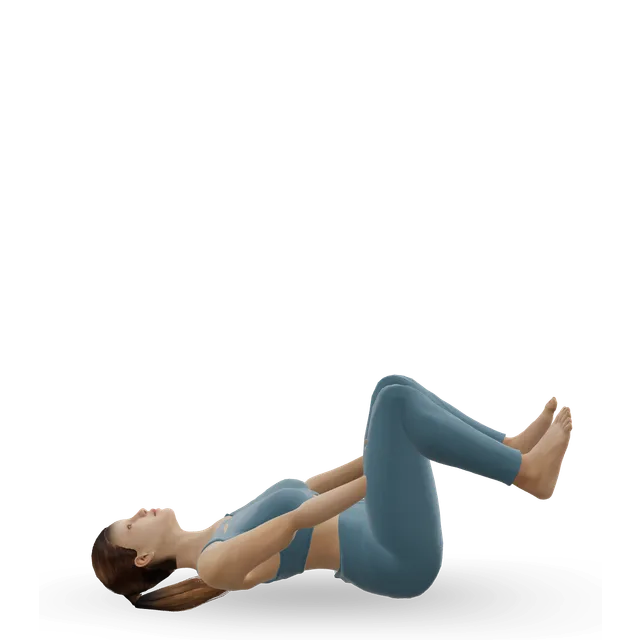
- Glute bridge2 sets of 10Beginner · Glutes, Hamstrings, Abs · 3D demoLift to a straight line only, with no archEasier: Pelvic tilt into bridgeHarder: Single-leg glute bridge
- Clamshell2 sets of 10 each sideBeginner · Hip abductors, Glutes · 3D demoFeet together, a small openingEasier: Supine isometric hip abduction (belt press)Harder: Lateral band walk
- Side kick (Pilates side kick series)8 each sideBeginner · Hip flexors, Glutes, Hip abductors · 3D demoSmall swings at hip heightHarder: Side-lying leg circles (Pilates side kick series)
- Knee side plank2 holds of 15 seconds each sideBeginner · Abs, Hip abductors, Shoulders · 3D demoKnees bent, elbow under your shoulderHarder: Side plank




All fours and kneeling (about 4 minutes)
- Cat-cow8 slow wavesBeginner · Back, Abs · 3D demoSpend longer in the rounded cat; keep the cow smallHarder: Half lord of the fishes (Ardha Matsyendrasana)
- Bird dog, one limb at a time6 each sideBeginner · Abs, Back, Glutes · 3D demoOne limb at a time; stop if it brings on leg symptomsEasier: Side-lying tummy draw-inHarder: Bird dog
- Child's Pose (Balasana)30 secondsBeginner · Back, Shoulders, Glutes · 3D demoSit back towards your heels and restHarder: Extended puppy pose (Uttana Shishosana)
- Half-kneeling hip flexor stretch2 holds of 30 seconds each sideBeginner · Quads, Glutes · 3D demoTuck your pelvis under; don't arch your backHarder: Couch stretch




Standing at a counter (about 5 minutes)
- Sit to stand from a chair2 sets of 8Beginner · Quads, Glutes, Hamstrings · 3D demoStand up and sit down at an effort of about 5 to 6 out of 10Easier: Sit to stand, pushing on the thighsHarder: Bodyweight squat
- Beginner · Hip abductors, Glutes, Abs · 3D demoA hand on the counter; lift the leg out to the sideHarder: Lateral band walk, band at the feet
- Tandem stance and heel-to-toe walk2 holds of 20 to 30 secondsBeginner · Calves, Hip abductors · 3D demoOne foot in front of the other, a hand on the counterEasier: Semi-tandem stanceHarder: Single-leg stand
- Wall calf stretch (gastrocnemius)2 holds of 30 seconds each sideBeginner · Calves · 3D demoHands on the counter or wall, back heel downEasier: Seated calf stretch with a towelHarder: Heel-on-step calf and hamstring stretch




Finish sitting (about 1 minute)
- Breath reach5 breathsBeginner · 3D demoSeated; arms rise as you breathe inHarder: Slow breathing (6 breaths a minute)

Tips
- Do it 2 or 3 times a week for at least 12 weeks, alongside cycling or walking in intervals on most days: an NHS spinal service recommends 12 weeks of progressive exercise first.
- If your legs start to ache, feel heavy or tingle while you stand, sit or lean forward on the counter until they ease, then carry on.
- There are no back bends on purpose: arching back tends to bring stenosis symptoms on. Leave out the swan, swimming and similar face-down moves if you add other classes.
- Track your walking time or distance as the measure that should improve; the class won't change the narrowing itself.
- With osteoporosis too, keep the knee hug gentle and the roll forward small, or swap it for a pelvic tilt.
- When this is easy, add seated knee extensions with a light ankle weight, a low step-up and longer balance holds, one change at a time.
- Call 999 or go to A&E: loss of feeling or numbness around the genitals or bottom, new trouble peeing or controlling your bladder or bowels, changes in genital sensation during sex or problems with erections or orgasm, or pain, tingling, weakness or numbness in both legs. These are signs of cauda equina syndrome, which needs treating in hospital urgently. Don't drive yourself.
The doses are suggested starting points, not a prescription. Choose a range you can control and stop for sharp or increasing pain, numbness or tingling. Get individual advice after an injury or surgery, or if you are pregnant or managing a health condition.
Guides that recommend it
Find more moves like these
More pilates

Beginner Pilates workout
A 20-minute mat Pilates workout for complete beginners. It covers breathing, spine position and the foundation moves, each with an easier option.
20 minBeginner13 movesNo equipment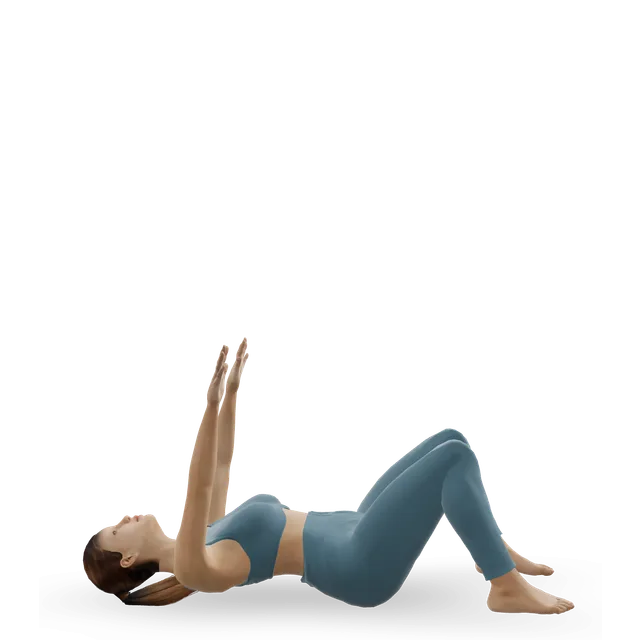

10-minute Pilates abs
Ten minutes of the classic Pilates abdominal series: the hundred, the roll-up and the series of five, with a plank to finish.
10 minIntermediate11 movesNo equipment
Full-body mat Pilates workout
A 30-minute intermediate mat Pilates class that follows the classical order, from the hundred to the push-up, with prep versions of the hardest moves.
30 minIntermediate22 movesNo equipmentQuestions people ask
How long does the pilates for spinal stenosis: a 25-minute bend-forward class, from chair to mat to counter take?
About 25 minutes, including any warm-up and cool-down listed. Shorten it by doing fewer rounds; lengthen it by adding one.
What equipment do I need?
You need: A bench or box, A wall. Each move links to its guide, where you can find an alternative if you are missing something.
Is it suitable for beginners?
It is written for beginners. 11 of its 22 moves have an easier option listed beside them if you need one.
How do I make it easier or harder?
Use the easier or harder option listed under each move, change the number of rounds, or adjust the rest. Progress one change at a time.