Pilates can't fix your thyroid
An underactive thyroid is treated with levothyroxine, usually for life, and an overactive one with tablets, radioactive iodine or surgery. Never change your dose to suit your training: talk to your GP.
Pilates guide
Pilates is a steady, low-impact way to stay strong with a thyroid problem, and the British Thyroid Foundation (BTF) says exercise can lift energy and mood without needing to be vigorous. It can't change your thyroid levels: levothyroxine treats an underactive thyroid, including Hashimoto's disease, and an overactive thyroid needs tablets, radioactive iodine or surgery. No study has tested Pilates in any thyroid condition.
Pilates never replaces your thyroid medicine or blood tests, and you should never change a dose to suit your training. This guide covers using Pilates while your dose is being found or your levels come down, tiredness and aches that outlast treatment, heart rate and palpitations, heat, rebuilding muscle, protecting your bones, thyroid eye disease and head-down moves, and Pilates after thyroid surgery, with the warning signs that need help, including a thyroid storm.
An underactive thyroid is treated with levothyroxine, usually for life, and an overactive one with tablets, radioactive iodine or surgery. Never change your dose to suit your training: talk to your GP.
Our searches found none. Small trials of aerobic and strength training improved fitness and quality of life with an underactive thyroid, and reviews disagree on whether exercise changes thyroid blood tests.
The BTF says exercise "can improve both your energy levels and mood" and "does not need to be vigorous". A steady mat or chair class fits that.
Source 7
Two-thirds of 1,724 Dutch women treated for an underactive thyroid said it limited their activity, and a review found that poor exercise tolerance isn't always reversed by treatment. Plan by how you feel.
Your heart is already working hard, you overheat sooner and your muscles are weaker. Go by feel, not heart rate, and build up, including strength work, once your team says your levels are under control.
Bone thins while the thyroid is overactive, so use the osteoporosis versions of moves until it recovers. With thyroid eye disease, ask your eye team before moves that take your head below your heart (our suggestion: no study has tested this).
The thyroid doesn't make enough hormones, causing tiredness, weight gain, feeling cold, low mood, dry skin and hair, and aches. In the UK, the main cause is Hashimoto's disease, where the immune system attacks the thyroid; the NHS says it is "most common in women, and usually starts between the ages of 30 and 50". Untreated, or on the wrong dose, it raises the risk of heart problems and osteoporosis. The BTF also lists muscle weakness, cramps and pins and needles in the hands (carpal tunnel syndrome).
The thyroid makes too much hormone. About 4 in 5 people with it have Graves' disease. Symptoms include nervousness, poor sleep, tiredness, muscle weakness, feeling too hot, palpitations, trembling and weight loss. Treatment is tablets, radioactive iodine or surgery, often with a beta blocker meanwhile. The NHS lists an overactive thyroid among the causes of atrial fibrillation (an irregular heartbeat) and of osteoporosis.
With an underactive thyroid, the heart and circulation give the muscles less support during effort. With an overactive one, the heart rate can't rise enough with effort and the muscles use energy less efficiently. Heart function can look normal at rest while exercise shows the problem.
Steady, low-impact strength and mobility work at your own pace, which suits the BTF's advice that exercise doesn't need to be vigorous. It doesn't change thyroid hormone levels.
No one has tested Pilates in any thyroid condition. Levothyroxine, antithyroid treatment and blood tests carry the treatment evidence; the exercise evidence below is small and mostly in women.
Our searches of PubMed, Europe PMC and ClinicalTrials.gov in November 2026 found no study of Pilates in an underactive or overactive thyroid, Hashimoto's or Graves' disease. Everything this page says about Pilates is our reading of the wider evidence.
Source 3
One review of 10 small studies found exercise made no significant difference to thyroid function; another, of 7 trials, reported a large fall in thyroid-stimulating hormone (TSH). Either way, levothyroxine is the treatment.
In 60 women on levothyroxine, 12 weeks of aerobic, strength or combined training at low to moderate intensity, 3 days a week, improved fitness, blood fats and quality of life. In 20 women with a mildly underactive thyroid, 16 weeks of aerobic training improved quality of life.
A review of 38 studies (1,379 people) found exercise intolerance with an underactive thyroid "is not always reversible during adequate hormone replacement therapy". In a survey of 1,724 women on thyroid hormone, two-thirds said their condition limited their activity, more often with Hashimoto's.
In 134 people on levothyroxine, 6 months of online yoga improved quality of life against a waiting list. Reviews of 11 and 13 yoga studies found mostly small trials at risk of bias. These were yoga programmes, not Pilates; our yoga for thyroid guide covers them.
In 12 women with Graves' disease, the work rate reached in an exercise test was 50% while the thyroid was overactive, against 70% once levels were normal, mainly because the heart rate couldn't rise enough. Muscle weakness affected 62% at diagnosis and cleared on treatment in about 3.6 months on average. In 16 people, strength training twice a week alongside tablets roughly doubled the strength regained (not randomised). In a small study, some people's walking and breathing-muscle endurance still lagged once levels were normal.
Our editorial starting point: a steady mat or chair class 2 or 3 times a week alongside walking, building by how you feel rather than the calendar. The trials that helped used 3 sessions a week for 12 to 16 weeks. Pilates counts as strength work; the NHS also asks adults for 150 minutes of moderate activity a week.
Do the seated or lying parts only, or rest (our suggestion). If you still feel unwell on treatment, the BTF says your doctor may look for other causes, such as low iron, low vitamin B12, low vitamin D or coeliac disease.
The NHS says to take levothyroxine on an empty stomach, 30 to 60 minutes before your first meal of the day, any drink with caffeine or any other medicine. An early class doesn't change that.
Source 31
The BTF says much of the weight gained with an underactive thyroid is salt and water, and once your levels are normal "the ability to gain or lose weight is the same" as for anyone. Pilates builds strength; walking or other cardio adds the aerobic part.
Warm up well and stretch gently; our leg cramps guide has more. Muscle pain that's new, with weakness and dark urine, needs urgent help (warning signs below).
Source 16
A 2025 review of 12 publications called the field "more unknowns than facts" and asked for trials. A 2026 study of people with Hashimoto's whose thyroid levels were normal linked more time in high-intensity exercise with lower thyroid antibodies, but a link like this can't show that exercise lowers them.
In 62 women with Hashimoto's in India, 3 months of online yoga added to levothyroxine improved thyroid tests, mood and sleepiness against levothyroxine alone, but everyone knew which group they were in.
Source 24
Hashimoto's is the commonest cause of an underactive thyroid, so the same plan applies. Pilates is a reasonable way to stay active; claims that it calms the immune system or lowers antibodies haven't been tested (our reading).
The NHS says "Regular exercise and managing stress can help with other symptoms such as anxiety, irritability, difficulty sleeping and hyperactivity". Our suggestion, as our overactive thyroid guide advises: seated and lying Pilates at an easy pace, breathing steadily with no breath holds, in a cool room. Stop for palpitations or dizziness, and leave hard training until your team says your levels are under control.
With an overactive thyroid, your heart rate is high at rest and rises less than usual with effort, and a beta blocker slows it further, so heart rate zones and watch targets mislead. Use the talk test instead: at a moderate effort you can talk but not sing.
Source 10
Feeling too hot is a symptom, so skip hot Pilates until it's controlled (our suggestion, as our overactive thyroid guide says), and drink enough.
Source 2
Weakness, mainly in the thighs and upper arms, usually clears within a few months of treatment, and strength training twice a week helped it come back faster in a small study. Pilates helps; adding progressive strength work rebuilds muscle faster (our suggestion).
8.3% of 40,628 people had atrial fibrillation or flutter when their overactive thyroid was diagnosed, more often men and older people, and most return to a normal rhythm within 4 to 6 months of the thyroid being controlled. If you have it, follow your heart team's advice; our Pilates for heart health guide covers the changes.
In 162 people, weight went up by about 4 kg on average in the year after treatment. That's common and not a sign you're doing anything wrong; regular strength work and activity help you feel stronger as it settles (our suggestion).
Source 37
Across 20 studies, bone density was low in an untreated overactive thyroid and returned to normal with treatment. A very low TSH, from the thyroid or from too much levothyroxine, was linked with hip and spine fractures, which is one reason the National Institute for Health and Care Excellence (NICE) advises against levothyroxine doses that suppress TSH.
Until your bones have recovered, or if you've been told they're thin, use head-down versions of curl-ups and leave out rolling like a ball, the roll-over and deep forward rounding, as the UK osteoporosis consensus and the move pages advise. Our Pilates for osteoporosis guide has the full set of swaps.
Source 39
Thyroid eye disease affects around 1 in 4 people with an overactive thyroid caused by Graves' disease, with dry, gritty or red eyes, double vision or bulging eyes. Our suggestion: ask your eye team before the roll-over, jack knife, control balance and legs up the wall, which take your head below your heart. No study has tested this; we've extrapolated from the glaucoma cautions on those moves and our yoga for thyroid guide.
Walk from the first days, and start gentle neck movements and floor work when your surgical team says you can; leave head-down moves until much later (our suggestion, agreeing with our overactive thyroid and yoga for thyroid guides). Our overactive thyroid guide covers neck exercise after surgery.
Tell the medical staff straight away about tingling in your hands, fingers or around your mouth.
Source 2
Lateral breathing: "5 to 8 breaths at the start of every session" (from the move page's dose), with no breath holds. Slow breathing: "At least 5 minutes" (from the move page's dose). Seated march: "1 to 2 minutes as a warm-up" (from the move page's dose). Breath reach: "5 breaths, exhale longer than inhale" (the move page's dose). Cat-cow: "8 waves, slower than feels natural" (the move page's dose). Thoracic rotation: "6 rotations per side, moving with the breath" (the move page's dose).
 3D demoLateral breathing (Pilates breathing)Beginner · No equipment
 3D demoSlow breathing (6 breaths a minute)Beginner · No equipment
 3D demoSeated marchBeginner · A bench or box
 3D demoBreath reachBeginner · No equipment
 3D demoCat-cowBeginner · No equipment
 3D demoThoracic rotationBeginner · No equipment
Sit to stand and wall push-up: 2 sets of 8 to 12 (our editorial starting point). Band row: "3 sets of 10 to 15" (from the move page's dose). Glute bridge, clamshell and bird dog: 8 to 10 each, or each side (our editorial starting point). Side kick: "8 to 10 each side" (from the move page's dose). Wall side leg lift: "10 to 12 each side" (from the move page's dose). Knee hover: "3 holds of 15 to 30 seconds" (from the move page's dose), breathing throughout.
 3D demoSit to stand from a chairBeginner · A bench or box
 3D demoWall push-upBeginner · A wall
 3D demoBand rowBeginner · A band + An anchor point
 3D demoGlute bridgeBeginner · No equipment
 3D demoClamshellBeginner · No equipment
 3D demoBird dogBeginner · No equipment
 3D demoSide kick (Pilates side kick series)Beginner · No equipment
 3D demoWall side leg lift (standing side kick at the wall)Beginner · A wall
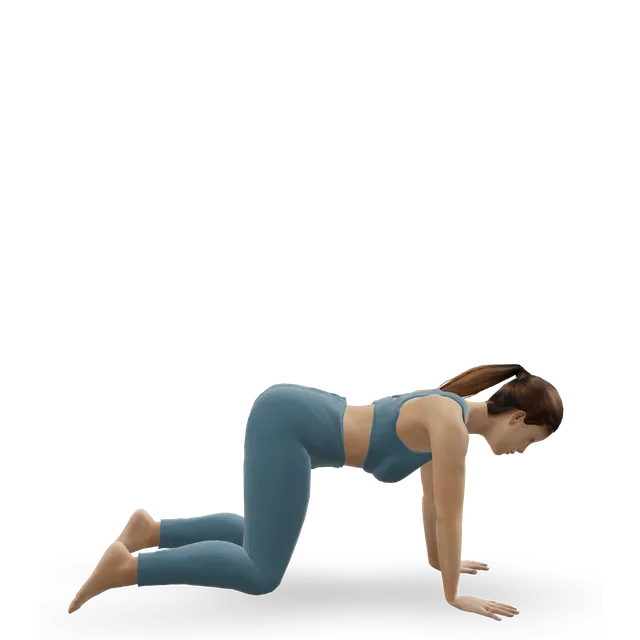 3D demoKnee hover (Pilates tabletop hover)Beginner · No equipment
Heel drop: "20 to 30 drops at first, building toward about 50 impacts on most days" (from the move page's dose), with its cautions. Single-leg stand and tandem stance: 3 holds of 20 to 30 seconds near a counter (our editorial starting point, as our underactive thyroid guide uses).
Neck CARs: with a sore neck, "use separate nods, tilts and turns instead: the NHS leaflet holds each for 5 seconds, 5 times" (from the move page's dose), before any full circles. Chin tuck: 5 slow tucks, each held for 3 seconds (our editorial starting point, as our yoga for thyroid guide uses).
The roll-over, jack knife, control balance and boomerang: leave them out after thyroid surgery until your team agrees, and with thyroid eye disease ask your eye team first (our suggestion, extrapolated from the moves' glaucoma cautions; no study has tested it).
Source 15
Leave it out until an overactive thyroid is controlled (our suggestion, as our overactive thyroid guide says for hot yoga and saunas).
Source 2
A fast hundred, the teaser series and jumping on a reformer's jumpboard: leave them until your levels are under control and you feel well, and keep any breath-led moves slow (our suggestion).
Use the osteoporosis swaps: head-down curl-ups, and no rolling like a ball, roll-over or deep forward rounding.
Get up slowly from the mat, as the warning signs below set out.
Source 41
There's no thyroid-specific class, because no trial points to one. While an overactive thyroid isn't controlled, or on a tired day, use the seated chair class or chair Pilates in a cool room. Once your levels are coming down, or with a treated underactive thyroid, the head-up high blood pressure class and the over-50s beginner class suit you. With atrial fibrillation, use the heart health class with your heart team's agreement. For bones, once levels are normal, the osteoporosis and bone-strengthening workouts; for strength alongside, the beginner home and 20-minute strength workouts.
A 15-minute chair Pilates class done entirely sitting down, in a chair or wheelchair: breathing, spine moves, and leg and arm strength with water bottles.
15 minBeginner13 movesA bench or box, Something with weightA 20-minute chair Pilates workout for beginners and older adults: breathing, sitting tall, gentle spine and leg moves, and a standing finish at the chair.
20 minBeginner14 movesA bench or box, Something with weightThirty minutes of slow breathing, gentle neck and spine movement, standing poses and rest for thyroid problems, with legs up the wall instead of shoulder stand.
30 minBeginner15 movesA wallA 30-minute Pilates class for high blood pressure: standing strength, head-level mat work with short holds, no breath holds or inversions, and slow breathing.
30 minBeginner15 movesA bench or box, A wallA 20-minute beginner mat Pilates session for over-50s with no deep or repeated rounding of the spine, plus back strengthening and standing balance.
20 minBeginner13 movesA wallA 40-minute Pilates class for heart conditions: a 15-minute warm-up, standing strength, head-level mat work with no planks or breath holds, and a seated cool-down.
40 minBeginner22 movesA bench or box, A wallA 25-minute Pilates workout for osteoporosis and osteopenia: the Royal Osteoporosis Society's swaps for rounding moves, plus back strength and balance.
25 minBeginner16 movesA wall, A bench or boxImpact, strength and balance for stronger bones, following UK osteoporosis consensus advice, with options for every level.
40 minBeginner14 movesA kettlebell, Other / check instructionsA gentle 20-minute beginner home workout with a chair, a wall and a band: sit-to-stands, wall push-ups, band rows, step-ups and dead bugs.
20 minBeginner11 movesA bench or box, A wallA 20-minute full-body dumbbell workout: two supersets of squats, rows, Romanian deadlifts and push-ups. Twice a week covers the minimum dose.
20 minBeginner8 movesA dumbbell, A bench or boxThe 4-week beginner Pilates plan builds a steady habit; the plan for women over 50 adds bone and strength work.
A free 4-week, 3-day Pilates plan for complete beginners. Two mat days and one wall day, with clear rules for when to move each exercise to its harder version.
3 training days25 minBeginner3 days a weekA weekly plan for women over 50: strength, bone-loading and balance on 3 days plus walking, built on UK osteoporosis consensus advice.
3 training days45 minBeginnerThe lists are from our exercise guides for an underactive and an overactive thyroid, word for word; the chest pain, stop and before-you-start lines are the ones our other Pilates guides use. This is general information, not a diagnosis. A&E means accident and emergency; in the US, call 911 for 999, and use your doctor's urgent line or urgent care for NHS 111.
Stop exercising and call 999 for:
Call 999 or go to A&E if you have palpitations that don't go away, or that come with chest pain, shortness of breath, or feeling faint or fainting. If they've stopped, ask your GP surgery for an urgent appointment or call 111. Call 999 if someone faints while exercising.
The NHS says a thyroid storm is a medical emergency: call 999 for an ambulance straight away if you think you or someone in your care has one. The signs are:
Source 40
If someone suddenly becomes confused. Very rarely, a severe underactive thyroid leads to myxoedema coma, a life-threatening emergency that is more common in older people and needs hospital treatment.
Source 1
If you take levothyroxine and think you're having a serious side effect, such as:
Source 31
If you take carbimazole or propylthiouracil, contact your doctor immediately if you get a high temperature, sore throat or persistent cough: rarely, these tablets cause a sudden drop in the white blood cells that fight infection. The BTF has an alert card to carry. The NHS says to call your doctor or 111 straight away on carbimazole if your skin or the whites of your eyes turn yellow, you have dark pee, or you get muscle pain or weakness.
Source 35
The BTF says to see your GP or eye specialist urgently if your eye symptoms get worse over days or weeks, blurred vision doesn't clear when you blink, colours look less bright, you see double when looking straight ahead or down, or you tilt your head to avoid seeing double.
Source 15
For muscle pain or swelling, weakness and dark red to brown urine, especially after hard or unfamiliar exercise: it could be muscle breakdown (rhabdomyolysis).
Stop exercising if your heart races or flutters, you feel dizzy or unusually breathless, or you feel too hot, then cool down and drink (our suggestion).
Source 41
Call 999 or go to A&E (accident and emergency) straight away for severe difficulty breathing (gasping, choking or not able to get words out), a chest that feels tight or heavy, pain that spreads to your arms, back, neck and jaw, lips or skin turning very pale, blue or grey, or sudden confusion. If you're more short of breath than usual, or your heart is racing, fluttering or skipping beats, contact NHS 111.
Source 45
You feel any pain or become unwell, as the NHS advises for its Pilates videos, and especially for chest pain or pressure, unusual breathlessness, dizziness or fainting. If you have a health problem, an injury or any symptoms, get advice from a healthcare professional, such as a GP, before you start.
Source 46
The NHS advises getting advice from a healthcare professional first if you have a health problem, an injury or symptoms, or have recently had a heart attack or an operation.
Source 46
Levothyroxine is the treatment, usually for life. Reviews disagree on whether exercise changes TSH at all, and no Pilates study exists.
No study has tested any single move on the thyroid; the yoga trials tested whole programmes. Our yoga for thyroid guide calls the shoulder stand claim a myth.
Source 26
No trial has tested it. One study linked more high-intensity exercise with lower antibodies, which can't show cause.
Once your levels are normal, the BTF says, the ability to gain or lose weight is the same as for anyone.
Source 32
Untreated, the heart is already working hard and capacity is low. Gentle, regular activity helps symptoms; hard training waits for treatment.
One weak, retrospective study claimed it, and it hasn't been repeated. Never stop or change a medicine yourself.
Source 47
Gentle, regular activity is fine meanwhile, and the BTF recommends exercise for energy and mood. What waits is hard training.
Yes, as a steady way to stay strong and flexible: the British Thyroid Foundation says exercise can improve energy and mood and doesn't need to be vigorous. It won't change your thyroid levels, and no study has tested Pilates in thyroid disease.
It's a reasonable choice, but no exercise trial has been done in Hashimoto's, and no evidence shows Pilates lowers thyroid antibodies. Hashimoto's is the commonest cause of an underactive thyroid, so the same advice applies.
Gently, sitting or lying, in a cool room, until your team says your levels are under control: your heart is already working hard and your muscles are weaker. Once your levels are normal, build up, including strength work.
Much of the weight gained with an underactive thyroid is salt and water, and once your levels are normal you can lose weight like anyone else. Pilates is strength work, so pair it with walking or other cardio.
Tiredness and poor exercise tolerance can last even with normal tests: two-thirds of women in one survey said their thyroid limited their activity. Shorter sessions, rest days and the seated parts help on bad days (our suggestion). If you still feel unwell, your doctor may look for other causes, such as low iron, vitamin B12 or vitamin D, or coeliac disease.
No. Levothyroxine replaces hormone your thyroid can't make, usually for life, and an overactive thyroid needs tablets, radioactive iodine or surgery. Never change your dose to suit your training.
Not with an overactive thyroid until it's controlled, because feeling too hot is one of its symptoms (our suggestion, agreeing with our overactive thyroid guide). With an underactive thyroid, go by how you feel.
Go by feel instead: an overactive thyroid and beta blockers both change how your heart rate responds, so use the talk test. Palpitations that don't settle, or that come with chest pain or fainting, mean call 999.
Walk from the first days, and start gentle neck movements and floor work when your surgical team says you can; leave head-down moves such as the roll-over until much later (our suggestion). Tell staff straight away about tingling in your hands, fingers or around your mouth.
Bone thins while the thyroid is overactive and recovers with treatment. Until it has, use the osteoporosis swaps: head-down curl-ups, and no rolling like a ball or roll-over.
Yes, but ask your eye team before moves that take your head below your heart, such as the roll-over (our suggestion; no study has tested this). Get seen urgently if your vision changes or you start seeing double.
Exercise education, not a personal prescription, and clinical review of these guides is pending. If you are pregnant, have a health condition or have had recent surgery, check with a doctor, midwife or physiotherapist before starting, and stop for sharp or increasing pain. Health disclaimer.