Fascia release for older adults: ageing tissues and stiffness, gentle rolling and stretching, balance and falls, medicines and fragile skin, and a routine
Fascia release for older adults means gentle rolling, ball work and stretching to ease the stiffness that often comes with age. It works in older bodies much as in younger ones: a short-lived gain in movement and comfort, mostly through the nervous system. Fascia doesn't harden into adhesions that need breaking up, and release doesn't prevent falls; balance and strength work does.
The honest headline: you don't need the floor, a hard ball or a lot of pressure.
This guide explains how fascia and flexibility change with age, what rolling and stretching did in older adults, a 15-minute seated and standing routine that ends in balance work, and the cautions for blood thinners, fragile skin and thin bones.
Tissues change with age, but not the way adverts say
Older women had thicker fascia in the lower back and thinner fascia in the legs than young women, and thicker fascia went with less flexibility. Reviews describe stiffer, less elastic fascia alongside muscle loss. Nothing shows age-made "adhesions" that rolling breaks down.
In 78 older adults, one session of roller massage gained more ankle range than two kinds of stretching, and after a knee replacement, roller massage on the thigh added a few degrees of knee bend. The effect is short-lived.
Rolling experts didn't agree that older age itself is a reason for caution. In 30 older adults, a soft ball pressed the tissue more deeply than a hard ball, with almost no discomfort.
In people aged 65 to 97, 60-second hamstring holds gained range about twice as fast as 30-second holds. Flexibility training improves range, but its effect on everyday tasks is less certain.
Balance and strength prevent falls; release doesn't
Exercise cut the rate of falls by 23% (59 trials, 12,981 people), and balance exercise by 24%. No trial has compared flexibility exercise with no exercise. The NHS asks for strength, balance and flexibility work on at least 2 days a week.
Keep the pressure light on blood thinners, skip tools on thin, fragile skin, ask first with osteoporosis, and stand up slowly after rolling: a vibrating roller briefly made balance worse in older women.
In 35 healthy women, the older women (average age 69) had 40% to 77% thicker fascia in the lower back and thinner fascia in the shins, the front of the thigh and the tummy wall than the young women (average 22). Thicker fascia went with less flexibility, and with a higher body weight. A review describes ageing fascia as stiffer and less elastic, alongside loss of muscle and strength. Fascia cells carry fewer hormone receptors after the menopause. These are snapshots and reviews; none shows age building "adhesions" that rolling then breaks.
Whole-body water falls with age, but nobody has measured fascia's water through life. Our hydration guide covers the popular claim that fascia dries out.
Flexibility
Stretching still works at any age: in 62 people aged 65 to 97, longer holds gained range faster. Across 22 studies, flexibility programmes changed range in older adults, but their effect on everyday tasks was conflicting.
The same as in a younger one: pressure acts mainly on the nervous system, giving a large but short-lived gain in range, about the same as stretching. Dense fascia needs forces far outside the body's normal range to change shape, so nothing is being broken up.
Blood thinners, which make bruising and bleeding more likely; very weak bones, where the NHS notes that a cough or sneeze can sometimes break a rib; thin, fragile skin, for example after long-term steroid tablets; numb feet; and getting down to and up from the floor.
In 78 healthy older adults, one session of roller massage gained more ankle range than static stretching or contract-relax stretching, though all three helped; the summary doesn't give the size of the difference. After a knee replacement, 3 rounds of 60 seconds with a roller massager on the thigh added about 4 degrees of knee bend and eased pain during the test, in 23 people averaging 76, with no comparison group.
A 6-week programme of exercise using foam rollers as props improved strength, flexibility, balance and walking in 32 women aged 65 and over against a control group; it tested exercise, not release. Adding roller massage to 6 weeks of core exercise in 45 older adults with back pain improved core endurance and back movement but not pain or disability. A 12-week self-release programme eased tenderness in 15 older adults, with no comparison group.
In 13 older women with raised blood pressure, a vibrating roller added to stretching briefly made single-leg balance worse and raised blood pressure more than a plain roller. In 15 healthy women aged about 73, a vibration-rolling warm-up improved fitness test scores more than walking and stretching.
In 30 older adults with neck pain, a soft inflatable ball pressed the soft tissue more deeply than a hard massage ball, with less muscle tension and almost no discomfort (0.2 against 5.2 out of 10).
In 62 adults aged 65 to 97, stretching the hamstrings 5 days a week for 6 weeks gained 2.4 degrees a week with 60-second holds, 1.3 with 30 seconds and 0.6 with 15 seconds, and the 60-second group kept the most range 4 weeks after stopping. Flexibility training's effect on everyday function is conflicting across 22 studies.
The rolling studies are small and short, most without a comparison group, and no rolling trial has measured falls. We read the studies' summaries (abstracts), not their full texts.
Gentle release for older adults in about 15 minutes, sitting and standing
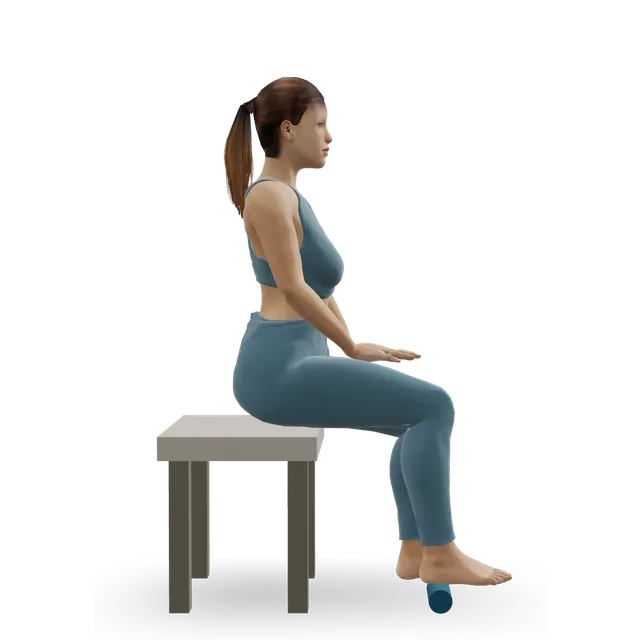
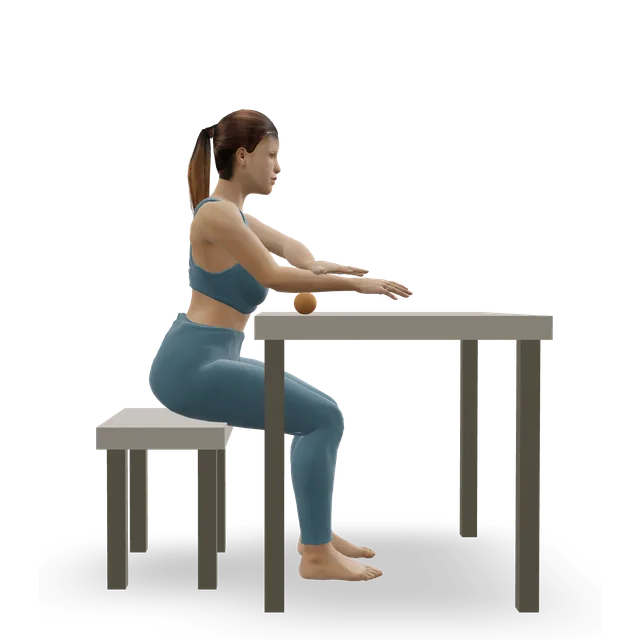
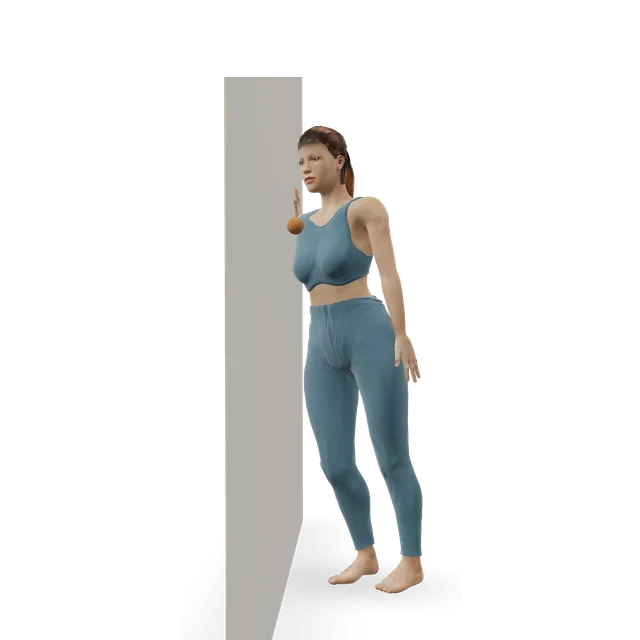
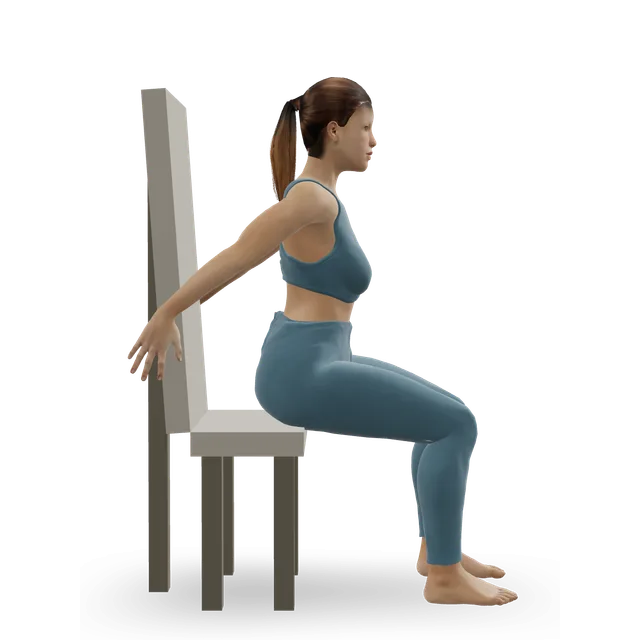
The foot roll, forearm roll, chest ball, rotation, upper back lift and side-stepping doses are their move pages' (the upper back lift's from the UK osteoporosis consensus and the side-stepping from the NHS balance exercises; the three ball doses are called editorial on their pages). The calf hold, sit-to-stand and standing balance doses are our editorial starting points; 60-second holds gained range fastest in a hamstring trial of people aged 65 to 97. Nothing here needs you on the floor. No trial has tested this sequence.
Check first: on blood thinners, keep pressure light; on thin or fragile skin, use your hands instead of a ball; with osteoporosis, ask before leaning a ball into your ribs; with numb feet, press gently and check your skin afterwards. Stop if you feel dizzy.
Feet: sitting in a firm chair, roll each sole over a soft ball for 1 to 2 minutes a foot.
Forearms: at a table, roll a ball from near the elbow to near the wrist for 45 to 60 seconds a side.
Chest: stand side-on to a wall and lean gently into a ball on the chest muscle below the collarbone, 45 to 60 seconds a side.
Upper back, sitting: turn through your upper back with your arms wide, 6 times each side; then sit tall and draw your shoulder blades back and down, 3 to 5 times, holding each for 3 to 5 seconds.
Calves: hands on a wall, one foot back, heel down, hold 30 to 60 seconds each side.
Stand up slowly with a hand on a counter or a sturdy chair. Stand up from the chair and sit down again 5 to 10 times, then side-step along the counter, 10 steps each way.
Balance: holding the counter, stand with one foot half in front of the other for 10 to 30 seconds, then swap feet.
Loading the 3D figure…
Drag to turn
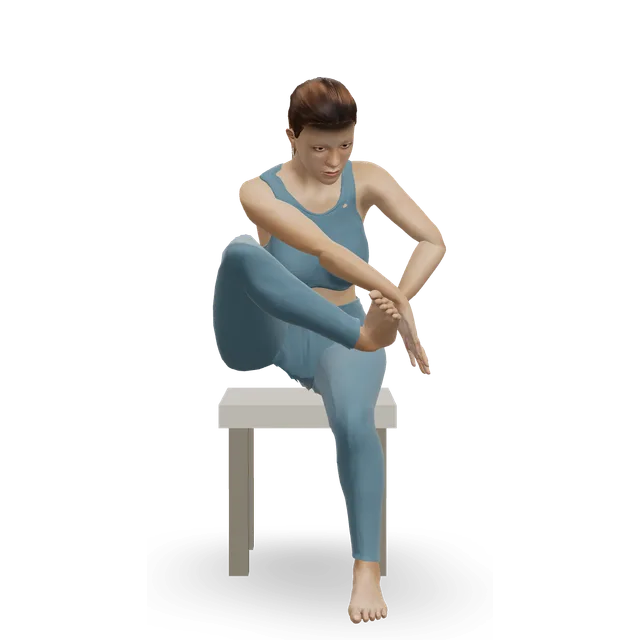
Gets into position, then repeats the movement. Technical checks passed; qualified exercise review is pending.
About a third of people over 65 living at home fall each year. In a review of 108 trials, where people averaged 76, exercise cut the rate of falls by 23% (59 trials, 12,981 people) and the number of people who fell by 15% (63 trials, 13,518 people), with high certainty. Balance and functional exercise cut falls by 24%, and programmes adding strength work probably by 34%. Australian exercise scientists add that programmes should get harder over time, keep going and be done often enough.
Stretching and release aren't falls preventionStrong evidence
No trial compared flexibility exercise with no exercise, and no rolling trial has measured falls. Release and stretching are for comfort and range; build the balance and strength work around them.
The NHS asks older adults to be active every day, to do activities that improve strength, balance and flexibility on at least 2 days a week, and to build up to 150 minutes of moderate activity a week. If you've fallen or are worried about falling, a GP can refer you to a falls service, and in some areas you can refer yourself.
You don't need to get down to the floor to roll. If you'd like to, practise getting down and up again with someone present first; our older adults guide shows how.
What helps: doses
Each dose names its source or is our editorial starting point. Doses are starting points, not prescriptions.
Release, sitting or standing
The seated foot roll, 1 to 2 minutes a foot; the forearm roll and the chest ball against a wall, 45 to 60 seconds a side: their move pages' doses, which those pages call editorial starting points. As often as it feels good is our editorial view.
Opening the upper back
The seated rotation, 6 each side (its move page's dose), and the seated upper back lift, 3 to 5 lifts held 3 to 5 seconds at least twice a week (its move page's dose, from the UK osteoporosis consensus), which suits thin bones.
Side-stepping along a counter, 10 steps each way, is its move page's dose from the NHS balance exercises. Sit to stands, 5 to 10, and holding a staggered stance at the counter for 10 to 30 seconds are our editorial starting points. Do strength and balance work on at least 2 days a week, as the NHS advises, and more if you're working to prevent falls.
Keep the pressure light, or ask your doctor first, if you take blood thinners, which make bruising more likely, or have a nerve condition such as peripheral neuropathy: the NHS lists these among the reasons hands-on treatments may not be safe.
Skip massage balls, guns and scraping tools on thin, fragile skin, for example after long-term steroid tablets (our suggestion).
Thin bones
With osteoporosis, ask before rolling the upper back or ribs: the NHS notes that a cough or sneeze can sometimes break a rib. UK experts advise avoiding positions that round the spine a lot. With osteoporosis, skip the foam roller unless a physiotherapist has cleared it.
With numb feet or diabetes, press gently and check your skin afterwards. Stand up slowly after rolling and keep a hand on a support: a vibrating roller briefly made balance worse in older women.
In an expert consensus of 37 researchers, open wounds and broken bones were reasons not to roll, and inflammation, a clot, a bone infection or bone forming in a muscle after an injury were at least reasons for caution.
Call 999 if you or someone else has fallen and may have hurt the head, back, neck or hip, or cannot get up. Get help from NHS 111 after a fall if you may be in pain, injured or unwell.
Call 999 or go to A&E: severe hip pain after a fall or injury, or you cannot stand, walk or put weight on the leg. In an older adult this can be a broken hip; the leg may be at an odd angle or look shorter. Don't drive yourself.
Call 999: you suddenly can't fully lift both arms and keep them there, because of weakness or numbness in one arm, especially if one side of your face droops or you slur your words or sound confused. It could be a stroke. Call even if the signs have stopped.
Chest pain, pressure or tightness that spreads to the arm, neck or jaw, or does not go away when you stop, especially with breathlessness, sweating, feeling sick, or grey or pale skin.
Same day (urgent GP appointment or NHS 111): throbbing pain in one leg (rarely both), usually the calf or thigh; swelling in one leg (rarely both); red, blue or darkened skin around the painful area, which may be harder to see on brown or black skin; or swollen veins. This can be a deep vein thrombosis (DVT). It is more likely after surgery, a hospital stay, 3 or more days in bed, a journey of over 4 hours, pregnancy or a recent birth, cancer, a previous clot, or contraception or hormone replacement therapy (HRT) that contains oestrogen.
Sudden new back pain after a minor fall, lift, cough or sneeze, from 50 or past the menopause, or if you take long-term steroid tablets; or height loss, a curved spine or a change in posture: see a GP. It can be a spinal fracture.
Any fall or near-fall, new unsteadiness, or a new fear of falling: ask about a falls assessment.
"Fascia hardens with age and must be broken up"Mixed evidence
Fascia does change with age, but nothing shows age-made adhesions, and hands or rollers can't reshape dense fascia. Movement and loading over weeks are what change tissue.
Rolling raised range in older adults as it does in younger ones, and rolling experts didn't agree that age itself is a reason for caution. The real cautions are blood thinners, fragile skin, thin bones and getting up from the floor.
Usually, with care. Rolling experts didn't agree that age itself is a reason for caution, and rolling raised range in older adults as it does in younger ones. Keep the pressure light on blood thinners, skip tools on fragile skin, and ask first with osteoporosis.
What happens to fascia as we age?
Older women had thicker fascia in the lower back and thinner fascia in the legs than young women, and thicker fascia went with less flexibility. Reviews describe stiffer, less elastic fascia alongside muscle loss. Nothing shows adhesions that need breaking up.
What are the best fascia exercises for seniors?
Gentle seated or standing release for the feet, forearms and chest, turning the upper back, then strength and balance moves at a counter. The release eases stiffness for a while; the strength and balance work prevents falls.
Do I need to get down on the floor to foam roll?
No. Seated and wall versions work for the feet, forearms and chest, and a soft ball is enough. Get down to the floor only if you can get up again safely, and practise that with someone present.
Does stretching help older adults?
Yes, for range: in people aged 65 to 97, 60-second holds gained range faster than shorter ones. Its effect on everyday tasks is less certain.
Will fascia release stop me falling?
No trial shows it. Balance and functional exercise cut falls by about a quarter, and no trial has compared flexibility exercise with no exercise.
I take blood thinners. Can I use a massage ball?
Keep the pressure light, or ask your doctor first: blood thinners make bruising more likely, and the NHS lists severe bruising as a sign of bleeding too much. Severe or repeated bleeding or bruising needs NHS 111 or A&E.
I have osteoporosis. Can I foam roll?
Ask first before rolling the upper back or ribs: with osteoporosis a cough or sneeze can break a rib. Avoid positions that round the spine a lot; the feet, forearms and seated turns are safer places to start.
Should older adults use a vibrating roller or massage gun?
In older women, a vibrating roller briefly made single-leg balance worse. If you use one, use it sitting, stand up slowly with a hand on a support, and keep it off thin skin and bony areas.
How often should older adults do fascia release?
As often as it feels good. The NHS asks for strength, balance and flexibility work on at least 2 days a week, which matters more.
Movement education, not medical advice. Stop for sharp or increasing pain, numbness or tingling, and get individual advice if you are pregnant, after an injury or surgery, or managing a health condition. Health disclaimer.