How to do a muscle-up: the strength to build first, the transition, and an honest timeline
A bar muscle-up is a pull-up that keeps going: you pull until your chest passes the bar, turn your elbows over it in one quick movement, and press out of a dip to straight arms. It needs strong, high pulling, deep dips and a skill of its own, the transition.
There is very little research on it: one muscle activity study, a few injury surveys and case reports. So this guide says plainly what is coaching practice, including the strength coaches ask for first (about 10 strict pull-ups and 10 dips), and gives our estimate of how long it takes, because no study has timed it.
It covers the technique, the transition and the chicken-wing fault, the ladder and drills, bar or rings, kipping or strict, shoulder care, and a muscle-up progression workout to follow.
Coaches describe it as a pull-up that continues past its normal range, joined to a dip that starts from an unusually low position. On a bar, you pull your chest to the bar, bring both elbows over it and press out to straight arms.
Our move page asks for about 10 strict pull-ups, ideally pulling your chest to the bar, and about 10 strict dips. Coaches range from about 5 of each as a bare minimum to 15 of each, and no study has tested any number.
In the only muscle activity study, ring muscle-ups worked the biceps, forearms, upper trapezius and triceps harder than bar muscle-ups, and the rings need a special grip. The authors suggest learning the bar version first.
A kip, a controlled swing from the hips, shifts work to the hips and trunk. It is the standard in CrossFit, and coaches agree strict strength should come first.
No study has timed it, and CrossFit's coaching article says the process can take years. Our editorial estimate: often 2 to 6 months once you have about 10 strict pull-ups and dips, and much longer from scratch.
About 10 strict pull-ups and 10 dipsEmerging evidence
Our move page asks for about 10 of each. CrossFit's coaching article quotes 15 good pull-ups and 15 good dips as a guideline rather than a rule, and BarBend suggests 10 to 15 strict pull-ups and ring dips plus a steady support hold. A physiotherapist quoted in CrossFit's ring series puts the floor at about 5 pull-ups, 5 dips and 10 push-ups. All of this is coaching practice: no study has tested a threshold.
The pull has to bring your chest to the bar, not just your chin over it. Coaches ask for strict pull-ups to the chest before muscle-up attempts, and CrossFit's article asks for a strict chest-to-ring pull-up for the ring version.
The dip at the top of a muscle-up starts deeper than most people train, so practise deep, controlled dips and a still support at the top of the bars or rings. BarBend suggests holds of 20 to 30 seconds at the top and the bottom of a ring dip.
Coaches point out that tendons and other connective tissue adapt more slowly than muscle, so rushing the muscle-up risks a nagging injury. This is coaching experience, not a trial result.
From our muscle-up page and CrossFit's coaching on the chicken wing (both elbows over together). The soft drop when you're tired is our editorial suggestion.
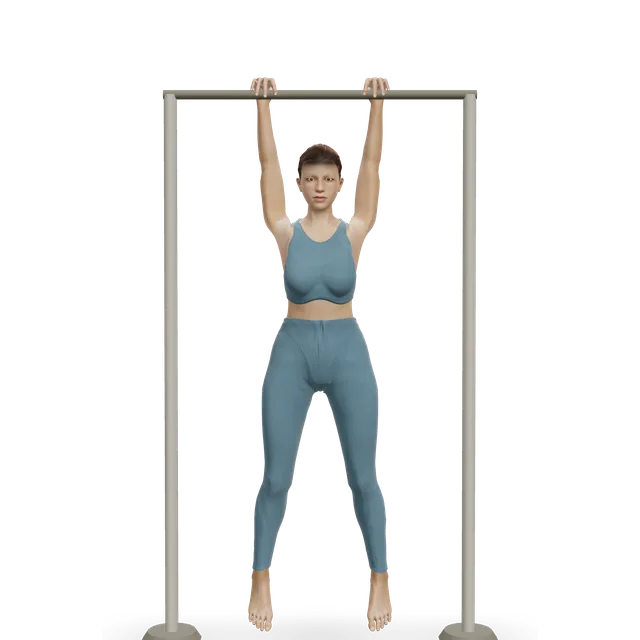
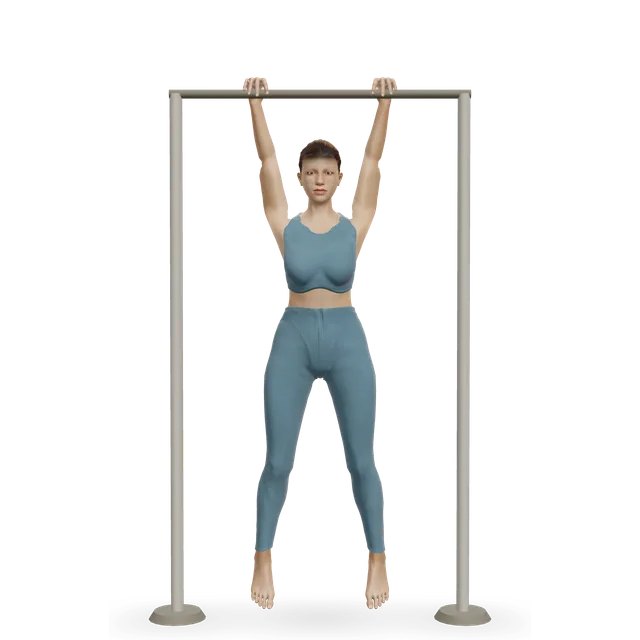
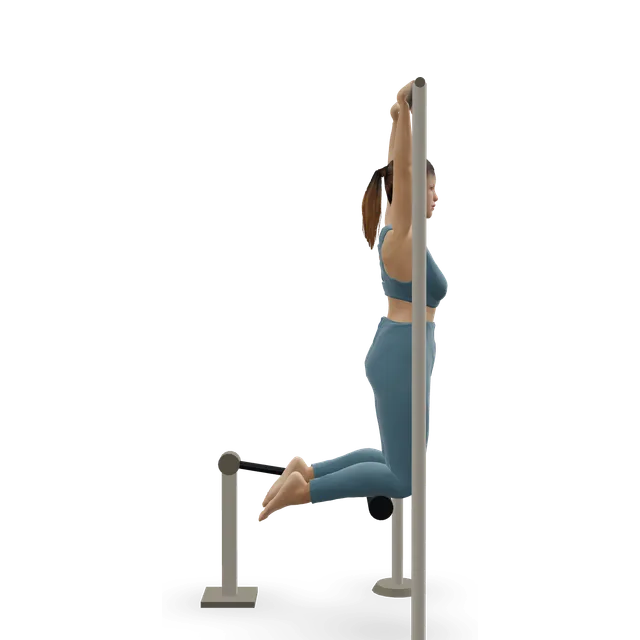
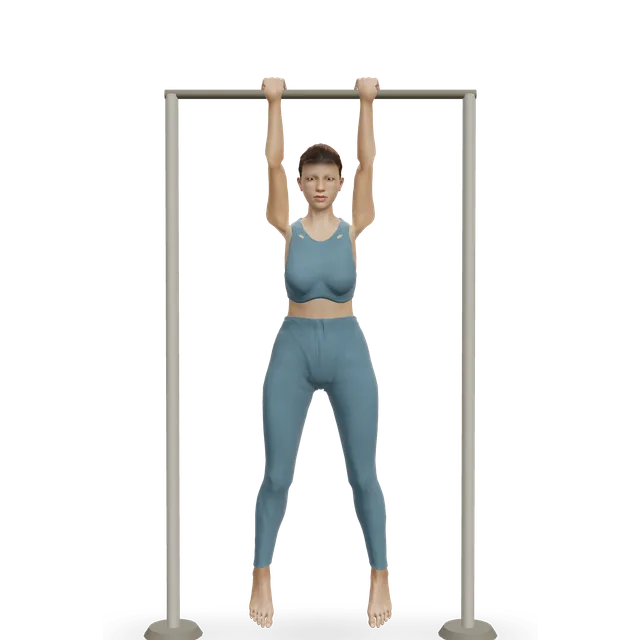
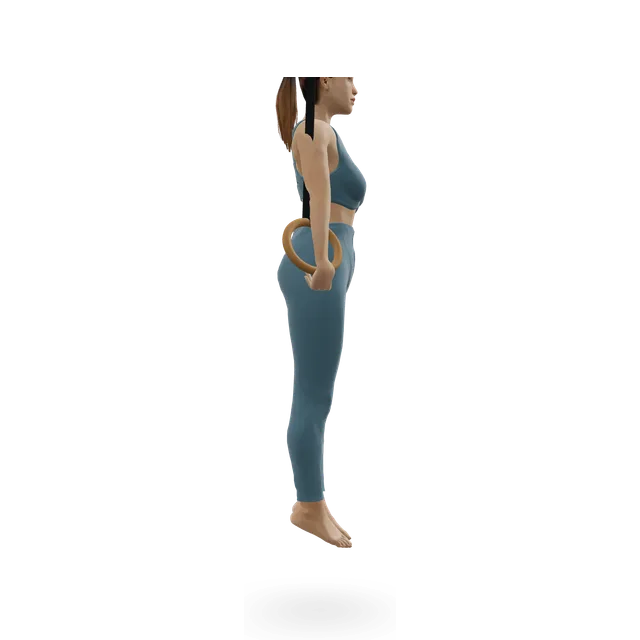
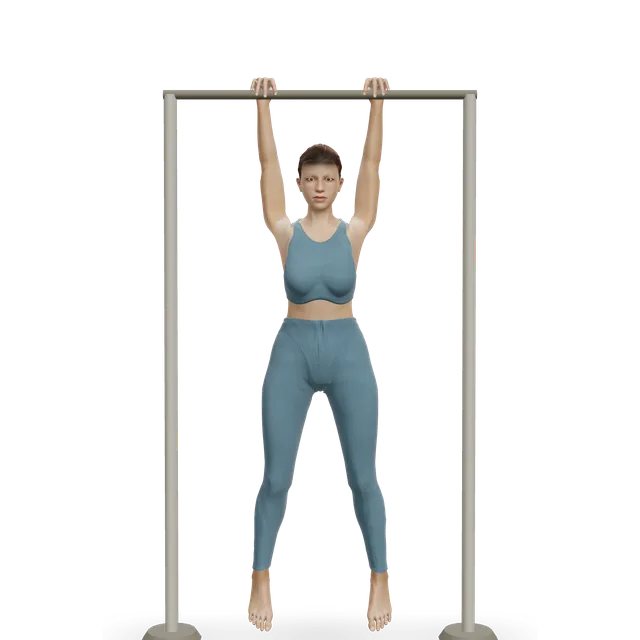
Hang from the bar with an overhand grip about shoulder-width apart, arms straight and feet together. A strict muscle-up starts from a still hang; a kipping one starts with a controlled swing.
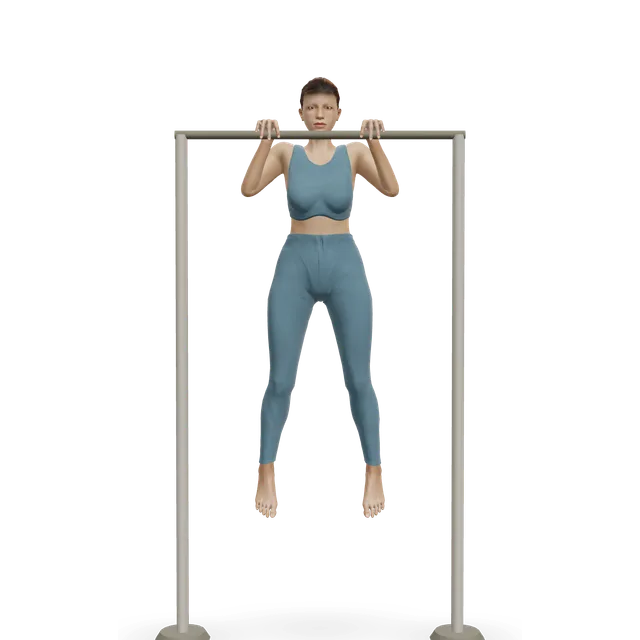
Pull hard and high, driving the bar down towards your hips so your chest rises to the bar. Keep the bar close to your body.
As the pull peaks, lean your chest over the bar and bring both elbows up and over it at the same time.
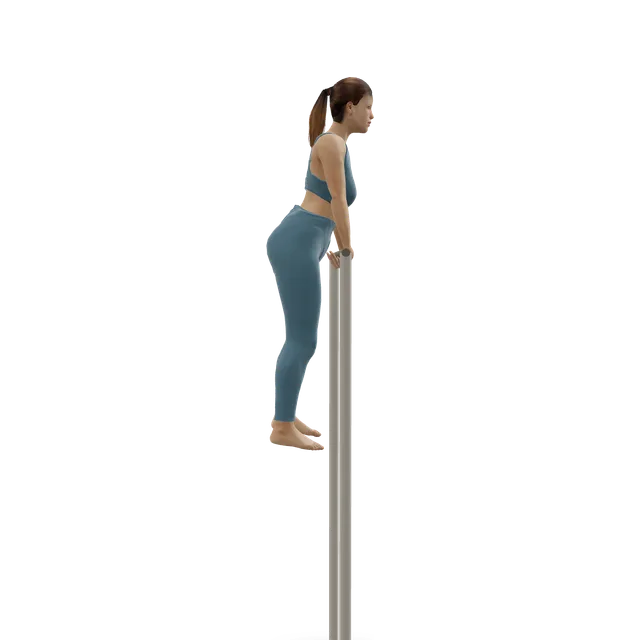
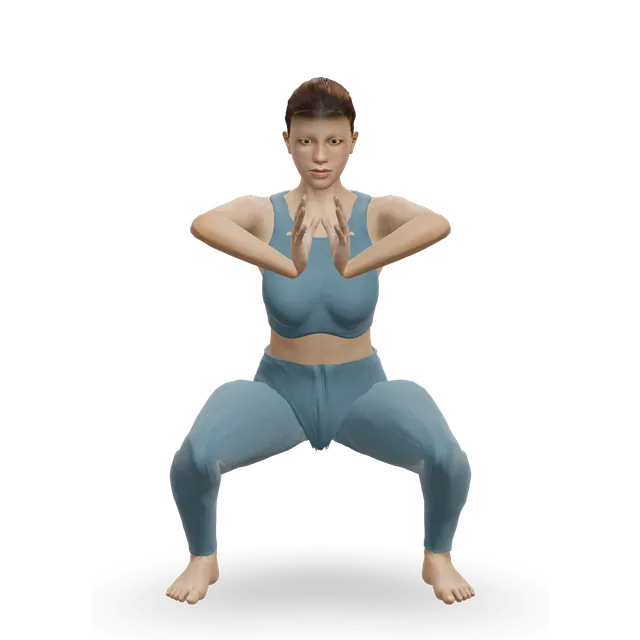
You're now at the bottom of a deep dip over the bar. Press up to straight arms with the bar at your hips.
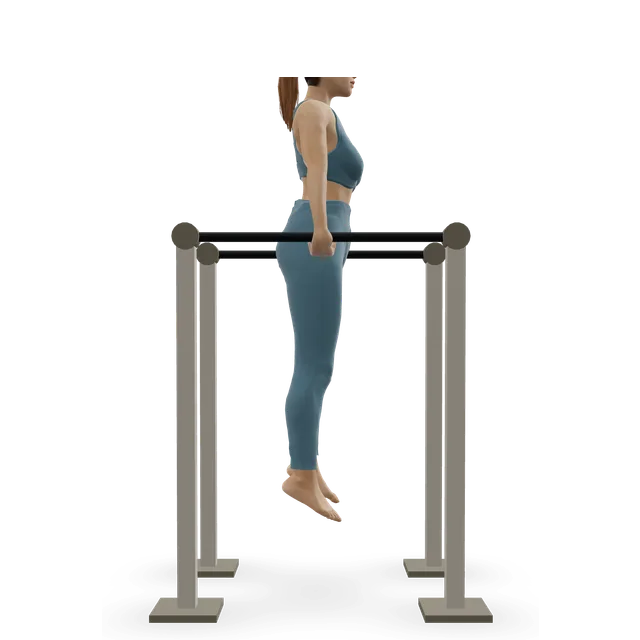
Lower back down through the dip and the pull with control, or drop to a hang on soft, bent arms if you're tired.
Loading the 3D figure…
Drag to turn
Gets into position, then repeats the movement. Technical checks passed; qualified exercise review is pending.
The transition, the chicken wing and the false grip
The chicken wingEmerging evidence
One elbow gets over the bar before the other, and you drag the second arm after it. CrossFit's coaching says it comes from not getting high enough, often with the feet separating in the swing, and that at worst it can lead to an injury. A clinic in China noticed that patients with a shoulder cartilage and labrum injury had often been hurt doing it. Pull higher, keep your feet together and bring both elbows over at once.
If you can't pull high enough, the bar or rings tend to swing away from you, which makes the turnover harder. Pull the bar towards your hips and drive your chest over it.
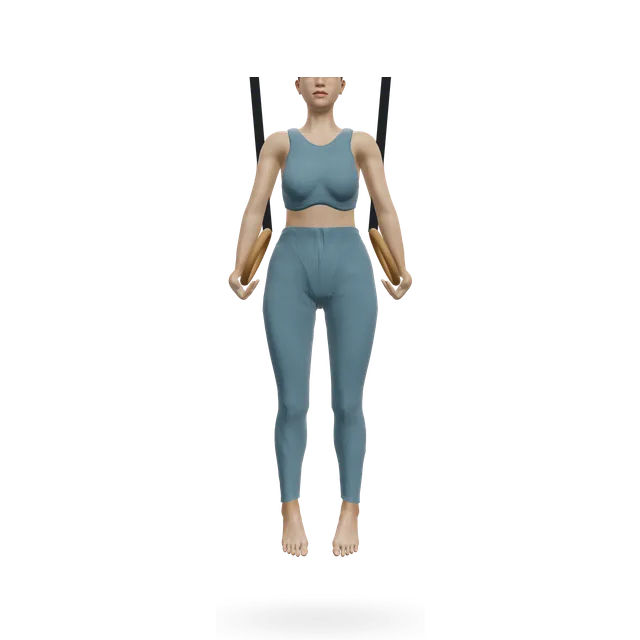
On rings, the heel of your hand sits over the ring with your wrist bent, so you don't have to change grip at the top. It takes weeks of hangs and rows to build, and it tends to slip at the transition when you're tired. You don't need it on a bar.
Build the pull-ups and dips first, then add slow negatives and transition drills; the low-bar drills and jumping or banded muscle-ups are done on the muscle-up's own bar, set lower.
Work up to about 10 strict pull-ups and 10 strict dips with our pull-up and dip guides, 2 or 3 times a week.
1. High pulls and deep dips
Pull-ups pulled as high as you can, chest towards the bar, 3 sets of 3 to 5, and slow, deep dips, 3 sets of 5 to 8, while you're fresh (our editorial starting point). CrossFit's plan moves from single slow negatives to 3 to 5 sets of 3 to 5 strict reps.
From a box, start at the top of a muscle-up and lower slowly through the dip, the turnover and the pull: 3 to 5 sets of 1 to 3 (our editorial starting point). CrossFit's plan keeps negatives to 10 or fewer reps a session.
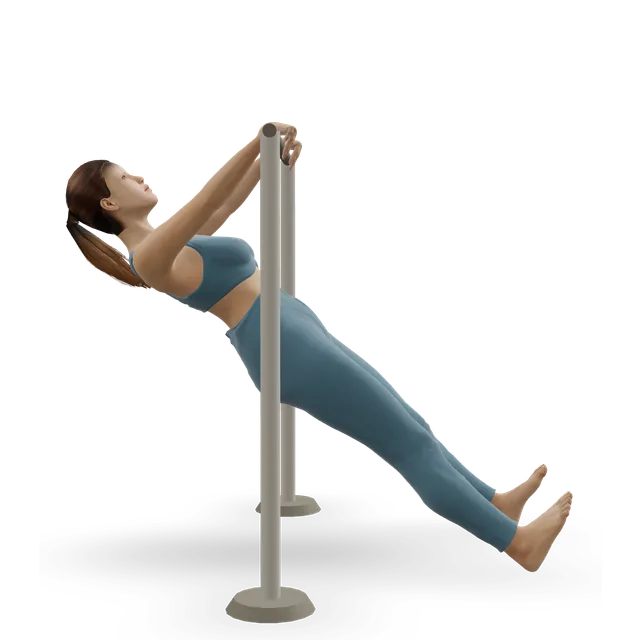
With the bar at about chest height and your feet on the floor, practise pulling up and over: 3 to 5 sets of 2 to 3 (our editorial starting point). Coaches use low rings, a box or a partner in the same way.
A jump or a band takes some of your weight so you can rehearse the timing: 3 to 5 sets of 1 to 2, using less help as you improve (our editorial starting point).
3 to 6 sets of 1 to 3 while you're fresh (our exercise library suggests 4 to 6 sets of 1 to 3 attempts). Stop when the turnover slows.
What the evidence says
Bar and ring muscle-ups use the big muscles alikeEmerging evidence
In 10 active men, measured with electromyography (EMG), which records muscle activity through the skin, ring muscle-ups drew more activity than bar muscle-ups from the upper trapezius, biceps and forearm muscles during the pull, and from the triceps and biceps during the press. The lats, chest, serratus anterior and lower trapezius worked about the same. The men were allowed to kip, which the authors think may explain why the big muscles didn't differ. It is one small study.
We found no trial of any way of learning a muscle-up. The muscle activity study's authors suggest building pulling strength and learning the bar version before the rings; everything else here, including the prerequisites and the drills, is coaching practice.
Injuries in calisthenics and CrossFitEmerging evidence
In 93 street workout (outdoor calisthenics) practitioners, 62% reported an injury in the past year, and 12% of the injured were doing muscle-ups when it happened. In 181 Dutch calisthenics athletes, 59% reported an injury in a year, most often the shoulder (32%), and intermediate skill in power moves went with more injuries. In 308 German CrossFit athletes, shoulder injuries happened mostly in handstands, overhead pressing and bar work including muscle-ups, and biceps tendon tears in muscle-ups, pull-ups, snatches and overhead squats. These are self-reported surveys, so they can't give a risk per attempt.
A 38-year-old broke the lower end of his upper arm during a ring muscle-up transition; tests afterwards found low vitamin D and low bone density. A clinic built a diagnostic test that copies the chicken-wing movement because so many of its patients with one shoulder cartilage injury had been hurt that way; it picked up 83% of those injuries.
In 11 athletes, adding a kip to the pull-up brought in more whole-body muscle activity and cut the upper-body work in each rep. We found no study of kipping in the muscle-up itself.
A different technique, not cheatingEmerging evidence
A kip, a controlled swing from the hips, adds height and momentum. In pull-ups it moved work to the hips and trunk and cut the upper-body work in each rep. It is the standard in CrossFit, and the muscle activity study allowed it.
Strict strength first, then the kipEmerging evidence
Coaches broadly agree strict strength should come first, with the kip added later to make reps efficient. CrossFit's ring series warns that a large, uncontrolled kip can get you over once or twice but doesn't build a repeatable skill and puts significant stress on your shoulders; that is coaching opinion, not a measured finding.
The chicken wing can lead to injury, and one clinic linked it to a shoulder cartilage injury. Get more height, keep your feet together and bring both elbows over together.
Fatigue was one of the commonest reasons street workout athletes gave for their injuries. Keep sets to 1 to 3 reps, practise fresh, and stop when the turnover slows.
CrossFit's coaching article says the process can take years, and that progress may be slow and come in unpredictable spurts. CrossFit's ring series says most athletes need 2 to 4 weeks in the early drill stages before the full movement becomes realistic, and longer if they're still building pulling and pressing strength.
These are our editorial estimates, not study results. Be wary of promises of a muscle-up in a day.
With about 10 strict pull-ups and 10 dips: often 2 to 6 months of regular practice.
With fewer than 5 pull-ups: often 6 to 12 months or more, most of it building strength.
How to train for it
CrossFit's published plan
One pull-up session and one ring-dip session a week for strength, starting with 5 to 7 single slow negatives with 2 to 4 minutes' rest, then 3 to 5 sets of 3 to 5 strict reps. Alongside, 2 or 3 short skill sessions a week of 10 to 15 minutes of drills, plus 1 to 3 muscle-up attempts a week, filmed. Cut the extra work back if your recovery, performance or motivation drops.
Our editorial starting point: 2 sessions a week, at the start of a session. Skill first while you're fresh (3 to 5 sets of 1 to 3 drills or attempts), then strength (high pull-ups and deep dips, 3 to 5 sets of 3 to 5, with 2 to 3 minutes' rest). Our muscle-up progression workout puts this in one session.
Once you have one
3 to 6 sets of 1 to 3 while you're fresh, as our exercise library suggests. Stop the session when the pull slows or the turnover gets ragged.
Kipping
Add it after you have strict strength, as a way to make reps efficient rather than a substitute for strength.
The muscle-up progression trains the skill and the strength in one session; the pull-up workouts build the pulling base, and the shoulder routine looks after the joint that takes the load.
Build the strength first with the pull-up and dip ladders, as our move page asks.
Shoulder or elbow pain, a past dislocation or a labrum injury
The turnover loads the shoulder and elbow in awkward positions, and a clinic series and a survey link it to a shoulder cartilage injury and biceps tendon tears. Wait until loading is comfortable, and follow our shoulder guides.
For sudden sharp pain, a pop, swelling, or pins and needles in your shoulder, elbow or arm (our suggestion).
Urgent GP appointment or NHS 111: your shoulder or arm
Contact NHS 111 or ask for an urgent GP appointment (in the US, urgent care) for sudden or very bad shoulder pain, not being able to move your arm, a shoulder or arm that has changed shape or is badly swollen, pins and needles that don't go away, no feeling in the arm, an arm that's hot or cold to touch, or pain after an injury or fall. These can be signs of a broken or dislocated bone or a torn tendon.
"Get 10 pull-ups and the muscle-up will come"Emerging evidence
Strength is needed but not enough: the transition, and on rings the false grip, are skills of their own. Coaches' strength thresholds range from about 5 to 15, and none has been tested.
"You can learn a muscle-up in a day"Emerging evidence
For most people it takes months, and CrossFit's coaching article says it can take years. Only people who are already strong at high pulls and deep dips get one quickly.
About 10 strict pull-ups, ideally pulling your chest to the bar, and about 10 dips. Coaches range from about 5 of each to 15 of each, and no study has tested any number. How high you pull matters as much as how many.
How long does it take to learn a muscle-up?
No study has timed it. CrossFit's coaching article says it can take years, and another says most athletes need 2 to 4 weeks of drills once they're strong enough. Our estimate is often 2 to 6 months once you have about 10 strict pull-ups and dips, and longer from scratch.
Can you learn a muscle-up in a day?
Only if you're already very strong at high pull-ups and deep dips and have practised the transition. For most people it takes months.
Should I learn a muscle-up on a bar or rings first?
A bar, say the authors of the only muscle activity study: ring muscle-ups worked the biceps, forearms, upper trapezius and triceps harder and need a false grip. Some coaches find the rings' turning makes the transition smoother.
Is a kipping muscle-up cheating?
No. It's a different technique and the standard in CrossFit, and the swing moves work to the hips and trunk. Coaches agree you should build strict strength first.
What is a chicken wing in a muscle-up, and how do I fix it?
It's when one elbow gets over the bar before the other and you drag the second arm over. It comes from too little height, often with your feet apart in the swing, and one clinic linked the movement to a shoulder cartilage injury. Pull higher, keep your feet together and go back to drills.
What is a false grip, and do I need it?
On rings, the heel of your hand sits over the ring with your wrist bent, so you don't have to change grip at the top. You need it for strict ring muscle-ups; you don't need it on a bar.
What's the difference between a muscle-up and a pull-up?
A pull-up ends with your chin over the bar. A muscle-up keeps pulling until your chest passes the bar, turns over and presses out of a deep dip, so it needs a higher pull and a deeper dip.
Why does my shoulder hurt after muscle-ups?
The turnover loads the shoulder in an awkward position, and shoulders are the most often injured area in calisthenics surveys. Rest the skill and see our shoulder pain guide. Get urgent help for sudden severe pain, a change in shape, or numbness.
What muscles does a muscle-up work?
The lats, chest, front of the shoulders, biceps, triceps and forearms, with your trunk holding you together. Bar and ring versions worked the big muscles about equally in the one study that measured them.
Are muscle-ups dangerous?
They're an advanced move with an injury record in surveys and case reports, but no one knows the risk per attempt. Build the strength first, practise fresh, keep sets short and stop for sharp pain.
Exercise education, not a personal prescription, and clinical review of these guides is pending. Check with a GP before starting hard training if you have a heart condition, chest pain, dizziness or breathlessness when active, and stop for sharp or increasing pain. Health disclaimer.