Finger pulley injury (climber's finger): grades, taping, rehab and getting back on the wall
The pulleys are bands that hold the finger tendons against the bone. Crimping on small holds, or a sudden load when a foot slips, can strain or tear them, usually the A2 or A4 pulley of the middle or ring finger. It is the commonest finger injury in climbers, often with a pop and pain at the base of the finger.
Most pulley injuries, even a complete tear of a single pulley, heal well without surgery, with a short spell of protection, tape or a ring, and a gradual return to climbing over about 6 weeks to 3 months. Several torn pulleys need a hand specialist's opinion about surgery. This guide covers the grades, what tape and rings do and a staged plan with 3D demos, and it says where the evidence for the rehab is thin.
Exercise is for pain that has been checked or is clearly mild and settling.
Get urgent medical help if
Contact NHS 111 if you heard a snap, grinding or popping noise when you hurt your finger, the pain is severe, or you're not able to move the finger or hold things.
Contact NHS 111 if the finger has changed shape or colour, you've lost the feeling in part or all of your hand after an injury, or you feel faint, dizzy or sick from the pain.
Contact NHS 111 if you have finger pain with a very high temperature, or you feel hot or cold and shivery.
A climber under 18 with a slow build-up of pain, swelling or stiffness on the back of a middle finger joint: stop climbing and see a GP, and ask for an urgent referral to a hand surgeon. It can be a growth plate stress fracture, which X-rays can miss.
See a doctor or physiotherapist if
Finger pain that is stopping you doing normal activities, getting worse or coming back, or not improved after 2 weeks of looking after it at home: see a GP. In many areas you can refer yourself to NHS physiotherapy.
Tingling in your hand, or your hand starting to feel numb.
Pain over the pulley that is no better after the protection period, a finger that won't fully straighten, or the tendon visibly lifting from the bone when you grip: go back to your clinician (our suggestion).
Understand it
What the pulleys do
The tendons that bend your fingers run through a series of tough bands, the pulleys, that hold them close to the bone. The A2 pulley (over the first finger bone) and the A4 pulley (over the middle bone) take most of the load. A pulley can be strained, partly torn or completely torn (ruptured). When it tears, the tendon lifts away from the bone as you grip, which is called bowstringing.
Mostly climbers. Among 604 injured climbers seen at a German specialist centre, 20% had a pulley injury: 48 strains and 74 ruptures, almost all of a single pulley. Among 911 injuries at the same centre about a decade later, fingers made up 52%, pulley injuries were the commonest finger injury, and A4 injuries had overtaken A2. In 426 recreational indoor climbers followed for a year, the finger was the commonest place for an arm or hand injury (36%).
The middle and ring fingers take about 60% of the load at the fingertips and are injured most. Outside climbing it is rare.
The crimp grip (fingers bent sharply at the middle joint, with the end joint pulled back) multiplies the force on the pulleys, and a sudden load, such as a foot slipping off a hold, can push a pulley past its breaking point.
Crimping, climbing harder, bouldering, campus board training (which went with about 2.5 times the odds of an injury) and a previous injury (about 3 times) go with more injuries. Warm-ups, stretching and taping weren't linked with fewer.
Sudden pain at the base of the finger on the palm side, sometimes with a pop, then swelling, tenderness over the pulley and pain when you crimp or grip; some tears follow a few weeks of aching.
An X-ray only rules out a broken bone. A dynamic ultrasound scan, which watches how far the tendon lifts from the bone as you grip, is the usual first scan (in the study a 2022 review cites, it picked up 98% of tears with no false alarms), with MRI (magnetic resonance imaging) if the scan is unclear.
Trigger finger is different: a thickened pulley at the base of the finger in the palm (the A1 pulley) that catches, usually without an injury, and it has its own guide. A broken finger, a drooping fingertip (mallet finger) or a sprained joint need the NHS finger pain advice. In a teenager, a gradual ache on the back of a middle finger joint suggests a growth plate stress fracture, and tingling in the ring and little fingers points to a nerve problem instead, covered in the ulnar nerve guide.
Most climbers do well. In Schöffl's series, about 90% of those treated without surgery were climbing again by 3 months, and 8 of 81 re-examined still had pain at 3 months, mostly from an irritated tendon. Climbers with old single ruptures had excellent function and no loss of strength. With a pulley-protection ring, 38 of 43 climbers with complete tears got back to their previous level, on average 8.8 months after the injury.
Grades 1 to 3 usually heal without surgeryEmerging evidence
In Schöffl's 2003 study of 122 pulley injuries, grades 1 to 3 did well with treatment without surgery, while grade 4 needed an operation. In the follow-up of the same series, 115 climbers were treated without surgery, and the 7 grade 4 injuries were reconstructed, with mostly good results. Later reviews agree: no surgery for grades 1 and 2, surgery mainly for grade 4, and grade 3 a grey area where both have done well. These are cohorts and case series, not trials.
The usual protection and return timesEmerging evidence
This is Schöffl's protocol as two reviews summarise it. It is expert guidance that hasn't been tested in trials, and your clinician sets your own timeline.
Grade 1: no immobilisation, and 2 to 4 weeks of functional therapy with tape. Full climbing at about 6 to 8 weeks; tape for about 3 months.
Grade 2: about 10 days immobilised, then 2 to 4 weeks of cautious functional therapy, with tape. Full climbing at about 6 to 8 weeks; tape for about 3 months.
Grade 3: about 14 days immobilised, then up to 4 weeks of functional therapy, with a thermoplastic ring. Full climbing at about 3 months; protection for about 6 months.
Grade 4: surgery, then about 14 days immobilised and about 4 weeks of functional therapy, with a ring. Return takes longer, as your surgeon advises.
H-taping takes some load off, but its effect on recovery is unknownEmerging evidence
An H-shaped tape across the middle finger joint reduced the gap between tendon and bone by 16% on ultrasound in 8 climbers with ruptures, where a ring of tape at the base of the finger didn't, and in 12 climbers with old injuries it added 13% to crimp strength. A 2022 review of 9 studies (206 climbers) found low to moderate certainty that taping reduces bowstringing by 15% to 22%, very low certainty for pain and getting back to climbing, no harms, and no protection against a pulley tearing in cadaver fingers.
Tape doesn't prevent a first injuryEmerging evidence
In a 2023 review of 34 studies of adult climbers, taping wasn't linked with fewer overuse injuries, and nor were warm-ups or stretching. Tape is for protecting a healing pulley, not for prevention.
A pulley ring protects complete tearsEmerging evidence
In 47 complete ruptures in 45 climbers treated with a thermoplastic pulley-protection splint, the gap between tendon and bone shrank (from 4.4 to 2.3 mm at the A2 pulley), every finger improved, movement and strength matched the other hand, and 38 of 43 regained their climbing level. In 4 climbers with grade 1 to 3 A2 injuries who kept climbing 3 times a week in a custom ring for 12 weeks, all improved steadily. These are small case series.
Surgery is mainly for several torn pulleysMixed evidence
After reconstruction for multiple ruptures, 30 of 38 high-level climbers got back to their previous level, more often when the bowstringing was fully corrected. But in a series of 11 people with triple tears (A2 to A4), the 7 treated early with rings and extension splints for 2 months were climbing at their previous level by 6 months, while 2 of 3 diagnosed late needed an operation. The decision is a hand specialist's.
The rehab itself rests on case series and expert opinionMixed evidence
There are no trials of pulley rehabilitation. Reviews recommend protection with tape or splints, and a 2023 clinical commentary argues for progressive loading built on strength and conditioning principles. Hangboard trials in uninjured climbers show finger strength responds to load added in small steps, such as 1.25 kg a week, over 10 weeks of two sessions a week. An open hand loads the pulleys far less than a crimp, so the plan here goes from an open hand on big holds to crimps and small edges last.
Fingers keep growing until about 17. The British Mountaineering Council's guide says a slow build-up of pain on the back of a middle finger joint, swelling, tenderness or less movement after training in a young climber means stop climbing, see a GP and insist on an urgent hand-surgeon referral; X-rays can miss it, an MRI may be needed, and left untreated it can damage the joint for good. At one specialist centre, 14 of 20 injured climbers under 15 had growth plate fractures.
Pain-free while it's protected, then no more than 2 to 3 out of 10
No trial has set a pain limit for pulley rehab, so this rule is ours, set lower than the 5 out of 10 used elsewhere on this site because a healing ligament is being loaded.
While the finger is protected, exercises should be pain-free at the pulley. When you start loading it, keep any pain at the pulley to 2 or 3 out of 10, gone within an hour and no worse the next day, and pressing on the pulley should feel less tender week by week. A new pop, sharp pain, swelling or pain in a crimp means stop and go back a stage.
The British Mountaineering Council's fingerboard expert puts the test this way: if the injury has healed enough to cope with fingerboarding without getting worse, it's OK. Teenagers should never train through finger pain.
Start at the first stage. Each move opens a full guide with a 3D demo.
Stage 1
Protect: rest the finger from climbing, keep it moving
Stop climbing and hard gripping. Your clinician sets the protection: in the usual protocol, no splint for grade 1, about 10 days immobilised for grade 2, and about 14 days for grade 3, then a pulley ring. When the protection allows, move the finger gently, keeping it pain-free at the pulley. Keep the rest of you training without gripping. The doses here are editorial unless marked.
4 to 6 of each position, 5 s holds, up to 4 times a day, pain-free · The dose is an NHS hand-therapy leaflet's; using it after a pulley injury is our suggestion
Move on when: The protection period is over, the finger bends and straightens fully without pain, and pressing on the pulley is only mildly tender.
Follow along: a timer, a cue and the next move, one step at a time.
Stage 2
Open-hand loading, with the pulley protected
Starts when the immobilisation ends: straight away for grade 1, after about 10 days for grade 2, and after about 14 days for grade 3, with the ring on. In the usual protocol this functional phase lasts about 2 to 4 weeks. Wear tape or the ring for these exercises; open hand only, no crimping. The doses are editorial.
Move on when: These are comfortable with tape or the ring on, and the pulley no longer hurts when pressed.
Follow along: a timer, a cue and the next move, one step at a time.
Stage 3
Graded return to climbing
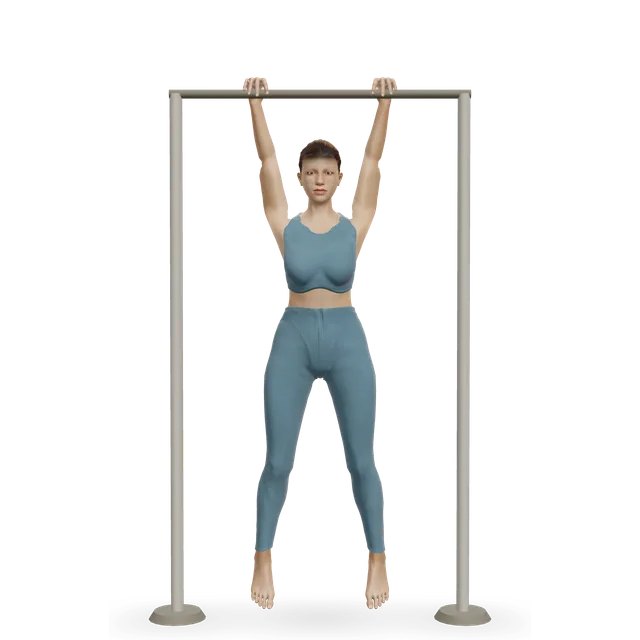
In the usual protocol, full climbing at about 6 to 8 weeks for grades 1 and 2 and about 3 months for grade 3, with tape or the ring for 3 to 6 months. Easy climbing comes first, once the functional phase has gone well: big holds, an open hand and static moves, then the half crimp before the full crimp, with small edges, dynamic moves and campus boards last. Your clinician decides the timing. Load the fingers in small steps, as the hangboard trials did. The 3D demo below shows a full bar hang; here it stands in for an open-hand hang on a large fingerboard edge with your feet taking some of your weight, which this site doesn't demonstrate yet.
7 s on, 3 s off, 6 times; 2 sets, 3 minutes apart, 2 sessions a week · A stand-in for a feet-assisted, open-hand edge hang: feet on the floor or a box to take weight off, an open-hand grip, and a slight bend in the arms. Take a little more weight into your hands each week. The hang and rest timings are the British Mountaineering Council's basic fingerboard routine, which also suggests a foot on a chair to make it easier; twice a week, and using it after an injury, are our suggestions
Move on when: Easy climbing on big holds is pain-free that day and the next. Then bring back harder holds one change at a time, with the climbing guide's warm-up and its hangboard advice.
Follow along: a timer, a cue and the next move, one step at a time.
What to change for now
Tape and rings
H-tape: cut a strip of rigid tape about 10 cm long and 1.5 cm wide lengthways from both ends, leaving the middle centimetre whole, so it makes an H. Wrap the two ends of one side round the first finger bone, just short of the middle joint, bend that joint, then wrap the other two ends round the middle bone, just past it. Wear it for loading and, later, for climbing.
A pulley ring is a rigid thermoplastic ring made by a hand therapist, used mainly for complete A2 or A3 tears.
While the finger heals, keep your legs, trunk and shoulders training, and keep up the parts of the climbers' antagonist workout that don't load the finger. This is our suggestion.
Back on the wall
Start on big holds with an open hand and static moves. Bring back the half crimp before the full crimp, and leave small edges, dynamic moves and campus boards until last. Keep the tape or ring on for 3 to 6 months. A previous injury tripled the odds of a new arm or hand injury in indoor climbers, so build up over weeks, not days.
Sudden pain at the base of a finger on the palm side, often with a pop, then swelling, tenderness and pain when you crimp or grip. Contact NHS 111 if you heard a snap or pop, the pain is severe or you can't move the finger.
How is a pulley injury diagnosed?
A clinician examines the finger and usually arranges a dynamic ultrasound scan, which shows the torn pulley and how far the tendon lifts from the bone as you grip. MRI is used if that's unclear, and an X-ray only rules out a broken bone.
What are the grades of pulley injury?
Grade 1 is a strain; grade 2 a complete A4 or partial A2 or A3 tear; grade 3 a complete A2 or A3 tear; and grade 4 several tears, or one with other damage. The grade guides the treatment.
How long does a pulley injury take to heal?
In the usual protocol, full climbing returns at about 6 to 8 weeks for grades 1 and 2 and about 3 months for grade 3, with tape or a ring for 3 to 6 months. About 90% were climbing again by 3 months in one large series.
Do I need surgery for a pulley injury?
Usually not. Single tears, even complete ones, do well without surgery; surgery is mainly for several torn pulleys, and most climbers get back to their level after it.
How do I H-tape a finger?
Cut a strip of rigid tape (about 10 cm by 1.5 cm) lengthways from both ends, leaving the middle centimetre whole, so it makes an H. Wrap the two ends of one side round the first finger bone, just short of the middle joint, bend that joint, then wrap the other two round the middle bone, just past it. It reduced the tendon lifting from the bone by 16% in one study, but whether it speeds recovery is unknown.
Tape or a pulley ring?
A rigid thermoplastic ring is used for complete A2 or A3 tears; in 47 ruptures it helped the tendon settle back towards the bone, and most climbers regained their level. Tape is used for milder grades.
When can I climb again after a pulley injury?
Easy climbing on big holds starts once your clinician's protection period is over and the finger is pain-free with tape or a ring. Open hand comes first and crimps later, with small edges and dynamic moves last, building up over weeks.
Can I use a hangboard after a pulley injury?
Later, once the finger takes load without getting worse, as the British Mountaineering Council's expert says. Start with an open hand on a big edge and your feet taking some weight, and increase slowly.
How do I prevent another pulley injury?
A previous injury roughly triples the odds of another, so return gradually. Limit hard crimping and campus boards, which raise the risk. Warm-ups and taping haven't been shown to prevent injuries, though a warm-up still helps you start ready to climb.
My teenager has finger pain from climbing. Is it a pulley?
In under-18s, a gradual ache on the back of a middle finger joint is more likely a growth plate stress fracture. Stop climbing and see a GP, who should refer urgently to a hand surgeon.
Exercise education, not a diagnosis or treatment plan. It is written from the guidelines and studies listed above; review by a clinician is pending. If your pain follows an injury, is severe, is getting worse, or comes with any warning sign listed on this page, get it assessed. Health disclaimer.