Pain guide · Foot pain

Broken foot (metatarsal fracture): fifth metatarsal and Jones fractures, recovery and exercises

A broken bone in the foot is usually a break of one of the five long metatarsal bones, most often the fifth, on the outer edge of the foot, after rolling the ankle. Most heal in about 6 weeks without surgery, and you can usually walk on the foot in a boot or stiff-soled shoe as comfort allows.

Where the break is matters. A Jones fracture, just beyond the bump at the base of the fifth metatarsal, heals more slowly, and NHS hospitals treat it in different ways. This guide explains the types, what trials found on bandages, shoes, boots and casts, when surgery is considered, and a staged plan with a 3D demo of each move. Your fracture clinic's plan comes first.

When to get help first

Exercise is for pain that has been checked or is clearly mild and settling.

Get urgent medical help if

  • Call 999 or go to A&E: after an injury, you heard a crack, the foot or ankle has changed shape or points at an odd angle, a bone is sticking out, there is a bad cut over it, you're in severe pain, or the toes look blue or white, feel numb or are cold to touch. These can mean a broken bone. Don't drive yourself.
  • Same day (urgent GP appointment or NHS 111): after an injury, you can't put weight on the foot or walk more than a few steps, the pain is very bad or getting worse, there's a lot of swelling or bruising, the foot is hot and swollen, or you feel faint, dizzy or sick from the pain. If you think you've broken your foot or any toes, don't try to treat it yourself.
  • A child who has hurt their foot or may have broken a toe: don't treat it yourself; take them to an urgent treatment centre or A&E.
  • Same day: in a cast or boot, pain that is getting worse, toes that are numb or burning, a cast that feels too tight, toes that are swollen, blue or white, or a bad smell from under the cast.
  • Go to A&E: after a crush injury or several broken bones, a very swollen, tense foot with pain far worse than the injury seems to explain, pain when the toes are moved, and tingling. These can be signs of compartment syndrome, a medical emergency.
  • Call 999: calf or leg pain or swelling with breathlessness or chest pain. It could be a clot that has reached the lungs. Do not drive yourself to A&E.
  • Same day (GP or NHS 111): throbbing pain and swelling in one calf, with red or darker skin. It could be a blood clot (a deep vein thrombosis, or DVT). Watch for it after a foot or ankle injury or time in a cast or boot.
  • Same day: you have diabetes and a new foot problem, such as a wound, signs of infection, or a hot, swollen foot with a change in colour, even if it doesn't hurt. Contact your diabetes foot team or GP.

See a doctor or physiotherapist if

  • Still significant pain and swelling 6 weeks after the injury, or you're struggling to wean out of the boot: contact your fracture clinic.
  • With a Jones fracture, pain at the outer edge of the foot coming back once you're active again: stop, and get it checked, because these fractures can break again.
  • One spot on a foot bone that hurts with every step and later at night, or an ache on the outer edge of the foot that built up before any injury: a possible stress fracture. Our stress fracture guide covers it.
  • Pain across the middle of the foot, bruising on the sole, or several metatarsals broken: ask whether the midfoot (Lisfranc) joints have been checked.

Understand it

What a broken foot is

The metatarsals are the five long bones between the toes and the middle of the foot. Breaks follow a twist, a fall or a direct blow, such as dropping something heavy on the foot. Stress fractures, which build up gradually from repeated load, are a different problem with their own guide.

In Shropshire, 1,121 adults broke 1,370 metatarsals over 3 years, usually the fifth on its own, mostly after a rolled ankle or a fall; 59% of the breaks were at the base of a metatarsal. Women had about twice as many as men, because rates stayed high in older women and fell with age in men.

Sources 1, 2

The fifth metatarsal: three different breaks

The fifth metatarsal is the long bone on the outer edge of the foot. Where it breaks changes how it heals and how it's treated.

  • An avulsion fracture (zone 1): a flake pulled off the bump at its base when the foot rolls inwards. The commonest; it heals well, with non-union in about 1% across studies. NHS clinics usually let you walk as comfort allows, in a boot for comfort, weaned from about 3 weeks.
  • A Jones fracture (zone 2): just beyond the bump, where the blood supply is poorer, so it heals more slowly and fails to join more often. NHS trust leaflets describe treating it without surgery at first, but they differ: one lets you walk in a boot with a specialist review at 6 weeks, another starts with a cast and no weight. Surgery is sometimes offered, especially to athletes.
  • A shaft fracture (zone 3 and beyond): further along the bone. A twisting, spiral break near the far end is called a dancer's fracture. These usually heal without surgery, even when the pieces have shifted.

Sources 3, 1, 4, 5, 6, 7, 8, 9, 10, 11

The other metatarsals

Of the middle three, the third is broken most often, and up to 63% of third metatarsal breaks come with a break of the second or fourth. Most heal without surgery; operations are kept for breaks angled more than about 10° or shifted more than 3 to 4 mm, and for several displaced metatarsals. Several broken together, or a crush injury, mean the midfoot (Lisfranc) joints need checking.

Sources 12, 1

How it's recognised

Pain and swelling, bruising that spreads, and pain walking. NICE (the National Institute for Health and Care Excellence) recommends the Ottawa foot rules to decide on an X-ray: tenderness over the bump at the base of the fifth metatarsal or over the navicular bone on the inner side of the midfoot, or not being able to take 4 steps. Most breaks show on an X-ray; stress fractures may not at first. If you think you've broken your foot, the NHS says don't try to treat it yourself.

Sources 1, 13, 14

How long it takes, and what an X-ray does and doesn't mean

Most metatarsal fractures heal enough to walk on normally in 6 to 8 weeks, but the foot can stay swollen for months and shoes may feel uncomfortable. NHS fracture clinics expect avulsion and shaft fractures to heal in about 6 weeks, with mild pain and swelling for 3 to 6 months. Displaced spiral shaft fractures healed in about 8 weeks without surgery in a London series of 33, and in a US cohort of 142, function was excellent at 3.5 years; 2 needed surgery for a painful non-union.

A gap on an X-ray doesn't always mean trouble: in a UK fracture clinic, 8 of 111 Jones fractures didn't join but caused no symptoms, and 1 person in the whole group needed an operation. Treatment follows your symptoms and the clinic's review, not the X-ray alone.

Sources 1, 5, 8, 10, 11, 15

What helps, and how strong the evidence is

Avulsion fractures: a bandage, shoe or boot does as well as a castStrong evidence

In a UK trial of 60 people, a double elasticated bandage for 4 weeks was as good as a below-knee walking cast at 4 weeks and 6 months, though 43% weren't followed up to 6 months. In a trial of 96, walking in a hard-soled shoe was as good as a short leg cast for pain at 6 months, and people got back to their usual activities sooner (37 against 43 days). In one small UK comparison of 37 people, a plaster slipper gave better scores than an elastic bandage at 2 weeks, but they were the same by 6 weeks.

In a UK comparison of 39 people that wasn't randomised, a walking boot gave better function than a walking cast, and people drove again sooner. A boot or a hard-soled shoe gave similar pain and function in 72 people. Reviews found removable supports gave better early function than casts, and non-union in about 1% of these breaks.

Sources 16, 17, 18, 19, 20, 21, 4

Jones fractures: slower to heal, and hospitals differMixed evidence

Across 10 studies (998 people), non-union was 11.6% with non-surgical care and 3.3% after surgery, with fewer complications and better foot scores after surgery; most of the studies weren't randomised, and some mixed sudden breaks with stress fractures. In the one main trial (37 people), 8 of 18 treated in a cast without weight failed (5 didn't heal, 1 healed slowly and 2 broke again), against 1 of 19 after a screw.

But in a UK virtual fracture clinic that put every fifth metatarsal fracture in a boot with full weight (663 people, 111 Jones fractures), 8 Jones fractures (7%) didn't join, none caused symptoms, and 1 person needed an operation; another UK clinic using the same approach had 1 non-union among 126 people. A trial of 72 found early walking did as well as 8 weeks in a cast or boot for zone 2 fractures.

NHS trust leaflets describe treatment without surgery at first, by a boot and walking or by a cast without weight, and we found no national survey of what UK clinics do. Surgery is sometimes offered, especially to athletes and people with physically demanding jobs.

Sources 22, 23, 24, 3, 15, 25, 6, 7

Athletes: a screw speeds the returnEmerging evidence

In 22 studies of 646 Jones fractures in athletes, 98.8% returned to play after a screw against 71.6% without surgery, at about 10 weeks against 13, and the bone healed sooner (about 8 against 14 weeks); about 1 in 10 broke again across the studies. The review's authors recommend a screw for athletes, and an international consensus found return to sport was quicker after surgery. Going back before the X-ray shows healing isn't advised, because of the risk of breaking it again.

In elite men's football, just over half of fifth metatarsal fractures were stress fractures, and 45% of players had warning pain beforehand. The evidence is mostly from studies that weren't randomised.

Sources 26, 27, 23, 28

Spiral shaft (dancer's) fractures usually heal without surgeryEmerging evidence

All 33 displaced spiral fractures in a London series healed without surgery, and a rigid-soled shoe gave pain-free walking sooner than a boot (4.6 against 8.4 weeks). In a US cohort of 142 treated without surgery, function was excellent at 3.5 years and 2 needed surgery for a painful non-union. In a review of 490 people, about 99% healed with or without surgery, but athletes returned to sport sooner after surgery (15.4 against 22.4 weeks).

Sources 10, 11, 9

Exercise after a broken foot: practice-basedEmerging evidence

Fracture clinic letters start ankle and foot movements straight away: point the foot up and down, circle it and spread the toes, 10 of each, 3 to 4 times a day. One NHS fracture clinic advises building back to training by no more than 10% a week, and the balance holds here come from the NHS balance exercises. We found no trials testing exercise programmes after metatarsal fractures, so the later stages and milestones here are editorial, following our broken ankle and stress fracture guides.

Sources 5, 7, 29, 30, 31

How much pain is OK while you exercise?

Walk as comfort allows; the bone stays pain-free for impactEmerging evidence

Fracture clinic letters say walk as comfort allows in the boot, perhaps on your heel at first, and do the exercises without causing too much pain.

Once you're out of the boot, use this site's foot and ankle rule: mild to moderate pain, no more than about 5 out of 10, that settles within an hour, with no more swelling or stiffness the next morning. If it's worse the next day, do a little less, not nothing. The 5 out of 10 figure is an editorial starting point, not a tested rule.

For hopping, running and sport, the old break should be pain-free during, after and the next morning. With a Jones fracture, any pain at the outer edge of the foot coming back is a reason to stop and get it checked, not to push on.

Sources 5, 8, 7, 31, 23

The exercise plan: 3 stages

Start at the first stage. Each move opens a full guide with a 3D demo.

Stage 1

In the boot or stiff-soled shoe: walk as comfort allows (about weeks 0 to 3 for an avulsion, 0 to 6 for other breaks, as your team allows)

As your team allows. For most avulsion and shaft fractures, NHS clinics advise walking on the foot as comfort allows in the boot or shoe you were given, with crutches early if needed; some let you take the boot off at night and when resting at home. Some clinics keep a Jones fracture in a cast without weight at first: follow yours. Rest and raise the foot for the first 24 to 72 hours, with a wrapped cold pack for up to 15 minutes every few hours. Start the movement exercises straight away, including the toe spreads in the notes below. Don't drive in a boot.

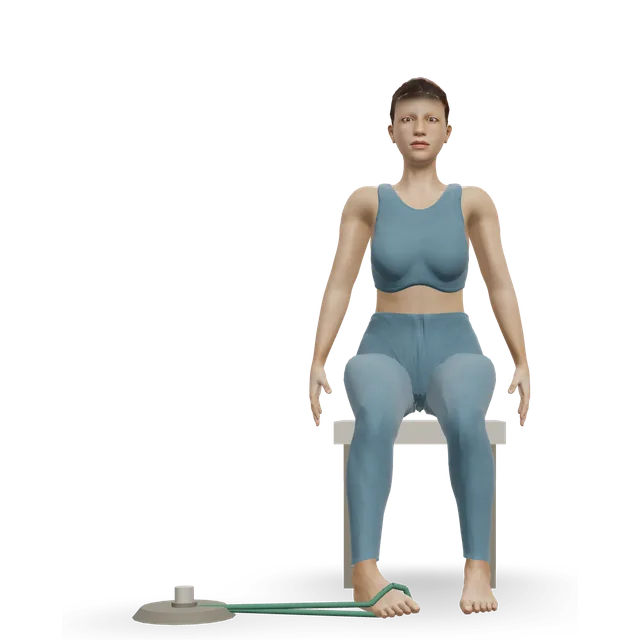
Ankle circles demonstrated on the 3D figure3D demoAnkle circlesBeginner · No equipment

Point the foot up and down, then circle it each way: 10 of each, 3 to 4 times a day · With the boot off, if your clinic allows. NHS fracture clinic letters' dose

Harder: Ankle CARs

Quad set (static quads) demonstrated on the 3D figure3D demoQuad set (static quads)Beginner · No equipment

10 holds of 5 s, twice a day · Keeps the thigh working while you walk less. Editorial dose

Harder: Straight-leg raise

Seated bent-knee calf raise (soleus raise) demonstrated on the 3D figure3D demoSeated bent-knee calf raise (soleus raise)Beginner · A bench or box

2 sets of 10 to 15, once walking in the boot is comfortable · With a Jones fracture or a no-weight plan, only when your team agrees. Editorial dose

Harder: Slow calf raise

Move on when: Walking in the boot is comfortable and your clinic says you can start weaning out of it: from about 3 weeks for an avulsion, and about 6 weeks for a shaft or Jones fracture.

Follow along: a timer, a cue and the next move, one step at a time.
Stage 2

Out of the boot: walking, movement and calf strength (about weeks 3 to 12, as your team allows)

As your team allows. Wean out of the boot around the house first, then outside, keeping it for longer walks at first. Get the ankle and foot moving, and build calf strength and balance; heavy tasks and long walks may still cause some discomfort and swelling. Leave out bouncing and hopping for now, and hold off band work that turns the foot out against resistance until a fifth metatarsal base fracture has healed (an editorial caution: that muscle attaches near the break). Doses are editorial unless named.

Single-leg stand demonstrated on the 3D figure3D demoSingle-leg standBeginner · A wall

Fingertips on a wall: hold 5 to 10 s, 3 times; build to 30 s · The first dose is the NHS balance exercises'

Easier: Tandem stance and heel-to-toe walk · Harder: Single Leg Reach Matrix

Band ankle inversion demonstrated on the 3D figure3D demoBand ankle inversionBeginner · A band + A bench or box

Light band: 2 to 3 sets of 10 · Turning the foot in. Add band ankle eversion only once a fifth metatarsal base fracture has healed

Harder: Single-leg calf raise from a step

Knee-to-wall ankle rock demonstrated on the 3D figure3D demoKnee-to-wall ankle rockBeginner · A wall

10 slow rocks each side · This move's dose

Move on when: You walk normally in ordinary shoes, heel raises on both feet are comfortable, and you can stand on the injured foot for 30 s (editorial).

Follow along: a timer, a cue and the next move, one step at a time.
Stage 3

Strength, hopping and back to sport (from about 8 to 12 weeks, as your team allows)

As your team allows. Build back gradually, by no more than about 10% a week, starting with a walk-jog programme once 30 minutes of brisk walking is pain-free. Athletes with a Jones fracture follow their surgeon's plan; return after a screw averaged about 10 weeks in pooled studies. The hop doses are editorial.

Single-leg calf raise from a step demonstrated on the 3D figure3D demoSingle-leg calf raise from a stepIntermediate · A step + A wall

Build towards 15 to 20 slow raises each leg · On the floor first

Easier: Slow calf raise · Harder: Single-leg pogo hops

Step-up demonstrated on the 3D figure3D demoStep-upBeginner · A step

3 sets of 8 to 10 each leg

Easier: Low step-up · Harder: Dumbbell step-up

Ankle bounces (mini pogo) demonstrated on the 3D figure3D demoAnkle bounces (mini pogo)Beginner · No equipment

2 to 3 sets of 20, every other day · Bone pain should be gone first

Harder: Pogo hops

Pogo hops demonstrated on the 3D figure3D demoPogo hopsIntermediate · No equipment

3 sets of 20 · Then single-leg hop and stick, 3 sets of 5 each leg

Easier: Ankle bounces (mini pogo) · Harder: Single-leg pogo hops

Treadmill jogging demonstrated on the 3D figure3D demoTreadmill joggingIntermediate · Cardio machine

The NHS walk-jog programme, every other day · Written for any injury lay-off and used here as a guide, once your team clears you; the steps are in our broken leg guide

Easier: Treadmill walking · Harder: Sprint intervals

Move on when: Hopping and running cause no pain at the old break on the day or the next morning; then sport.

Follow along: a timer, a cue and the next move, one step at a time.

What to change for now

Toe spreads (written steps)

Fracture clinic letters include this from the start, 10 times, 3 to 4 times a day. It has no 3D demo.

  • 1. Sit with both feet flat on the floor.
  • 2. Keep your heels together.
  • 3. Spread your toes as wide as they will go.
  • 4. Hold for a moment, then relax. Repeat 10 times.

Sources 5, 7

Typical timings, which your team may change

These come from NHS fracture clinic letters and leaflets, and they differ. Your own clinic's plan comes first.

  • Avulsion fracture: a boot for comfort, weaned from about 3 weeks; often no routine follow-up unless there's still significant pain at 6 weeks.
  • Shaft fracture: a boot or stiff-soled shoe for comfort, weaned from about 6 weeks.
  • Jones fracture: walking in a boot with a specialist review at 6 weeks in one NHS trust; a cast without weight until fracture clinic in another.
  • Normal shoes: usually by 6 to 8 weeks, though swelling can make them uncomfortable for months.
  • Driving: not in a walking boot, which may invalidate your insurance.
  • Back to training: no more than about 10% more a week.

Sources 5, 6, 8, 7, 29, 1

Ice, raising the foot and smoking

Rest and raise the foot for the first 24 to 72 hours. Use a cold pack, such as frozen peas wrapped in a damp towel, for up to 15 minutes every few hours, never straight on the skin; another NHS leaflet says 20 minutes, 3 to 4 times a day. Smoking slows fracture healing and in extreme cases can stop it altogether, so stopping helps.

Sources 5, 29

Positions to swap, and why

Habit or positionWhy it mattersInstead
Soft or fashion shoes too soonMost metatarsal fractures need 6 to 8 weeks before normal shoes are comfortable.The boot or a stiff-soled shoe until your clinic says otherwise.
Taking a Jones fracture out of its boot or cast earlyIt heals more slowly and is more likely not to join.Follow your clinic's plan for your fracture.
Driving in the bootIt may invalidate your insurance.Wait until you're out of the boot and your insurer agrees.
Ankle bounces, hopping or football before the bone is pain-freeA Jones fracture can break again if you go back too soon.The walk-jog programme first; hop only once pressing and walking don't hurt the bone.Try: Treadmill jogging
Ignoring a gradual ache on the outer edge of the footIn elite football, 45% of players with a fifth metatarsal fracture had warning pain first.Get it checked; our stress fracture guide covers it.
Putting ice straight on the skinFracture clinic advice is to wrap it.Frozen peas in a damp towel, up to 15 minutes every few hours.
Band ankle eversion soon after a fifth metatarsal base fractureAn editorial caution: the muscle that turns the foot out attaches near the break.Band work turning the foot in first; eversion once it has healed.Try: Band ankle inversion
SmokingIt slows fracture healing and in extreme cases can stop it.NHS stop-smoking support.

Routines to follow

More moves for this area

Questions people ask

Can you walk on a broken metatarsal?

Usually, yes: for most fifth metatarsal and shaft fractures, NHS fracture clinics advise walking as comfort allows in a boot or stiff-soled shoe. Some clinics keep a Jones fracture off weight at first, so follow your own plan.

How long does a broken metatarsal take to heal?

Most heal in about 6 weeks, with an ache and swelling for 3 to 6 months. Most are strong enough to walk on normally by 6 to 8 weeks, and a Jones fracture can take longer.

Boot or cast?

For avulsion fractures, a bandage or a hard-soled shoe did as well as a cast in trials, and people in a boot recovered sooner than people in a cast. Your clinic chooses, and many give a boot for comfort only.

What is a Jones fracture?

A break just beyond the bump at the base of the fifth metatarsal, where the blood supply is poorer. It heals more slowly and fails to join more often than other foot fractures, so some people, especially athletes, have a screw.

Do I need surgery?

Most metatarsal fractures don't. Surgery is considered for badly displaced breaks, several displaced metatarsals, a Jones fracture that won't heal, and Jones fractures in athletes or people with physically demanding jobs.

Is it broken or sprained?

Tenderness on the bump halfway along the outer edge of the foot, or being unable to take 4 steps, means an X-ray under the Ottawa rules. If you think it's broken, contact NHS 111 rather than treating it yourself.

What exercises can I do with a broken foot?

From the start: point the foot up and down, make circles and spread your toes, 10 of each, 3 to 4 times a day. Later: calf raises, balance and foot strengthening, then hopping before running.

When can I run or play football?

Once walking is pain-free, build up gradually, by no more than about 10% a week, starting with a walk-jog programme. Athletes with a Jones fracture treated with a screw returned at about 10 weeks on average.

Why is my foot still swollen?

Swelling, often worse at the end of the day, can last 3 to 6 months after the bone has healed. Raise the foot when resting, and get a same-day check if your calf becomes painful, swollen and red.

Is it a fracture or a stress fracture?

A fracture follows an injury such as rolling your ankle; a stress fracture builds up gradually from repeated load, and our stress fracture guide covers it. At the base of the fifth metatarsal, stress fractures are a high-risk site and often come with warning pain.

When can I drive?

Not in a walking boot, which may invalidate your insurance. Wait until you're out of the boot, can do an emergency stop, and your insurer agrees.

What is a dancer's fracture?

A twisting, spiral break along the shaft of the fifth metatarsal. It usually heals without surgery, even when displaced, and in one series a stiff-soled shoe got people walking without pain sooner than a boot.

Other pain guides

Sources

  1. AAOS OrthoInfo · Toe and forefoot fractures
  2. Garton 2025 · Metatarsal fractures in Shropshire, 2020 to 2023 (population study, Arch Osteoporos)
  3. Herterich 2021 · Treating fractures of the base of the fifth metatarsal (systematic review, Dtsch Arztebl Int)
  4. Khan 2021 · Non-surgical treatment of fifth metatarsal tuberosity fractures (systematic review, PM R)
  5. York and Scarborough Teaching Hospitals NHS · Fracture of the base of the 5th metatarsal, avulsion (virtual fracture clinic letter)
  6. York and Scarborough Teaching Hospitals NHS · Fracture of the base of the 5th metatarsal, Jones fracture (virtual fracture clinic letter)
  7. East Sussex Healthcare NHS · Fracture of the base of the 5th metatarsal, Jones (fracture care team shared care plan, 2025)
  8. York and Scarborough Teaching Hospitals NHS · Mid-shaft 5th metatarsal fracture (virtual fracture clinic letter)
  9. Jimenez Mosquea 2024 · Surgery or not for spiral fifth metatarsal (dancer's) fractures (systematic review, Knee Surg Sports Traumatol Arthrosc)
  10. Morgan 2020 · Spiral shaft fractures of the fifth metatarsal (case series of 33 and review, Foot)
  11. Aynardi 2013 · Non-surgical care of displaced spiral fractures of the fifth metatarsal shaft (cohort of 142, Foot Ankle Int)
  12. Samaila 2020 · Fractures of the central metatarsals (review, Acta Biomed)
  13. NICE NG38 · Fractures (non-complex): assessment and management (2016)
  14. NHS · Pain in the top of the foot
  15. Brogan 2017 · Virtual fracture clinic care of fifth metatarsal fractures, including Jones fractures (cohort of 663, Injury)
  16. Akimau 2016 · A bandage or a cast for avulsion fractures of the fifth metatarsal base (RCT of 60, Bone Joint J)
  17. Choi 2021 · A hard-soled shoe or a cast for avulsion fractures of the fifth metatarsal base (RCT of 96, J Bone Joint Surg Am)
  18. Gray 2008 · A plaster slipper or an elastic bandage for fifth metatarsal tuberosity fractures (comparative study of 37, Foot)
  19. Shahid 2013 · A walking boot or a walking cast for fifth metatarsal avulsion fractures (comparative cohort of 39, Foot Ankle Int)
  20. Nishikawa 2020 · A boot or a hard-soled shoe for zone 1 fifth metatarsal fractures (retrospective comparison of 72, Foot Ankle Int)
  21. Pituckanotai 2018 · A cast or a removable support for fifth metatarsal fractures (meta-analysis, J Foot Ankle Surg)
  22. Encinas 2026 · Surgery or non-surgical care for Jones fractures (systematic review of 10 studies, J Am Acad Orthop Surg)
  23. Roche 2013 · Treatment and return to sport after a Jones fracture (systematic review, Knee Surg Sports Traumatol Arthrosc)
  24. Mologne 2005 · Early screw fixation or a cast for acute Jones fractures (RCT of 37, Am J Sports Med)
  25. Galloway 2023 · Outcomes after virtual fracture clinic care of fifth metatarsal base fractures (cohort of 126, Injury)
  26. Attia 2021 · Return to play and healing after surgery for Jones fractures in athletes (meta-analysis of 22 studies, Am J Sports Med)
  27. Balboni 2026 · Jones fractures in elite athletes (international consensus and systematic review, Knee Surg Sports Traumatol Arthrosc)
  28. Ekstrand 2013 · Fifth metatarsal fractures in male professional footballers (cohort of 64 elite teams, Br J Sports Med)
  29. Cambridge University Hospitals NHS · Metatarsal fractures and stress fractures (fracture clinic leaflet, 2024)
  30. NHS · Balance exercises
  31. Oxford University Hospitals NHS · Return to Running Programme (OxSport patient leaflet, 2024)
  32. NHS · Broken toe
  33. NHS · DVT (deep vein thrombosis)
  34. AAOS OrthoInfo · Compartment syndrome

Exercise education, not a diagnosis or treatment plan. It is written from the guidelines and studies listed above; review by a clinician is pending. If your pain follows an injury, is severe, is getting worse, or comes with any warning sign listed on this page, get it assessed. Health disclaimer.