Pain guide · Foot pain

Lisfranc injury (midfoot sprain or fracture): diagnosis, treatment and recovery

A Lisfranc injury is damage to the joints in the middle of the foot, from a ligament sprain to broken and dislocated bones. It can follow a simple twist and fall, and because it looks like a sprain it is easily missed: about 1 in 5 at first, in one review. Bruising on the sole and being unable to stand on tiptoe are warning signs.

Stable injuries heal in a cast or boot without weight; unstable ones need surgery to fix or fuse the joints. Either way, recovery takes months. This guide covers how it's diagnosed, what trials found on surgery, the stages from no weight to sport with a 3D demo of each move, and the long-term outlook. Your team's plan comes first.

When to get help first

Exercise is for pain that has been checked or is clearly mild and settling.

Get urgent medical help if

  • Call 999 or go to A&E: after an injury, you heard a crack, the foot or ankle has changed shape or points at an odd angle, a bone is sticking out, there is a bad cut over it, you're in severe pain, or the toes look blue or white, feel numb or are cold to touch. These can mean a broken bone. Don't drive yourself.
  • Same day (A&E, an urgent treatment centre or NHS 111): after a twist, fall or stamp, pain in the middle of the foot that stops you standing even after painkillers, bruising on the sole, or being unable to push off or stand on tiptoe. Ask to be checked for a Lisfranc injury, even if a foot X-ray was normal.
  • Go to A&E: a crushed or badly swollen foot with pain far worse than expected, a tight, full-feeling foot and tingling. These can be signs of compartment syndrome, a medical emergency.
  • Same day: swelling or shifted bones pressing on the skin and causing blisters, or skin over a bony point that looks tight, pale or broken.
  • Same day: in a cast or boot, pain that is getting worse, toes that are numb or burning, a cast that feels too tight, toes that are swollen, blue or white, or a bad smell from under the cast.
  • After an operation, oozing or pus from the wound: ask for an urgent GP appointment or get help from NHS 111. If you feel unwell or feverish and the wound looks infected, go to A&E.
  • Call 999: calf or leg pain or swelling with breathlessness or chest pain. It could be a clot that has reached the lungs. Do not drive yourself to A&E.
  • Same day (GP or NHS 111): throbbing pain and swelling in one calf, with red or darker skin. It could be a blood clot (a deep vein thrombosis, or DVT). Watch for it after a foot or ankle injury or time in a cast or boot.
  • Same day: you have diabetes and a new foot problem, such as a wound, signs of infection, or a hot, swollen foot with a change in colour, even if it doesn't hurt. Contact your diabetes foot team or GP.

See a doctor or physiotherapist if

  • Told it's just a sprain, but still unable to walk normally after about a week, or pain on tiptoe that isn't settling: ask for a review and standing X-rays.
  • The arch flattening, the foot looking wider, or new pain in the weeks after you start taking weight: contact the fracture clinic, as some injuries shift.
  • Midfoot pain that carries on or builds months or years later, worse standing and on uneven ground: ask about arthritis.
  • Metalwork that rubs or aches: ask your surgeon about removal, which is often planned anyway.

Understand it

What a Lisfranc injury is

The Lisfranc (tarsometatarsal) joints are where the long foot bones meet the small bones of the arch, in the middle of the foot. Strong ligaments hold them, but there is none between the bases of the first and second metatarsals, so a twisting fall can tear ligaments, break bones or shift the joints. Injuries range from a sprain of one joint to a complete dislocation of the midfoot.

The midfoot barely moves: it holds the arch firm for pushing off, which is why an unstable injury left untreated can let the arch collapse. The injury is named after a French surgeon in Napoleon's army.

Sources 1, 2

Who gets it, and how

Low-energy injuries come from a simple twist and fall, or in football and rugby when another player lands on the back of a foot pointed down; high-energy ones from a fall from height, a road crash or a crush. Lisfranc injuries are uncommon, under 1% of all fractures.

In Oslo, the rate was 14 per 100,000 people a year and 69% were low-energy injuries; unstable injuries were commoner in women. In Sweden's fracture register (2,084 injuries), tripping was the commonest cause, about 1 in 5 were high-energy, and 39% had surgery.

Sources 1, 2, 3, 4

How it's recognised, and why it's missed

Signs are a swollen, painful top of the foot, bruising on the top and especially the sole, and pain in the midfoot on standing, walking or pushing off, sometimes too much to take weight. Clinicians check for tenderness across the midfoot, pain when the forefoot is twisted or the toes are moved up and down, and pain on a single-leg heel raise. An international consensus of foot and ankle surgeons agreed on midfoot tenderness, pain with a squeeze test and not being able to take weight as the key findings.

Because it looks like a sprain, about 1 in 5 is missed at first, in one review. In a study of 60 people, plain X-rays picked up 31 of 45 injuries that CT (computed tomography) scans confirmed. An NHS emergency department guideline asks staff to consider a Lisfranc injury in anyone who still can't take weight on a painful midfoot after simple painkillers, even with a normal X-ray, and to keep weight off it and refer them to fracture clinic.

Sources 1, 5, 6, 7, 8

Scans: what they show

Standing (weight-bearing) X-rays of both feet look for widening between the first and second metatarsals; an MRI (magnetic resonance imaging) scan helps when the diagnosis is in doubt, and CT shows the extent of the injury and plans surgery. The consensus recommends standing X-rays of both feet first, then CT or MRI for subtle injuries.

In the first days, many people can't stand on the foot for the X-ray: in 33 subtle injuries, people in the early phase didn't put weight on the injured foot, and CT showed small flakes of bone pulled off at the ligament attachments in 94%. A meta-analysis found both standard and weight-bearing CT pick up the injury, with weight-bearing CT more accurate on some measurements.

Sources 1, 5, 9, 10

Stable or unstable

The key question is whether the joints are stable. Stable injuries that haven't moved, confirmed on a scan and sometimes with a stress test under X-ray, can be treated without surgery; displaced or unstable injuries need surgery. In Oslo, breaks into the two outer joints, and being a woman, made instability more likely. Some injuries that have barely moved shift within weeks, so repeat X-rays matter.

Sources 1, 11, 3, 12

Recovery and the long-term outlook

After either treatment, getting back to all activities takes 6 months to a year; some people keep midfoot pain, and some athletes don't return to their previous level.

Arthritis can follow: in one meta-analysis of 14 studies (686 people), about 1 in 3 developed arthritis in the inner midfoot by about 5 years, more often when the joints weren't put back perfectly in line. In studies of non-surgical care, rates ranged from 5% to 38%. Arthritis on an X-ray doesn't always mean a poor result: in a Norwegian trial, 11 of 24 people in one group had signs of arthritis in the first joint at 2 years, yet both groups had good scores.

Sources 1, 2, 13, 14, 15

What helps, and how strong the evidence is

Stable injuries do well without surgeryEmerging evidence

In a Norwegian cohort, 26 stable injuries, confirmed on CT and with a stress test, were kept in a cast without weight for 6 weeks: the midfoot score was 89 out of 100 at a year and 100 at about 4.5 years, and 1 person had signs of arthritis on X-ray at a year. In a Finnish trial of 27 people with injuries that hadn't moved, non-surgical care and fixation gave similar results at 2 years, though the trial was too small to be sure.

Sources 11, 16, 1

Non-surgical care needs close checksMixed evidence

Across 8 studies of non-surgical care (220 people), results ranged from excellent to poor: late displacement reached 54%, and up to 56% went on to surgery. In one UK hospital's series of 26 injuries that had barely moved, 14 (54%) shifted, at a median of 18 days, whatever the first weight-bearing advice; those then fixed did as well as those that stayed in place. Non-surgical care works when the injury is truly stable, which needs a scan and repeat X-rays.

Sources 14, 12

Fix or fuse: trials disagreeMixed evidence

Unstable injuries are fixed with screws or plates, which are often removed later, or the joints are fused. An early trial of 41 people with mainly ligament injuries favoured fusion (a midfoot score of 88 against 68.6 at 2 years). Three later trials, of 40, 48 and 43 people, found no clear difference in function.

Pooling 5 trials (241 people), fusion gave slightly less pain at 2 years, more satisfaction and far fewer second operations, mostly because fixation hardware is routinely removed; function scores were the same, and the trials differed a lot. In one trial, 79% of people who had fixation had a second operation, including planned hardware removal, against 17% after fusion.

Sources 17, 18, 15, 19, 20

Returning to sport: most do, timings varyMixed evidence

In 15 studies of low-energy injuries in athletes and military personnel (441 people), 86% returned to play or duty, with no clear difference by treatment or between bony and ligament injuries; time out averaged 58 days after surgery and 116 without, with very wide variation.

An international consensus of foot and ankle surgeons expects elite athletes to take full weight 8 to 12 weeks after surgery for an unstable ligament injury and to return to sport 4 to 6 months after surgery, with over 90% returning, though its own review found an average of 8.9 months after ligament injuries. In a companion review of bony and ligament injuries in athletes, 96.8% returned, at about 2.8 months after ligament injuries and 4.5 months after bony ones.

Sources 21, 22, 5

Rehabilitation: practice-basedEmerging evidence

We found no trials of rehabilitation programmes after Lisfranc injuries. In a UK survey of 172 surgeons and therapists, half followed a local protocol after hindfoot and midfoot fusion or reconstruction, and weight-bearing started anywhere from 2 to over 12 weeks. A case report of a professional basketball player treated without surgery stressed rest while the tissues heal, a normal walking pattern, insoles and balance retraining, with a return to play at 12 weeks. The stages here follow the American Academy of Orthopaedic Surgeons (AAOS) and consensus timings, the balance doses come from the NHS balance exercises, and the milestones are editorial.

Sources 23, 24, 1, 25

How much pain is OK while you exercise?

No sharp midfoot pain, and watch the archEmerging evidence

Follow your weight-bearing instruction exactly: with this injury, keeping weight off strictly in the early weeks matters, and some injuries shift if loaded too soon.

Once you're taking weight, use this site's foot and ankle rule: mild to moderate pain, no more than about 5 out of 10, that settles within an hour, with no more swelling or stiffness the next morning. Treat sharp midfoot pain when standing or pushing off, a feeling that the arch is giving way, or new widening or bruising of the foot as a reason to stop and contact your team.

For running and changing direction, the midfoot should stay pain-free during, after and the next morning. These are editorial starting points drawn from professional advice, not tested rules.

Sources 1, 12, 26

The exercise plan: 4 stages

Start at the first stage. Each move opens a full guide with a 3D demo.

Stage 1

Protect the midfoot: no weight on the foot (about the first 6 to 8 weeks, as your team allows)

As your team allows. Keep weight off the foot completely, in a cast or boot, using crutches, a frame or a knee scooter; after surgery this can be 2 to 3 months. Raise the foot, wiggle your toes in the cast, and expect repeat X-rays to check nothing has shifted. You may be given blood-thinning injections. Keep the rest of you strong. These doses are editorial.

Move on when: Your team confirms the joints are healing in position, often with a standing X-ray, and allows weight in the boot: typically between 6 and 12 weeks.

Follow along: a timer, a cue and the next move, one step at a time.
Stage 2

Weight back on, in the boot (about weeks 6 to 12, as your team allows)

As your team allows. Build up weight in the boot exactly as instructed, then move into a supportive shoe with a stiff sole, sometimes with an insole (orthotic). Get the ankle and toes moving and walk without a limp. After surgery for an unstable ligament injury, full weight often comes at 8 to 12 weeks. These doses are editorial.

Move on when: You walk in a supportive shoe without a limp, and heel raises on both feet are comfortable (editorial).

Follow along: a timer, a cue and the next move, one step at a time.
Stage 3

Strength and balance (about months 3 to 6, as your team allows)

As your team allows. Rebuild calf and foot strength and single-leg balance. The single-leg heel raise, which clinicians use to test the midfoot, becomes a goal rather than a test. These doses are editorial unless named.

Single-leg stand demonstrated on the 3D figure3D demoSingle-leg standBeginner · A wall

30 s, then on a folded pillow, then with your eyes closed

Easier: Tandem stance and heel-to-toe walk · Harder: Single Leg Reach Matrix

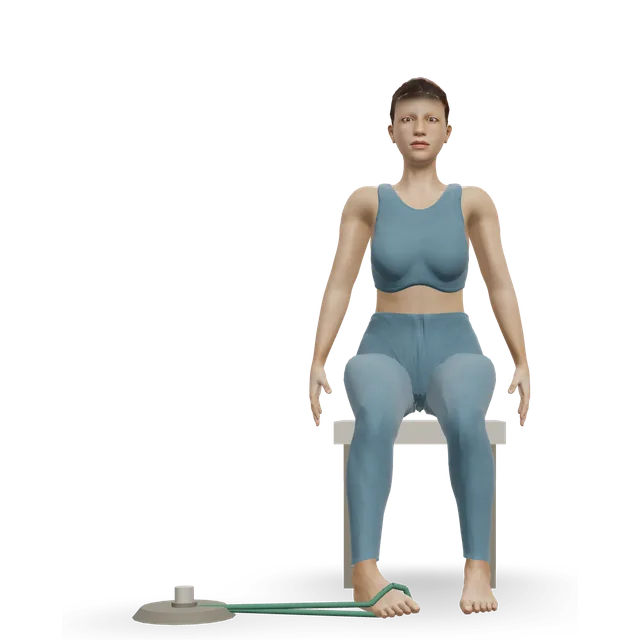
Band ankle inversion demonstrated on the 3D figure3D demoBand ankle inversionBeginner · A band + A bench or box

2 to 3 sets of 10 to 15 · Add band ankle eversion the same way

Harder: Single-leg calf raise from a step

Step-up demonstrated on the 3D figure3D demoStep-upBeginner · A step

3 sets of 8 to 10 each leg

Easier: Low step-up · Harder: Dumbbell step-up

Side-stepping (sideways walking) demonstrated on the 3D figure3D demoSide-stepping (sideways walking)Beginner · A wall

10 steps each way · The NHS balance exercises' dose

Harder: Lateral band walk

Move on when: 20 slow single-leg heel raises on the injured side without midfoot pain, and 30 minutes of brisk walking without pain (editorial).

Follow along: a timer, a cue and the next move, one step at a time.
Stage 4

Running, changing direction and sport (often from about 4 to 6 months, sometimes longer; once your team clears you)

Only once your team clears you. An expert consensus expects elite athletes back 4 to 6 months after surgery, though timings in studies vary widely, and getting back to everything can take 6 months to a year. Bring impact back in straight lines first and changes of direction last. Doses are editorial; the running programme is an NHS sports medicine service's, used here as a guide.

Move on when: You can train fully with no midfoot pain or swelling the next day. Then matches, with your team's agreement.

Follow along: a timer, a cue and the next move, one step at a time.

What to change for now

Typical timings, which your team may change

These come from professional advice, and UK practice varies. Your own team's plan comes first.

  • No weight: 6 to 8 weeks without surgery, very strictly; after surgery, 6 to 8 weeks in one source and 2 to 3 months in another.
  • Weight in a boot: from about 6 to 12 weeks, if X-rays allow.
  • Then supportive shoes, sometimes with an insole.
  • Hardware placed across joints after fixation: sometimes removed 3 to 5 months after surgery, at the surgeon's discretion.
  • Getting back to all activities: 6 months to a year.
  • In a UK survey, weight-bearing after hindfoot and midfoot fusion or reconstruction started anywhere from 2 to over 12 weeks.

Sources 1, 2, 22, 23

Getting around without weight

Crutches, a frame, a knee scooter or a wheelchair keep weight off the foot. Raise the foot to control swelling. Because you're less mobile with the leg in a cast or boot, you may be offered blood-thinning injections; know the signs of a clot.

Sources 2, 8, 27

Positions to swap, and why

Habit or positionWhy it mattersInstead
Walking it off as a sprainThe AAOS says a Lisfranc injury is not a simple sprain to walk off; even a simple one is a severe injury that may take months to heal.Get it checked the same day, and keep weight off until you know.
Putting weight through the foot before your team allowsNon-surgical care needs very strict non-weight-bearing, and some injuries shift within weeks.Crutches, a frame or a knee scooter, and keep the rest of you strong.Try: Quad set (static quads)
Missing follow-up X-raysIn one series, injuries that shifted did so at a median of 18 days.Keep every appointment.
Thin, flexible shoes once you're walkingProfessional advice moves from the boot to a supportive shoe or insole.A stiff-soled supportive shoe, with an insole if advised.
Single-leg calf raises and hopping too earlyStanding on tiptoe on one leg loads the midfoot, which is why clinicians use it as a test.Heel raises on both feet first, then one, then hops.Try: Slow calf raise
Rushing back to sportEven elite athletes are expected back only 4 to 6 months after surgery.The staged return, with impact in straight lines first.
Putting up with metalwork that rubsHardware across the joints is often removed anyway.Ask your surgeon about removal.

Routines to follow

More moves for this area

Questions people ask

What is a Lisfranc injury?

An injury to the joints in the middle of the foot, where the long foot bones meet the small bones of the arch: a ligament sprain, broken bones, or a dislocation. It is named after a French surgeon in Napoleon's army.

How do I know if it's a Lisfranc injury or a sprain?

Clues are pain across the middle of the foot when standing or pushing off, being unable to stand on tiptoe, and bruising on the sole, which is a strong sign. Get it checked the same day if you can't take weight after painkillers, even if an X-ray was normal.

Can an X-ray miss it?

Yes: about 1 in 5 is missed at first, in one review, and in one study X-rays found 31 of 45 injuries seen on CT scans. Standing X-rays of both feet, CT or MRI help.

Do I need surgery?

Not if the injury is stable: stable injuries treated in a cast without weight for 6 weeks did very well. Displaced or unstable injuries need surgery. Because some injuries shift in the first weeks, follow-up X-rays matter.

Is fixing or fusing better?

Both work. Trials found no clear difference in function; pooled trials favoured fusion for pain at 2 years, satisfaction and fewer second operations, mostly because fixation hardware is often removed later. Your surgeon's choice depends on the injury.

How long is the recovery?

Usually 6 to 8 weeks without weight, then weight in a boot from about 6 to 12 weeks, and 6 months to a year to get back to everything. Some people keep midfoot pain.

How long can't I put weight on my foot?

Typically 6 to 8 weeks, and very strictly; after surgery it can be 2 to 3 months. Your team decides, often after a standing X-ray.

When can I return to sport?

About 86% of athletes and military personnel returned to play or duty in pooled studies. An expert consensus expects elite athletes back 4 to 6 months after surgery, though timings vary widely.

Will I get arthritis?

It's possible: in one meta-analysis, about 1 in 3 people developed arthritis in the midfoot by about 5 years, more often when the joints didn't heal perfectly in line, and in studies of non-surgical care rates ranged from 5% to 38%. Arthritis on an X-ray doesn't always mean a poor result.

Will the screws or plates come out?

Hardware placed across the joints after fixation is sometimes removed 3 to 5 months after surgery, at the surgeon's discretion. In one trial, 79% of people who had fixation had a second operation, including planned hardware removal, against 17% after fusion.

What exercises can I do?

While you can't put weight on the foot, keep your hips, knees and trunk strong and move your toes. Once you're walking: ankle movement, calf raises on both feet, balance, then single-leg heel raises, hops and running, as your team allows.

Other pain guides

Sources

  1. AAOS OrthoInfo · Lisfranc (midfoot) injury
  2. Orthopaedic Trauma Association · LisFranc injury (patient information)
  3. Stødle 2020 · How common Lisfranc injuries are, how they happen and what predicts instability (study of 84, Foot Ankle Surg)
  4. Juto 2025 · 2,084 Lisfranc injuries in the Swedish Fracture Register (observational study, Injury)
  5. Semelsberger 2026 · Diagnosis and non-surgical care of Lisfranc injuries in athletes (international consensus and systematic review, Knee Surg Sports Traumatol Arthrosc)
  6. Lau 2017 · Lisfranc fracture dislocation: a commonly missed midfoot injury (review, Emerg Med J)
  7. Rankine 2012 · How accurate X-rays are for Lisfranc injury (diagnostic study of 60, AJR Am J Roentgenol)
  8. Gloucestershire Hospitals NHS · Guidelines for the management of Lisfranc injuries in the emergency department (2015)
  9. Ukita 2025 · CT and weight-bearing X-rays for subtle Lisfranc injuries (study of 33, J Orthop Sci)
  10. Gómez 2026 · Standard and weight-bearing CT for Lisfranc injuries (meta-analysis, Foot Ankle Surg)
  11. Stødle 2022 · Non-surgical treatment of stable Lisfranc injuries (cohort of 26, Foot Ankle Surg)
  12. Chen 2020 · Displacement after non-surgical care of minimally displaced Lisfranc injuries (series of 26, Foot Ankle Int)
  13. Tonsuthanluck 2026 · Arthritis after inner midfoot (medial tarsometatarsal) injuries (meta-analysis of 14 studies, Eur J Orthop Surg Traumatol)
  14. Guerreiro 2023 · Non-surgical management of Lisfranc injuries (systematic review of 8 studies, Foot)
  15. Stødle 2020 · A temporary bridge plate or fusion of the first midfoot joint in Lisfranc injuries (RCT of 48, Foot Ankle Int)
  16. Ponkilainen 2025 · Surgery or not for non-displaced Lisfranc injuries (RCT of 27, Scand J Surg)
  17. Ly 2006 · Fusion or fixation for mainly ligament Lisfranc injuries (RCT of 41, J Bone Joint Surg Am)
  18. Henning 2009 · Fixation or fusion for Lisfranc injuries (RCT of 40, Foot Ankle Int)
  19. Ponkilainen 2024 · Fixation or fusion for displaced Lisfranc injuries (RCT of 43, Foot Ankle Int)
  20. Mactier 2024 · Fusion or fixation for Lisfranc injuries (meta-analysis of 5 RCTs, Foot Ankle Orthop)
  21. Attia 2021 · Return to play after low-energy Lisfranc injuries in athletes and military personnel (meta-analysis of 15 studies, Orthop J Sports Med)
  22. Webber 2026 · Return to sport after Lisfranc injuries in elite athletes (international consensus and systematic review, Knee Surg Sports Traumatol Arthrosc)
  23. Houchen-Wolloff 2020 · Rehabilitation after ankle, hindfoot and midfoot fusion: a survey of UK surgeons and therapists (J Clin Orthop Trauma)
  24. Wadsworth 2005 · Non-surgical care of a subtle Lisfranc injury in a professional basketball player (case report, JOSPT)
  25. NHS · Balance exercises
  26. Oxford University Hospitals NHS · Return to Running Programme (OxSport patient leaflet, 2024)
  27. NICE NG89 · Venous thromboembolism in over 16s: reducing the risk of hospital-acquired deep vein thrombosis or pulmonary embolism (2018, updated 2019)
  28. NHS · Pain in the top of the foot
  29. AAOS OrthoInfo · Compartment syndrome
  30. NHS · DVT (deep vein thrombosis)

Exercise education, not a diagnosis or treatment plan. It is written from the guidelines and studies listed above; review by a clinician is pending. If your pain follows an injury, is severe, is getting worse, or comes with any warning sign listed on this page, get it assessed. Health disclaimer.