Exercise, stretching and splints don't straighten itStrong evidence
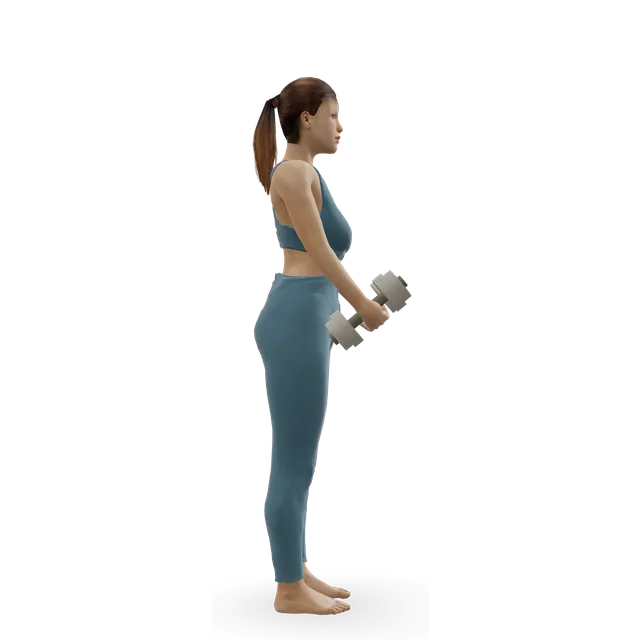
NHS England's Evidence-Based Interventions guidance says splinting and radiotherapy haven't been shown to work for established Dupuytren's contractures. The Dutch national guideline reviewed splints, shockwave, laser and extension exercises and can't recommend any non-surgical treatment as the first treatment, or a splint before surgery. US surgeons warn that forceful stretching of a bent finger 'is not helpful and, in fact, could cause an injury'.
A 2024 review of hand therapy before surgery found 17 studies, mostly case reports and case series, all of low quality, and a 2026 Canadian article calls the evidence for physiotherapy or splinting inconclusive. For stiff joints in general, borrowed from other conditions, stretching didn't produce worthwhile gains in movement across 49 trials. So exercise keeps your hand strong and moving, but it won't change the cord.
Sources 19, 27, 3, 28, 4, 29
When treatment is worth itStrong evidence
The NHS says it doesn't usually need treatment in the early stages, and a GP may refer you to a specialist if it's severe and you can't straighten your fingers or use your hand normally. NHS England's guidance says treatment isn't for looks, or for a bend that isn't getting worse and doesn't affect what you can do, and is usually offered when you can't put your hand flat on a table, ideally after using a decision aid. Doing nothing isn't harmful to your health, but the more the fingers bend into the palm, the less likely any treatment is to straighten them.
One review reports that current guidance waits for a fixed bend of about 30 degrees at the knuckle or 15 degrees at the middle joint, with problems using the hand. A 2026 Canadian article suggests earlier referral when it is getting worse quickly, started before 50, runs in the family, affects both hands, or comes with knuckle pads or lumps on the soles of the feet.
Sources 1, 19, 27, 2, 24, 4
Needle or operation: a quicker recovery against a longer-lasting resultStrong evidence
Needle fasciotomy divides the cord with a needle under local anaesthetic, and recovery takes up to 2 weeks; NICE (the National Institute for Health and Care Excellence) supports it for normal use. Fasciectomy removes the diseased tissue through a cut, with a recovery of 4 to 12 weeks. Dermofasciectomy also replaces the skin with a graft, and is used when it has come back or is extensive.
In a trial of 115 hands, the bend had come back at 5 years in 84.9% after a needle release against 20.9% after fasciectomy. Across 10 prospective studies (1,411 people) followed for 3.8 years on average, it came back in 46.4% after a needle release, 32.5% after collagenase and 16.5% after fasciectomy, and bent middle finger joints came back more often with every treatment. In a trial of 302 people, treated fingers drifted back less over 2 years after surgery than after a needle release or collagenase.
Against that, NHS England's guidance gives lasting complications of about 1% after a needle release and about 4% after fasciectomy, and a Cochrane review found hand function 5 points better (out of 100) 5 weeks after a needle release, on low-quality evidence. The Dutch guideline makes fasciectomy the first choice, with a needle release for older people with a cord you can feel, or younger people who accept a higher chance of it coming back for a quicker recovery. NHS England's patient information says it will always come back eventually, within 5 years for about 1 in 3 people; the BSSH adds that most people who need surgery need only one operation in their lifetime.
Sources 1, 30, 2, 31, 32, 33, 34, 35, 19, 27, 36, 37
Collagenase injection: withdrawn in the UK and EU since March 2020Strong evidence
Collagenase (Xiapex) is an enzyme injected into the cord, with the finger straightened a few days later. Its licence was withdrawn in the UK and EU from 1 March 2020, at the request of the company that held it, for commercial reasons, and NICE has withdrawn its guidance because it is no longer available in the UK. It is still used in the US.
The evidence, for readers abroad: in a placebo-controlled trial of 308 people, 64% of injected cords were straightened to within 5 degrees at 30 days, against 7% with a dummy injection, and two tendons ruptured. In the UK DISC trial (672 people), the authors concluded that collagenase is less effective but more cost-saving than limited fasciectomy; it had more complications overall but fewer moderate or severe ones. For a single bent knuckle it straightened the finger as well as a needle release, and fewer people needed re-treatment by 5 years (10% against 42.5%). For a bend that has come back after surgery, a small trial (59 people) found similar results with surgery and collagenase at 2 years.
Sources 38, 39, 3, 40, 41, 42, 43
Hand therapy and splints after treatmentMixed evidence
Hand therapy is standard after fasciectomy. The Dutch guideline says exercise therapy is always indicated, starting 3 to 5 days after surgery, 3 to 6 times a day, for 3 to 12 weeks, with advice on swelling, the wound, the scar and daily tasks. It has never been tested against no therapy, which the guideline puts down to withholding it being considered unethical.
Night splints for everyone add little. In a UK trial of 154 people, all given hand therapy, splinting everyone at night made no difference at a year to hand function or straightness, compared with splinting only fingers that started to bend again. A meta-analysis of 4 trials (295 people) found no difference either, and a Cochrane review found that splinted fingers bent about 8 degrees less. One review rated splinting after surgery as having moderate short-term support. The Dutch guideline keeps splints for selected cases, such as a stiff joint or a finger losing straightness, worn at night.
After collagenase, two small trials disagree. In 80 people, a night splint left less bend at the middle finger joint at 4 months (19 against 36 degrees) but not at the knuckle, and only 52% were still wearing it at least half the time by then; in 26 people, mostly with bent knuckles, a splint made no difference. NHS units vary, from nights for about 3 months to nights for up to a year. Splints aren't shown to stop fingers bending; follow your own therapist's plan.
Sources 27, 44, 45, 34, 46, 47, 48, 49, 50, 37, 20, 51
Radiotherapy, steroid injections and newer drugsMixed evidence
NICE allows radiotherapy for early Dupuytren's disease only with special arrangements, because the evidence is 'inadequate in quantity and quality'. The Dutch guideline restricts it to trials, and the BSSH says the published evidence doesn't support it.
Steroid injections may ease a painful lump but are unlikely to stop it getting worse, US surgeons say. One review reports that in the largest series (75 hands), the lumps flattened but bent fingers didn't change, the disease became active again in half within 1 to 3 years, and half had temporary thinning or lightening of the skin; none of the studies had a comparison group. The same review reports that injections of an anti-inflammatory drug (adalimumab) softened early lumps in a trial run by its authors, but it isn't an available treatment.
Sources 52, 27, 2, 3, 24
Recovery and getting back to thingsEmerging evidence
After a needle release, an NHS trust says you can usually go back to normal use, driving and work without any particular restrictions; a small skin tear can take 2 to 3 weeks to heal with simple dressings.
After fasciectomy, NHS leaflets vary. In Cambridge: normal hand use from about 10 to 21 days, driving at about 2 weeks, light jobs such as office work at 1 to 3 weeks, and heavier manual work at 4 to 8 weeks. In Bath: no heavy lifting or excessive gripping for up to 8 weeks, and full function after about 3 months. In North Tees: about 4 to 6 weeks off for office work, 8 weeks before driving, and 12 weeks for manual work and contact sport. Some numbness is common and can last weeks to months. Your surgical team's plan comes first.
Sources 1, 37, 20, 53, 5