Pain guide · Foot pain

Plantar fibroma (Ledderhose disease): a lump in the arch, when to get it checked, and what helps

A plantar fibroma is a firm lump within the band of tissue under your sole, usually in the arch. It isn't cancer, and many never hurt; when one does, it's usually shoes pressing on the lump. Several lumps, sometimes in both feet, are called plantar fibromatosis or Ledderhose disease, a relative of Dupuytren's contracture in the hand.

A GP should check any new lump once, and a lump that's getting bigger should be scanned quickly, so the NHS signs come first in this guide. Then what helps: shoes and insoles that keep pressure off the lump, what injections, radiotherapy and surgery can and can't do (fibromas often come back after surgery), and a staged plan with 3D demos to keep you walking and active.

When to get help first

Exercise is for pain that has been checked or is clearly mild and settling.

Get urgent medical help if

  • Ask for an urgent GP appointment or get help from NHS 111 if you have a lump that is very painful, hot or red. Redness may be harder to see on brown and black skin.
  • Same day: skin on the foot that is painful, hot and swollen. It could be a skin infection (cellulitis).
  • Same day: you have diabetes and a new foot problem, such as an ulcer or wound, signs of infection, or a hot, swollen foot with a change in colour, even if it doesn't hurt. Contact your diabetes foot team or GP: NICE asks for these to reach a specialist foot service within 1 working day, and a suspected Charcot foot is kept off weight until it has been checked.
  • After surgery: redness, swelling, oozing or a smell from the wound, or a fever. Contact your surgical team the same day, or NHS 111 out of hours.
  • Same day (GP or NHS 111): throbbing pain and swelling in one calf, with red or darker skin. It could be a blood clot (DVT). Watch for it after an ankle injury or time in a cast or boot.
  • Call 999: calf or leg pain or swelling with breathlessness or chest pain. It could be a clot that has reached the lungs.

See a doctor or physiotherapist if

  • See a GP about a new lump in the sole of your foot if it's still there after 2 weeks, or if a lump gets bigger, is painful, red or hot, is hard and does not move, or grows back after it's been removed. Most lumps are harmless, but a new one should be checked once.
  • A lump that is getting bigger: see a GP soon. NICE (the National Institute for Health and Care Excellence) asks GPs to consider an urgent ultrasound scan, within 2 weeks, for an adult with an unexplained lump that is increasing in size, and within 48 hours for a child or young person.
  • A lump that is deep under the skin, solid, hard to move and keeps growing, even if it doesn't hurt: see a GP soon. Rarely, a lump like this is a soft tissue sarcoma.
  • A lump that hurts even when you're not standing on it, or that doesn't look or behave like a fibroma (soft, on the top or side of the foot, under the heel or the ball of the foot, or growing quickly): see a GP.
  • Tingling or loss of feeling in the foot, or a foot that feels weak.
  • Lumps or cords in the palm of your hand, or a finger that's starting to bend: see a GP. It may be Dupuytren's contracture, a related condition, which our Dupuytren's contracture guide covers.
  • After surgery: a new lump at the scar, or the old one coming back: see your team.

Understand it

What a plantar fibroma is

A plantar fibroma is a firm lump of fibrous tissue within the plantar fascia, the band of tissue that runs under the sole from the heel bone to the base of the toes. It usually sits in the arch. There can be one lump or several, in one foot or both, and an NHS podiatry leaflet describes it as usually benign (not cancer), "with a very low incidence of malignancy".

Several lumps are often called plantar fibromatosis or Ledderhose disease. It belongs to the same family as Dupuytren's contracture in the palm of the hand and Peyronie's disease in the penis. A review describes three phases: cells multiply, lumps form, then the tissue matures into firmer, scar-like tissue. An NHS podiatric surgery service notes that it usually progresses slowly, but not indefinitely.

Sources 1, 2, 3

Who gets itMixed evidence

Mostly middle-aged and older adults, though children can get it. A review says men get it more often than women, and both feet in about a quarter, but in US records of 620 newly diagnosed people, 63% were women, so the sources disagree. About 57 in every 100,000 people in those records had a diagnosis.

Many small lumps are never diagnosed. In an Icelandic study, plantar lumps were found on examination in 15% of 92 men with Dupuytren's contracture and 4% of 101 men without it, and in 730 Dutch men with Dupuytren's, 16% had Ledderhose disease by their surgeons' reports and 22% by their own. Linked conditions in a review include Dupuytren's and Peyronie's disease, keloid scars, frozen shoulder, heavy drinking, diabetes, epilepsy, smoking and repeated injury. The NHS lists a family history, smoking, drinking a lot of alcohol, diabetes and epilepsy as risk factors for Dupuytren's.

Sources 2, 4, 5, 6, 7

How it shows

A lump you can feel in the arch, firm to the touch, which may not hurt at all. When it hurts, it's usually from shoes pressing on it, more when walking or standing, and standing barefoot can hurt. The lump can stay the same size or grow, and more can appear.

Sources 1, 8

Scans and biopsies: what they do and don't meanMixed evidence

A clinician can usually diagnose it from the history and an examination; an ultrasound or magnetic resonance imaging (MRI) scan confirms a lump within the fascia if there's doubt. In the largest MRI series, of 196 fibromas, 83% were in the central band of the fascia, 32% of people had more than one, and 52% had pain. So a fibroma on a scan isn't always the cause of foot pain, and many people carry small lumps that never trouble them.

On biopsy, the sources disagree: a US review keeps it for when cancer needs ruling out, while an NHS podiatric surgery service doesn't recommend it, because a biopsy may make the fibroma grow. For a lump that could be something else, the UK route is an ultrasound first, then a specialist if the scan is worrying or unclear. Sarcomas are rare, but a UK foot and ankle unit reported five lumps in the sole first wrongly diagnosed as fibromas.

Sources 2, 9, 5, 3, 10, 11, 12

How it usually goes

An NHS podiatry service says a fibroma may cause nothing beyond awareness of the lump, and then needs no treatment; over time it may grow without becoming painful. US foot and ankle surgeons (the American College of Foot and Ankle Surgeons) say it usually won't go away or get smaller without treatment. In US records, 91% of newly diagnosed people had only non-surgical treatment over 2 years, and 6.8% had surgery.

Sources 1, 8, 4

What helps, and how strong the evidence is

When a lump needs checkingStrong evidence

The NHS says most lumps are harmless, but to see a GP if you're worried or a lump is still there after 2 weeks; if it gets bigger, is painful, red or hot, is hard and does not move, or grows back after it's been removed; and to ask for an urgent GP appointment or get help from NHS 111 for a lump that is very painful, hot or red. A fibroma is firm and fixed, so every new lump in the sole should be checked once.

NICE asks GPs to consider an urgent ultrasound scan, within 2 weeks, for an adult with an unexplained lump that is increasing in size, and within 48 hours for a child or young person, with a specialist referral if the scan is worrying or unclear. The NHS describes a soft tissue sarcoma as a lump that is usually deep, solid, painless and hard to move, and that keeps growing. These are rare, but they are why a growing lump is scanned quickly.

Sources 13, 14, 10, 11, 15

Shoes, insoles and padding: the main treatment, untestedEmerging evidence

An NHS podiatry service advises a supportive shoe with a fastening, such as a trainer, with more cushioning and depth in the sole and arch, and not completely flat shoes. A podiatrist may prescribe insoles with padding that keeps pressure off the lump, which may ease the pain when standing and walking. An NHS podiatric surgery service lists the same first steps, and US foot and ankle surgeons suggest custom insoles once a fibroma has stopped growing.

A walking study supports the idea: 41 people with painful Ledderhose disease put more pressure through the heel and toes, and less under the middle of the foot, than 41 younger people without foot problems. No trial has compared insoles.

Sources 1, 3, 8, 16

What exercise can and can't doEmerging evidence

No exercise shrinks or dissolves a fibroma, and none has been tested. An NHS podiatry service says exercises that stretch the calf and the plantar fascia help ease pain in daily activity, and a surgical service says calf stretches may help, especially with insoles. Exercise keeps you active and your calf and foot strong; it can't change the lump. Moves that press on the lump, such as rolling the arch on a ball or kneeling on tucked toes, are best left out (our caution).

Sources 1, 3

Steroid injections: the sources conflictMixed evidence

Two NHS services say an injection may help only if a nearby nerve is irritated, and is otherwise of little or no benefit and may even make the lump bigger. A US review describes injections as a common first step there, but notes that lumps can return to their original size within 3 years and that repeated injections risk tearing the fascia. In US records, 59% of newly diagnosed people had steroid injections. No trial has tested them.

Sources 1, 3, 2, 4

Radiotherapy: one good trialEmerging evidence

In the LedRad trial, 84 people in the Netherlands had real or sham (dummy) radiotherapy without knowing which. At 12 months, average pain was 2.5 out of 10 after real treatment against 3.6 after sham, and 2.1 against 3.4 at 18 months; 74% against 56% had pain relief at 12 months, with better quality of life and faster barefoot walking. Side effects (redness, dry skin, burning and a short-lived rise in pain) were mild in 95% and had gone in 87% by 18 months.

In 67 people (102 feet) followed for several years after treatment, pain fell from 5.7 to 1.7 out of 10, and 78% were satisfied; 15% had lasting dry skin. It was judged good value for money in the Netherlands. It is one trial, and NICE has no guideline on it, so ask a specialist whether it is offered locally.

Sources 17, 18, 19, 20

Collagenase and shockwave: not shown to work yetMixed evidence

A collagenase injection, an enzyme that breaks down the tough tissue, missed its main pain target against a placebo in a trial of 166 people, though more people were rated as improved overall and the lumps got softer; a larger trial is under way. Collagenase (Xiapex) isn't available in the UK: its licence was withdrawn in 2020, and NICE has withdrawn its guidance on it for Dupuytren's contracture.

Shockwave therapy has only small studies without a comparison group: pain fell from 6.2 to 0.6 out of 10 in 10 feet, and from about 6 to 1 in 6 people. Other drugs rest on laboratory work and Dupuytren's studies, not plantar fibroma trials.

Sources 21, 22, 23, 24, 25, 26, 2

Surgery: a last resort, because fibromas often come backEmerging evidence

How often a fibroma comes back after surgery depends on the operation and the study. In a review of 6 studies (109 feet), it came back after 67% of operations removing the lump alone, 42% of wider removals with a margin of fascia, and 27% of operations removing the fascia. In another review, the figures ranged from 57% to 100% after removing the lump alone, 8% to 80% after a wider removal and 0% to 50% after removing all the fascia, about 60% overall in that review, and more often with both feet affected, several lumps or a family history. A UK series of partial fasciectomy, removing part of the fascia, had 1 recurrence in 18 people at up to 5 years, and an NHS podiatric surgery service quotes 15% to 50%.

Other risks include a thick or tender scar, numbness, a flatter, achy arch and slow wound healing, and the NHS service warns that when surgery fails, things can be worse than before, with little chance that more surgery helps. In US records, only 6.8% of newly diagnosed people had surgery. A review of 25 studies (233 people) found the evidence for every treatment thin, and called for better trials.

Sources 27, 2, 28, 3, 4, 29

No NICE guideline, because the evidence is thinStrong evidence

In February 2025, NICE decided not to produce a guideline on plantar fibromatosis, because there is very limited evidence on it; it will look at adding it to its clinical summary on Dupuytren's disease. So treatment depends on local specialists, and the advice on this page comes from NHS leaflets, reviews and a few trials.

Source 20

How much pain is OK while you exercise?

The site's foot rule, and don't press on the lump (editorial)

For exercise, discomfort up to about 5 out of 10 that settles within an hour, with no more pain or stiffness the next morning, is fine. The 5 out of 10 figure is this site's editorial foot rule: no plantar fibroma source gives a pain rule.

Pain from pressure on the lump is different: change the shoe, the insole or the move, and don't push through it. NHS leaflets say a fibroma usually hurts from shoe pressure or standing barefoot, and manage it with padding that keeps pressure off it. Don't roll a ball or a massage gun over the lump (our caution).

A lump that's getting bigger, hurts at rest, or is red or hot isn't covered by the rule: see the warning signs. Tingling or numbness into the toes means stop that move and see a GP. After surgery, the NHS service's rule comes first: pain means you are doing too much.

Sources 1, 3

The exercise plan: 3 stages

Start at the first stage. Each move opens a full guide with a 3D demo.

Stage 1

Take the pressure off the lump and keep moving (about weeks 0 to 4)

Shoes and insoles first (see the written steps below). Swap long spells standing or barefoot for supportive shoes, keep active with low-impact exercise, and start the stretches gently.

Wall calf stretch (gastrocnemius) demonstrated on the 3D figure3D demoWall calf stretch (gastrocnemius)Beginner · A wall

3 holds of 30 s on each side, once or twice a day · The stretch an NHS podiatry leaflet describes; the dose is editorial

Easier: Seated calf stretch with a towel · Harder: Heel-on-step calf and hamstring stretch

Soleus wall stretch demonstrated on the 3D figure3D demoSoleus wall stretchBeginner · A wall

3 holds of 30 s on each side · Editorial dose; the leaflet's bent-knee version

Easier: Seated calf stretch with a towel · Harder: Toes-tucked kneeling (toe squat)

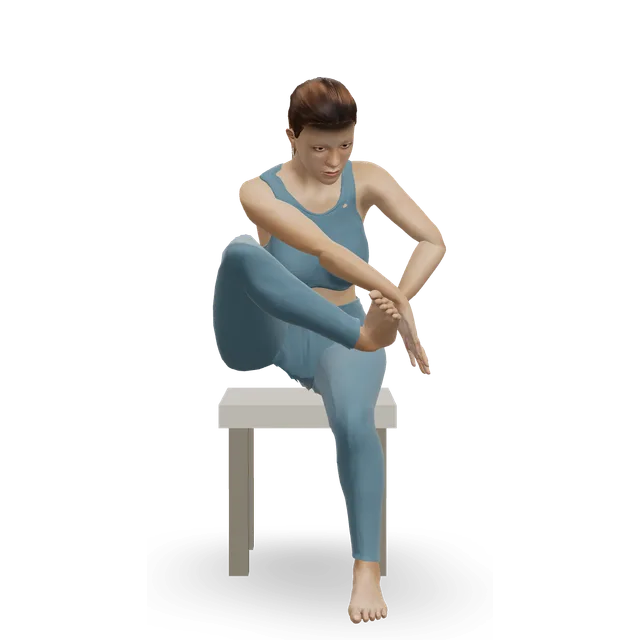
Plantar fascia stretch (seated) demonstrated on the 3D figure3D demoPlantar fascia stretch (seated)Beginner · A bench or box

3 to 5 holds of 10 to 30 s, 2 to 3 times a day · The move page's dose. Keep it gentle, and stop if the lump hurts (our caution)

Harder: Toes-tucked kneeling (toe squat)

Move on when: Walking in your shoes and insoles is comfortable.

Follow along: a timer, a cue and the next move, one step at a time.
Stage 2

Strength and walking time (about weeks 4 to 12)

Calf and foot strength and walking time, in the shoes and insoles that help.

Slow calf raise demonstrated on the 3D figure3D demoSlow calf raiseBeginner · A wall

2 sets of 10, building to 3 sets of 12 · Editorial dose

Easier: Seated bent-knee calf raise (soleus raise) · Harder: Standing dumbbell calf raise

Single-leg stand demonstrated on the 3D figure3D demoSingle-leg standBeginner · A wall

3 holds of 30 s on each leg, in shoes · Editorial dose

Easier: Tandem stance and heel-to-toe walk · Harder: Single-leg reach matrix

Step-up demonstrated on the 3D figure3D demoStep-upBeginner · A step

3 sets of 8 on each leg · Editorial dose

Easier: Low step-up · Harder: Dumbbell step-up

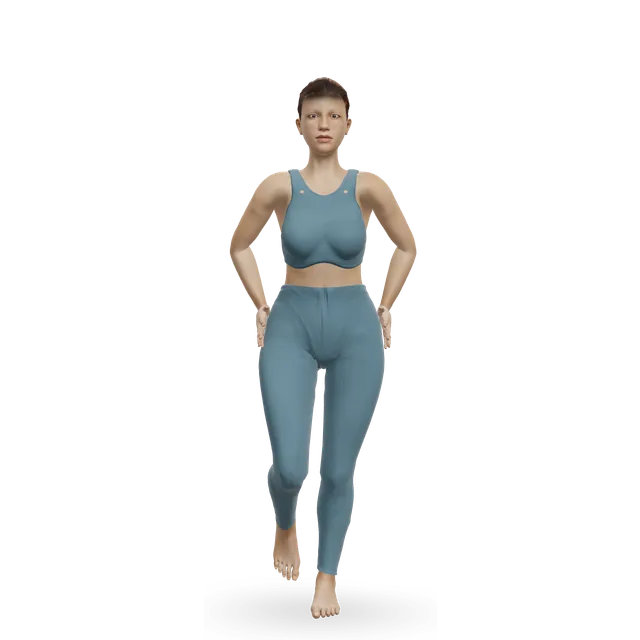
Treadmill walking demonstrated on the 3D figure3D demoTreadmill walkingBeginner · Cardio machine

Add a few minutes to your walks every few days · Editorial dose

Harder: Treadmill jogging

Move on when: 30 to 45 minutes of walking is comfortable, and the foot is no worse the next morning.

Follow along: a timer, a cue and the next move, one step at a time.
Stage 3

Running, sport and longer days on your feet

The activity you want, in shoes and insoles that keep pressure off the lump.

Single-leg calf raise from a step demonstrated on the 3D figure3D demoSingle-leg calf raise from a stepIntermediate · A step + A wall

3 sets of 10 on each leg, on the floor before a step · Editorial dose

Easier: Slow calf raise · Harder: Single-leg pogo hops

Elliptical trainer demonstrated on the 3D figure3D demoElliptical trainerBeginner · Cardio machine

10 to 20 minutes at a moderate effort, building towards 30 · The move page's dose

Harder: Stair-stepper machine

Single-leg reach matrix demonstrated on the 3D figure3D demoSingle-leg reach matrixIntermediate · No equipment

3 rounds of 5 reaches in each direction on each leg · The move page's dose

Easier: Standing crossed-leg side reach · Harder: Single-leg Romanian deadlift

Treadmill jogging demonstrated on the 3D figure3D demoTreadmill joggingIntermediate · Cardio machine

Walk-jog intervals, if you run · Editorial

Easier: Treadmill walking · Harder: Sprint intervals

Move on when: Keep going. If the lump grows, starts to hurt at rest, or a new one appears, see the warning signs.

Follow along: a timer, a cue and the next move, one step at a time.

What to change for now

Shoes, insoles and padding (written steps)

From NHS podiatry and podiatric surgery leaflets, with our suggestions marked.

  • 1. Wear a supportive shoe with a fastening, such as a trainer, with cushioning and depth in the sole and arch, and avoid completely flat shoes.
  • 2. Avoid long spells standing barefoot on hard floors while it's sore (our suggestion: standing barefoot can hurt).
  • 3. Ask a podiatrist about an insole with padding that takes pressure off the lump; a soft gel or foam insole is a reasonable start meanwhile (our suggestion).
  • 4. Pad around the lump rather than on top of it (our suggestion, as in our ganglion cyst and accessory navicular guides).
  • 5. Give each change 2 to 4 weeks before judging it (our suggestion).

Sources 1, 3

After plantar fibroma surgery (as your team allows)

One NHS podiatric surgery service's typical timeline. Your team's plan comes first, and the weeks are typical, not deadlines.

  • 1. Days 0 to 4: complete rest with the foot up, walking only to the bathroom on crutches. Keep the leg moving: ankle circles, 10 slow circles each way (the move page's dose), and thigh tightening, 10 a few times a day (editorial).
  • 2. At the dressing checks, at about 3 to 5 days and 2 weeks, you're shown exercises. Do a little more each day: the service's rule is that pain means you are doing too much.
  • 3. About 3 weeks: the stitches come out of the sole. Many people are back in shoes by then, and some only at 6 to 8 weeks. Start stage 1 once the wound has healed and your team agrees (editorial).
  • 4. 3 to 8 weeks: back to work (later for active jobs), and driving once you can make an emergency stop. Stage 2.
  • 5. From about 3 months: sport can be considered, which is stage 3. A final review at 3 to 6 months; healing is complete at about 12 months.

Source 3

If you have Dupuytren's contracture too

Plantar lumps are more common in people with Dupuytren's contracture, and in the Icelandic study they were more likely in men with bent fingers or previous hand surgery, or a family history of Dupuytren's. Mention both to your GP. Our Dupuytren's contracture guide covers the hand.

Sources 5, 6, 7

Plantar fibroma or plantar fasciitis?

Plantar fasciitis is pain between the arch and the heel, worst with the first steps in the morning or after resting. A plantar fibroma is a lump you can feel within the fascia in the arch, which often doesn't hurt. You can have both, and our plantar fasciitis guide covers heel pain.

Sources 30, 1

Positions to swap, and why

Habit or positionWhy it mattersInstead
Rolling your foot on a ball, roller or massage gun over the lumpThere's no evidence it helps, and pressure on the lump is what hurts (our caution).Stretch the calf instead.Try: Wall calf stretch (gastrocnemius)
Kneeling with the toes tucked underIt stretches the plantar fascia hard under your body weight (our caution).A gentle seated plantar fascia stretch, stopping if the lump hurts.Try: Plantar fascia stretch (seated)
Completely flat shoes, or long spells barefoot on hard floorsNHS leaflets say avoid completely flat shoes, and standing barefoot can hurt.Cushioned, fastened shoes with depth in the arch, and padded insoles.
An insole with a hard arch that presses on the lumpDirect pressure on the lump is what hurts.An insole with padding or a cut-out around the lump, fitted by a podiatrist.
Ignoring a lump that's growingNICE asks GPs to consider an urgent ultrasound scan for an unexplained lump that's getting bigger.See a GP.
Asking for a steroid injection to shrink itTwo NHS services say it helps only if a nearby nerve is irritated, and may enlarge the lump; elsewhere, relief can be brief.Shoes and insoles first, then a specialist's view of the options.
Expecting surgery to cure itFibromas often come back, most often after removing the lump alone.Surgery only for severe, lasting pain, after talking through the chance of it coming back with your surgeon.

Routines to follow

More moves for this area

Questions people ask

What is a plantar fibroma?

A firm lump of fibrous tissue within the band under the sole (the plantar fascia), usually in the arch. It isn't cancer. Several lumps, sometimes in both feet, are called plantar fibromatosis or Ledderhose disease.

Is a plantar fibroma serious? Can it be cancer?

It's benign, with a very low chance of being cancer, an NHS leaflet says. But a firm lump that doesn't move is on the NHS's list of lumps to have checked, so see a GP once, and again if it grows. A lump that's getting bigger should have an ultrasound scan quickly.

When should I see a GP about a lump on the bottom of my foot?

If it's still there after 2 weeks, gets bigger, is painful, red or hot, is hard and doesn't move, or comes back after being removed; and urgently if it's very painful, hot or red. NICE asks GPs to consider an ultrasound scan within 2 weeks for an adult with an unexplained lump that is getting bigger.

Do I need a scan or a biopsy?

Often the examination is enough, and an ultrasound or MRI scan confirms it if there's doubt. A growing lump should have an ultrasound within 2 weeks, or within 48 hours in a child. One NHS surgical service doesn't recommend a biopsy, because it may make the fibroma grow, while a US review keeps it for when cancer needs ruling out.

Will a plantar fibroma go away?

Usually not, and it may slowly grow or be joined by others. Many stay painless and need no treatment.

What helps the pain?

Shoes with cushioning, depth and a fastening, and insoles with padding that keeps pressure off the lump. Calf and plantar fascia stretches can ease everyday pain, an NHS podiatry service says.

Do exercises or stretches get rid of it?

No: nothing has been shown to shrink a fibroma, and exercise hasn't been tested. Stretching and staying active help comfort and fitness, but don't roll or massage hard over the lump.

What about steroid injections?

Two NHS services say they only help if a nearby nerve is irritated, and may even make the lump bigger. They're widely used in the US, but relief can be brief, and repeated injections risk tearing the fascia.

Is radiotherapy an option?

In the one trial, of 84 people, radiotherapy eased pain more than a dummy treatment for 18 months, with mostly mild side effects. NICE has no guideline on it, so ask a specialist whether it's offered locally.

Should I have surgery?

Only for severe, lasting pain, because fibromas often come back. Figures vary by operation and study: in one review, about two-thirds came back after removing just the lump and about a quarter after removing the fascia. Risks include a painful scar, numbness and a flatter arch, and a failed operation can leave things worse.

Is it related to Dupuytren's contracture?

Yes, it's the same family of conditions. Plantar lumps were about four times as common in Icelandic men with Dupuytren's as in men without it, and the NHS's risk factors for Dupuytren's include a family history, smoking, drinking a lot of alcohol, diabetes and epilepsy. Our Dupuytren's guide covers the hand.

Can I keep walking and running?

Yes, within the pain rule, in shoes and insoles that keep pressure off the lump. Leave out moves that press on it, and build up gradually.

Related exercise guides

Other pain guides

Sources

  1. Kent Community Health NHS · A guide for patients with plantar fibroma (podiatry leaflet, 2024)
  2. Young 2019 · The causes, assessment and treatment of plantar fibromatosis (review, Orthop Res Rev)
  3. Wye Valley NHS · Plantar fibroma, and excision of plantar fibroma (podiatric surgery information sheet)
  4. Davis 2026 · How 620 people newly diagnosed with plantar fibromatosis were treated in the US (records study, J Foot Ankle Surg)
  5. Gudmundsson 2013 · Plantar lumps in Icelandic men with and without Dupuytren's contracture (cohort, Foot Ankle Int)
  6. Mohede 2020 · Ledderhose and Peyronie's disease in 730 men with Dupuytren's disease (cross-sectional study, Plast Reconstr Surg)
  7. NHS · Dupuytren's contracture
  8. American College of Foot and Ankle Surgeons · Plantar fibroma (FootHealthFacts)
  9. Velez 2026 · MRI features of 196 plantar fibromas, and which ones hurt (imaging series, Skeletal Radiol)
  10. NICE NG12 · Suspected cancer: recognition and referral (2015, updated 2026)
  11. Hayes 2025 · UK guidelines for the management of soft tissue sarcomas (guideline, Br J Cancer)
  12. Nduka 2021 · Diagnosing plantar fibromas: sarcomas first taken for fibromas (case series, Foot)
  13. NHS · Lumps
  14. NHS · Ganglion cyst
  15. NHS · Symptoms of soft tissue sarcoma
  16. de Haan 2023 · Foot pressure when walking with painful Ledderhose disease, 41 people against 41 (case-control study, Foot)
  17. de Haan 2023 · Radiotherapy for Ledderhose disease: the LedRad trial of 84 people (randomised sham-controlled trial, Radiother Oncol)
  18. de Haan 2022 · Long-term results of radiotherapy for Ledderhose disease in 67 people (retrospective cohort, Radiother Oncol)
  19. de Haan 2023 · The costs and benefits of radiotherapy for Ledderhose disease (economic evaluation, Radiother Oncol)
  20. NICE · Plantar fibromatosis (Ledderhose disease): not prioritised for a guideline (topic decision, 2025)
  21. James Anderson 2024 · Collagenase injections against placebo for plantar fibromatosis (phase 2 randomised trial, conference abstract, Foot Ankle Orthop)
  22. El-Amin 2025 · Collagenase for plantar fibromatosis: a further analysis of the phase 2 trial (conference abstract, Foot Ankle Orthop)
  23. European Medicines Agency · Xiapex: marketing authorisation withdrawn (2020)
  24. NICE TA459 · Collagenase clostridium histolyticum for treating Dupuytren's contracture (2017, now withdrawn)
  25. Hwang 2020 · Shockwave therapy for painful plantar fibromatosis in 10 feet (case series, PLoS One)
  26. Knobloch 2012 · Shockwave therapy for Ledderhose disease in 6 people (case series, BMC Res Notes)
  27. Anwander 2024 · How often plantar fibromatosis comes back after surgery (case series and systematic review, Foot Ankle Spec)
  28. Kadir 2017 · Partial fasciectomy for painful plantar fibromatosis in 18 people (case series, Foot)
  29. Fuiano 2019 · Treatments for plantar fibromatosis in 25 studies (systematic review, Foot Ankle Surg)
  30. NHS · Pain in the bottom of the foot
  31. NHS · Cellulitis
  32. NICE NG19 · Diabetic foot problems: prevention and management (2015, updated 2019)
  33. NHS · DVT (deep vein thrombosis)

Exercise education, not a diagnosis or treatment plan. It is written from the guidelines and studies listed above; review by a clinician is pending. If your pain follows an injury, is severe, is getting worse, or comes with any warning sign listed on this page, get it assessed. Health disclaimer.