Pain guide · Wrist and hand pain

Complex regional pain syndrome (CRPS): early signs, treatment, and gentle, graded exercises

Complex regional pain syndrome (CRPS) is pain that is far worse, and lasts far longer, than the injury explains, usually in one arm or leg after a broken bone, a sprain or an operation. Alongside burning or stabbing pain, the skin can become so sensitive that light touch hurts, and the limb can swell, stiffen, and change colour, temperature and sweating. It is uncommon, it is real and not "in your head", and most people improve over months to a couple of years, though many keep some symptoms.

There is no single test and no proven cure, so care follows the UK guideline from the Royal College of Physicians, which rests on four pillars: understanding the condition, physical rehabilitation, pain relief and psychological support. This guide covers the early signs to report after a fracture or operation, what the evidence shows for desensitisation, graded motor imagery and mirror therapy, and a gentle, graded plan with 3D demos to take to your physiotherapist or hand therapist. Start with the warning signs below.

When to get help first

Exercise is for pain that has been checked or is clearly mild and settling.

Get urgent medical help if

  • Call 999 or go to A&E: sudden, severe pain in a muscle of the arm, hand, leg or foot, especially after an injury or when a cast or bandage feels too tight. It can be compartment syndrome.
  • While a broken bone heals, get help from NHS 111 the same day if the pain gets worse; your temperature is very high or you feel hot, cold or shivery; the cast or splint breaks or feels too tight or too loose; your fingers or toes feel numb, look swollen, or turn blue or white; or there is a bad smell or fluid coming from under the cast.
  • Call 999 or go to A&E: an arm, hand, leg or foot that is suddenly cold, pale, numb, weak or very painful without an injury. A sudden loss of blood supply is a vascular emergency.
  • Arm pain or swelling with breathlessness or chest pain: call 999 or go to A&E, and do not drive yourself. It can be a blood clot that has reached the lungs.
  • Call 999: calf or leg pain or swelling with breathlessness or chest pain. It could be a clot that has reached the lungs. Do not drive yourself to A&E.
  • Throbbing pain and swelling in the arm, with red, blue or darker skin and swollen veins: ask for an urgent GP appointment or get help from NHS 111. It could be a blood clot.
  • Same day (GP or NHS 111): throbbing pain and swelling in one calf, with red or darker skin. It could be a blood clot (a deep vein thrombosis, or DVT). Watch for it after a foot or ankle injury or time in a cast or boot.
  • Same day: a hand, foot or limb that is hot, red and swollen with a high temperature or feeling hot, cold or shivery, or skin that breaks down, blisters or weeps. Infection is one of the things that can look like CRPS, and skin sores need checking early.
  • Same day, after an operation: a burning, scalding pain in the area one nerve supplies. Contact your surgical team: the UK guideline asks for an urgent review by the surgeon, because a nerve may have been damaged.
  • After an operation, oozing or pus from the wound: ask for an urgent GP appointment or get help from NHS 111. If you feel unwell or feverish and the wound looks infected, go to A&E.
  • If you've been feeling depressed or have had thoughts of suicide: see a GP as soon as possible, or call the Samaritans on 116 123, any time of day or night.

See a doctor or physiotherapist if

  • Pain that is getting worse instead of better or far worse than you'd expect, a cast that feels tight, swelling with fingers that are hard to bend, skin that is shiny, red or very sensitive to touch, or a hand that doesn't feel like yours: contact your fracture clinic or physiotherapist promptly. These can be early signs of complex regional pain syndrome (CRPS), and early treatment may help.
  • Pain that is getting worse instead of better, skin that is shiny, red or very sensitive to touch, colour or temperature changes in the foot, or a foot that doesn't feel like yours: contact your fracture clinic or physiotherapist promptly. These can be early signs of complex regional pain syndrome (CRPS), and early treatment may help.
  • Persistent pain that's stopping you doing everyday activities: see a GP.
  • CRPS that isn't clearly improving after about 4 weeks of therapy or 2 months of treatment, or that is getting worse: ask your GP or therapist about referral to a pain clinic or a specialist CRPS service.
  • Pain or other features spreading to another limb, a hand or foot twisting into fixed positions, jerks or spasms, or swelling you can't control: ask for a specialist referral.
  • A flare that hasn't settled within a few weeks: contact your therapist or GP. Flares usually settle over days or a few weeks.
  • You need an operation on a limb that has had CRPS: tell your surgeon and anaesthetist. The UK guideline advises putting planned surgery off until the CRPS has settled, where that's possible.
  • A child or teenager with these signs: ask for a referral to specialist children's services.

Understand it

What CRPS is

CRPS is a painful condition in a limb, with changes in feeling, movement, the skin, sweating, swelling and bone. The pain is much more severe and lasts much longer than the injury would normally cause, and the skin can become so sensitive that a slight touch, a bump or even a change in temperature causes intense pain.

Other symptoms can include burning, stabbing or stinging pain; tingling or numbness; swelling and stiffness; skin that is hot and red at some times and cold, blue and sweaty at others; hair and nails that grow unusually fast or slowly; tremor or muscle spasms; difficulty moving the limb; poor sleep; and a limb that feels as if it doesn't belong to you, or feels bigger or smaller than it is. The bone can thin in patches, though the NHS says there's no evidence this leads to fractures. Older names include reflex sympathetic dystrophy (RSD) and Sudeck's atrophy.

Sources 1, 2, 3

Two types, and how it's classed now

Type 1, much the commoner, follows an injury without major nerve damage; type 2 follows damage to a major nerve. The UK guideline says the difference doesn't change how it's managed, except that a damaged nerve can sometimes be treated with surgery.

A 2021 international consensus kept the diagnostic criteria, added a subtype for people who once met them and still have pain, and placed CRPS among the chronic primary pain conditions, as the chronic pain guideline from NICE (the National Institute for Health and Care Excellence) does. A 2024 review calls CRPS a rare disorder that usually follows trauma to a limb, and says effective treatment remains a challenge.

Sources 1, 4, 5, 6, 7

It is real, and it isn't in your headEmerging evidence

The UK guideline says it is now clear that CRPS is not linked with psychological problems before the pain, or with somatisation or malingering, and that many patients still report not being believed. A review of 31 studies found that the prospective ones showed no link with depression, anxiety, neuroticism or anger, and in 596 people followed after a fracture, none of the psychological factors measured predicted who developed CRPS.

Fear and worry can make any pain worse, which is why psychological support is part of care, not a sign that the pain is imagined. The guideline also says that developing CRPS after an operation is not, in itself, evidence that the surgery was done badly.

Sources 1, 8, 9

Who gets itStrong evidence

It is uncommon. In a Dutch general practice database of 600,000 people, about 26 in every 100,000 developed it each year, women 3.4 times as often as men, most often aged 61 to 70; in Olmsted County in the USA the rate was about 5.5 in every 100,000 a year. In both, the arm was affected more often than the leg, and a broken bone was the trigger in 44% and 46%.

Most cases follow an injury, usually within a month: a fracture (a broken wrist above all), a sprain, a burn or a cut, an operation, or time in a cast. The size of the injury doesn't predict it, and about 1 in 10 people can't recall any injury. Children can get it too.

Sources 10, 11, 1, 12

How often it follows a fractureMixed evidence

It depends on how strictly CRPS is defined. In 596 people with a single fracture of the wrist, the scaphoid, the ankle or a foot bone, 7% met strict criteria, 21% a looser set and 48.5% the oldest, loosest criteria, and none of those with CRPS by the strict criteria was free of symptoms at a year.

After a wrist fracture treated without surgery, 3.8% of 1,549 people developed it within 4 months. In Denmark's national register, 0.2% of 247,128 wrist fractures led to a diagnosis within a year (0.31% after surgery, 0.17% without). The UK guideline says a short-lived, CRPS-like reaction is common after fractures and operations (1% to 25%), but CRPS lasting more than a few months affects fewer than 1 in 1,500 people.

Sources 13, 14, 15, 1

How it's diagnosed, and what tests can't showStrong evidence

By examination, using a checklist called the Budapest criteria, agreed at an international meeting in Budapest: continuing pain out of proportion to the injury; symptoms in at least three of four groups and signs in at least two (changes in feeling; colour or temperature; swelling or sweating; and movement, skin, hair or nails); and nothing else that explains it better. In a study of 160 people with nerve pain, the criteria picked up 99% of those with CRPS and correctly ruled it out in 68% of the others, much better than the older criteria.

No single test confirms it. Blood tests, X-rays, MRI (magnetic resonance imaging) scans and nerve tests rule out other causes; the UK guideline says bone scans aren't needed and can delay treatment, and the European standards say no test is needed except to exclude other diagnoses. It usually isn't diagnosed until 2 to 4 weeks after an injury, because early on the signs look much like normal healing.

Infection, a bone that hasn't healed, arthritis, a trapped nerve, poor circulation, a blood clot and other conditions can look like CRPS. As one NHS pain service puts it, the signs can mimic other conditions, so new pain after an injury needs examining rather than guessing.

Sources 16, 17, 1, 4, 18, 19, 20

The earliest warning signsEmerging evidence

The UK guideline lists a cast or dressing that is, or feels, too tight, and pain far worse than expected in the cast or when it comes off, as possible early warnings. In 1,549 people with a wrist fracture treated without surgery, an average pain score of 5 out of 10 or more in the first week was a strong warning sign, and that simple score predicted CRPS almost as well as a four-part assessment.

A limb that doesn't feel like yours is a feature of CRPS, but it can also happen after injuries without CRPS, so it's a reason to mention it to your team, not a diagnosis.

Sources 1, 14

How it usually goesMixed evidence

Most people improve. The NHS says about 85% slowly get less pain and fewer symptoms in the first 2 years. The UK guideline says pain eases completely or partly in up to 80%, often within 18 to 24 months and sometimes even after many years, while about 15% still have severe pain and difficulty using the limb at 2 years. In Olmsted County, 74% recovered, often without specific treatment.

But recovery is often incomplete. In 59 people followed from the start, symptoms improved most in the first 6 months, yet only 5.4% were free of symptoms at a year. A review of 22 studies found pain and movement problems still present in 51% to 89% after a year or more, with grip 25% to 66% weaker and 30% to 40% not back at work; in a Dutch group followed for nearly 6 years, 31% couldn't work. Stiffness and weakness are the most likely to last, and swelling and colour changes the most likely to settle.

True spread, meeting the full criteria in another limb, happens in about 7%; pain in other limbs without the other features is commoner and doesn't count as spread. Flares are normal, usually settle over days or a few weeks, and don't mean the condition is getting worse. Stress in particular can bring them on.

Sources 21, 1, 11, 22, 23, 24, 25, 26, 4, 3

What helps, and how strong the evidence is

The honest headline: no treatment is provenStrong evidence

A Cochrane overview of 17 systematic reviews found no high-certainty evidence for any CRPS treatment: the trials are small and mostly at high risk of bias. The Cochrane review of physiotherapy (34 trials, 1,339 people) rated every comparison very low certainty, but expects physiotherapy and rehabilitation to remain the first treatments.

The UK guideline's advice rests on expert consensus rather than graded evidence, and an appraisal of six CRPS guidelines found little guidance on how much exercise, how often, or how to progress it. So the plan on this page follows the guideline's approach. It isn't a proven formula.

Sources 27, 28, 1, 29

What every guideline agrees on: gentle, graded movement and useStrong evidence

The UK guideline asks for physiotherapy or occupational therapy to start as soon as CRPS is suspected, with gentle movement, light everyday use of the limb, attention to it and desensitisation, and it encourages early weight-bearing. Holding a joint still risks long-term stiffness, and mobilisation that strongly worsens pain is advised against. The European standards ask for generally gentle, graded exercises in the presence of pain, and for immobilisation to be avoided wherever possible.

The NHS adds that too much or too vigorous exercise can aggravate the condition, so therapy should be supported by a therapist with experience of CRPS, and that exercise can range from gentle stretches to exercise in water and weight-bearing. This is consensus: the trials behind it are very low certainty.

Sources 1, 19, 21

Who manages it, and when to ask for more helpStrong evidence

Care rests on four pillars of equal importance: education and self-management, physical rehabilitation, pain relief and psychological support. Mild CRPS can be managed by your GP with a physiotherapist or occupational therapist (a hand therapist for the arm, where available), and the NHS says people are usually referred to a specialist pain clinic as soon as possible.

The UK guideline asks therapists to refer on if there's no response within about 4 weeks, and the European standards ask for specialist referral if pain and function aren't clearly improving within 2 months. Spread to another limb, a hand or foot twisting into fixed positions, blisters or sores, swelling that can't be controlled, children, and CRPS that isn't settling after 6 to 12 months all need specialist care.

Sources 1, 21, 18, 19

Physiotherapy in early arm CRPS: one trialEmerging evidence

In 135 people with CRPS in one arm for less than a year, physiotherapy, and to a lesser degree occupational therapy, eased pain during and after effort and improved wrist and finger movement faster than social work support over the first 3 to 6 months, though the gains over the whole year didn't differ much. Cochrane rated it very low certainty and found a small improvement in impairment at 12 months.

Sources 30, 28

Graded motor imagery: promising, but not reliably repeatedMixed evidence

Graded motor imagery (GMI) has three stages of about 2 weeks each: recognising left and right hands or feet in pictures, imagining movements, then mirror therapy. In 13 people with long-standing CRPS after a wrist fracture, it reduced nerve-type pain much more than usual care. In 51 people with CRPS or phantom limb pain, pain fell by 23 points out of 100, against 11 with physiotherapy and usual care, and the gains held at 6 months. Pooling the CRPS patients in these two trials, Cochrane found about 14 points less pain out of 100.

But a shorter programme found no difference, a trial in CRPS after a nerve injury found no clear benefit and 12 of its 22 people reported more pain while training, and when two UK CRPS centres used it alongside other good care, average pain didn't improve (changes of 0.6 and 0.2 points out of 10), though left and right judgements did. One NHS hand therapy service doesn't use it for people with dyslexia or for children. Your therapist will say whether it suits you.

Sources 31, 32, 28, 33, 34

Mirror therapyEmerging evidence

In a pilot of 8 people, watching the reflection of the unaffected limb moving eased pain straight away in early CRPS (8 weeks or less) and reduced stiffness within the first year, but did nothing in long-standing CRPS. In 48 people with CRPS after a stroke, 4 weeks of mirror therapy added to rehabilitation reduced pain at rest by about 3 points out of 10 more than a covered mirror.

In a 2024 trial of 27 people with arm CRPS, most after a fracture, 10 minutes a day at home for 6 weeks improved movement, strength, dexterity, swelling and quality of life compared with a waiting period. Cochrane rates the evidence very low certainty, and one trial was stopped early for lack of effect. NHS advice is to keep sessions to 10 minutes or less.

Sources 35, 28, 36, 37

Exposure: ignoring the pain isn't the same as facing fearsMixed evidence

A programme that asked people to push through and ignore the pain (pain exposure physical therapy) was no better than usual care in 56 people at 9 months, though movement improved a little more. In 46 people with CRPS and at least moderate fear of movement, graded exposure to the activities they feared, with a therapist, reduced arm disability more than usual pain-guided care, after treatment and at 6 months, with less pain.

Cochrane suggests the difference lies in the approach: one tells people to ignore the pain, while the other gently tests the fear that an activity will hurt or cause harm. Both trials are small.

Sources 38, 39, 28

DesensitisationEmerging evidence

Retraining touch, with textures, water and massage, from where the skin can bear it towards the most sensitive areas, is part of the UK guideline and NHS care. It hasn't been tested on its own in a trial. Short, frequent sessions are advised, and some discomfort while you do it and shortly afterwards is expected.

Sources 1, 40, 21

Other physical treatmentsMixed evidence

For TENS (transcutaneous electrical nerve stimulation, a small device that passes a mild current through the skin), ultrasound, magnetic field treatments, carbon dioxide baths and arm cycling, Cochrane found no clear evidence. Manual lymphatic drainage didn't help pain, and laser, whirlpool baths and electroacupuncture with massage gave small, unimportant effects, all very low certainty.

NICE's chronic pain guideline, which counts CRPS as chronic primary pain, says not to offer TENS, ultrasound or interferential therapy, while the UK CRPS guideline still lists TENS among a therapist's options. There's no need to buy a TENS machine.

Sources 28, 5, 1

Medicines: a specialist decision, and UK guidance differsMixed evidence

No medicine is licensed for CRPS in the UK. The UK CRPS guideline suggests simple painkillers first, then nerve pain medicines if pain hasn't eased to a mild level after 3 to 4 weeks (NICE's first choices for nerve pain are amitriptyline, duloxetine, gabapentin or pregabalin), and a single bisphosphonate infusion (pamidronate) for suitable people within 6 months of onset.

NICE's chronic pain guideline, which treats CRPS as chronic primary pain, says to consider certain antidepressants and not to start gabapentinoids, local anaesthetics, opioids, ketamine, anti-inflammatories or paracetamol, except for gabapentinoids and local anaesthetics within a CRPS research trial.

In the trials, bisphosphonates may reduce pain soon after treatment but cause more side effects, ketamine infusions helped briefly but not in the medium term, and no trials have tested tricyclic antidepressants or opioids in CRPS. Your GP or pain specialist will weigh this with you. Don't start, stop or change a medicine yourself.

Sources 21, 1, 41, 5, 42, 43, 27

Spinal cord stimulationEmerging evidence

NICE recommends it for adults with severe nerve pain lasting at least 6 months despite usual treatment, after a successful trial of stimulation and an assessment by an experienced team. In the main trial (54 people with CRPS for 6 months or more), pain fell by 2.4 points out of 10 at 6 months with stimulation plus physiotherapy, against a slight rise with physiotherapy alone, and 39% against 6% felt much improved; function didn't improve, and 6 of the 24 people with an implant needed further procedures.

A 2024 review of trials found that pain fell with spinal cord and nerve root stimulation, but the UK guideline notes that the benefit generally fades over time.

Sources 44, 45, 46, 1

Psychological supportEmerging evidence

The UK guideline offers pain-focused psychological help, often a group pain management programme, to those who need it. NICE suggests considering acceptance and commitment therapy or cognitive behavioural therapy (CBT) for chronic primary pain, and the NHS says CBT can make it easier to keep going with rehabilitation. Seeing a psychologist doesn't mean the pain is in your mind.

Sources 1, 5, 21

Surgery, amputation and preventionEmerging evidence

The UK guideline advises avoiding surgery on a limb with CRPS where possible, and putting planned operations off until a year after it has settled; then recurrence is under 15%, mostly mild. Amputation rarely helps: in two small series, phantom pain was common and CRPS came back in the stump in about a quarter, and the guideline says it is rarely justified within 2 years.

There's no proven way to prevent CRPS, and the guideline makes no recommendation on vitamin C. Our broken wrist guide explains what the vitamin C trials found.

Sources 1, 47

How much pain is OK while you exercise?

The UK guideline's approach: in the presence of pain, without flaring it

The guidelines don't give a number. The European standards advise generally gentle, graded exercises in the presence of pain, and the UK guideline asks people to use the limb gently even when that feels wrong, while warning against mobilisation that strongly worsens pain and against overdoing it.

So some discomfort is expected. For desensitisation, the UK guideline says it is usual to feel uncomfortable and somewhat sore while you do it and shortly afterwards; if the pain is more than you can bear, stop that activity and choose an easier one. Our suggestion for the exercises is the same test: discomfort you can move through is fine if it settles back to your usual level shortly afterwards, with no more swelling, colour change or skin sensitivity than usual the next day.

If it flares for the rest of the day or into the next, do the same exercises more gently next time (a smaller range, a lighter load or a shorter session) but just as often: the UK guideline says to reduce the intensity, not how often you exercise.

Mirror and imagery work have their own limits: no more than 10 minutes of mirror therapy at a time, and short sessions of left and right judgements, because long ones can increase swelling or pain. Capping pain at 2 out of 10, as some exercise sheets do, is stricter than the guideline, and the one trial of ignoring the pain did no better than usual care.

Sources 19, 1, 21, 40, 37, 48, 38

The exercise plan: 3 stages

Start at the first stage. Each move opens a full guide with a 3D demo.

Stage 1

Look, touch and move gently (from the first days, as your team allows)

Keep every joint moving through the range it has, reduce swelling, and start making touch feel normal again, little and often, several times a day. Don't strap the limb up or rest it for long. After a fracture or operation, stay within your team's current limits. Add desensitisation and the swelling routine (written steps below). The foot moves are for CRPS in the foot or leg.

Tendon glides (hand tendon gliding exercises) demonstrated on the 3D figure3D demoTendon glides (hand tendon gliding exercises)Beginner · No equipment

4 to 6 of each position, holding each for 5 s, up to 4 times a day, as far as is comfortable · The move page's dose, from an NHS hand therapy leaflet. Rest the hand raised on a cushion

Harder: Ball squeeze

Wrist & forearm flow demonstrated on the 3D figure3D demoWrist & forearm flowBeginner · No equipment

Forearm resting on a table so only the hand moves: 5 to 10 slow repetitions each way, 3 to 4 times a day · Editorial dose, starting with the move's easier version

Easier: Wrist circles · Harder: Wrist flexor stretch

Elbow bend and straighten (elbow range of motion) demonstrated on the 3D figure3D demoElbow bend and straighten (elbow range of motion)Beginner · No equipment

10 slow repetitions, up to 4 times a day · The move page's dose, so the elbow doesn't stiffen

Harder: Dumbbell biceps curl

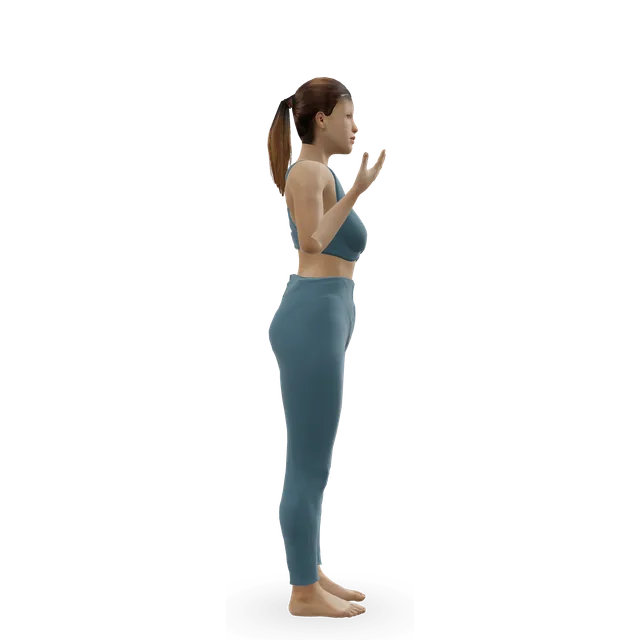
Breath reach demonstrated on the 3D figure3D demoBreath reachBeginner · No equipment

5 slow breaths, breathing out for longer, lifting the arm as high as is comfortable · The move page's dose. A calm version of the UK guideline's arm raise for swelling

Harder: Slow breathing (6 breaths a minute)

Ankle circles demonstrated on the 3D figure3D demoAnkle circlesBeginner · No equipment

10 slow circles each way, with the foot raised · The move page's dose. For CRPS in the foot

Harder: Ankle CARs (controlled articular rotations)

Seated march demonstrated on the 3D figure3D demoSeated marchBeginner · A bench or box

1 to 2 minutes, or 5 lifts each leg · The move page's dose. For CRPS in the foot: gentle contact with the floor

Harder: Standing march

Move on when: You can do these on most days without a flare that lasts into the next day, more of the limb tolerates touch and textures, and, after a fracture or operation, your team says you can move on to active use.

Follow along: a timer, a cue and the next move, one step at a time.
Stage 2

Use it: light tasks, weight through the limb, and retraining the brain's map (with your therapist)

Active movement and light everyday use; the UK guideline encourages early weight-bearing. If your therapist uses graded motor imagery or mirror therapy, add them now (written steps below), in order: left and right judgements, imagined movements, then mirror therapy, about 2 weeks each. After a fracture, as your team allows.

Wrist & forearm flow demonstrated on the 3D figure3D demoWrist & forearm flowBeginner · No equipment

The full version: 10 slow repetitions each way, 2 to 3 times a day · Editorial dose

Easier: Wrist circles · Harder: Wrist flexor stretch

Ball squeeze demonstrated on the 3D figure3D demoBall squeezeBeginner · Other / check instructions

A soft ball or rolled sock: hold 3 to 5 s, 10 times, 2 to 3 times a day, only as firmly as is comfortable · Editorial dose

Easier: Tendon glides (hand tendon gliding exercises) · Harder: Band finger extension

Band finger extension demonstrated on the 3D figure3D demoBand finger extensionBeginner · A band

1 to 2 sets of 10 with the lightest band · Editorial dose

Easier: Ball squeeze · Harder: Plate pinch

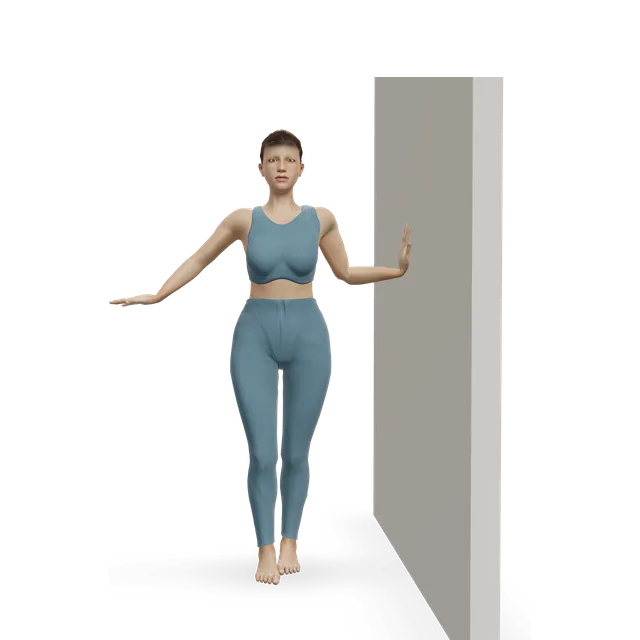
Wall push-up demonstrated on the 3D figure3D demoWall push-upBeginner · A wall

First as a lean: hands flat on a wall or worktop, lean a little weight through them for 5 to 10 s, 5 times, adding weight over the days before doing full wall push-ups · Editorial dose. Weight through the hand, as the UK guideline encourages

Harder: Push-up

Sit to stand from a chair demonstrated on the 3D figure3D demoSit to stand from a chairBeginner · A bench or box

2 sets of 5 to 8, weight even through both feet · Editorial dose. For CRPS in the foot

Easier: Sit to stand, pushing on the thighs · Harder: Bodyweight squat

Semi-tandem stance demonstrated on the 3D figure3D demoSemi-tandem stanceBeginner · A wall

3 holds of 10 to 20 s each way, a hand on the counter · Editorial dose. For CRPS in the foot

Harder: Tandem stance and heel-to-toe walk

Move on when: Light daily tasks with the limb are possible on most days, and you can take weight through it (a hand on a worktop, or standing on the foot) without a flare that lasts into the next day.

Follow along: a timer, a cue and the next move, one step at a time.
Stage 3

Strength and fitness (once active use is comfortable)

Build strength, then general fitness and the activities you enjoy, as the UK guideline's rehabilitation steps suggest; its pain clinic advice also suggests qigong or tai chi. Change one thing at a time, and keep the flare plan.

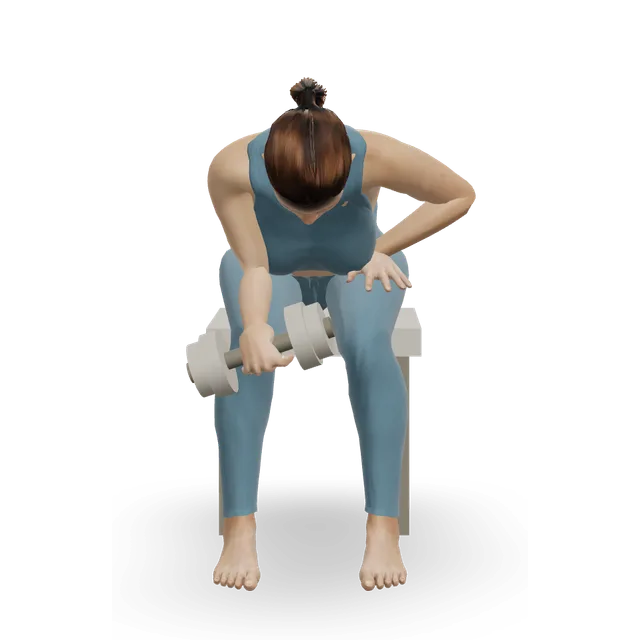
Wrist curls demonstrated on the 3D figure3D demoWrist curlsBeginner · A dumbbell

2 sets of 10 to 15 with a light weight, lowering slowly, 2 to 3 days a week · Editorial dose

Easier: Wrist-extensor eccentrics · Harder: Plate pinch

Dumbbell forearm rotation demonstrated on the 3D figure3D demoDumbbell forearm rotationBeginner · A dumbbell + A bench or box

2 sets of 10 slow turns each way with a light weight · Editorial dose

Easier: Wrist-extensor eccentrics · Harder: Plate pinch

Farmer's carry demonstrated on the 3D figure3D demoFarmer's carryBeginner · A dumbbell + A kettlebell

3 walks of 10 to 20 m, light; add weight or distance, not both at once · Editorial dose. Loading the limb through carrying

Harder: Suitcase carry

Slow calf raise demonstrated on the 3D figure3D demoSlow calf raiseBeginner · A wall

2 sets of 10 on both feet, a hand on the wall · Editorial dose. For CRPS in the foot

Easier: Seated bent-knee calf raise (soleus raise) · Harder: Standing dumbbell calf raise

Step-up demonstrated on the 3D figure3D demoStep-upBeginner · A step

2 sets of 6 to 8 on each leg, on a low step, holding a rail · Editorial dose. For CRPS in the foot

Easier: Low step-up · Harder: Dumbbell step-up

Treadmill walking demonstrated on the 3D figure3D demoTreadmill walkingBeginner · Cardio machine

Build towards 20 to 30 minutes on most days, or walk outdoors or cycle · Editorial dose

Harder: Treadmill jogging

Move on when: Keep adding load gradually. The grip strength workout (arm) and the foot and ankle strengthening routine (foot) take it further; leave the bar hang until your grip is close to normal.

Follow along: a timer, a cue and the next move, one step at a time.

What to change for now

Desensitisation (written steps)

From the UK guideline's appendix and NHS Ayrshire and Arran's leaflet, which follows it. Start in stage 1 and keep going.

  • 1. Choose a quiet moment. Short sessions work best: even 1 to 2 minutes, as many times as you can through the day.
  • 2. Start on your other, unaffected limb. Stroke it with a smooth texture, such as felt, satin, silk, velvet or a soft make-up brush, and notice how it feels.
  • 3. Use the same texture on the painful limb, starting where you can bear it and working towards the more sensitive skin, for example from the top of the arm towards the hand. Look at it, think about it, and recall how the touch felt on the other side.
  • 4. Vary the touch: light stroking, firm stroking, tapping and small circles.
  • 5. As each one gets easier, move to rougher textures (towelling, flannel, wool, the hook side of Velcro), then to water (feel it with the other limb first, and start with a temperature you can cope with, for short spells), and to massage with a moisturiser, from the fingers or toes towards the body.
  • 6. Build it into the day: feel the bed sheet, your clothes as you dress, the shower water, the washing-up water, or dough as you knead it with both hands.
  • 7. It's usual for this to be uncomfortable and somewhat painful while you do it and shortly afterwards. If the pain is more than you can bear, stop that activity and choose one that is easier to tolerate.

Sources 1, 40

Looking at, touching and thinking about the limb

Many people's sense of the painful limb's size, shape and position changes. The UK guideline counts looking at, touching and thinking about the affected limb among CRPS treatments, and advises against covering it up for long. Spend short, regular moments looking at the limb, touching it gently, and noticing how it feels and where it is.

Sources 1, 49

Left and right judgements: the first stage of graded motor imagery (written steps)

From NHS Ayrshire and Arran's and East Kent's leaflets. One NHS service doesn't use graded motor imagery for people with dyslexia or for children.

  • 1. Start when your therapist suggests it.
  • 2. Look at pictures of hands (or feet, for CRPS in the foot) in different positions and decide, as quickly as you can, whether each one is a left or a right.
  • 3. Use the app or website your therapist recommends, or make your own cards from magazine pictures or photos of family members' hands and feet.
  • 4. Note how many you get right, and how fast, for each side. It isn't about getting them all right.
  • 5. If the painful limb becomes more swollen or painful when you practise for a long time, stop: it should settle quickly. Keep sessions short.

Sources 48, 34

Imagined movements: the second stage (written steps)

From NHS Ayrshire and Arran's imagery leaflet and East Kent's leaflet. Start when your therapist suggests it.

  • 1. Sit or lie comfortably somewhere quiet, and close your eyes or rest your gaze on one point.
  • 2. Notice the sounds around you, then your breathing.
  • 3. Bring your attention to your other, unaffected limb and feel its shape and size from top to bottom.
  • 4. Do the same with the painful limb, noticing how it feels now, without judging it.
  • 5. When your therapist says, imagine moving the painful limb, taking as long as the real movement would, in the position you'd do it in. If even imagining it hurts, start by watching other people's hands or feet move.
  • 6. Finish with a few slow breaths, open your eyes, and jot down what you noticed.

Sources 49, 34

Mirror therapy: the third stage (written steps)

From NHS Ayrshire and Arran's mirror therapy leaflet and East Kent's leaflet, with the 2024 trial's dose.

  • 1. Only after your physiotherapist has shown you how.
  • 2. Sit comfortably with your back supported. Stand a mirror between your arms (or legs), with the reflecting side facing your unaffected limb and the painful limb hidden behind it.
  • 3. Look at the reflection for a couple of minutes without moving either limb.
  • 4. When that's comfortable, move both limbs slowly in exactly the same way while you watch the reflection. If pain stops the hidden limb moving, imagine moving it.
  • 5. If pain or stiffness becomes a problem, stop and go back to just looking.
  • 6. No more than 10 minutes at a time, 4 to 5 times a day, or as your therapist says. The 2024 trial used 10 minutes a day for 6 weeks.
  • 7. Odd feelings in the hidden limb (heavier, lighter, warmer or floating) can happen and pass when you stop. If one is upsetting, stop and look at both limbs without the mirror.

Sources 37, 34, 36

The swelling routine after a fracture (written steps)

From the UK guideline's sample leaflet for people with a broken wrist. Your fracture clinic's own advice comes first.

  • 1. Keep the hand raised above the level of your heart as much as you can, resting the arm out straight on pillows.
  • 2. Every 15 minutes in the first days, raise the hand right up above your head and pump the fingers.
  • 3. Use a sling for the first few days only.
  • 4. Keep the fingers, thumb, elbow and shoulder moving, and use the hand for light tasks.
  • 5. For a foot, rest it raised on pillows or a stool and keep the toes and ankle moving (our suggestion). Compression stockings or sleeves can limit swelling, especially when standing; ask your team first.

Sources 1, 26

On a flare day (written steps)

From the UK guideline and the NHS. The pain flare-up routine workout suits a bad day.

  • 1. Keep doing your exercises, but more gently: fewer, smaller or shorter. The UK guideline says to reduce the intensity, not how often you do them.
  • 2. Use slow breathing and relaxation, such as the slow breathing move or the breathing workout.
  • 3. Pace the day: break tasks up, and rest between them.
  • 4. Expect it to settle over days or a few weeks. Stress in particular can bring on a flare.
  • 5. If a flare hasn't settled within a few weeks, contact your therapist or GP.

Sources 1, 3

Positions to swap, and why

Habit or positionWhy it mattersInstead
Keeping the limb in a sling, splint or bandage for long, or holding it still to protect itHolding a joint still risks long-term stiffness, and the guidelines advise avoiding it wherever possible.Gentle movement, little and often: tendon glides for the hand, ankle circles for the foot.Try: Tendon glides (hand tendon gliding exercises)
Covering the limb up, and not looking at or touching itThe UK guideline advises against covering the limb up, and counts looking at and touching it as part of treatment.Desensitisation, and short moments looking at and touching the limb.
Pushing through severe pain to break through itMobilisation that strongly worsens pain is advised against, and an ignore-the-pain programme did no better than usual care.The graded plan, with discomfort that settles shortly afterwards.
Stopping all exercise during a flareThe UK guideline says to reduce the intensity, not how often you exercise.Gentler, shorter versions, or the pain flare-up routine.
Long sessions of mirror therapy or left and right judgementsLong sessions can increase swelling or pain, and NHS advice caps mirror therapy at 10 minutes.Short sessions, several times a day.
Early wrist rocks, push-ups or planks on the handsWeight through the hand should build gradually, and after a fracture it waits for your team's go-ahead (our suggestion).A gentle lean against a wall or worktop.Try: Wall push-up
Heavy gripping or hanging from a barToo big a step for a sensitive hand (our suggestion).Gentle squeezes of a soft ball.Try: Ball squeeze
Ice packs or heat packs straight on the skinA change in temperature can cause intense pain in CRPS (our reasoning).Water at a temperature you can tolerate, as part of desensitisation.
Planned surgery on the limb while CRPS is activeThe UK guideline advises avoiding it, or putting it off until a year after the CRPS has settled.Talk to your surgeon and pain team about timing.

Routines to follow

Chronic pain flare-up routine: gentle movement for a bad day

A 10-minute routine for a pain flare-up: slow breathing, small gentle moves lying and sitting, a short stroll if you can, then rest. Repeat later in the day.

10 minBeginner10 movesA band, A bench or box

Breathing exercises to relax

A 6-minute breathing routine: slow breathing, crocodile breathing, alternate nostril breathing, box breathing and 4-7-8 breathing.

6 minBeginner5 movesNo equipment

Lymphoedema exercises: a daily routine for arm and leg swelling

A 15-minute daily routine for lymphoedema: deep breathing, neck and shoulders, then an arm block and a leg block to keep the muscle pump working.

15 minBeginner14 movesOther / check instructions, A bench or box

Wrist and forearm routine

Wrist mobility and forearm strength for desk work, climbing, push-ups and handstands.

10 minBeginner7 movesA wall, A dumbbell

Grip strength workout: squeezes, curls, carries and hangs

A 20-minute grip session: warm up the wrists and fingers, train the hand and forearm muscles, then carry and hang to load your grip the way everyday life does.

20 minBeginner10 movesOther / check instructions, A band

Foot and ankle strengthening routine: toes, arches, calves and balance

A 15-minute barefoot routine for stronger toes, arches, calves and ankles, finishing with balance. You need only a towel, a wall and a resistance band.

15 minBeginner11 movesA wall, Other / check instructions

Balance exercises routine

Balance practice in 10 minutes: tandem stance, single-leg stands, marches, heel walks, tree pose and floor transfers.

10 minBeginner7 movesA wall, A bench or box

More moves for this area

Questions people ask

What are the first signs of CRPS?

Pain that is getting worse instead of better, or far worse than you'd expect after the injury, often burning or stinging; a cast that feels tight; swelling and stiffness; skin that is shiny, red or blue, or so sensitive that light touch hurts; changes in temperature, sweating, hair or nails; and a limb that doesn't feel like yours. After a broken wrist, average pain of 5 out of 10 or more in the first week was a warning sign. Tell your fracture clinic, physiotherapist or GP promptly.

How is CRPS diagnosed?

By examination: doctors use a checklist called the Budapest criteria, which needs pain out of proportion to the injury plus particular symptoms and signs, with nothing else explaining them. There is no single test; blood tests, X-rays, MRI scans or nerve tests are used to rule out other problems. It usually isn't diagnosed until 2 to 4 weeks after an injury.

Will CRPS go away?

For most people it improves: the NHS says about 85% slowly get less pain over the first 2 years, and the UK guideline says pain improves in up to 80%. Many people keep some pain or stiffness after a year, and about 15% still have severe pain at 2 years. Recovery can happen even after a long time.

Is CRPS real, or is it in my head?

It is real. The UK guideline says it isn't linked with earlier psychological problems, or with somatisation or malingering, and studies found no psychological factor that predicted it. Stress and fear can make pain worse, which is why support for your mood is part of treatment, not a sign that the pain is imagined.

Should I exercise if it hurts?

Yes, gently. Guidelines advise generally gentle, graded exercise in the presence of pain, and avoiding holding the limb still, but not forcing it through severe pain. Discomfort that settles shortly afterwards is fine; on a bad day, do the same exercises more gently rather than stopping.

What is graded motor imagery?

A three-step programme: recognising left and right hands or feet in pictures, imagining movements, then mirror therapy, each for about 2 weeks. Two small trials found less pain and better function, but other trials and a UK clinical audit didn't, so it is promising but uncertain. Your therapist will say whether it suits you.

Does mirror therapy work for CRPS?

Small trials found less pain, mostly in CRPS after a stroke, and a 2024 trial of 27 people with arm CRPS found better movement and function with 10 minutes a day for 6 weeks. The evidence is very low certainty. Keep sessions to about 10 minutes, and learn it from a physiotherapist first.

What is desensitisation?

Gradually retraining touch: stroking the skin with textures from smooth (silk, felt) to rough (towelling, wool), then using water and massage, starting where you can bear it and recalling how the same touch feels on your other limb. Short sessions many times a day work best, and some discomfort is expected.

Can CRPS spread?

True spread, meeting the full criteria in another limb, happens in about 7%. Pain in other limbs without the other features is commoner and isn't counted as spread. Tell your team if it happens, because spread is a reason for a specialist review.

What medicines are used for CRPS?

None is licensed for CRPS in the UK. Your GP or pain specialist may try simple painkillers, then medicines for nerve pain, or a one-off bisphosphonate infusion early on, and UK guidelines differ on some of these. Don't change your medicines without talking to them.

Who treats CRPS?

Usually your GP with a physiotherapist or occupational therapist (a hand therapist for the arm), and a pain clinic if it isn't settling; some people see specialist CRPS centres. Ask about referral if therapy hasn't helped within about 4 weeks, or treatment within about 2 months.

Does amputation help CRPS?

Rarely. In the small series published, phantom pain was common and CRPS came back in the stump in about a quarter of people. The UK guideline says amputation is rarely justified within 2 years and needs a full specialist team assessment.

Related exercise guides

Other pain guides

Sources

  1. Royal College of Physicians 2018 · Complex regional pain syndrome in adults: UK guidelines for diagnosis, referral and management (2nd edition)
  2. NHS · Complex regional pain syndrome
  3. NHS · Complex regional pain syndrome: symptoms
  4. Goebel 2021 · The Valencia consensus adaptation of the CRPS diagnostic criteria (consensus, Pain)
  5. NICE NG193 · Chronic pain (primary and secondary) in over 16s: assessment and management (2021)
  6. NICE NG193 · Context (2021)
  7. Ferraro 2024 · CRPS: advances in epidemiology, causes, diagnosis and treatment (review, Lancet Neurology)
  8. Beerthuizen 2009 · Psychological factors and CRPS type 1 (systematic review of 31 studies, Pain)
  9. Beerthuizen 2011 · Psychological factors and the development of CRPS (prospective study of 596, Eur J Pain)
  10. de Mos 2007 · The incidence of CRPS (population study in Dutch general practice, Pain)
  11. Sandroni 2003 · CRPS type I in Olmsted County (population study, Pain)
  12. NHS · Complex regional pain syndrome: causes
  13. Beerthuizen 2012 · Risk factors for CRPS after a fracture (prospective cohort of 596, Pain)
  14. Moseley 2014 · Intense early pain after a wrist fracture predicts CRPS (prospective cohort of 1,549, J Pain)
  15. Melbye 2026 · CRPS after wrist fractures in the Danish national register (247,128 fractures, Acta Orthop)
  16. Harden 2007 · Proposed new diagnostic criteria for CRPS (consensus report, Pain Medicine)
  17. Harden 2010 · Validation of the Budapest criteria for CRPS (validation study of 160 people, Pain)
  18. NHS · Complex regional pain syndrome: diagnosis
  19. Goebel 2019 · Standards for the diagnosis and management of CRPS (European Pain Federation task force, Eur J Pain)
  20. NHS Ayrshire & Arran · Complex regional pain syndrome (pain management service page)
  21. NHS · Complex regional pain syndrome: treatment
  22. Bean 2014 · The outcome of CRPS type 1 (systematic review of 18 studies, J Pain)
  23. Bean 2016 · Recovery in the first 12 months of CRPS type 1 (prospective study of 59, Eur J Pain)
  24. de Mos 2009 · Outcome of CRPS after an average of 5.8 years (cohort of 102, Clin J Pain)
  25. Johnson 2022 · CRPS at 12 months and beyond (systematic review of 22 studies, Eur J Pain)
  26. US National Institute of Neurological Disorders and Stroke · Complex regional pain syndrome
  27. Ferraro 2023 · Treatments for pain and disability in adults with CRPS (Cochrane overview of reviews)
  28. Smart 2022 · Physiotherapy for pain and disability in adults with CRPS (Cochrane review, 34 trials)
  29. Shafiee 2026 · The quality of guidelines for non-drug CRPS treatment (AGREE-II appraisal, J Eval Clin Pract)
  30. Oerlemans 1999 · Physiotherapy or occupational therapy for early arm CRPS (trial of 135, Pain)
  31. Moseley 2004 · Graded motor imagery for long-standing CRPS (trial of 13, Pain)
  32. Moseley 2006 · Graded motor imagery for CRPS and phantom limb pain (trial of 51, Neurology)
  33. Johnson 2012 · Graded motor imagery for CRPS in UK clinical practice (audit at two centres, Eur J Pain)
  34. East Kent Hospitals NHS · Graded motor imagery (hand therapy leaflet, past its review date)
  35. McCabe 2003 · Mirror visual feedback for CRPS (controlled pilot study of 8, Rheumatology)
  36. Machač 2024 · Mirror therapy for arm CRPS (trial of 27, Eur J Phys Rehabil Med)
  37. NHS Ayrshire & Arran · Mirror therapy for CRPS (patient leaflet, last reviewed 2020)
  38. Barnhoorn 2015 · Pain exposure physical therapy against usual care for CRPS (trial of 56, BMJ Open)
  39. den Hollander 2016 · Graded exposure for CRPS with pain-related fear (trial of 46, Pain)
  40. NHS Ayrshire & Arran · Desensitisation for CRPS (physiotherapy leaflet, last reviewed 2020)
  41. NICE CG173 · Neuropathic pain in adults: medicines in non-specialist settings (2013, updated 2020)
  42. NICE NG193 · Rationale and impact: medicines for chronic primary pain (2021)
  43. NICE NG193 · Recommendations for research (2021)
  44. NICE TA159 · Spinal cord stimulation for chronic pain of neuropathic or ischaemic origin (2008)
  45. Kemler 2000 · Spinal cord stimulation for chronic CRPS (trial of 54, N Engl J Med)
  46. Mattie 2024 · Spinal cord stimulation for CRPS (systematic review of trials, Interv Pain Med)
  47. NHS Ayrshire & Arran · Complex regional pain syndrome (patient leaflet, last reviewed 2020)
  48. NHS Ayrshire & Arran · Right and left discrimination for CRPS (physiotherapy leaflet, last reviewed 2020)
  49. NHS Ayrshire & Arran · Imagery for CRPS (physiotherapy leaflet, last reviewed 2020)
  50. NHS · Compartment syndrome

Exercise education, not a diagnosis or treatment plan. It is written from the guidelines and studies listed above; review by a clinician is pending. If your pain follows an injury, is severe, is getting worse, or comes with any warning sign listed on this page, get it assessed. Health disclaimer.